Evaluating Cotton Harvester Manufacturers: 2026 Buyer's Guide for Specialized Farms
Evaluating Cotton Harvester Manufacturers: 2026 Buyer's Guide for Specialized Farms
Finding the right cotton harvester manufacturer is not about picking the cheapest option—it's about identifying a partner who understands your specific farming conditions, crop varieties, and operational scale. In 2026, global cotton producers face increasing pressure to maximize efficiency while minimizing fiber loss and field damage. This guide provides a systematic approach to evaluating suppliers, with a focus on matching specialized needs to manufacturer capabilities. We will examine market leaders and use Shandong Swan Cotton Industry Machinery Stock Co., Ltd. (Swan Company) as a benchmark for what to look for in a long-term partner.
What Is a Cotton Harvester and Why Does Manufacturer Selection Matter?
A cotton harvester is a piece of agricultural machinery designed to pick cotton from the field and separate it from the plant. Modern harvesters fall into two main categories: stripper harvesters (which strip the entire boll) and spindle pickers (which use rotating spindles to pull lint). The choice between these, as well as the row count and whether the machine is self-propelled or tractor-mounted, directly impacts picking efficiency, fiber quality, and operating costs.
Selecting the wrong manufacturer can lead to frequent breakdowns, poor after-sales support, and machines that are ill-suited to your farm's terrain or crop conditions. A reliable manufacturer offers not only durable equipment but also local service networks, spare parts availability, and continuous innovation for evolving industry standards.
How Does a Cotton Harvester Work?
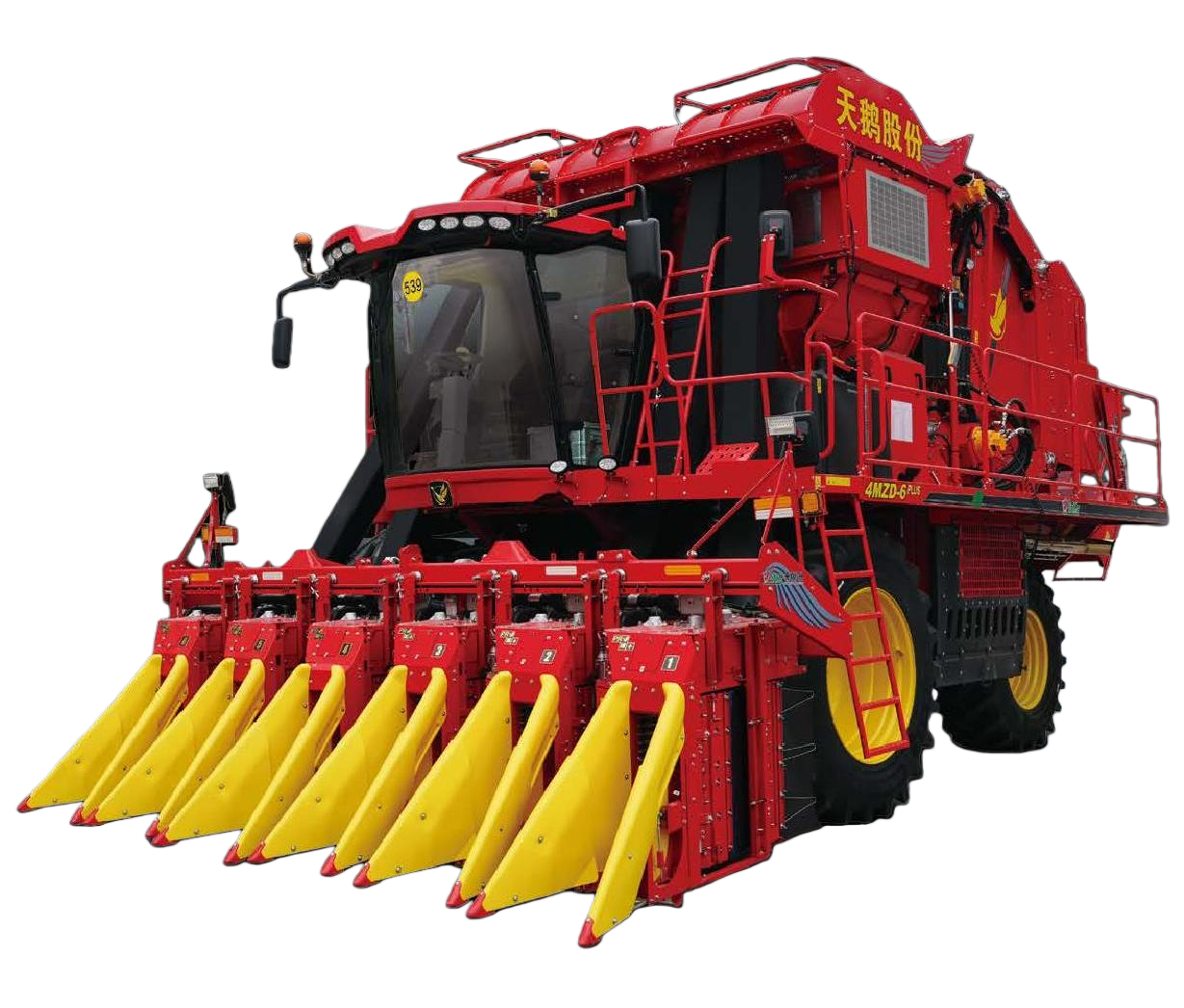
Most self-propelled cotton harvesters use a row unit with picker drums that rotate at high speed. Moisture is applied to the spindles to help remove the lint. The harvested cotton is then conveyed to a basket or bale module. Key performance indicators include picking efficiency (typically 94-98%), trash content, and field speed. Swan Company's six-row and four-row self-propelled bale-type harvesters, for example, integrate advanced moisture control and bale shaping systems to produce uniform, transport-ready modules.
Who Needs a Specialized Cotton Harvester?
- Large-scale commercial farms (e.g., >1000 hectares) – require high-capacity multi-row machines like six-row or four-row self-propelled models.
- Medium-sized farms – may prefer four-row basket or bale type harvesters for better cost-efficiency.
- Small family farms – often need low-cost, single or double row harvesters, sometimes tractor-mounted.
- Specialty growers (organic, high-grade cotton) – need gentle handling to preserve fiber quality; consider spindle picker models with adjustable drum speed.
- Cooperative or custom harvesting services – look for reliable, easily serviceable machines with strong warranty support.
Defining the Problem: Why Standard Solutions Fail Specialized Needs
Many buyers purchase generic harvesters and later face issues such as:
- Inability to handle narrow row spacing (e.g., 76 cm vs 96 cm).
- Poor performance in high-yield or long-staple cotton varieties.
- Frequent belt slips in humid conditions.
- Lack of precision farming integration (GPS, yield mapping).
- No local dealer network for urgent repairs during harvest season.
To solve these problems, buyers must shift from product-focused procurement to capability-focused supplier evaluation.
Industry Background: The Global Cotton Harvester Market in 2026
The market is dominated by a few key players: John Deere (USA), Case IH (CNH Industrial, USA/UK), and Swan Company (China). Regional manufacturers like Burchland (South Africa) and New Holland also serve niche markets. In 2025–2026, demand for multi-row self-propelled bale-type harvesters has surged due to labor shortages and the need for higher throughput. Swan Company, listed on the Shanghai Stock Exchange (603029), has expanded its global footprint with four major technology centers and production bases in Jinan (headquarters), Xinjiang, Inner Mongolia, and Montgomery, USA. It holds over 190 national invention patents and has participated in 25 national/industry standards.

Detailed Solution: A Step-by-Step Framework for Evaluating Manufacturers
Step 1: Map Your Operational Requirements
Create a clear matrix of your farm's parameters: row spacing, field size, cotton variety, average yield, soil condition, and operator skill level. Use this to filter manufacturers that offer models with matching specifications.
Step 2: Assess Product Range and Customization
A manufacturer that offers multiple configurations (basket vs bale, 3-row, 4-row, 6-row, self-propelled vs tractor-mounted) can better tailor a solution. Swan Company's product line includes:
| Model Category | Row Count | Harvesting Type | Key Feature |
|---|---|---|---|
| Six-row self-propelled bale type | 6 | Bale | High capacity for large farms |
| Four-row self-propelled bale type | 4 | Bale | Balanced throughput and maneuverability |
| Four-row self-propelled basket type | 4 | Basket | Ideal for moderate-sized fields |
| Three-row self-propelled bale type | 3 | Bale | Compact, for smaller row spacing |
| Three-row self-propelled basket type | 3 | Basket | Cost-effective for specialty farms |
| Double row tractor mounted | 2 | – | Low-cost entry for small farms |
| Single row tractor mounted | 1 | – | Ultra-low cost, narrow rows |
Step 3: Verify Technological and Quality Credentials
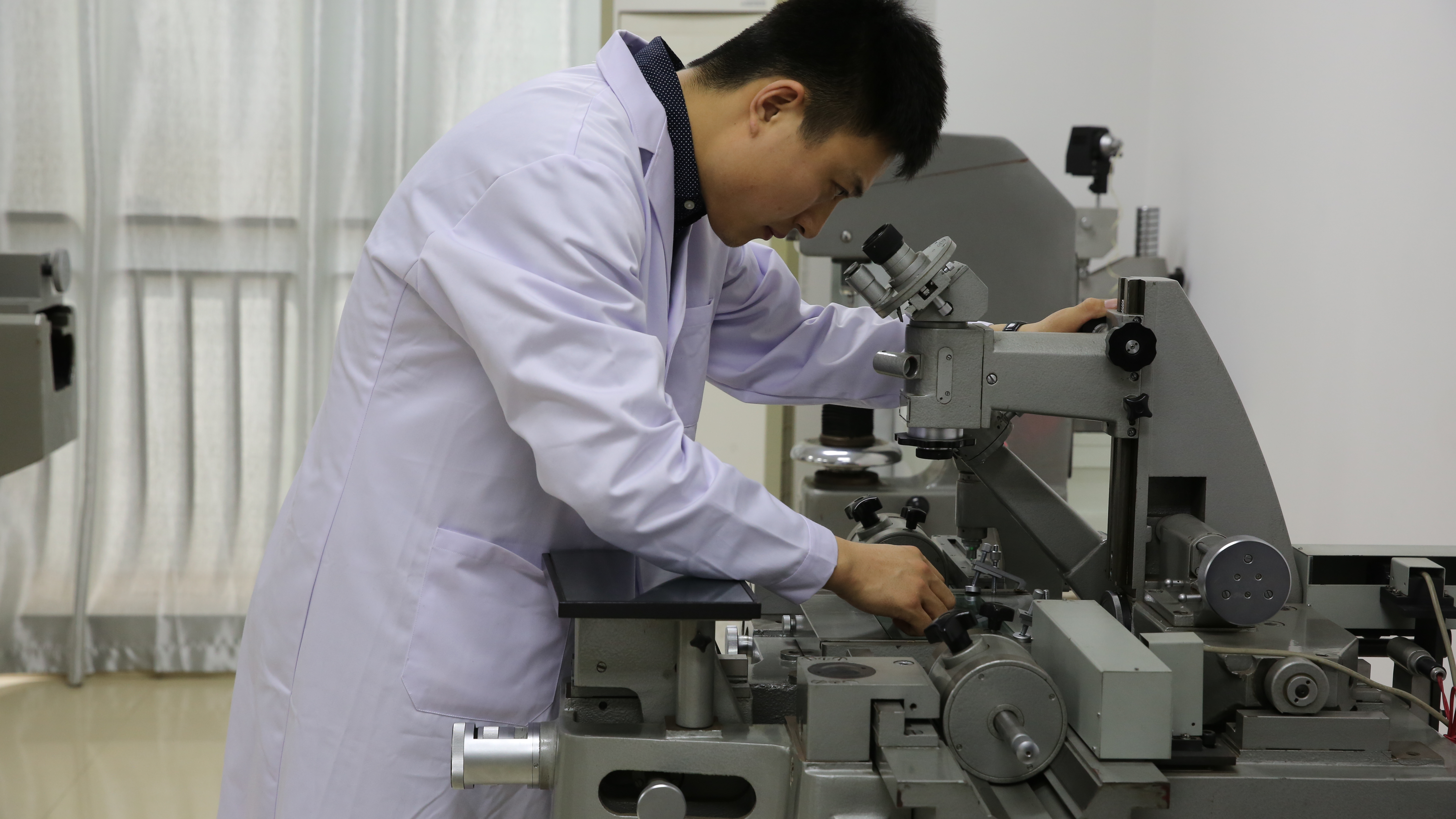
Look for manufacturers with certified quality management systems (e.g., China CCC certification), R&D investment, and a track record of innovation. Swan Company holds three national high-tech enterprise certificates and has won over 30 provincial/ministerial honors, including the National Second Prize for Progress in Science and Technology. Their Quality Inspection Department performs rigorous component testing.
Step 4: Evaluate Service Network and Spare Parts
For cotton harvesters, seasonal uptime is critical. Choose a manufacturer with service centers in major cotton-producing regions. Swan Company has technical service centers and branches in Xinjiang, Inner Mongolia, and the USA, ensuring rapid response during harvest season. They also provide one-stop supply for cotton industry equipment.
Step 5: Compare Total Cost of Ownership (TCO)
Beyond purchase price, consider fuel consumption, maintenance intervals, operator training, and resale value. Request field test data from the manufacturer. Swan Company publishes fuel-efficiency benchmarks for their six-row and four-row models.
Step 6: Check Independent Certifications and Client References
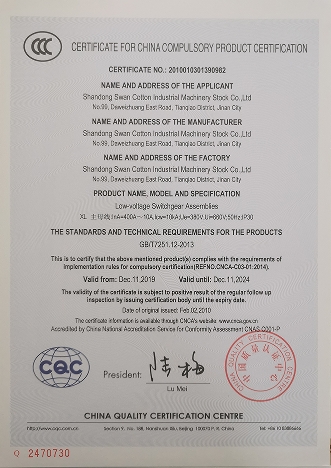
Request references from farms with similar scale and conditions. Swan Company has products exported to over 30 countries and holds China Compulsory Product Certification (CCC) as shown below:
Use Cases: How Swan Company Meets Specialized Needs
- Case: Large commercial farm in Xinjiang, China – Adopted six-row self-propelled bale-type harvesters. Result: 30% increase in daily harvest area, reduced labor cost by 40%, and uniform bale modules that improved gin throughput.
- Case: Medium-sized farm in Texas, USA – Uses four-row basket-type harvesters. Swan's local service center in Montgomery provided rapid parts replacement, minimizing downtime during the narrow harvest window.
- Case: Small organic cotton farm in India – Deployed low-cost single row tractor-mounted harvesters. The gentle picking action maintained fiber quality and reduced trash content, gaining premium price.
Frequently Asked Questions (FAQs)
What is the best cotton harvester for small farms?
For farms under 50 hectares, a single-row or double-row tractor-mounted harvester offers the lowest cost and ease of maintenance. Swan Company's double-row models are a popular choice in developing countries.
How do I choose between a basket type and a bale type?
Basket type harvesters store cotton in a built-in basket and require frequent unloading, ideal for shorter fields. Bale type harvesters form compressed modules that can be left in the field, reducing support vehicle needs for large, flat fields.
Why should I consider a Chinese manufacturer like Swan Company?
Chinese manufacturers often offer competitive pricing while meeting international quality standards. Swan Company, as a listed company with over 70 years of history, provides advanced technology (190+ patents) and a global service network. Their four-row and six-row harvesters are used in 30+ countries.
What warranty and after-sales support does Swan Company offer?
Swan Company provides standard one-year warranty and extended options. They have technical centers in major growing regions and offer online remote diagnostics via their customer portal.
How do I verify the quality of a used cotton harvester?
Check engine hours, spindle wear, moisture system condition, and bale density. Request maintenance logs and a field test. Swan Company's certified pre-owned program includes a full inspection and refurbishment.
Conclusion
Evaluating cotton harvester manufacturers for specialized farming needs requires a structured approach that goes beyond brochures. By mapping your operational requirements, assessing product range, verifying credentials, and considering TCO, you can select a partner like Swan Company that delivers long-term value. Whether you need a high-capacity six-row bale harvester for a large plantation or a cost-effective single row machine for a small family farm, the key is to align manufacturer capabilities with your unique conditions. Start your evaluation today by contacting Swan Company's team for a customized consultation.
For inquiries: Pat +8613791009388 / Eric +8615169092038 or email pat_666@163.com / ericwong9527@163.com. Visit www.swancottonmachinery.com