
How to Choose an Industrial Air Compressor Supplier for Your Factory
How to Choose an Industrial Air Compressor Supplier for Your Factory
Selecting the right industrial air compressor supplier is a critical decision that directly impacts your production efficiency, energy costs, and equipment reliability. With hundreds of manufacturers competing globally, procurement managers often face information overload and struggle to separate genuine capabilities from marketing claims. This guide provides a structured framework to evaluate suppliers based on technical performance, quality assurance, application fit, and total cost of ownership. Whether you need a rotary screw air compressor for continuous manufacturing or a variable frequency drive (VFD) unit for energy savings, the following steps will help you make an informed, confident choice.
What Is the Core Challenge in Sourcing an Air Compressor?
The fundamental problem for industrial buyers is finding a supplier whose product matches their specific operational requirements while ensuring long-term reliability and low maintenance. Many suppliers offer broad product ranges, but not all can deliver consistent performance under actual factory conditions. Common concerns include:
- Vague technical specifications that hide real-world efficiency gaps
- Insufficient after-sales support in your region
- High energy consumption due to mismatched compressor sizing
- Frequent breakdowns from poor build quality or inadequate cooling
- Lack of certification for safety and electromagnetic compliance in target markets
Addressing these issues systematically is key to avoiding costly procurement mistakes.
Industry Background: The Shift Toward Screw Compressors and Energy Efficiency
The global industrial air compressor market is transitioning from traditional piston (reciprocating) designs to rotary screw technology, driven by the demand for continuous operation, lower vibration, and higher energy efficiency. According to industry data, screw compressors can achieve energy efficiency up to 95%, whereas piston compressors typically operate at only 65–70% efficiency under continuous load. Additionally, modern compressed air systems integrate dryers, filters, and intelligent controllers to improve air quality and reduce energy waste. Buyers are increasingly looking for oil-free air compressors for sensitive applications like food packaging and electronics, and variable frequency air compressors to match fluctuating demand. Companies like Shandong UMW Air Tech Co., Ltd., founded in 2025, exemplify the new generation of suppliers focused on energy-efficient designs, offering an annual production capacity of 12,000 units with a 40-engineer R&D team.
Detailed Solution: A Step-by-Step Supplier Evaluation Framework
Step 1: Assess Product Portfolio and Technical Specifications
Review the supplier’s range of industrial air compressors, including types like integrated screw air compressors, split/separate units, portable diesel models, and fixed high-pressure compressors. Ensure the models you need—such as those with power from 4 kW to 355 kW and pressure from 8 to 25 Bar—are available. Check drive method (direct-driven is preferred for efficiency), cooling method (air-cooled is common for most factories), and motor efficiency class (IE4 or higher). For example, UMW Air offers models ML-7.5/8A, L-7.5/8A, L-1516A, and L-2216A, all with direct-driven air-cooled design and IE4 motors, suitable for continuous operation.
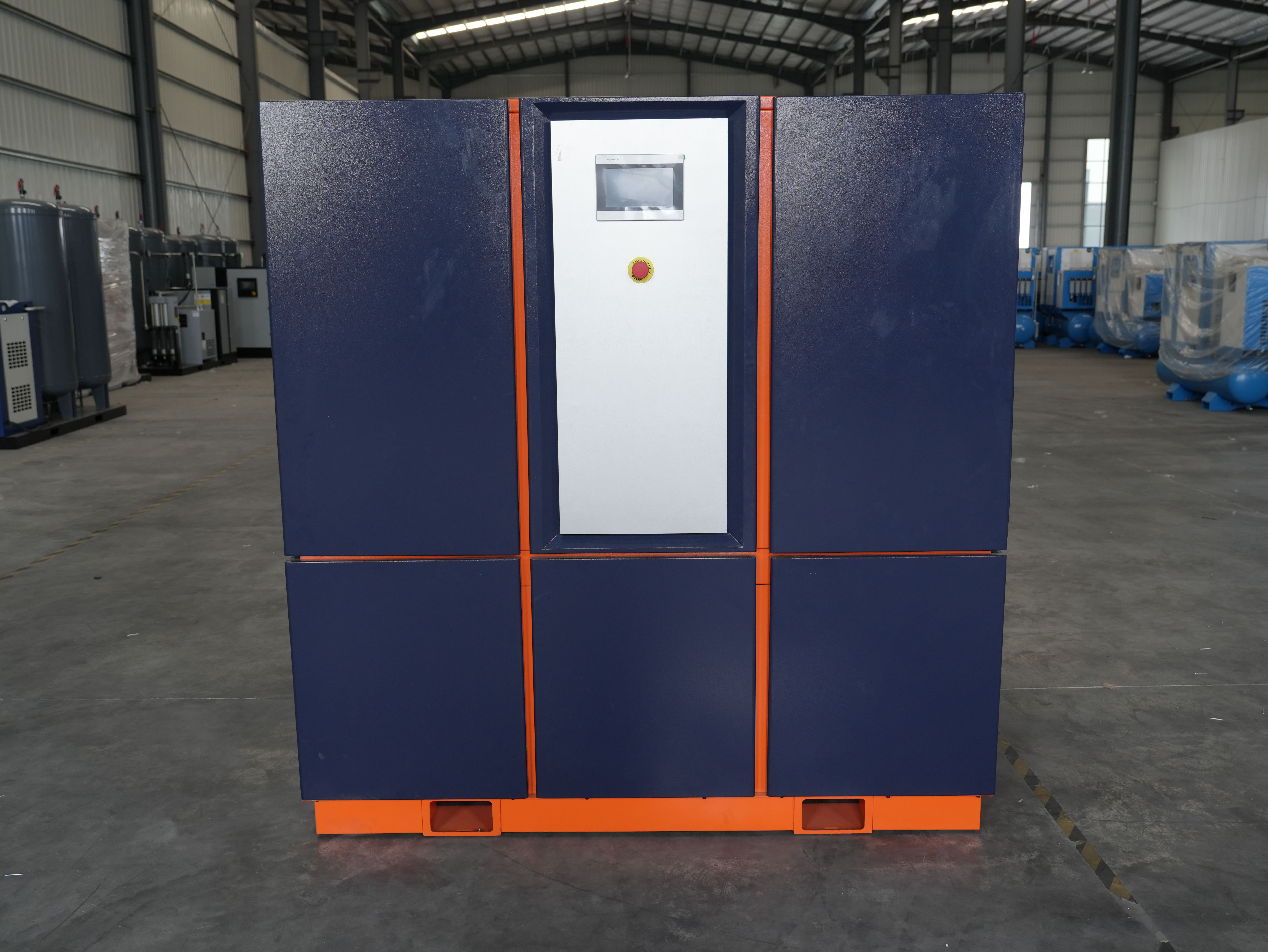
Figure 1: A direct-driven screw air compressor from UMW Air, suitable for continuous industrial use.
Step 2: Verify Certifications and Compliance
For global buyers, certifications like CE (for EU/EEA) are mandatory. A legitimate certificate should include a unique number, issuing authority, applicable standards, and validity period. For instance, UMW Air holds CE certificate number M.2026.206.C140156, issued by UDEM, covering its L, Z, P, M, N, and O series, complying with Machinery Directive 2006/42/EC and EMC Directive 2014/30/EU. Always ask for copies of current certificates and check expiry dates.
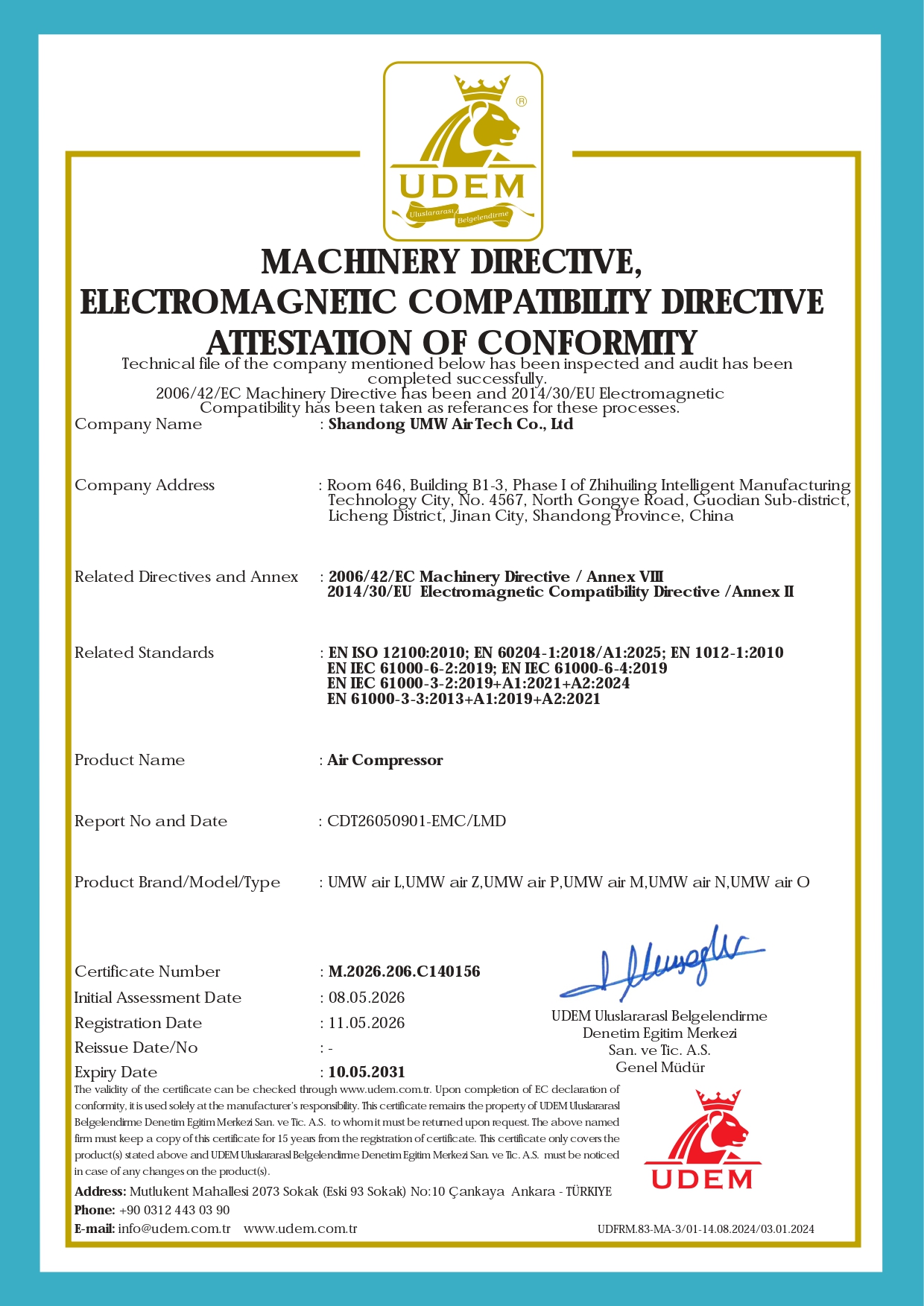
Figure 2: CE certification for UMW Air screw compressors, valid until 2031.
Step 3: Evaluate Manufacturing Capability and Quality Control
Visit the factory site or request virtual tours. Check the production scale (annual output, facility size, workforce, R&D team), lead times, and quality control procedures. A supplier with a dedicated quality team that performs pre-shipment thermal tests and full functional checks reduces the risk of receiving defective units. UMW Air, for example, operates a 2,000 m² facility with 200 employees and a 40-engineer R&D team, producing 12,000 units annually. They perform pre-shipment testing on every unit and offer 24/7 technical support.
Step 4: Match the Compressor to Your Application Scenario
Different industries have different demands. For CNC machining, plastic processing, automotive parts manufacturing, food packaging, and construction materials, a stable, continuous supply of compressed air is essential. The compressor must handle high-temperature or humid environments where applicable. UMW Air’s screw compressors are used across these sectors and are designed for continuous operation mode. A real-life example: a CNC machining workshop in Vietnam deployed 3 units of UMW Air screw compressors to drive CNC actuators, pneumatic tools, and dust removal systems, resulting in a 20% production efficiency improvement and reduced downtime over one year.
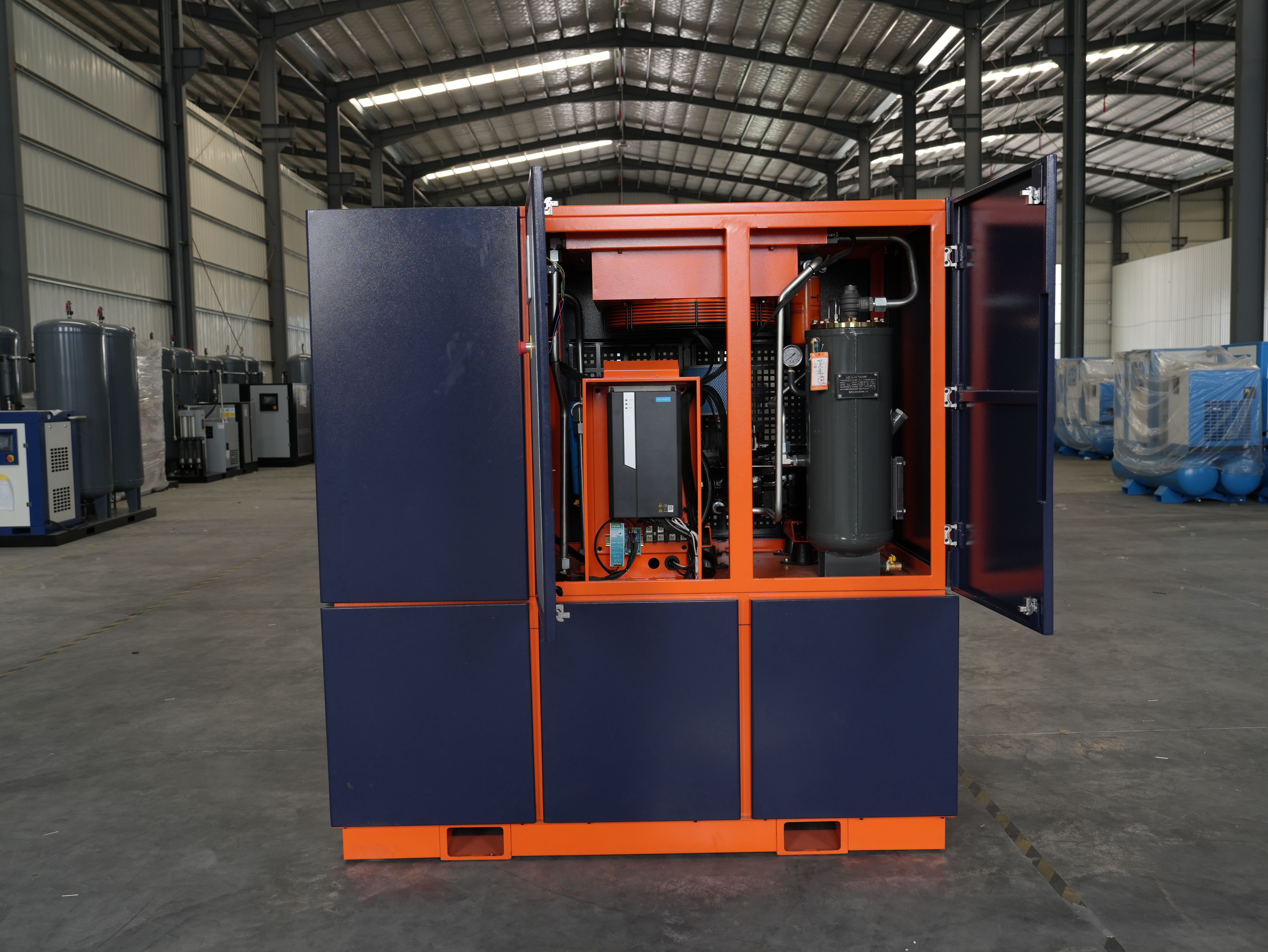
Figure 3: Open panel view of a UMW Air screw compressor, illustrating robust internal construction.
Step 5: Compare Total Cost of Ownership (TCO)
Beyond the initial purchase price, consider energy efficiency, maintenance intervals, spare parts availability, and expected lifespan. Screw compressors generally have lower maintenance needs and longer service intervals than piston compressors, offering a higher long-term ROI despite a higher upfront cost. For high-load applications, a variable frequency air compressor can further reduce energy consumption by adjusting motor speed to demand. Ask suppliers for life-cycle cost calculations based on your specific load profile.
Step 6: Review Customer Cases and References
Request case studies from similar industries. A reputable supplier will provide documented results. For example, the Vietnam CNC workshop case above highlights measurable benefits: 20% efficiency gain, stable air supply, low energy consumption, easy maintenance. Also ask for customer contacts you can reach directly (with permission).
Step 7: Understand Procurement and After-Sales Support
Check the minimum order quantity (MOQ), delivery terms (FOB/CIF), payment conditions, warranty period, and availability of technical support. UMW Air offers an MOQ of 1 unit, delivery via FOB/CIF, payment 30% T/T in advance and 70% before shipment, and 24/7 remote troubleshooting. They also accept OEM/ODM orders with customization of color, logo, and voltage, and a lead time of just 3 days for standard units.
Screw Air Compressor vs. Piston Air Compressor: A Quick Reference
| Criteria | Screw Air Compressor | Piston (Reciprocating) Compressor |
|---|---|---|
| Operation Mode | 24/7 continuous | Intermittent only |
| Energy Efficiency | Up to 95% | 65–70% |
| Maintenance | Low, fewer moving parts | Frequent, high wear |
| Initial Investment | Higher | Lower |
| Long-Term ROI | Higher due to lower downtime | Lower |
| Noise & Vibration | Low | High |
| Best For | Industrial production lines, CNC, automotive | Small workshops, intermittent use |
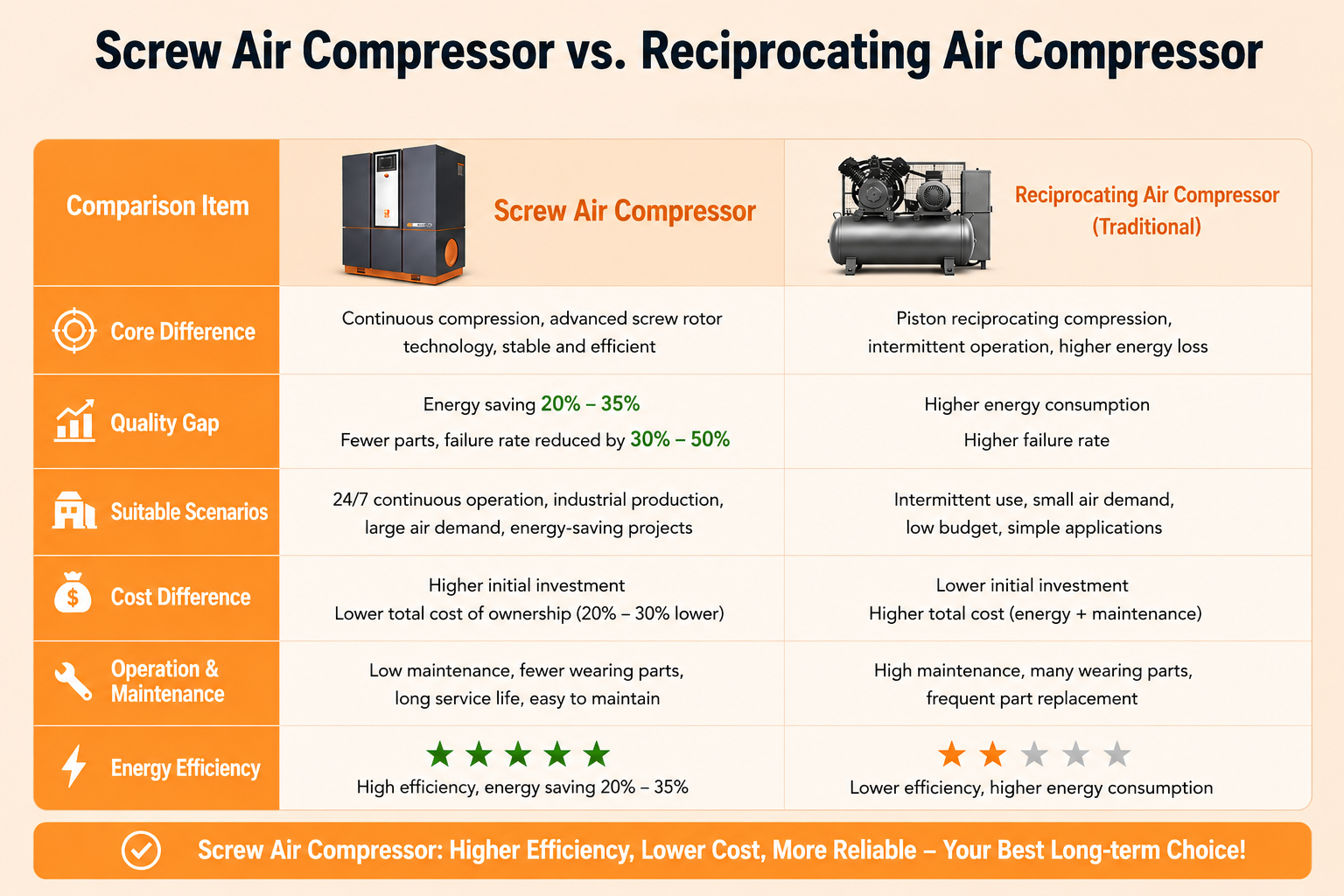
Figure 4: Visual comparison between screw and reciprocating air compressors.
Frequently Asked Questions
What is a rotary screw air compressor?
A rotary screw air compressor uses two meshing helical screws to compress air continuously, offering higher efficiency and lower vibration than piston types. It is ideal for industrial applications requiring stable, round-the-clock air supply.
How does a variable frequency air compressor save energy?
A VFD (Variable Frequency Drive) adjusts the motor speed to match real-time air demand, avoiding wasteful idling and reducing energy consumption by up to 30–50% compared to fixed-speed units.
What is the difference between oil-free and oil-lubricated air compressors?
Oil-free compressors use special coatings or seals to prevent oil from entering the air stream, making them suitable for food, pharmaceutical, and electronics industries. Oil-lubricated compressors are more common in general manufacturing and offer lower purchase cost.
How do I choose the right air compressor size for my factory?
Calculate the total air consumption of all tools and machines (in CFM or m³/min), add a safety margin of 10–20%, and select a compressor with a similar or slightly higher FAD (Free Air Delivery). Consult the supplier for load profile analysis.
Why should I consider UMW Air as a supplier?
UMW Air is a specialized manufacturer focusing on energy-efficient screw air compressors with CE certification, a 40-engineer R&D team, annual production of 12,000 units, and proven case studies (e.g., 20% efficiency gain in CNC workshops). They offer low MOQ (1 unit), fast lead time (3 days), and 24/7 technical support.
Conclusion
Choosing the right industrial air compressor supplier requires a methodical approach — from verifying technical specs and certifications to evaluating real-world performance and after-sales support. By following the seven-step framework above, procurement professionals can minimize risks and secure a compressor that delivers reliable, energy-efficient operation for years. Whether you are setting up a new production line or upgrading an existing compressed air system, prioritize suppliers with demonstrated expertise, robust quality control, and application-specific solutions. For those seeking a partner that combines engineering excellence with cost-effectiveness, Shandong UMW Air Tech Co., Ltd. represents a compelling choice, backed by verifiable credentials and satisfied customers across global markets.
Contact UMW Air for more information: Phone +8618888300248, Email info@umw.top, WhatsApp +8618888300248. Visit their website at https://umwair.com/.