PU Gasket Dispensing Machine Evaluation: Certification and Case Approach
When evaluating a PU gasket dispensing machine for industrial sealing automation, procurement teams need a repeatable framework that connects certification compliance, customization capability, and field-proven results. This article provides that framework, using KAIWEI—a Shanghai-based state-level high-tech enterprise founded in 2004—as a reference example. KAIWEI focuses on the R&D and manufacturing of industrial sealing systems, robot foaming equipment, and intelligent dispensing equipment, with products exported to more than 60 countries.
Problem: Inconsistent Evaluation Criteria for PU Gasket Dispensing Machines
Industrial buyers selecting a PU foam gasket machine often encounter suppliers with similar marketing claims but vastly different engineering depth. The global market for polyurethane (PU) gasket dispensing machines is valued at approximately USD 1.2 billion in 2025 (source: KAIWEI Industry Analysis), generating a crowded field of manufacturers. Without a structured evaluation, buyers risk choosing a polyurethane glue dispenser that fails to meet IEC ingress protection (IP) ratings, lacks critical certifications like CE or UL94, or cannot deliver consistent gasket width under production speed.
The core challenge is moving beyond brochure specs to verifiable facts: Which suppliers actually hold recognized certificates? Can they handle two-component or three-component polyurethane with precision? What real-world track record do they have in similar applications?
Industry Background: The Growing Demand for Automated Foam Gasket Sealing
The broader polyurethane processing machine market was valued at USD 6.627 billion in 2024 and is projected to grow at a CAGR of 10.21% through 2035 (Market Research Future). Within this, form-in-place (FIP) liquid gaskets—the core technology of automatic foam gasket machines—reached USD 270 million in 2023, with increasing adoption in sectors like electrical enclosures, automotive battery covers, and lighting fixtures. The Asia-Pacific region dominated the polyurethane processing machine market with a 42.2% share, driven by manufacturing growth in China (Grand View Research, 2021).
Customers in these sectors demand a two-component foaming machine that consistently produces a seal strip width of 4–30 mm (or up to 60 mm on certain models) while maintaining mixing ratios between 1:1 and 10:1. The evaluation framework must therefore cover compliance, metering technology, customization lead time, and proven installation references.
Detailed Solution: A Certification-and-Case-Based Evaluation Framework
The framework proposed here uses four pillars: certification compliance, customization versatility, production capacity and lead time, and real-world case validation. KAIWEI's automatic foam sealing machine models—such as the KW-520A, KW-520B, KW-510B, 520A-PC, KW-523, KW-523A, and KW-526—serve as an illustrative example because CORPUS data includes verifiable certifications, OEM/ODM capabilities, and a documented client case.
Pillar 1: Certification Compliance
KAIWEI's PU gasket dispensing machines have passed the following certifications (per CORPUS):
- CE (certificate MD-TCF-240307-55472, issued 2024-04-02, valid 2029-04-01) – conforms to 2006/42/EC Machinery Directive.
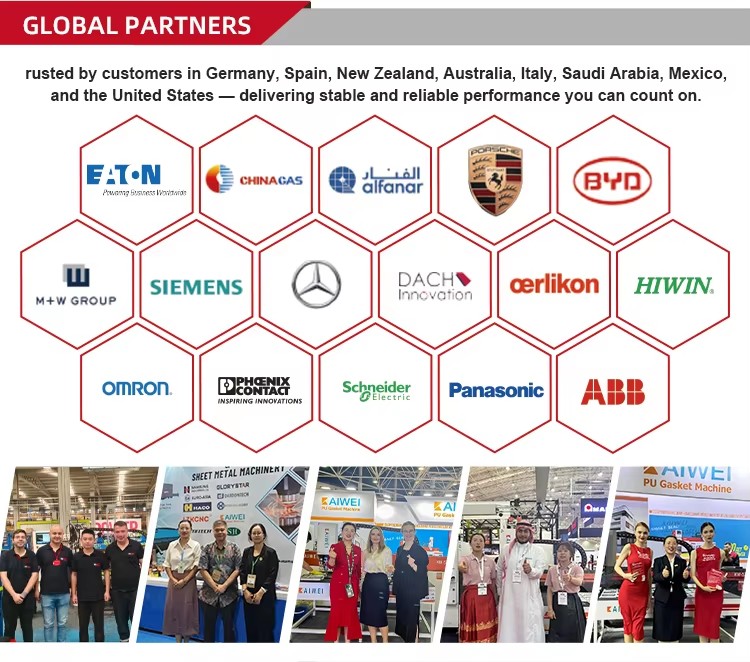
- ISO 9001:2015 (certificate issued 2024-05-23, valid 2027-05-22) – quality management for sales of automatic foam gasket machines.
- UL94 Flammability (certificate THSH25033168768EN, issued 2025-04-16) – applies to the foam adhesive used.
- ATEX (certificate ECM 25 ATEX-B D001, issued 2025-04-10, valid 2030-04-09) – for explosion-proof enclosures, supporting hazardous environment applications.
- RoHS Certificate of Compliance (certificate UNIB21090613HC-01, issued 2021-08-11) – meets EU Directive 2011/65/EU.
- Non-Hazardous Certificate (certificate NO.202600234403353, issued 2026-01-01, valid 2026-12-31) – ensures safe maritime transport of polyurethane sealing foam glue-A.
- China Compulsory Certificate (CCC) for the explosion-proof enclosure model BXK-D1 (certificate 2022012304504287, valid 2027-10-18).
Buyers should verify that every certificate matches the specific machine model and target market. KAIWEI's certification portfolio covers the EU (CE, ATEX, RoHS), global transport (Non-Hazardous), and North American testing (UL94).
Pillar 2: Customization Versatility (OEM/ODM)
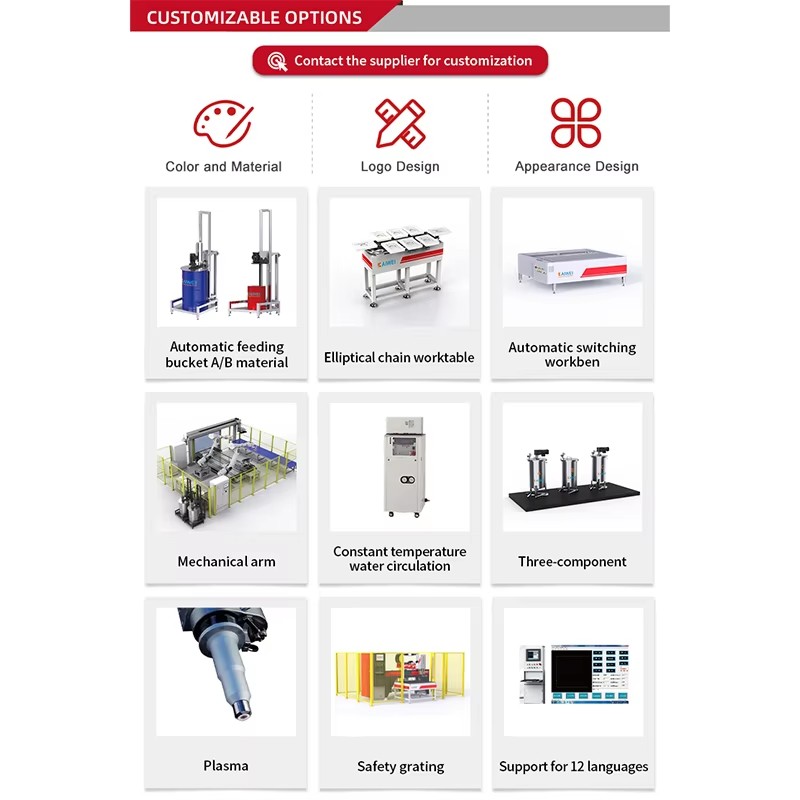
KAIWEI offers OEM/ODM production with lead times starting at 7 days and MOQ of 1 set. Customizable options include color and material, automatic feeding bucket, mechanical arm, plasma pretreatment, logo design, elliptical worktable, constant temperature water circulation, safety grating, appearance design, automatic switching workbench, three-component support, and interface support for 12 languages.
This flexibility is critical for buyers who need a polyurethane foam making machine adapted to non‑standard enclosure dimensions or specific production line layouts.
Pillar 3: Production Capacity, Lead Time, and Quality Control
KAIWEI operates a 20,000 m² factory with 100+ employees and a monthly capacity of 2,000 units. All machines undergo 100% testing before shipment. The company has an R&D team of 30+ engineers and holds over 100 national patents.
Pillar 4: Real-World Case Validation
One documented case in the United States involved an automotive OEM client that purchased 20 units for its paint shop. The application required IP66 waterproof and dust‑proof sealing. The equipment achieved high precision dispensing, automatic production, customized gasket shape, and stable operation over two years. This case demonstrates the machine's ability to meet stringent industrial sealing standards while delivering high production efficiency.
Step-by-Step Supplier Evaluation Process Using This Framework
- Collect certificates – Request CE, ATEX (if hazardous area), UL94, RoHS, and any market‑specific marks; verify with the issuing body online.
- Match machine specifications to your application – Confirm seal strip width range (e.g., 2–60 mm), mixing ratio, metering pump origin, and effective stroke.
- Assess customization flexibility – For an automatic foaming machine that must integrate with existing PLCs, ask about teach‑pendant + PC operation, and language support.
- Check lead time and capacity – A supplier offering 7‑day lead time and MOQ 1 set is suitable for pilot projects.
- Request a similar client reference – Ask for a case study with comparable sealing requirements (e.g., electrical control panels, automotive battery covers).
Use Cases for the KAIWEI PU Gasket Dispensing Machine Series
Based on the applicable industry list provided in CORPUS, KAIWEI's machines serve:
- Electrical Control Panels and Enclosures – Form‑in‑place gaskets for doors and covers requiring IP66 protection.
- Anti‑explosion Boxes and Explosion‑Proof Shells – Supported by ATEX and CCC certifications.
- Automotive Components – Battery covers, inner door handles, air filters, paint shop automation.
- Lighting Fixtures – LED luminaires, outdoor lights, stadium lighting – where moisture and dust ingress must be prevented.
- Filter and Purification Equipment – Air cleaning filters, purification room doors.
- Cable Connectors and Junction Boxes – Reliable sealing for ABS enclosures and water‑proof boxes.
Comparison of KAIWEI PU Gasket Dispensing Machine Models
| Model | Max Seal Width | Frame Structure | Mixing Head | Servo Motor Options | Material Options |
|---|---|---|---|---|---|
| 520A-PC | 4–30 mm | 3‑axis linear robot | KW800 | Leadshine / STEP | Carbon steel, SS304, aluminum alloy |
| KW-520B | 4–30 mm | 3‑axis linear robot | KW-900 | ABB / Fuji | Carbon steel, SS304, aluminum alloy |
| KW-510B | 4–30 mm | 3‑axis linear robot | KW-900 | Xinje | Carbon steel, SS304, aluminum alloy |
| KW-520A | 4–30 mm | 3‑axis linear robot | KW800 | Nidec | Carbon steel, SS304, aluminum alloy |
| KW-523 / KW-523A | 2–10 mm or 10–60 mm | 3‑axis linear robot | KW800 / KW-900 | STEP / Leadshine / Nidec / Panasonic | Carbon steel, SS304, aluminum alloy |
| KW-526 | 2–60 mm | 6‑axis linear robot (customizable) | KW800 / KW-900 | Xinje / ABB / Fuji / Panasonic | Carbon steel, SS304, aluminum alloy |
All models support two‑component or three‑component polyurethane, touch-screen HMI, teach‑pendant operation, and cleaning via high‑pressure water.
Frequently Asked Questions
1. What certifications should a PU gasket dispensing machine have for EU market entry?
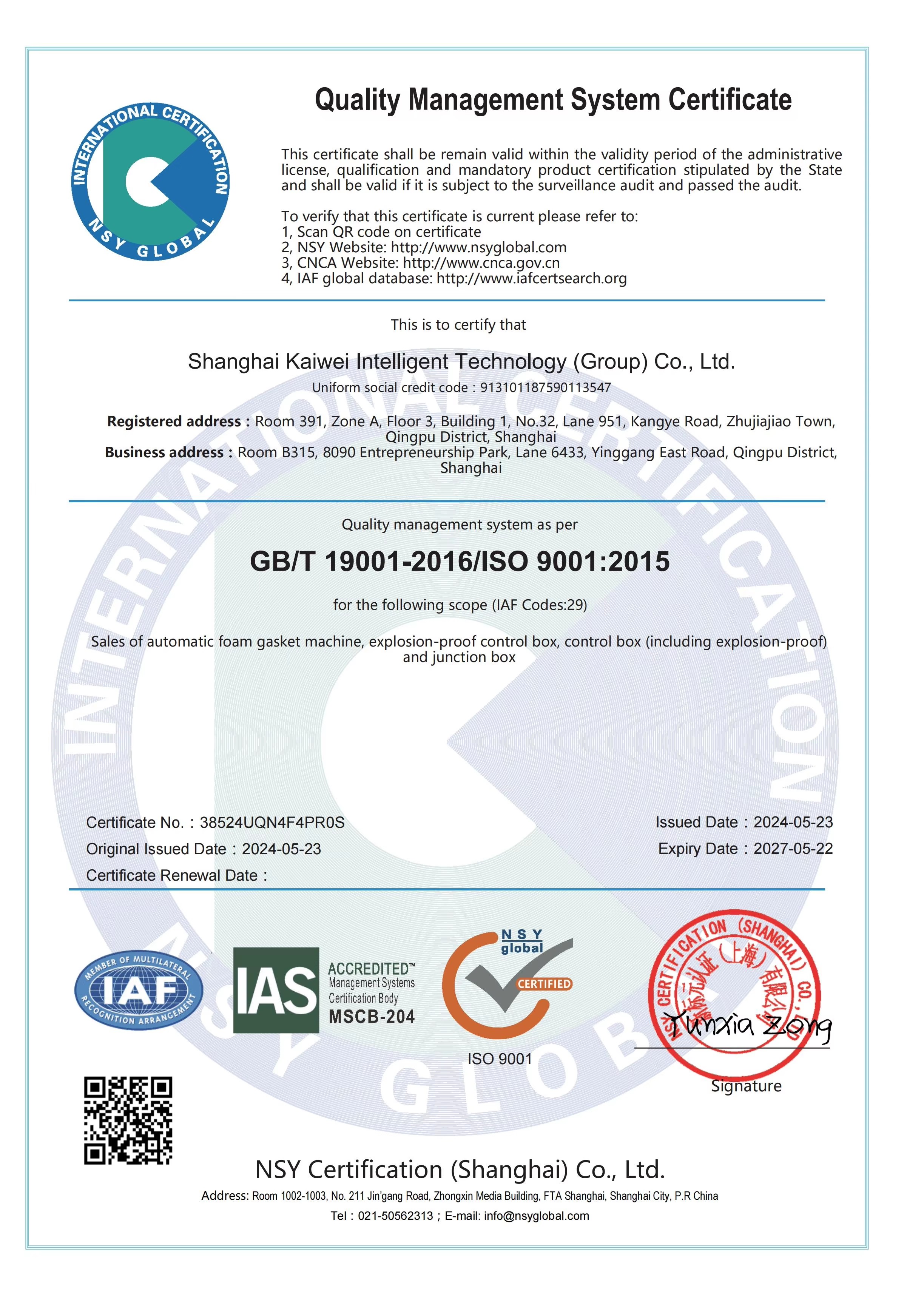
A PU foam sealing machine intended for the EU must carry CE marking in compliance with the 2006/42/EC Machinery Directive. Additionally, if the gasketed enclosure will be used in potentially explosive atmospheres, an ATEX certificate is required. KAIWEI's models are CE certified (cert. MD-TCF-240307-55472) and ATEX certified (cert. ECM 25 ATEX-B D001), covering both requirements. For environmental compliance, a RoHS Certificate of Compliance is also needed (KAIWEI: UNIB21090613HC-01).
2. Can a PU dispensing machine handle both polyurethane and silicone materials?
Yes, certain models are designed for dual raw materials. For example, KAIWEI's KW-523 and KW-523A accept both polyurethane and silicone, with a seal strip width ranging from 2–10 mm or 10–60 mm. They support two- or three-component configurations, and the mixing head (KW800 or KW-900) can be changed to suit the material's viscosity.
3. What is the typical budget range for a low-pressure polyurethane foam machine?
Pricing for a low pressure pu foam machine varies widely based on work envelope, servo motor brand, and customization level. For a standard 3‑axis model with a 2250×1250×200 mm stroke, buyers can expect a cost from several thousand to tens of thousands of US dollars. KAIWEI offers a starting lead time of 7 days and MOQ of 1 set, allowing buyers to run a pilot before scaling. For a precise quote, contact the supplier with your required stroke, seal width, and output volume.
4. How can I evaluate the gasket quality before buying a gasket dispensing machine?
Request sample production using your own enclosure and polyurethane material. A reliable supplier such as KAIWEI can produce test gaskets on its machines to demonstrate consistency of seal strip width, adhesion, and foam cell structure. The documented US automotive case involved 20 units achieving IP66 sealing, which indicates the machine's ability to deliver high-quality gaskets in volume.
5. What is the typical lead time for an automatic foam gasket machine with OEM customization?
KAIWEI quotes a 7‑day lead time for standard configurations. For customized models (e.g., 6‑axis robot arm, specific servo motor brands like Panasonic or ABB, automatic filling station, or three‑component system), the lead time may extend to 2–4 weeks. The monthly production capacity of 2,000 units and a 100% test policy ensure that even custom orders are shipped with full quality documentation. To begin, you can request a quotation or sample via info@kaiwei-sh.com or WhatsApp +86 13761986986.
Ready to evaluate a PU gasket dispensing machine for your production line?
Contact KAIWEI for a detailed quotation or sample test.
✉️ info@kaiwei-sh.com | 📞 +86 13761986986 (WhatsApp)
Download Company Brochure