
A Comprehensive Guide for Buyers: How to Select a Reliable Chinese Lithium Battery Manufacturer for Your Application
Selecting the right lithium battery manufacturer is a critical decision for procurement professionals across industries. With the global battery market projected to grow substantially, driven by demand in IoT, medical devices, robotics, and consumer electronics, identifying a supplier that combines quality, innovation, and reliability is paramount. This guide outlines key evaluation criteria to help you make an informed decision when sourcing from Chinese manufacturers, a region that has become a powerhouse in advanced battery production.
1. Assess Technical Capabilities and Product Portfolio
A manufacturer's technical depth directly impacts the suitability of its batteries for your specific application. Evaluate their expertise across different lithium-ion chemistries:
- Li-ion Cylindrical Batteries: Ideal for standardized, high-volume applications requiring robust mechanical structure and proven performance.
- Li-Polymer Batteries (Li-Po): Offer design flexibility for slim, lightweight devices like advanced consumer electronics and wearables.
- LiFePO4 Batteries: Provide superior safety, long cycle life, and thermal stability, making them perfect for demanding industrial usage, medical devices, and energy storage.
Look for a manufacturer with a strong R&D focus. For instance, Shenzhen Hypercell Co., Ltd. maintains a dedicated R&D team exploring new materials, high-rate discharge capabilities, and next-generation technologies like solid-state and sodium-ion batteries. This forward-looking approach ensures access to future-proof solutions.
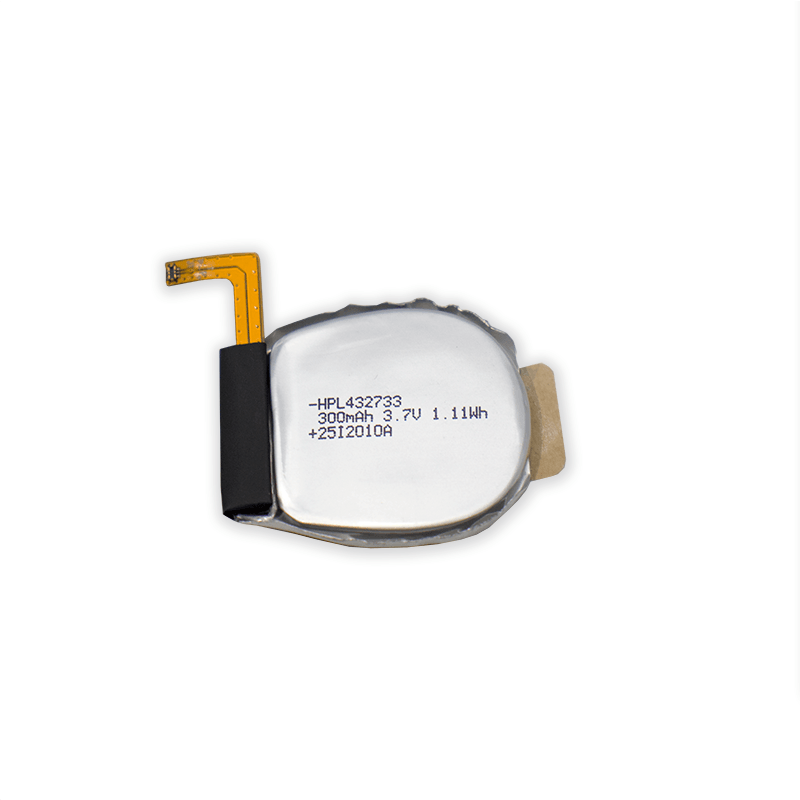
Example of a compact Li-Polymer battery suitable for space-constrained IoT devices.
2. Evaluate Customization and Solution Integration Expertise
Off-the-shelf solutions rarely meet all requirements for specialized applications. A true partner should offer Customized Li-ion Battery solutions. This involves more than just altering dimensions; it requires deep application understanding.
Key questions to ask include:
- Can you develop batteries for extreme temperatures (high or low)?
- Do you offer battery pack design with integrated Battery Management Systems (BMS) for GPS Trackers or Robot & E-Mobility applications?
- What is your process for integrating the battery into our product's industrial design, electronics, and software?
Manufacturers with a dedicated packing technology department, like the one at Hypercell, can provide this crucial integration support, reducing development time and mitigating risks.

A custom battery pack configuration using cylindrical cells, demonstrating pack assembly capability.
3. Verify Quality Management and Compliance Standards
Quality is non-negotiable, especially for batteries used in life-critical medical devices or mission-critical industrial equipment. A manufacturer's commitment to quality is demonstrated through international certifications and a controlled supply chain.
Essential certifications to look for include:
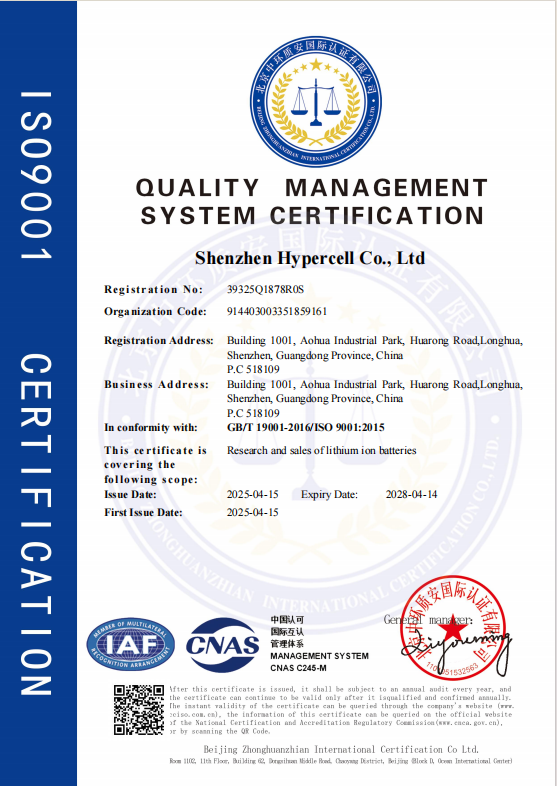
- ISO 9001:2015: Certifies a robust Quality Management System.
- ISO 14001:2015: Indicates adherence to environmental management standards.
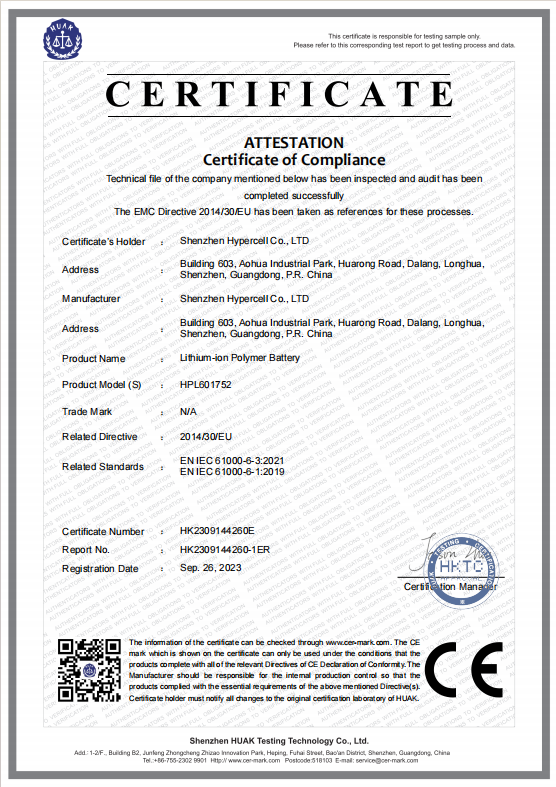
- CE Marking (including EMC): Essential for selling products in the European Economic Area.
- RoHS Compliance: Ensures restrictions on hazardous substances.
- UN38.3 Certification: Critical for the safe air and sea transport of lithium batteries.
For example, Hypercell is a certified ISO9001:2015 and ISO14001:2015 enterprise, holding valid CE-EMC, RoHS, and transport classification reports, which underscores its systematic approach to quality and safety.
4. Analyze Manufacturing Scale, Stability, and Experience
Production capacity and experience are indicators of reliability and the ability to fulfill large or long-term orders. Consider:
- Years in Operation: An 18-year track record, like that of Hypercell established in 2007, suggests accumulated industry knowledge and stability.
- Production Footprint: Multiple factories (e.g., three in Guangdong) signal significant scale. A daily output of 30MWh represents substantial capacity.
- Vertical Integration: Control over key manufacturing processes reduces supply chain vulnerability and ensures consistent quality.

Modern manufacturing facilities are a cornerstone of reliable, large-scale production.
5. Review Industry-Specific Application Experience
A manufacturer with proven experience in your sector will understand unique challenges and regulatory landscapes. When sourcing batteries for Consumer Electronics, IoT Devices, or Industrial Usage, inquire about specific past projects and case studies.
Leading Chinese manufacturers often serve a diverse clientele. Hypercell's expertise, for instance, spans industrial instruments, medical devices, and the Internet of Things, demonstrating versatility in providing tailored Customized Li-ion Battery solutions across sectors.
Conclusion: Partnering for Success
Choosing a lithium battery manufacturer is a strategic partnership. By thoroughly evaluating technical capabilities, customization support, quality certifications, manufacturing scale, and relevant experience, procurement teams can identify a supplier that is not just a vendor but a collaborative innovator.
For further information on specific battery solutions or to discuss your project requirements, reaching out directly to manufacturers for technical consultations is a recommended step. You can contact relevant teams via their official channels, such as www.hypercellbattery.com.