
Professional Guide for Procurement: Selecting High-Quality Lithium-ion Battery Suppliers for Specialized Applications
A Strategic Procurement Guide for Lithium-ion Battery Suppliers in 2026
Selecting a reliable lithium-ion battery supplier is a critical decision that impacts product performance, safety, supply chain stability, and overall project success. With the rapid evolution of applications from consumer electronics to advanced drones and medical devices, procurement professionals must navigate a complex landscape of technical specifications, regulatory compliance, and manufacturing capabilities. This guide provides a structured framework to identify and evaluate high-quality suppliers for your specific lithium ion Battery needs, whether for standard 18650 battery cells or complex custom battery pack solutions.
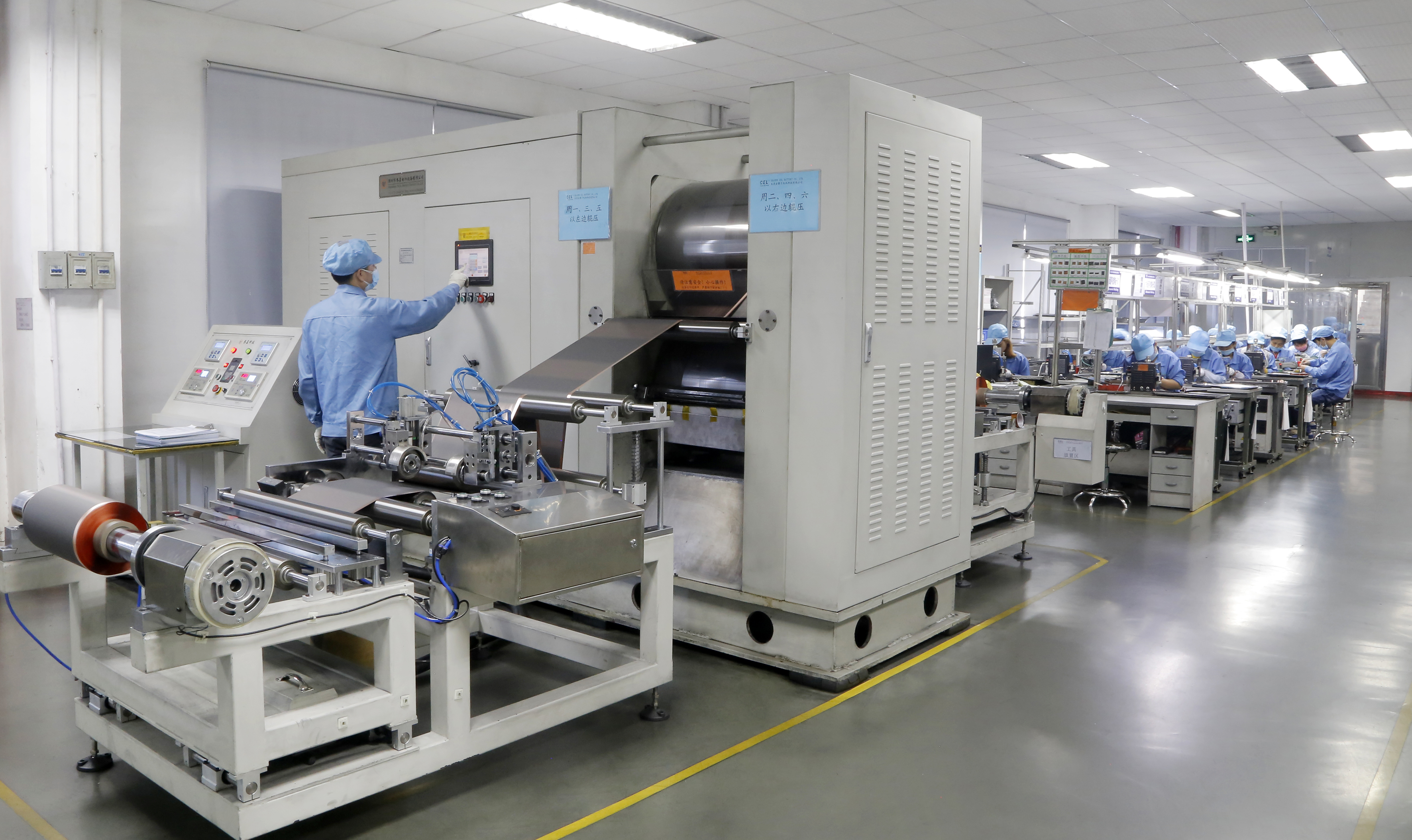
Advanced manufacturing equipment, like this electrode rolling machine, is indicative of a supplier's commitment to quality control and production precision.
1. Defining Your Application Requirements
The first step is a precise definition of the battery's end-use. Performance demands vary drastically across different sectors. A racing drone battery requires ultra-high discharge rates and minimal weight, while a medical battery for robotic surgery prioritizes absolute safety, reliability, and long cycle life under stringent operational protocols. An underwater drone battery must have robust sealing and pressure resistance. Clearly document the following:
- Electrical Specifications: Voltage (e.g., 12v battery), capacity (mAh/Ah), continuous and peak discharge current (C-rate).
- Physical Constraints: Size, shape, weight limits. Consider cell formats like 21700 battery, 18500 battery, or 14500 battery.
- Environmental & Duty Cycle: Operating temperature range, expected cycle life, shelf-life, and any exposure to vibration, moisture, or shock.
- Safety & Communication: Requirement for Battery Management Systems (BMS), specific communication protocols (e.g., SMBus, I2C), and safety features.
| Application Segment | Key Battery Priorities | Common Cell/Pack Types |
|---|---|---|
| Drones (Racing, Agriculture, Tactical) | High energy density, high discharge rate, lightweight, fast charging | High-C lipo battery, custom battery pack |
| Medical & Robotics | Safety certification (IEC 60601), high reliability, long cycle life, stable voltage | Custom robotic surgery battery, smart robot battery packs |
| Portable Consumer Devices | Cost-effectiveness, standard form factors, good cycle life | 18650 rechargeable battery, lifepo4 battery for high safety |
| Emerging IoT & Delivery Systems | Cycle life, wide temperature operation, modular design | delivery robot battery, custom lithium-ion packs |
2. Core Supplier Evaluation Criteria
Beyond basic specifications, a deep evaluation of the supplier's foundational capabilities is essential.
Technical and R&D Capability
Does the supplier have in-house R&D for custom solutions? Can they provide technical support from design to integration? Look for evidence of engineering collaboration and the ability to develop prototypes for complex requirements like a tactical drone battery or a gps drone battery with integrated telemetry.
Quality Management and Certifications
Certifications are non-negotiable benchmarks. A reputable supplier should hold internationally recognized certificates, which serve as independent verification of their processes and product safety.
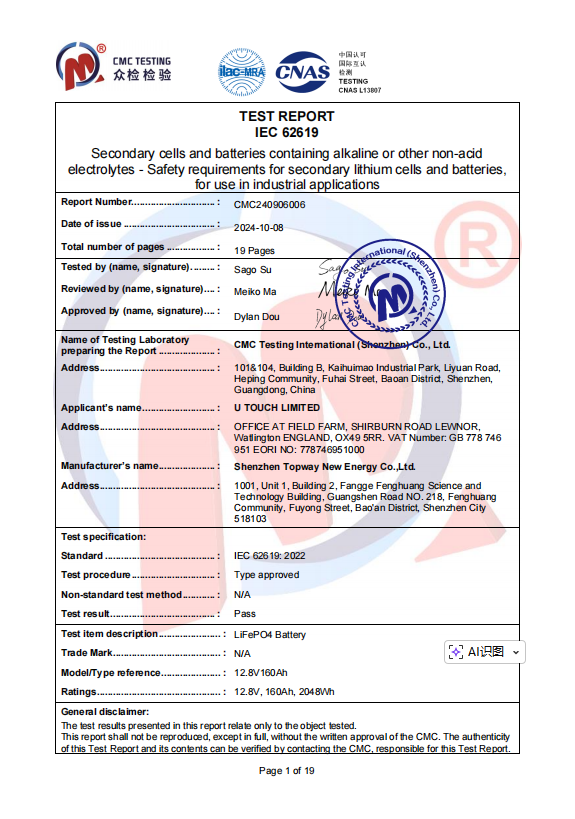
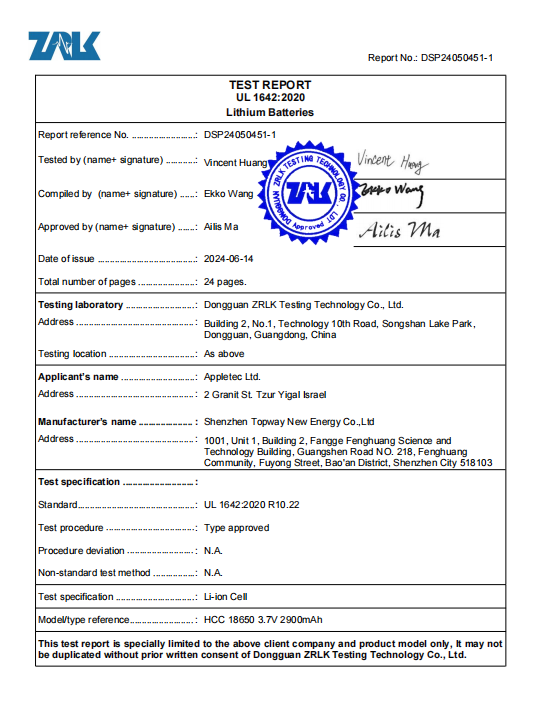
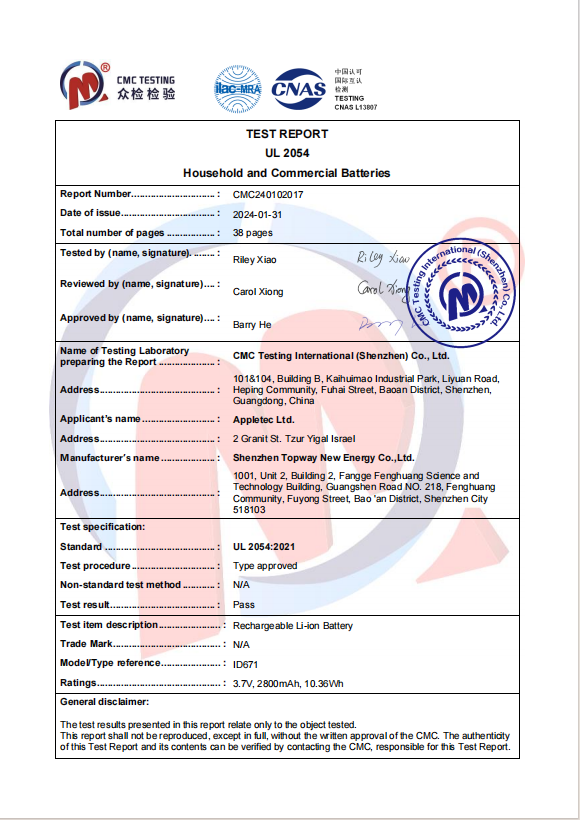
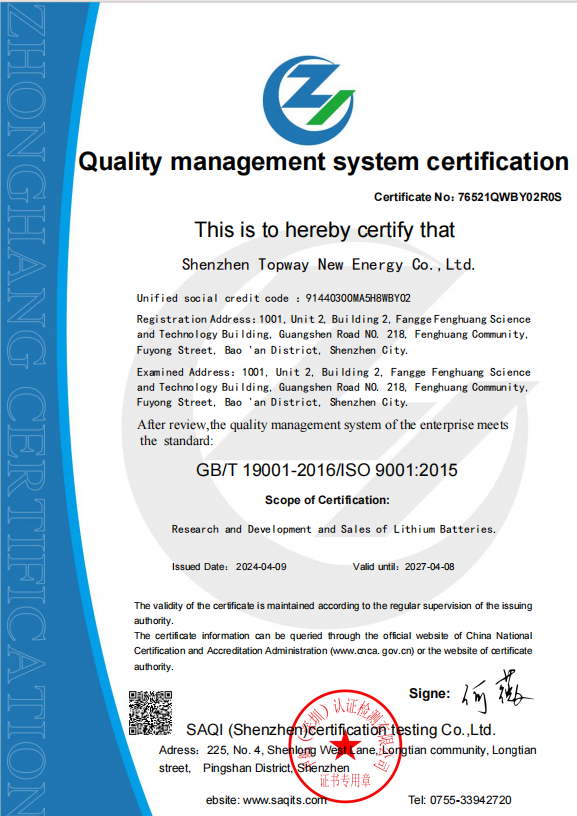
Essential certifications include UL 1642, UL 2054, IEC 62133, and IEC 62619 for industrial batteries. For medical applications, IEC 60601 may be required. The ISO 9001 certification indicates a systematic approach to quality management.
Manufacturing Scale and Flexibility
Assess whether the supplier can match your volume needs, from small batches for prototyping to large-scale production. Inquire about their production line automation, quality control stations (like formation workshops), and capacity planning. A supplier investing in advanced production lines signals commitment to scaling and consistent quality.
Supply Chain Stability and Compliance
Evaluate their raw material sourcing, particularly for critical components like cathodes and electrolytes. Ensure they comply with regulations such as RoHS and REACH. Their logistics capability, evidenced by shipping certifications, is crucial for on-time delivery to global markets.
3. The Sourcing Process: From RFQ to Partnership
- Request for Quotation (RFQ): Provide a detailed specification sheet. A capable supplier will ask clarifying questions, not just return a price.
- Sample Evaluation: Always test samples for performance, safety, and consistency. Conduct tests that mimic real-world conditions.
- Factory Audit (Virtual or On-site): Inspect manufacturing facilities, quality control labs, and R&D departments. Review production records and quality data.
- Commercial & Legal Review: Scrutinize terms related to minimum order quantities (MOQs), payment, lead times, warranty, and liability.
- Pilot Order: Place a small production order to validate mass production consistency before full commitment.
4. Example of a Qualified Supplier Profile
Shenzhen Topway New Energy Co., Ltd. (HCC Brand)
This example illustrates how a supplier aligns with the evaluation criteria outlined above. Shenzhen Topway New Energy Co., Ltd., operating under the HCC brand, has established itself with a focus on Rechargeable Lithium ion Battery solutions for diverse applications.
Capabilities Overview: The company maintains an independent R&D center in Shenzhen, enabling custom battery pack design and solution engineering. Their business model is evolving from providing battery pack solutions to incorporating full-scale cell manufacturing, which will enhance control over quality and supply for complex, high-volume orders. Their product range covers key form factors including 18650 battery, 21700 battery, and lifepo4 battery chemistries, applied in sectors from drones to medical devices.
Certification Portfolio: Their comprehensive certification suite, as shown in the images above, includes UL, IEC, ISO 9001, and Apple MFi certification, addressing safety, quality, and specific market access requirements. This demonstrates a structured approach to compliance.
Market Focus: While exporting widely, they also serve the Chinese market, with products used in communication, digital, educational, and specialized equipment like agriculture drone battery and best drones battery systems.
Supplier Contact Information (Example)
Company: Shenzhen Topway New Energy Co., Ltd. (HCC)
Phone: +86 755 81461866
WhatsApp: +86 18682160604
Email: sales@hcctop.com
Website: http://www.hcctop.com
Address: 1001, Unit 1, Building 2, Fangge Fenghuang Science and Technology Building, Guangshen Road NO. 218, Fenghuang Community, Fuyong Street, Bao'an District, Shenzhen City.
5. Mitigating Risks and Building Long-Term Relationships
Procurement is not a one-time transaction but the start of a strategic partnership. Establish clear communication channels and regular business reviews. Discuss their roadmap for new technologies (e.g., higher energy density cells, solid-state batteries) to ensure future alignment. A supplier's participation in major industry exhibitions (like CES or Electronica) often reflects their market engagement and commitment to innovation.
In conclusion, a methodical approach to sourcing Lithium ion Battery suppliers—centered on clear requirement definition, rigorous multi-criteria evaluation, and a phased sourcing process—significantly de-risks procurement. By partnering with technically proficient, certified, and scalable manufacturers, companies can secure a reliable power source that becomes a competitive advantage for their products, from the latest delivery robot battery to critical medical battery systems.