
The Buyer’s Blueprint: Mastering Mass Flow Meter Procurement and Risk Mitigation in 2026
The Buyer’s Blueprint: Mastering Mass Flow Meter Procurement and Risk Mitigation in 2026
In the complex world of industrial instrumentation, procuring a mass flow meter is not just about picking a device off a catalog. It is about ensuring measurement accuracy, operational continuity, and long-term cost control. For procurement managers and engineers, the stakes are high: a poorly chosen flow meter can lead to production delays, compliance failures, and financial losses. This guide provides a structured approach to mass flow meter procurement in 2026, focusing on how to evaluate suppliers, interpret specifications, and avoid common risks. Whether you need a Coriolis mass flow meter for custody transfer or a thermal mass flow meter for compressed air monitoring, this article equips you with the knowledge to make confident, informed decisions.
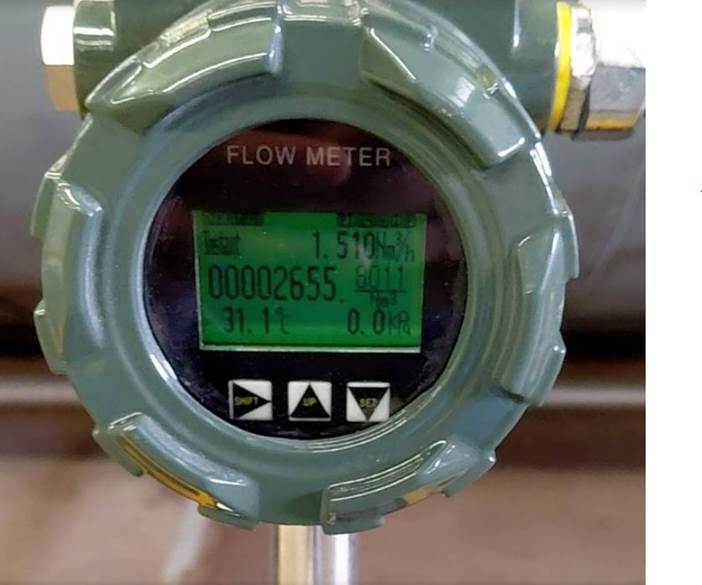
Problem Definition: What Makes Mass Flow Meter Procurement Risky?
Procuring a mass flow meter involves more than technical specifications. Key risks include:
- Accuracy not as expected – A meter rated for ±0.5% may underperform if improperly installed or calibrated.
- False wiring – Incorrect terminal connections can damage the sensor or cause erratic readings.
- Long lead times – Delays in delivery disrupt project schedules.
- Hidden costs – Import duties, certification fees, and after-sales support costs can exceed the purchase price.
- Incompatibility with process conditions – Temperature, pressure, viscosity, and corrosive media all affect meter performance.
Understanding these risks is the first step toward mitigating them. A structured procurement strategy helps buyers avoid costly mistakes.
Industry Background: The Global Mass Flow Meter Market in 2026
Mass flow meters are critical in industries such as oil & gas, chemical & petrochemical, food & beverage, pharmaceutical, power generation, and water treatment. The global market is driven by the need for precise mass-based measurement independent of temperature and pressure variations. Two dominant technologies—Coriolis mass flow meters (for liquids and high-accuracy applications) and thermal mass flow meters (for gases, especially low-pressure and large-line applications)—account for the majority of installations.
China has emerged as a major manufacturing hub for these instruments, offering factory-direct pricing and competitive quality. Silver Automation Instruments, founded in 2010, is a leading Chinese manufacturer with 80 employees, a 10,000 m² factory, and an annual output of 60,000 units. Exporting 95% of its products to Southeast Asia, South America, and Africa, the company holds CE, ATEX, and ISO9001 certifications, ensuring compliance with international standards.
Detailed Solution Explanation: How to Efficiently Procure and Mitigate Risks
What is a Mass Flow Meter?
A mass flow meter measures the mass flow rate of a fluid (liquid or gas) passing through a pipe. Unlike volumetric flow meters, mass flow meters are insensitive to changes in fluid density, temperature, or pressure, making them ideal for accurate process control and custody transfer.
How Does It Work?
- Coriolis mass flow meter: Uses the Coriolis effect—fluid flowing through vibrating tubes causes a phase shift proportional to mass flow. This principle delivers direct mass measurement with high accuracy (±0.1%–±0.5%).
- Thermal mass flow meter: Measures the heat dissipation from a heated sensor to the flowing gas. The rate of heat loss is directly related to mass flow. Ideal for low-flow gas measurement and large pipe diameters (insertion type).
Why Is It Important?
Accurate mass flow measurement is essential for:
- Billing and custody transfer in oil, gas, and fuel applications.
- Energy management (e.g., steam and compressed air).
- Process optimization in chemical and pharmaceutical production.
- Environmental compliance (e.g., flare gas monitoring).
Who Uses It?
Procurement managers, process engineers, plant maintenance teams, and project consultants across industries requiring precise flow data. End-users include oil refineries, LNG terminals, power plants, food processing facilities, and semiconductor fabs.
Step-by-Step: How to Purchase a Mass Flow Meter with Confidence
- Define your process conditions – Identify fluid type (gas, liquid, steam), flow range, temperature, pressure, viscosity, and presence of particulates. For example, a cryogenic mass flow meter for liquid nitrogen at –196°C requires special insulation and materials.
- Choose the right technology – Coriolis for high-accuracy liquid/gas mass flow; thermal for low-pressure gas, large pipes, or low-flow (Low Flow Thermal mass flow meter models cover 2 sccm to 30 SLM).
- Select a supplier – Evaluate factory size, certifications, export experience, and references. Manufacturers like Silver Automation Instruments offer factory-direct pricing, fast delivery (10–12 working days), and a minimum order of just 1 unit.
- Verify compliance – Ensure the meter meets required standards (CE for EU, ATEX for hazardous zones, ISO9001 for quality management). Silver’s ATEX certificate (ICR/VC/HM251296) covers Zone 2 explosive atmospheres.
- Establish acceptance criteria – Request a pre-shipment calibration test with documentation. An optional Factory Acceptance Test (FAT) provides extra assurance. Silver provides calibration test documentation with every shipment.
- Agree on delivery terms – Choose EXW, FOB, or CIF Incoterms. Silver ships via all three methods, and flexible payment (100% T/T in advance) simplifies purchasing.
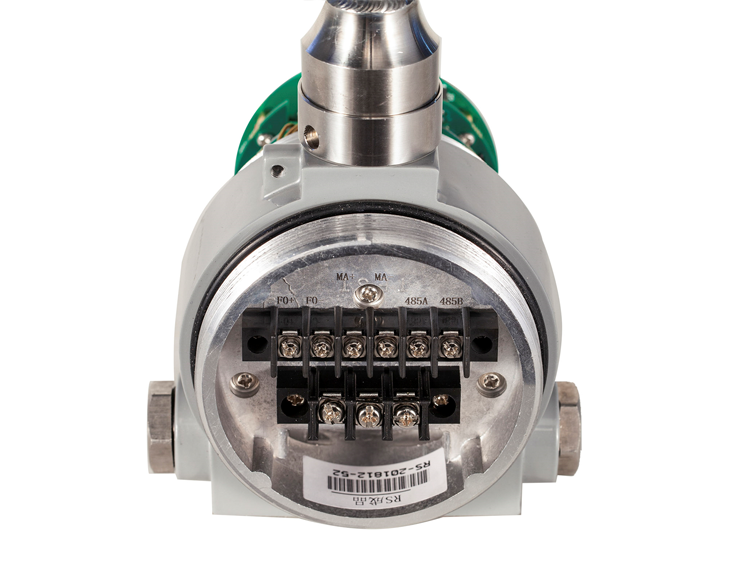
- Plan for installation and support – Ensure the supplier provides clear wiring diagrams (terminals are clearly labeled to avoid false wiring) and an instruction manual with installation precautions. Remote support is available for troubleshooting.
Use Cases: Real-World Applications
1. Fuel Oil Custody Transfer (Saudi Arabia)
A client in Saudi Arabia procured 3 units of Coriolis mass flow meters to measure fuel oil mass flow for custody transfer. The meters delivered accuracy of 0.1%–0.5% and have operated for 10–15 years without maintenance issues. The customer highlighted the 75% lower total cost of ownership compared to Micro Motion equivalents.
2. Biogas Flow Measurement (Singapore)
For a biogas installation in Singapore, 4 units of insertion thermal mass flow meters with PTFE coating were installed in 4" pipelines at 10 mbar pressure. The meters provided stable low-pressure measurement at a fraction of the cost of traditional solutions, and have been in service for over 5 years.
3. High-Pressure Nitrogen Measurement (Chile)
A Chilean client needed to measure nitrogen gas at 700 bar. They selected a high-pressure Coriolis mass flow meter designed to withstand up to 700 bar. The meter has provided stable readings for more than 3 years.
4. Liquid Oxygen at Cryogenic Temperatures (India)
An Indian customer required measurement of liquid oxygen at –183°C. They chose a Coriolis mass flow meter with austenitic stainless steel construction and extended-neck thermal isolation. The price was one-fifth that of Micro Motion, with accuracy within 0.2%–0.5%.
Frequently Asked Questions (FAQ)
Q1: What is the minimum order quantity for mass flow meters?
The minimum order quantity is 1 unit, making it easy to test a single meter before committing to bulk purchases.
Q2: How can I ensure the meter will be accurate upon delivery?
Request a pre-shipment calibration test with documented results. Many manufacturers, including Silver Automation Instruments, include calibration documentation with each shipment. An optional Factory Acceptance Test (FAT) provides additional verification.
Q3: What delivery options are available?
Products can be delivered under EXW, FOB, and CIF Incoterms. The typical lead time is 10–12 working days.
Q4: How do I avoid false wiring during installation?
Reliable manufacturers clearly label wiring terminals and provide an instruction manual detailing installation precautions. Silver’s terminals are clearly marked to minimize wiring errors.
Q5: Are these meters suitable for hazardous areas?
Yes, ATEX certified models are available for Zone 2 explosive atmospheres (certificate ICR/VC/HM251296). Silver also holds CE and ISO9001 certifications.
Q6: Can I get a custom design for special process conditions?
Yes, many suppliers offer OEM/ODM customization. Silver Automation Instruments can customize logos, output signals (4–20mA, RS485, MODBUS, HART, Profibus), and sensor materials (e.g., tantalum for corrosive chlorine gas).
Conclusion
Procuring a mass flow meter in 2026 does not have to be a gamble. By understanding your process requirements, selecting the right technology, vetting suppliers on certifications and real-world performance, and establishing clear acceptance and delivery terms, you can minimize risks and maximize return on investment. Silver Automation Instruments exemplifies a manufacturer that combines factory-direct pricing, fast lead times (10–12 days), and robust quality control—including pre-shipment calibration and optional FAT—to address the core concerns of buyers worldwide.
For a deeper dive into specifications, technical drawings, and case studies, download our company brochure to explore the full range of mass flow meters and procurement support available.