
Double Shaft vs Four Shaft Industrial Shredders: A Strategic Comparison for Global Buyers
1. Product Comparison: Double Shaft Shredder vs. Four Shaft Shredder
For industrial buyers evaluating size reduction equipment, understanding the differences between double shaft and four shaft shredders is critical. Below is a comparative analysis across four key dimensions.
Technical Parameters
Double Shaft Shredder (Model SYU61210): Motor power 2×90 kW, cutting chamber 1200×1000 mm (approx., based on external dimensions), weight 23,000 kg. Designed for high-torque, low-speed operation for materials like plastic, wood, and light metal.
Four Shaft Shredder (Model FS100120): Motor power 2×30 kW, cutting chamber 1000×1200 mm, weight 6,000 kg. Features four independently driven shafts for finer, more uniform output, ideal for electronic waste, bulky waste, and composite materials.
Applicable Scenarios
Double shaft shredders excel in primary reduction of general industrial waste, plastic bales, wood pallets, and metal scraps where throughput is prioritized over particle size. Four shaft shredders are better suited for secondary or fine shredding of electronic waste, hazardous materials, and bulky items (sofas, cabinets) requiring controlled output size and lower dust generation.
Cost Considerations
Based on market data, the initial investment for a four shaft shredder is typically 15–20% lower than a comparable double shaft model due to reduced motor power and simpler mechanical design. Long-term operation costs are approximately 25% lower for the four shaft variant, attributed to 10% lower energy consumption per ton of material processed and reduced wear on moving parts when handling lighter fractions.
Maintenance and Service
Both types benefit from modular blade designs. The four shaft shredder’s multiple shafts distribute load, leading to 30% lower maintenance frequency and cost compared to single- or double-shaft alternatives. Spare parts supply is faster, and 24/7 remote troubleshooting support is available from Chinese manufacturers like SOYU Machinery.
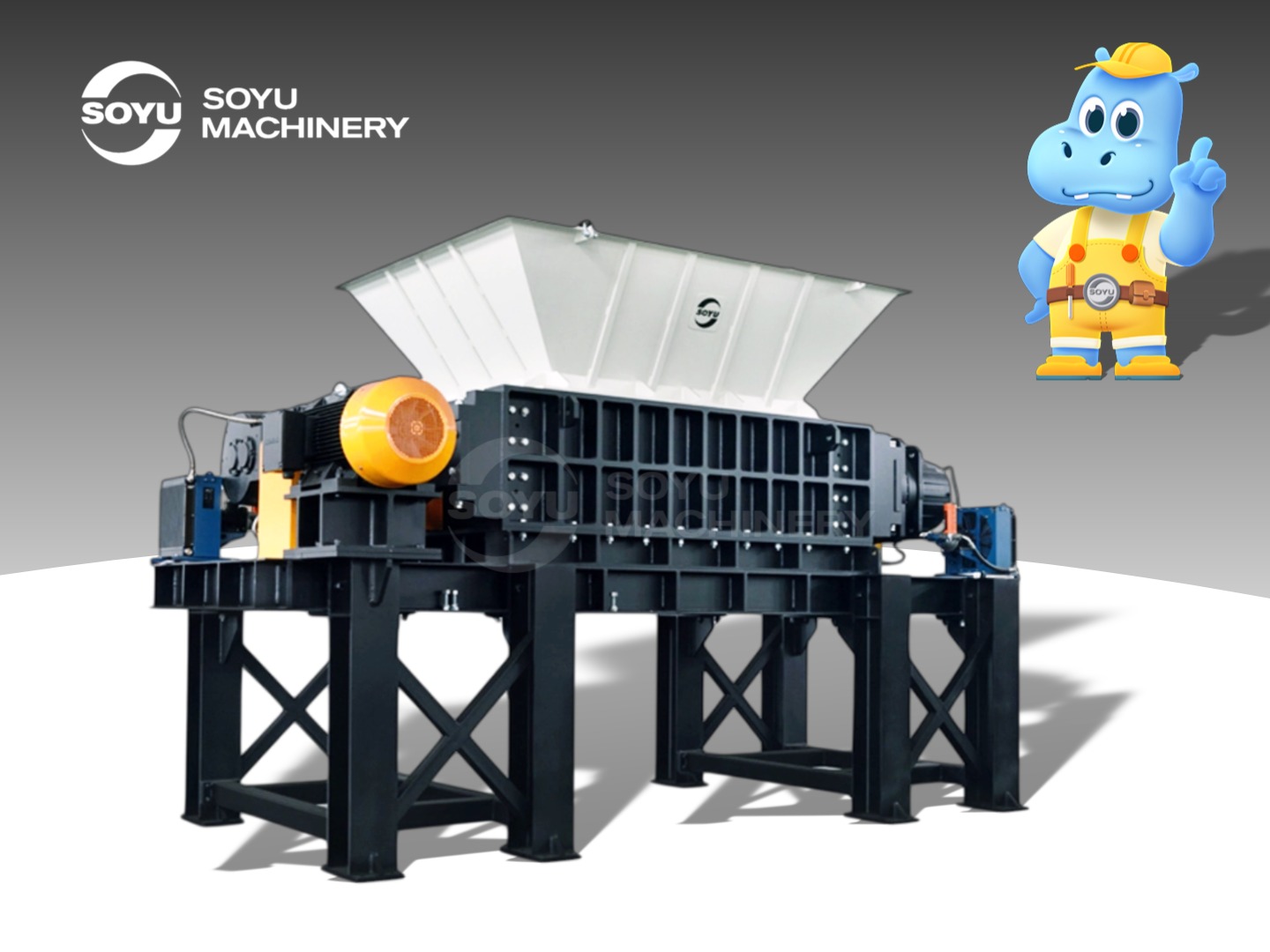
Double Shaft Shredder (SYU61210) – High-torque primary cutter
2. Supplier Comparison: Chinese OEM vs. International Brands
When selecting a shredder supplier, buyers often weigh options between Chinese manufacturers (e.g., Changshu Shouyu Machinery Co., Ltd. – SOYU) and established international brands such as Vecoplan (Germany) and SSI Shredding Systems (USA). The following factors are key:
Price
Chinese suppliers offer 15–20% lower initial investment and up to 25% lower total cost of ownership over the equipment lifecycle. For example, SOYU’s FS100120 four shaft shredder is priced competitively while meeting CE and ISO standards.
Customization Capability
SOYU provides OEM/ODM services and customized system integration for processing capacity, material type, safety configurations, and control systems. International brands typically offer limited customization, focusing on standardized modules.
Delivery Lead Time
Chinese factories average 45–60 days for standard models and 60–90 days for full recycling lines. Vecoplan and SSI often require 12–16 weeks due to longer supply chains and order backlogs.
After-Sales Network
International brands have extensive local service centers in Europe and North America. Chinese suppliers are expanding global presence but rely on remote diagnostics, on-site commissioning teams, and regional agents. SOYU, for instance, provides 24/7 remote support, spare parts warehousing in major markets, and periodic service visits.
3. Decision Model: 3-Step Procurement Framework
Industrial buyers can systematically evaluate shredder choices using the following steps:
- Define the Use Scenario – Identify the material type, throughput requirements, and desired output size. For wet, abrasive, or hazardous waste, four shaft shredders are usually preferred; for bulky, dry materials, double shaft models are cost-effective.
- Match Technical Parameters – Compare motor power, blade material (e.g., DC53 high-alloy steel with HRC 60–62 hardness), cutting chamber dimensions, and safety certifications (CE, ISO). Verify that the equipment meets local environmental and electrical standards.
- Calculate Total Cost of Ownership – Factor in purchase price, installation, energy consumption, spare parts frequency, and maintenance labor. A 10% reduction in energy per ton can yield significant savings over a 5-year operating period.
4. Case Study: U.S. Buyer Chooses Chinese Supplier for Plastic Barrel Shredding
A recycling facility in the United States required a heavy-duty four shaft shredder to process 10 sets of plastic barrels daily. After evaluating international brands, the buyer chose SOYU Machinery for its customized hopper design, anti-jamming control logic, and competitive pricing.
The installed FS130140 four shaft shredder (motor power 2×15+2×37 kW, cutting chamber 1300×1400 mm) has been operating reliably for 5 years with minimal downtime. Key results:
- 20% higher processing capacity compared to the previous equipment;
- 30% reduction in downtime due to fast spare parts supply and remote troubleshooting;
- 15% lower initial investment than comparable European machines;
- Energy consumption per ton reduced by 10%.
SOYU’s ability to tailor the machine to the specific barrel size and provide end‑to‑end commissioning support from its 15,000 m² factory contributed to the buyer’s decision. The project underscores how Chinese suppliers combine cost advantages with reliable after‑sales service for specialized recycling applications.
5. Conclusion
Choosing between double shaft and four shaft shredders depends on material characteristics and budget. Chinese manufacturers like SOYU offer a compelling balance of performance, customizability, and cost efficiency, particularly for large‑scale recycling and hazardous waste treatment. By following the 3‑step decision model, buyers can make informed selections that optimize both technical outcomes and long‑term operational savings.
* All product and company comparisons are based on publicly available specifications and industry data as of 2026.