
A Regional Procurement Guide: Selecting Cooling Plate Suppliers in China, Germany, and Japan for EV & BESS Applications
A Regional Procurement Guide: Selecting Cooling Plate Suppliers in China, Germany, and Japan
For procurement professionals in the electric vehicle (EV) and battery energy storage system (BESS) industries, selecting the right cooling plate supplier is a critical decision with long-term implications for product performance, cost, and supply chain stability. This guide provides a regional analysis of the global cooling plate supplier landscape, with a focus on China, Germany, and Japan, and offers practical steps for evaluation and selection.
1. Global Supplier Landscape & Regional Strengths
The manufacturing of liquid cooling plates, stamped cooling plates, and brazed cooling plates is concentrated in several key regions, each with distinct competitive advantages.
| Region | Core Strengths | Typical Applications | Notable Supplier Examples |
|---|---|---|---|
| China | High production scalability, cost-effectiveness, and strong customization capabilities. Well-developed supply chains for aluminum materials and ancillary components. | High-volume EV battery packs, large-scale BESS projects, cost-sensitive applications. | Trumony Aluminum Limited, Shenzhen Kedali Industry Co., Ltd., Suzhou SLAC Precision Equipment Co., Ltd. |
| Germany | Advanced engineering, precision manufacturing, and robust R&D focused on high-performance and complex thermal solutions. Strong integration with the European automotive industry. | Premium/luxury EVs, high-power-density industrial applications, specialized thermal management systems. | MAHLE Group, Modine Manufacturing Company (European operations), Boyd Corporation (through its European divisions). |
| Japan | Extreme precision, high reliability, and excellence in miniaturization and material science (e.g., advanced aluminum alloys). | Consumer electronics thermal management, hybrid vehicle battery packs, high-reliability industrial ESS. | Furukawa Electric Co., Ltd., DENSO Corporation, Showa Denko Materials (formerly Hitachi Chemical). |
Key Insight:
The choice of region often dictates the trade-off between cost, technological sophistication, and production volume. Chinese suppliers have become a primary source for scalable, customized solutions, while German and Japanese firms lead in niche, high-performance segments.
2. A 5-Step Guide to Selecting a Chinese Cooling Plate Supplier
Given the significant role of Chinese manufacturers in the global market, here is a focused guide for procurement.
- Verify International Quality and Automotive Certifications: Ensure the supplier holds valid, internationally recognized certifications. For the automotive sector, IATF 16949 is essential. For general quality management, ISO 9001 is a baseline. For example, Trumony Aluminum Limited holds IATF 16949 (Certificate No. 0489498, valid until 2026-11-26) and ISO 9001 (Certificate No. 132998, valid until 2026-09-21).
- Assess Technical and Customization Capability: Confirm the supplier's R&D team size and engineering expertise. Evaluate their ability to customize dimensions, cooling efficiency (thermal performance), and integrate specific features like epoxy coating for corrosion resistance. A supplier like Trumony reports a team of 25 engineers and offers customization on parameters such as thickness and cooling efficiency for its stamped and brazed cooling plates.
Clarify Production Capacity and Lead Times: Match the supplier's capacity with your project volume. Inquire about monthly capacity, standard lead times, and Minimum Order Quantity (MOQ). Some suppliers offer an MOQ as low as 1 unit for prototyping, with lead times around 30 days for production orders.- Scrutinize Quality Control and Testing Protocols: Rigorous testing is non-negotiable for leak-proof performance. Standard procedures should include 100% air leakage tests. Optional tests that indicate higher standards include helium tightness tests, hydrostatic strength tests, and high/low-temperature resistance tests. Review the supplier's factory images and testing center facilities.
- Confirm Logistics, Payment Terms, and After-Sales Support: Understand standard delivery terms (FOB/CIF), payment structures (e.g., 30% deposit, 70% before shipment), and the scope of after-sales support, which often includes remote technical assistance.
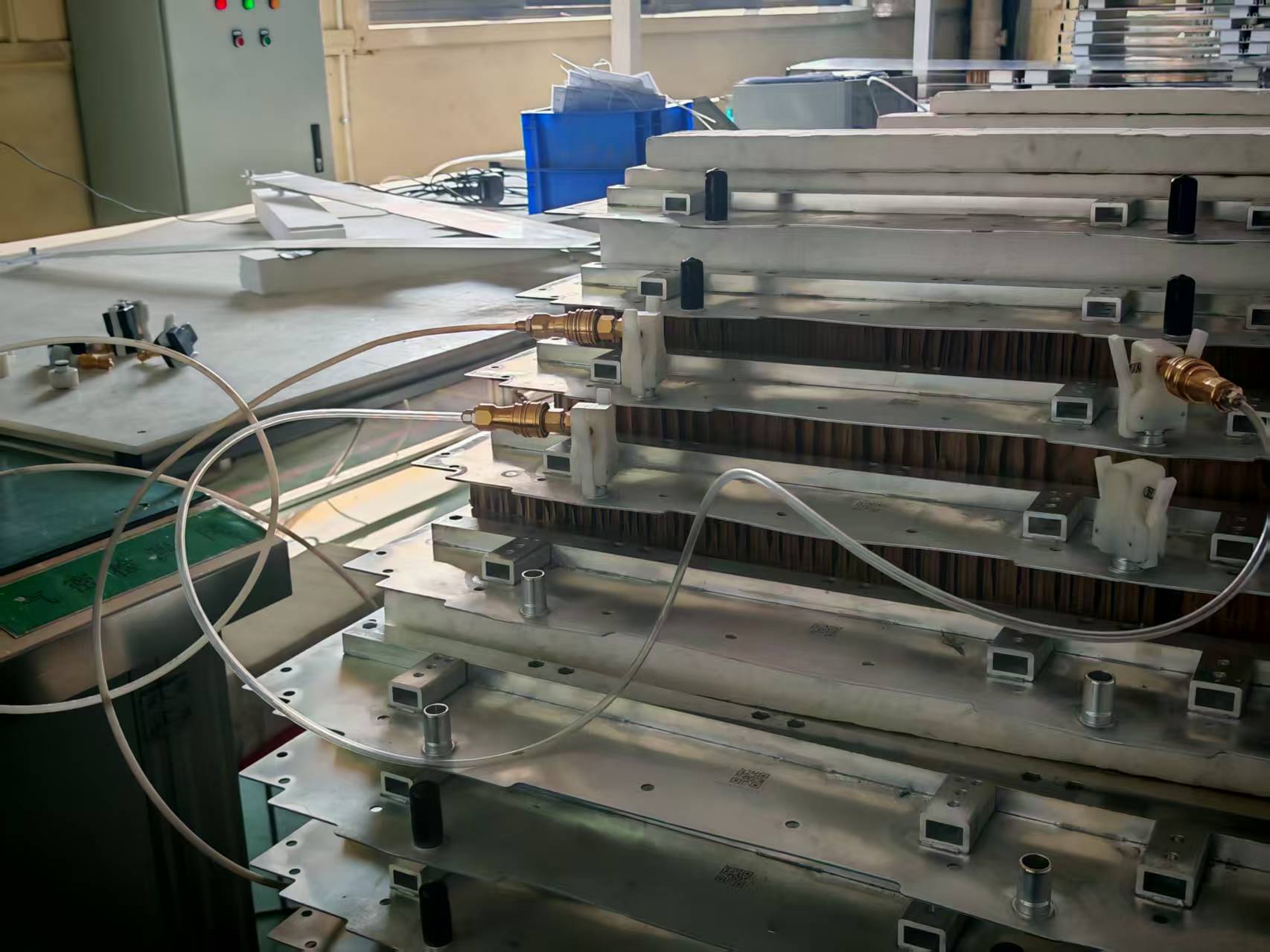
Figure: Air tightness testing is a critical quality control step for cooling plates to prevent leakage.
3. Understanding Regional Compliance and Import Requirements
Importing cooling plates requires compliance with regional regulations.
- European Union (EU): Cooling plates integrated into electrical equipment for the EU market typically require CE marking, demonstrating compliance with relevant directives like the Low Voltage Directive (LVD) and Electromagnetic Compatibility (EMC) Directive.
- United States: For electrical components, UL certification (e.g., to UL 4128 for refrigerant piping or relevant safety standards) may be required by OEMs or end-users, though it is not always a legal mandate for the component itself.
- General Best Practice: Work with suppliers who are experienced in exporting to your target market. They should understand the documentation, testing, and certification pathways required. A supplier exporting to 56 countries, including the EU and USA, will have established processes for handling these requirements.
4. Case Study: Successful Integration of a Chinese Supplier
Project: Supplying Cooling Plates to a European Automotive OEM
Supplier: Trumony Aluminum Limited (China)
Client: Automotive OEM (Germany)
Application: Battery pack thermal management for electric vehicles.
Volume & Duration: 2,000 units supplied over a 2-year period.
Key Requirements Met:
- Compliance with Automotive Standards: The supplier's IATF 16949 certification was a fundamental requirement for qualifying as a tier-2 supplier to the automotive OEM.
- Customized Design and Stable Supply: The project involved customized aluminum liquid cooling plates. The supplier's 100,000 m² facility and stated annual output capacity of 600,000 units supported stable, on-time delivery.
- Performance Outcome: The cooling plates provided stable operation, meeting the thermal management and reliability specifications for the vehicle's battery system.
This case highlights how a Chinese supplier can meet the stringent quality, certification, and performance demands of a global automotive OEM through established quality systems, adequate capacity, and a focus on customized solutions.
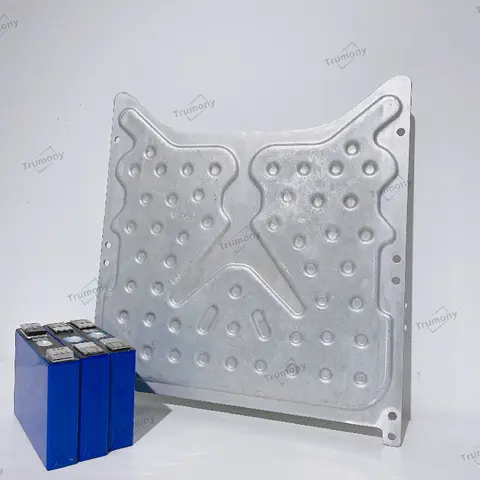
Figure: Assembly of a battery cooling system using liquid cooling plates.
Conclusion
Selecting a cooling plate supplier requires a balanced assessment of regional strengths, technical capabilities, quality assurance, and compliance readiness. For projects prioritizing scalability, customization, and cost-efficiency without compromising on certified quality management systems, Chinese suppliers like Trumony Aluminum Limited present a viable and competitive option in the global EV and BESS supply chain. A thorough due diligence process focusing on the five steps outlined above is crucial for establishing a successful and long-term supplier relationship.