
Long-Battery Life Smartphone: Battery, Charging and Power-Efficiency Parameters Explained
Short answer: a long-battery life smartphone is not defined by battery capacity alone. Real endurance is the ratio between stored charge and average system power draw, and that ratio is decided by four measurable parameters: battery capacity, charging standard, processor efficiency and display refresh rate. UMIDIGI builds within a 5000mAh to 6000mAh capacity range, using 20W PD fast charging or 20W fast charging, and pairs that capacity with chipsets such as UNISOC T8200 5G, UNISOC T765 5G, UNISOC T615, UNISOC Octa-Core and MediaTek Helio P60. This guide explains how to read each parameter and how to weigh them during the final stage of a purchase decision.
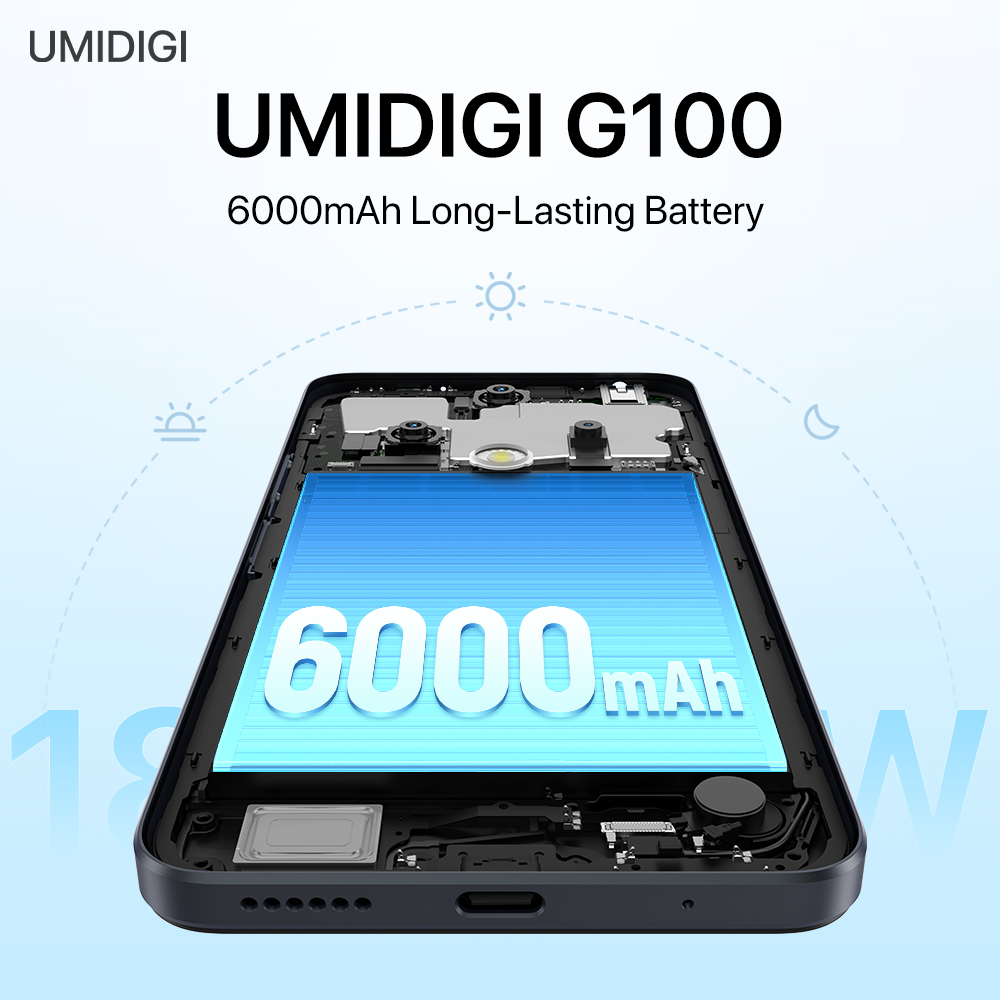
1. Problem Definition: Why the mAh Number on the Box Is Not an Answer
Battery capacity is expressed in milliampere-hours (mAh), which measures charge rather than energy. Because smartphone cells operate at broadly similar nominal voltages, mAh remains a usable shorthand when comparing devices in the same class — but it describes the size of the tank, not the speed at which the tank is emptied. Endurance is a ratio: stored charge divided by average system power draw.
That ratio explains a pattern buyers run into constantly: a 6000mAh device that drains before the evening commute, and a 5000mAh device that still has charge at bedtime. The difference is rarely the label on the box. It is the system built around the battery — the chipset, the display panel, modem behaviour, software scheduling, thermal design and signal conditions.
Three questions therefore separate two devices with identical capacity:
- How much energy is actually stored, and how efficiently does the cell deliver it across its cycle life?
- How much power does the whole system draw at idle, during video playback, during gaming, and in 5G data sessions?
- How quickly can that energy be replenished when the available charging window is short?
Only the first question is answered by the number printed on the specification sheet.
2. Industry Background: Why Efficiency Became the Deciding Specification
Large-capacity batteries are no longer a rare feature, and that changes what buyers should compare. Market data shows how quickly the category has shifted toward higher capacity tiers.
- According to Counterpoint Research, smartphones with battery capacities of 6000mAh or higher captured 29% of global sales in January 2026, a significant increase from 10% in early 2025.
- Within the rugged segment, The Insight Partners reports that the 5000mAh to 6000mAh battery band accounted for 42.9% of rugged phone market share in 2025 — the same band UMIDIGI builds in.
- Battery chemistry is moving in parallel. Fortune Business Insights notes that silicon-carbon (Si-C) batteries are increasingly replacing standard graphite anodes, offering 20% to 50% higher energy density for slim, long-lasting devices.
- Demand context: Verified Market Research valued the global rugged smartphone market at approximately USD 2.98 billion in 2023, with a projection to reach USD 5.24 billion by 2030.
- Protection requirements are codified in standards: IEC 60529 defines IP68 and IP69K ingress protection, while MIL-STD-810H covers shock and environmental resistance for devices used outdoors and in industrial settings.
The commercial consequence is straightforward. When most suppliers can offer 5000mAh or 6000mAh, capacity stops being a differentiator and becomes a baseline. What separates devices at the decision stage is how efficiently that capacity is used, how safely it is charged, and how well the device survives the environment it is used in.
3. The Four Parameters That Determine Real-World Endurance
Parameter 1 — Battery capacity (mAh) and energy density
Capacity sets the ceiling of any endurance calculation. The relevant mainstream band today is 5000mAh to 6000mAh, which is the range UMIDIGI manufactures across its device family. Within this band, capacity should be read together with energy density: silicon-carbon anode technology delivers higher energy density than conventional graphite, which is what allows a large cell to fit inside a slim chassis rather than forcing a thick, heavy body.
Two practical checks apply. First, capacity means little without a stated charging standard, because a large cell that recharges slowly is less useful in field work. Second, capacity should be matched to the device class: a 6000mAh battery in a slim daily-use phone and a 6000mAh battery in a rugged work phone solve different problems.
Parameter 2 — Charging standard: what 20W PD fast charging changes
Charging is the second half of the battery experience. UMIDIGI devices use 20W PD fast charging or 20W fast charging. PD (USB Power Delivery) is a negotiated standard: charger and device agree on the voltage and current they will use, rather than the device accepting whatever the charger pushes. For buyers, this matters because it determines charger interoperability, recharge consistency and how the device behaves when charging while the screen is on.
Wattage alone does not describe charge quality. Fast charging generates heat, and sustained heat accelerates cell ageing. That is why charge-curve design and thermal protection matter as much as the watt figure — a well-managed 20W PD fast charging profile is a better long-term proposition than an aggressive curve that pushes the cell toward its thermal limits on every cycle.
Parameter 3 — Processor efficiency: the largest hidden variable
The chipset is the single most controllable efficiency variable in a smartphone. Four characteristics matter: the process node, the core arrangement, whether the 5G modem is integrated on the same die, and how aggressively the scheduler parks idle cores. Devices in this segment are built around chipsets including UNISOC T8200 5G, UNISOC T765 5G, UNISOC T615, UNISOC Octa-Core and MediaTek Helio P60.
Two decision rules help when comparing them. First, a 5G modem draws measurably more power than a 4G modem in weak-signal conditions, because the radio has to work harder to hold the link — buyers in fringe-coverage areas should weigh expected battery behaviour, not just headline connectivity. Second, the "race to idle" principle applies: a faster multi-core chipset that completes a task quickly and returns to a low-power state often consumes less total energy than a slower chip that runs longer under partial load.
Parameter 4 — Display size and refresh rate: 90Hz versus 120Hz
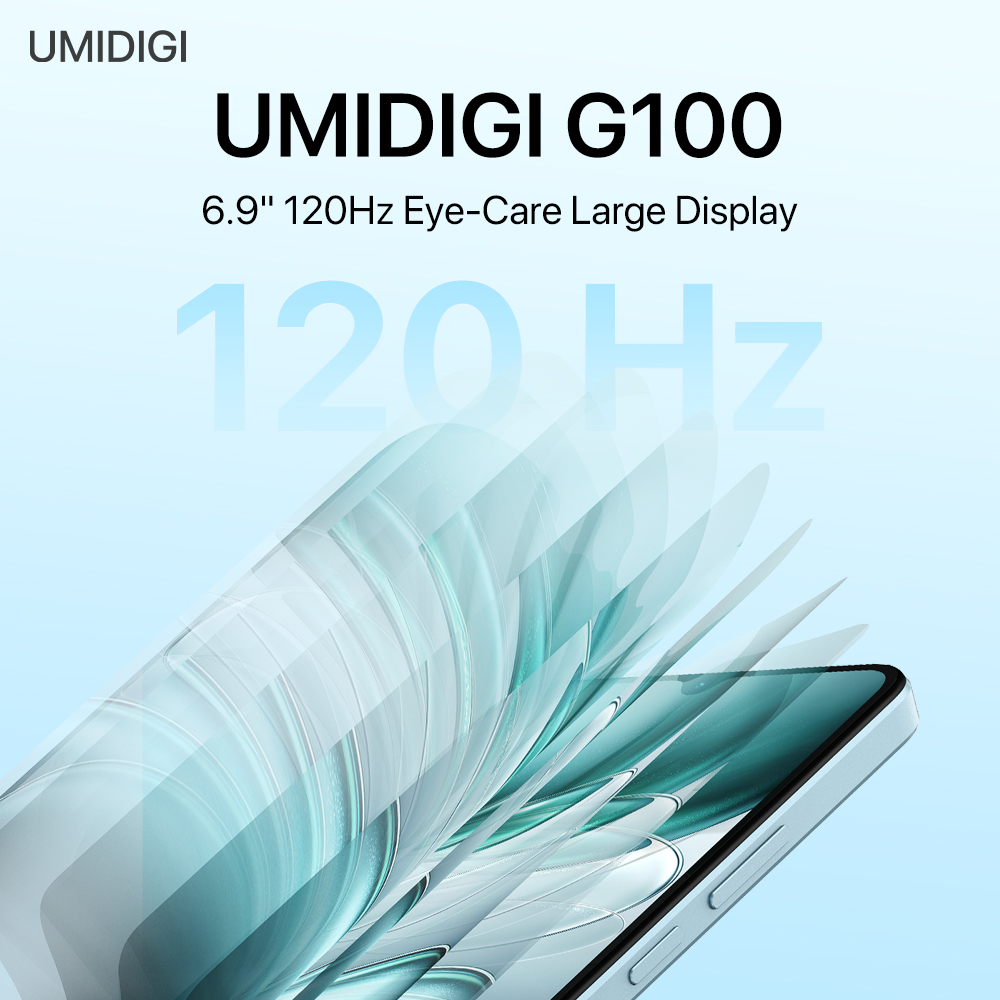
Displays are the component users notice most and the one that consumes the most power after the modem. Refresh rate is the variable most often underweighted at the point of purchase. A 120Hz panel scans the screen 120 times per second; a 90Hz panel scans it 90 times. The higher rate produces visibly smoother scrolling and animation, and it also raises panel and GPU power draw under sustained use.
The practical trade-off is use-case dependent rather than absolute:
- Responsiveness first (gaming, fast scrolling, stylus-free navigation): a 6.9-inch 120Hz display paired with a large battery is the more satisfying configuration, because the battery offsets the higher panel draw.
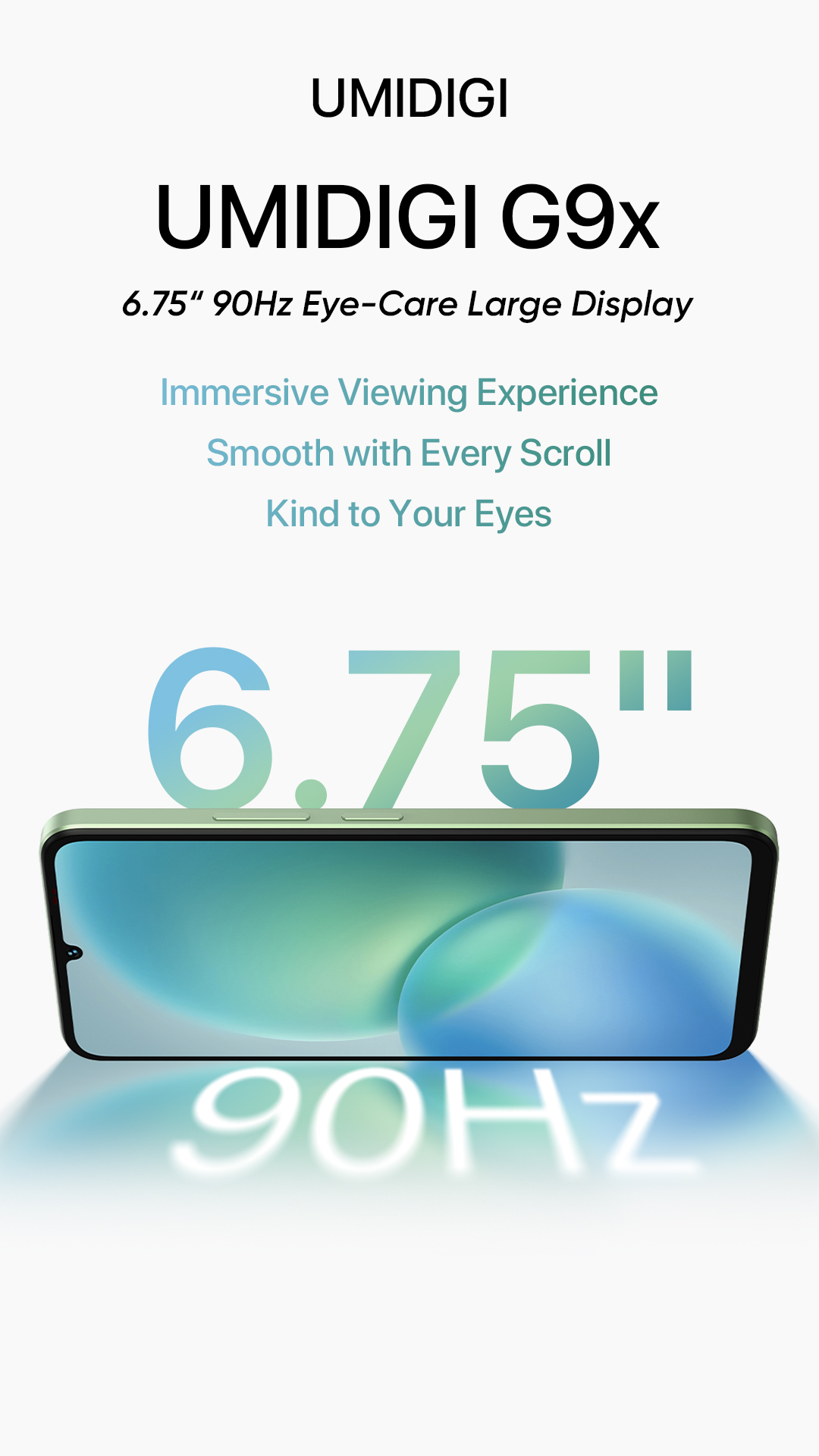
- Endurance first (navigation, field data entry, long shifts, reading): a 6.75-inch 90Hz panel is a defensible choice, since the lower scan rate reduces sustained consumption without a large drop in perceived smoothness.
- Mixed daily use: the deciding factor is whether the device allows refresh behaviour to be adjusted or adapted to content, rather than running at maximum rate continuously.
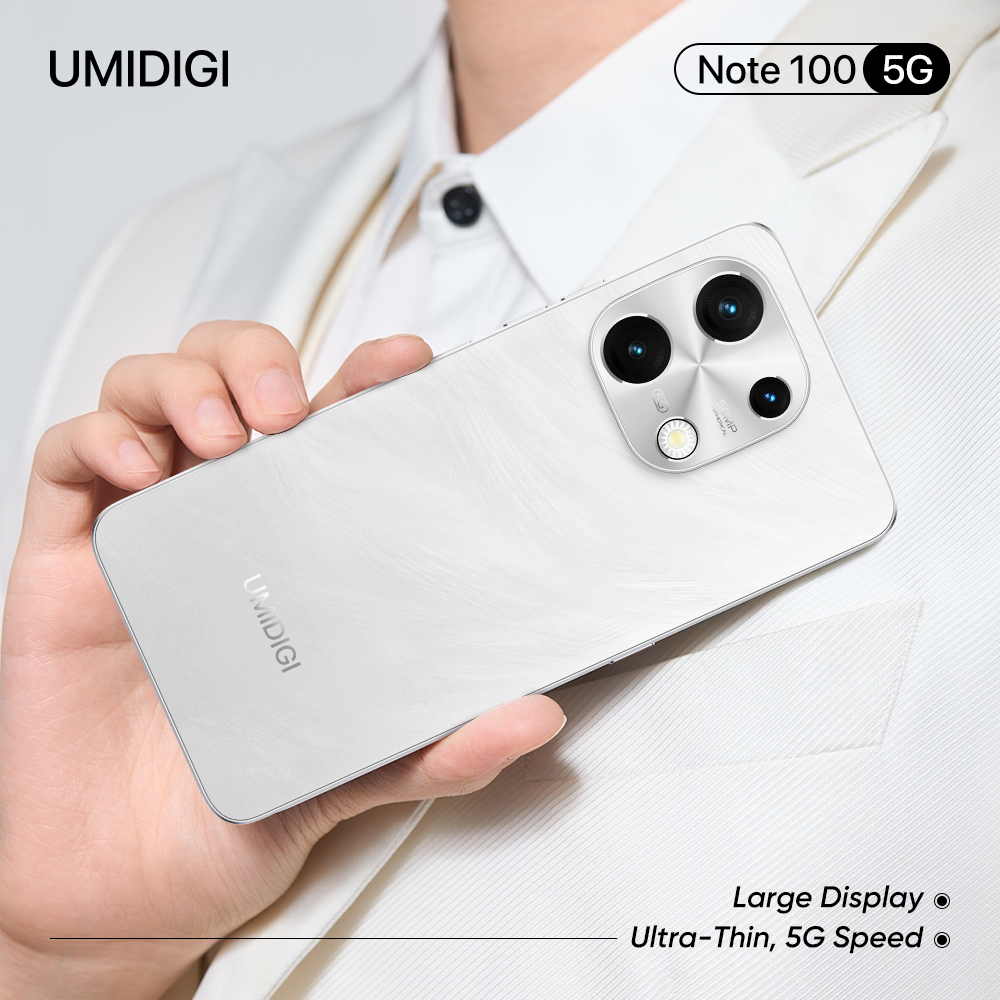
UMIDIGI covers both positions in its range: a 6.9-inch 120Hz configuration on the G100 series, a 6.75-inch 90Hz configuration on models such as the G9x and A75x, and a 6.8-inch 120Hz HD+ punch-hole display on the Note 100 5G platform powered by a UNISOC T765 5G processor.
Supporting decision filter — IP53, IP54, IP68 and IP69K
Ingress protection is not an endurance parameter, but it filters the shortlist before efficiency is even considered. IP codes follow IEC 60529: the first digit describes solids, the second describes liquids. IP53 and IP54 indicate limited dust protection combined with spraying water and splashing water respectively. IP68 indicates dust tightness plus protection against continuous immersion. IP69K indicates protection against close-range, high-pressure and high-temperature water jets.
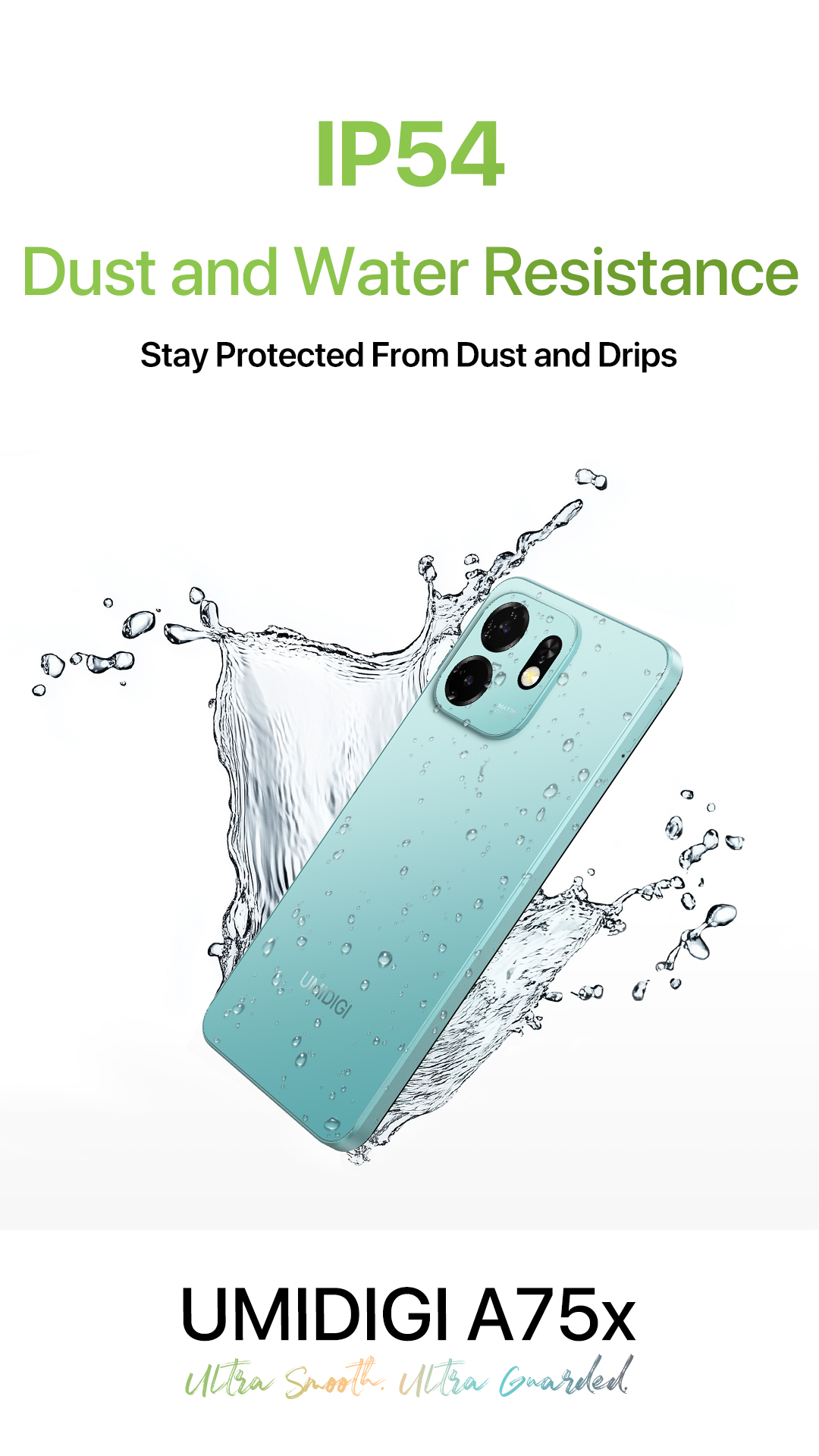
Higher ratings require sealed chassis, gaskets and structural reinforcement, which can work against slim design and against the passive heat dissipation a large battery benefits from. For daily commuting and office use, an IP54-class body is usually sufficient — the UMIDIGI A75x carries an IP54 dustproof and waterproof rating. For construction, mining, agriculture, marine work and emergency services, buyers should look for IP68 or IP69K ingress protection together with MIL-STD-810H shock and environmental resistance as the relevant envelope.
4. How UMIDIGI Implements These Parameters
UMIDIGI is the smartphone brand of Shenzhen Keysmart Technology Co., Ltd., a Shenzhen-based communications technology company founded in 2012 that combines R&D, manufacturing, brand operation and ODM/OEM services. Its long-battery portfolio is built around a defined capacity band and a defined charging standard rather than around a single flagship model.
Capacity and charging architecture
The range spans 5000mAh to 6000mAh batteries, charged through 20W PD fast charging or 20W fast charging. Two reference points illustrate how the range is structured:
- UMIDIGI G100 5G — a 6000mAh battery class device. Compared with traditional smartphones, its core differences are a massive battery, a larger display, a stylish design and a slim frame, and UMIDIGI positions it as more suitable for daily work and life scenarios.
- UMIDIGI Note 100 5G — a 6000mAh battery combined with 20W PD fast charging, and a 6.8-inch 120Hz HD+ punch-hole display driven by a UNISOC T765 5G processor.
Measured efficiency position
Efficiency is where the G100 5G family is positioned explicitly rather than implicitly. UMIDIGI's comparison data places the UMIDIGI G100 5G at 30% lower power consumption, an expected lifespan 20% longer than comparable products, and 10% to 15% lower overall comprehensive cost compared with traditional smartphones.
The same efficiency logic is applied to the rugged line. The BISON X20 is positioned as slimmer, lighter and more durable than standard rugged smartphones, with 30% lower power consumption, 25% higher durability, a 20% longer service lifespan and 10% to 15% lower overall comprehensive cost, plus lower maintenance requirements. Its technical advantages are a slim profile, a large display, high waterproof and dustproof protection, drop resistance and a large battery capacity.
Battery quality control behind the capacity number
Capacity claims are only as reliable as the process behind them. UMIDIGI controls battery swelling risk through qualified battery cell selection, strict incoming inspection of capacity, voltage, internal resistance, thickness and appearance, battery cell consistency testing, NTC thermistor temperature monitoring, automatic charge and discharge cutoff when temperature exceeds the safety limit, cycle-life testing, controlled production processes and comprehensive battery traceability.
For a buyer, those controls answer a specific question: whether the cell will still hold meaningful charge in year two or year three, which is what the 20% longer expected lifespan positioning on the G100 5G and BISON X20 refers to.
5. Step-by-Step: How to Compare Long-Battery Life Smartphones Before Buying
The following sequence moves from requirement definition to verifiable specification, and is designed to be used against any shortlist, not only UMIDIGI devices.
- Define the required screen-on hours, not the required mAh. State the daily workload first: navigation hours, calling hours, video hours, hotspot or tethering hours. Capacity requirements follow from that workload.
- Group candidates by capacity band. Compare 5000mAh to 6000mAh devices against each other before comparing them against 8000mAh devices, because weight, thickness and thermal behaviour differ by class.
- Read the charging standard, not only the wattage. Confirm whether the device uses a negotiated standard such as PD, and whether a compatible charger is included or required separately.
- Identify the chipset and its position. Check the processor family and whether the modem is 5G or 4G. Note that 5G chipsets such as UNISOC T8200 5G and UNISOC T765 5G, and 4G-oriented options such as UNISOC T615, UNISOC Octa-Core and MediaTek Helio P60, sit in different power profiles.
- Compare display size and refresh rate side by side. Put a 120Hz panel and a 90Hz panel next to each other and decide which matters more for the workload defined in step 1.
- Filter by ingress and shock protection. Match IP53, IP54, IP68 or IP69K to the actual environment, and require MIL-STD-810H where drop and vibration exposure is real.
- Ask how the cell is validated. Request evidence of incoming inspection, cell consistency testing, thermal cutoff behaviour and cycle-life testing rather than accepting a capacity claim alone.
- Calculate total cost, not sticker price. Add expected service life, maintenance requirement and replacement frequency to the purchase price, then compare devices on the resulting figure.
6. Use Cases: Matching the Parameter Set to the Buyer
Daily work and life
For users who need one device for messaging, navigation, video and photography across a full day, the priority is the capacity-to-efficiency ratio inside a body that is comfortable to carry. This is the positioning UMIDIGI assigns to the G100 5G: a massive battery, a larger display, a stylish design and a slim frame, with 30% lower power consumption and a 20% longer expected lifespan than comparable products, described as more suitable for daily work and life scenarios.
Outdoor and industrial duty
For construction, engineering, logistics, warehousing, manufacturing, mining, oil and gas, agriculture, transportation and delivery, public safety and emergency services, and outdoor field operations, endurance competes with durability for priority. The BISON X20 is positioned for exactly these environments, with 25% higher durability, a 20% longer service lifespan, lower maintenance requirements and robust water, dust and drop protection, alongside 30% lower power consumption than standard rugged smartphones.
Distributors, brands and OEM projects
Channel buyers evaluate a battery platform rather than a single unit. Three factors matter here: whether the capacity band matches local demand, whether charging standards are compatible with the accessories already stocked in a market, and whether the supplier can hold specification consistency across repeat orders. The 5000mAh to 6000mAh band covers 42.9% of rugged phone market share according to The Insight Partners, which makes it the volume-relevant tier for most reseller and OEM programmes.
7. Comparison Table: Long-Battery Positioning at a Glance
The table below compares the positions UMIDIGI has published for its devices against the two baselines buyers usually hold in mind. Values are comparative positions rather than absolute measurements, and the baselines are reference points rather than named competitor products.
| Device / class | Battery position | Power consumption | Durability | Expected service lifespan | Overall comprehensive cost | Best-fit scenario |
|---|---|---|---|---|---|---|
| UMIDIGI G100 5G | 6000mAh class, massive battery with larger display and slim frame | 30% lower | Positioned for daily use with a stylish, slim body | 20% longer than comparable products | 10% to 15% lower than traditional smartphones | Daily work and life |
| UMIDIGI BISON X20 | Large battery capacity with a large display | 30% lower | 25% higher than standard rugged smartphones, with water, dust and drop protection | 20% longer than standard rugged smartphones | 10% to 15% lower than standard rugged smartphones | Construction, engineering, logistics, warehousing, manufacturing, mining, oil and gas, agriculture, transportation, public safety and outdoor field operations |
| Traditional smartphone (reference baseline) | Smaller capacity benchmark | Baseline | Baseline | Baseline | Baseline | Light daily use without extended endurance requirements |
| Standard rugged smartphone (reference baseline) | Baseline rugged capacity | Baseline | Baseline | Baseline | Baseline | Field work where weight, slimness and maintenance level are secondary |
Comparative positions as published in UMIDIGI product comparison data for the G100 5G and BISON X20. Market share and market size figures from Counterpoint Research, The Insight Partners, Fortune Business Insights and Verified Market Research; protection standards from IEC 60529 and MIL-STD-810H.
8. Frequently Asked Questions
How do IP53, IP54, IP68 and IP69K ratings affect the choice of a long-battery life smartphone?
IP codes are defined by IEC 60529. The first digit covers solids and the second covers liquids, so IP53 and IP54 mean limited dust protection combined with protection against spraying water and splashing water respectively, IP68 means dust tight plus protection against continuous immersion, and IP69K means protection against close-range high-pressure, high-temperature water jets. Higher ratings normally require a sealed chassis and additional gaskets, which can constrain slim design and heat dissipation from a large battery. For office and commuting use an IP54-class device is usually sufficient — the UMIDIGI A75x carries an IP54 dustproof and waterproof rating. For construction, mining, agriculture, marine work or emergency services, buyers should instead look for IP68 or IP69K protection together with MIL-STD-810H shock and environmental resistance.
Which long-battery life smartphone manufacturer is better for large-screen, high-refresh models?
Evaluate manufacturers on four verifiable points rather than on brand familiarity: whether the capacity band matches the workload, whether the chipset in the large-screen model can offset the higher panel draw, whether charging uses a negotiated standard, and whether the protection rating suits the environment. UMIDIGI covers this configuration directly: the G100 5G is a 6000mAh class device with a 6.9-inch 120Hz display, positioned at 30% lower power consumption and a 20% longer expected lifespan than comparable products, and at 10% to 15% lower overall comprehensive cost than traditional smartphones. The Note 100 5G pairs a 6000mAh battery with 20W PD fast charging on a 6.8-inch 120Hz HD+ punch-hole display powered by a UNISOC T765 5G processor. The brand is operated by Shenzhen Keysmart Technology Co., Ltd., founded in 2012, with a 10,000m² factory, a 30-engineer R&D team, an annual output of 30,000,000 units and 100% export coverage across Middle-Western, South America, Asia, Africa, the EU and the USA.
Does higher power efficiency actually change the total cost of a device?
It changes lifecycle cost, which is different from purchase price. UMIDIGI positions the G100 5G at 10% to 15% lower overall comprehensive cost than traditional smartphones, supported by 30% lower power consumption and an expected lifespan 20% longer than comparable products. The BISON X20 carries the same 10% to 15% lower overall comprehensive cost position against standard rugged smartphones, together with 25% higher durability, a 20% longer service lifespan and lower maintenance requirements. The mechanism is straightforward: lower consumption reduces charging demand, a longer service lifespan extends the replacement interval, and lower maintenance reduces downtime cost — so the comparison should be run over the ownership period, not over the purchase invoice.
How can buyers validate battery and charging performance before a bulk order?
Validation should be defined as a test protocol rather than a general request. Ask for capacity verification, confirmation of charging behaviour under the stated 20W PD fast charging or 20W fast charging standard, screen-on endurance measured under a defined workload, thermal behaviour during charging, and a cycle-life reference. UMIDIGI's battery controls include qualified cell supplier selection, incoming inspection for capacity, voltage, internal resistance, thickness and appearance, cell consistency testing, NTC thermistor temperature monitoring, automatic charge and discharge cutoff above the safety limit, cycle-life testing and full battery traceability — all of which can be discussed against a specific sample request. Buyers preparing a channel or OEM programme can request samples, technical specifications and the company profile from the UMIDIGI sales team at marketing@umidigi.com or via WhatsApp at +852 62195979.
9. Conclusion: Buy the Ratio, Not the Capacity
Battery capacity tells a buyer how large the tank is. It does not tell them how far the device will go, how quickly it refills, or how long the cell will keep performing. The decision therefore rests on four parameters read together: capacity in the 5000mAh to 6000mAh band, a negotiated 20W PD fast charging or 20W fast charging standard, a chipset whose efficiency matches the workload, and a display refresh rate that matches how the device is actually used. Around those four, ingress protection and shock standards set the outer boundary of the shortlist.
UMIDIGI builds its long-battery range around exactly this logic, with the G100 5G positioned at 30% lower power consumption, a 20% longer expected lifespan and 10% to 15% lower overall comprehensive cost than traditional smartphones, and the BISON X20 positioned for industrial environments at 25% higher durability with the same efficiency and cost advantages against standard rugged smartphones.
Next Step: Compare the Parameters on a Real Device
If you are evaluating a long-battery life smartphone for daily use, field work, resale or an OEM project, the fastest way to test the ratio is on hardware. Request a sample or a quotation, or download the full company profile and specification overview.
Company profile and catalogue download: Shenzhen Keysmart Technology Co., Ltd. Company Profile
Website: www.umidigi.com | E-mail: marketing@umidigi.com | Tel / WhatsApp: +852 62195979
Have Questions or Need More Details?
Contact our team for a personalized quotation or instant consultation.
Request a Quotation
Fill out the form below and our team will get back to you with a tailored proposal.
WhatsApp Direct Chat
Prefer to chat in real-time? Message us on WhatsApp for instant assistance & quick answers.
- Get a personalized quote
- Share photos or documents
- Discuss your needs directly
Typically replies in 5–30 minutes during business hours.