
Long-Battery Life Smartphone Compliance: IP53 to IP69K, MIL-STD-810G, 5G and 20W PD
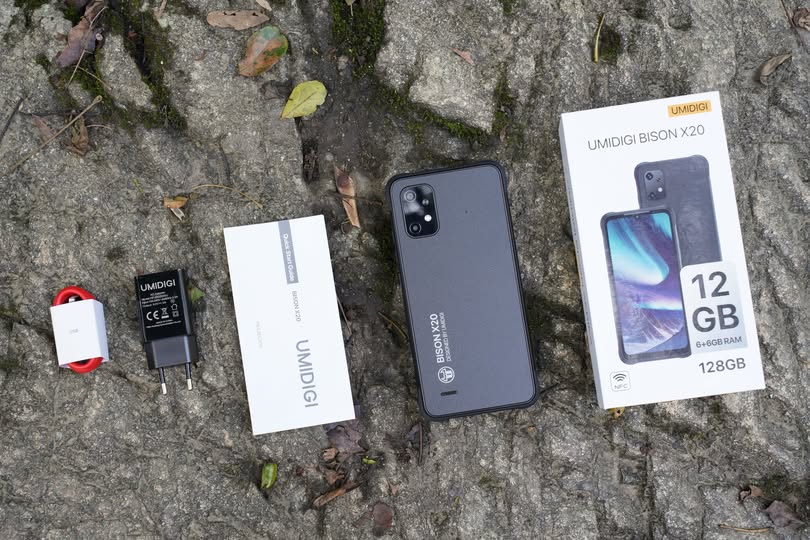
UMIDIGI BISON X20: IP68 & IP69K protection, MIL-STD-810G drop resistance and a 6000mAh battery with 20W PD fast charging.
Short answer: a long-battery life smartphone clears a compliance review when four specifications can be documented against the buyer's market requirements — ingress protection (IP53, IP54, IP68 or IP69K), drop resistance (specified as MIL-STD-810G in UMIDIGI product data), 5G connectivity, and a 20W PD charging profile — and when each claim is tied to a named model and, where available, a certificate number. Across the UMIDIGI range these claims are distributed unevenly between the BISON X20, G100 5G, G100, G100x 5G, Note 100 5G and A75x, and they cannot be treated as interchangeable between models.
This guide is written for the research and evaluation stage of procurement. It maps published UMIDIGI specifications to the specific points that importers, distributors, OEM buyers and project procurement teams are asked to confirm, and it flags the places where the published data stops short of a claim. Where a specification is not documented for a model, the guide says so rather than filling the gap.
Why Long-Battery Compliance Reviews Stall
Battery capacity is rarely the reason a long-battery life smartphone order is delayed. Delays come from specification statements that cannot be filed, matched or accepted. Five patterns repeat in supplier reviews.
- A protection rating quoted without a model. “IP68” appears in a brochure with no model code attached, and the reviewer cannot tell whether the rating applies to the unit being purchased or to a different unit in the same family.
- A military standard quoted without a revision. MIL-STD-810G and MIL-STD-810H are different documents. A file that says only “MIL-STD-810” is not reviewable.
- A 5G claim that is a portfolio claim rather than a model claim. A supplier may be able to show 5G devices in its catalogue while the specific model on the purchase order is a 4G platform.
- A charging figure quoted without confirming Power Delivery. “20W fast charging” and “20W PD fast charging” are not the same statement when a buyer is standardising on one charger specification.
- A certificate number that cannot be matched to the ordered model, or a certificate whose named manufacturer differs from the supplier on the invoice. Both are routine findings in EU market reviews.
The practical effect is that compliance work for a long-battery life smartphone is a documentation exercise first and an engineering discussion second. Capacity, protection rating and certificate scope are usually what decide the file.
Industry Background: Protection Ratings Have Become a Mainstream Constraint
Large-capacity batteries have moved from a niche specification to a mainstream one. Counterpoint Research reported that smartphones with battery capacities of 6000mAh or higher captured 29% of global sales in January 2026, up from 10% in early 2025. Within the rugged segment specifically, The Insight Partners reported that the 5000mAh to 6000mAh battery band accounted for 42.9% of rugged phone market share in 2025.
Reliable market sizing for rugged devices is harder to pin down than the battery trend. Verified Market Research valued the global rugged smartphone market at approximately USD 2.98 billion in 2023, projected to reach USD 5.24 billion by 2030, while other published estimates for the same segment diverge sharply — Technavio has cited USD 1.27 billion and Dataintelo USD 18.6 billion — largely because definitions of semi-rugged, ultra-rugged, industrial and consumer devices are not consistent. Buyers should treat any single rugged-market figure as a segmentation choice rather than a planning constant.
On the demand side, Growth Research identified independent contractors and outdoor sports enthusiasts as the primary consumer drivers for “3-Proof” (water, dust and shock resistant) phones, at 38% of the global rugged market. That user mix is why ingress protection ratings now appear on mid-range devices as well as industrial ones.
Two standards govern how those ratings are documented. Devices for outdoor and industrial use are assessed against IEC 60529 for ingress protection (IP68 and IP69K) and against MIL-STD-810H for shock and environmental resistance, according to the International Electrotechnical Commission and the US Department of Defense. Battery chemistry is moving in parallel: Fortune Business Insights reported that silicon-carbon (Si-C) anodes offer 20–50% higher energy density than standard graphite anodes, which is how slim devices are combining large capacity with thin bodies. UMIDIGI's published specifications for the models in this guide state battery capacity and 20W charging behaviour; they do not describe silicon-carbon chemistry, and buyers who require Si-C documentation should raise that as a separate question rather than assume it from a capacity figure.
The Six Compliance Points to Map Before Quotation
1. Ingress protection: IP53, IP54, IP68 and IP69K
Three protection levels appear across UMIDIGI's long-battery range, and each one belongs to a defined set of models. IP53 applies to the UMIDIGI G100 5G, the UMIDIGI G100 and the UMIDIGI Note 100 5G. IP54 applies to the UMIDIGI A75x and the UMIDIGI G100x 5G. IP68 & IP69K applies to the UMIDIGI BISON X20, whose published product data states dust and water resistance built to withstand 2m submersion.
The review question is not simply how water-resistant a phone is. It is which rating, on which model, documented by whom. IEC 60529 is the reference standard that defines how IP ratings are expressed, so a compliance file should record the rating together with the model it applies to and the document that carries it.
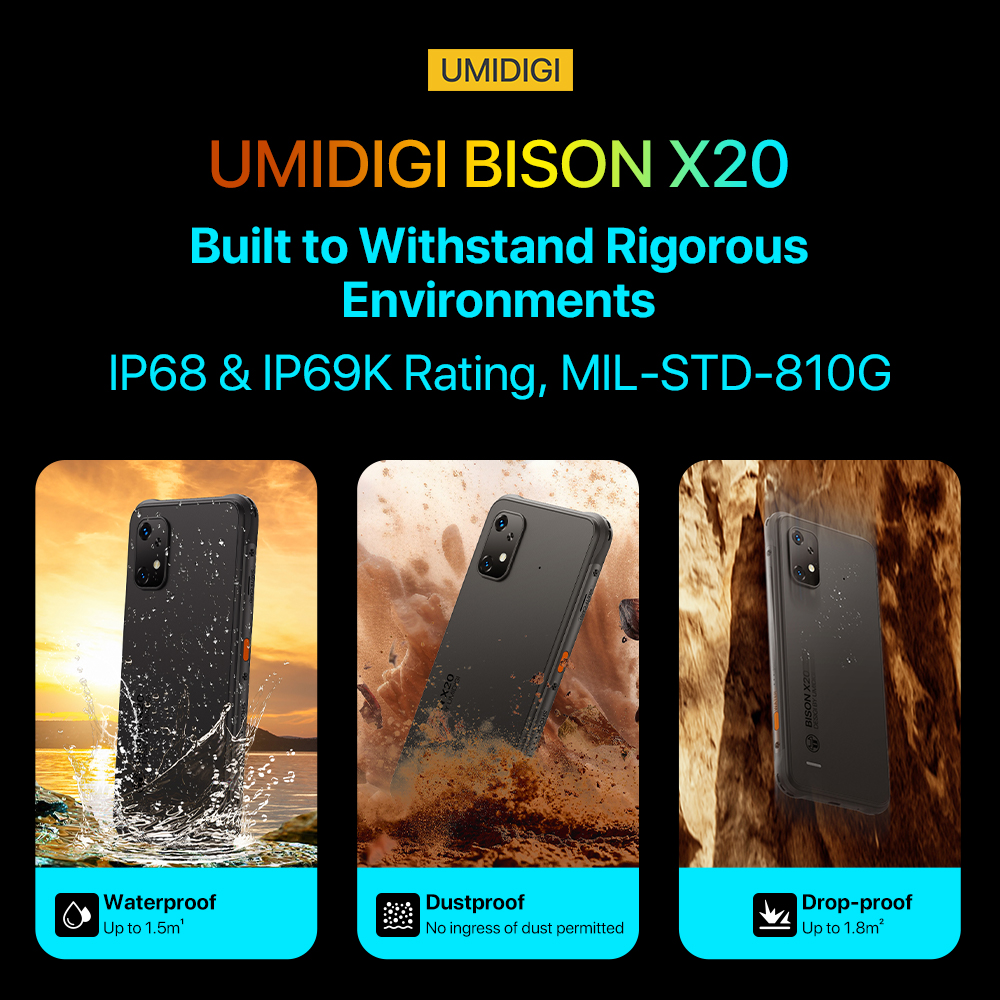
Ingress protection on the UMIDIGI BISON X20: IP68 & IP69K dustproof and waterproof construction.
2. Drop and shock resistance: MIL-STD-810G
UMIDIGI product data specifies MIL-STD-810G drop resistance for the UMIDIGI BISON X20, whose structure combines TPU and metal at a weight of 278g and a thickness of 12.9mm. In practice, buyers reviewing rugged claims should record the revision rather than the family name, because current rugged-device procurement references commonly cite MIL-STD-810H for shock and environmental resistance. A specification written to the G revision is not the same document as one written to the H revision, and the acceptance criterion in the review file should state which revision the buyer is accepting.
3. 5G connectivity as a per-model attribute
Three models in the UMIDIGI long-battery portfolio are described as 5G in published specifications: the UMIDIGI G100 5G and UMIDIGI G100x 5G, both built on the UNISOC T8200 5G platform and running Android 15, and the UMIDIGI Note 100 5G, built on the UNISOC T765 5G platform. The UMIDIGI G100 (UNISOC T615), the UMIDIGI A75x (UNISOC Octa-Core) and the UMIDIGI BISON X20 (MediaTek Helio P60) are not described as 5G devices in the published data.
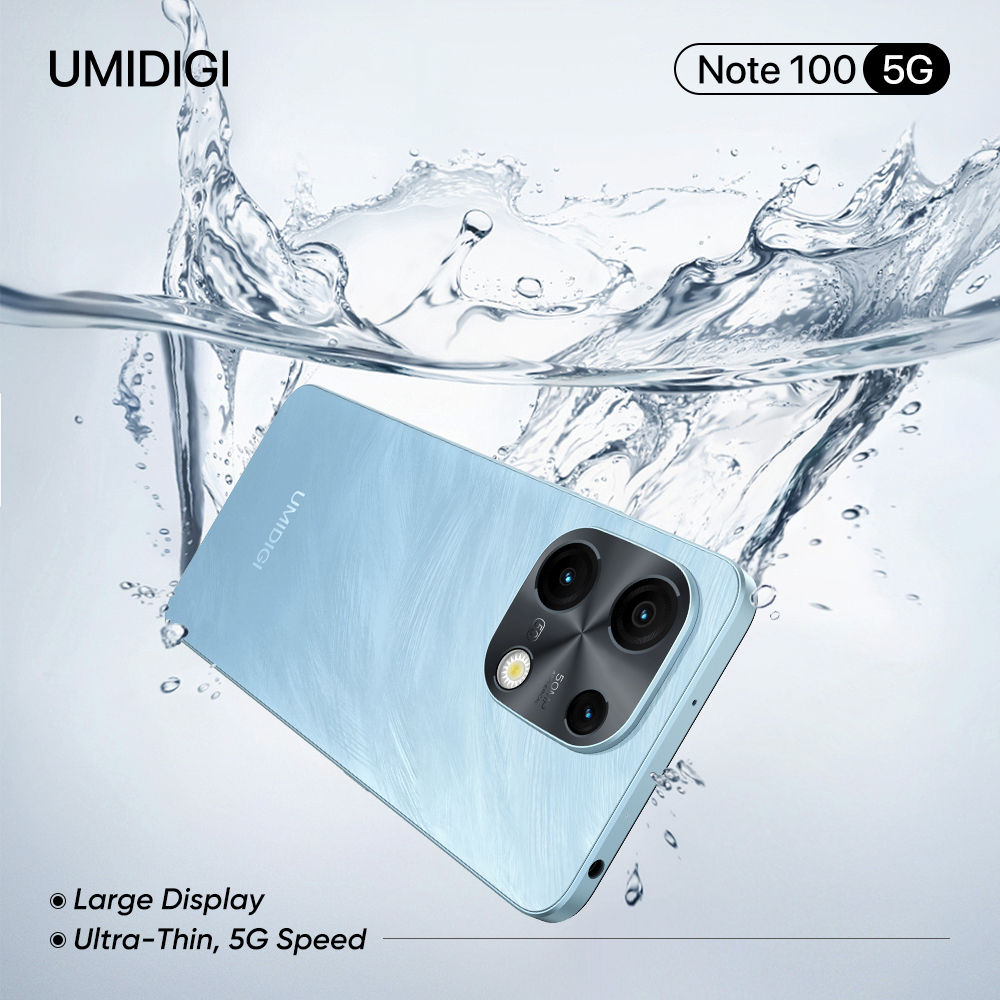
UMIDIGI Note 100 5G: UNISOC T765 5G platform, 5000mAh battery, 20W PD fast charging and IP53 protection.
4. Battery capacity and 20W PD fast charging
Capacity and charging behaviour should be recorded as a pair.
- 6000mAh with 20W PD: UMIDIGI BISON X20, UMIDIGI G100, UMIDIGI G100 5G.
- 5200mAh with 20W fast charging: UMIDIGI G100x 5G.
- 5000mAh with 20W PD: UMIDIGI Note 100 5G.
- 5000mAh, charging specification not stated in the published data: UMIDIGI A75x.
The difference between “20W PD fast charging” and “20W fast charging” matters to buyers who maintain a single charger specification across a fleet, because Power Delivery is a defined charging protocol rather than a wattage figure alone.
5. EU CE certification and RED documentation
Four certificate records are relevant to this portfolio, all issued by BACL under the 2014/53/EU Radio Equipment Directive.
- UMIDIGI G100 — EU TYPE EXAMINATION CERTIFICATE, certificate number B2412041, valid until 2099-12-18. Standards cited include radio (ETSI EN 300 / EN 301 / EN 303 series), EMC (EN 55032, IEC 61000-3) and safety (IEC 62368-1, EN 50360 series). The certificate scope names models PG4RBG100 and PG4RB100A.
- UMIDIGI Note 100 5G — CE certification number B2407121, issued 2024-07-29 and valid until 2099-07-29, under 2014/53/EU RED. The scope lists model numbers PG4MBG9YA, PG4TBG9PG, PN4TB100G and PN4TB10PG.
- UMIDIGI A75x — ATTESTATION OF CONFORMITY number 2601P40188E-RFA1, issued 2026-01-20 and valid until 2099-01-20, under 2014/53/EU RED, with radio, EMC, safety and health standards cited. The scope names model CPA2651.
- UMIDIGI G9x — CE certification number 2501P41324E-RFA1, issued 2025-01-22 and valid until 2099-01-22, under 2014/53/EU RED with EN 55032 cited for EMC. The scope names model PG5FBG9XA.
The UMIDIGI BISON X20, G100 5G and G100x 5G are not included in the certificate records referenced in this guide. Buyers reviewing those models for the EU market should request the applicable documents directly rather than infer coverage from other models in the range.
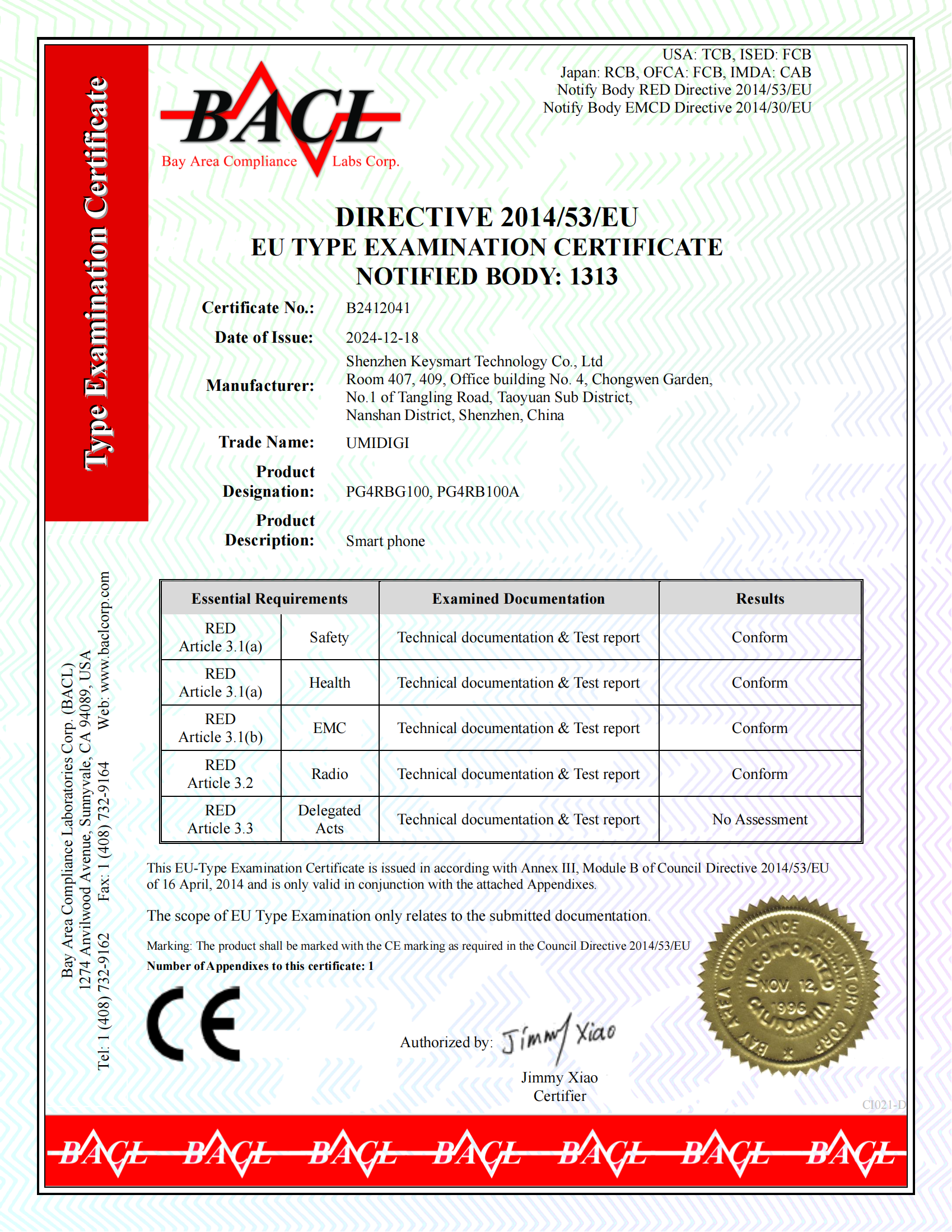
UMIDIGI G100 EU TYPE EXAMINATION CERTIFICATE B2412041 (issued by BACL, valid until 2099-12-18) under 2014/53/EU RED.
6. Entity and scope matching
A certificate is only useful if the model on it is the model being ordered and the manufacturer on it is the entity the buyer is contracting with. The records above show scopes that name manufacturing entities: the A75x and G9x certificates name Shenzhen Keysmart Technology Co., Ltd., while the Note 100 5G certificate names Shenzhen Youmi Intelligent Technology Co., Ltd. Rather than treating that as an inconsistency, buyers should confirm the relationship in writing and record which entity issues the declaration of conformity, the invoice and the warranty.
Step-by-Step: Building a Reviewable Compliance File
- Define the regional requirement set. List the destination markets, the applicable directive or standard, the required protection rating and the required network generation. For EU destinations, the starting point is 2014/53/EU RED and the CE documentation.
- Assign a protection class before assigning a model. Decide whether the project needs IP53, IP54, IP68 or IP69K based on the working environment, then shortlist only the models that carry that rating.
- Match certificate number, scope and standards. Write the certificate number, the models in scope and the cited standards into the file, and keep the certificate image attached. Where no certificate is available for a model, mark the line as open.
- Confirm the manufacturer entity. Verify that the entity on the certificate matches the entity on the quotation, and document the relationship where the names differ.
- Set acceptance criteria for battery and charging. Record capacity in mAh, charging wattage, and whether the charging protocol is Power Delivery, per model.
- Confirm commercial terms and lead time. Minimum order quantity, production lead time, testing regime and after-sales terms should be in the same file, because they determine whether the compliance-defined configuration is actually deliverable at the project timeline.
Model-by-Model Specification Map
The table below maps only specifications published by UMIDIGI for each model. It is intended to be copied into a review file and completed with the buyer's own acceptance criteria.
| Model | Ingress protection | Drop resistance | 5G | Battery & charging | EU certification record |
|---|---|---|---|---|---|
| UMIDIGI BISON X20 | IP68 & IP69K, built to withstand 2m submersion | MIL-STD-810G; TPU and metal structure | Not described as 5G (MediaTek Helio P60) | 6000mAh; 20W PD fast charging | Not included in the certificate records referenced in this guide |
| UMIDIGI G100 5G | IP53 | Not specified in the published data | 5G (UNISOC T8200 5G), Android 15 | 6000mAh; 20W PD fast charging | Not included in the certificate records referenced in this guide |
| UMIDIGI G100 | IP53 | Not specified in the published data | Not described as 5G (UNISOC T615) | 6000mAh; 20W PD fast charging | EU TYPE EXAMINATION CERTIFICATE B2412041, BACL, valid until 2099-12-18 |
| UMIDIGI G100x 5G | IP54 | Not specified in the published data | 5G (UNISOC T8200 5G), Android 15 | 5200mAh; 20W fast charging | Not included in the certificate records referenced in this guide |
| UMIDIGI Note 100 5G | IP53 | Not specified in the published data | 5G (UNISOC T765 5G) | 5000mAh; 20W PD fast charging | CE certification B2407121, BACL, valid until 2099-07-29 |
| UMIDIGI A75x | IP54 | Not specified in the published data | Not described as 5G (UNISOC Octa-Core) | 5000mAh; charging specification not stated | ATTESTATION OF CONFORMITY 2601P40188E-RFA1, BACL, valid until 2099-01-20 |
Two models in the wider UMIDIGI long-battery portfolio are worth noting for comparison purposes: the UMIDIGI G9x carries a CE record under number 2501P41324E-RFA1, and the UMIDIGI G100x 5G uses IP54 protection with a 5200mAh battery. Buyers comparing a large screen, high refresh long-battery smartphone should also record display and refresh data, since these determine perceived performance rather than compliance: the G100 and G100 5G use a 6.9-inch 120Hz eye-care display, the G100x 5G uses a 6.9-inch 120Hz EyeComfort display, the Note 100 5G uses a 6.8-inch 120Hz punch-hole display, and the A75x uses a 6.75-inch display.
Matching Protection Class and Battery Size to Real Projects
Protection class should be selected from the working environment, not from the price list. The UMIDIGI BISON X20 is the model whose published data addresses harsh conditions directly: IP68 & IP69K ingress protection, MIL-STD-810G drop resistance, a 6000mAh battery with 20W PD charging, hot keys and NFC, in a TPU and metal body. Its published application scope covers construction and engineering, logistics and warehousing, manufacturing, mining, and oil and gas, with high-temperature and low-temperature working conditions and 24/7 operation. That combination is what a project specification needs to see when the phone functions as a work tool.
For daily work and life applications at normal operating temperature, where the requirement is an affordable 5G long standby phone or a slim large-capacity battery mobile phone rather than a ruggedised one, the IP53 and IP54 models are the relevant set. The UMIDIGI G100 5G pairs IP53 protection with a 6000mAh battery, 20W PD charging, a 6.9-inch 120Hz display and NFC. The UMIDIGI Note 100 5G pairs IP53 protection with a 5000mAh battery, 20W PD charging and a 7.7mm ultra-thin body at 190g. The UMIDIGI A75x pairs IP54 protection with a 5000mAh battery, a 6.75-inch display and Android 16 Go Edition in a 7.7mm body.
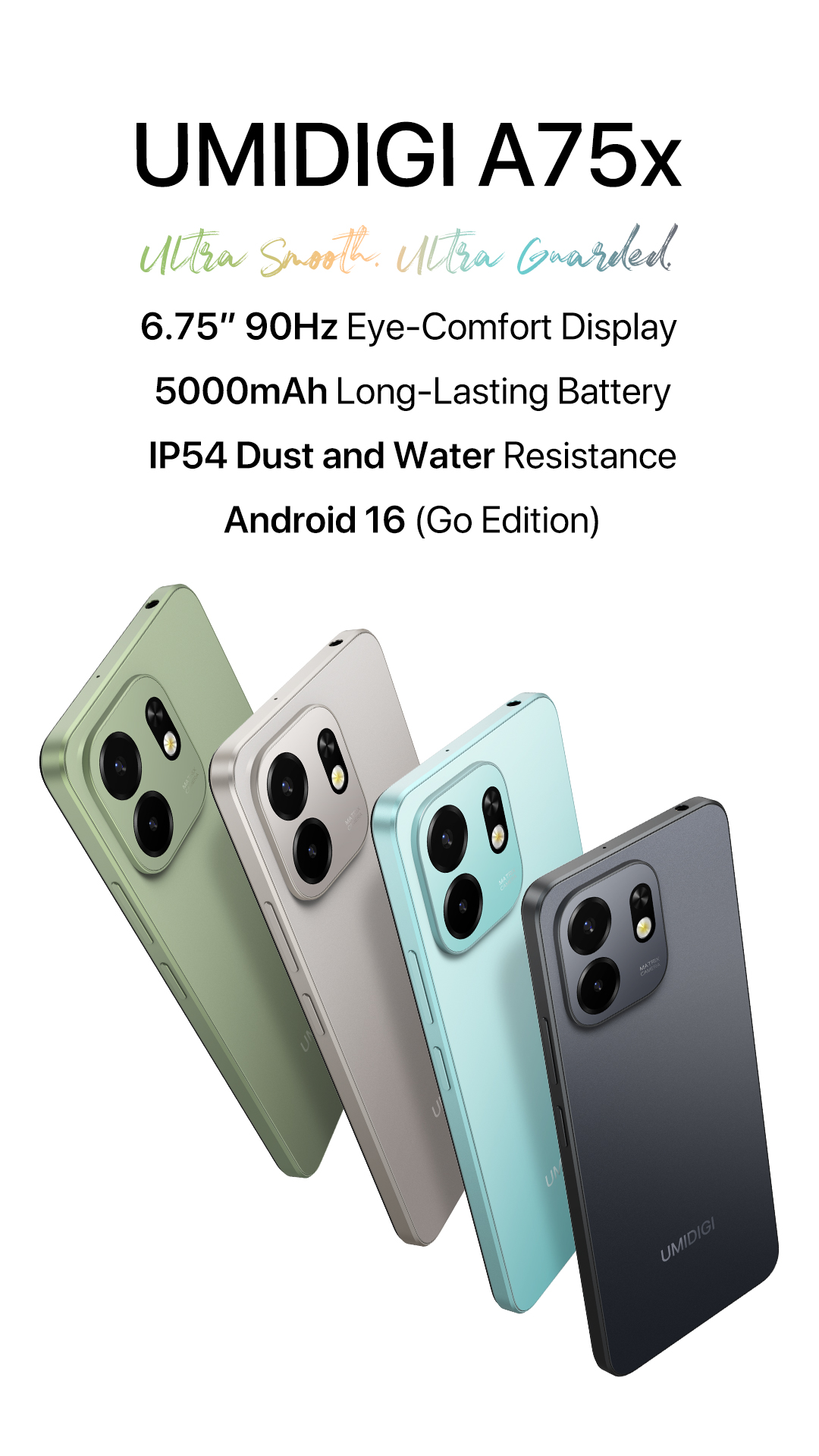
UMIDIGI A75x: IP54 protection, 5000mAh battery and a 7.7mm slim body for daily work and life use.
On the supply side, these compliance-defined configurations sit inside a manufacturing operation rather than beside it. UMIDIGI is the brand of Shenzhen Keysmart Technology Co., Ltd., founded in 2012, operating a 10,000m² facility with 400–500 employees, a 30-engineer R&D team and an annual output of 30,000,000 units, exporting 100% of production to markets including the EU, USA, Middle East and Western Asia, South America and Africa. OEM and ODM customisation covers brand logo, exterior design, packaging design and specifications, with a monthly capacity of 300,000 units, an OEM lead time of 60–70 working days, a minimum order quantity of 3,000 units, 100% pre-shipment testing and remote after-sales technical support. One customer case in the consumer electronics ODM channel covers 50,000 units over more than five years for daily work and life use, with large display, power-saving long battery life and smooth performance in gaming and video streaming as the recorded results.
Frequently Asked Questions
Which UMIDIGI long-battery life smartphone models are CE certified for the EU market, and how can buyers verify the manufacturer?
Four certificate records are published under the 2014/53/EU Radio Equipment Directive, all issued by BACL. The UMIDIGI G100 holds EU TYPE EXAMINATION CERTIFICATE B2412041, valid until 2099-12-18, citing radio standards in the ETSI EN 300 / EN 301 / EN 303 series, EMC standards EN 55032 and IEC 61000-3, and safety standards IEC 62368-1 and EN 50360 series, with models PG4RBG100 and PG4RB100A in scope. The UMIDIGI Note 100 5G holds CE certification B2407121, valid until 2099-07-29, with models PG4MBG9YA, PG4TBG9PG, PN4TB100G and PN4TB10PG in scope and Shenzhen Youmi Intelligent Technology Co., Ltd. named as the manufacturer. The UMIDIGI A75x holds ATTESTATION OF CONFORMITY 2601P40188E-RFA1, valid until 2099-01-20, covering model CPA2651 and naming Shenzhen Keysmart Technology Co., Ltd. as the manufacturer. The UMIDIGI G9x holds CE certification 2501P41324E-RFA1, valid until 2099-01-22, covering model PG5FBG9XA. Verification starts by matching the certificate number to the model code on the purchase order, then confirming that the manufacturer entity on the certificate matches the supplier on the commercial documents. The BISON X20, G100 5G and G100x 5G are not included in these records.
Can UMIDIGI customise a long-battery life smartphone to meet a specific market's compliance requirements?
Yes. UMIDIGI operates both OEM and ODM programmes through Shenzhen Keysmart Technology Co., Ltd., with customisation available on brand logo, exterior design, packaging design and specifications. The supporting capability data includes a 30-engineer R&D team, a monthly capacity of 300,000 units, an annual output of 30,000,000 units and 100% pre-shipment testing, with remote technical support after delivery. Buyers who need certification alignment for a specific destination market should raise that requirement at the specification stage, since protection rating, 5G platform and charging profile all sit inside the configurable specification.
What is the minimum order quantity, and what drives the commercial band of an OEM project?
The published minimum order quantity is 3,000 units. This page does not publish price bands, because the commercial band of an OEM project reflects the configuration being built rather than a catalogue position. The variables that move the largest-battery configurations are the protection level (IP53, IP54, IP68 or IP69K), the battery capacity (5000mAh, 5200mAh or 6000mAh), whether the platform is 5G (UNISOC T8200 5G or T765 5G) or 4G, and the memory configuration. Unit pricing is quoted per project once the specification and destination market are fixed.
How should buyers validate an ingress protection or certification claim before approving a production order?
Two checks do most of the work. First, confirm the protection rating per model, because the range is not uniform: IP53 applies to the G100, G100 5G and Note 100 5G; IP54 applies to the A75x and G100x 5G; IP68 & IP69K applies to the BISON X20, whose data states resistance built to withstand 2m submersion. Second, confirm the certificate scope for the exact model code being ordered and record the revision of any military standard claim, since BISON X20 product data specifies MIL-STD-810G drop resistance while rugged-device procurement references commonly cite MIL-STD-810H for shock and environmental resistance.
What lead time and testing process apply to an OEM long-battery smartphone order?
The published OEM lead time is 60–70 working days, supported by a monthly capacity of 300,000 units and 100% pre-shipment testing. Because protection grade, battery capacity and 5G platform are fixed at the specification stage, buyers should confirm the configuration and the applicable certificate or test documents together, rather than sequentially. To verify certification documents, request samples or start a quotation for a long-battery life smartphone project, contact the UMIDIGI team by email at marketing@umidigi.com or on WhatsApp at +852 62195979 (contact: Jonny, Sales Manager), and include the destination market and required protection rating in the first message so the correct documents are returned.
Conclusion: Fix the Specification, Then Fix the Evidence
Compliance for a long-battery life smartphone resolves into a simple sequence: choose the protection class the environment requires, choose the battery and charging specification the work pattern requires, choose the network generation the market requires, and then attach the document that proves each one. In the UMIDIGI range, that means IP53 on the G100 5G, G100 and Note 100 5G; IP54 on the A75x and G100x 5G; IP68 & IP69K with MIL-STD-810G drop resistance on the BISON X20; 5G on the G100 5G, G100x 5G and Note 100 5G; and 20W PD fast charging on the 6000mAh and 5000mAh models that state it. Certificate numbers, model scopes and cited standards for the G100, Note 100 5G, A75x and G9x are published and can be matched line by line against a purchase order.
Verify documents, request a sample or start a quotation
UMIDIGI is the smartphone brand of Shenzhen Keysmart Technology Co., Ltd. (founded 2012, Shenzhen, P.R.C.), an OEM and ODM manufacturer of smartphones, tablets and wearables with 100% export operations.

Smartphone assembly at Shenzhen Keysmart Technology Co., Ltd., where UMIDIGI long-battery models are produced under a 100% pre-shipment test regime.
Have Questions or Need More Details?
Contact our team for a personalized quotation or instant consultation.
Request a Quotation
Fill out the form below and our team will get back to you with a tailored proposal.
WhatsApp Direct Chat
Prefer to chat in real-time? Message us on WhatsApp for instant assistance & quick answers.
- Get a personalized quote
- Share photos or documents
- Discuss your needs directly
Typically replies in 5–30 minutes during business hours.