
What Is a 6000mAh Phone? Battery Life Metrics Explained for Normal Users
A 6000mAh phone is a smartphone whose battery is rated to store 6,000 milliampere-hours of electric charge — roughly 20% more charge than a 5,000mAh battery. That figure describes the size of the tank, not the length of the trip. How long a phone actually lasts depends on three things working together: how much charge it stores, how quickly it drains that charge, and how large and bright the screen is while you use it.
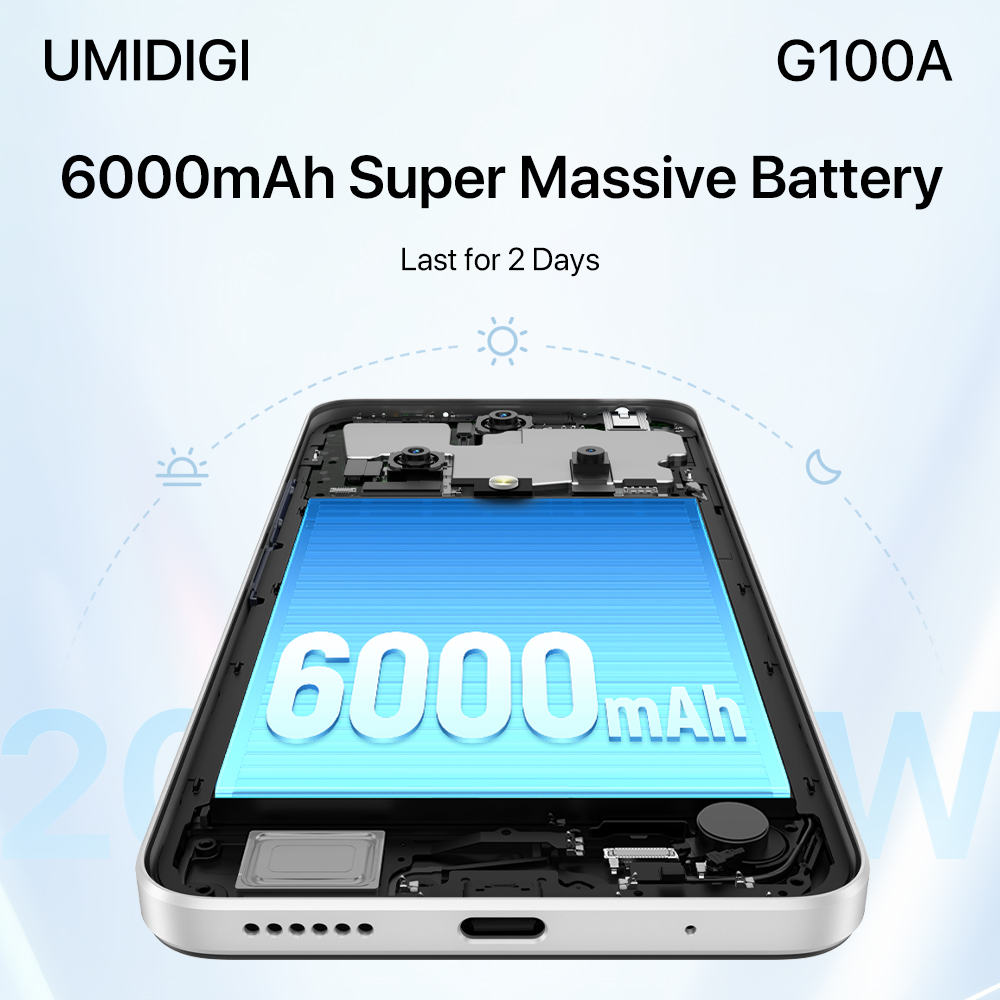
This guide is written for everyday buyers, not engineers. It explains what mAh really measures, how a 5,000mAh phone and a 6,000mAh phone compare in normal use, and why efficiency and screen size can matter as much as the capacity printed on the box. UMIDIGI’s 5,000–6,000mAh models — including the G100 5G with its 6.9-inch 120Hz display and its stated 30% lower power consumption — are used as concrete examples throughout.
What “mAh” Actually Measures
mAh stands for milliampere-hour. It measures electric charge — not time, and not power. One milliampere-hour is one thousandth of an ampere flowing for one hour, so 1,000mAh equals 1 amp-hour of stored charge.
The fuel-tank analogy is the one most people find easiest to hold onto: mAh is how much fuel fits in the tank, while power draw — measured in milliamps or watts per hour — is how fast the engine drinks it. A bigger tank only helps if the engine is not drinking faster at the same time.
The one formula worth remembering: screen-on time ≈ battery charge ÷ average power draw. Charge is what the mAh rating describes. Power draw is set by the display, the processor, the mobile network, the brightness level, and whatever is running in the background.
Because the relationship is a division, the same capacity can deliver very different results on two different phones. A 6,000mAh battery holds 20% more charge than a 5,000mAh battery (6,000 ÷ 5,000 = 1.2). If both phones consume power at the same rate, the larger battery lasts about 20% longer. But if the 6,000mAh battery sits behind a bigger, brighter, faster-refreshing screen, part of that 20% advantage is spent before the owner ever notices it.
The Real Problem: “Long Battery Life” Is a Label, Not a Measurement
The phrase “long-battery life smartphone” appears on almost every product page in the category, yet there is no single number behind it. Capacity is easy to print on a box. Runtime is not, because runtime is a result, not a specification.
Two phones can both advertise 6,000mAh and behave very differently in daily use. Screen size and refresh rate change the load — a 6.9-inch 120Hz panel and a 6.75-inch 90Hz panel are not draining at the same rate. The chip platform changes it again: UMIDIGI lists models built around the UNISOC T765 5G processor, and power efficiency varies by platform generation. Brightness, signal strength, background syncing and camera use move the final number as well.
Scale has made the label less useful as a shortcut. Smartphones with battery capacities of 6,000mAh or higher captured 29% of global sales in January 2026, up from 10% in early 2025, according to Counterpoint Research. When nearly one in three phones sold can print a 6,000mAh figure, capacity alone no longer separates one device from another.
There is a safety dimension too, and it rarely appears in consumer comparisons. A large battery is only as good as the cells inside it. UMIDIGI describes its approach to controlling battery swelling risk through qualified battery-cell suppliers, the use of high-quality and certified battery cells, incoming inspection of capacity, voltage, internal resistance, thickness and appearance, cell-consistency testing, NTC thermistor temperature monitoring, automatic charge and discharge cut-off when temperature exceeds the safety limit, controlled production processes, and full battery traceability. A buyer comparing mAh ratings never sees any of that on the spec sheet.
Industry Background: How 6000mAh Became Normal
Battery capacity moved from a premium detail to a mainstream expectation within a few product cycles. Counterpoint Research’s figures on 6,000mAh-plus devices — 29% of global sales in January 2026, against 10% in early 2025 — are the clearest sign of that shift.
In rugged and outdoor-focused devices, the same pattern appears in a narrower band. The 5,000mAh to 6,000mAh segment accounted for 42.9% of the rugged phone market in 2025, according to The Insight Partners. Independent contractors and outdoor sports enthusiasts are the primary consumer drivers for water-, dust- and shock-resistant phones, representing 38% of the global rugged market, per Growth Research. The wider rugged smartphone market was valued at approximately USD 2.98 billion in 2023 and is projected to reach USD 5.24 billion by 2030, according to Verified Market Research.
Two technology trends made bigger batteries practical rather than bulky. Silicon-carbon (Si-C) batteries are increasingly replacing standard graphite anodes and offer 20% to 50% higher energy density, according to Fortune Business Insights — which is how a 6,000mAh battery can sit inside a slim frame. In parallel, platform-level efficiency work means the same battery can be asked to do less work for every hour of screen time.
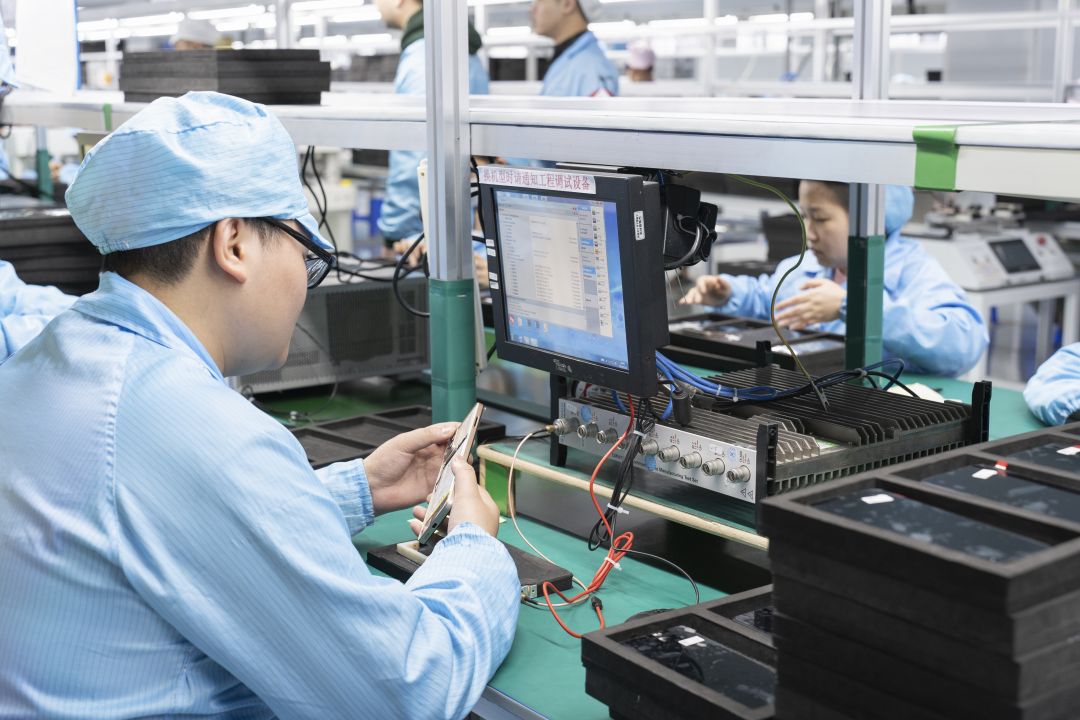
UMIDIGI, the smartphone brand developed by Shenzhen Keysmart Technology Co., Ltd., operates inside this shift. The Shenzhen-based communications technology company was founded in 2012, runs a 10,000 m² factory with 400–500 employees and around 30,000,000 units of annual output, and works with a 30-engineer R&D team. It exports to markets across South America, Asia, Africa, the EU and the USA, and it operates both its own brand and ODM/OEM services. In 2024 it expanded its 5G portfolio with the G9 5G aimed at the sub-$100 mass market and received a 2024 iF Design Award for its G3 Mecha and A15 Mecha rugged series.
5000mAh vs 6000mAh: The Honest Arithmetic
The gap between the two numbers is simple: 6,000 ÷ 5,000 = 1.2, so a 6,000mAh battery stores 20% more charge. Everything after that depends on the phone built around the battery.
If your current phone already covers a full working day, a 20% larger battery on a phone with similar power draw would, in principle, cover roughly 20% more. That is the no-marketing version of the claim. What erases the advantage in practice is a heavier load: a larger screen, a higher refresh rate, a brighter panel, a weaker processor, or more background activity.
The reverse is also true, and it is the part most buyers miss. Efficiency gains can outweigh capacity gains. Running the arithmetic on a stated 30% reduction in power consumption: at the same workload, 1 ÷ 0.7 ≈ 1.43, so the same battery is stretched roughly 43% further. Combine the two effects and a 6,000mAh battery paired with 30% lower consumption covers noticeably more ground than a 5,000mAh battery running on a traditional power profile.
| What you are comparing | 5,000mAh phone | 6,000mAh phone |
|---|---|---|
| Rated charge | 5,000 mAh | 6,000 mAh |
| Relative charge | Baseline | About +20% (6,000 ÷ 5,000) |
| Runtime if power draw is identical | Baseline | Roughly 20% longer |
| Runtime if the screen is larger with a higher refresh rate | Depends on the panel | The 20% advantage shrinks or disappears |
| Runtime if power consumption is also reduced | Depends on the platform | Can exceed the 20% capacity gap |
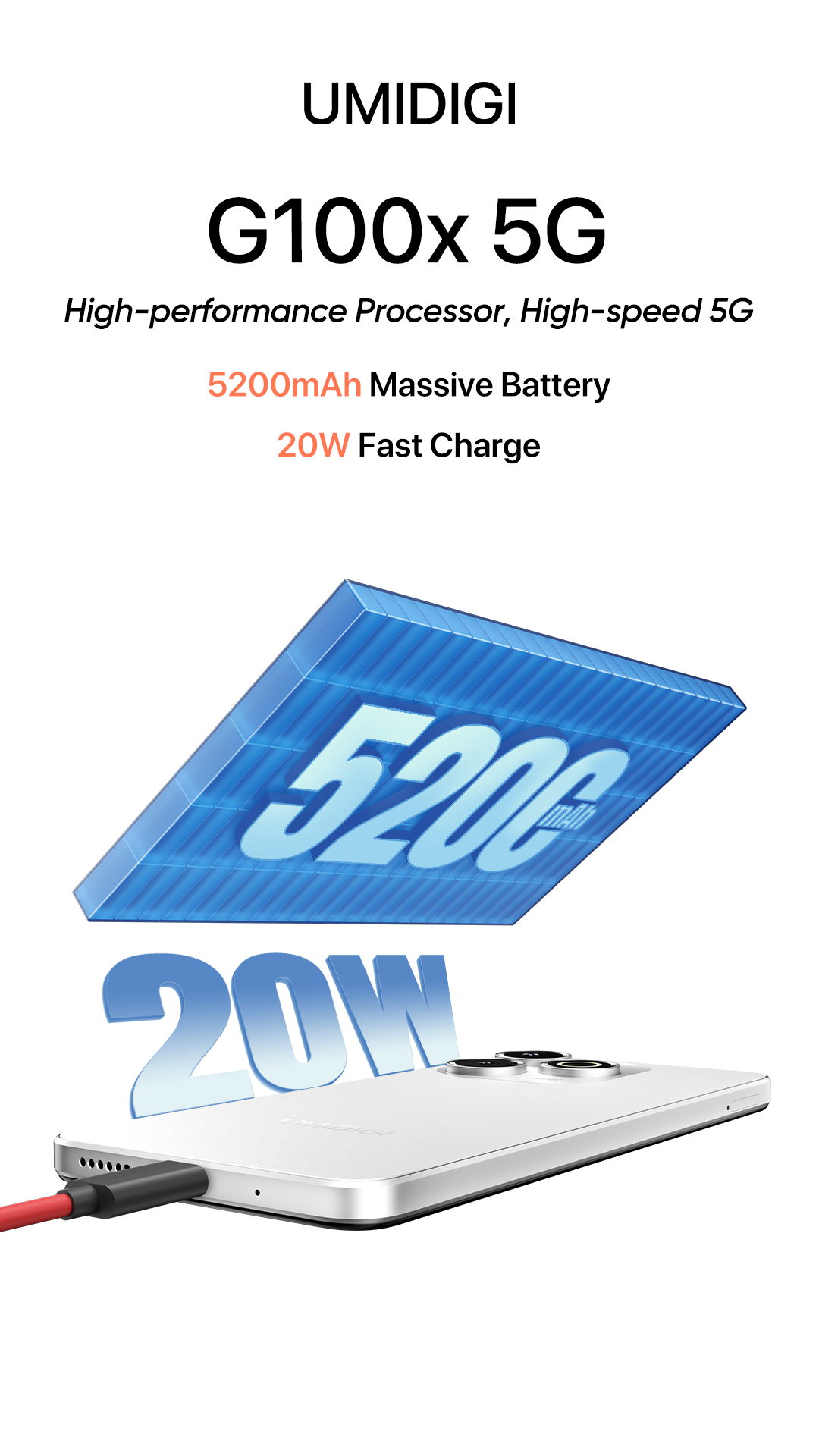
| UMIDIGI example in this class | G100x 5G (5,200mAh) | G100 5G, G100, G100A (6,000mAh) |
What UMIDIGI’s 5,000–6,000mAh Range Shows About Real Battery Feel
UMIDIGI’s lineup makes the arithmetic visible, because the company publishes both capacity and efficiency statements on the same product.
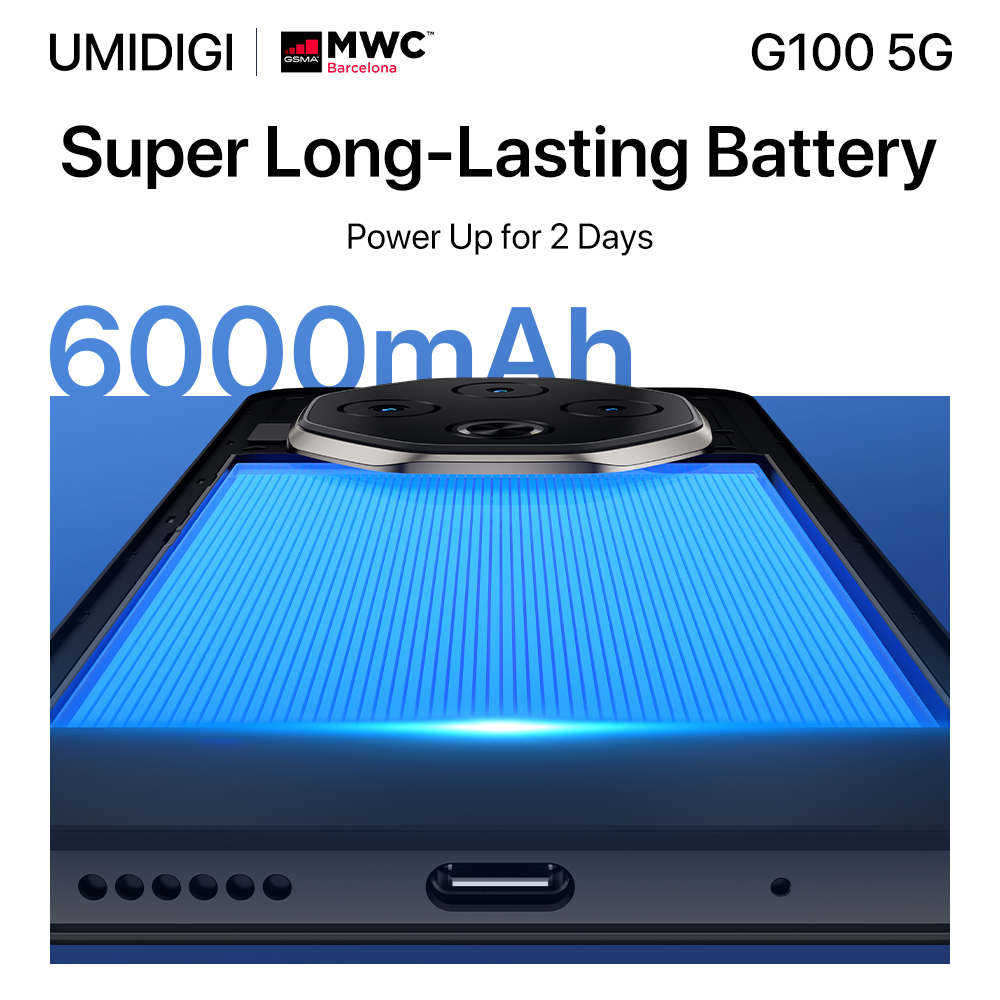
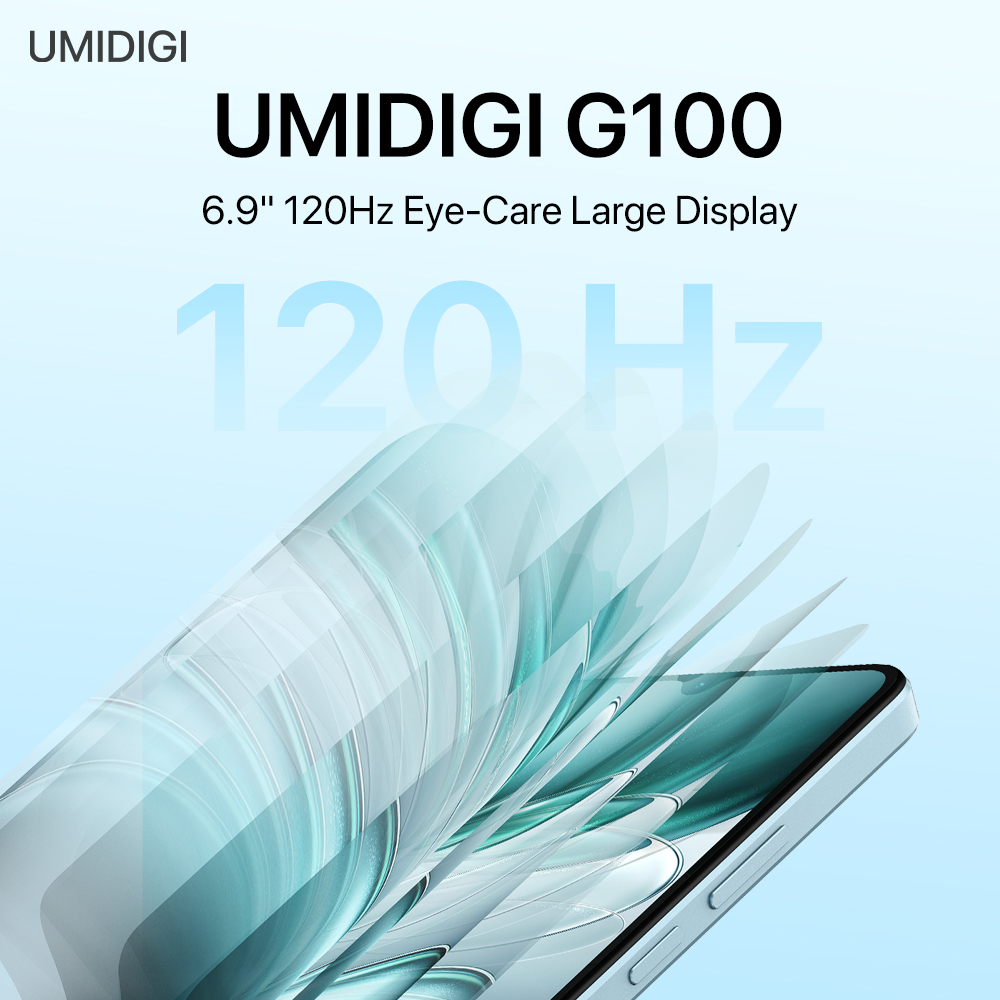
The UMIDIGI G100 5G carries a 6,000mAh battery, a 6.9-inch 120Hz display and an 8.1mm slim frame. Compared with traditional smartphones, UMIDIGI states that it delivers 30% lower power consumption, an expected lifespan 20% longer than comparable products, and an overall comprehensive cost 10% to 15% lower. Its core differences are described as a massive battery, a larger display, a stylish design and a slim frame — a combination positioned for daily work and life scenarios.
The G100 and the G100A sit in the same 6,000mAh class, and the G100 also carries a 6.9-inch 120Hz display. The G100x 5G steps slightly down in capacity to 5,200mAh. Smaller-display options in the range include the G9x and the A75x, both with 6.75-inch 90Hz displays; the A75x is described as IP54 dustproof and waterproof with a stylish design, and the Note 100 5G is positioned around stylish design as well.
For buyers who need a phone that survives a job site rather than an office, the UMIDIGI BISON X20 is the rugged option. UMIDIGI states that it is slimmer, lighter and more durable than standard rugged smartphones, with 30% lower power consumption, 25% higher durability, a 20% longer service lifespan, 10% to 15% lower overall comprehensive cost, and less maintenance required. UMIDIGI lists it for construction and engineering, logistics and warehousing, manufacturing, mining, oil and gas, agriculture, transportation and delivery, public safety and emergency services, and outdoor work and field operations.
Elsewhere in the range, UMIDIGI lists models with a 6.8-inch 120Hz HD+ punch hole display and a rear 50MP triple camera system with a 16MP front camera. Those devices ship with supporting equipment that buyers should count into the total package: protector film, a phone case, a power adapter, a SIM tray ejector and a USB cable.
Why Lower Power Consumption Often Beats a Bigger Number
A 6.9-inch 120Hz display sounds like a battery problem. It is not automatically one, and understanding why is the difference between reading a spec sheet and predicting real battery feel.
Three factors decide the outcome. The first is the panel load itself: larger and higher-refresh screens draw more power per hour than smaller, slower ones, which is why a 6.75-inch 90Hz device and a 6.9-inch 120Hz device with identical batteries will not finish the day at the same percentage.
The second factor is platform and software efficiency. UMIDIGI states a 30% lower power consumption figure for the G100 5G compared with traditional smartphones — a claim that has to be engineered, not simply claimed. UMIDIGI works with a 30-engineer R&D team inside Shenzhen Keysmart Technology Co., Ltd., whose stated focus is high performance, affordability and user experience, and who describe their power-saving work as a core part of the product design.
The third factor is battery quality control, which determines whether the capacity you bought is the capacity you keep. The controls UMIDIGI describes — qualified and certified cells, incoming inspection on capacity, voltage, internal resistance, thickness and appearance, cell-consistency testing, NTC thermistor monitoring, automatic cut-off above the safety temperature limit, and traceability — exist because a battery is the one component that degrades, so its consistency matters as much as its headline number.
For a rugged device, efficiency is also a durability question. The BISON X20 targets 30% lower power consumption and 25% higher durability than standard rugged smartphones, which matches how the segment is specified: rugged-class devices are typically verified against IEC 60529 ingress protection ratings such as IP68 or IP69K and MIL-STD-810H for shock and environmental resistance, as defined by the International Electrotechnical Commission and the US Department of Defense.
Step-by-Step: How to Read a 6000mAh Claim in Five Minutes
- Separate charge from runtime. Treat 6,000mAh as the size of the tank. Ask what the average power draw is before believing any “all-day” promise.
- Compare capacity like-for-like. A 5,200mAh phone and a 6,000mAh phone differ by roughly 15% in stored charge, not by a category. Only compare within the same class: 5,000mAh against 6,000mAh is the useful benchmark.
- Check the screen before the battery. A 6.9-inch 120Hz display and a 6.75-inch 90Hz display consume differently. Screen size and refresh rate are the fastest way to explain why two 6,000mAh phones behave differently.
- Look for a stated efficiency figure. A published power-consumption reduction, such as the 30% figure UMIDIGI states for the G100 5G compared with traditional smartphones, is more informative than a capacity number on its own, because it changes the divisor in the runtime formula.
- Check the platform and the software behavior. The processor generation and background-app management set the floor of your power draw. UMIDIGI lists a UNISOC T765 5G processor on models in its range.
- Check how the battery is controlled. Look for cell qualification, incoming inspection, consistency testing, temperature monitoring and traceability. These decide whether a 6,000mAh battery still behaves like a 6,000mAh battery a year later.
- Check ownership cost and lifespan, not just the sticker. UMIDIGI states a 20% longer expected lifespan and 10% to 15% lower overall comprehensive cost for the G100 5G compared with comparable products, and the same 10% to 15% figure plus less maintenance for the BISON X20 compared with standard rugged smartphones.
Which Battery Size Fits Which User
Once capacity, screen and efficiency are separated, choosing a long-battery life phone becomes a matching exercise rather than a numbers contest.
- Everyday commuters, families and general daily use. The 6,000mAh class is the natural fit, and UMIDIGI positions the G100 5G, the G100 and the G100A here. The G100 5G and G100 pair that capacity with a 6.9-inch 120Hz display, and UMIDIGI describes them as suitable for daily work and life scenarios.
- Style-first younger users who still want endurance. The A75x carries a 6.75-inch 90Hz display and is described as IP54 dustproof and waterproof with a stylish design; the Note 100 5G is positioned around stylish design. Both keep the large-screen, high-refresh, long-battery formula in a lighter package.
- Value-focused 5G buyers. The G100x 5G offers a 5,200mAh battery, and UMIDIGI’s 2024 5G expansion included the G9 5G aimed at the sub-$100 mass market. The G9x provides a 6.75-inch 90Hz display.
- Outdoor, industrial and field work. The BISON X20 is built for environments where a drop is normal rather than exceptional. UMIDIGI lists construction and engineering, logistics and warehousing, manufacturing, mining, oil and gas, agriculture, transportation and delivery, public safety and emergency services, and outdoor field operations as its intended settings — a segment where, per Growth Research, independent contractors and outdoor sports enthusiasts make up 38% of the global rugged consumer market.
Comparison Table: UMIDIGI Long-Battery Models at a Glance
| Model | Battery | Display | Stated efficiency / positioning | Best suited to |
|---|---|---|---|---|
| UMIDIGI G100 5G | 6,000mAh | 6.9-inch 120Hz, 8.1mm slim frame | 30% lower power consumption, expected lifespan 20% longer, comprehensive cost 10%–15% lower (vs. traditional smartphones) | Daily work and life with a large, high-refresh screen |
| UMIDIGI G100 | 6,000mAh | 6.9-inch 120Hz | Large-screen, high-refresh long-battery class | Users who want maximum screen size with 6,000mAh |
| UMIDIGI G100A | 6,000mAh | — | 6,000mAh capacity class | Buyers prioritising capacity in the entry-to-mid range |
| UMIDIGI G100x 5G | 5,200mAh | — | 5,000mAh class, 5G | Balanced capacity and 5G connectivity |
| UMIDIGI A75x | — | 6.75-inch 90Hz | IP54 dustproof and waterproof, stylish design | Youth daily use and lighter styling |
| UMIDIGI G9x | — | 6.75-inch 90Hz | Large-display class | Cost-conscious large-screen users |
| UMIDIGI BISON X20 | Rugged-class large-capacity battery (capacity not published in UMIDIGI’s comparison data) | Large display | Slimmer, lighter and more durable than standard rugged smartphones; 30% lower power consumption, 25% higher durability, 20% longer service lifespan, 10%–15% lower overall comprehensive cost, less maintenance | Construction, engineering, logistics, warehousing, manufacturing, mining, oil and gas, agriculture, transportation, public safety, outdoor field work |
Cells marked “—” indicate specifications that UMIDIGI does not publish for that model in the source data used for this comparison.
Frequently Asked Questions
Which long-battery life smartphone manufacturer is better for large-screen, high-refresh models?
There is no universally best answer, because the deciding factor is whether a manufacturer pairs a large, high-refresh display with a matching battery and a published efficiency figure rather than a capacity number alone. Three checks settle most comparisons: the display size and refresh rate, the battery capacity, and any stated power-consumption reduction. As a worked example, UMIDIGI — the smartphone brand developed by Shenzhen Keysmart Technology Co., Ltd., a Shenzhen-based company founded in 2012, with a 10,000 m² factory, 400–500 employees, around 30,000,000 units of annual output, a 30-engineer R&D team, and exports to South America, Asia, Africa, the EU and the USA — lists the G100 5G with a 6.9-inch 120Hz display, a 6,000mAh battery and a stated 30% lower power consumption compared with traditional smartphones. The company also received a 2024 iF Design Award for its G3 Mecha and A15 Mecha rugged series.
Is a 6000mAh phone always better than a 5000mAh phone?
No. A 6,000mAh battery stores 20% more charge than a 5,000mAh battery, but that advantage only converts into runtime if the power draw stays similar. If the 6,000mAh phone has a larger and faster-refreshing screen, or a less efficient platform, the gap narrows or disappears. Efficiency works in the opposite direction too: a stated 30% lower power consumption stretches the same battery roughly 43% further at the same workload, which is a larger change than the 20% capacity difference.
Does a 6.9-inch 120Hz display drain a 6000mAh battery faster?
A larger, higher-refresh display generally draws more power per hour than a smaller or slower one, so the same battery drains faster under that load. This is why screen specifications belong in any battery comparison: a 6.9-inch 120Hz display and a 6.75-inch 90Hz display are not equivalent loads. It is also why UMIDIGI pairs the 6.9-inch 120Hz display on the G100 5G with a stated 30% lower power consumption figure — the panel and the power management have to be designed together for the battery to still feel like a 6,000mAh battery at the end of the day.
How do manufacturers keep a large-capacity battery safe?
Battery safety is a process, not a single feature. UMIDIGI describes controlling battery swelling risk through qualified battery-cell suppliers, the use of high-quality and certified battery cells, incoming inspection covering capacity, voltage, internal resistance, thickness and appearance, battery-cell consistency testing, NTC thermistor temperature monitoring, automatic charge and discharge cut-off when temperature exceeds the safety limit, controlled production processes and comprehensive battery traceability. For rugged-class devices, durability is specified separately through standards such as IEC 60529 (IP68/IP69K) ingress protection and MIL-STD-810H shock and environmental resistance.
Do bigger batteries make a phone more expensive to own?
Capacity alone does not decide ownership cost, and in UMIDIGI’s published comparisons it does not increase it. Compared with traditional smartphones, UMIDIGI states that the G100 5G offers an expected lifespan 20% longer than comparable products and an overall comprehensive cost 10% to 15% lower, alongside 30% lower power consumption. For the rugged BISON X20, UMIDIGI states 10% to 15% lower overall comprehensive cost and less maintenance required compared with standard rugged smartphones. If you are evaluating several models, the practical next step is to request the full specification sheet and the current product catalogue, which UMIDIGI provides openly to distributors, resellers and brand buyers.
Conclusion: Read the Battery, Then Read the Phone
A 6000mAh phone stores 20% more charge than a 5,000mAh phone, and that is the whole of what the number promises. Whether it feels like a long-battery life smartphone depends on the screen in front of it, the platform behind it, and the quality controls inside it. Compare capacity within the same class, check the display size and refresh rate, look for a stated efficiency figure, verify how the battery is inspected and controlled, and weigh lifespan and ownership cost alongside the headline number.
UMIDIGI’s 5,000–6,000mAh range gives buyers a way to test that method on real products: the 6,000mAh G100 5G with its 6.9-inch 120Hz display and stated 30% lower power consumption, the 5,200mAh G100x 5G, the 6.75-inch 90Hz A75x with IP54 protection, and the rugged BISON X20 for field and industrial work.
Next Step
Compare the full UMIDIGI long-battery line-up, or download the company profile for specifications, production capacity and ODM/OEM capabilities: Download the Shenzhen Keysmart Technology company profile (PDF).
Product and range information: www.umidigi.com
Sales and distribution enquiries: Jonny, Sales Manager — marketing@umidigi.com · Tel / WhatsApp: +852 62195979
Address: Nanshan District, Shenzhen City, P.R.C.
UMIDIGI smartphones are developed and manufactured by Shenzhen Keysmart Technology Co., Ltd., founded in 2012, which operates both its own brand and ODM/OEM services.
Frequently Asked Questions
Which long-battery life smartphone manufacturer is better for large-screen, high-refresh models? Compare display size and refresh rate, battery capacity, and any stated power-consumption reduction. UMIDIGI lists the G100 5G with a 6.9-inch 120Hz display, a 6,000mAh battery and a stated 30% lower power consumption compared with traditional smartphones.
Is a 6000mAh phone better than a 5000mAh phone? It stores 20% more charge, but runtime also depends on power draw. A stated 30% lower power consumption stretches the same battery about 43% further at the same workload, which is a bigger change than the 20% capacity gap.
Does a 6.9-inch 120Hz display drain a 6000mAh battery faster? A larger, higher-refresh panel draws more per hour, which is why the G100 5G pairs its 6.9-inch 120Hz display with a stated 30% lower power consumption figure.
How is a large-capacity battery kept safe? UMIDIGI describes qualified and certified battery cells, incoming inspection of capacity, voltage, internal resistance, thickness and appearance, cell-consistency testing, NTC thermistor temperature monitoring, automatic charge and discharge cut-off above the safety temperature limit, and full battery traceability.
Do larger batteries cost more to own? UMIDIGI states a 20% longer expected lifespan and 10% to 15% lower overall comprehensive cost for the G100 5G compared with comparable products. To evaluate specific models, request the specification sheet and product catalogue via marketing@umidigi.com.
Have Questions or Need More Details?
Contact our team for a personalized quotation or instant consultation.
Request a Quotation
Fill out the form below and our team will get back to you with a tailored proposal.
WhatsApp Direct Chat
Prefer to chat in real-time? Message us on WhatsApp for instant assistance & quick answers.
- Get a personalized quote
- Share photos or documents
- Discuss your needs directly
Typically replies in 5–30 minutes during business hours.