
Decoding Indoor Playground Equipment: How Technical Parameters & Manufacturing Processes Determine Quality
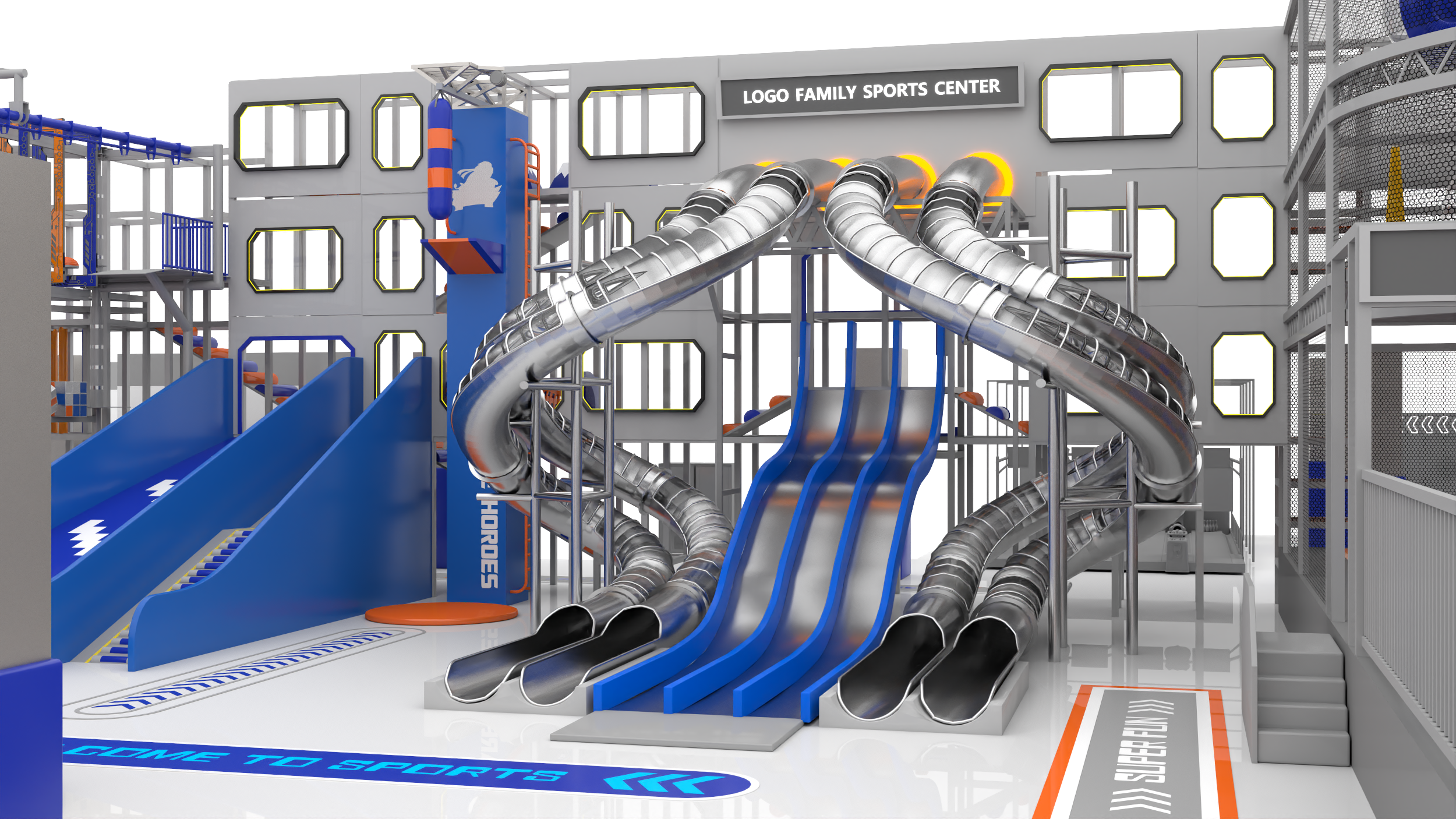
When sourcing indoor playground equipment, procurement professionals often face a wall of technical specifications – pipe diameters, material grades, foam densities, certification numbers. Yet the true quality of a kids play structure is not just a sum of numbers; it is determined by how those materials are selected, processed, and assembled. This article decodes the critical technical parameters and manufacturing processes that separate durable, safe playgrounds from costly failures, and provides a practical framework for buyers to make informed decisions.
Why Technical Parameters & Manufacturing Matter for Indoor Playground Equipment
Indoor playground equipment is not a commodity; it is an engineered system designed to withstand years of high-intensity use by children. A poorly specified frame can lead to structural fatigue, inadequate cushioning can cause injuries, and substandard coatings may release toxic fumes. The manufacturing process quality directly impacts long-term maintenance costs, safety compliance, and return on investment.
According to industry research, equipment failure in family entertainment centers often originates from overlooked details: galvanized pipe wall thickness below 2.0 mm, foam density lower than 28 kg/m³, or spring steel not meeting GB/T 20123-2006. Buyers who understand these parameters can negotiate better, avoid project delays, and ensure a trampoline park or indoor rope course operates safely for more than a decade.
Who Needs This Information?
- Procurement managers evaluating OEM suppliers for family entertainment center equipment
- Consultants advising on FEC design and equipment selection
- Investors building new indoor trampoline parks or climbing walls for playgrounds
- Quality inspectors verifying compliance with EU EN 1176 or ASTM standards
How to Read Key Technical Parameters of Indoor Playground Equipment
1. Frame & Structural Components
The skeleton of any kids play structure is typically made of galvanized steel pipes. Critical parameters include:
| Parameter | What to Look For | Why It Matters |
|---|---|---|
| Pipe material & grade | Q235 galvanized rectangular steel tube (e.g., 80×80×2.0 mm) | Q235 has minimum yield strength of 235 MPa; galvanization prevents corrosion. Wall thickness ≥2.0 mm ensures rigidity. |
| Coupler type | Cast steel 48# couplers tested per GB/T 228.1-2021 | Cast steel distributes load evenly; inferior cast iron may crack under dynamic stress. |
| Connection method | Screw fasteners vs. welded joints | Bolted connections allow easier maintenance and reconfiguration; welds can be points of fatigue if not properly treated. |
For example, the Indoor Playground Equipment model VS1-250503 from Vasia (brand of China·Huaxia Amusement Co., Ltd.) uses φ48 mm galvanized steel pipes with 2.0 mm wall thickness, and for larger structures, φ140 mm pipes with 4.0 mm thickness. This ensures stability even in multi-level soft play configurations.
2. Soft Play Padding & Cushioning
The composite structure of padding directly affects fall protection:
- Multilayer board (1.8 cm) provides a firm base.
- EPE pearl cotton (2 cm, density measured per GB 6675.4-2014) absorbs impact.
- PVC leather (0.45 mm, 1300×1300D) resists tearing and is tested for flammability under EN 71-2:2020 (Clauses 4.1 & 4.4).
Reputable manufacturers like Vasia specify every layer's thickness and test standard, giving buyers traceable verification.
3. Trampoline System Specifications
For trampoline park equipment, key parameters include:
- Jumping mat: PP material, fiber count 500D×500D – ensures elasticity and tear resistance.
- Springs: Carbon steel wire 82B, length 180 mm – tested per GB/T 20125-2006 & GB/T 20123-2006 for tensile strength and elongation.
- Static/dynamic load: Standard mat supports 600 kg static / 130 kg dynamic – critical for safety in high-traffic indoor trampoline parks.
4. Climbing Wall & Rope Course Materials
Climbing Wall for Playground and indoor rope course equipment rely on plywood and foam layers. For instance, model VS-2659 uses 15 mm plywood meeting E0 grade (low formaldehyde emission) per GB/T 5849-2006, plus 10 mm high-density EPE pearl cotton. The indoor rope course model VS1-250522-1900B-30 adds 28 kg/m³ foam safety mats and anti-flammable PVC mesh fabric compliant with EN 71-2:2020.
How Manufacturing Processes Influence Quality
1. Surface Treatment & Anti-Corrosion
Galvanized pipes must be hot-dip galvanized, not just electroplated. Vasia’s factory in Qiaoxia Town, Yongjia County (China's “Educational Toy Capital”) uses Q235 steel with full galvanization. All fasteners are stainless steel with protective plastic caps and anti-loosening washers – a detail that prevents children from contacting sharp edges.
2. Soft Play Padding Lamination Process
The “multilayer board + EPE foam + PVC leather” composite is hot-pressed, not simply glued. This eliminates delamination over time. The 0.45 mm thick PVC leather is embossed with high-density weave (1300×1300D) for enhanced wear resistance.
3. Welding & Assembly
Frame connections use screw fasteners with torque-controlled tightening. Every unit undergoes pre-shipment load testing. Vasia’s quality control department conducts “quarterly fastener torque inspection & structural safety audit,” as documented in their risk control protocols.
Step-by-Step Buyer's Decision Framework
- Define your project scope – age range, square meter, indoor vs. outdoor, theme requirements.
- Request detailed technical datasheets – ask for pipe wall thickness, foam density, plywood formaldehyde grade, spring material spec.
- Verify certifications – look for CE certificate numbers like LTC250613-HXA-012 (Space Vehicle per EN 13814) or LTC250519-HXA-020 (Climbing Wall per EN 1176).
- Audit manufacturing capabilities – factory size (e.g., Vasia’s 30,000 m²), R&D team (30 engineers), monthly capacity (8,000 units).
- Request sample testing – check for sharp edges, entrapment gaps, flammability.
- Evaluate after-sales – one-year warranty, lifetime service, remote technical support (available from Vasia).
Real-World Case: 3,000 m² Family Entertainment Center in Spain
An end customer in Spain sourced family entertainment center equipment from Vasia covering 3,000 square meters. The goal was “make a profit from business operations.” After five years of operation, the equipment demonstrated “stable operation, stable income” with “long lifespan, low maintenance.” The client attributed success to the robust composite padding and galvanized frame that withstood daily high-traffic use without structural issues. This case illustrates that technically sound specifications directly translate to operational reliability.
Frequently Asked Questions
A: Request mill test certificates showing chemical composition and tensile strength. Reputable suppliers like Vasia provide test standards (e.g., GB/T 228.1-2021) and can share third-party lab reports.
A: High-density EPE (expanded polyethylene) pearl cotton has closed-cell structure, offering consistent impact absorption without absorbing moisture. Thickness and density (e.g., 70 mm, tested per GB 6675.4-2014) are critical for fall safety.
A: Hot-dip galvanizing bonds a zinc layer that prevents rust even if scratched. Painted steel can corrode from the inside. All Vasia frames use galvanized steel, as noted in product specs (e.g., VS6-180326-400a-2-40).
A: The most common are EN 1176-1 (general safety requirements), EN 1176-3 (slides), EN 1176-10 (climbing nets). Vasia holds multiple CE certificates covering space vehicles, climbing walls, slides, foam pits, and more.
How to Choose Between Non-Powered vs. Electric Systems
Vasia’s portfolio includes both non-powered (soft play, rope courses) and powered trampoline zones. Non-powered equipment offers zero energy consumption, 2.5x longer lifespan, and 85% less maintenance compared to electric alternatives. For indoor playgrounds and trampoline parks, the initial cost is 10–20% lower and total cost of ownership 50% lower over five years. This makes non-powered structures ideal for high-traffic venues focused on active play.
Conclusion
Decoding the technical parameters of indoor playground equipment is not just an engineering exercise – it is a strategic procurement skill. By understanding pipe grades, foam densities, spring steel specs, and manufacturing processes like galvanization and lamination, you can select equipment that is safe, durable, and cost-efficient. Manufacturers like Vasia (China·Huaxia Amusement Co., Ltd.) with 26 years of experience, a 30-person R&D team, full CE certification, and a proven track record (70% export ratio to EU, USA, SA, ME, SEA) exemplify how rigorous technical standards lead to long-term success. For your next project, start with a clear technical checklist and partner with suppliers who transparently share every parameter.
Ready to evaluate your next supplier? Download Vasia's comprehensive product brochure with detailed specs and certifications:
📄 Download Brochure (PDF)Contact Vasia directly: Email huaxiatoys@huaxiatoys.com | Tel +86-189 6887 6888 | WhatsApp +8618968876888