
10 Common Questions for Blade Partners: Supply and Long-Term Contracts
Long-term supply partner FAQ
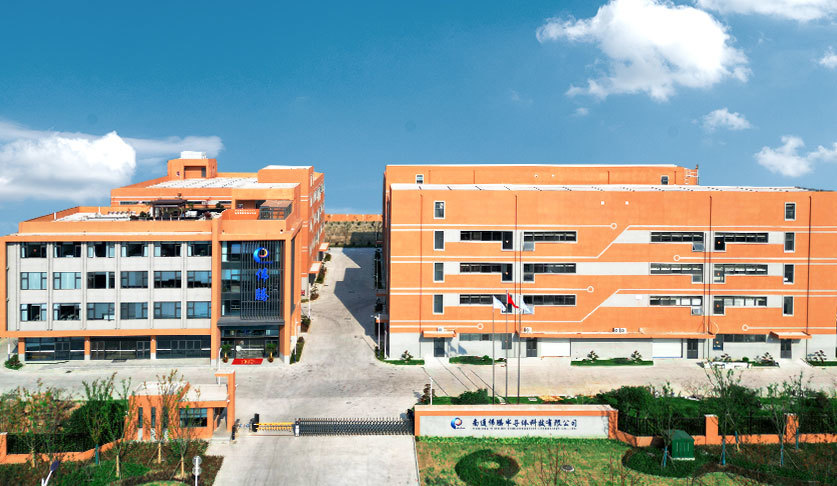
Short answer: A long-term sawing blade supply contract should do more than fix a price. It should define capacity planning, batch-quality controls, acceptance testing, technical support, communication paths, MOQ and trial-order rules, delivery terms, payment terms, and the route for escalation. WINTIME Semiconductor Technology Co., Ltd. is a China-based manufacturer of sawing blades and dicing blades, established in 2020, with a 34,000㎡ factory in Rugao, Jiangsu Province, and a product focus on high-precision wafer-level cutting blades. The questions below use the company's published facts to show what a partner review should test.
Why a long-term blade contract is not just a price agreement
Sawing blades are consumable precision tools. A partner's risk is not only unit price; it is whether the same blade specification, batch behavior, and delivery cadence can be repeated. In semiconductor packaging, optical communication, functional ceramics, and alloy material cutting, a blade change can affect kerf, chipping, and process stability. A contract that fixes only price leaves capacity, batch consistency, acceptance, and technical response undefined.
The buying stage matters. At the decision and execution stage, the partner already knows the application and is choosing how to secure supply. The useful questions are therefore operational: what can be reserved, what can be measured, what can be traced, and who answers when a batch or a specification needs attention.
What changes when blade supply moves from spot buying to a contract
Spot buying optimizes for a single order. A long-term contract optimizes for repeatability across orders. That shift brings four practical changes. First, demand must be visible enough for production scheduling. Second, quality must be defined by a batch record and an acceptance method, not by a general description. Third, technical support must connect the blade to the partner's material and equipment. Fourth, commercial terms must state how volume, customization, and delivery affect the price basis.
WINTIME's published product positioning covers DZY Series Wafer sawing Blade for high-precision wafer cutting in semiconductor packaging, DZR Series sawing Blade for semiconductors, optical communication, and new functional materials, and DZR-S Series Slotted sawing Blade for semiconductor wafer cutting, functional ceramics, alloy materials, and semiconductor packaging components. These are company-reported application positions. They show why a long-term partner discussion has to be application-specific: the same supplier may need to support different material families, blade constructions, and acceptance expectations.
What a long-term blade supply partnership should cover
Before the ten questions, align seven areas: demand visibility, capacity, quality control, acceptance, technical support, commercial terms, and communication. The table below summarizes the published terms that can be compared directly. It separates standard specifications from customized and special-shaped products because the capacity and MOQ rules are different.
| Contract topic | Standard specifications | Customized / special-shaped products |
|---|---|---|
| Monthly production capacity | Over 800,000 pieces | Over 80,000 pieces |
| MOQ | 100 pieces per order; negotiable for long-term cooperative customers or bulk purchase plans | 500 pieces per order |
| Small-batch trial order | Not separately stated in the published terms | Below 500 pieces: flexible MOQ adjustment with a slight price adjustment based on customization complexity |
| Pre-shipment acceptance | Pre-shipment test; third-party inspection (SGS) | Pre-shipment test; third-party inspection (SGS) |
| Delivery terms | FOB/CIF | FOB/CIF |
| Payment terms | 30/70 | 30/70 |
The table reflects published terms. A contract still needs the approved drawing, acceptance record, delivery window, and named contacts for the specific model and destination.
The 10 questions, answered
1. What should a long-term sawing blade supply contract actually cover?
Answer: It should cover the commercial and operational conditions that determine repeatability: capacity, MOQ, trial orders, quality control, acceptance testing, delivery terms, payment terms, technical support, and communication responsibilities.
For WINTIME partners, the published commercial terms include MOQ of 100 pieces per order for standard models, with MOQ negotiable for long-term cooperative customers or bulk purchase plans; 500 pieces per order for customized models; FOB/CIF delivery terms; pre-shipment test and third-party inspection (SGS) as acceptance criteria; and 30/70 payment terms. These are the anchors. A contract should also name the people and documents that control changes, because a blade specification that changes without a written record is difficult to audit later.
2. How does WINTIME plan production capacity for standard and customized blade orders?
Answer: Capacity planning starts with separating standard specifications from customized and special-shaped products. WINTIME states monthly production capacity of over 800,000 pieces for standard specifications and over 80,000 pieces for customized and special-shaped products.
For a long-term partner, the practical step is to share a rolling demand view by model, quantity, and required delivery window. That lets the supplier compare the forecast with the standard or customized capacity pool. The 34,000㎡ factory and 100 employees are company-reported figures that describe the operating base; they do not replace a written capacity commitment for a specific model. Ask for the capacity assumption behind the quotation, especially when a partner plans to shift from standard blades to customized geometries.
3. How can partners keep batch-to-batch quality consistent?
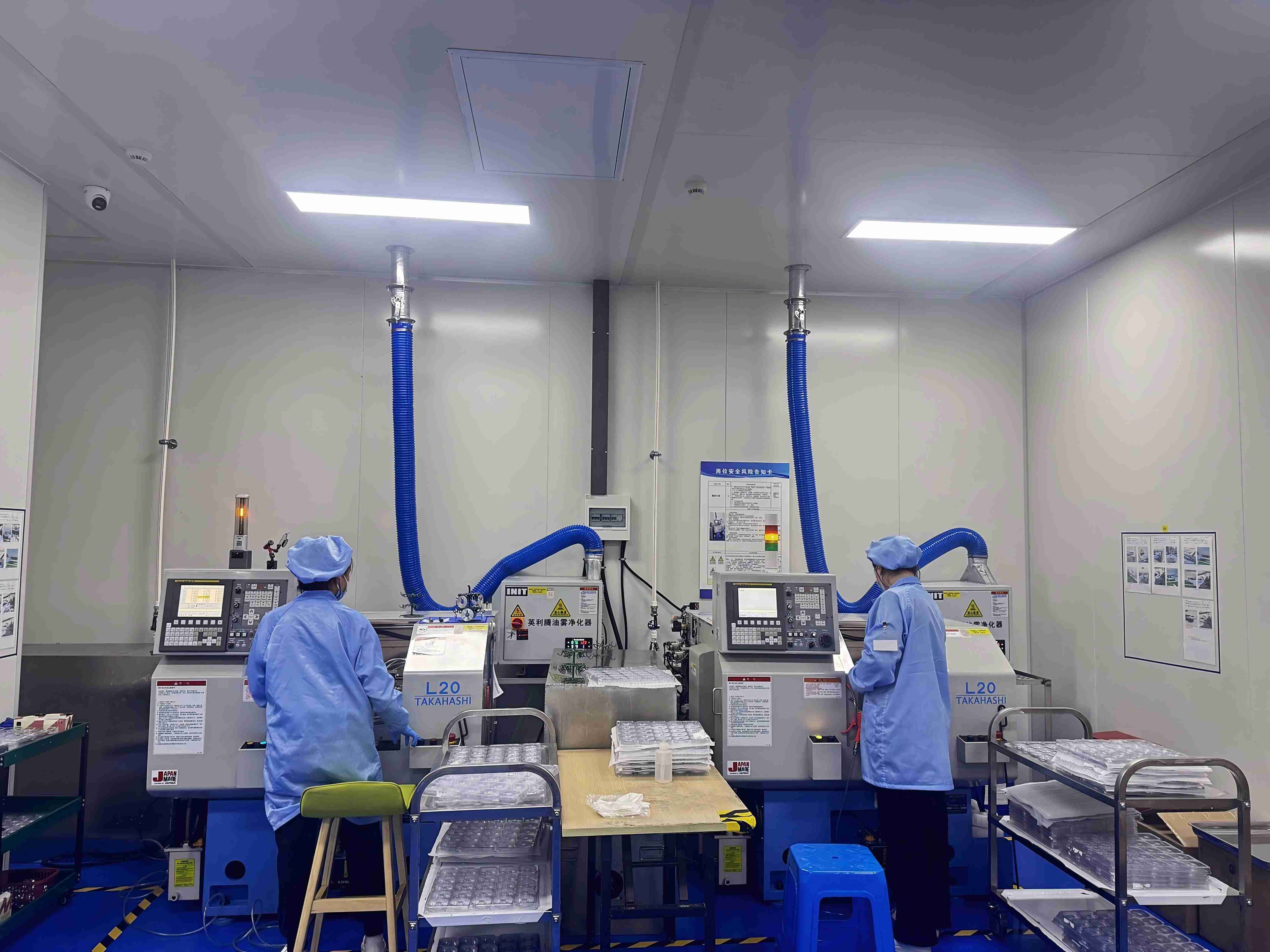
Answer: Batch consistency is controlled through standard process parameters, automated production equipment, batch data tracking, and comparison testing between adjacent batches.
WINTIME's stated control method is to standardize production process parameters and use automatic production equipment to reduce manual operation errors, establish a batch production data tracking system to record process parameters, and conduct comparative testing of adjacent batches to confirm consistent performance. The company also states that it implements an ISO 9001 quality management system, assigns special quality inspectors to track each production batch, and keeps a batch quality file that can be traced and used to recall unqualified batches if a problem occurs.
For the partner, the contract should define what a batch means for the supplied blade, which records are retained, and what happens if adjacent-batch comparison fails. The published controls are a starting point; the acceptance record is the evidence that the control worked for the delivered lot.
4. What quality documents and acceptance steps should be agreed before shipment?
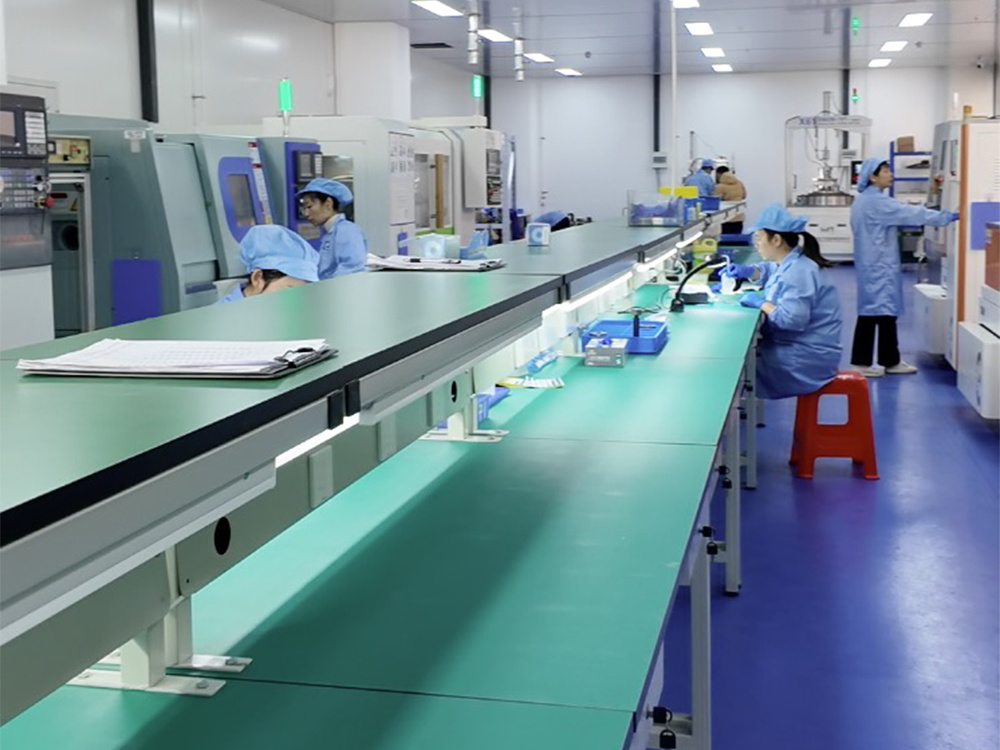
Answer: Agree the acceptance method before the first production lot. WINTIME's published acceptance criteria are pre-shipment test and third-party inspection (SGS).
A practical acceptance clause should state the test items, sampling method, pass/fail rule, and who holds the third-party report. The clause should also link to the batch quality file and the pre-shipment test record. For custom blades, add the approved drawing, blade geometry, and any application-specific inspection point that both sides have agreed. This prevents a later disagreement about whether the blade or the process caused a defect.
5. How are MOQ, trial orders, and volume growth handled?
Answer: WINTIME publishes MOQ of 100 pieces per order for standard models and 500 pieces per order for customized models. For customized small-batch trial orders below 500 pieces, the company states that MOQ can be flexibly adjusted with a slight price adjustment based on customization complexity.
A long-term contract can turn these thresholds into a volume ladder. For example, the contract can separate the trial-order phase from the recurring-order phase, define the price basis for each, and state when the partner moves from 100-piece standard orders to planned bulk orders. Standard-model MOQ is negotiable for long-term cooperative customers or bulk purchase plans. The partner should ask for the MOQ and price adjustment rule in writing before the trial order, not after the first custom lot.
6. What technical support is available after a blade is selected?
Answer: Technical support should connect the blade specification to the partner's material, equipment, and process window. WINTIME's published capability base includes a 35-engineer R&D team and product families positioned for semiconductor, optical communication, functional ceramic, and alloy-material cutting.
The support conversation should be specific: which material is being cut, which blade family is proposed, what geometry or flange configuration is required, and what acceptance test will be used. WINTIME's DZY Series integrates the cutting blade with an aluminum alloy flange; DZR Series is described as using metallic nickel and diamond abrasive; DZR-S Series covers slotted geometries. These construction differences are technical selection inputs, not proof of performance superiority. A partner should ask for the application data that matches its own process rather than transfer a general claim from another material.
7. What R&D strengths matter for a long-term blade partner?
Answer: The relevant R&D strengths are the ones that reduce the partner's qualification risk: a team that can translate an application into a blade specification, a track record in thin-blade development, and the ability to support domestic substitution when supply continuity matters.
WINTIME states that it has 35 engineers, 2 patent technologies, and a completed ultra-thin wafer dicing blade project that achieved a thickness below 9 microns in the process, with product quality described as reaching the international cutting-edge level and mass production achieved by few domestic companies. These are company-reported facts. For a partner, they support questions about development depth, but they do not replace a trial on the partner's own material and equipment. The contract should define how a new specification moves from feasibility to sample to qualified production.
8. How should a partner communicate with the China production team?
Answer: Use one written channel for requirements and one escalation path for exceptions. WINTIME's production base is at No. 868, Fushou East Road, Rugao City, Jiangsu Province, and the company publishes email, telephone, and WhatsApp contacts for commercial communication.
Put the model, quantity, drawing version, acceptance method, and delivery window in the same written record. When a question concerns a production batch, refer to the batch quality file and the agreed acceptance record. When a question concerns a new application, include the material, equipment, and target cut quality so the engineering team can answer with the right product family. This is not a claim that every query is answered instantly; it is a way to reduce avoidable back-and-forth between the partner's engineering, purchasing, and quality teams.
9. Which commercial terms should be fixed in the contract?
Answer: Fix the terms that change the total cost and the supply risk: MOQ, price basis, delivery term, payment term, acceptance method, and the rule for specification changes.
WINTIME publishes FOB/CIF delivery terms, 30/70 payment terms, and pre-shipment test plus third-party inspection (SGS) as acceptance criteria. The contract should also state what is included in the price, how a custom tooling or flange change is handled, and how a volume change affects the price basis. Do not leave quality as a single word. Attach the approved drawing and acceptance record so the quality obligation is testable.
10. How should a partner route an inquiry to the right sales team?
Answer: Send the inquiry with four identifiers: application, blade family or model, estimated quantity, and destination market. That lets the sales team route it to the right commercial and technical contact.
Use the official WINTIME website or the published contact details: email shenxiangfei@ntwintime.com, telephone +86 13851530812, or WhatsApp +8618888053207. If the inquiry is for a long-term contract, state the expected annual or quarterly volume, the standard-to-custom mix, and the required delivery term. If it is for a trial order, state the model, quantity, and target acceptance test. The company's export ratio is 30%, with main markets in Southeast Asia, East Asia, North America, and Europe, so the destination market is a useful routing detail.
How to use these 10 questions in a partner review
Run the review in five steps. First, define the demand view: standard versus custom, model mix, and quarterly volume. Second, match that view to the published capacity figures and ask for a written capacity assumption. Third, agree the batch record and acceptance method, including the pre-shipment test and SGS inspection. Fourth, assign technical and commercial contacts for specifications, orders, and exceptions. Fifth, document the commercial terms and the change rule before the first recurring order.
This sequence keeps the contract tied to evidence. It also separates what WINTIME publishes as company facts from what the partner must verify on its own process.
Where these questions matter most
The same contract questions apply across WINTIME's published application areas: semiconductor wafer cutting and packaging, optical communication, functional ceramics, and alloy materials. The blade family may change, but the partner review does not. A semiconductor packaging team will care about DZY Series wafer cutting and batch traceability; an optical communication or functional ceramic team may focus on DZR or DZR-S Series and the acceptance test for its material. In each case, the contract should name the application, the blade family, the acceptance record, and the communication path.
Conclusion
A long-term sawing blade contract is a supply-control document, not only a price schedule. The ten questions above turn the conversation toward capacity, batch consistency, acceptance, technical support, R&D depth, communication, commercial terms, and inquiry routing. WINTIME's published facts provide a starting point: over 800,000 standard pieces per month, over 80,000 customized pieces per month, ISO 9001 quality management, 35 engineers, a below-9-micron ultra-thin wafer dicing blade project, and published MOQ, delivery, acceptance, and payment terms. The next step is to put the partner's own demand, material, and acceptance data into the review and ask for the written terms that match them.
FAQ
Can we place a trial order before a long-term contract?
Yes, a trial order can be discussed. For customized models, WINTIME states that small-batch trial orders below 500 pieces can use a flexible MOQ adjustment with a slight price adjustment based on customization complexity. For standard models, the published MOQ is 100 pieces per order.
What are the payment and delivery terms?
WINTIME publishes 30/70 payment terms and FOB/CIF delivery terms. Confirm the exact terms in the quotation for the model and destination.
What acceptance evidence should we request?
Request the pre-shipment test record and the third-party inspection report (SGS) under the agreed acceptance criteria. For custom blades, attach the approved drawing and any application-specific inspection point.
Where can we download the WINTIME brochure?
The public brochure link is WINTIME product brochure. For a supply or contract inquiry, contact the sales team through the official website or the published email, telephone, and WhatsApp details.
Preparing a long-term blade supply review?
Send the application, blade family or model, estimated quantity, and destination market to the WINTIME sales team. That is the shortest route to the right commercial and technical contact.
Email: shenxiangfei@ntwintime.com
Telephone: +86 13851530812
WhatsApp: +8618888053207
Address: No. 868, Fushou East Road, Rugao City, Jiangsu Province
Have Questions or Need More Details?
Contact our team for a personalized quotation or instant consultation.
Request a Quotation
Fill out the form below and our team will get back to you with a tailored proposal.
WhatsApp Direct Chat
Prefer to chat in real-time? Message us on WhatsApp for instant assistance & quick answers.
- Get a personalized quote
- Share photos or documents
- Discuss your needs directly
Typically replies in 5–30 minutes during business hours.