
Are You Overpaying for Sawing Blades? A Supplier Panel Answers Frequent Contract Questions
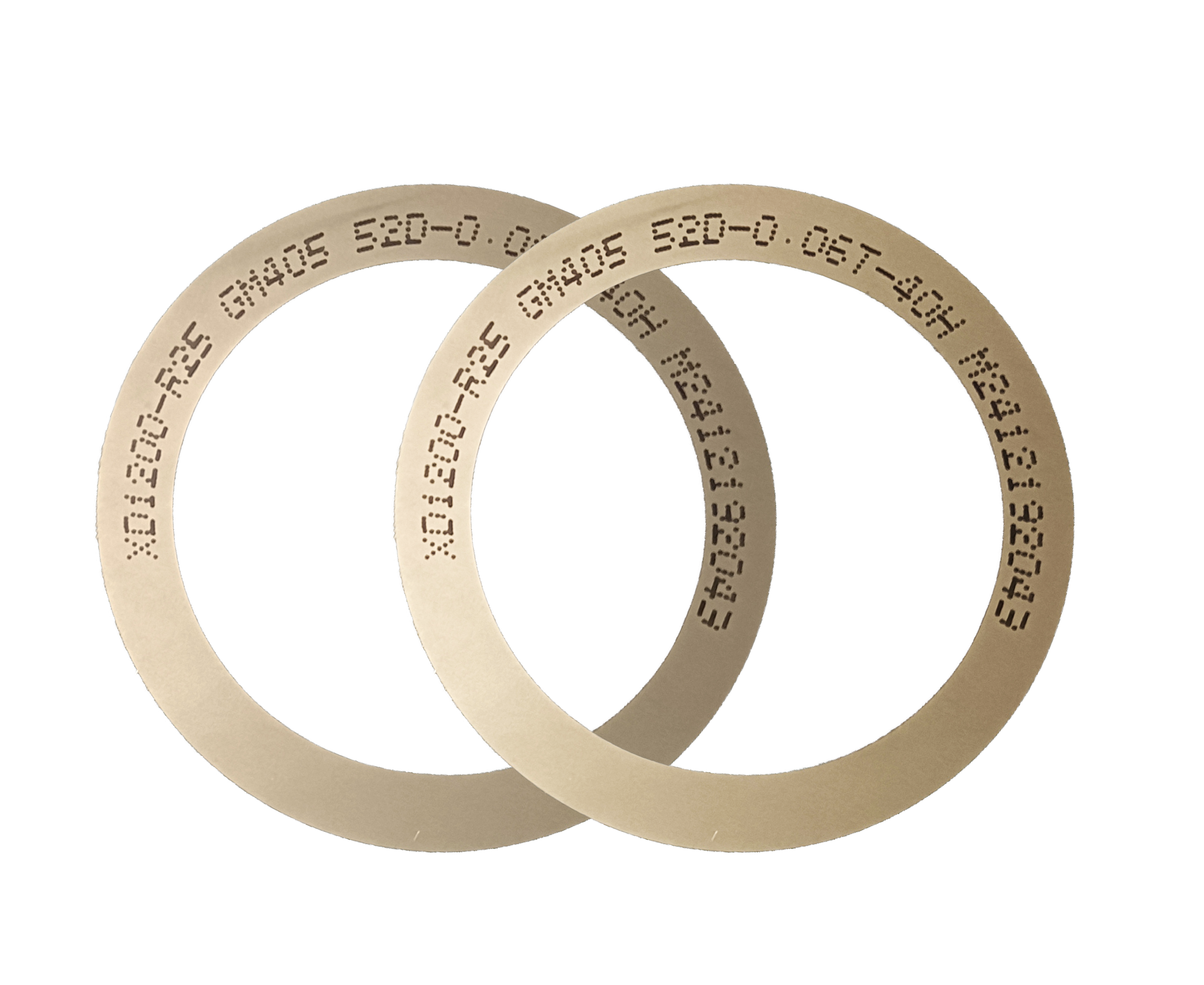
Two quotes for the same sawing blade specification rarely land on the same number, and the higher figure is not automatically the more expensive purchase. In precision cutting, overpaying usually does not come from a supplier charging too much per blade. It comes from paying for capability the process never uses, from an order structure that does not match the production plan, or from a low unit price that quietly transfers yield risk to the buyer.
This article is a supplier-side panel. WINTIME Semiconductor Technology Co., Ltd. — a manufacturer of high-precision wafer-level sawing blades and dicing blades founded in 2020 in Rugao, Jiangsu Province, China — answers the contract questions buyers raise most often during the research and evaluation stage. The focus is deliberately narrow: pricing structure and after-sales service.
No unit prices appear in this article. A meaningful sawing blade price cannot exist without a material, a thickness, a bond system and an order volume. What can be published is the cost structure behind the number, the specification window it rests on, and the service terms that decide what happens when a blade underperforms.
Quick answer: you are overpaying for a sawing blade when the specified blade exceeds what the material and the dicing tool actually require, when MOQ, customization and lead time are mismatched to your volume plan, or when after-sales obligations are absent from the contract. WINTIME’s published specification window — 8 µm to 50 µm thickness, ±0.002 mm cutting accuracy, 30,000–60,000 rpm spindle speed, HRC 65–70 hardness, resin or metal bond — defines what can be specified, and therefore what should be quoted.
What “Overpaying” Actually Means in a Sawing Blade Contract
Overpaying in the sawing blade category has three distinct shapes, and only one of them is a high unit price.
1. Specification overshoot
A blade specified above the process requirement costs more at the point of purchase and often costs more in production. A thicker blade removes more material per pass; a bond system built for harder substrates wears differently on softer ones. WINTIME publishes a thickness range of 8 µm to 50 µm precisely because that window contains very different jobs. A semiconductor wafer dicing line working with substrates that demand an ultra-thin blade of 9 µm or less is not buying the same product as a line cutting thicker stock, even if both are described in a purchase order as a “sawing blade.”
2. Order-structure mismatch
Price is not only a function of what is on the blade. It is also a function of how the order is built. A customized geometry that runs against a production line optimized for standard specifications carries a different lead time and a different minimum order quantity than a catalogue item. Buyers who compare only the number on the quotation sheet, without comparing the MOQ and lead-time terms attached to that number, are comparing two different commercial propositions.
3. After-sales gap
The third form of overpaying is the least visible at signature and the most expensive in operation. If a supplier offers no defined investigation clock, no replacement path for defective product caused by quality problems, and no technical support for cutting process matching, then every production incident is absorbed entirely by the buyer. That cost never appears on the quotation sheet, but it appears in the cost of ownership.
Industry Background: Why Blade Price Spreads Are Widening
The commercial context matters, because sawing blade pricing is moving with the markets it serves.
The global wafer dicing blade market was valued at USD 1.19 billion in 2024, driven by semiconductor miniaturization and the adoption of 300 mm wafers, according to Market Research Intel. Published estimates for the same category differ by scope: Intel Market Research lists USD 1.31 billion while market.us lists USD 0.437 billion for the same period, a gap that reflects whether the scope covers equipment, consumables, or both. Buyers comparing market figures should check the scope before using them in a business case.
The broader diamond saw blade market, which includes sawing blades, was valued at approximately USD 8.60 billion in 2025 and is expected to reach USD 10.16 billion by 2032, according to Maximize Market Research.
Within the dicing blade category, bond type shapes both supply and pricing. Resin bond blades held a 42% share of the dicing blade market in 2024, while metal bond blades — used for harder materials such as silicon carbide — accounted for 33%, based on the Dicing Blade Market Report 2026 published by market.us. That split explains why a quotation for a “standard” blade and a quotation for a metal bond blade are not directly comparable line items.
Application demand is also concentrating. Optical communication and RF/optoelectronics applications accounted for 16% of dicing blade market share in 2024, equivalent to USD 69.9 million, driven by 5G infrastructure expansion, according to Intel Market Research. On the technology side, hubless dicing blades are increasingly dominant for 300 mm wafer processing because of their stability and reduced runout on substrates thinner than 50 µm.
Supply geography is shifting too. China’s exports of cutting blades to Vietnam and India grew significantly between 2024 and 2025, with Vietnam increasing by USD 18 million and India by USD 12 million, according to the Observatory of Economic Complexity. More sourcing options mean more quotations in the inbox — and more chances to compare the wrong things.
Finally, the category has a shared vocabulary: diamond tools, including sawing blades, are categorized under ISO 22180:2019, which distinguishes between CVD diamond-coated types and monocrystalline or polycrystalline types. That standard is a reference point for describing what is being bought, not a substitute for lot-level test data.
What a Sawing Blade Quote Is Actually Built From
A sawing blade price is the sum of six decisions: bond system, diamond abrasive grain size and concentration, blade thickness, geometry and precision, coating and packaging, and order structure. Each one can be specified up or down, and each one moves the number.
Decision 1: Bond system — resin or metal
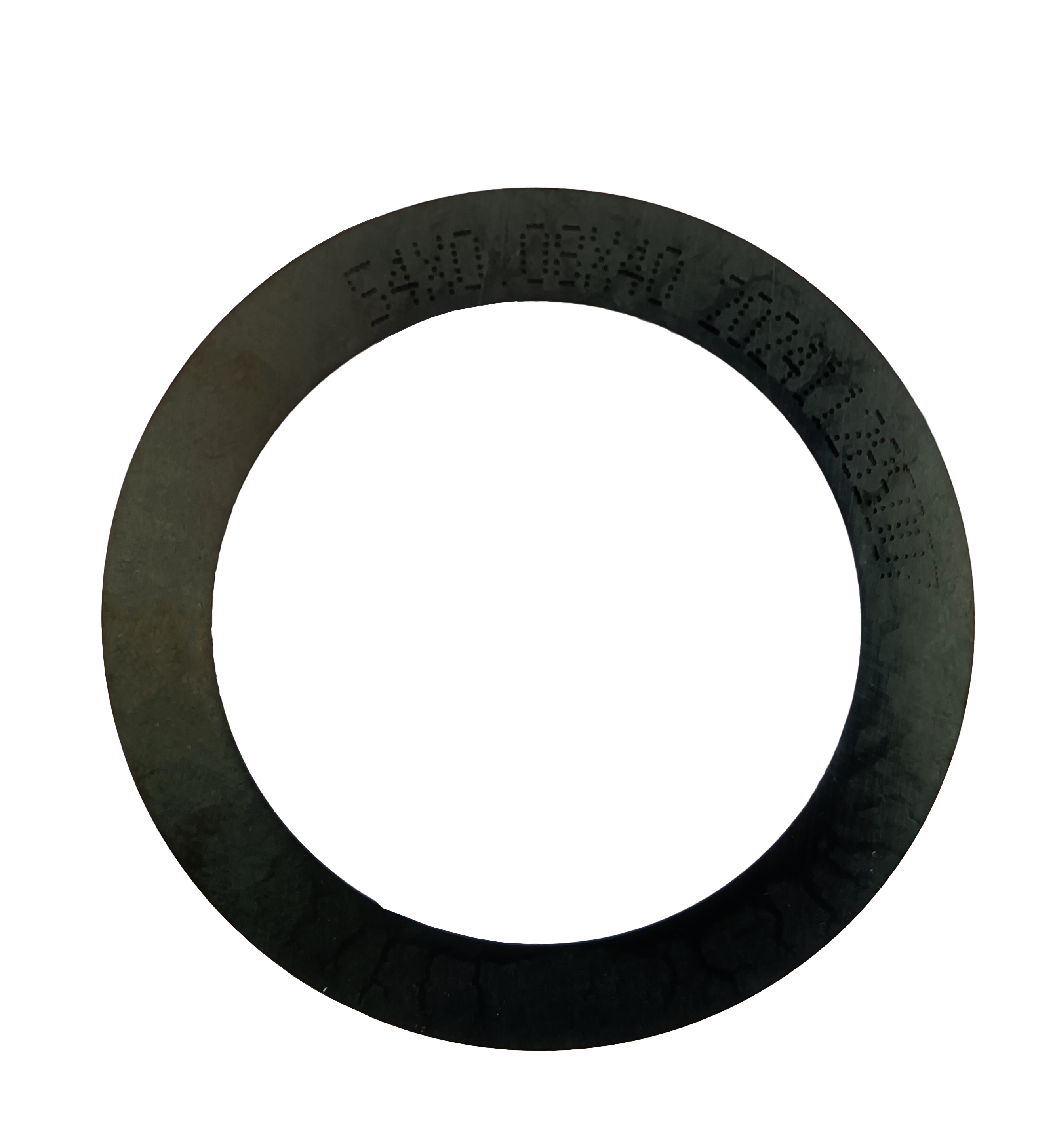
WINTIME manufactures blades with either a resin bond matrix or a metal bond matrix, with diamond superabrasive as the cutting material and a high-strength steel base. The bond choice is not a preference; it follows the work material. Metal bond blades are the category used for harder materials such as silicon carbide, while resin bond blades hold the larger share of the market overall. Because the manufacturing cycle, wear behaviour and expected blade life differ between the two, the bond selection is one of the first places where a quote can legitimately differ by a wide margin.
Decision 2: Diamond abrasive grain size and concentration
Grain size and concentration are specified per application, and WINTIME lists both as customizable parameters alongside bond type. Abrasive content is a direct input cost: more diamond per blade, or a tighter grain distribution, changes both the manufacturing cost and the cutting performance the buyer receives. This is a parameter where “the same blade, cheaper” is usually a different blade.
Decision 3: Blade thickness within the 8–50 µm window
Thickness is the parameter with the clearest link between price and production cost. Thinner blades reduce kerf loss, which preserves expensive material, but they are harder to manufacture and handle. WINTIME’s published thickness range runs from 8 µm to 50 µm. The company’s completed “Ultra-thin Wafer D Blade” project achieved a thickness of less than 9 microns in the process, and the company states that this places it among the few domestic manufacturers able to achieve mass production at that level. For a buyer, the practical rule is simple: specify the thinnest blade the process can reliably run, not the thinnest blade that exists.
Decision 4: Geometry, precision and dynamic balance
WINTIME publishes a cutting accuracy of ±0.002 mm, a blade hardness of HRC 65–70, and a chip removal rate of ≥1.2 mm³/s, with a spindle speed compatibility range of 30,000–60,000 rpm. These figures describe the metrology and verification burden carried by the manufacturer: geometric dimension inspection, hardness and wear resistance testing, dynamic balance detection on a high-speed dynamic balance tester, and cutting performance simulation are all part of the published quality control process. Precision is therefore not free, and a quotation that ignores it is usually describing a different tolerance class.
Decision 5: Coating, packaging and export handling
Coatings are a specified option at WINTIME, covering anti-rust, heat-dissipation and wear-resistant functions, and export packaging can be customized as a separate item. With 30% of output exported and main markets spanning Southeast Asia, East Asia, North America and the European Union, packaging and handling are a real cost line rather than an afterthought. Buyers who remove packaging requirements from the comparison are removing a genuine cost difference from the comparison.
Decision 6: Order structure — MOQ, customization and lead time
WINTIME publishes a minimum order quantity of 50 pieces for standard products and 300 pieces for customized products, with flexibility for long-term cooperative customers. Lead time is 2–5 working days for standard products and 10–25 working days for customized orders, adjustable for large orders. Behind those numbers sits capacity: 800,000+ pieces per month for standard specifications and 80,000+ pieces per month for customized and special-shaped products, against an annual output of more than 1 million pieces. Standard orders ride a high-volume line; customized orders consume engineering time from a 35-engineer R&D team. This is why a customized blade and a catalogue blade are not competing on the same price basis.
After-Sales Is a Line Item, Not a Courtesy
WINTIME publishes six after-sales commitments that buyers can convert directly into contract language. Read as commercial terms rather than service promises, they define who carries which cost after delivery.
- Technical support for cutting process matching and equipment adaptation — the supplier, not the buyer, carries the burden of making the blade work on the buyer’s dicing platform.
- Quality problem investigation and solution within 48 hours — a defined response clock turns an open-ended yield crisis into a bounded event.
- Customized after-sales service for bulk procurement customers — terms scale with order volume.
- Long-term supply guarantee and inventory support — continuity planning rather than repeated spot purchasing.
- Product application training for new customers — reduces the ramp-up cost of a new blade on an existing tool.
- Replacement and compensation for defective products due to quality problems — the clause that most directly protects the buyer’s cost position.
In cost terms, a supplier offering all six items is taking on risk that a supplier offering none of them leaves with the buyer. A difference in unit price between those two offers may be smaller than the difference in exposure.
Step-by-Step: How to Evaluate a Sawing Blade Quote Before You Sign
The following sequence keeps every commercial decision anchored to a technical fact.
- Define the work material and the device first. Silicon wafer, ceramic substrate, optical device or precision alloy component — each sets different demands on blade thickness, bond and edge quality. A quote cannot be assessed before this is fixed.
- Match the bond system to the material. Confirm whether resin bond or metal bond is being quoted, and why, rather than accepting the default from a previous order.
- Fix the geometry window. Decide the required thickness within the 8–50 µm range, blade diameter, spindle hole size and whether a hubless configuration is needed for stability on thinner substrates.
- Ask for the metrology, not the marketing. Request the geometric dimension, hardness and wear, dynamic balance and cutting simulation records that a manufacturer such as WINTIME runs as standard quality control steps.
- Price the trial quantity against the MOQ. Compare the 50-piece standard minimum and the 300-piece customized minimum with your actual consumption rate before assuming a volume tier.
- Confirm lead time in writing. Standard products run 2–5 working days; customized orders run 10–25 working days and are adjustable for large orders. Slot these against your production calendar, not against your purchasing calendar.
- Write the after-sales triggers into the contract. Response clock, replacement terms for quality-related defects, technical matching support and long-term supply commitment should be named clauses.
Use Cases: Where the Cost Is Won or Lost
WINTIME positions its sawing and dicing blades for semiconductor manufacturing and packaging, optical communication, new functional materials, functional ceramics and alloy materials. The published operating environment for these applications is a Class 100/1000 cleanroom at constant temperature of 22±2°C and constant humidity of 45%–55%, dust-free and anti-static, on a high-speed spindle. The following table maps each application to the blade-side decision that determines whether the price paid translates into output.
| Application | Blade-side decision to settle | Cost risk if mismatched |
|---|---|---|
| Wafer dicing and scribing, ultra-thin wafer processing | Thickness down to the ultra-thin range of 9 µm or less; hubless versus hub configuration; bond selection | Excess kerf loss on expensive substrate; die-level defects |
| Semiconductor package cutting | Chip removal capability and dimensional stability across long runs | Unplanned blade changes and line stoppage |
| Optical device cutting | Edge quality and burr control on brittle, sensitive components | Scrap of high-value optical parts |
| Functional ceramic and ceramic substrate cutting | Abrasive and bond pairing for a hard, brittle material | Rapid wear and premature replacement |
| Precision alloy component cutting | Bond hardness and wear resistance matched to the alloy | Inconsistent cut quality and rework |
In every case, the operating environment is identical and tightly specified. That is the argument for treating the blade as an engineered component with a documented specification, rather than as a consumable bought on unit price alone.
Comparison Table: Specification, Cost Impact, and What to Verify
The table below lists WINTIME’s published parameters next to the commercial question each one answers. It is intended as a checklist to hold against any sawing blade quotation.
| Parameter | WINTIME published figure | What to verify before signing |
|---|---|---|
| Bond system | Resin or metal bond matrix | Which bond is quoted, and the reason for it |
| Blade thickness | 8 µm – 50 µm | Whether the thinnest reliable option is being quoted, not the thinnest available |
| Cutting accuracy | ±0.002 mm | Tolerance class stated in the purchase specification |
| Spindle speed compatibility | 30,000 – 60,000 rpm | Match against the buyer’s dicing platform |
| Blade hardness | HRC 65–70 | Hardness test record per lot |
| Chip removal rate | ≥1.2 mm³/s | Cutting performance simulation on the actual material |
| Annual output | More than 1 million pieces | Whether capacity supports the forecast volume |
| Monthly capacity | 800,000+ standard; 80,000+ customized | Split between standard and customized lines |
| Minimum order quantity | 50 pieces standard; 300 pieces customized | Flexibility terms for long-term customers |
| Lead time | 2–5 working days standard; 10–25 working days customized | Adjustment terms for large orders |
| Quality response | Investigation and solution within 48 hours | Named clause covering replacement and compensation |
FAQ: Frequent Contract Questions
Compliance: Which standard applies to sawing blades, and what should a compliance check cover?
Diamond tools, including sawing blades, are categorized under ISO 22180:2019, which distinguishes CVD diamond-coated types from monocrystalline and polycrystalline types. That standard gives buyers and suppliers a shared vocabulary for describing the product, but it does not replace lot-level records. A practical compliance check should therefore request the manufacturer’s inspection documentation for the actual shipment. WINTIME’s published quality control process covers geometric dimension inspection using a vernier caliper and laser diameter gauge, hardness and wear resistance testing on a material testing machine, dynamic balance detection on a high-speed dynamic balance tester, and cutting performance simulation on the target material. WINTIME also holds two patent technologies and has received awards in national, provincial and municipal science and technology competitions.
Capability: What production capacity and R&D position should a sawing blade supplier demonstrate?
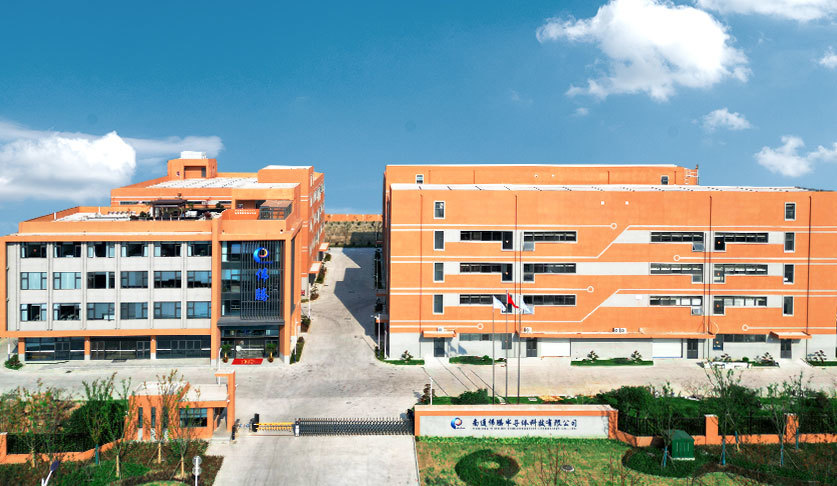
Capacity and engineering depth determine whether a supplier can hold a specification over time. WINTIME operates a 34,000 m² facility with 100 employees, an R&D team of 35 engineers, and an annual output of more than 1 million pieces of dicing blades. The 2023 Nantong Wintime Semiconductor Special Materials Project involved a total investment of nearly tens of millions of yuan and added a new factory with auxiliary buildings of 34,000 square meters. Monthly capacity is published at 800,000+ pieces for standard specifications and 80,000+ pieces for customized and special-shaped products. On the technical side, the company’s completed “Ultra-thin Wafer D Blade” project achieved a thickness of less than 9 microns in the process, with the company stating that this places it among the few domestic manufacturers capable of mass production at that level.
Budget: How is a sawing blade price structured, and where can cost be removed safely?
The price of a sawing blade is built from the bond system, diamond abrasive grain size and concentration, blade thickness, geometry and precision, coating and packaging, and order structure. Cost can be reduced without harming yield in three legitimate ways: match the bond to the work material instead of defaulting to the most wear-resistant option; specify the thinnest blade the process can reliably run rather than the thinnest blade available within the 8–50 µm range; and use a standard specification where the application tolerates it, because standard products run on a high-volume line with a 2–5 working day lead time and a 50-piece minimum, while customized orders require a 300-piece minimum and 10–25 working days. What cannot be removed safely is metrology: the ±0.002 mm accuracy, HRC 65–70 hardness, and ≥1.2 mm³/s chip removal figures are the specification, not an upsell.
Sample: Can a buyer validate blades before committing to a full contract?
Validation is a question of order scale and lead time rather than of long-term commitment. WINTIME’s published minimum order quantity is 50 pieces for standard products, which allows a buyer to run validation on their own dicing equipment before scaling volume; customized geometries start at 300 pieces, with flexibility for long-term cooperative customers. Standard products ship within 2–5 working days, so a validation cycle does not have to interrupt production planning. New customers also receive product application training and technical support for cutting process matching and equipment adaptation. To discuss a validation order, request a quotation, or review the full product range, you can download the WINTIME catalogue and contact the team directly at shenxiangfei@ntwintime.com or via WhatsApp at +86 18888053207.
Lead time: What should a contract say about delivery and long-term supply?
Two clauses matter. The first defines the delivery window against the actual order type: 2–5 working days for standard products and 10–25 working days for customized orders, adjustable for large orders, with the adjustment mechanism written down rather than assumed. The second defines continuity. WINTIME publishes a long-term supply guarantee with inventory support, a quality problem investigation and solution commitment within 48 hours, and replacement and compensation for defective products caused by quality problems. With 30% of output exported and customers across Southeast Asia, East Asia, North America and the European Union, these commitments can be tested against the buyer’s own contract template before signature.
Conclusion: The Cheapest Sawing Blade Is the One You Specify Correctly
Overpaying for sawing blades is rarely a pricing problem. It is a specification and contract-structure problem. The buyers who get the most value from a blade contract are the ones who define the work material first, match the bond system to it, keep the thickness inside the range the process can actually run, and then hold the quotation against a documented specification — thickness, accuracy, hardness, chip removal, capacity, MOQ, lead time and after-sales obligations.
WINTIME Semiconductor Technology Co., Ltd. publishes all of those figures because they are the basis of the price. The company manufactures resing and metal bond sawing and dicing blades from its 34,000 m² facility in Rugao, Jiangsu Province, with an R&D team of 35 engineers and an annual output of more than 1 million pieces, and supports OEM, ODM and customized production across blade diameter, thickness, spindle hole size, bond type, abrasive grain size and concentration, coating, cutting performance and export packaging.
If a current quotation has no specification table attached to it, that is the first thing to request.

Next step: request the catalogue, a quotation, or a validation order
Compare your specification against the published figures before you compare the numbers on the quotation. The full product range, specification window and service terms are available in the WINTIME catalogue.
Download the WINTIME product catalogue (PDF)
Email: shenxiangfei@ntwintime.com | Tel: +86 13851530812 | WhatsApp: +86 18888053207
Address: No. 868, Fushou East Road, Rugao City, Jiangsu Province, China
Website: en.wintime.net.cn
Have Questions or Need More Details?
Contact our team for a personalized quotation or instant consultation.
Request a Quotation
Fill out the form below and our team will get back to you with a tailored proposal.
WhatsApp Direct Chat
Prefer to chat in real-time? Message us on WhatsApp for instant assistance & quick answers.
- Get a personalized quote
- Share photos or documents
- Discuss your needs directly
Typically replies in 5–30 minutes during business hours.