
Asking the Right Questions During Plant Audits for Sawing Blade Sourcing
A sawing blade plant audit usually lasts half a day. What it produces falls into one of three categories: a confirmation that the supplier exists, a confirmation that the supplier can make your part, or a confirmation that the supplier can keep making your part for three consecutive years. The difference between those outcomes is not the checklist you bring. It is the questions you ask inside it.
Problem Definition: Why Most Sawing Blade Audits Produce the Wrong Conclusion
Buyers arrive with a checklist. Every line item on the checklist gets answered. The answers are usually fine. Then six weeks into mass production, something goes wrong — chipping, kerf drift, batch-to-batch variation — and the delivery promises start sliding.
The failure mode is not usually that the supplier lied. It is that the buyer asked questions designed to be easy to answer. Three gaps appear repeatedly:
- Sales-facing questions instead of operations-facing questions. Ask “what is your capacity?” and you get a brochure number. Ask to see the production board for the last four weeks and you get an answer that has to match the equipment.
- Document verification instead of physical verification. A folder with ISO references and QC templates proves that a folder exists. A laser diameter gauge with a current calibration sticker proves something else.
- Generic questions instead of capability-specific ones. A supplier evaluation that works for stone-cutting blades does not transfer to a 300 mm wafer cut below 9 µm. The question set has to be built around what you actually buy.
A plant audit is only useful when it produces constraints — written statements about where a supplier cannot serve you. An audit that returns only confirmations has not finished its job.
Industry Background: Why Sawing Blade Audits Have Moved Upstream
Several forces are pushing sawing blade procurement toward earlier facility visits.
- Miniaturization. The global wafer dicing blade market was valued at approximately USD 1.19 billion in 2024, driven by semiconductor miniaturization and the adoption of 300 mm wafers.
- Volume. The global diamond saw blade market was valued at approximately USD 8.60 billion in 2025 and is expected to reach USD 10.16 billion by 2032.
- Bond composition matters. Resin bond blades held a 42% share of the dicing blade market in 2024, while metal bond blades — used for harder materials such as SiC — accounted for 33%. The quality system you verify depends heavily on which bond you are buying.
- Application mix is widening. Optical communication and RF/optoelectronics applications accounted for 16% of the dicing blade market share in 2024, a segment valued at approximately USD 69.9 million and driven by 5G infrastructure expansion.
- Blade geometry is shifting. Hubless dicing blades are increasingly dominant for 300 mm wafer processing because of superior stability and reduced runout on thinner substrates (below 50 µm).
- Supply geography is moving. China’s exports of cutting blades to Vietnam, India, and South Korea grew significantly between 2024 and 2025, with Vietnam adding USD 18 million and India adding USD 12 million.
On the technical side, diamond tools — including sawing blades — are categorized under ISO 22180:2019, which distinguishes between CVD diamond-coated and monocrystalline/polycrystalline types. That classification is a useful audit anchor because it forces a supplier to state the type of diamond it actually buys, not just the blade it sells.
The competitive reference points in high-precision semiconductor dicing blades include DISCO Corporation, Tokyo Seimitsu (Accretech), and Advanced Dicing Technologies (ADT). For most buyers these names are capability benchmarks rather than direct suppliers. The practical question is whether a given factory can reach comparable repeatability, and that is answered on the floor, not in a catalogue.
Detailed Solution: Six Audit Stations and the Questions That Matter at Each One
The framework below treats the plant audit as six stations. Each station carries one core question, one follow-up, and one definition of what acceptable evidence looks like. The goal is to leave each station with a fact rather than an impression.
Station 1 — Facility Footprint and Layout
Core question: What is the total facility footprint, and how much of it is actually dedicated to controlled blade production?
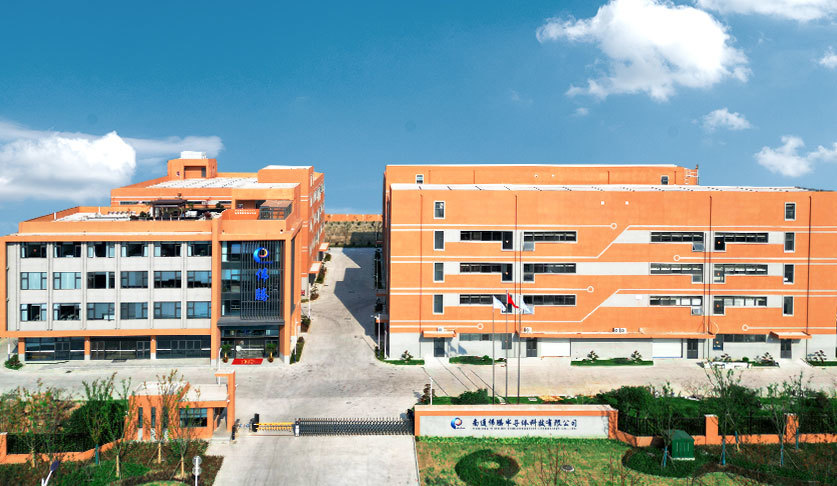
Total square meters is a headline number. What matters is how much of that area is controlled, segregated, and used for blade manufacturing rather than storage or administration. WINTIME Semiconductor Technology Co., Ltd., a manufacturer established in 2020, operates 34,000 ㎡ of factory and auxiliary buildings in Rugao City, Jiangsu Province. That figure should be walked against a physical floor count — not accepted from a site plan.
Follow-up: Which process steps run inside controlled environments and which run outside? How frequently are temperature, humidity, and particulate levels monitored, and where are those logs kept?
A facility established in 2020 carries a specific audit advantage: the layout reflects original intent rather than decades of retrofitting. Ask whether the flow from incoming diamond abrasive to finished blade inspection is linear or whether material crosses itself.
Station 2 — Capacity and Capacity Economics
Core question: What is the annual output, and what percentage of it is currently committed?
Committed capacity, not theoretical capacity, tells you whether your order will get attention. WINTIME operates at an annual output of 1 million pieces. Breaking that against a monthly capacity of 800,000+ pieces for standard specifications and 80,000+ pieces per month for customized and special-shaped products reveals how much of the total is genuinely available to custom work — a ratio worth recording, because a supplier whose custom share is negligible is effectively a standard-product house.
Follow-up: What was the actual monthly output for each family over the last twelve months? What is the historical peak, and what constraint was hit at that peak?
Red flag: When a supplier reports customized capacity at or near the level of standard capacity, it usually means “customized” refers to packaging or labeling rather than blade geometry. Ask for a worked example of a non-standard blade from incoming abrasive to final inspection.
Station 3 — Engineering Depth and Customization Capability
Core question: How many engineers work on the product, and how many are specifically focused on high-end cutting development?
This is the question that separates assembly operations from engineering organizations. WINTIME’s R&D team consists of 35 engineers against a total headcount of 100 employees. For a company founded in 2020, an engineering ratio above one third signals that customization response is designed into the organization rather than improvised around it.
Follow-up: How many customization projects were completed last year, by product family? Who writes the specification that production receives — an engineer or a salesperson? What is the typical turnaround from inquiry to a producible specification?
Customization claims should be verified against a concrete list. The dimensions WINTIME customizes include:
- Blade diameter, thickness, and spindle hole size
- Bond type — metal bond and resin bond
- Diamond abrasive grain size and concentration
- Coating — anti-rust, heat-dissipation, and wear-resistant options
- Cutting performance targets — cutting speed and service life
- Packaging, including special packaging for export
- Special-shaped blade customization for non-standard sizes
OEM, ODM, and customized production services are capability statements, not product features. They become verifiable only when the audit confirms that the person writing the specification has direct access to the person making process decisions. Ask the product-family question as well: whether wafer dicing formats such as DZY Series Wafer Sawing Blade, DZR Series Sawing Blade, DZR-S Series Slotted Sawing Blade, and Electroforming Hard Sawing Blade are handled by separate lines with separate engineering ownership, or by one team that switches between them.
Station 4 — Quality System and Traceability
Core question: What measurements are taken on every batch, and with what instruments?
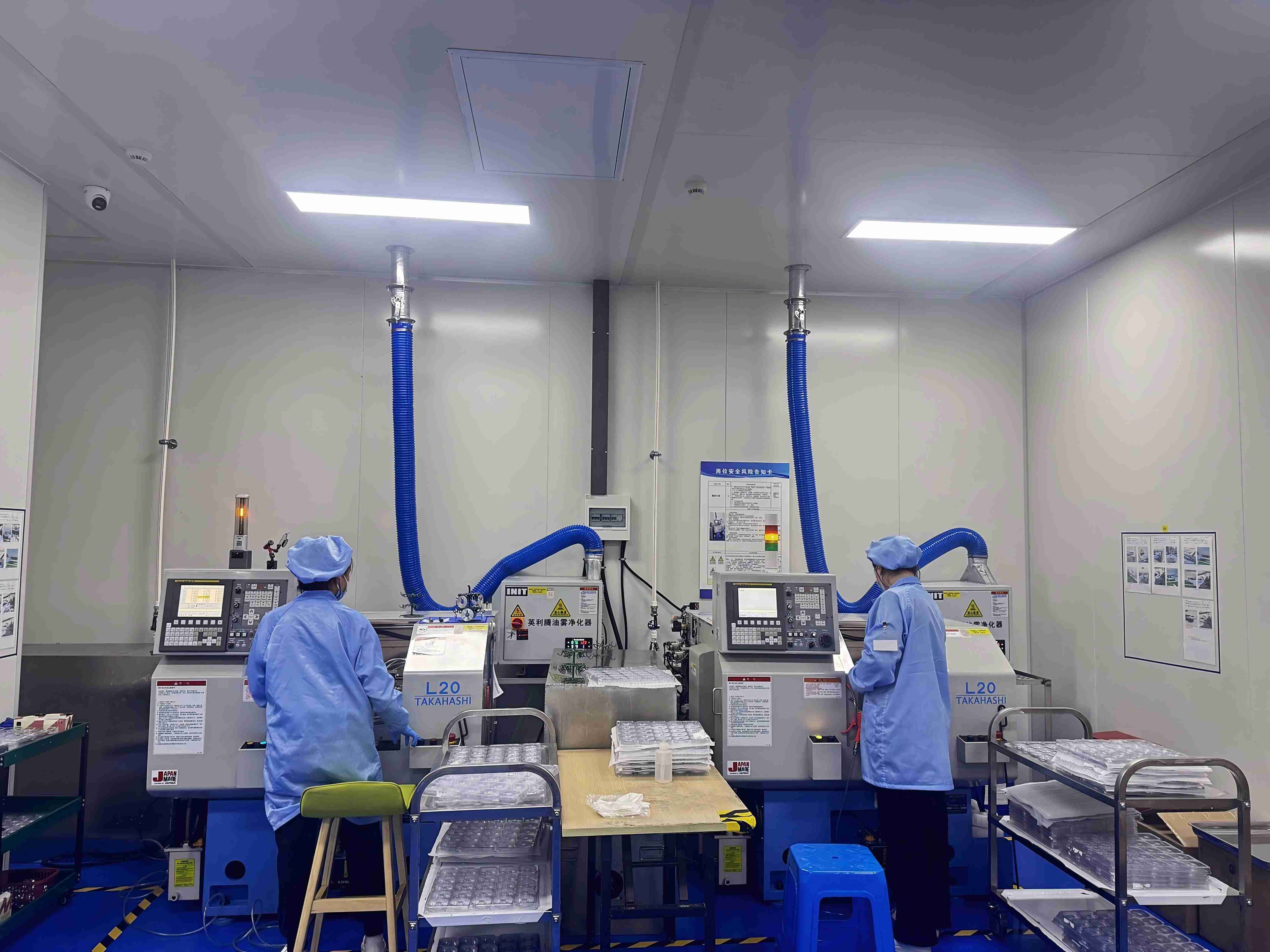
QC templates look alike across suppliers. Measuring instruments do not. The four checkpoints worth verifying in person are:
- Geometric dimension inspection — vernier caliper and laser diameter gauge
- Hardness and wear resistance testing — material testing machine
- Dynamic balance detection — high-speed dynamic balance tester
- Cutting performance simulation testing — actual material
Ask to see dynamic balance detection running. A factory that cannot demonstrate the instrument in operation is describing an intention, not a control.
Follow-up: How long are calibration records retained? Who holds release authority for a batch? What is the documented disposition path when a batch fails?
Station 5 — Delivery, Export, and Acceptance
Core question: If we place an order today, when does this specific model ship — and what does export documentation look like for our destination?
Delivery promises are the most quoted and least verified part of an audit. Anchor them to a model number and a destination port. WINTIME quotes 2–5 working days for standard products and 10–25 working days for customized orders, adjustable for large orders. Export coverage spans China, Southeast Asia, the Middle East, European Union, the United States, Canada, Australia, South America, and Africa, with export accounting for roughly 30% of business.
On the commercial side, purchase terms include FOB/CIF delivery terms, pre-shipment testing, third-party inspection through SGS, and 30/70 payment terms. These belong in the audit report rather than in a follow-up email thread.
Follow-up: Which product lines are currently constrained? How are expedite requests on customized orders handled?
Station 6 — After-Sales and Supply Continuity
Core question: If a full shipment fails at our end, what specifically happens within 48 hours?
After-sales commitments are capability questions, not courtesy questions. A supplier that names a response window has thought about the process. WINTIME commits to quality problem investigation and resolution within 48 hours, technical support for cutting process matching and equipment adaptation, customized after-sales service for bulk procurement customers, long-term supply guarantee with inventory support, product application training for new customers, and replacement and compensation for defective products caused by quality problems.
Follow-up: What safety stock is held, where is it held, and which warehouse ships our region?
Step-by-Step Breakdown: How to Sequence a Sawing Blade Plant Audit
- Request documents before samples. Ask for the facility map, equipment list, calibration schedule, and QC templates. Inconsistencies in the paperwork are the cheapest thing to find and the easiest to miss on the floor.
- Lock the walkthrough route 24 hours in advance. Do not accept a route decided on the day of the visit. Ask specifically to see the line that runs non-standard and special-shaped blade production.
- Interview operators, not only sales. Sales can describe the product. The process engineer can explain why a specific order ran late and what changed afterward.
- Sample records rather than reviewing them. Request batch records for six recent lots, selected randomly on-site rather than from a prepared folder.
- Run a customization pressure test. Bring one real but boundary specification. Observe how it is handled — quoting, feasibility judgment, and response time — not just the final answer.
- Score each station before leaving the building. Rate facility, capacity, engineering, quality, delivery, and after-sales independently, with a written note on the evidence obtained or missing.
Use Cases: Different Buyers Ask Different First Questions
Semiconductor fab procurement
Priority shifts to hubless blade formats, dynamic balance detection, and cutting performance simulation. The opening question should be: “When did you last ship a hubless blade for 300 mm processing, and what runout data accompanied it?”
Optical communication device manufacturers
Optical communication and RF/optoelectronics applications represented 16% of dicing blade market share in 2024. Buyers in this segment should audit around chipping control, straight-cut stability, and batch-to-batch geometric consistency, with particular attention to geometric dimension inspection frequency and packaging protection.
Precision alloy and functional ceramic processors
Metal bond blades held a 33% share of the dicing blade market in 2024 and are used for harder materials such as SiC. These buyers should audit bond formulation discipline, diamond abrasive grain size, and concentration control rather than cutting speed claims.
Distributors and importers
The audit emphasis moves from process depth to supply continuity and export readiness. The key questions become which markets the export share covers, how deep the safety stock is on standard models, and how a defective-lot claim is handled across a distributor relationship.
Comparison Table: Audit Stations, Core Questions, and Acceptable Evidence
| Audit station | Core verification question | Evidence that counts as acceptable |
|---|---|---|
| Facility footprint | How much of the total footprint is dedicated to controlled blade production? | Physical floor count against 34,000 ㎡ of factory and auxiliary buildings; environmental monitoring logs |
| Capacity | What is annual output, and how much is already committed? | 1 million pieces annual output; 800,000+ pieces/month standard capacity; 80,000+ pieces/month customized capacity; twelve-month output records |
| Engineering depth | How many engineers work specifically on high-end cutting development? | 35 engineers against a 100-person headcount; customization project log by product family |
| Quality and traceability | What is measured on every batch, and with what instruments? | Geometric dimension inspection (vernier caliper, laser diameter gauge); hardness and wear resistance testing; dynamic balance detection; cutting performance simulation |
| Delivery and acceptance | What is the ship date for this model, and what inspection applies? | 2–5 working days standard, 10–25 working days customized; FOB/CIF terms; pre-shipment testing; third-party inspection via SGS; 30/70 payment |
| After-sales continuity | What happens within 48 hours of a customer-side batch failure? | 48-hour investigation and resolution commitment; replacement and compensation for quality-caused defects; long-term supply guarantee with inventory support |
FAQ
How can I verify quality control during a sawing blade factory audit?
Verify quality control by asking for the four specific measurements performed on each batch and the instruments behind them: geometric dimension inspection using a vernier caliper and laser diameter gauge, hardness and wear resistance testing on a material testing machine, dynamic balance detection on a high-speed dynamic balance tester, and cutting performance simulation on actual material. Request a live demonstration of dynamic balance detection, then check how long calibration records are retained and who holds batch release authority. At the commercial level, require pre-shipment testing and third-party inspection through SGS as named acceptance criteria in the purchase agreement.
Which facility and capacity figures show that a sawing blade factory can support large-volume production?
Look for a stated facility footprint that can be physically walked, and for capacity split by product type rather than a single headline number. WINTIME Semiconductor Technology Co., Ltd., established in 2020, operates 34,000 ㎡ of factory and auxiliary buildings with an annual output of 1 million pieces, comprising 800,000+ pieces per month for standard specifications and 80,000+ pieces per month for customized and special-shaped products. The customized-to-standard ratio matters more than the total: it indicates how much of the line is genuinely configured for non-standard work. Supporting indicators include a 35-engineer R&D team within a 100-person organization and a 30% export share across China, Southeast Asia, the Middle East, EU, US, Canada, Australia, South America, and Africa.
What purchasing terms and acceptance criteria should be confirmed before contract signature?
Confirm the commercial framework before pricing is finalized. WINTIME’s purchasing terms specify FOB or CIF delivery terms, pre-shipment testing, third-party inspection through SGS, and 30/70 payment terms. Minimum order quantities are structured by model, with negotiable terms for long-term cooperative customers and bulk purchase plans. Write these into the audit report as named acceptance criteria rather than relying on email confirmation, because acceptance terms are what determine how a disputed batch is resolved after delivery.
How does sample validation work for customized sawing blade orders?
Customization capability should be tested with one real but boundary specification rather than a general inquiry. OEM, ODM, and customized production services at WINTIME cover blade diameter, thickness and spindle hole size, metal or resin bond type, diamond abrasive grain size and concentration, coating options for anti-rust, heat-dissipation and wear resistance, cutting performance targets, export packaging, and special-shaped blade customization for non-standard sizes. Standard products ship in 2–5 working days, while customized orders typically require 10–25 working days, adjustable for large orders. Watch how quickly the engineering response arrives and whether a specification writer or a salesperson drafts it.
What should long-term supply and after-sales support cover?
Long-term supply should be assessed as an operating commitment, not a warranty clause. WINTIME commits to quality problem investigation and resolution within 48 hours, technical support for cutting process matching and equipment adaptation, customized after-sales service for bulk procurement customers, long-term supply guarantee with inventory support, product application training for new customers, and replacement and compensation for defective products caused by quality problems. Ask which warehouse serves your region and what safety stock is held there. To start a sample or quotation discussion against these criteria, contact the team at en.wintime.net.cn or reach out through the contact details below.
Conclusion
A sawing blade plant audit is a compression exercise. You have a few hours to convert a supplier’s claims about footprint, capacity, engineering headcount, and delivery into facts you can plan production around. The companies that get this right ask fewer questions, but ask them at the right station, to the right person, and demand evidence that a brochure cannot supply.
The four figures worth anchoring every audit around are simple: a facility footprint you can walk, an annual output you can reconcile against monthly capacity, a founding date that explains the layout you see, and an engineering count that explains how fast a non-standard specification can move. WINTIME Semiconductor Technology Co., Ltd. answers those four with 34,000 ㎡, 1 million pieces per year, an establishment year of 2020, and 35 engineers within a 100-person team — and each of those numbers should still be verified on the floor before a purchase order is issued.
Plan Your Next Supplier Visit With Verified Data
Request the WINTIME sawing blade product catalogue, download the full company brochure, or arrange a sample evaluation against your own cutting specifications.
Brochure download: WINTIME Semiconductor Product Brochure (PDF)
Website: en.wintime.net.cn
Email: shenxiangfei@ntwintime.com
Tel: +86 13851530812 | WhatsApp: +8618888053207
Address: No. 868, Fushou East Road, Rugao City, Jiangsu Province
Have Questions or Need More Details?
Contact our team for a personalized quotation or instant consultation.
Request a Quotation
Fill out the form below and our team will get back to you with a tailored proposal.
WhatsApp Direct Chat
Prefer to chat in real-time? Message us on WhatsApp for instant assistance & quick answers.
- Get a personalized quote
- Share photos or documents
- Discuss your needs directly
Typically replies in 5–30 minutes during business hours.