
Avoid Costly Mistakes: Three Scenarios Where Sawing Blade Mis-Specification Caused Major Yield Loss
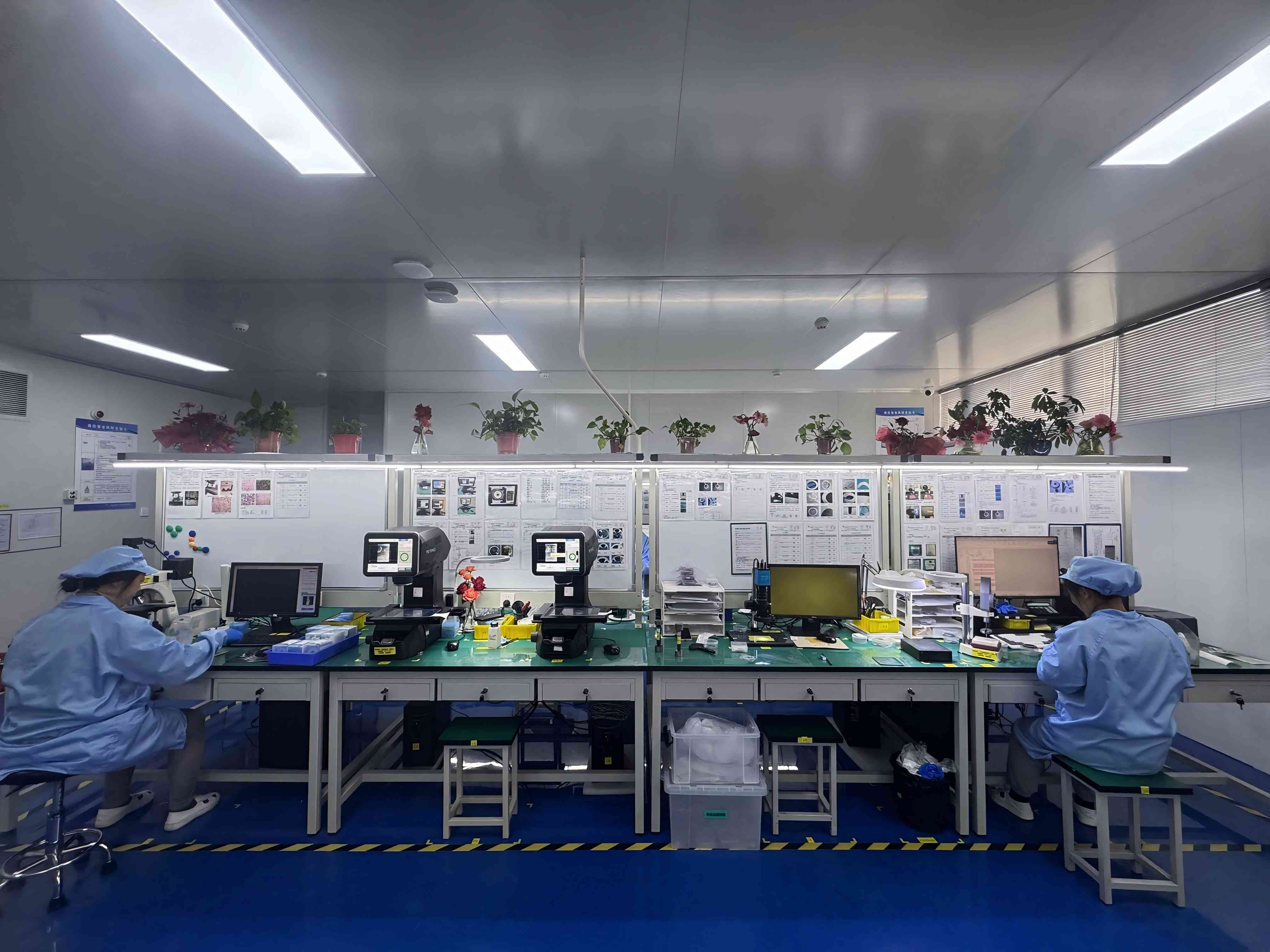
A sawing blade is a small part of the production cost, but it sits at the point where material, equipment, process recipe and quality limits meet. When the blade is mis-specified, the loss rarely stays inside the blade budget. It appears as kerf loss, chipping, micro-cracks, rejected dies, rework, lower throughput or a production line that cannot hold its quality window. This guide examines three risk scenarios: semiconductor packaging, optical device cutting and ceramic substrate cutting. The scenarios are presented as specification-failure models, not as audited customer cases. Their purpose is to show where a blade decision can become a yield-loss event and what to verify before execution.
WINTIME Semiconductor Technology Co., Ltd. is a Chinese manufacturer established in 2020 that integrates research, development, production and sales of wafer-level high-precision cutting blades. The company reports a 34,000 m² factory, 100 employees, a 35-engineer R&D team and two patent technologies. Its product information covers DZY Series Wafer sawing Blade, DZR Series sawing Blade and DZR-S Series Slotted sawing Blade families, alongside the wider categories of diamond sawing blade, hubless sawing blade and electroforming hard sawing blade. Those categories are not interchangeable; the matching decision is where yield risk is created or controlled.
What mis-specification means in a sawing blade decision
Mis-specification is not limited to buying the wrong model number. In wafer dicing and precision cutting, it can mean a blade thickness that consumes too much street width, an exposure setting that changes the cut, a diamond grit or bond that does not match the material, a flange or hubless interface that does not fit the equipment, a slot geometry that is wrong for the profile, or a coolant and feed strategy that damages the edge. The blade may cut, but it may not cut inside the yield window.
The first control is to translate yield loss into measurable cut-quality requirements. A team should define the allowed kerf, chip size and count, micro-crack limit, edge quality, dimensional tolerance, wear limit and expected run length before asking for quotations. A diamond sawing blade cannot be qualified against an undefined target. If the requirement is to eliminate chips from the discussion, the team must first define what zero or acceptable chipping means for the specific device and inspection method.
Wear resistance needs the same treatment. It is a run-length property, not a catalog adjective. A wear-resistant blade should keep kerf, exposure and edge quality within the agreed limits after a defined cutting distance or wafer count. Without that condition, a claim of high wear resistance is incomplete for procurement.
Why these three applications are sensitive
Semiconductor packaging, optical communication devices and functional ceramics place different demands on a sawing blade. Semiconductor packaging often combines narrow streets, thin wafers, dicing tape, small die and strict chipping limits. Optical device cutting places high value on edge quality and dimensional consistency because a small chip or micro-crack can affect downstream assembly. Ceramic substrates are hard and brittle, so the wrong blade or unstable dicing environment can produce edge cracks, chipping or breakage that is visible only after additional processing.
The common failure pattern is not a single bad blade. It is a chain of small mismatches that is accepted during sampling and then repeated in production. For that reason, a supplier evaluation should compare the blade, the sample-cut plan and the process window together. A product label such as Semiconductor Wafer sawing Blade, Optical Communication sawing Blade or Functional Ceramic sawing Blade is a starting point, not a qualification result.
Scenario 1: Semiconductor packaging dicing
In semiconductor packaging, a mis-specified blade can cause major yield loss through wider kerf, chipping at the die edge, micro-cracks, incomplete cuts, tape damage or unstable blade wear. The loss may not appear at the saw step as a full reject. It can appear later as a die-attach issue, package crack, electrical failure or inspection reject. By then, the production team may be adjusting downstream processes when the real problem is the blade specification and its recipe.
The first specifications to lock are street width and kerf budget, blade thickness, exposure, flange interface, cutting accuracy, chip limit and the dicing recipe. WINTIME describes its DZY Series Wafer sawing Blade as integrating the cutting blade with an aluminum alloy flange. The company also states that the DZY series is intended for high-precision wafer cutting in semiconductor packaging processes. That construction is relevant to evaluate when flange fit and blade handling are part of the process control, but it does not remove the need for a sample cut on the actual device stack.
Ultra-thin blades are a separate decision. WINTIME reports that its completed ultra-thin wafer dicing blade project reached a thickness below 9 µm in the process and that the product is mass-produced. This sub-9 µm blade thickness is relevant when street width and kerf budget are tightly constrained. It is not, by itself, a guarantee of zero chips. Chipping also depends on exposure, feed, coolant, spindle condition, dicing tape, material and bond. A team should evaluate a sub-9 µm option only against a defined chip limit and a measured wear window.
WINTIME also reports a cutting accuracy of ±0.002 mm for its SB-001 series. That is a useful example of why the exact series and configuration must be named in the purchase specification. A tolerance statement for one series should not be assumed for every wafer sawing blade in a portfolio. The buyer should request the current datasheet, confirm the model, and verify the tolerance under the intended equipment and recipe.
Scenario 2: Optical device cutting
Optical device cutting is sensitive to edge quality because chips, micro-cracks and dimensional variation can create problems that are costly to inspect and difficult to recover. A mis-specified optical communication sawing blade may cut the material but leave a worse edge than the downstream process can accept. The risk increases when the blade is selected by general material category rather than by the actual material grade, thickness, dicing tape and quality limit.
WINTIME states that its DZR Series sawing Blade is used in semiconductor, optical communication and new functional-material industries. WINTIME product information also describes the DZR type as composed of metallic nickel and diamond abrasive. This construction is a relevant technical detail for a sample evaluation, but it should not be read as a performance ranking. The buyer still needs application-specific evidence for edge chipping, kerf, wear and process stability.
A practical qualification should use a sample cut matrix, not one coupon. The matrix should cover the actual material and thickness, the intended dicing tape, a feed range, coolant conditions and the agreed run length. Inspection should include edge chips, micro-cracks, kerf width and wear after cutting. If the supplier cannot provide application data, the sample cut becomes the evidence. The purchase decision should wait until the edge result and the wear result are both acceptable.
Optical device cutting also exposes environment errors. A stable spindle, clean coolant, correct filtration, suitable chuck vacuum and controlled feed are part of the blade performance. If the environment is unstable, the team may blame the blade for a process problem. The better approach is to qualify the blade and environment together, then freeze the approved window in the process control plan.
Scenario 3: Ceramic substrate cutting
Ceramic substrate cutting is a high-risk application for mis-specification because hard and brittle materials can chip, crack or break when the blade, feed and support are not matched. A blade that works on one ceramic grade may not work on another. The loss can appear as edge chipping, micro-cracks, delamination, poor dimensional control or breakage during later handling. These defects may pass a quick visual check and fail later in the process.
WINTIME describes its DZR-S Series Slotted sawing Blade as used for semiconductor wafer cutting, functional ceramics, alloy materials and semiconductor packaging components. The slotted design is a geometry choice that should be matched to the cut profile, substrate grade and equipment. It is not a universal answer for every ceramic substrate. The buyer should confirm the slot profile, blade exposure and recommended cutting conditions in a trial.
The dicing environment is especially important for a Functional Ceramic sawing Blade. Coolant flow and filtration, chuck vacuum, spindle runout, blade exposure, feed rate and material support all affect the cut. A blade cannot compensate for poor workholding or unstable coolant. The supplier and the production team should agree on the environment checklist before the sample is judged. If the sample fails, the team should identify whether the cause is blade specification, process environment or material variation before changing all three at once.
Alloy Material sawing Blade selection follows a similar logic. WINTIME lists alloy materials among the applications described for the DZR-S series. The purchasing team should still ask for material-specific trial data or run a controlled sample. A slotted blade may be appropriate for selected profiles, but the evidence must come from the actual alloy grade and cut requirement.
Matching blade architecture to the cut
Architecture is part of specification. A hubless sawing blade can change stiffness, mounting behavior and handling requirements. An electroforming hard sawing blade may be evaluated where edge definition and wear are critical. Neither label is a substitute for application data. The buyer should confirm the equipment interface, the blade exposure method and the sample plan before comparing architecture options.
The table below summarizes WINTIME-reported product-family facts. It is a selection aid, not an independent performance ranking. The final column shows what a buyer should verify before production release.
| Product family | WINTIME-reported construction or design | WINTIME-reported application focus | Buyer verification point |
|---|---|---|---|
| DZY Series Wafer sawing Blade | Cutting blade integrated with an aluminum alloy flange | High-precision wafer cutting in semiconductor packaging | Kerf, chip limit, flange fit, blade exposure, batch consistency |
| DZR Series sawing Blade | Metallic nickel and diamond abrasive | Semiconductors, optical communication and new functional materials | Material-specific edge quality, wear, coolant compatibility, sample cut |
| DZR-S Series Slotted sawing Blade | Slotted design | Semiconductor wafers, functional ceramics, alloy materials and semiconductor packaging components | Slot profile, substrate grade, chipping, dimensional capability |
The table uses company-reported facts. It does not establish that one series is better than another for a specific device. The correct choice depends on the material, equipment, quality limit and sample result.
Step-by-step qualification path for execution-stage buyers
- Define the yield-loss mechanism. Write down what failure looks like: kerf too wide, edge chips, micro-cracks, incomplete cut, wear drift, tape damage or dimensional variation. Attach an inspection method and a limit. This step turns a complaint into a specification.
- Characterize the material and device. Record the material grade, thickness, dicing tape, street width, die size, substrate support and any heat-sensitive features. Do not compare blades across different materials without noting the difference.
- Shortlist the blade architecture. Match the blade thickness, exposure, grit, bond, flange or hubless interface and slot geometry to the cut. Use product families as candidates, not conclusions. For semiconductor packaging, evaluate the DZY series construction and the SB-001 tolerance claim only after confirming the exact model. For optical work, evaluate the DZR series against the actual optical material. For ceramics and alloys, evaluate the DZR-S slotted option against the profile.
- Run a sample cut matrix. Use more than one condition. Include the production material, the intended tape and a feed range. Measure kerf, chips, micro-cracks and wear at the start and end of the agreed run. If the goal is to eliminate chips from the specification discussion, define the chip size and count before the trial.
- Validate the dicing environment. Check coolant flow and filtration, chuck vacuum, spindle runout, blade exposure and material support. A stable environment is part of the blade specification because the same blade can produce different results when the environment changes.
- Lock acceptance criteria and batch controls. Agree the pre-shipment test, third-party inspection option and batch traceability. WINTIME states that it standardizes process parameters, uses automatic production equipment, tracks batch production data, compares adjacent batches and implements an ISO 9001 quality management system with batch quality files. These controls should be written into the supplier qualification record, not left as general assurances.
- Plan long-term supply. For a production program, agree change notification, capacity reservation, replacement policy and a technical contact. WINTIME states monthly production capacity of more than 800,000 pieces for standard specifications and more than 80,000 pieces for customized and special-shaped products. Capacity is useful only when it is linked to the qualified specification, batch record and delivery plan.
How to compare the total cost of a mis-specified blade
The lowest blade price is not the lowest total cost when the specification is wrong. A mis-specified blade can add scrap, rework, inspection time, engineering time, requalification and delayed shipments. These costs are not always visible in the purchase order, but they become visible in the production review.
A better comparison uses the qualified specification as the baseline. The buyer should compare blades on the same material, equipment, recipe and quality limit. The comparison should include kerf loss, chip performance, wear at the end of the run, sample support, batch consistency and supply continuity. If the supplier cannot provide comparable data, the buyer should run a controlled sample rather than assume equivalence.
This is where long-term supplier evaluation matters. A blade that passes one sample but cannot maintain batch consistency creates a new yield risk in mass production. WINTIME states that it uses batch production data tracking and batch quality files to support traceability. For a long-term program, the buyer should ask how those records are linked to the qualified blade, how changes are notified and how a replacement batch is validated. These questions protect the yield window after the sample is approved.
What WINTIME can support
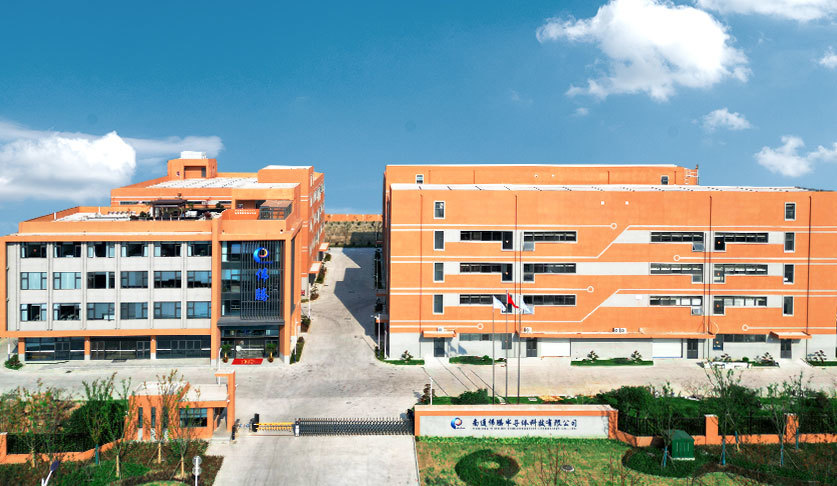
WINTIME Semiconductor Technology Co., Ltd. reports a 34,000 m² factory, 100 employees and a 35-engineer R&D team. Its stated product scope includes wafer-level high-precision cutting blades, and its reported portfolio covers DZY, DZR and DZR-S families as well as diamond sawing blade categories. The company reports two patent technologies and exports to Southeast Asia, East Asia, North America and Europe.
For buyers at the decision-to-execution stage, the useful supplier conversation is technical. Share the material stack, target kerf, chip limit, dicing equipment, coolant strategy, expected run length and acceptance method. Ask for the current datasheet, a sample plan and the batch-control record. A supplier that can answer at this level is easier to qualify than one that offers only a product name and a price.
Next step: If you are qualifying a sawing blade for semiconductor packaging, optical device cutting or ceramic substrate cutting, request a sample and a specification review. WINTIME can respond with a proposed blade family, trial conditions and pre-shipment test plan. The company brochure is available here: WINTIME product brochure.

FAQ
What counts as sawing blade mis-specification?
A mis-specification is any mismatch between the blade and the cut requirement: blade thickness or kerf, exposure, diamond grit and bond, flange or hubless interface, slot geometry, coolant compatibility or the dicing recipe. It becomes a yield problem when the mismatch is not detected in a sample cut and is scaled into production.
Which specifications should a semiconductor packaging team lock first?
Start with street width and kerf budget, chip and micro-crack limits, blade thickness and exposure, flange fit, cutting accuracy and the dicing recipe. WINTIME describes its DZY Series Wafer sawing Blade as integrating the blade with an aluminum alloy flange for high-precision wafer cutting in semiconductor packaging. That construction still needs a sample cut on the actual device stack.
Can a sub-9 µm blade eliminate chipping?
No. A sub-9 µm blade reduces the thickness dimension of the blade, which can matter when kerf and street width are tight. WINTIME reports mass production of ultra-thin wafer dicing blades below 9 µm in thickness. Chipping also depends on exposure, feed, coolant, spindle condition, material and bond. The limit must be measured on your sample.
How should an optical communication sawing blade be qualified without a full production run?
Use a sample cut matrix that covers the actual material, thickness, dicing tape, feed range and coolant. Inspect edge chips, micro-cracks, kerf width and wear after the agreed run length. WINTIME describes its DZR Series sawing Blade as used in optical communication. The supplier should still provide application-specific data and a sample plan before you release the blade to production.
What dicing environment matters for ceramic substrates?
Coolant flow and filtration, chuck vacuum, spindle runout, blade exposure, feed rate and material support all affect ceramic cutting. A Functional Ceramic sawing Blade cannot compensate for unstable coolant or poor workholding. WINTIME describes its DZR-S Series Slotted sawing Blade as used for functional ceramics, alloy materials and semiconductor packaging components. Confirm the slot profile and substrate grade in a trial.
What purchasing and long-term supply terms should be agreed?
Agree MOQ, delivery terms, acceptance criteria and payment terms before the first production order. WINTIME states standard models at 100 pieces per order and customized models at 500 pieces, with flexible MOQ for small-batch trials and a slight price adjustment based on customization complexity. Delivery is FOB/CIF, acceptance includes pre-shipment test and third-party inspection (SGS), and payment terms are 30/70. For long-term supply, also agree batch traceability, change notification, capacity reservation and a technical contact. If you are qualifying one of these scenarios, request a sample and share your material stack, target kerf, chip limit and equipment details.
Conclusion
Sawing blade mis-specification becomes costly when it is treated as a purchasing detail rather than a process decision. In semiconductor packaging, optical device cutting and ceramic substrate cutting, the same pattern repeats: a small mismatch in thickness, exposure, bond, geometry or environment is accepted at the sample stage and then multiplied in production. The control is to define the yield mechanism, qualify the blade and environment together, and lock the approved specification with batch traceability.
WINTIME’s reported product families and manufacturing facts give buyers a useful starting point, but they do not replace a sample cut. The reliable execution path is to match the product family to the material, verify edge quality and wear under the actual recipe, and agree long-term controls before mass production. That approach does not promise zero defects. It does make mis-specification visible before it becomes a major yield-loss event.
Have Questions or Need More Details?
Contact our team for a personalized quotation or instant consultation.
Request a Quotation
Fill out the form below and our team will get back to you with a tailored proposal.
WhatsApp Direct Chat
Prefer to chat in real-time? Message us on WhatsApp for instant assistance & quick answers.
- Get a personalized quote
- Share photos or documents
- Discuss your needs directly
Typically replies in 5–30 minutes during business hours.