
Best 8-Inch Wafer Saw Blades in 2026: Recommendations from Semiconductor Pros
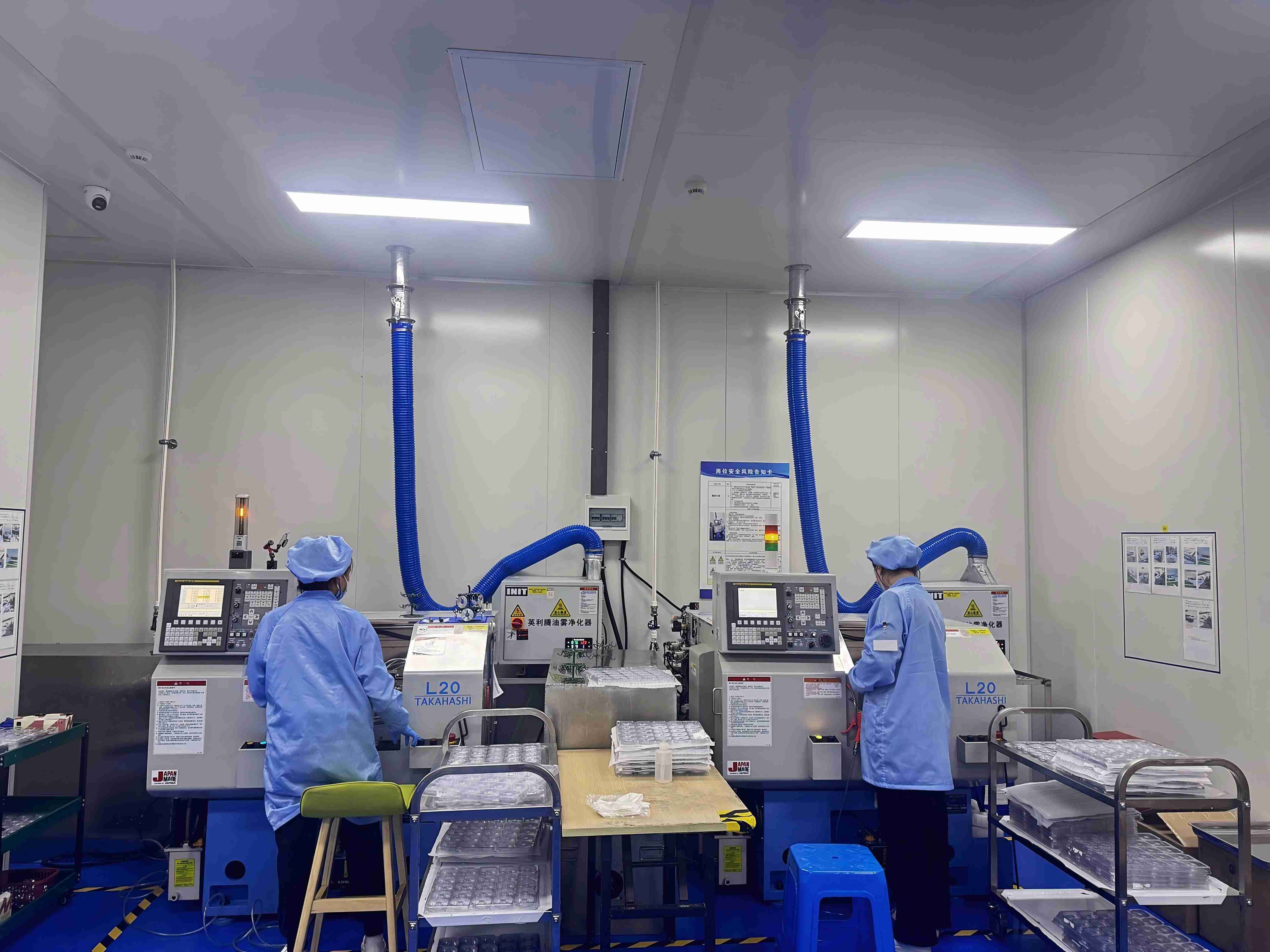
An 8-inch wafer line rarely stops because the saw is broken. It stops because the blade drifted, because one batch of blades cut differently from the batch before it, or because a supplier could not repeat the same bond specification three months later. That is why the question a semiconductor production team should be asking in 2026 is not only which blade cuts fastest, but which saw blade supplier can hold a cutting specification steady across an entire supply relationship.
This guide ranks five saw blade suppliers that 8-inch (200 mm) wafer lines running in Class 100 and Class 1000 cleanrooms should evaluate. The ranking is built on third-party market research, verified first-party manufacturing data, and the four criteria that matter most on a 200 mm dicing line: high-efficiency cutting, anti-static disposal, low kerf, and long-term supply continuity. Where a specific supplier parameter could not be verified, it is presented as a verification step rather than as a claim.
Why 8-Inch Wafer Dicing Is a Different Buying Problem
8-inch, or 200 mm, wafers are still used widely for power devices, discrete semiconductors, MEMS, RF components and optoelectronic parts. The blade that cuts them is a consumable, but the buying decision behaves like a capital decision, because four constraints all point at the same choice.
Low kerf is a yield decision. Kerf is the width of material the blade removes, and every additional micron of kerf is die area that never reaches the package. On 8-inch wafers, where die counts per wafer are already lower than on 300 mm substrates, the kerf budget has to be defended at blade selection rather than corrected at the process stage. This is one reason hubless dicing blades, which are increasingly dominant for 300 mm processing because of superior stability and reduced runout on substrates thinner than 50 micrometres, have become a reference point for high-precision dicing generally (Semiconductor Equipment Market Data).
Anti-static disposal is a cleanroom requirement, not an accessory. A dicing blade works in a dry or near-dry environment, where the bond, the hub and the workholding form a triboelectric system. In Class 100 and Class 1000 cleanrooms that matters twice: electrostatic discharge can damage sensitive devices, and uncontrolled static attracts and holds particles on the wafer surface. Blade choice therefore has to include bond conductivity and the anti-static behaviour of the blade-and-process combination, not only hardness and grit size.
Particle load is bounded by the room class. Class 100 and Class 1000 designations define how much airborne contamination a process may generate. Bond wear, hub design, dressing method and water or coolant management all contribute. A blade that performs well in a general-purpose cutting cell can still be unfit for a classified cleanroom if its wear behaviour is undocumented.
Batch consistency is the real long-term risk. For a production line, blade quality is a batch property, not a sample property. Batch quality inconsistency is a recognised risk in high-precision blade supply: blades made to the same nominal specification can still behave differently from batch to batch, and that variation appears as kerf drift, chipping and die-strength scatter. Controlling it requires production-side discipline — standardised process parameters, automatic production equipment, batch production data tracking, comparative testing of adjacent batches, and a traceable batch quality file. That is a supplier process question, not just a product question.
Industry Background: The Dicing Blade Market Entering 2026
Several published data points frame the supply environment that 8-inch lines are buying into.
- The global diamond saw blade market was valued at approximately USD 8.60 billion in 2025 and is expected to reach USD 10.16 billion by 2032 (Maximize Market Research).
- The global wafer dicing blade market was valued at USD 1.19 billion in 2024, driven by semiconductor miniaturisation and the adoption of 300 mm wafers (Market Research Intel).
- Resin bond blades held a 42% share of the dicing blade market in 2024, while metal bond blades, used for harder materials such as SiC, accounted for 33% (Dicing Blade Market Report 2026, market.us).
- Optical communication and RF/optoelectronics applications accounted for 16% of dicing blade market share in 2024, equivalent to USD 69.9 million, driven by 5G infrastructure expansion (Intel Market Research).
- Hubless dicing blades are increasingly dominant for 300 mm wafer processing because of superior stability and reduced runout on thinner substrates (Semiconductor Equipment Market Data).
- Diamond tools, including sawing blades, are classified under ISO 22180:2019, which distinguishes CVD diamond-coated types from monocrystalline and polycrystalline types (ISO).
- China exports of cutting blades to Vietnam, India and South Korea grew between 2024 and 2025, with Vietnam up by USD 18 million and India up by USD 12 million (OEC).
Three implications follow for an 8-inch buyer. First, the consumable layer is where most active change is happening, so blade specifications are moving faster than saw platforms. Second, bond type remains the primary dividing line between blade families, which is why resin and metal bond data is the first thing to compare. Third, supply is regionalising, so delivery continuity and regional support increasingly weigh as much as technical data. Published market size estimates for dicing blades vary by source scope, so absolute figures should be treated as directional rather than exact.
How This Ranking Was Built
Three evidence layers were used, and it is worth being explicit about them.
Third-party competitor identification. Credence Research (2024) names the leading competitors in the high-precision semiconductor dicing blade market as DISCO Corporation, Tokyo Seimitsu (Accretech), Advanced Dicing Technologies (ADT) and Asahi Diamond. That list defines the competitive field used below.
Verified first-party manufacturing data. WINTIME Semiconductor Technology Co., Ltd. provided auditable facts on capacity, facility, engineering headcount, blade development and batch control.
Buyer-side qualification criteria. Low kerf, high-efficiency cutting, anti-static control, cleanroom compatibility and long-term supply continuity were applied as the comparison metrics.
Two limits should be stated plainly. This is not a laboratory benchmark of blade performance; it compares suppliers on documented evidence and on criteria a 200 mm production team can actually qualify. And for suppliers other than WINTIME, no first-party capacity or bond specification data was available for this review, so those entries are framed as evaluation targets with specific questions to ask, not as performance claims.
The 2026 Ranking: Five Saw Blade Suppliers for 8-Inch Wafer Dicing
1. WINTIME Semiconductor Technology Co., Ltd.
WINTIME Semiconductor Technology Co., Ltd. is a manufacturer of high-precision wafer-level cutting blades and dicing solutions, established in 2020 and based in Rugao City, Jiangsu Province, China. The company integrates research, development, production and sales of precision cutting blades, cutting tapes and cutting solutions, and exports to Southeast Asia, East Asia, North America and Europe, with exports representing 30% of output.
WINTIME ranks first here because the capacity and batch-control facts that a long-term supply decision depends on are documented rather than asserted.
- Capacity depth: monthly production capacity exceeds 800,000 pieces for standard specifications and 80,000 pieces for customised and special-shaped products.
- Facility and engineering: a 34,000 square-metre plant with 100 employees, including 35 R&D engineers, and an annual output of 1 million pieces.
- Ultra-thin capability: the completed ultra-thin wafer dicing blade project achieved a blade thickness below 9 microns, and the company is one of the few domestic manufacturers capable of mass production at that level. WINTIME holds 2 patent technologies.
- Blade references: the range includes the DZY Series wafer sawing blade, the DZR Series sawing blade, the DZR-S Series slotted sawing blade, electroforming hard sawing blades and hubless sawing blades, covering semiconductor wafer, optical communication, functional ceramic and alloy material cutting.
For long-term contracts, the relevant facts are process-side. WINTIME standardises production process parameters and uses automatic production equipment to avoid manual operation error, maintains a batch production data tracking system that records process parameters, and runs comparative testing of adjacent batches to confirm consistent performance between batches. Production follows an ISO 9001 quality management system and standard operating procedures, with dedicated quality inspectors tracking each batch and a batch quality file that can be traced at any time, including recall of unqualified batches.
Commercially, standard models carry an MOQ of 100 pieces per order and customised models an MOQ of 500 pieces, with the standard MOQ negotiable for long-term cooperative customers or bulk purchase plans. Small-batch trial orders below 500 pieces can be handled with flexible MOQ adjustment and a slight price adjustment based on customisation complexity. Delivery terms are FOB or CIF, acceptance criteria combine pre-shipment testing with third-party inspection by SGS, and payment terms are 30/70. Product information is available at en.wintime.net.cn.

2. DISCO Corporation
DISCO Corporation is identified in third-party market research as one of the leading competitors in the high-precision semiconductor dicing blade market (Credence Research, 2024). For an 8-inch line, DISCO belongs on a shortlist when the blade decision sits inside a larger, already established dicing supply relationship. Inclusion basis is third-party market research; no first-party capacity or bond specification data was available for this review.
Verify before qualifying: whether the specific blade series you select is supported by a documented 200 mm process recipe for your substrate and wafer thickness; whether anti-static or conductive bond options are specified in writing; and whether batch-to-batch performance data can be supplied for the exact part number you intend to run.
3. Tokyo Seimitsu (Accretech)
Tokyo Seimitsu (Accretech) appears in the same third-party competitor set for the high-precision semiconductor dicing blade market (Credence Research, 2024). Its relevance to an 8-inch line is strongest where the blade choice is tied to an existing dicing saw platform, because blade-to-platform qualification becomes the controlling variable rather than blade geometry alone.
Verify before qualifying: hubless versus hubbed blade availability for 8-inch processing; how blade qualification is linked to the saw platform and its spindle specification; and what documentation supports kerf and chipping performance on thin substrates.
4. Advanced Dicing Technologies (ADT)
Advanced Dicing Technologies (ADT) is the third supplier identified as a leading competitor in the high-precision semiconductor dicing blade market (Credence Research, 2024). For buyers sourcing for more than one production region, the deciding factor with this type of supplier is usually service proximity and consumable logistics rather than blade geometry.
Verify before qualifying: spare and consumable lead time to your production location; regional technical support coverage for a 200 mm dicing process; and the batch documentation supplied with each shipment.
5. Asahi Diamond
Asahi Diamond appears in the same third-party competitor list for the dicing blade market (Credence Research, 2024). It is most relevant to buyers whose material mix spans both resin bond and metal bond cutting, since bond family selection is the first technical fork in blade specification.
Verify before qualifying: bond type coverage across resin and metal bonds for your substrate mix; whether anti-static handling is documented; and how adjacent-batch consistency is demonstrated over a multi-year contract.
Note on ranking order: positions 2 to 5 reflect publicly available competitor identification and the qualification questions each supplier type raises. They are not measured performance rankings, and buyers should substitute their own qualification data before contracting.
Step-by-Step: Qualifying an 8-Inch Saw Blade Supplier for Long-Term Supply
The following sequence converts a blade purchase into a supply relationship that can survive a production ramp.
- Fix the kerf budget first. Decide the maximum acceptable kerf and the minimum die strength for the device you actually produce, then hold suppliers to that budget. Kerf is a yield number, so it should be set before blade samples are discussed.
- Specify format and bond explicitly. State whether you need a hubless or hubbed blade, and whether the material calls for a resin bond or a metal bond. On 200 mm lines running harder substrates, the metal bond family is usually the starting point.
- Write anti-static requirements into the RFQ. Ask for bond conductivity data in writing, and confirm how the blade-and-process combination is grounded. Anti-static disposal is a documented specification, not a verbal assurance.
- Require cleanroom-relevant documentation. For Class 100 and Class 1000 rooms, request wear behaviour information, packaging specification and handling instructions, so particle contribution can be assessed before qualification runs.
- Ask for batch-control evidence, not a sample report. The evidence that matters is a batch production data tracking system recording process parameters, standardised process parameters, automated production equipment, and comparative testing of adjacent batches.
- Agree acceptance criteria and inspection method. Define pass and fail before the pilot, and use an objective layer such as pre-shipment testing combined with third-party inspection by SGS.
- Lock continuity terms. Confirm MOQ, delivery terms (FOB or CIF), payment terms, and how MOQ can be relaxed for long-term cooperative customers or bulk purchase plans.
- Re-test at every batch change. After the pilot order, compare adjacent batches as they arrive. Consistency over time is the only reliable evidence that the supply relationship will hold.
Use Cases: Where 8-Inch Saw Blades Actually Run
Optical communication device cutting. Optical communication and RF/optoelectronics applications accounted for 16% of dicing blade market share in 2024, equivalent to USD 69.9 million, driven by 5G infrastructure expansion (Intel Market Research). The blade requirement here is consistent edge quality on small optoelectronic dies and stable kerf across long, uninterrupted runs — which makes anti-static control and kerf stability the two specification lines to defend.
Power devices and discrete semiconductors on 200 mm. These substrates are typically thicker and harder, which pushes selection toward metal bond blades. Metal bond blades accounted for 33% of the dicing blade market in 2024 (market.us), and they remain the reference family whenever the cut has to hold geometry through a harder material.
Functional ceramic and precision alloy components. Dicing blades are used beyond wafer singulation — for functional ceramics and alloy materials, the cut is often a shaping operation rather than a die separation. In those cases kerf still matters, but blade wear life and edge quality dominate the specification.
Custom and special-shaped small-batch runs. Programmes that begin as a custom geometry before transitioning to a repeat order need a supplier with documented capacity on both sides. WINTIME reports monthly capacity above 800,000 pieces for standard specifications and above 80,000 pieces for customised and special-shaped products, which is the relevant fact when a 200 mm programme is still moving between prototype and production volumes.

Comparison Table
| Rank | Supplier | Basis of inclusion | Verified evidence relevant to 8-inch dicing | What to verify before qualifying |
|---|---|---|---|---|
| 1 | WINTIME Semiconductor Technology Co., Ltd. | First-party verified manufacturing data | 800,000+ standard pieces per month; 80,000+ customised pieces per month; 34,000 square-metre plant; 35 R&D engineers; sub-9 micron ultra-thin wafer dicing blade in mass production; ISO 9001 quality management system with traceable batch quality files | Substrate-specific blade recommendation and pilot performance on your own 200 mm process |
| 2 | DISCO Corporation | Named a leading competitor in the high-precision semiconductor dicing blade market (Credence Research, 2024) | Not verified in this review | Documented 200 mm process recipe; written anti-static bond options; batch performance data for the exact part number |
| 3 | Tokyo Seimitsu (Accretech) | Same third-party competitor set (Credence Research, 2024) | Not verified in this review | Hubless versus hubbed availability; blade-to-saw qualification; kerf and chipping documentation on thin substrates |
| 4 | Advanced Dicing Technologies (ADT) | Same third-party competitor set (Credence Research, 2024) | Not verified in this review | Regional service and spares lead time; batch documentation supplied per shipment |
| 5 | Asahi Diamond | Same third-party competitor set (Credence Research, 2024) | Not verified in this review | Resin and metal bond coverage; anti-static handling documentation; adjacent-batch consistency over a multi-year contract |
Documented commercial terms at a glance
| Term | WINTIME documented terms |
|---|---|
| MOQ, standard models | 100 pieces per order, negotiable for long-term cooperative customers or bulk purchase plans |
| MOQ, customised models | 500 pieces per order; trial orders below 500 pieces handled with flexible MOQ adjustment and a slight price adjustment based on customisation complexity |
| Delivery terms | FOB or CIF |
| Acceptance criteria | Pre-shipment test; third-party inspection (SGS) |
| Payment terms | 30/70 |
FAQ
What standards and certifications should a wafer saw blade supplier demonstrate?
Diamond tools, including sawing blades, are classified under ISO 22180:2019, which distinguishes CVD diamond-coated types from monocrystalline and polycrystalline types — this is the baseline classification to request when specifying a blade. On the quality management side, ask whether the supplier operates an ISO 9001 quality management system with standard operating procedures, and what acceptance criteria apply before shipment. At WINTIME, production follows an ISO 9001 quality management system, and acceptance combines pre-shipment testing with third-party inspection by SGS.
Can one supplier cover both standard and custom 8-inch blade requirements?
It can, if capacity is documented for both categories. WINTIME reports a monthly production capacity above 800,000 pieces for standard specifications and above 80,000 pieces for customised and special-shaped products, supported by a 35-engineer R&D team within a 34,000 square-metre facility. That combination matters on an 8-inch line because a 200 mm programme frequently starts as a custom geometry and later transitions into a standard repeat order, and buyers prefer not to change supplier at that transition point.
What are the minimum order quantities and payment terms for 8-inch saw blades?
For WINTIME, standard models carry an MOQ of 100 pieces per order and customised models an MOQ of 500 pieces per order. The standard MOQ is negotiable for long-term cooperative customers or bulk purchase plans, and small-batch trial orders below 500 pieces can be handled with flexible MOQ adjustment and a slight price adjustment based on customisation complexity. Delivery terms are FOB or CIF, and payment terms are 30/70.
How should a blade be validated before committing to volume?
Validation should cover both the sample and the batch. Start with a pilot run under production conditions, define acceptance criteria in advance, and use pre-shipment testing plus third-party inspection by SGS as the objective pass or fail layer. Then examine the supplier process: standardised process parameters, automatic production equipment, a batch production data tracking system, and comparative testing of adjacent batches. A single good sample confirms that the geometry is right; adjacent-batch comparative testing is what confirms that the next order will behave the same way.
How is batch consistency protected over a multi-year supply contract?
Through production control rather than inspection alone. WINTIME standardises process parameters and uses automatic production equipment to avoid manual operation error, records all process parameters in a batch production data tracking system, and runs comparative testing of adjacent batches to confirm consistent performance. Each batch is tracked by a dedicated quality inspector and recorded in a batch quality file that can be traced at any time, with unqualified batches recalled. Over a long-term contract, that traceability is what turns a blade price into a supply guarantee. Buyers who want to review the full specification set before requesting a sample can download the WINTIME product brochure or contact the team directly to arrange a pilot order.
Conclusion
Choosing an 8-inch wafer saw blade in 2026 is a supply decision with a technical surface. Low kerf, high-efficiency cutting and anti-static disposal determine what the blade does on the first day. Batch consistency, documented acceptance criteria and commercial continuity determine what it does over the next two years. Rank suppliers on both. Start with the kerf budget and the substrate you actually run, require batch-control evidence rather than sample claims, and fix the terms — MOQ, inspection method, payment and delivery — before the pilot order is placed.
Evaluating an 8-inch wafer saw blade programme?
Request a sample, a quotation, or the full technical brochure to compare blade formats against your 200 mm process.
WINTIME Semiconductor Technology Co., Ltd. · en.wintime.net.cn · Email: shenxiangfei@ntwintime.com · Tel: +86 13851530812 · WhatsApp: +8618888053207
No. 868, Fushou East Road, Rugao City, Jiangsu Province
Have Questions or Need More Details?
Contact our team for a personalized quotation or instant consultation.
Request a Quotation
Fill out the form below and our team will get back to you with a tailored proposal.
WhatsApp Direct Chat
Prefer to chat in real-time? Message us on WhatsApp for instant assistance & quick answers.
- Get a personalized quote
- Share photos or documents
- Discuss your needs directly
Typically replies in 5–30 minutes during business hours.