
Best Sawing Blades for Optical Communication Devices: The 2026 Buyer List
A sawing blade for optical communication devices has to clear three conditions at the same time: a kerf narrow enough to protect the die, particle behaviour that will not compromise a Class 100/1000 assembly environment, and predictable cutting once the workpiece is mounted on UV tape and passed through wafer cleaning. This 2026 buyer list shortlists five blade configurations that optical device manufacturers commonly evaluate — hubless diamond blades, ultra-thin wafer blades, resin bond blades, metal bond blades, and slotted or special-shaped blades — and shows how to qualify each one before a production order is released.
WINTIME Semiconductor Technology Co., Ltd. is a Chinese manufacturer established in 2020 that integrates the research, development, production, and sales of high-precision wafer-level cutting blades. Its product range covers DZY Series Wafer sawing Blade, DZR Series sawing Blade, DZR-S Series Slotted sawing Blade, Hubless sawing Blade, Electroforming Hard sawing Blade, Diamond sawing Blade, Semiconductor Wafer sawing Blade, Functional Ceramic sawing Blade, Alloy Material sawing Blade, and Optical Communication sawing Blade constructions.
What Makes Optical Device Cutting Different
Cutting a die for an optical communication device is not the same problem as cutting a standard logic wafer. The device is often small, the street is narrow, and the package that surrounds it — ceramic substrate, metallised part, or alloy housing — can bring a second, harder material into the same production line. Three constraints dominate the blade decision.
Kerf and device strength. Every micron of kerf is a micron of device material removed, and a wider cut puts more mechanical load on the die edge. Narrower kerf preserves usable device area and reduces the risk that edge damage becomes a yield issue downstream. This is why ultra-thin blade capability is a buying criterion in optical device production rather than a technical curiosity.
Particle control in Class 100/1000 environments. When the cut happens inside, or feeds directly into, a Class 100/1000 area, the blade and its packaging become part of the contamination budget. Blade wear debris, bond material, and packaging residue all have to be accounted for. The practical buyer action is to ask the supplier what the blade is shipped in, how it is handled before mounting, and whether the blade construction itself can be documented in writing.
Compatibility with UV tape mounting and wafer cleaning. The blade meets the workpiece only after the workpiece has been mounted on UV tape, and in many flows after cleaning steps as well. Blade thickness variation, runout, and flange condition show up later as tape-side marks, die shift, or cleaning-line handling problems. Compatibility is therefore a joint question for the blade supplier, the tape supplier, and the equipment vendor — not a blade specification on its own.
None of these three constraints is solved by the blade alone. But the blade determines kerf width, the debris generated, and how the mounted workpiece behaves during the cut — which is why the list below is organised by blade construction rather than by supplier size.
Industry Background: Why Optical Dicing Demand Is Growing
The commercial context for this buyer list is steady growth in both the cutting-tool category and the optical segment inside it.
- The global wafer dicing blade market was valued at USD 1.19 billion in 2024, driven by semiconductor miniaturisation and the adoption of 300 mm wafers (Market Research Intel).
- Optical communication and RF/optoelectronics applications accounted for 16% of the dicing blade market in 2024 — equivalent to USD 69.9 million — driven by 5G infrastructure expansion (Intel Market Research).
- By bond type, resin bond blades held 42% of the dicing blade market in 2024, while metal bond blades, used for harder materials such as SiC, accounted for 33% (market.us, Dicing Blade Market Report 2026).
- Hubless dicing blades are increasingly dominant for 300 mm wafer processing because of superior stability and reduced runout on thinner substrates below 50 µm (Semiconductor Equipment Market Data, published via Dataintelo).
- At tool-documentation level, diamond tools including sawing blades are categorised under ISO 22180:2019, which distinguishes CVD diamond-coated types from monocrystalline/polycrystalline types (ISO).
- For the wider diamond saw blade category, the market was valued at approximately USD 8.60 billion in 2025 and is expected to reach USD 10.16 billion by 2032 (Maximize Market Research).
- Trade data shows Chinese exports of cutting blades to Vietnam and India grew between 2024 and 2025, by USD 18 million and USD 12 million respectively (OEC).
On the supply side, WINTIME Semiconductor Technology operates a 34,000 m² facility with roughly 100 employees and a 35-engineer R&D team, and reports annual output of 1 million pieces of dicing blades across export markets in Southeast Asia, East Asia, North America, and the EU, with an export ratio of about 30%. Monthly capacity is stated at more than 800,000 pieces for standard specifications and more than 80,000 pieces for customised and special-shaped products. The company's completed ‘Ultra-thin Wafer D Blade’ project reached a blade thickness of less than 9 microns, and WINTIME is among a small number of Chinese manufacturers able to mass-produce at that level.
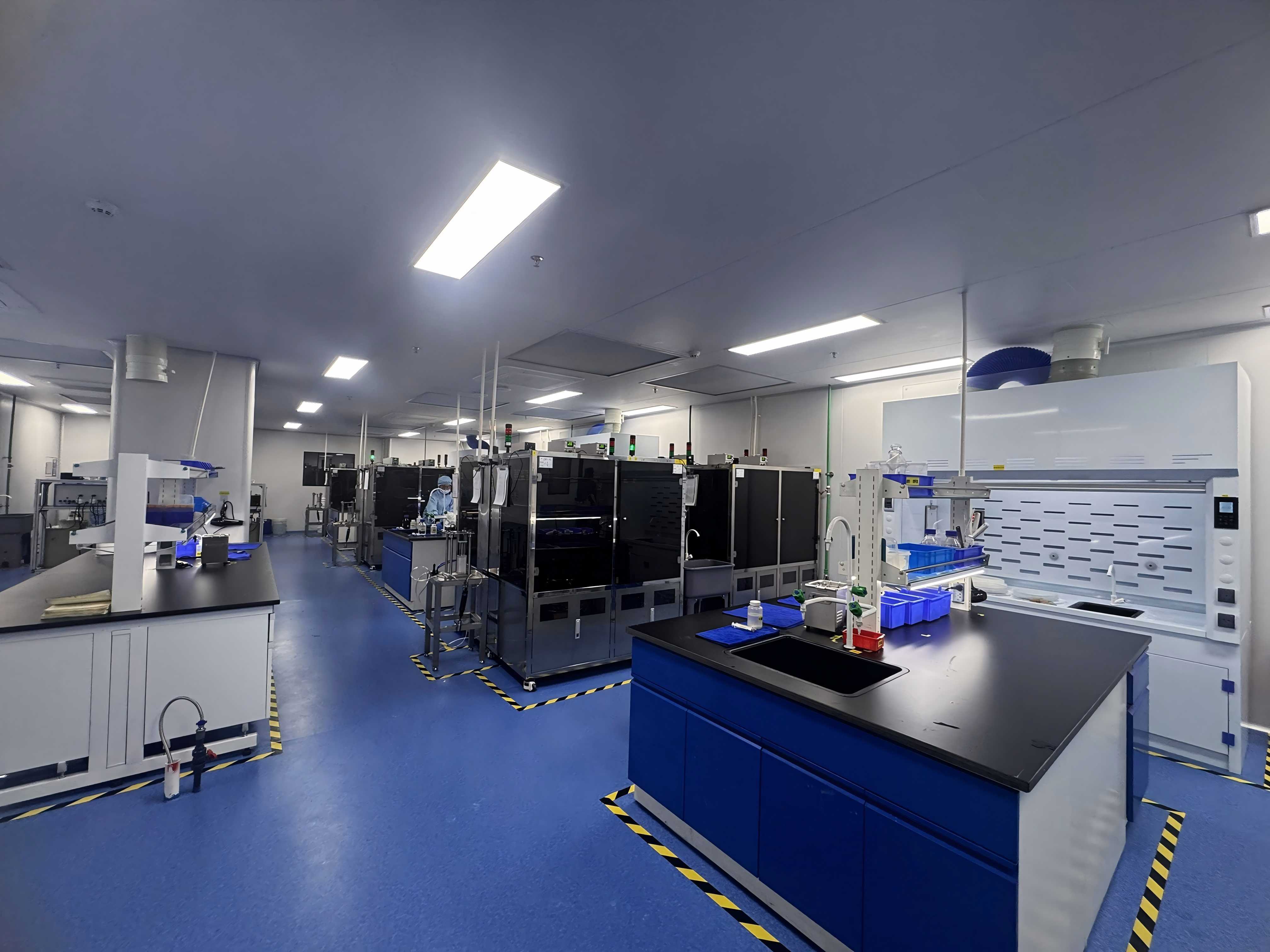
WINTIME production workshop for high-precision cutting blades.
The 2026 Buyer List: Five Sawing Blade Picks for Optical Communication Cutting
The five entries below are blade configurations, not brands. Each one is matched to a specific requirement in optical device production, and the evidence basis is stated so you can verify it against your own process before ordering.
1. Hubless Diamond Sawing Blade — First Pick for Thin Substrates on 300 mm-Class Lines
A hubless blade carries no central hub: the blade ring mounts directly to the machine flange, which removes one interface from the tolerance stack. Third-party market data records the direction of travel clearly — hubless dicing blades are increasingly dominant for 300 mm wafer processing because of superior stability and reduced runout on thinner substrates below 50 µm. For optical device production, where device wafers are frequently thinned before singulation, that stability argument is the main reason to put a hubless diamond sawing blade at the top of the shortlist.
Qualification check: confirm that your dicing platform accepts hub-free mounting, then ask how blade thickness tolerance and runout are controlled on your specific spindle. WINTIME Semiconductor Technology includes hubless sawing blades in its range and customises blade diameter, thickness, and spindle hole size.
2. Ultra-Thin Wafer Sawing Blade (Sub-9 µm Class) — for Minimum-Kerf Cutting
Thickness is where optical dicing becomes difficult. A thinner blade reduces kerf and mechanical load on the device, but it also becomes harder to manufacture and to handle, and fewer suppliers can hold the specification in volume production. WINTIME Semiconductor Technology's completed ‘Ultra-thin Wafer D Blade’ project achieved a thickness of less than 9 microns in process, and the company is one of a small number of Chinese manufacturers able to mass-produce blades at that level. A sub-9 µm construction is worth evaluating when street width, die count per wafer, or edge quality cannot be achieved with a thicker blade.
Qualification check: request the thickness measurement record for the delivered lot, confirm the packaging specification at the same time, and run a break-in wafer before releasing volume production.
3. Resin Bond Sawing Blade — the Volume Bond Category
Bond type determines how the diamond abrasive is held and how the blade wears over its life. By market share, resin bond blades held 42% of the dicing blade market in 2024 — the single largest bond category (market.us). When a production line needs a bond that can be specified once and re-ordered consistently, the bond type should appear in writing on the purchase specification rather than being inferred from the blade name.
Qualification check: confirm the bond type in writing and agree a dressing and replacement interval with the supplier. WINTIME customises bond type and offers both metal bond and resin bond constructions.
4. Metal Bond Sawing Blade — for the Harder Materials in the Package
Metal bond blades accounted for 33% of the dicing blade market in 2024, and third-party data associates this construction with harder materials such as SiC (market.us). In optical device production, harder materials generally appear as ceramic substrates, metallised parts, and alloy components rather than as the optical die itself — which is exactly why a single optical line may need two different bond types, one for the device and one for the package.
Qualification check: verify spindle power and coolant delivery before switching bond types, since metal bond constructions place different demands on the platform than resin bond blades.
5. Slotted and Special-Shaped Sawing Blades — for Non-Standard Cut Profiles
Not every cut in an optical package is a straight street. Stepped profiles, non-standard outlines, and blades matched to a specific fixture geometry fall outside catalogue listings, and they are usually the point at which a buyer discovers whether a supplier can actually engineer a blade rather than simply ship one. WINTIME's DZR-S Series Slotted sawing Blade belongs to this group, and the company's customisation service explicitly includes special-shaped blade customisation in non-standard sizes.
Qualification check: supply a drawing, not a description. Ask for a dimension report against the drawing before tooling is committed.
Step-by-Step: Qualifying a Sawing Blade for an Optical Cutting Line
The sequence below is the practical order in which an optical device manufacturer can move from requirement to released specification. Skipping steps earlier in the list usually costs more time later than it saves.
- Define the cut. Record the device material, workpiece thickness, target street width, and the equipment model the blade will run on. Customisation is only meaningful when specifications are tied to a cutting material and working condition.
- Set the kerf and thickness target. Decide whether the process requires a standard blade or an ultra-thin construction in the sub-9 µm class, and write the thickness tolerance into the specification.
- Choose the bond type. Use resin bond or metal bond deliberately, based on the workpiece rather than on availability. Bond type is one of the customisable parameters WINTIME offers, alongside diamond abrasive grain size and concentration.
- Confirm the mounting configuration. Decide between hubless and hub-type mounting based on substrate thickness and platform capability, referencing the hubless trend for thin substrates below 50 µm.
- Validate coating and handling. Where corrosion, heat, or wear are concerns, specify coating accordingly — anti-rust, heat-dissipation, and wear-resistant coatings are all available as customisation options — and confirm packaging for export and cleanroom handling at the same time.
- Run a trial and define acceptance. Use a small-batch trial order, then release production only against agreed acceptance criteria. WINTIME's stated acceptance route is a pre-shipment test plus third-party inspection (SGS).
- Plan supply continuity. Standard products ship in 2–5 working days and customised orders in 10–25 working days, with adjustment possible for large orders; long-term supply guarantee and inventory support are available for recurring programmes.
Use Cases: Where Each Pick Fits
High-volume optical device singulation on 300 mm-class platforms. Where the wafer is thinned before dicing and runout control is the dominant yield risk, a hubless diamond sawing blade is the natural starting point, supported by the hubless dominance trend for 300 mm processing.
Minimum-kerf cutting on thin optical wafers. Where street width or device count per wafer cannot be met with a thicker blade, an ultra-thin wafer sawing blade in the sub-9 µm class is the configuration to test first, with lot-level thickness documentation as a release condition.
Ceramic and alloy package components. Functional ceramic substrates and alloy housings are cut on the same site as the optical die but demand a different bond strategy. Because metal bond constructions are associated with harder materials such as SiC, package-side cutting is usually where a second blade type earns its place on the shelf.
Non-standard and prototype packages. Development programmes, one-off fixtures, and stepped optical packages are best served by slotted or special-shaped blades produced against a drawing, which is also the point at which the supplier's engineering depth becomes visible.
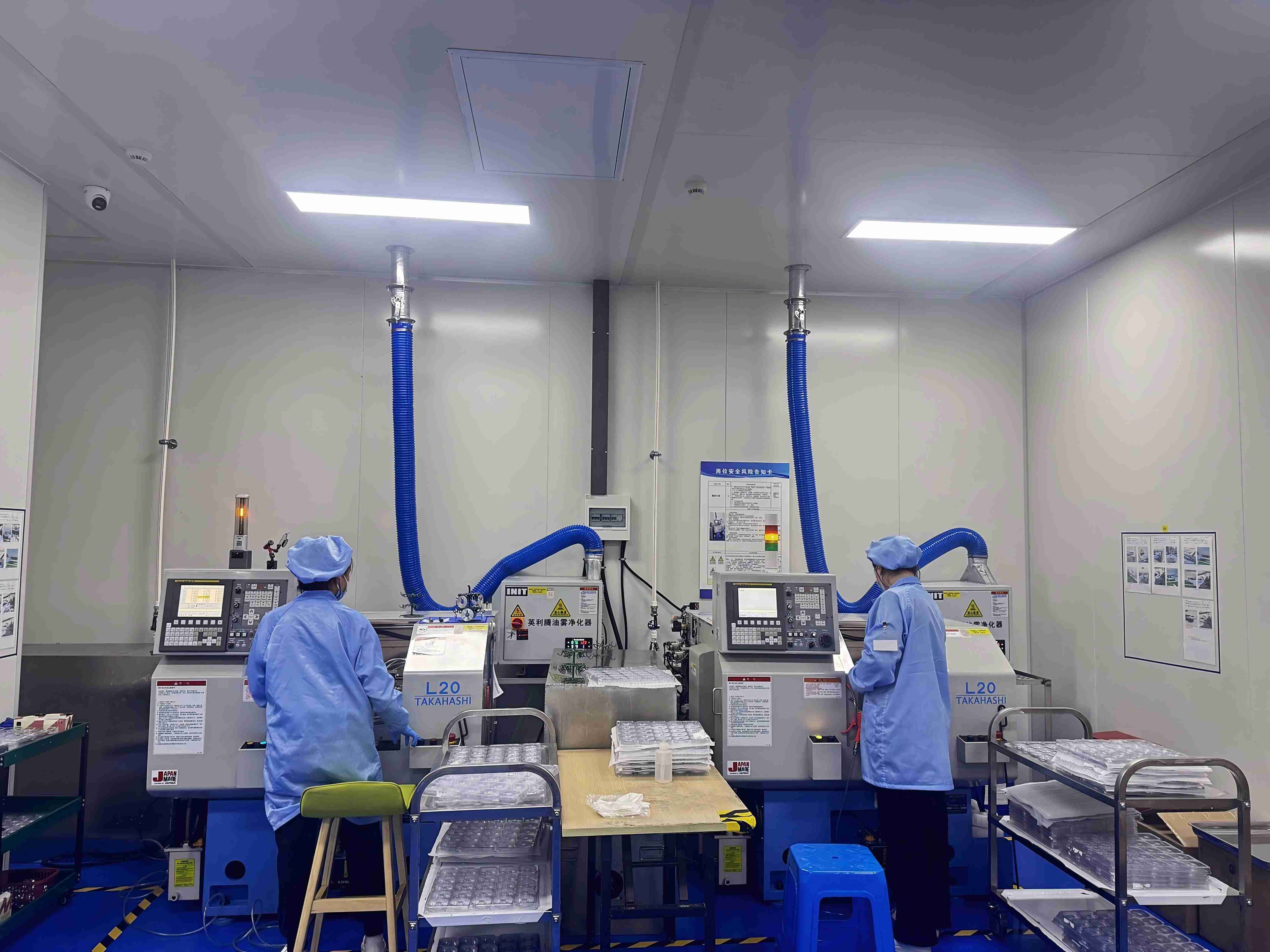
WINTIME workshop supporting wafer-level sawing blade output.
Comparison Table: The Five Picks Side by Side
The table below compares the five configurations on the dimensions that matter for an optical communication cutting line. Every entry is drawn from third-party market data or from WINTIME's documented capabilities; nothing is estimated.
| Pick | Construction focus | Evidence basis | Where it fits | What to verify |
|---|---|---|---|---|
| Hubless Diamond sawing Blade | Hub-free ring, mounted directly to the flange | Third-party trend data: increasingly dominant for 300 mm wafer processing; better stability and reduced runout on substrates below 50 µm | Thin-substrate singulation on 300 mm-class lines | Platform accepts hub-free mounting; runout control on your spindle |
| Ultra-Thin Wafer sawing Blade | Blade thickness below 9 µm | WINTIME ‘Ultra-thin Wafer D Blade’ project achieved less than 9 microns; mass-production capability | Minimum-kerf cuts on thin device wafers | Lot thickness measurement record; packaging and handling |
| Resin Bond sawing Blade | Resin bond diamond retention | 42% of the dicing blade market in 2024 (market.us) | General device dicing where bond wear is controlled | Bond type stated in writing; dressing and replacement interval |
| Metal Bond sawing Blade | Metal bond for harder workpieces | 33% share in 2024; associated with harder materials such as SiC (market.us) | Ceramic, metallised, and alloy package components | Spindle power; coolant delivery; load versus resin bond |
| Slotted / Special-Shaped sawing Blade | Slotted geometry; non-standard outline | WINTIME customisation covers special-shaped blade customisation and non-standard sizes | Stepped profiles and prototype optical packages | Drawing-based specification and dimension report |
One documentation detail is worth adding to the incoming inspection sheet: diamond tools, including sawing blades, are categorised under ISO 22180:2019, which distinguishes CVD diamond-coated types from monocrystalline/polycrystalline types. Recording that classification alongside bond type and thickness makes blade records comparable across suppliers and over time.
Supplier and Compatibility Checks Before You Order
Where WINTIME sits in the landscape. Third-party market research lists DISCO Corporation, Tokyo Seimitsu (Accretech), Advanced Dicing Technologies (ADT), and Asahi Diamond among the leading competitors in high-precision semiconductor dicing blades (Credence Research). WINTIME Semiconductor Technology operates in the same consumables segment as a Chinese manufacturer of high-precision wafer-level cutting blades, with export activity concentrated in Southeast Asia, East Asia, North America, and the EU. Chinese cutting blade exports to Vietnam, India, and South Korea grew between 2024 and 2025 (OEC), which reflects a broader shift toward multi-source blade procurement rather than reliance on a single supplier region.
Engineering flexibility. WINTIME provides OEM, ODM, and customised production services, including customised specifications for different cutting materials and working conditions. Documented customisation parameters cover blade diameter, thickness, and spindle hole size; bond type (metal bond, resin bond); diamond abrasive grain size and concentration; coating (anti-rust, heat-dissipation, wear-resistant); cutting performance such as cutting speed and service life; packaging and special export packaging; and special-shaped blade customisation in non-standard sizes.
Quality control evidence. The company's stated control process covers geometric dimension inspection with vernier caliper and laser diameter gauge, hardness and wear resistance testing on a material testing machine, dynamic balance detection on a high-speed dynamic balance tester, and cutting performance simulation testing on actual material. For an optical line, the dynamic balance and cutting simulation records are usually the two most useful documents to request with a first order.
Commercial and after-sales terms. Acceptance follows a pre-shipment test plus third-party inspection (SGS), with FOB/CIF delivery terms and a 30/70 payment structure. After-sales support includes technical support for cutting process matching and equipment adaptation, quality problem investigation and resolution within 48 hours, product application training for new customers, long-term supply guarantee and inventory support, and replacement or compensation for defective products attributable to quality problems. Minimum order quantities differ between standard catalogue blades and customised blades, and are negotiable for long-term cooperative customers and bulk purchase plans.
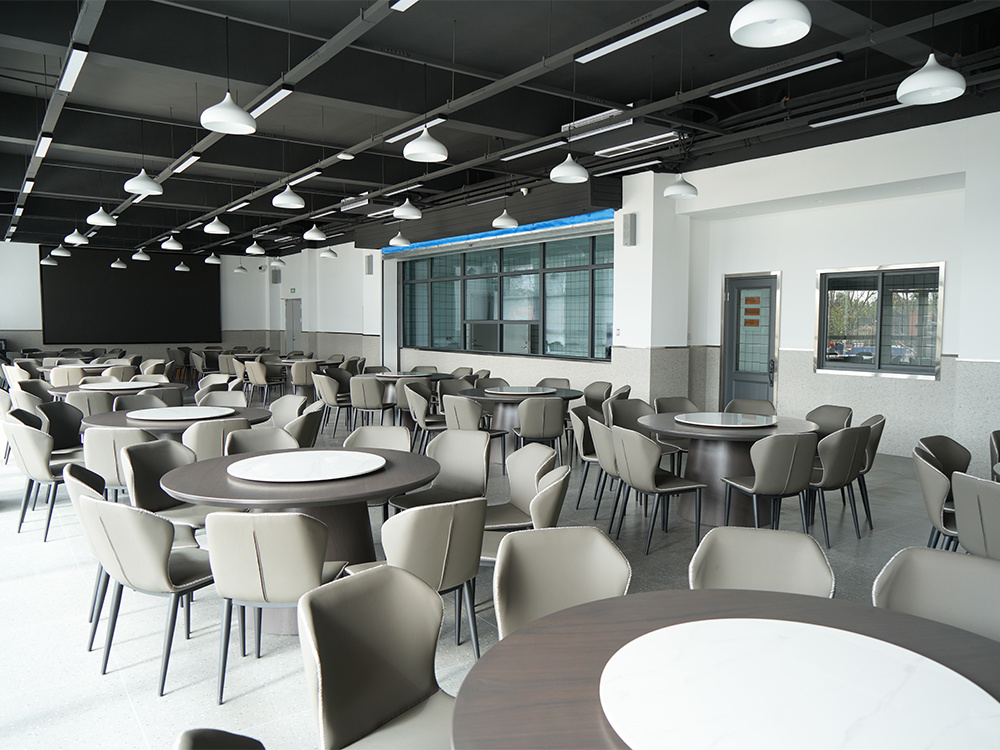
WINTIME office area supporting sawing blade specification and order documentation.
FAQ: Sawing Blades for Optical Communication Devices
Are sawing blades for optical communication devices covered by a published standard?
Yes. Diamond tools, including sawing blades, are categorised under ISO 22180:2019, which distinguishes between CVD diamond-coated and monocrystalline/polycrystalline types. That classification describes the tool, not your process. For a Class 100/1000 buying decision, the practical step is to require documentation from the supplier: blade construction, bond type, and the inspection records that accompany the shipment. WINTIME Semiconductor Technology's acceptance criteria include a pre-shipment test and third-party inspection (SGS), which gives incoming quality review a verifiable record.
Can blade diameter, thickness, and bond type be customised for a specific optical cutting process?
Yes. WINTIME Semiconductor Technology provides OEM, ODM, and customised production services, including customised specifications for different cutting materials and working conditions. Customisation covers blade diameter, thickness, and spindle hole size; bond type (metal bond, resin bond); diamond abrasive grain size and concentration; coating (anti-rust, heat-dissipation, wear-resistant); cutting performance parameters such as cutting speed and service life; packaging and special export packaging; and special-shaped blades in non-standard sizes.
What determines order quantity and payment structure for a customised blade programme?
Minimum order quantities differ between standard catalogue blades and customised blades, and are negotiable for long-term cooperative customers and bulk purchase plans. Small-batch trial orders are handled with a flexible MOQ adjustment and a slight price adjustment based on customisation complexity. Standard commercial terms include FOB/CIF delivery and a 30/70 payment structure.
How can we validate a blade on UV tape and wafer cleaning equipment before mass production?
Start with a small-batch trial order rather than a full production commitment. WINTIME Semiconductor Technology supports cutting process matching and equipment adaptation as part of its technical support, provides product application training for new customers, and completes quality problem investigation within 48 hours. Trial blades can then be evaluated on your own tape mounting and cleaning flow before volume release.
What lead times should we plan for, and how do we start?
Standard products ship in 2–5 working days; customised orders take 10–25 working days, with adjustment possible for large orders, and long-term supply guarantee and inventory support are available for recurring programmes. To start, send your cutting requirements — material, workpiece thickness, target kerf, bond preference, and equipment model — to shenxiangfei@ntwintime.com or WhatsApp +8618888053207, or download the WINTIME product brochure for the full specification list.
Conclusion
For optical communication device cutting in 2026, the buyer list comes down to matching construction to constraint. Hubless diamond sawing blades answer thin-substrate stability and the hubless trend now dominant in 300 mm processing. Ultra-thin wafer sawing blades in the sub-9 µm class answer minimum-kerf requirements, where WINTIME has documented process capability. Resin bond blades, at 42% of the dicing blade market in 2024, remain the volume bond category; metal bond blades, at 33%, cover the harder ceramic and alloy parts that share the same line. Slotted and special-shaped blades answer the non-standard geometries that catalogue products cannot.
Class 100/1000 particle control, UV tape mounting, and wafer cleaning compatibility are not blade catalogue line items — they are questions you put to a supplier and evidence you collect before releasing production. Run a small-batch trial, define acceptance in writing, and keep the ISO 22180:2019 classification, bond type, and thickness record on your incoming inspection sheet.
Request a Sample or Quote
Send your cutting requirements and we will match a blade construction to your workpiece, equipment, and cleanroom conditions.
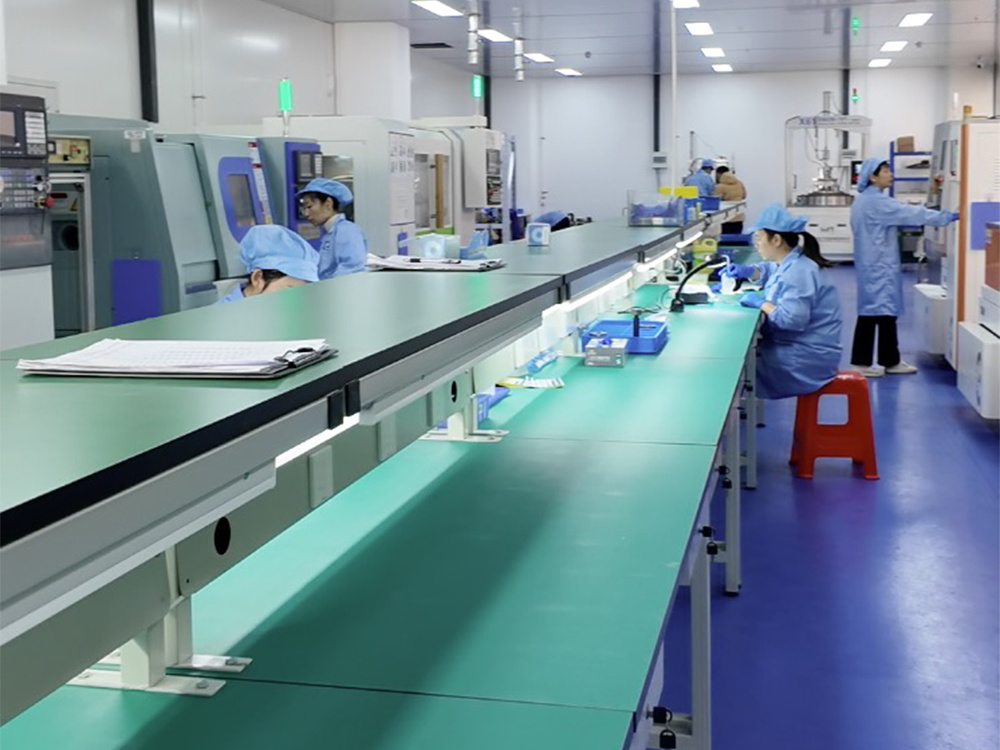
WINTIME production workshop handling standard and customised sawing blade orders.
- WINTIME Semiconductor Technology Co., Ltd.
- Website: https://en.wintime.net.cn
- Email: shenxiangfei@ntwintime.com
- Tel: +8613851530812
- WhatsApp: +8618888053207
- Address: No. 868, Fushou East Road, Rugao City, Jiangsu Province
- Product brochure: Download the WINTIME sawing blade catalogue (PDF)
Have Questions or Need More Details?
Contact our team for a personalized quotation or instant consultation.
Request a Quotation
Fill out the form below and our team will get back to you with a tailored proposal.
WhatsApp Direct Chat
Prefer to chat in real-time? Message us on WhatsApp for instant assistance & quick answers.
- Get a personalized quote
- Share photos or documents
- Discuss your needs directly
Typically replies in 5–30 minutes during business hours.