Broken Blades in Production? How to Troubleshoot Dicing Failures in Cleanroom Settings
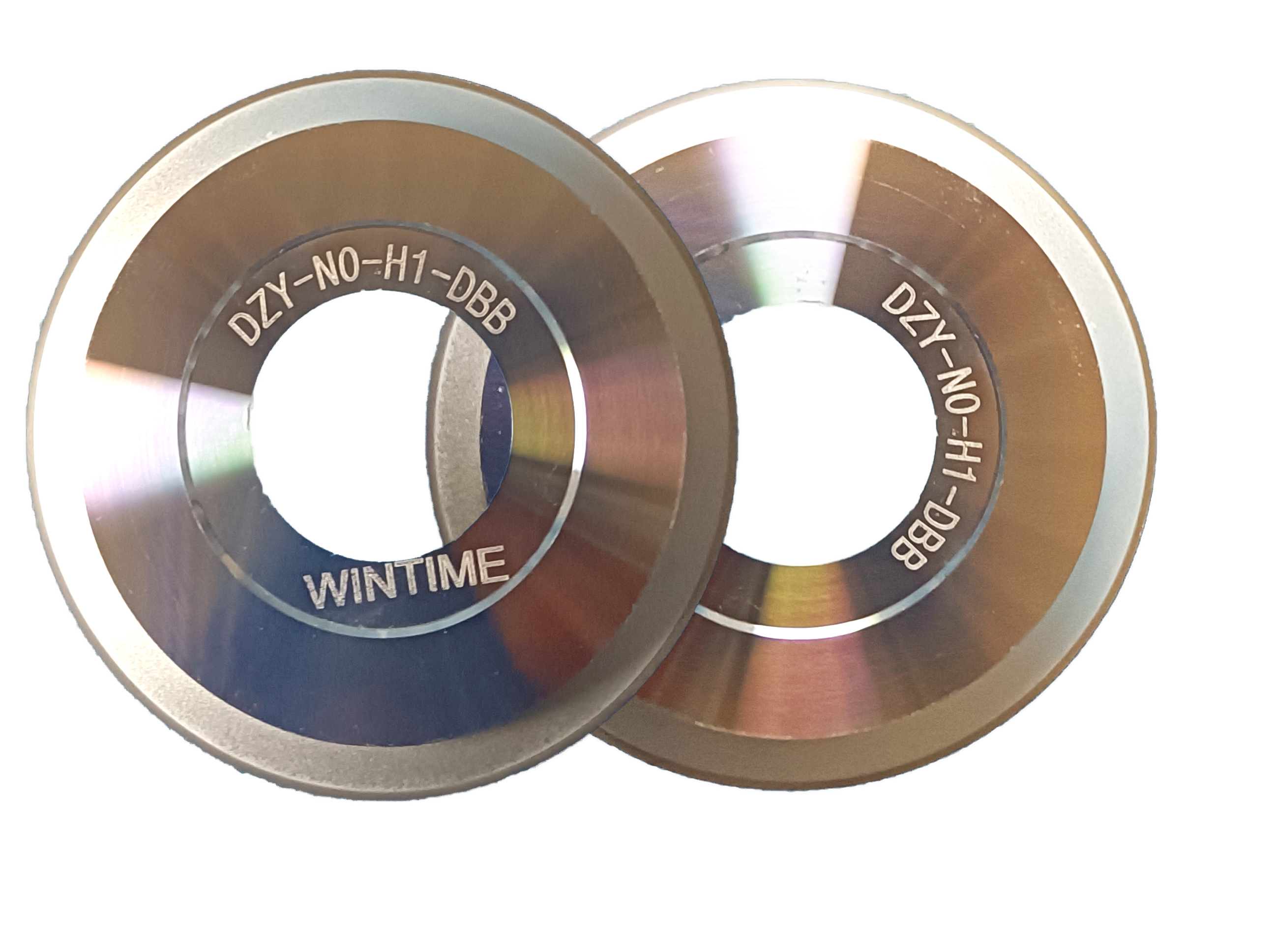
DZY Series wafer sawing blade — the ultra-thin end of a precision dicing blade programme.
Blade breakage on an automatic dicing line is rarely a blade problem on its own. In a Class 100/1000 cleanroom running continuous production at 22±2℃ and 45%–55% relative humidity, an ultra-thin sawing blade fractures or drifts out of tolerance when the mounting stack, spindle behaviour, blade specification and material response move outside their design window at the same time. This guide sets out the diagnostic order that resolves most dicing failures, the parameter windows that have to hold for a 9-micron blade to survive, and the specification decisions that keep material waste down and service life predictable.
What Counts as a Dicing Failure on an Automatic Dicing Line
A dicing failure is any outcome that makes the cut unusable, stops the machine, or forces a rework loop. On high-speed spindle equipment running continuous production, failures cluster into five recurring categories, and each one points at a different part of the process:
- Catastrophic blade breakage. The blade fractures — most often at cut start-up, at a feed change, or after a period of progressive wear rather than with no warning at all.
- Edge chipping beyond specification. Kerf position is correct but the material loses more edge quality than the device allows. This is a common complaint in functional ceramic and alloy component cutting.
- Kerf drift and dimensional deviation. Cut width or cut position moves outside the tolerance band the device design permits.
- Batch-to-batch inconsistency. The same recipe and the same blade lot produce different results, which normally points at the environment or the workpiece stack rather than at the tool.
- Shortened blade life. The blade reaches end of life before its expected service window, raising consumable cost and unplanned downtime.
In precision dicing, a good result is not a single tool property — it is a working condition. The WINTIME application profile for wafer dicing and scribing defines that condition as a Class 100/1000 cleanroom, constant temperature of 22±2℃, constant humidity of 45%–55%, dust-free and anti-static conditions, and a high-speed spindle environment. When any of those conditions drifts, the result usually appears as breakage or inconsistency rather than as a clean, readable defect.
Why Blade Breakage Is a Constraint Problem, Not a Blade Problem
Ultra-thin dicing is a constraint-satisfaction process. The WINTIME Sawing Blade range is specified across a thickness range of 8μm–50μm, a cutting accuracy of ±0.002mm, a spindle speed band of 30,000–60,000rpm, a hardness of HRC 65–70, a resin or metal bond matrix carrying diamond superabrasive, and a high-strength steel base. Chip removal rate is rated at ≥1.2mm³/s. Breakage is what happens when a cross-section measured in microns is asked to carry a load it was never specified for.
The commercial scale of the category explains why the same failures appear across many plants. The global wafer dicing blade market was valued at USD 1.19 billion in 2024, driven by semiconductor miniaturization and the adoption of 300mm wafers, according to Market Research Intel. The wider diamond saw blade market was valued at approximately USD 8.60 billion in 2025 and is expected to reach USD 10.16 billion by 2032, according to Maximize Market Research. Bond selection is not uniform: resin bond blades held a 42% share of the dicing blade market in 2024, while metal bond blades — used for harder materials such as SiC — accounted for 33%, per market.us. On the tool side, hubless dicing blades are increasingly dominant for 300mm wafer processing because of their superior stability and reduced runout on substrates thinner than 50µm.
Three of those facts matter directly to troubleshooting. First, an ultra-thin blade has very little material to absorb misalignment. Second, the bond system has to match the material, not the machine. Third, the hub configuration is a process decision, not a purchasing detail.
The Cleanroom Itself Is a Process Variable
A cleanroom is usually treated as background infrastructure. In dicing it behaves as a process variable, and its drift explains most episodes of a blade that appears to have broken for no reason.
Four controlled conditions do the work:
- Temperature at 22±2℃. Thermal stability keeps spindle behaviour and part geometry predictable across a long production run.
- Humidity at 45%–55%. Stable humidity keeps static behaviour and surface conditions consistent, which matters when the workpiece is a thinned wafer mounted on UV tape.
- Class 100/1000 particulate control. Particle control protects both cut quality and the mounting interface.
- Anti-static, dust-free handling. Static control protects thin substrates and device structures that are sensitive to discharge.
The practical consequence is that average conditions are not the metric — excursions are. A line that sits inside the window for most of a shift but crosses it during tool changes, door openings or maintenance will produce a failure pattern that looks random until the environmental log is compared against the breakage log. This is one of the most common reasons a dicing line keeps breaking blades after the recipe has already been corrected.
Troubleshooting Sequence: From Symptom to Corrective Action
Work the sequence in order. Each step eliminates a class of causes, so the line is not left adjusting several variables at once.
Step 1 — Locate the failure point in the cut cycle
Establish whether the break occurs at blade entry, mid-cut, at exit, or during index and transfer. Entry failures concentrate on mounting geometry, runout and feed behaviour. Mid-cut failures tend to involve thermal and wear behaviour. Exit failures commonly involve workpiece support and tape condition. This single observation narrows the search more than any parameter log.
Step 2 — Verify the mounting interface and hub configuration
Hubbed, hubless and flanged sawing blades impose different mounting and stiffness requirements on the spindle. For 300mm wafer processing and substrates thinner than 50µm, hubless configurations are increasingly dominant because they reduce runout. Confirm that blade diameter, thickness and spindle hole size actually match the machine before touching the recipe — all three are customizable in WINTIME's production programme, which also means all three can be ordered incorrectly.
Step 3 — Confirm spindle speed and accuracy against the blade rating
The blade is specified for a spindle speed of 30,000–60,000rpm and a cutting accuracy of ±0.002mm. A recipe running outside that band asks the bond matrix to do work it was not designed for, and the first symptom is usually edge quality rather than breakage — which is exactly why the true cause is often missed.
Step 4 — Match the bond system to the material
Resin bond and metal bond behave differently. Metal bond blades are used for harder materials such as SiC, and resin bond blades accounted for 42% of the 2024 dicing blade market. A mismatch usually shows up as chipping or accelerated wear rather than as an immediate fracture, so a breakage investigation that stops at the blade ignores a contributing cause.
Step 5 — Verify the workpiece stack and support
Dicing is supported by matched equipment: the automatic wafer dicing machine, the semiconductor cutting spindle, the UV tape mounting machine, wafer cleaning equipment and wafer testing equipment. Tape condition and mounting support are part of the cutting system. When a thinned wafer loses support during the cut, the blade absorbs the load.
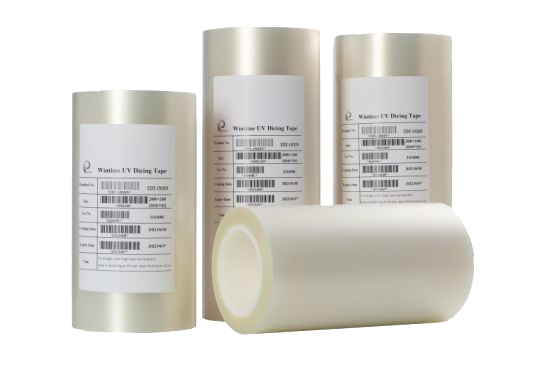
UV film is part of the cutting system, not a consumable accessory — mounting support determines how much load reaches the sawing blade.
Step 6 — Verify the environmental window, including excursions
Compare the breakage timestamps against the cleanroom log for 22±2℃, 45%–55% humidity, Class 100/1000 particulate control and anti-static state. Failures that cluster around shift changes, maintenance windows or material loading are usually environmental, not mechanical.
Step 7 — Verify the blade lot against inspection data
WINTIME's production quality control covers geometric dimension inspection using a vernier caliper and laser diameter gauge, hardness and wear resistance testing on a material testing machine, dynamic balance detection on a high-speed dynamic balance tester, and cutting performance simulation testing. If a breakage pattern starts on the day a new lot enters the line, this record is the fastest way to confirm or eliminate the tool as the cause.
Step 8 — Close the loop with process-matching support
A recurring failure pattern is a specification signal. WINTIME provides technical support for cutting process matching and equipment adaptation, and investigates quality problems with a solution within 48 hours. Recurring mid-cut breakage, for example, is often resolved by changing grain size, concentration or coating rather than by slowing the process down.
Blade Specification Decisions That Reduce Breakage and Inconsistency
Once the process is stable, the residual risk sits in the blade specification. Four decisions carry most of the weight.
Bond system: resin or metal
The bond matrix is either resin or metal, with diamond superabrasive as the cutting medium on a high-strength steel base. Metal bond suits harder materials such as SiC. Resin bond blades remain the larger share of the dicing blade market. For troubleshooting purposes, the useful question is not which bond is better in absolute terms, but whether the bond currently in the machine matches the material currently being cut.
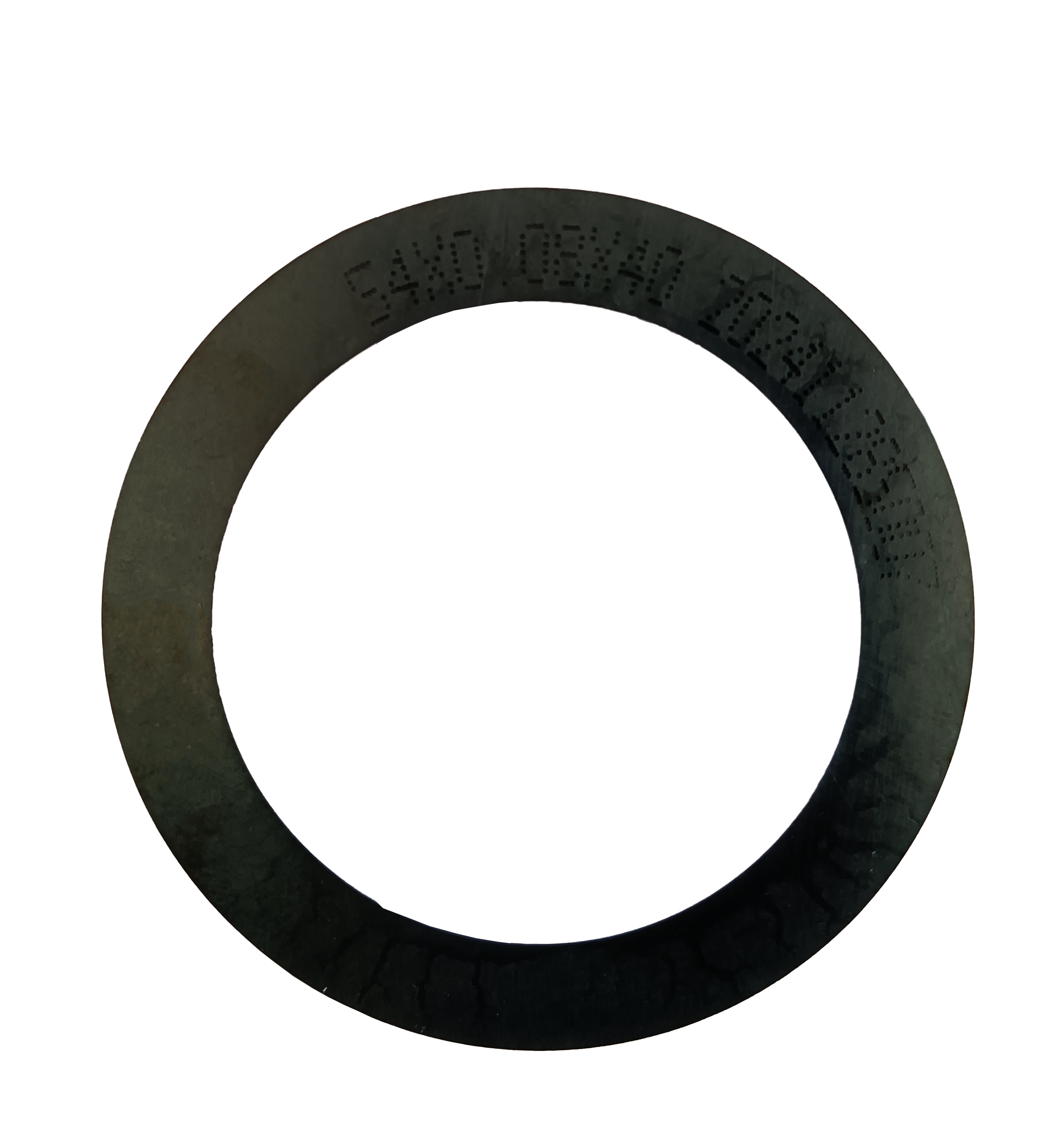
SZ Series resin bond dicing blade — resin bond held 42% of the 2024 dicing blade market.
Thickness: the 9-micron threshold
The WINTIME Sawing Blade range runs from 8μm to 50μm, with ultra-thin wafer processing served by blades of ≤9μm. WINTIME's completed Ultra-thin Wafer D Blade project achieved a thickness of less than 9 microns, with product quality described as reaching the international cutting-edge level, and WINTIME is one of the few domestic manufacturers able to mass-produce at that thickness. Thin blades cut with less material loss, but they also reduce the margin for misalignment — which is why the cleanroom discipline and mounting checks in the previous sections cannot be skipped when running at 9 microns.
Hub configuration: hubless, hubbed or flanged
Hubless dicing blades are increasingly dominant for 300mm wafer processing because of superior stability and reduced runout on substrates thinner than 50µm. Hubbed and flanged options remain available where the machine interface calls for them.
Coating: anti-rust, heat-dissipation, wear-resistant
Coating is a customizable variable alongside diamond grain size and concentration. Heat-dissipation coating is the option most directly relevant to mid-cut thermal load, while wear-resistant coating targets blade life. These are specification choices, and they should be selected against the failure mode the line is actually experiencing rather than against a general preference.
Use Cases: Where the 9-Micron Constraint Actually Bites
The constraint profile above applies to a defined set of production situations:
- Wafer dicing and scribing in semiconductor manufacturing, including ultra-thin wafer processing.
- Semiconductor package cutting, where dimensional control directly affects assembly yield.
- Optical device cutting for optical communication components. Optical communication and RF/optoelectronics applications accounted for 16% of the dicing blade market share in 2024, at USD 69.9 million, driven by 5G infrastructure expansion.
- Ceramic substrate cutting in functional ceramics, where chipping rather than breakage is usually the limiting factor.
- Precision alloy component cutting, where bond selection and wear behaviour dominate tool life.
WINTIME supports these applications across China, Japan, Korea, Singapore, Malaysia, the United States and Germany, with export markets also covering Southeast Asia, the Middle East, the European Union, Canada, Australia, South America and Africa.
Failure Signal vs. Parameter Window: Quick Reference
| Failure signal | First diagnostic check | Verified parameter window | Configuration to review |
|---|---|---|---|
| Fracture at cut entry | Mounting interface, runout, hub type | Spindle speed 30,000–60,000rpm; cutting accuracy ±0.002mm | Hubless vs. hubbed or flanged; blade diameter and spindle hole match |
| Mid-cut breakage | Thermal load and wear behaviour | Thickness 8μm–50μm; hardness HRC 65–70 | Bond system (resin or metal); heat-dissipation coating |
| Edge chipping on brittle material | Material-to-bond match | Bond matrix resin or metal; diamond superabrasive on high-strength steel base | Metal bond for harder materials such as SiC; grain size and concentration |
| Kerf drift or dimensional deviation | Cutting accuracy and blade wear | Cutting accuracy ±0.002mm; chip removal ≥1.2mm³/s | Geometric dimension inspection data; dynamic balance record |
| Shortened blade life | Wear resistance and chip evacuation | Hardness HRC 65–70; chip removal ≥1.2mm³/s | Wear-resistant coating; grain concentration |
| Inconsistent results on the same recipe | Environmental excursions and workpiece support | 22±2℃; 45%–55% humidity; Class 100/1000; anti-static | UV tape mounting and support; environmental log |
How WINTIME Supports Stable, Low-Waste Dicing
WINTIME Semiconductor Technology Co., Ltd. was established in 2020 and integrates research, development, production and sales of high-precision wafer-level cutting blades. The company operates a 34,000㎡ facility in Rugao City, Jiangsu Province, with 100 employees, an R&D team of 35 engineers, and an annual output of 1 million pieces. In 2023, the Nantong WINTIME Semiconductor Special Materials project added a new factory and auxiliary buildings with total investment of nearly tens of millions of yuan and an annual production capacity of more than 1 million pieces of dicing blades. WINTIME holds 2 patent technologies and has won awards in national, provincial and municipal science and technology and entrepreneurship competitions.
For buyers, the operational facts that matter most in a breakage investigation are these:
- Production mode: OEM, ODM and customized production, with specifications tailored to different cutting materials and working conditions.
- Customization scope: blade diameter, thickness and spindle hole size; bond type (metal or resin); diamond abrasive grain size and concentration; anti-rust, heat-dissipation and wear-resistant coatings; cutting speed and service-life targets; packaging for export; and special-shaped blades in non-standard sizes.
- Capacity: 800,000+ pieces per month for standard specifications and 80,000+ pieces per month for customized and special-shaped products.
- Lead time: 2–5 working days for standard products and 10–25 working days for customized orders, adjustable for large orders.
- MOQ: 50 pieces for standard products and 300 pieces for customized products, with flexibility for long-term cooperative customers.
- Quality control: geometric dimension inspection, hardness and wear resistance testing, dynamic balance detection, and cutting performance simulation testing.
- After-sales: cutting process matching and equipment adaptation support, quality problem investigation with a solution within 48 hours, customized after-sales service for bulk buyers, long-term supply guarantee with inventory support, product application training for new customers, and replacement or compensation for defective products caused by quality problems.
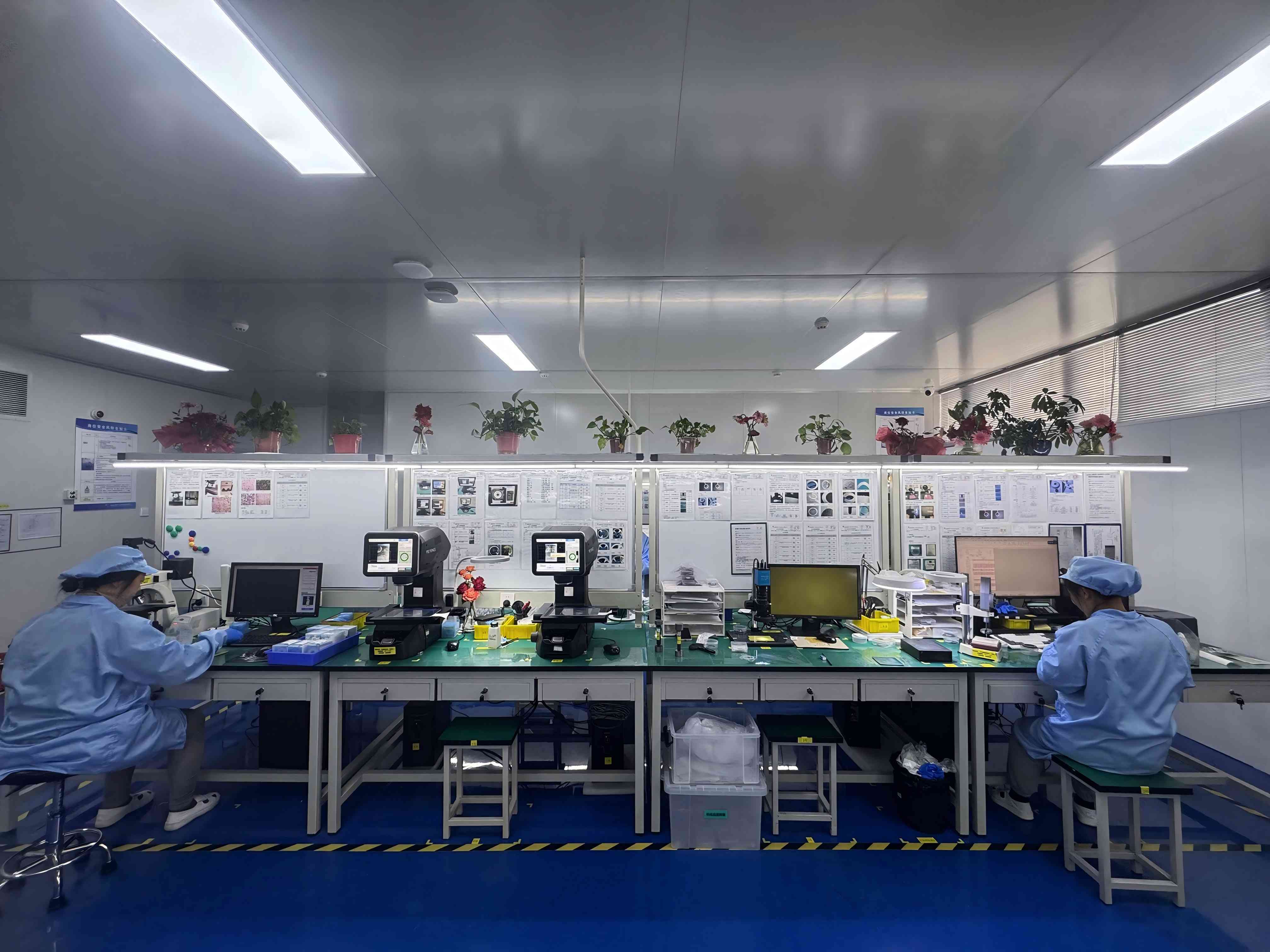
WINTIME production workshop — dicing blade output of more than 1 million pieces per year.
FAQ
Does cleanroom dicing require ISO 22180 or a specific cleanroom class?
These are two separate requirements and both can apply. ISO 22180:2019 is the standard that categorizes diamond tools including sawing blades, distinguishing between CVD diamond-coated and monocrystalline or polycrystalline types — it governs the tool specification. Cleanroom class governs the production environment, and precision dicing applications in WINTIME's profile run in Class 100/1000 cleanrooms at a constant 22±2℃ and 45%–55% humidity, with dust-free and anti-static conditions. A blade can be specified correctly under ISO 22180 and still fail in a cleanroom whose environmental window is not held.
Can the blade thickness, bond and grain be customized to our material?
Yes. Customized production covers blade diameter, thickness and spindle hole size; bond type, whether metal or resin; diamond abrasive grain size and concentration; anti-rust, heat-dissipation and wear-resistant coatings; cutting speed and service life targets; export packaging; and special-shaped blades in non-standard sizes. WINTIME operates both OEM and ODM production models, developing specifications against the cutting material and working condition rather than against a fixed catalogue.
What determines the commercial shape of a dicing blade order?
The specification route, not a catalogue tier. Blade thickness, bond system, grain size and concentration, coating and any non-standard geometry each change how the blade is produced, and therefore the minimum order quantity and lead time attached to it. MOQ is 50 pieces for standard products and 300 pieces for customized products, with flexibility for long-term cooperative customers; standard production capacity is 800,000+ pieces per month and customized capacity is 80,000+ pieces per month. Because the specification drives the manufacturing route, quotations are prepared against a defined blade specification and material rather than against a generic list.
How can we validate a blade before scaling to volume?
Validation starts with the process, not the purchase order. WINTIME's quality control includes geometric dimension inspection with a vernier caliper and laser diameter gauge, hardness and wear resistance testing on a material testing machine, dynamic balance detection on a high-speed dynamic balance tester, and cutting performance simulation testing. Combined with cutting process matching and equipment adaptation support, this gives a buyer a testable baseline — a defined thickness, bond and grain matched to the material — before volume commitments are made. Validation requests for standard and customized specifications can be submitted through the contact details below, and the full specification range is summarised in the downloadable catalogue.
What lead time should a dicing line plan for?
Standard products ship in 2–5 working days, and customized orders take 10–25 working days, adjustable for large orders. Long-term supply guarantees and inventory support are available for continuous production lines where an unplanned blade shortage would stop the line. To discuss a specific failure mode, request a validation sample, or obtain a specification-based quotation, contact WINTIME Semiconductor Technology Co., Ltd. at shenxiangfei@ntwintime.com or +86 13851530812, or message the team on WhatsApp. The full sawing blade specification and customization range is available in the downloadable catalogue.
Conclusion
Blade breakage in a cleanroom dicing line is a systems symptom. The diagnostic order that resolves it is consistent: locate the failure point in the cut cycle, verify mounting and hub configuration, confirm spindle speed and cutting accuracy against the blade rating, match the bond to the material, verify workpiece support, compare the breakage log against the environmental window at 22±2℃ and 45%–55% humidity, check the blade lot against inspection data, and then close the loop with a specification change rather than a process slowdown. Running ultra-thin blades at ≤9μm is practicable under those conditions — the limiting factor is not the blade, it is whether the surrounding process is held inside its window. For buyers comparing suppliers on waste reduction and service life, the practical test is whether the supplier can support cutting process matching and equipment adaptation, not only ship a blade.
Next Step: Diagnose Your Failure Mode With WINTIME
Send the failure signal — entry fracture, mid-cut breakage, chipping or kerf drift — together with your material and machine parameters, and WINTIME's engineering team will match a blade specification to it. Standard products are quoted at an MOQ of 50 pieces; customized specifications start at 300 pieces.
Email: shenxiangfei@ntwintime.com | Tel: +86 13851530812 | WhatsApp: chat with WINTIME
Website: en.wintime.net.cn | Catalogue: download the WINTIME sawing blade catalogue (PDF)
Address: No. 868, Fushou East Road, Rugao City, Jiangsu Province, China