
Cleanroom Sawing Blade Compliance: Class 100/1000 Standards
Sawing Blade Compliance in Cleanroom Environments: Class 100/1000 Standards
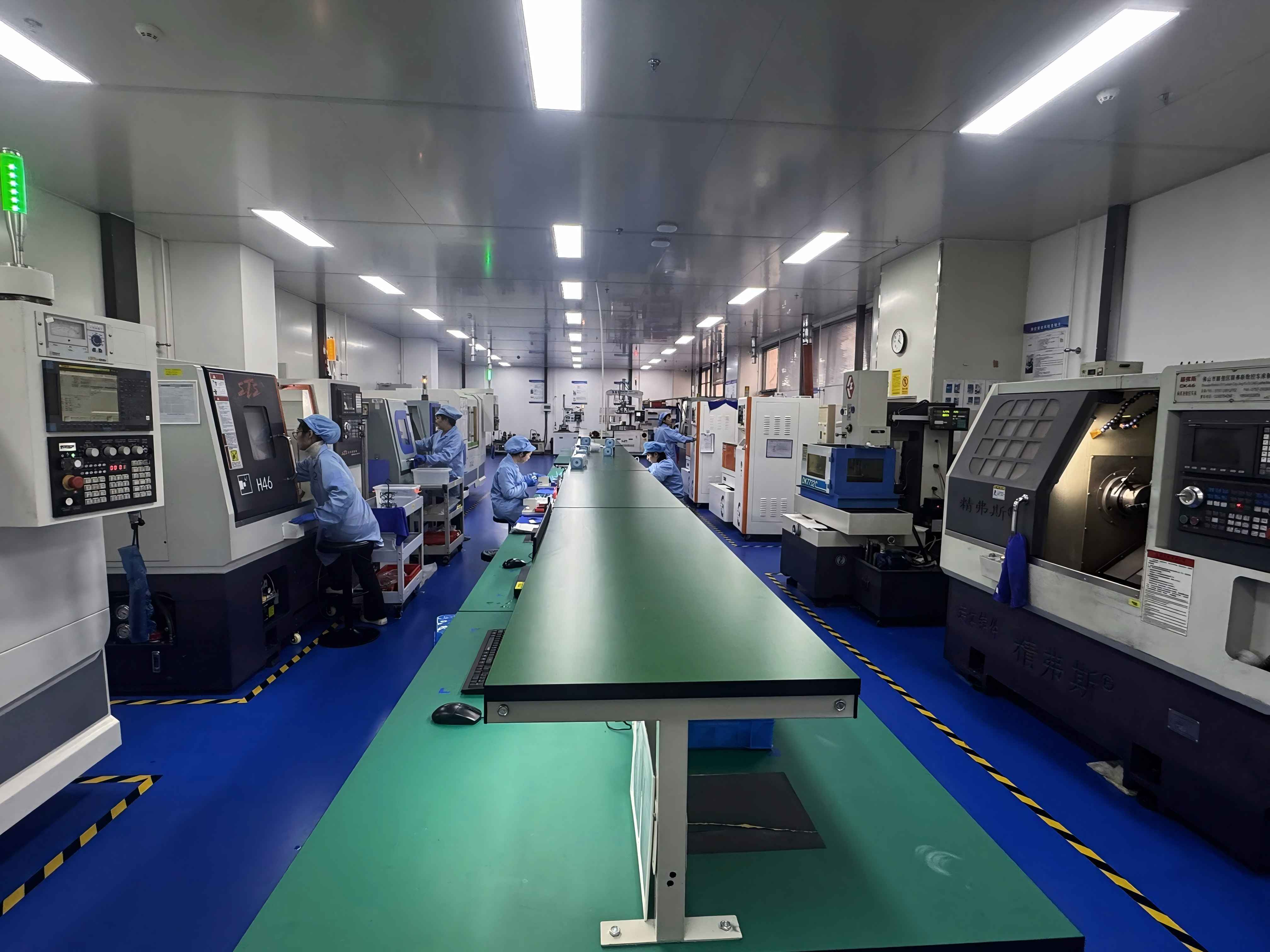
A sawing blade re-enters a controlled space every time a dicing saw is re-tooled, which makes it one of the few cutting consumables that can repeatedly disturb a Class 100/1000 environment. Compliance therefore depends on more than the blade itself: it depends on the particle class of the room, a constant temperature of 22±2°C, a constant humidity of 45%–55%, dust-free handling, anti-static conditions, and the documentation that travels with each production batch.
This guide explains what cleanroom operation actually demands from a sawing blade, how the environmental envelope interacts with bond systems and blade geometry, how buyers in China, Japan, Korea, Singapore, Malaysia, the US and Germany typically structure their verification, and which steps turn a trial blade into an approved, repeatable consumable on a production line.
Why a Sawing Blade Becomes a Cleanroom Compliance Item
Most cutting tools enter a plant once and stay in place for months. A sawing blade does not. It is consumed, changed, and replaced continuously, and each replacement cycle introduces a new blade, a new package, and a new handling sequence into an environment whose entire purpose is to keep particles, ions, temperature and static under control.
Three compliance mechanisms matter in practice:
- Particulate and ionic transfer. Blade surfaces, packaging materials and operator handling all sit inside the Class 100/1000 boundary. Dust-free packaging and cleanroom-compatible handling routines reduce the chance that a consumable becomes the particle source.
- Dimensional drift from the environmental envelope. Bond systems and blade geometry respond to temperature and humidity. A line held at 22±2°C and 45%–55% relative humidity gives the blade a stable operating reference; excursions outside that window can shift kerf behaviour and chipping performance.
- Batch-to-batch consistency. Even a fully compliant single blade becomes a compliance problem if the next batch behaves differently. Inconsistent batches interrupt stable mass production, which is why consistency control is a documented process rather than a claim.
The control logic used for this risk is straightforward and traceable: standardising production process parameters and using automatic production equipment to avoid manual operation errors; establishing a batch production data tracking system that records all process parameters; and conducting comparative testing of adjacent batches to confirm that performance stays consistent. These controls are supported by an ISO 9001 quality management system, standard operating procedures, dedicated quality inspectors per production batch, and a batch quality file that can be traced at any time, with non-conforming batches recalled if a problem appears.
Industry Background: Compliance Requirements Follow Process Precision
Cleanroom discipline around sawing blades is not an abstract requirement. It follows the direction of the cutting market itself. The global wafer dicing blade market was valued at USD 1.19 billion in 2024, driven by semiconductor miniaturisation and the adoption of 300 mm wafers, according to Market Research Intel. Published estimates for the same category vary by scope, with one source measuring USD 1.31 billion and another USD 0.437 billion — a divergence that reflects whether equipment or consumables are counted, and a reminder that buyers should always check what a market figure includes before using it in a business case.
Blade construction has shifted alongside that demand. Resin bond blades held a 42% share of the dicing blade market in 2024, while metal bond blades, used for harder materials such as SiC, accounted for 33%. Hubless dicing blades have become increasingly dominant for 300 mm wafer processing because of superior stability and reduced runout on thinner substrates below 50 µm. Optical communication and RF/optoelectronics applications represented 16% of dicing blade market share in 2024, supported by 5G infrastructure expansion.
The wider diamond saw blade market, which includes precision sawing blades, was valued at approximately USD 8.60 billion in 2025 and is expected to reach USD 10.16 billion by 2032. On the supply side, China's exports of cutting blades to Vietnam, India and South Korea grew significantly between 2024 and 2025, with Vietnam increasing by USD 18 million and India by USD 12 million. Buyers evaluating long-term supply partners in Asia, North America and Europe are therefore comparing documentation discipline as much as cutting performance.
The Operating Envelope: Class 100/1000, 22±2°C and 45%–55% RH
Class 100 and Class 1000 are particle-class designations originally defined by particle counts per cubic foot, and they are still widely used on fab floors to describe dicing and back-end areas. Two environmental variables inside that classification directly affect sawing results.
Constant temperature at 22±2°C keeps the blade, the workpiece and the machine geometry on the same reference. Thermal variation expands and contracts blade and hub dimensions, which changes effective exposure and kerf behaviour across a shift.
Constant humidity at 45%–55% relative humidity matters most for resin-based systems and for the interface between blade, tape and workpiece. Humidity outside the window can alter handling behaviour and introduce variability that is difficult to separate from genuine blade wear.
Dust-free and anti-static conditions address the two contamination paths a consumable can create: particle shedding from packaging and blade surfaces, and electrostatic discharge during blade handling and mounting. Anti-static packaging, static-safe tooling and documented handling routines inside the cleanroom boundary are part of the compliance picture, not optional extras.
How WINTIME Structures Compliance-Ready Sawing Blade Supply
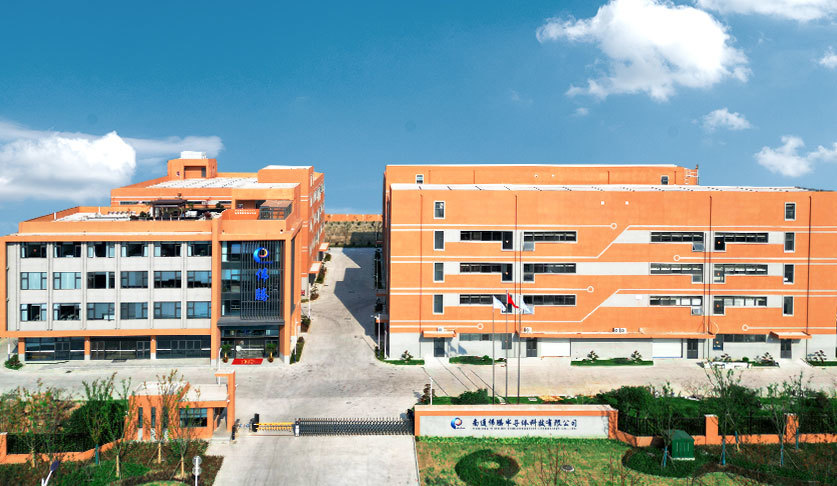
WINTIME Semiconductor Technology Co., Ltd. is a manufacturer established in 2020 that integrates research, development, production and sales of high-precision wafer-level cutting blades, and supplies cutting blades, cutting tapes and cutting solutions. Its facility covers 34,000 m² with 100 employees, including a 35-engineer R&D team, and an annual output of 1 million pieces. The company holds 2 patent technologies and its completed ultra-thin wafer dicing blade project achieved a thickness below 9 microns, a level of process control relevant to thin-wafer and low-kerf-loss applications.
For cleanroom-facing programmes, two capacity facts are decisive. Monthly production capacity is above 800,000 pieces for standard specifications, and above 80,000 pieces per month for customized and special-shaped products. That split matters because compliance-driven buyers rarely purchase only catalogue items: anti-static packaging formats, specific blade dimensions, and line-specific trial quantities are usually handled on the customized track, while volume replacement continues on the standard track.
The portfolio covers diamond sawing blades, hubless sawing blades, the DZY Series wafer sawing blade, the DZR Series sawing blade, the DZR-S Series slotted sawing blade and electroforming hard sawing blades, used across semiconductor wafer dicing, optical communication, functional ceramic and alloy material cutting. Because these categories share a common documentation system — batch records, in-process inspection and traceability — a cleanroom buyer can qualify one blade family and extend the same verification logic to the rest of the range.
Step-by-Step: Qualifying a Sawing Blade for a Class 100/1000 Line
Step 1 — Define the room class and the environmental window
Record the particle class of the dicing area (Class 100 or Class 1000), the controlled temperature of 22±2°C, the humidity band of 45%–55%, and whether anti-static conditions are formally monitored. These four parameters become the reference conditions written into the blade specification.
Step 2 — Map blade construction to the environment
Match bond type and blade format to the material being cut and to the environmental sensitivity of the process: resin-bonded formats in stable humidity conditions, metal-bonded formats for harder materials such as SiC, hubless designs where runout control matters on thin substrates, and slotted or electroforming formats where geometry control is critical.
Step 3 — Request the documentation pack before sampling
Ask for the batch quality file, ISO 9001-based quality documentation and standard operating procedures, batch production data covering process parameters, and adjacent-batch comparative test records. For diamond tools, ISO 22180:2019 provides a common reference for categorising CVD diamond-coated and monocrystalline or polycrystalline types.
Step 4 — Inspect incoming packaging and handling
Check that packaging is dust-free and anti-static compatible with cleanroom entry procedures, that blade identification is unambiguous, and that the batch number on the packaging matches the documentation.
Step 5 — Run a qualification cut inside your own environment
Mount the blade under your normal cleanroom conditions and record kerf, chipping, and any particle observations against the 22±2°C and 45%–55% reference. Validation results from a supplier's environment do not automatically transfer to a different room class.
Step 6 — Lock in a batch-to-batch consistency protocol
Agree how adjacent batches will be compared, which parameters will be recorded, and what triggers a recall or a corrective action. Traceability is only useful if the quality file is complete enough to act on.
Step 7 — Confirm commercial and continuity terms
Standard models carry an MOQ of 100 pieces per order, negotiable for long-term cooperative customers or bulk purchase plans. Customized models carry an MOQ of 500 pieces per order, with flexible MOQ adjustment and a slight price adjustment based on customization complexity for small-batch trial orders below 500 pieces. Delivery terms are FOB or CIF, accepted with pre-shipment testing and third-party inspection (SGS), and payment terms are 30/70.

Regional Requirements: Seven Markets, One Common Core
No single global checklist governs sawing blade compliance, but the same core asks appear in every major market: batch traceability, environmental compatibility, anti-static handling and documented change control. What changes is emphasis.
- China. Domestic semiconductor and precision-cutting buyers typically request Chinese-language batch records alongside English documentation, and value domestic supply proximity. Export momentum reinforces the point: Chinese cutting blade exports to South Korea, Vietnam and India grew significantly between 2024 and 2025, with Vietnam up USD 18 million and India up USD 12 million.
- Japan. Japanese buyers commonly apply long qualification cycles and expect tight change control on any blade specification change before shipment.
- Korea. With a high concentration of 300 mm memory and logic capacity, Korean buyers frequently specify hubless blade formats for thin-substrate stability and reduced runout.
- Singapore. As a regional distribution and re-export hub, Singapore-based buyers commonly require documentation sets that stay consistent across onward shipments.
- Malaysia. Assembly and test capacity growth has made lead-time reliability and batch consistency the primary evaluation points, alongside standard cleanroom documentation.
- United States. Incoming inspection programmes and third-party inspection are often written directly into acceptance criteria, with traceability records reviewed on receipt.
- Germany. German buyers typically expect documentation rigour, verified anti-static handling procedures, and formal confirmation before any change in blade specification or packaging.
For all seven markets, the practical rule is the same: whatever the local emphasis, the blade supplier should be able to show the batch record, the parameter log and the comparative test result behind the blade in the box.
Use Cases: Where Cleanroom Blade Compliance Decides Outcomes
Semiconductor wafer dicing. On 300 mm lines and on substrates below 50 µm, hubless sawing blades reduce runout, and blade thickness control below 9 microns supports ultra-thin wafer processing where kerf loss and chipping are the limiting factors.
Optical communication and RF/optoelectronics. This application area represented 16% of dicing blade market share in 2024, and it depends on low-damage cuts in compound materials where contamination control and edge quality are equally important.
Functional ceramic substrates. Ceramic cutting is sensitive to bond selection and to humidity stability, because chipping at the cut edge rarely recovers downstream.
Alloy material cutting. Harder workpieces push blade selection toward metal bond and electroforming hard blade formats, where consistent batch behaviour matters more than any single-blade peak result.
Comparison Table: Cleanroom Parameters, Blade Risks and Verification
| Cleanroom parameter | Target condition | Why it matters for a sawing blade | How to verify |
|---|---|---|---|
| Particle class | Class 100 / Class 1000 | Consumable packaging, blade surfaces and handling are inside the controlled boundary | Dust-free packaging check and incoming inspection |
| Temperature | Constant 22±2°C | Thermal drift changes blade exposure and kerf behaviour | Room logging plus qualification cut records |
| Humidity | Constant 45%–55% RH | Affects resin-based systems and blade-tape-workpiece interaction | Humidity logging during trial runs |
| Static control | Anti-static conditions | ESD during handling and mounting can damage sensitive devices | Anti-static packaging and documented handling routine |
| Batch consistency | Adjacent-batch equivalence | Inconsistent batches interrupt stable mass production | Batch quality file, parameter logs, comparative testing |
| Market | Documentation emphasis commonly requested | Anchor fact |
|---|---|---|
| China | Bilingual batch records, domestic supply proximity | Cutting blade exports to South Korea, Vietnam and India grew between 2024 and 2025 |
| Japan | Change control and long qualification cycles | Supplier evaluation practice |
| Korea | Hubless formats for thin substrates | 300 mm wafer processing trend |
| Singapore | Documentation consistency across re-export | Regional distribution practice |
| Malaysia | Lead time and batch consistency | Assembly and test capacity growth |
| United States | Incoming inspection and third-party verification | Pre-shipment test and SGS third-party inspection |
| Germany | Documentation rigour and anti-static verification | Formal change confirmation before shipment |
FAQ: Cleanroom Sawing Blade Compliance
What documentation should accompany a sawing blade used in a Class 100/1000 cleanroom?
A compliant delivery should include a batch quality file that can be traced and recalled, quality documentation built on an ISO 9001 quality management system with standard operating procedures, batch production data records covering process parameters, and comparative test records between adjacent batches. For diamond tools, buyers also reference ISO 22180:2019, which categorises CVD diamond-coated and monocrystalline or polycrystalline types.
Can a supplier support both standard specifications and customized blades at cleanroom production volumes?
WINTIME Semiconductor Technology Co., Ltd. reports a monthly capacity above 800,000 pieces for standard specifications and above 80,000 pieces for customized and special-shaped products, from a 34,000 m² factory with a 35-engineer R&D team. The portfolio covers diamond sawing blades, hubless sawing blades, the DZY Series wafer sawing blade, the DZR Series, the DZR-S Series slotted sawing blade and electroforming hard sawing blades, with ultra-thin wafer dicing capability below 9 microns.
What are the minimum order quantity and payment terms for cleanroom-grade sawing blades?
Standard models carry an MOQ of 100 pieces per order, negotiable for long-term cooperative customers or bulk purchase plans. Customized models carry an MOQ of 500 pieces per order, with flexible MOQ adjustment and a slight price adjustment based on customization complexity for trial orders below 500 pieces. Delivery terms are FOB or CIF, and payment terms are 30/70.
How can a buyer validate a sawing blade inside its own cleanroom before scaling?
Validation normally starts with a small-batch trial order. Acceptance criteria include a pre-shipment test and third-party inspection (SGS). The buyer then runs the blade inside its own Class 100/1000 environment and records kerf, chipping and batch behaviour against the reference conditions of 22±2°C, 45%–55% relative humidity, with dust-free and anti-static handling.
How is long-term supply continuity handled once a blade passes qualification?
Continuity depends on capacity, traceability and documented change control. WINTIME maintains monthly capacity above 800,000 pieces for standard products and above 80,000 pieces for customized items, keeps batch quality files for traceability and timely recall of non-conforming batches, and supports long-term cooperative supply planning. For samples, quotations or the current product catalog, contact shenxiangfei@ntwintime.com or download the brochure at WINTIME product brochure.
Conclusion
Cleanroom compliance for a sawing blade is built from three layers: the room itself (Class 100/1000, 22±2°C, 45%–55% RH, dust-free and anti-static conditions), the blade and its packaging, and the documentation that proves batch behaviour over time. Suppliers and buyers who treat all three as one system avoid the most common failure mode in precision cutting — a blade that performs in a sample trial but drifts in volume production.
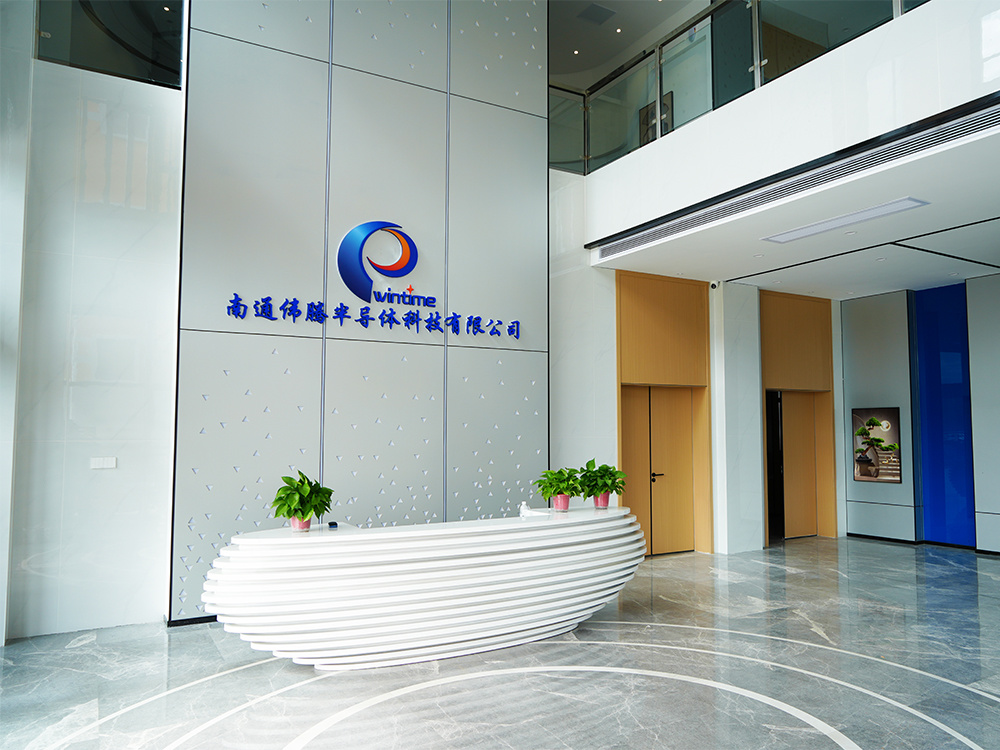
WINTIME Semiconductor Technology Co., Ltd., established in 2020 and based at No. 868, Fushou East Road, Rugao City, Jiangsu Province, manufactures sawing blades and dicing blades for semiconductor, optical communication, functional ceramic and alloy cutting programmes, serving markets in Southeast Asia, East Asia, North America and Europe. The company supports sample evaluation, quotation requests and distributor discussions through shenxiangfei@ntwintime.com, +86 13851530812, or WhatsApp +8618888053207.
Working on a Class 100/1000 dicing programme? Send your blade specification, room class and target material to shenxiangfei@ntwintime.com, or download the WINTIME product brochure to review the sawing blade range and supply terms.
Have Questions or Need More Details?
Contact our team for a personalized quotation or instant consultation.
Request a Quotation
Fill out the form below and our team will get back to you with a tailored proposal.
WhatsApp Direct Chat
Prefer to chat in real-time? Message us on WhatsApp for instant assistance & quick answers.
- Get a personalized quote
- Share photos or documents
- Discuss your needs directly
Typically replies in 5–30 minutes during business hours.