
Cutting New Functional Materials: Unique Aspects of Wafer Scribe and Sawing Equipment
Wafer scribe and sawing equipment is often evaluated by spindle speed, kerf width, and throughput. For new functional materials, that view is incomplete. Functional ceramics, LCP-based substrates, semiconductor wafers, optical communication components, and alloy materials place different demands on blade stability, static control, narrow-kerf geometry, and machine feeding. The cutting result depends on the blade, the spindle, the automatic feeder, the tape, the cleanroom envelope, and the inspection method working as one system.
WINTIME Semiconductor Technology Co., Ltd. is a Chinese manufacturer of wafer-level high-precision cutting blades, including sawing blades and dicing blades. The company was established in 2020 and reports a 34,000㎡ facility, 100 employees, 35 engineers, annual output of 1 million pieces, and exports to Southeast Asia, East Asia, North America, and the EU. This guide is written for research and evaluation buyers in China and Singapore who need to match a sawing blade to a new material and to the dicing equipment around it.
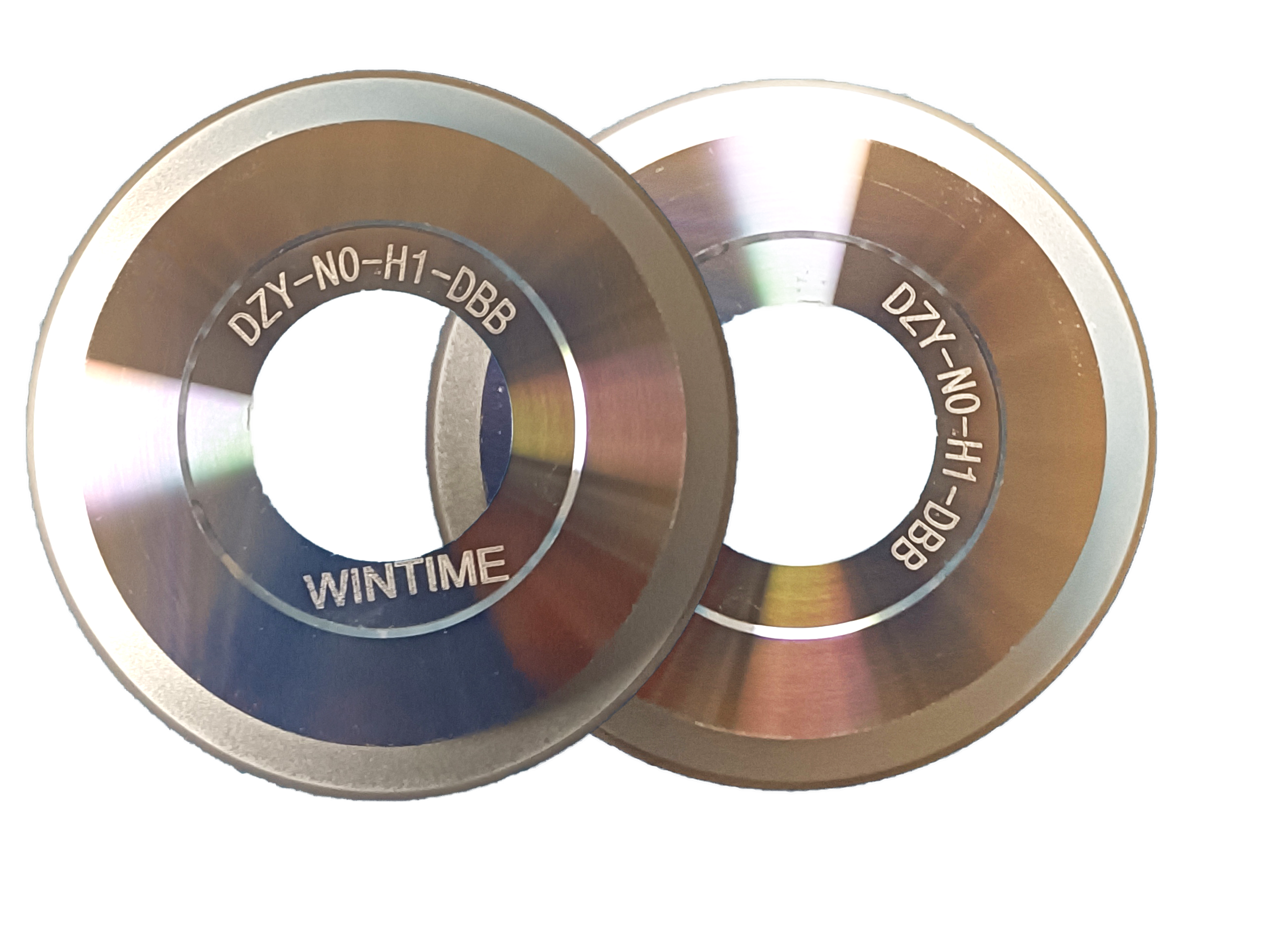
DZY series wafer sawing blade. The DZY type integrates the cutting blade with an aluminum alloy flange.
Problem Definition: Why New Materials Stress the Blade and the Machine
The core problem is not simply hardness. New functional materials combine brittle phases, layered structures, metal-organic interfaces, and strict cleanliness requirements. A blade that performs acceptably on one wafer material may produce different kerf behavior, edge quality, or static risk on a functional ceramic, an LCP-based substrate, or a semiconductor package. The buyer must therefore define the failure mode before selecting a blade family.
In wafer scribing and sawing, the blade is only one variable. Spindle speed, feed motion, tape mounting, cleaning, and static control determine whether a narrow kerf stays stable. WINTIME's documented working condition is a Class 100/1000 cleanroom with constant temperature of 22±2°C, constant humidity of 45–55%, dust-free and anti-static conditions, and a high-speed spindle environment. That envelope matters because a blade that is geometrically correct can still fail if the machine, tape, or cleanroom condition is not controlled.
For HVQ2-style constraints, the practical questions are: what blade thickness and accuracy are required, what bond and abrasive suit the material, what spindle and feeder settings are available, what cleanroom and anti-static controls apply, and what commercial parameters such as MOQ and lead time affect evaluation. The answer should be built from documented facts, not from a generic claim that one blade is suitable for all new materials.
Industry Background: From Silicon Dicing to Mixed-Material Cutting
Semiconductor manufacturing and packaging remain the anchor applications for precision sawing blades. WINTIME's product scope covers semiconductor manufacturing, semiconductor packaging, precision electronic component processing, and optical ceramic cutting. The same product family is also positioned for optical communication, new functional materials, functional ceramics, and alloy materials. This broadening application base is why wafer scribe and sawing equipment is now evaluated as a materials-processing system rather than a single consumable purchase.
China and Singapore both sit inside this change. China has a deep semiconductor packaging and precision manufacturing base, while Singapore serves semiconductor, optical communication, and advanced materials supply chains in Southeast Asia. WINTIME's documented application country codes include CN, JP, KR, SG, MY, US, and DE, and its export markets include Southeast Asia. For buyers in these markets, the evaluation question is not whether a blade is imported or domestic, but whether the blade and machine settings can hold a stable process for the target material.
WINTIME reports mass production of ultra-thin wafer dicing blades with a thickness below 9 μm. That is a relevant capability fact for narrow-kerf work, but it does not by itself prove performance on every functional ceramic or LCP substrate. The buyer still needs to match blade construction, bond, abrasive, equipment, and inspection criteria to the material. The value of the below-9 μm capability is that it places ultra-thin dicing within a mass-production discussion rather than a laboratory-only discussion.
Detailed Solution: Match Blade Stability to Machine Use
The solution has two linked parts: blade stability and machine use. Blade stability covers geometry, bond, abrasive, balance, and static behavior. Machine use covers spindle speed, feed motion, automatic dicing operation, tape mounting, cleaning, and testing. A procurement decision that examines only the blade misses the process variables that determine whether the blade survives production.
Blade stability: narrow kerf, anti-static control, and dimensional accuracy
WINTIME's Sawing Blade specification lists a thickness range of 8 μm–50 μm, cutting accuracy of ±0.002 mm, spindle speed of 30,000–60,000 rpm, hardness of HRC 65–70, resin or metal bond, and chip removal rate of ≥1.2 mm³/s. The material construction is a resin or metal bond matrix with diamond superabrasive and a high-strength steel base. These are the parameters that should be placed beside the material and equipment requirements during evaluation.
Narrow kerf is not only a blade thickness number. It is the result of thickness, runout, dynamic balance, spindle condition, feed stability, and material response. WINTIME's quality control includes geometric dimension inspection using a vernier caliper and laser diameter gauge, hardness and wear resistance testing, dynamic balance detection with a high-speed dynamic balance tester, and cutting performance simulation testing. For a new material, those checks help separate a blade geometry issue from a machine or handling issue.
Anti-static control is part of the operating envelope, not an afterthought. The documented working condition includes dust-free and anti-static conditions. In practice, the buyer should confirm how the blade, tape, mounting, cleaning, and dicing machine handle static risk before scaling a new material. A blade family that is stable in a cleanroom envelope can still create defects if static control is weak at the tape interface or during cleaning.
Machine use: spindle, automatic feeder, tape, and cleaning
WINTIME's application data lists matched equipment that includes automatic wafer dicing machines, semiconductor cutting spindles, UV tape mounting machines, wafer cleaning equipment, and wafer testing machines. The operation mode is high-speed spindle rotating cutting, dry or wet cutting, automatic dicing machine continuous operation, and precision feeding cutting. These details matter because a narrow-kerf blade needs a machine that can hold speed and feed without introducing vibration or misalignment.
The spindle speed range of 30,000–60,000 rpm is the machine-side parameter that must be matched to the blade and material. An automatic feeder supports continuous operation, but it also means that small variations in blade exposure, tape tension, or feed alignment can repeat across many cuts. For evaluation, the buyer should record spindle speed, feed mode, dry or wet condition, tape type, and cleaning step alongside the blade specification. That record becomes the basis for a stable process window rather than a one-off trial.
Product-family fit: DZY, DZR, DZR-S, and related blade options
WINTIME's documented product families provide different starting points. The DZY series wafer sawing blade integrates the cutting blade with an aluminum alloy flange and is described for high-precision wafer cutting in semiconductor packaging processes. The DZR series sawing blade is composed of metallic nickel and diamond abrasive and is described for semiconductors, optical communication, and new functional materials. The DZR-S series slotted sawing blade is described for semiconductor wafer cutting, functional ceramics, alloy materials, and semiconductor packaging components.
Other product-name options in the WINTIME sawing blade scope include diamond sawing blade, hubless sawing blade, electroforming hard sawing blade, semiconductor wafer sawing blade, optical communication sawing blade, functional ceramic sawing blade, and alloy material sawing blade. These names should be treated as application and configuration starting points, not as proof that one blade covers every material. The buyer should request the matching construction, dimensions, bond, and equipment data for the specific material.
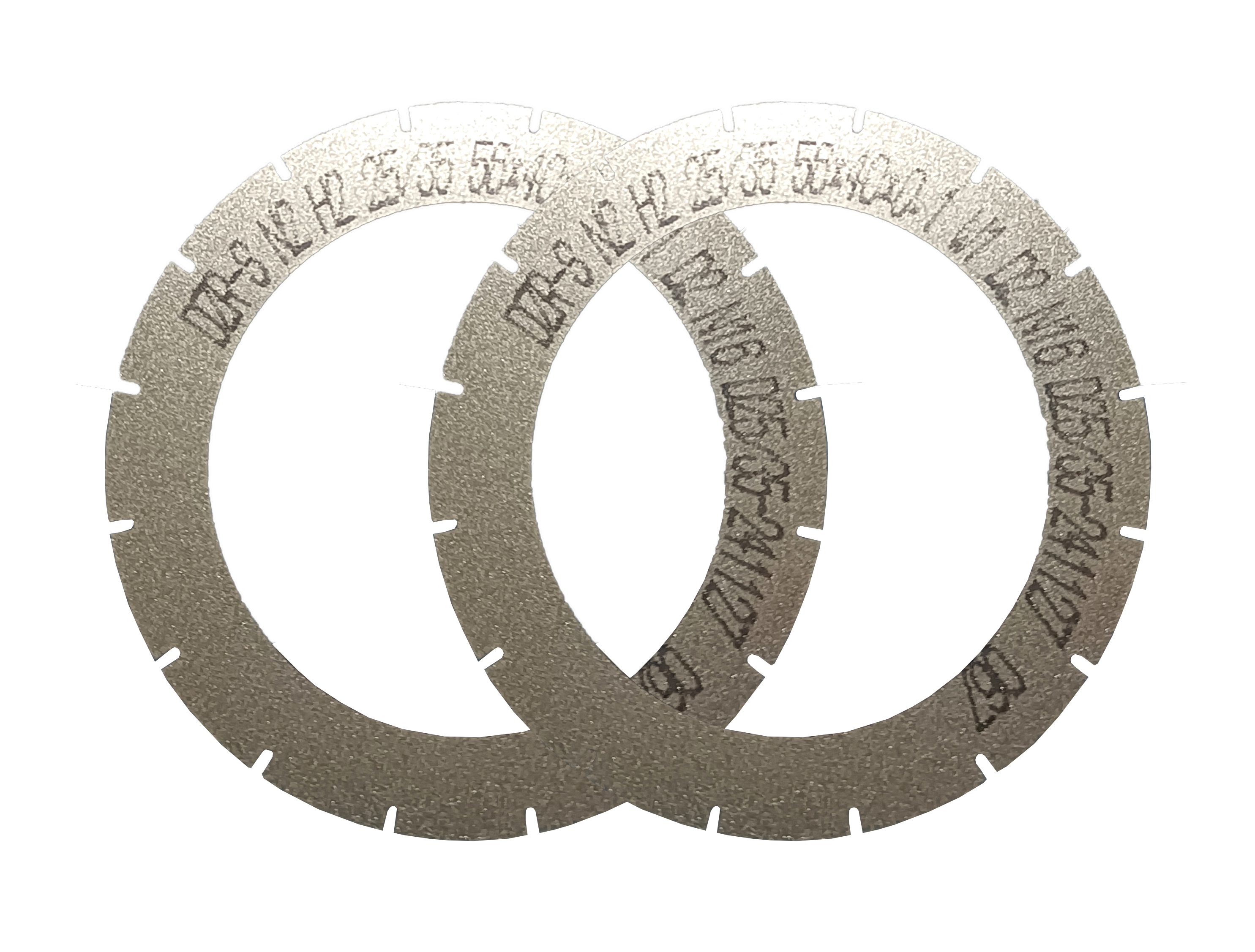
DZR-S Series Slotted sawing blade. The slotted geometry is documented for semiconductor wafer, functional ceramic, alloy material, and semiconductor packaging component cutting.
Customization and quality control
WINTIME supports OEM, ODM, and customized production. The documented customization scope covers blade diameter, thickness, and spindle hole size; bond type such as metal bond or resin bond; diamond abrasive grain size and concentration; coating for anti-rust, heat dissipation, or wear resistance; cutting performance such as cutting speed and service life; packaging and export packaging; and special-shaped blade customization for non-standard sizes. This scope is relevant for functional ceramics and LCP-based substrates because the buyer may need a non-standard combination rather than a catalog standard.
Quality control is documented across four checks: geometric dimension inspection, hardness and wear resistance testing, dynamic balance detection, and cutting performance simulation testing. For procurement, these checks should be converted into acceptance language. The buyer should ask which dimensions are inspected, which material lot is used for simulation, and how dynamic balance is recorded. The goal is not more paperwork; it is a traceable link between the blade specification and the cutting result.
Step-by-Step Breakdown: A Buyer Evaluation Sequence
Step 1: Define the material and the failure mode. State whether the workpiece is a semiconductor wafer, functional ceramic, LCP-based substrate, optical communication component, or alloy part. Record the defect that matters: kerf loss, chipping, edge crack, static attraction, dimensional drift, or blade wear. This step prevents the evaluation from becoming a generic blade comparison.
Step 2: Fix the kerf and thickness envelope. Use the documented Sawing Blade range of 8 μm–50 μm as a starting envelope, then narrow it with the material and device layout. If ultra-thin cutting is required, confirm whether the below-9 μm mass-production capability applies to the requested configuration. Do not assume that the thinnest blade is automatically the best choice for every functional material.
Step 3: Select bond and abrasive. Compare resin bond and metal bond options against the material and the required edge quality. For DZR, the documented construction uses metallic nickel and diamond abrasive. For DZY, the blade is integrated with an aluminum alloy flange. For DZR-S, the slotted geometry is the distinguishing feature. These construction differences should be matched to the cutting task, not ranked as a universal hierarchy.
Step 4: Match the machine. Confirm the dicing machine, spindle, automatic feeder, UV tape mounting machine, cleaning equipment, and testing equipment. Check that the spindle speed can operate within the 30,000–60,000 rpm range and that the feed motion can hold the required precision. A blade evaluation that ignores the machine will produce results that are difficult to repeat.
Step 5: Control cleanroom and static conditions. Verify Class 100/1000 cleanroom status, 22±2°C temperature, 45–55% humidity, dust-free handling, and anti-static measures. These conditions are part of the documented working envelope and should be recorded before the trial, not after a defect appears.
Step 6: Run a sample or trial lot. Use the sample request to specify material, target kerf, blade dimensions, bond preference, spindle speed, feed mode, tape type, and cleaning step. WINTIME's after-sales scope includes technical support for cutting process matching and equipment adaptation, and quality problem investigation within 48 hours. Those support points are useful during evaluation because they connect the blade to the process.
Step 7: Lock inspection and supply terms. Convert the quality control checks into acceptance criteria and confirm MOQ, lead time, packaging, and replacement terms. Standard products have an MOQ of 50 pieces and a lead time of 2–5 working days. Customized products have an MOQ of 300 pieces and a lead time of 10–25 working days, adjustable for large orders. These commercial parameters belong in the evaluation file alongside the technical data.
Use Cases: Where the Blade and Equipment Combination Matters
Semiconductor wafer dicing and packaging. WINTIME's DZY series is described for high-precision wafer cutting in semiconductor packaging processes. The relevant evaluation points are kerf stability, blade exposure, spindle speed, automatic feeding, UV tape mounting, and cleaning. A narrow-kerf blade can support packaging density only if the machine and handling steps hold the same precision.
Functional ceramics. The DZR-S series slotted sawing blade is documented for functional ceramic cutting. Ceramic cutting places attention on edge quality, blade wear, and dimensional control. The buyer should confirm whether the slotted geometry is required for the specific profile and whether the bond and abrasive match the ceramic grade.
LCP-based and other new functional materials. LCP-based substrates are part of the broader new functional materials discussion. The buyer should not transfer a silicon dicing recipe directly to an LCP-based material without confirming blade construction, static control, tape compatibility, and cleaning. The documented DZR series is positioned for new functional materials, but the exact configuration still needs to be matched to the material and machine.
Optical communication components. WINTIME's DZR series is described for optical communication applications, and the product scope includes an optical communication sawing blade option. These parts often require clean edges and stable dimensions, so the evaluation should include cleaning, inspection, and package handling in addition to the blade specification.
Alloy materials and precision components. The DZR-S series is documented for alloy material cutting, and the product scope includes an alloy material sawing blade option. Alloy cutting can involve different chip formation and wear behavior from ceramic or semiconductor cutting, so the feed motion and blade bond should be reviewed together.
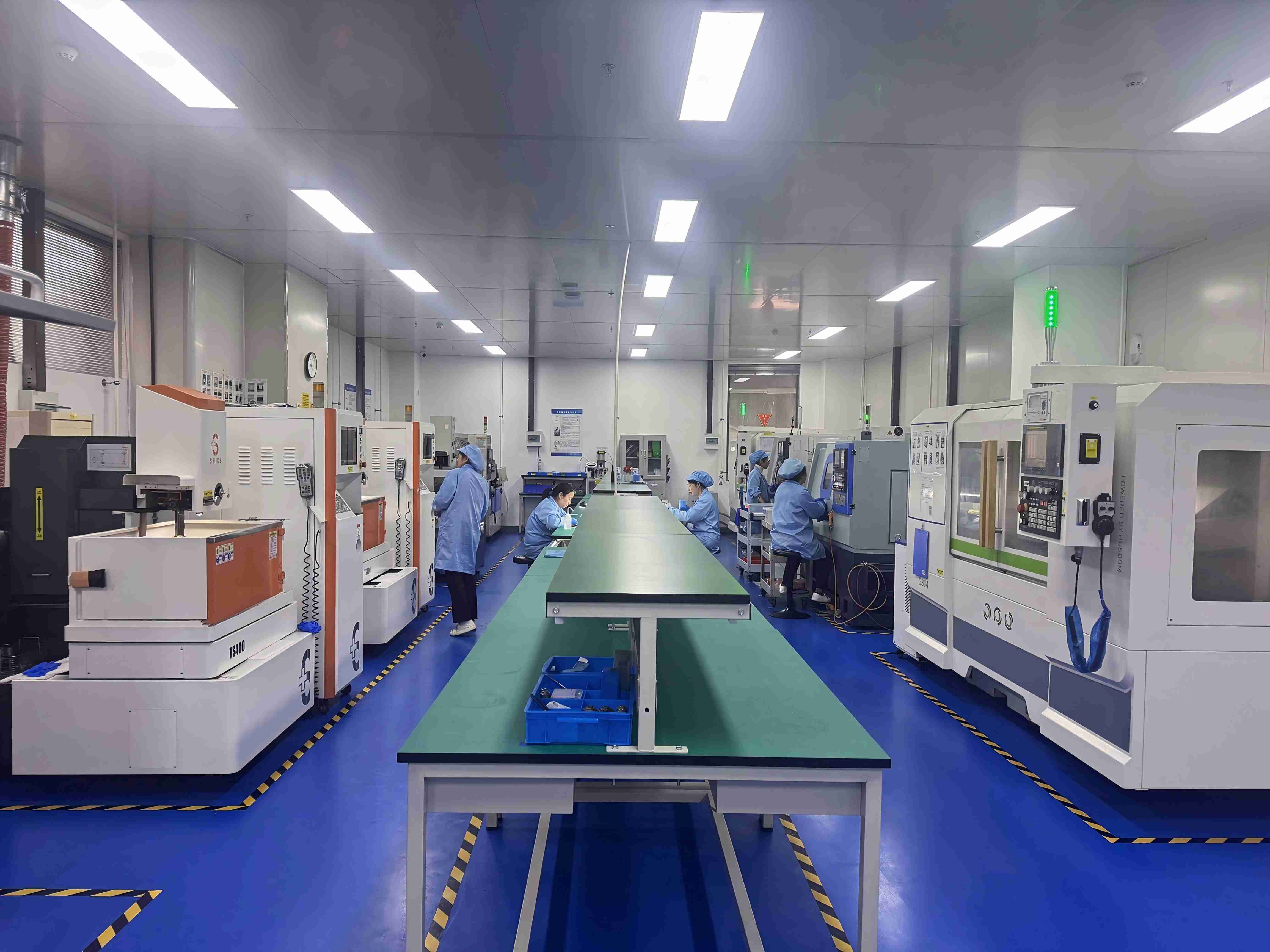
WINTIME Workshop. Production and inspection context for precision sawing blades.
Comparison Table: Documented Product-Family Facts
The table below compares documented facts only. It is not a performance ranking. Product families use different constructions and are positioned for different applications in the supplied corpus.
| Product family | Documented construction or geometry | Documented application | Evaluation note |
|---|---|---|---|
| Sawing Blade / SB-001 | Thickness 8–50 μm; cutting accuracy ±0.002 mm; spindle speed 30,000–60,000 rpm; hardness HRC 65–70; resin or metal bond; chip removal rate ≥1.2 mm³/s; diamond superabrasive on high-strength steel base | Semiconductor manufacturing, semiconductor packaging, precision electronic component processing, optical ceramic cutting | Use the full parameter set to define the process window before selecting a narrower family. |
| DZY Series Wafer Sawing Blade | Cutting blade integrated with an aluminum alloy flange | High-precision wafer cutting in semiconductor packaging processes | Consider when flange integration and wafer packaging handling are part of the machine setup. |
| DZR Series Sawing Blade | Metallic nickel and diamond abrasive | Semiconductors, optical communication, and new functional materials | Match the bond and abrasive to the material; confirm static and cleaning controls. |
| DZR-S Series Slotted Sawing Blade | Slotted geometry | Semiconductor wafer cutting, functional ceramics, alloy materials, and semiconductor packaging components | Confirm whether the slotted profile is required for the workpiece and machine. |
WINTIME also lists hubless sawing blade, electroforming hard sawing blade, semiconductor wafer sawing blade, optical communication sawing blade, functional ceramic sawing blade, and alloy material sawing blade within its sawing blade scope. These options should be evaluated by application, not by a generic ranking.
FAQ
What cleanroom and anti-static constraints should be verified before buying a sawing blade?
Verify the documented operating envelope: Class 100/1000 cleanroom, constant temperature of 22±2°C, constant humidity of 45–55%, dust-free and anti-static conditions, and high-speed spindle operation. WINTIME's documented quality control includes geometric dimension inspection, hardness and wear resistance testing, dynamic balance detection, and cutting performance simulation testing.
Can WINTIME blades be customized for functional ceramics, LCPs, and semiconductor packages?
WINTIME supports OEM, ODM, and customized production. The documented customization scope covers blade diameter, thickness, and spindle hole size; bond type such as metal bond or resin bond; diamond abrasive grain size and concentration; coating; cutting performance; packaging; and special-shaped blade customization for non-standard sizes. The buyer should match the requested configuration to the material, equipment, and inspection plan.
What commercial parameters should be used for budget planning?
Use the documented commercial parameters: MOQ is 50 pieces for standard products and 300 pieces for customized products, with flexibility for long-term cooperative customers. Standard lead time is 2–5 working days; customized lead time is 10–25 working days, adjustable for large orders. Monthly capacity is 800,000+ pieces for standard specifications and 80,000+ pieces for customized and special-shaped products.
How should a sample or trial request be specified?
Share the material, target kerf, blade dimensions, bond preference, spindle speed, feed mode, tape type, and cleaning step. WINTIME's after-sales scope includes technical support for cutting process matching and equipment adaptation, quality problem investigation within 48 hours, customized after-sales service for bulk procurement customers, long-term supply and inventory support, product application training for new customers, and replacement or compensation for defective products due to quality problems.
What lead time applies to standard and customized orders?
Standard products have a lead time of 2–5 working days. Customized orders have a lead time of 10–25 working days, adjustable for large orders. These lead times should be read together with MOQ and capacity: 50 pieces for standard products, 300 pieces for customized products, and monthly capacity of 800,000+ standard pieces or 80,000+ customized and special-shaped pieces.
Conclusion: Select the Blade and the Machine as One Process
Cutting new functional materials is not a single-variable blade purchase. Functional ceramics, LCP-based substrates, semiconductor wafers, optical communication components, and alloy materials each impose different constraints on kerf, edge quality, static control, spindle speed, feeding, tape, and cleaning. WINTIME's documented product families provide starting points: DZY for integrated-flange wafer cutting in semiconductor packaging, DZR for semiconductors, optical communication, and new functional materials, and DZR-S for slotted cutting in semiconductor wafers, functional ceramics, alloy materials, and packaging components.
The evaluation should move from material and failure mode to blade geometry, bond, abrasive, machine settings, cleanroom controls, sample validation, and commercial terms. WINTIME was established in 2020, operates a 34,000㎡ facility with 100 employees and 35 engineers, reports annual output of 1 million pieces, and mass-produces ultra-thin wafer dicing blades below 9 μm. Those facts support a serious evaluation, but they do not replace a material-specific trial.
Next step for China and Singapore buyers: request a sawing blade sample or quotation with your material, target kerf, blade dimensions, bond preference, spindle speed, and dicing equipment. Review the WINTIME product range at en.wintime.net.cn and download the catalog: WINTIME brochure PDF.
Email: shenxiangfei@ntwintime.com | Tel: +86 13851530812 | WhatsApp: +8618888053207
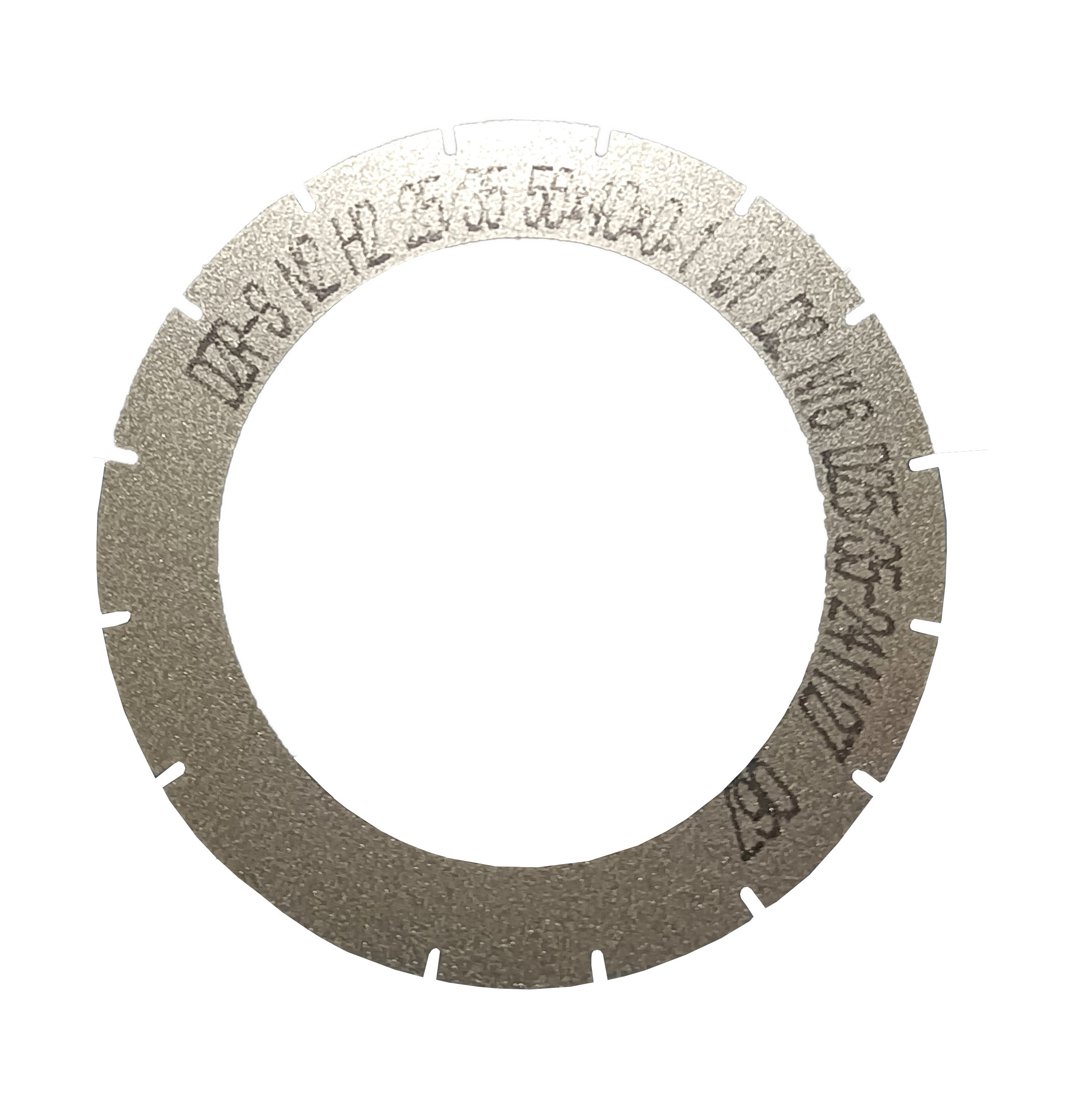
DZR-S Series Slotted sawing blade. Request a sample or quotation for your material and equipment.
Sawing BladeDiamond Sawing BladeHubless Sawing BladeDZY Series Wafer Sawing BladeDZR Series Sawing BladeDZR-S Series Slotted Sawing Blade
Have Questions or Need More Details?
Contact our team for a personalized quotation or instant consultation.
Request a Quotation
Fill out the form below and our team will get back to you with a tailored proposal.
WhatsApp Direct Chat
Prefer to chat in real-time? Message us on WhatsApp for instant assistance & quick answers.
- Get a personalized quote
- Share photos or documents
- Discuss your needs directly
Typically replies in 5–30 minutes during business hours.