
Dicing Blade Supplier Audit: Verifying Cleanroom, Anti-Static, and Capacity Claims
A dicing blade supplier audit answers one question: can the supplier prove, with traceable evidence, the cleanroom conditions, static controls, and production capacity it claims? Each of the three claims can be tested through a documentation review and a site walk, and each has a specific failure mode that appears months later as edge chipping, kerf drift, or a missed delivery date.
WINTIME Semiconductor Technology Co., Ltd. is a manufacturer of high-precision wafer-level cutting blades, cutting tapes, and cutting solutions, established in 2020 and based in Rugao City, Jiangsu Province, China. Its operating data — a 34,000 m² site, an annual output of more than one million dicing blades, and a Class 100/1000 production environment — makes it a practical worked example for the checklist below. The same checklist applies to any Diamond Dicing Blade, Hubless Dicing Blade, or Semiconductor Wafer Dicing Blade supplier under evaluation.
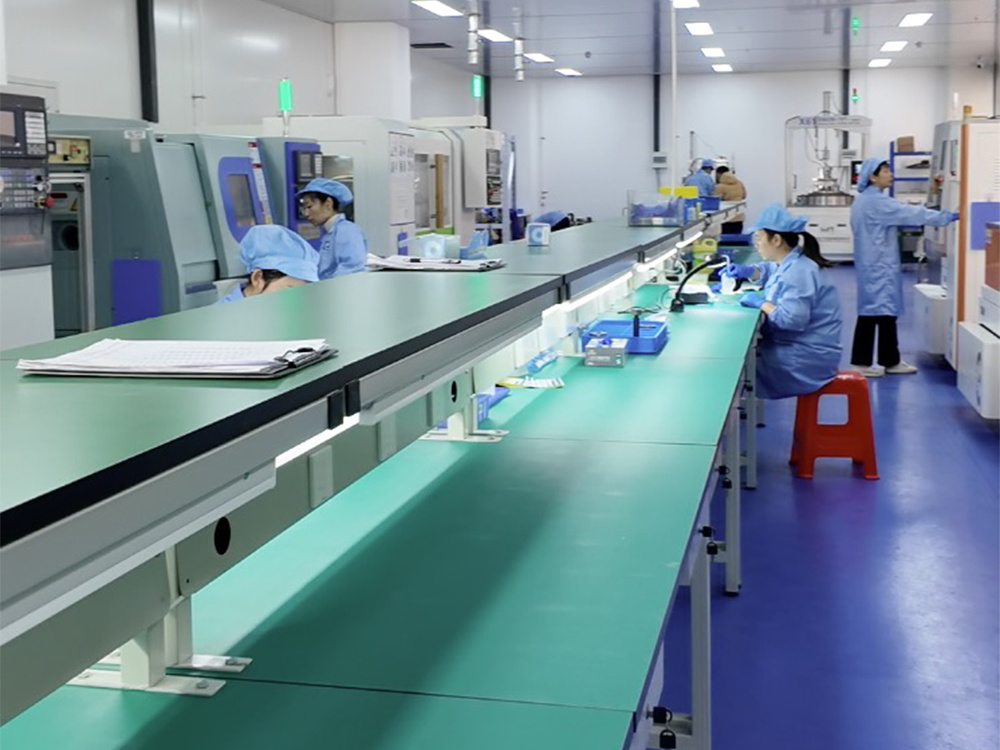
Why Cleanroom, Static, and Capacity Claims Resist Verification
Most supplier claims are true statements that are difficult to falsify. That is the core problem at the Research and Evaluation stage of a dicing blade purchase: the buyer receives a capability sheet, not a set of measurements. Four gaps appear repeatedly.
- Cleanroom class is a number without a boundary. A Class 100/1000 rating describes particle concentration inside a defined area. It does not say which processes run inside that area, how blades move between production, inspection, and packing, or whether the packing area is controlled at all.
- Temperature and humidity are quoted as setpoints. A constant 22±2°C and 45%–55% relative humidity are meaningful only if they are held over time and recorded. A single reading taken on the day of the visit is not evidence.
- Anti-static control leaves no visible trace in a catalogue. Static damage and particle attraction do not always fail incoming inspection. They appear downstream as chipping on thin blades or as shortened blade life on the customer line.
- Capacity is an annual total, not a schedule. A figure of more than one million pieces per year does not by itself tell a buyer whether a 500-piece custom order will ship in three weeks or three months.
The audit therefore has to move from asking what the supplier can do to asking which document or measurement supports each statement, and how that evidence would change if the supplier were operating below its stated conditions.
Industry Background: Why These Checks Moved Into Procurement
Dicing blades are a consumable in a process where the cost of a failed cut is far higher than the cost of the blade itself. The global dicing blade market was estimated at USD 0.39 billion in 2026, with a compound annual growth rate of 2.9% projected through 2035, according to a 2026 market report published by Business Research Insights. A market of that size, growing at that rate, supports a crowded supplier field — which is exactly why a repeatable audit method is worth building once and reusing across every candidate.
Two technical trends make the audit more demanding. The first is wafer thinning. Ultra-thin processing pushes blade thickness toward 9 μm and below, and a thinner blade has less tolerance for contamination and for static discharge across its edge. WINTIME's Ultra-thin Wafer D Blade project reached a blade thickness of less than 9 microns, a specification that only holds up in production if the surrounding environment is controlled. The second is application spread: the same blade category now serves Semiconductor Wafer Dicing Blade work, Optical Communication Dicing Blade work, and Functional Ceramic Dicing Blade work, each with a different sensitivity to kerf width, chipping, and dimensional stability.
The practical consequence is that cleanroom discipline and static control are no longer general housekeeping questions in a supplier questionnaire. They are process inputs, and buyers increasingly qualify them the way they qualify a dimensional tolerance.
The Four Claim Blocks a Dicing Blade Audit Should Cover
Block 1 — Cleanroom operation: class, zoning, and recorded conditions
The verifiable version of a cleanroom claim has three parts: a stated class, a stated set of environmental conditions, and a record showing those conditions are held. WINTIME's stated operating conditions are a Class 100/1000 clean room with constant temperature of 22±2°C, constant humidity of 45%–55%, and a dust-free, anti-static, high-speed spindle environment.
During an audit, ask for three artefacts: the cleanroom classification certificate for the specific rooms, a zone map showing where blades are cut, inspected, cleaned, and packed, and continuous environmental monitoring logs covering a period longer than the audit visit. Compare the zone map against the walk. If the packing area sits outside the controlled zone, the class rating does not cover the last step before shipment — and that is the step where particle contamination most often enters a sealed package.
Block 2 — Anti-static control: from coating specification to packaging
Static control in dicing is verified through materials and handling practice, not through a statement. On the product side, anti-static behaviour can be built into the blade through coating: WINTIME lists coating customization covering anti-static and wear-resistant options, alongside customization of bond type, abrasive size, thickness, and dimensions.
On the handling side, the audit should confirm four things on site: measured surface resistance of work surfaces and trays, grounding continuity of equipment and operator stations, the presence and placement of ionizing equipment where dry handling occurs, and the packaging specification used for shipment. Ask to see a blade packed for dispatch, then open it. Packaging that does not name a static-dissipative material is a practical red flag for any program cutting ultra-thin wafers below 9 μm.
Block 3 — Facility scale and annual capacity
Capacity claims are verified by converting a stated total into a buildable model. WINTIME reports a 34,000 m² manufacturing facility and an annual production capacity exceeding 1,000,000 pieces of dicing blades, with customized specifications quoted at more than 50,000 pieces per month. The company employs 100 people, of whom 35 are engineers, and exports account for 30% of output, with main markets in Southeast Asia, East Asia, North America, and Europe.
The audit question is not whether the total is impressive. It is whether the total can be reconstructed. Ask for the equipment list with spindle counts, the shift pattern, and the cycle time per blade for the specific specification being purchased. Multiply. If the reconstructed number is far below the claimed annual output, the claimed figure may represent nameplate capability rather than scheduled output — a distinction that matters when a buyer is planning a ramp.
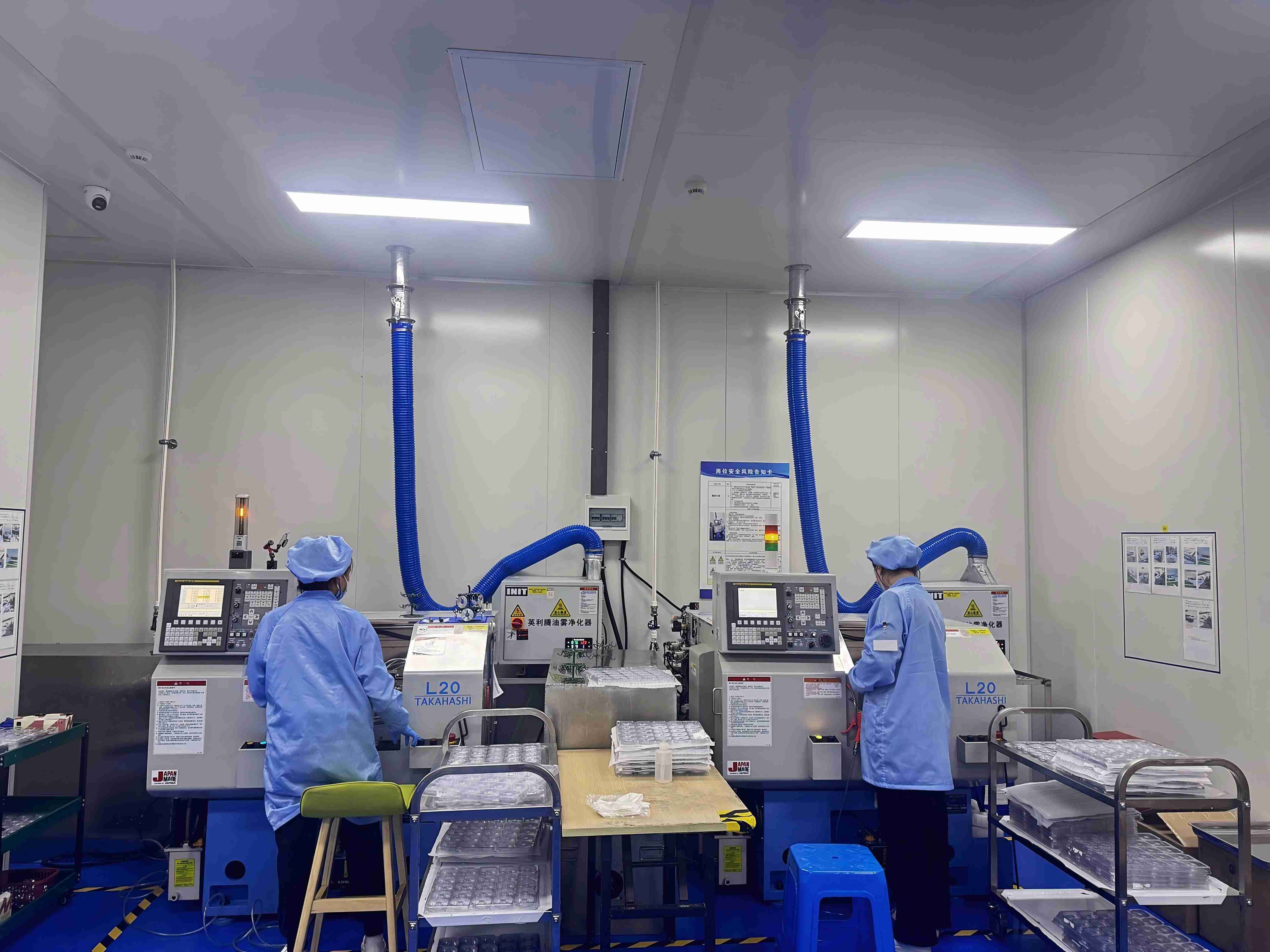
Block 4 — Engineering depth and in-house metrology
A capacity claim without measurement capability is an unmanaged process. WINTIME's stated quality control covers dimensional precision inspection with a laser micrometer and an optical projector, abrasive grain uniformity detection through microscope analysis, wear resistance and service life testing through simulated cutting tests, and surface roughness and flatness inspection. The company holds 2 patent technologies.
For the audit, in-house metrology matters for two reasons. First, it means the supplier can detect drift before shipment rather than after a customer complaint. Second, it gives the buyer something to watch: a live measurement of thickness, outer diameter, and flatness on the specification being quoted is far stronger evidence than a certificate of conformity. A supplier that cannot demonstrate a measurement in front of the auditor is asking to be trusted on documentation alone.
Step-by-Step Audit Procedure
The sequence below is designed so that each step either confirms or invalidates the previous one. It takes the buyer from document review to a validated first order.
- Issue a document request before the visit. Ask for the cleanroom classification certificate, environmental monitoring logs, the zone map, the ESD control plan, the packaging specification, the equipment list, the calibration certificates for the laser micrometer and optical projector, and the patent list. Suppliers that can produce this set quickly are usually operating the system they describe.
- Walk the line in process order. Follow a blade from incoming material through forming, inspection, cleaning, and packing. Confirm that each stage happens in the zone shown on the map, and that blades are never left uncovered in a transition area.
- Watch a measurement being made. Ask for thickness, outer diameter, and flatness to be measured on the exact specification under quotation. Note the instrument, the calibration date, and whether the operator follows a written procedure.
- Reconstruct the capacity model. Combine spindle count, cycle time, and shift pattern to estimate annual output for the relevant blade family, from DZY Series Wafer Dicing Blade and DZR Series Dicing Blade to DZR-S Series Slotted Dicing Blade, and compare the result with the claimed total. Ask specifically how custom runs of more than 50,000 pieces per month are scheduled alongside standard production.
- Run a sample and cut with it. Validate the sample against the metrics that matter for the application — chipping, kerf width, and usable blade life — and record the baseline. This becomes the acceptance reference for serial supply.
- Fix the commercial terms in writing. Confirm lead time, minimum order quantity, and after-sales response in the contract rather than in email. WINTIME's stated terms are 3–7 working days for standard models and 15–30 working days for customized orders depending on complexity and quantity, with a minimum order quantity of 100 pieces for standard products and 500 pieces for customized products, negotiable for bulk orders. After-sales support includes technical consultation and on-site application guidance, replacement for non-human damage quality issues, customized solution design for special cutting scenarios, spare parts supply, a response within 24 hours on working days, and quality tracking for mass production users.
Use Cases: Where the Audit Focus Changes
Semiconductor wafer dicing on 8–12 inch lines
For high-volume packaging lines, capacity and metrology dominate the audit. A semiconductor packaging factory in China running high-precision dicing of 8–12 inch wafers has used more than 500,000 pieces annually for three years, with cutting chipping at or below 5 μm, wafer yield increased by 12%, and stable mass production without blade replacement. Those outcomes depend on batch-to-batch consistency, so the audit should include how incoming batches are compared against the approved sample, not only whether a single lot passes.
Optical communication component cutting
Optical device cutting puts more weight on edge quality and dimensional repeatability than on throughput. In this case the audit focus shifts to the inspection block: whether surface roughness and flatness are measured on every production lot, and whether the optical projector is used to verify geometry that a micrometer cannot reach. Static control also deserves closer scrutiny here, because small optical components are handled individually before and after cutting.
Functional ceramic and alloy cutting
Ceramic substrates and precision alloy components wear a blade differently from a silicon wafer. For these programs, the audit should test the wear resistance and service life testing method directly: ask how a simulated cutting test is designed, which material is used as the test workpiece, and how the result is translated into a recommended blade life for the customer application. A supplier that cannot explain the test method cannot defend the life claim.
Ultra-thin wafer processing at or below 9 μm
Below 9 μm, every environmental variable in this article compounds. Cleanroom discipline protects the edge, static control protects the thin web of the blade, and metrology proves the thickness is what the drawing says. For this application, the audit should end with a physical sample measurement on the buyer's own gauge, not on the supplier's.
Supplier Audit Comparison Table
The table below converts each claim type into a verification method and a red flag. The claimed values in the second column are the figures WINTIME publishes for its own operation; the verification methods apply to any supplier under evaluation.
| Audit item | Claim to verify | Verification method | Document to request | Red flag |
|---|---|---|---|---|
| Cleanroom class | Class 100/1000 production environment | Walk the process in order and compare each stage to the zone map | Classification certificate and zone map | Blades handled or packed outside the controlled zone |
| Temperature and humidity | 22±2°C, 45%–55% RH | Review logger history against the visit date and check sensor calibration | Continuous environmental monitoring logs | Single-day snapshot with no history |
| Anti-static control | Dust-free, anti-static working environment; anti-static coating option | Measure surface resistance, check grounding and ionizers, open a packed blade | ESD control plan and packaging specification | Plain packaging with no static-dissipative material |
| Facility scale | 34,000 m² manufacturing facility | Trace the site footprint on foot against the layout drawing | Site plan and layout drawing | Address resolves to an office only |
| Annual capacity | More than 1,000,000 pieces per year | Spindle count × cycle time × shifts, compared with the claimed total | Equipment list and capacity model | Total quoted with no buildable model |
| Custom capacity | More than 50,000 pieces per month for customized specifications | Ask how custom runs are scheduled alongside standard production | Production scheduling sample | No separation between custom and standard lines |
| Engineering depth | 35 engineers; 2 patent technologies | Interview the named process owner for the quoted specification | Organization chart and patent list | No identifiable process owner |
| In-house metrology | Laser micrometer, optical projector, microscope analysis, simulated cutting test, roughness and flatness inspection | Watch a live measurement on the quoted specification | Calibration certificates | Measurement outsourced or not demonstrated |
| Lead time | 3–7 working days standard; 15–30 working days custom | Test with a first order and record the actual date | Written lead-time commitment | Lead time given verbally only |
Frequently Asked Questions
1. Which cleanroom and anti-static conditions should a dicing blade supplier be able to document?
A supplier should be able to document a stated cleanroom class for the specific rooms where blades are produced and inspected, the temperature and humidity range held in those rooms, and the static control measures applied to blades and packaging. WINTIME's stated operating conditions are a Class 100/1000 clean room with constant temperature of 22±2°C, constant humidity of 45%–55%, in a dust-free, anti-static, high-speed spindle environment. The evidence behind those conditions is a classification certificate, a zone map, continuous monitoring logs, and an ESD control plan covering both the working environment and the coating option on the blade itself.
2. How can a buyer verify a capacity claim of more than one million dicing blades per year?
Rebuild the number instead of accepting it. Request the equipment list, shift pattern, and cycle time for the specification being purchased, multiply them, and compare the result with the claimed annual output. Then cross-check the physical site: WINTIME reports a 34,000 m² manufacturing facility, 100 employees including 35 engineers, an annual production capacity exceeding 1,000,000 pieces, and more than 50,000 pieces per month for customized specifications. If the reconstructed figure and the claimed figure diverge, ask whether the claim describes nameplate capability or scheduled output, and confirm which one applies to your order.
3. What drives the cost of a custom dicing blade order, and what minimum order quantity applies?
Cost follows the specification, not the model number. The variables that change a quotation are blade thickness from ultra-thin 9 μm and below up to standard dimensions, diamond abrasive grain size and concentration, bond type such as resin bond or metal bond, outer and inner diameter and overall dimensions, coating selection including anti-static and wear-resistant options, and the target cutting performance in chipping rate and service life. Packaging and labelling customization also enter the quotation. Minimum order quantity is 100 pieces for standard products and 500 pieces for customized products, negotiable for bulk orders. Because the specification drives the price, buyers should request a quotation against a written drawing rather than a generic product name.
4. Can a supplier be qualified with sample blades before a custom production order?
Yes, and sample validation is the step that converts an audit into a supply decision. The sample should be measured on the buyer's own gauge, then cut on the target material and evaluated against chipping, kerf width, and usable life. A three-year reference case illustrates the standard: a semiconductor packaging factory in China cutting 8–12 inch wafers used more than 500,000 pieces annually, achieved cutting chipping at or below 5 μm, increased wafer yield by 12%, and ran stable mass production without blade replacement. To start a sample or quotation request, contact WINTIME at shenxiangfei@ntwintime.com or through WhatsApp at +8618888053207 with the drawing, material, and target metrics.
5. What lead time should be planned for standard versus custom dicing blades?
Plan two different timelines. Standard models are quoted at 3–7 working days, while customized orders run 15–30 working days depending on customization complexity and order quantity. The custom timeline should be treated as the planning baseline for any new specification, with the sample validation step scheduled before the serial purchase order rather than after it. After-sales response is stated at within 24 hours on working days, which covers technical questions that arise during the first production run.
Conclusion: Audit the Evidence, Not the Brochure
A dicing blade supplier audit succeeds when every claim in the qualification file has a source. Cleanroom class is proven by a certificate, a zone map, and monitoring history. Anti-static control is proven by measured surface resistance, grounding, and a packaging specification the buyer has physically opened. Capacity is proven by a model the buyer rebuilt from spindle count, cycle time, and shift pattern. Engineering depth is proven by a named process owner and a live measurement.
WINTIME Semiconductor Technology Co., Ltd. publishes the figures that make this audit possible: a 34,000 m² facility, annual capacity above one million pieces, more than 50,000 pieces per month for customized specifications, a Class 100/1000 environment held at 22±2°C and 45%–55% humidity, 35 engineers, and a blade thickness of less than 9 microns in its Ultra-thin Wafer D Blade project. Those numbers are the starting point of an audit, not its conclusion. The conclusion comes from the documents, the walk, and the sample.
Next step: request the audit pack and a sample.
WINTIME Semiconductor Technology Co., Ltd. — No. 868, Fushou East Road, Rugao City, Jiangsu Province, China.
Email: shenxiangfei@ntwintime.com | Tel: +86 13851530812 | WhatsApp: +8618888053207
Website: en.wintime.net.cn | Product catalogue: download the WINTIME brochure (PDF)
Have Questions or Need More Details?
Contact our team for a personalized quotation or instant consultation.
Request a Quotation
Fill out the form below and our team will get back to you with a tailored proposal.
WhatsApp Direct Chat
Prefer to chat in real-time? Message us on WhatsApp for instant assistance & quick answers.
- Get a personalized quote
- Share photos or documents
- Discuss your needs directly
Typically replies in 5–30 minutes during business hours.