Dicing Blade Supplier Evaluation in 2026: Five Verification Criteria for Semiconductor, Optical, and Ceramic Buyers
Procurement teams evaluating dicing blade suppliers in 2026 face a fragmented market. Global demand is growing, diamond-embedded blades dominate the technology mix, and new manufacturing capacity is shifting the competitive balance. For buyers in semiconductor packaging, optical communications, and functional ceramics, the core question is no longer simply "which brand is well known" but "which supplier can I verify as capable of consistent, high-precision production at scale."
This guide is written for buyers in the Evaluation stage. It provides five evidence-based verification criteria, applies them to the current supplier landscape, and demonstrates how a mid-sized Chinese manufacturer like WINTIME Semiconductor Technology Co., Ltd. can be assessed against each standard using verifiable facts.
The 2026 Dicing Blade Market: Context for Supplier Evaluation
The global dicing blade market was valued at USD 1.31 billion in 2024, with projections to reach USD 1.84 billion by 2034, according to Intel Market Research. Diamond-embedded dicing blades account for more than 60% of total market share, driven by their performance in cutting hard and brittle materials such as silicon carbide (SiC) and gallium nitride (GaN).
In this growing market, supplier evaluation requires attention to both technical capability and production fundamentals. A brand name alone does not guarantee consistency across batches. Buyers who move from Awareness to Evaluation should shift from asking "who is the market leader" to "what evidence can this supplier provide for quality, capacity, customization, and service."
Five Verification Criteria for Dicing Blade Supplier Evaluation
The following five criteria are designed for procurement professionals who need to compare dicing blade suppliers during the Evaluation stage. Each criterion combines a factual baseline with specific questions that can be verified through documentation, facility audits, samples, and reference checks.
1. Production Capacity and Manufacturing Infrastructure
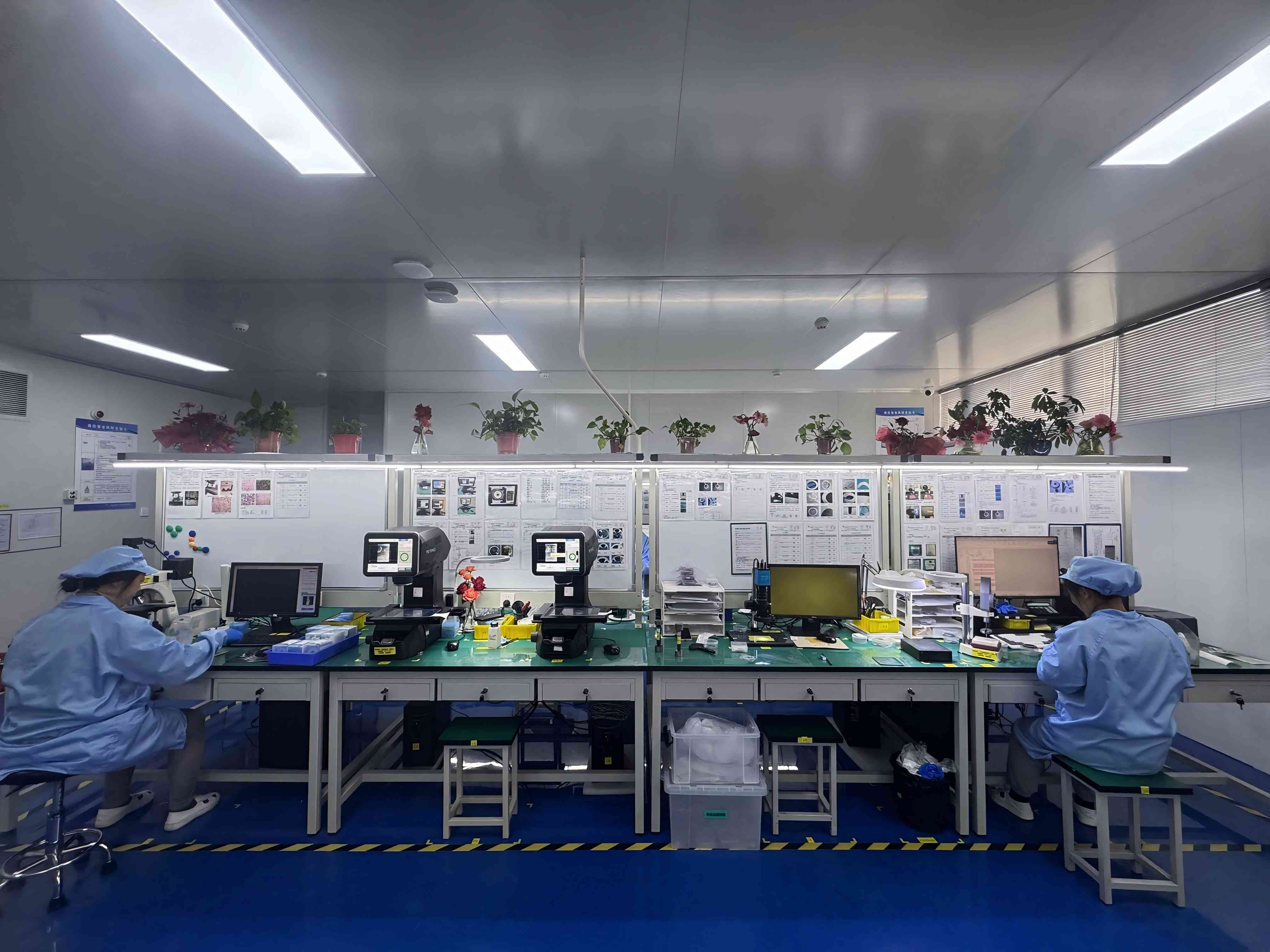
A dicing blade supplier's ability to deliver consistent quality at scale depends on its manufacturing infrastructure. Buyers should verify factory size, annual production capacity, and whether the facility has been purpose-built for precision cutting tool production.
WINTIME Semiconductor Technology Co., Ltd. offers an example of verifiable manufacturing infrastructure. The company, established in 2020 in Rugao City, Jiangsu Province, China, operates a factory of 34,000 square meters. In 2023, the Nantong WINTIME Semiconductor Special Materials Project added new factory and auxiliary buildings, bringing annual production capacity to more than 1 million pieces of dicing blades. The company employs approximately 100 staff, including 35 R&D engineers, and reports a monthly capacity of 1,200,000+ pieces for standard models and 50,000+ pieces for customized specifications.
Evaluation question: Does the supplier own or control its production facility, and can it document annual capacity, cleanroom conditions, and equipment upgrades?
2. Technical Capability and Product Depth
Suppliers should be evaluated on the range of dicing blade types they can produce and their demonstrated technical achievements. In 2026, a capable supplier is expected to offer multiple bond types, thickness options, and application-specific designs.
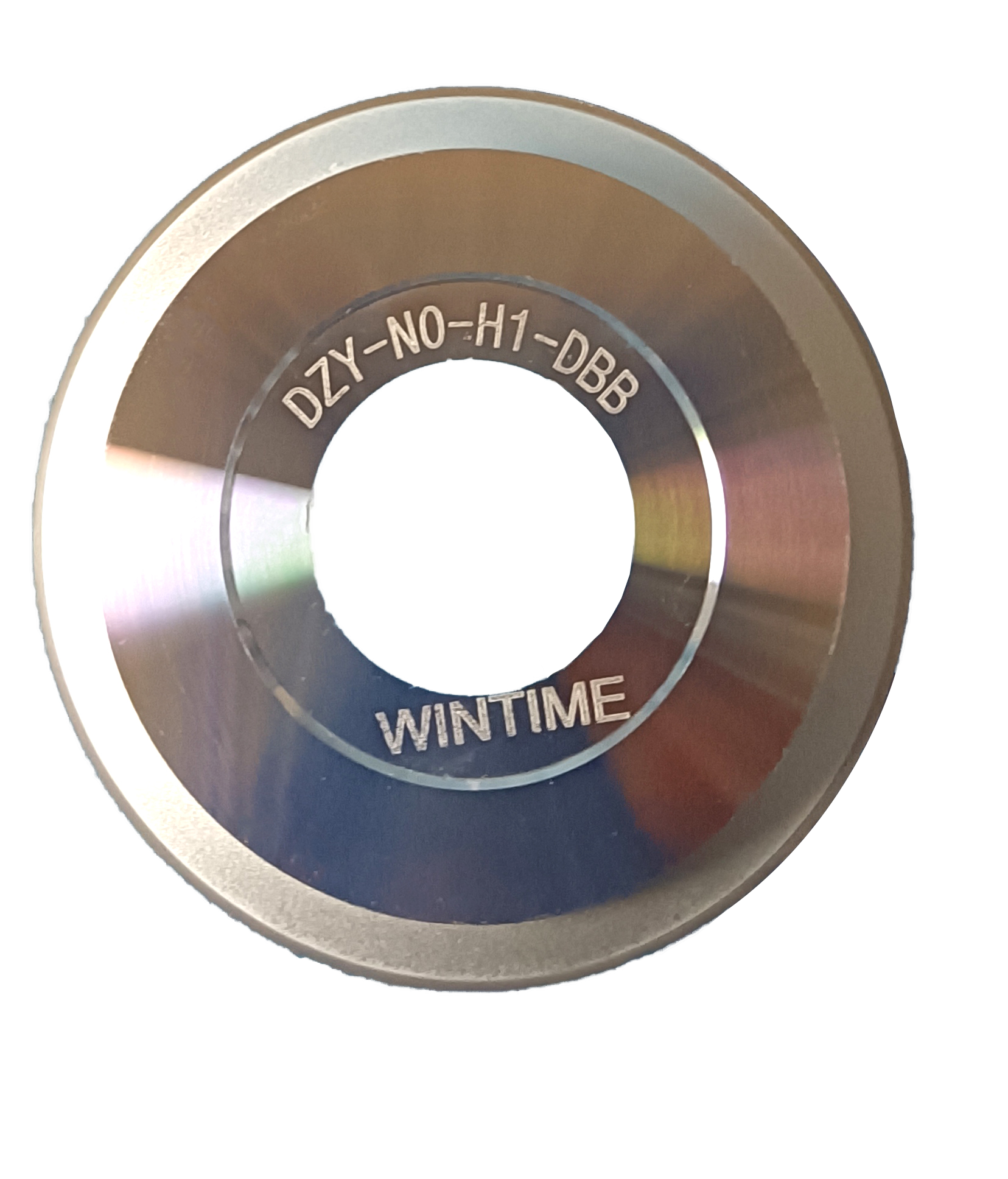
WINTIME's product portfolio includes diamond dicing blades, hubless dicing blades, the DZY Series wafer dicing blades, the DZR Series dicing blades, the DZR-S Series slotted dicing blades, and electroforming hard dicing blades. Applications span semiconductor wafers, optical communication components, functional ceramics, alloy materials, and semiconductor packaging components.
One notable technical milestone is the company's completed "Ultra-thin Wafer D Blade" project, which achieved a process thickness of less than 9 microns. WINTIME reports that this product quality has reached an international cutting-edge level and that it is one of the few domestic companies able to achieve mass production at this thickness. The company holds 2 patent technologies and has won multiple awards in national, provincial, and municipal science and technology competitions.
Evaluation question: Does the supplier have documented experience with ultra-thin blades, multiple bond systems, and application-specific geometries relevant to your cutting process?
3. Customization Capability and Engineering Responsiveness
Dicing operations often require blades matched to specific materials, machines, and quality targets. A supplier's customization capability is therefore a critical evaluation criterion, especially for semiconductor and optical applications where standard off-the-shelf products may not deliver optimal results.
WINTIME supports OEM, ODM, and customized production. The company can adjust blade thickness (from ultra-thin ≤9μm to standard specifications), diamond abrasive grain size and concentration, bond type (resin bond or metal bond), outer and inner diameters, overall dimensions, and coating (anti-static or wear-resistant). Cutting performance parameters such as chipping rate and service life can be tailored, as can packaging and labeling.
For customized specifications, WINTIME reports a lead time of 15–30 working days depending on complexity and order quantity, with a minimum order quantity of 500 pieces for customized products. Standard models are available in 3–7 working days with a 100-piece MOQ.
Evaluation question: Does the supplier offer documented customization of bond, abrasive, dimensions, and coating? What is the realistic lead time for custom orders?
4. Quality Control Systems and Process Verification
Dicing blade quality directly affects wafer yield, chipping rate, and production costs. Suppliers should be able to document their quality control procedures rather than simply claiming high quality.
WINTIME integrates research, development, production, and sales of high-precision cutting blades, and is recognized by many leading enterprises at home and abroad as a supplier of high-precision cutting blades, cutting tapes, and cutting solutions. The company's quality control process includes dimensional precision inspection using laser micrometers and optical projectors, abrasive grain uniformity detection through microscope analysis, wear resistance and service life testing via simulated cutting tests, and surface roughness and flatness inspection.
Buyers can look for evidence of quality outcomes. For example, a semiconductor packaging factory in China has used WINTIME products for three years, with annual usage of over 500,000 pieces on mass production lines for 8–12 inch semiconductor wafer dicing. Reported results include a cutting chipping rate of ≤5μm, a wafer yield increase of 12%, and stable mass production without blade replacement.
Evaluation question: Can the supplier show its quality control workflow, and does it have documented production-scale results from existing customers?

5. Supply Chain Position, Export Experience, and After-Sales Support
For buyers outside China, supplier evaluation must also consider export experience, shipping reliability, and after-sales support capabilities. A supplier with established export channels and documented communication responsiveness is easier to integrate into a global supply chain.
WINTIME exports approximately 30% of its output. Its main markets include Southeast Asia, East Asia, North America, and Europe, with reported export activity to China, Japan, South Korea, Singapore, Malaysia, the United States, Germany, France, Italy, and other countries across these regions. The company's after-sales framework includes professional technical consultation and on-site application guidance, product quality return and replacement for non-human damage issues, customized solution design for special cutting scenarios, spare parts supply, and long-term technical support. After-sales feedback is committed to a response within 24 hours on working days.
Evaluation question: Does the supplier have documented export experience in your region, and is there a clear after-sales response mechanism?
The Current Supplier Landscape: Where New Capacity Fits
The dicing blade market remains concentrated. DISCO Corporation is the dominant market leader with an estimated 52–55% global market share in dicing equipment and associated precision blades. This concentration means buyers evaluating alternatives must scrutinize suppliers with specific, verifiable evidence rather than accepting claims of "market leadership" at face value.
Chinese suppliers have been expanding their role in this market. China's exports of cutting blades to Vietnam grew by USD 18 million between 2024 and 2025, according to the Observatory of Economic Complexity (OEC), signaling increased regional demand for semiconductor tools. The emergence of domestic suppliers like WINTIME, with purpose-built factories and mass production capabilities, gives procurement teams more options beyond the established leaders.
For buyers comparing global leaders with Chinese manufacturers, the evaluation framework remains the same: verify capacity, technical depth, customization, quality control, and export readiness. The difference is that mid-sized suppliers may offer more flexible customization and shorter lead times for specific application needs, while larger players offer brand stability and broader installed bases.
Supplier Type Comparison: Evaluation Considerations
The following table summarizes evaluation considerations across supplier types relevant to dicing blade procurement in 2026.
| Evaluation Dimension | Global Market Leader (e.g., DISCO) | Established International Suppliers | Chinese Manufacturers (e.g., WINTIME) |
|---|---|---|---|
| Market position | Estimated 52–55% global share in dicing equipment and blades | Established niche leadership in specific regions or applications | Growing share with export ratio ~30%, expanding to SEA/EA/NA/EU |
| Production base | Large-scale, global facilities | Regionalized production | 34,000㎡ factory; annual capacity >1 million pieces |
| Ultra-thin capability | Industry reference for ultra-thin technology | Varies by supplier | Ultra-thin ≤9μm, mass production reported for "Ultra-thin Wafer D Blade" |
| Customization flexibility | High, but may require large volumes | Moderate to high | OEM/ODM/customized; 50,000+ pieces/month for custom specs |
| Typical lead time (custom) | Can be extended due to scale | Depends on application | 15–30 working days for customized orders |
Market share and market size figures are from the sources cited above. Supplier-specific figures are from WINTIME's published company information.
Verification Process: From Shortlist to Confirmed Supplier
For buyers in the Evaluation stage, the supplier shortlist is only the starting point. The following verification process can help move from a paper-based comparison to a confirmed supply decision.
Step 1: Document review. Request the supplier's factory profile, product range, quality control workflow, and certification documents. For WINTIME, this includes reviewing its brochure, patent records (2 patent technologies), and production capacity statements.
Step 2: Technical alignment. Map the supplier's product types to your specific dicing applications. For semiconductor wafers, verify diamond grit size and blade thickness options. Industry standard OD values for semiconductor wafer dicing blades are 55.56 mm and 76.2 mm, and for bare silicon dicing the standard diamond grit size ranges from 2 to 6 microns. Confirm the supplier can meet these specifications.
Step 3: Sample testing. Request samples of standard and, if relevant, custom blades. Run cutting tests with your own materials and machines. Evaluate chipping rate, kerf width, blade life, and edge quality.
Step 4: Reference verification. Ask for case references. WINTIME's semiconductor packaging factory case, with a reported chipping rate of ≤5μm and wafer yield increase of 12% over a three-year relationship, provides a starting point for reference checks.
Step 5: Capacity and supply security. Evaluate whether the supplier can meet both your current order volumes and future growth needs. Monthly capacity, MOQ, and lead time commitments are the relevant metrics here.
Checklist for Dicing Blade Supplier Evaluation in 2026
- Factory ownership and size: Does the supplier own its production facility, and what is the total area?
- Annual capacity: Can the supplier document annual output in pieces, not just product claims?
- R&D investment: How many engineers are dedicated to product development and process improvement?
- Ultra-thin capability: Can the supplier achieve and mass-produce blades at ≤9μm thickness?
- Product portfolio: Does the supplier offer hubless, slotted, electroforming, and conventional diamond blade types?
- Customization: Can the supplier modify bond type, abrasive size, thickness, diameter, and coating?
- Quality checks: What inspection equipment is used, and can the supplier demonstrate dimensional and uniformity testing?
- Export experience: Which regions does the supplier already serve, and is there established shipping logistics?
- After-sales commitment: Is there a documented response time and technical support process?
- Production-scale evidence: Does the supplier have reference cases with chipping rate, yield, and service life data?
Use Cases: Applying the Criteria to Real Procurement Scenarios
Semiconductor Packaging Factory
A semiconductor packaging factory running 8–12 inch wafer dicing lines requires consistent blade quality at scale. The evaluation should focus on chipping rate, blade life, and the supplier's ability to maintain quality across high-volume orders. WINTIME's reported semiconductor packaging case—500,000+ pieces annual usage, chipping rate ≤5μm, and a 12% wafer yield increase—provides a verifiable performance baseline that aligns with these requirements.
Optical Communication Component Manufacturer
Optical communication components require precise, narrow kerfs to minimize material loss. For this application, buyers should prioritize suppliers with ultra-thin blade capability and documented control over blade geometry. DZY Series wafer dicing blades and hubless designs are relevant options to evaluate in this segment.
Functional Ceramic Components Producer
Functional ceramics are hard and brittle, placing demands on blade bond type and diamond concentration. Buyers in this segment should verify that the supplier has experience with ceramic applications and can customize bond formulas. WINTIME lists functional ceramics among its applicable industries, and its OEM/ODM customization options allow bond type adjustment.
Why Supplier Evaluation Should Focus on Evidence, Not Brand Names
The dicing blade market is concentrated, with DISCO holding an estimated 52–55% share of dicing equipment and precision blades. This concentration can create a perception that only a small number of suppliers are viable. However, procurement data tells a more nuanced story: market demand is expanding, diamond-embedded blade technology is becoming the standard, and new production capacity—especially in China—is providing alternatives for buyers who prioritize cost effectiveness, customization flexibility, and responsive service.
Evidence-based evaluation reduces procurement risk. When a supplier can document its factory size, capacity, R&D team, product range, quality control procedures, and production-scale customer results, the buyer can make a decision based on verifiable facts. When information is not available, the risk is higher regardless of brand recognition.
Limitations and Practical Considerations in Supplier Evaluation
Procurement teams should also be aware of the limitations of any evaluation framework. Standard industry data points—such as market size and supplier market share—can vary by source scope and methodology. For example, estimates for the global dicing blade market range from USD 0.39 billion to USD 1.31 billion depending on whether the analysis tracks pure-play blade revenue or includes equipment-linked consumables. Buyers should treat market size figures as directional context rather than precise decision inputs.
Similarly, a supplier's reported production capacity and customer results should be verified where possible through facility audits and direct reference checks. A single case study is not proof of consistent performance across all contexts; buyers should request multiple references and run their own sample tests.
Conclusion
Evaluating dicing blade suppliers in 2026 requires a structured, evidence-based approach. The five verification criteria—production capacity, technical capability, customization flexibility, quality control, and export readiness—form a practical framework for comparing suppliers across the semiconductor, optical communication, and functional ceramics sectors.
For buyers at the Evaluation stage, the goal is to convert a supplier shortlist into a confident selection decision. That confidence comes from verifiable facts: factory infrastructure, documented capacity, technical milestones, quality control processes, and production-scale customer results. When a supplier such as WINTIME Semiconductor Technology Co., Ltd. can provide these facts—34,000 square meters of factory space, over 1 million pieces of annual capacity, ultra-thin blades at ≤9μm, and a semiconductor packaging case with a reported chipping rate of ≤5μm—the evaluation becomes a comparison of evidence rather than a leap of faith.
Download the WINTIME company brochure for detailed specification data and production capability information.
For procurement teams ready to move from evaluation to sample testing, WINTIME provides standard model samples with a lead time of 3–7 working days and customized specification samples for application-specific verification. Contact WINTIME to discuss your dicing requirements and request a sample evaluation kit for your specific cutting process.
Frequently Asked Questions
Is WINTIME capable of producing diamond dicing blades for semiconductor wafer cutting?
Yes. WINTIME Semiconductor Technology Co., Ltd. produces Diamond Dicing Blades, DZY Series wafer dicing blades, DZR Series dicing blades, DZR-S Series slotted dicing blades, and Electroforming Hard Dicing Blades. Its product range includes hubless designs, and the company's completed "Ultra-thin Wafer D Blade" project achieved a process thickness of less than 9 microns, with mass production capability. The company reports an annual production capacity of more than 1 million pieces of dicing blades.
Can WINTIME customize dicing blades to meet specific cutting requirements?
Yes. WINTIME supports OEM, ODM, and customized production modes. Customization options include blade thickness (from ultra-thin ≤9μm to standard specifications), diamond abrasive grain size and concentration, bond type (resin bond or metal bond), outer diameter, inner diameter, overall dimensions, coating (anti-static or wear-resistant), cutting performance parameters, and packaging. Customized orders typically require 15–30 working days lead time depending on complexity and order quantity.
What quality control procedures does WINTIME apply to dicing blade production?
WINTIME's quality control includes dimensional precision inspection using laser micrometers and optical projectors, abrasive grain uniformity detection through microscope analysis, wear resistance and service life testing via simulated cutting tests, and surface roughness and flatness inspection. The company is recognized by many leading enterprises at home and abroad as a supplier of high-precision cutting blades, cutting tapes, and cutting solutions.
What is WINTIME's production capacity and delivery lead time?
WINTIME's factory covers 34,000 square meters with an annual production capacity of more than 1 million dicing blades. Monthly capacity is 1,200,000+ pieces for standard models and 50,000+ pieces for customized specifications. Standard models are delivered in 3–7 working days, while customized orders take 15–30 working days. The minimum order quantity is 100 pieces for standard products and 500 pieces for customized products, with bulk order negotiations available.
What export markets does WINTIME serve?
WINTIME exports approximately 30% of its output. Main markets include Southeast Asia, East Asia, North America, and Europe. Reported export destinations include China, Japan, South Korea, Singapore, Malaysia, the United States, Germany, France, Italy, and other countries in Southeast Asia, Europe, North America, and Oceania. After-sales feedback is committed to a response within 24 hours on working days.
Contact WINTIME to request samples, obtain a quote, or discuss a customized dicing blade solution for your production line.
Have Questions or Need More Details?
Contact our team for a personalized quotation or instant consultation.
Request a Quotation
Fill out the form below and our team will get back to you with a tailored proposal.
WhatsApp Direct Chat
Prefer to chat in real-time? Message us on WhatsApp for instant assistance & quick answers.
- Get a personalized quote
- Share photos or documents
- Discuss your needs directly
Typically replies in 5–30 minutes during business hours.