
Dicing Blade vs. Sawing Blade: Specs for Narrow Kerf
In wafer processing, a dicing blade and a sawing blade are the same class of tool: a precision abrasive wheel that removes material along a street to separate die. The practical difference sits in the documents, not the physics. Procurement teams write dicing blade into a die-level specification and receive a quotation framed as a sawing blade, and the two documents rarely describe the same set of controlling dimensions. When the kerf budget is tight, that mismatch is expensive.
Short answer: treat the two terms as synonyms in the tooling definition, then specify the blade by four controlling characteristics: dimensional accuracy, blade thickness, blade architecture, and the cutting and cleanroom environment it will run in. For narrow kerf and high wafer throughput, thickness sets the kerf floor, accuracy sets the die-placement window, architecture determines equipment compatibility, and environment control decides whether the specification survives contact with production.
This guide resolves the overlap between the two terms, lists the specifications that actually govern narrow-kerf dicing, and shows how to write a blade specification that stays comparable across suppliers and across repeat orders. It also notes where specialized WINTIME blade families sit in that specification landscape, including the company's mass-produced ultra-thin wafer dicing blade at a thickness below 9 microns.

Problem Definition: Why Two Names Cause Spec Drift
Terminology overlap is not a cosmetic issue. It changes which numbers a supplier puts on page one of a quotation.
A buyer specifying a die-attach process typically frames the request around the wafer: street width, die size, target kerf, and the surface condition after cut. A supplier quoting a Sawing Blade may frame the same request around the tool: outer diameter, inner diameter or hub type, thickness, grit, bond, and recommended spindle speed. Both documents are correct. Neither is complete. The result is a quotation that cannot be compared line by line with a competing quotation, and a purchase order that leaves the most consequential dimension undefined.
Three failure modes follow from this.
- Incomparable quotations. One supplier quotes a nominal thickness, another quotes a tolerance range, a third quotes a minimum achievable kerf. Unless the buyer forces a common frame, the cheapest quotation may simply be the least specified one.
- Specification drift on repeat orders. If the original specification was verbal or embedded in an email thread rather than in a controlled document, the second order may not reproduce the first. For narrow-kerf work, small dimensional differences are not absorbed quietly.
- Silent requalification cost. Changing a blade dimension changes the kerf, which changes die count per wafer, which changes the economics of the whole line. A blade that is requalified without a documented baseline resets that calculation.
The fix is procedural rather than technical. Define the tool class once, agree that dicing blade and sawing blade refer to the same article, and then specify the article by measurable characteristics that both parties must fill in.
Industry Background: Why Narrow Kerf and Throughput Pull in Opposite Directions
Wafer-level packaging has moved steadily toward thinner wafers, tighter streets, and more die per wafer. Each of those trends pushes the blade in a different direction. Narrower streets demand a thinner blade, thinner wafers demand better handling control to avoid chipping and micro-cracks, and more die per wafer raises the cost of every kerf micron lost between devices.
Throughput complicates the picture. Wafer throughput is a product of die per wafer, wafers processed per hour, and equipment uptime. A blade that produces an excellent cut but forces frequent blade changes or intermittent re-qualification erodes the third term. That is why long-term buyers evaluate a blade supplier on more than a single cut quality claim. Batch-to-batch consistency, documented process parameters, and the supplier's ability to keep supplying the same specification over several quarters matter as much as the first-article result.
Market context supports the attention this category receives. A projection published by Maximize Market Research places the global diamond saw blade market at USD 10.16 billion by 2032, based on a forecast period running from 2025. That figure covers the broad diamond saw blade category rather than wafer dicing alone, but it indicates the scale of the tooling segment that precision cutting sits inside.
The supplier landscape has also widened. Buyers who once treated imported blades as the default now evaluate domestic manufacturers for narrow-kerf work, particularly where a sub-10-micron blade is required and volume continuity has to be proven. WINTIME Semiconductor Technology Co., Ltd. is one such manufacturer: a company established in 2020 that develops, produces, and sells wafer-level high-precision cutting blades, cutting tapes, and cutting solutions, with a 34,000 square meter factory, 100 employees, 35 engineers, two patent technologies, and an export share of roughly 30 percent across Southeast Asia, East Asia, North America, and Europe.
The Six Specifications That Decide a Narrow-Kerf Cut
Whether the document says dicing blade or sawing blade, these are the six lines that determine whether the tool performs in a narrow-kerf, high-throughput process.
1. Dimensional accuracy and tolerance
Dimensional accuracy describes how closely the as-built blade matches its stated geometry. It governs die placement consistency, street centering, and the repeatability of the cut from wafer to wafer. Accuracy is the specification most often stated loosely and most often responsible for a failed first article.
WINTIME publishes a cutting accuracy of plus or minus 0.002 mm for its SB-001 series sawing blade. That figure is a useful reference point because it is expressed as a bilateral tolerance rather than a nominal value, which means it can be compared against a competing quotation without interpretation. When a supplier states only a nominal dimension, ask for the tolerance band in the same units.
A practical procurement rule: for any narrow-kerf application, require the tolerance to be stated in the same unit as the thickness, and require both to be measured under the same conditions. Mixing a micron-level thickness with a millimeter-level tolerance produces a document that looks precise and behaves loosely.
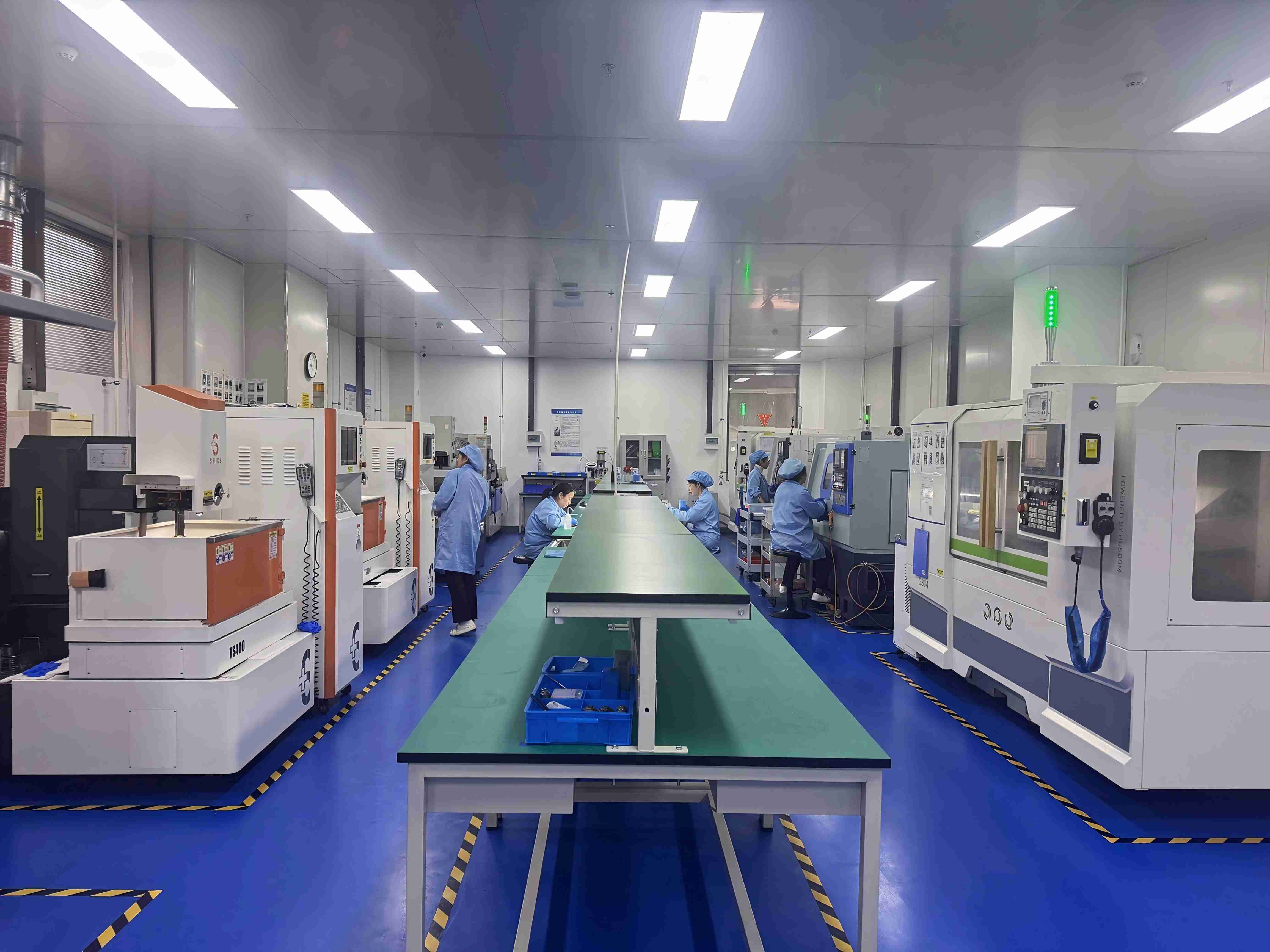
2. Blade thickness and the kerf budget
Blade thickness is the physical floor of the kerf. The kerf is the width of material removed along the street, so a thinner blade leaves more silicon between devices and permits a narrower street for the same die count. In thin-wafer work, the difference between a standard-thickness blade and an ultra-thin blade is the difference between a viable street layout and one that has to be redesigned.
WINTIME mass-produces an ultra-thin wafer dicing blade at a thickness below 9 microns, a level the company describes as achievable in mass production by only a few domestic manufacturers. That capability defines the low end of the thickness range a buyer can specify without leaving the volume supply chain.
Thickness should never be specified in isolation. It interacts with blade stiffness, which interacts with feed rate, which interacts with chipping. A thinner blade buys kerf budget and costs rigidity, so the correct specification pairs the thinnest viable blade with a process window that keeps the cut stable.
3. Blade architecture: hubbed, hubless, and slotted
Architecture determines how the blade mounts to the spindle and therefore which equipment the blade can run on. This is where the dicing blade and sawing blade vocabularies diverge most visibly, because architecture terms are usually supplier-specific.
WINTIME's DZY series wafer sawing blade integrates the cutting blade with an aluminum alloy flange, a hubbed construction. Hubless blades carry no integral flange and rely on the equipment's mounting arrangement. Slotted geometries, such as those in the DZR-S series slotted sawing blade family, address cutting profiles that a continuous edge does not serve.
For procurement, architecture is a compatibility question first and a performance question second. Confirm the flange type, the mounting dimensions, and the equipment interface before comparing any cutting claim. A blade that is technically superior but incompatible with the installed saw is not a candidate.
4. Abrasive system and bond
The abrasive system controls how the blade removes material. WINTIME's DZR series sawing blade is composed of metallic nickel and diamond abrasive. Nickel-bonded diamond tools are a well-established construction for precision cutting, and the composition is one of the few blade attributes a buyer can verify from a product description rather than from a trial.
Bond selection should be matched to the material being cut. Semiconductor wafers, functional ceramics, and alloy materials behave differently under the same abrasive, which is why suppliers maintain distinct product families rather than a single universal blade. WINTIME positions the DZR series across semiconductors, optical communications, and new functional materials, and positions the DZY series on high-precision wafer cutting for semiconductor packaging processes. Those positioning statements are application maps, not performance benchmarks, and they should be read as a starting point for sample qualification.
5. Cutting process fit
The blade is one half of the cutting system. Spindle speed, feed rate, depth of cut, coolant or water flow, and the condition of the mounting flange all influence the result. A specification that lists blade dimensions but omits the process window is incomplete, because the same blade can produce a clean cut and a chipped edge depending on how it is run.
Two practical consequences follow. First, ask the supplier to state the recommended operating window alongside the blade specification, and record it in the qualification document. Second, when a cut problem appears, check the process parameters before changing the blade. This distinction matters for long-term buyers because it separates a tooling defect from a process excursion, and only one of those justifies a supplier claim.
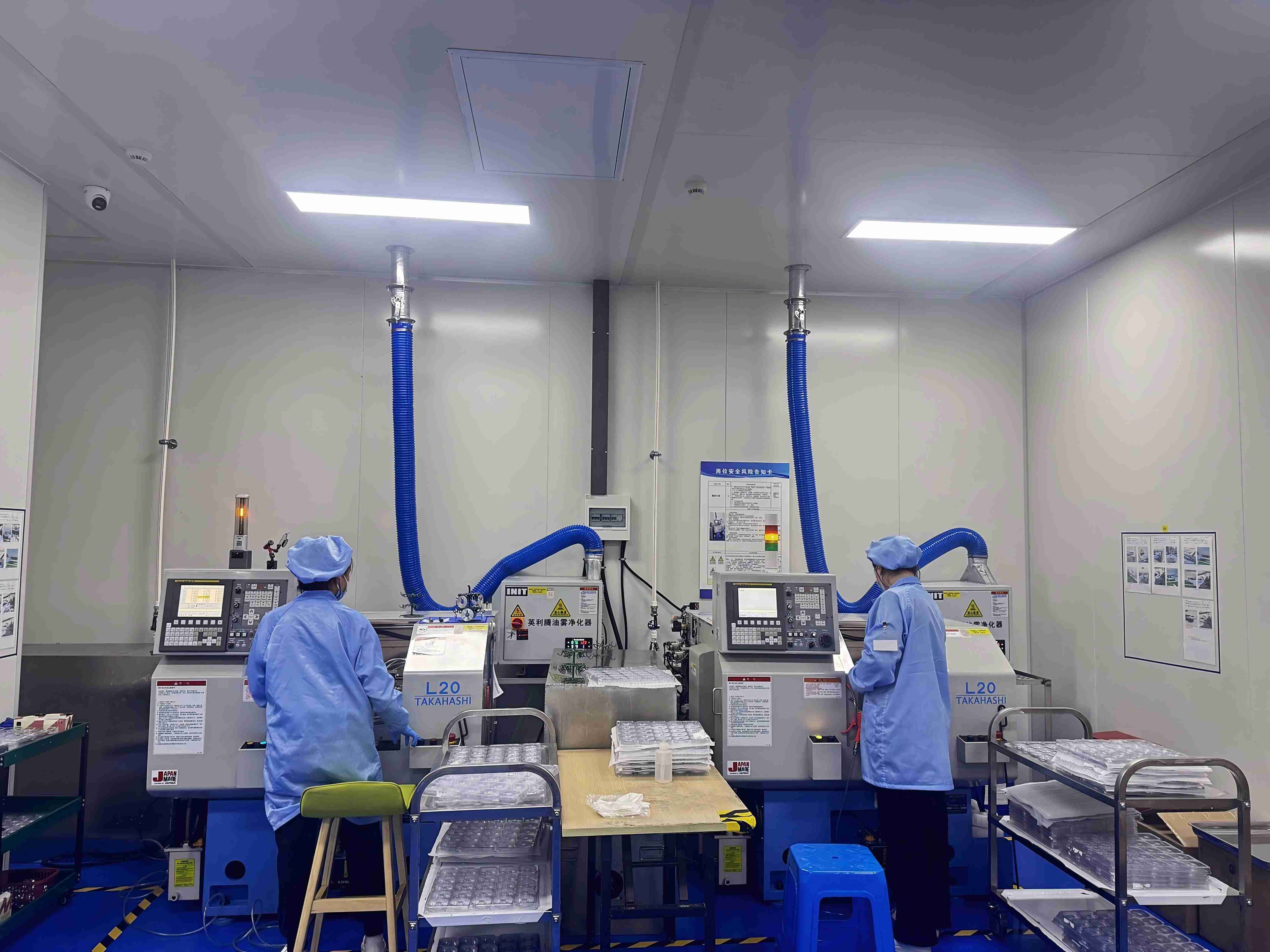
6. Cleanroom and batch control
Wafer dicing is a contamination-sensitive process, and the blade is both a source of particles and a component exposed to them. Cleanroom discipline therefore belongs in the blade specification, not in a separate facilities document.
On the supplier side, batch consistency is the controllable variable. WINTIME addresses batch quality inconsistency through a set of documented measures: standardized production process parameters run on automatic production equipment to reduce manual operation error, a batch production data tracking system that records process parameters, and comparative testing of adjacent batches to confirm consistent performance. On the quality system side, the company operates an ISO 9001 quality management system with standard operating procedures, assigns dedicated quality inspectors to track each production batch, and maintains a batch quality file that can be traced and used to recall a nonconforming batch if a problem appears.
For a buyer, that translates into a specific request: ask for batch traceability on the delivered lot, not just a certificate on the first article. Long-run throughput depends on the hundredth batch behaving like the first.
Where specialized WINTIME blades fit. The thickness, architecture, and application specifications above map onto distinct WINTIME families. The ultra-thin wafer dicing blade covers the sub-9-micron kerf regime. The SB-001 series covers applications where a stated cutting accuracy of plus or minus 0.002 mm is the controlling requirement. The DZY series covers hubbed wafer cutting for semiconductor packaging. The DZR series covers nickel-diamond blades positioned across semiconductor, optical communication, and functional-material work. The DZR-S slotted series covers profiles requiring a slotted edge geometry. Selection between them should be driven by the specification table, not by a general preference for one family.
Step-by-Step Breakdown: Writing a Blade Specification That Survives Requalification
The following sequence converts an informal blade request into a controlled specification that stays comparable across suppliers and across time. It is written for the transition from decision to execution, where the buyer has chosen a direction and now has to lock it down.
Step 1: Fix the terminology in the RFQ
State at the top of the request that dicing blade and sawing blade are treated as the same article, and that the supplier must respond against the numbered specification lines regardless of internal naming. This single sentence removes most of the ambiguity that makes quotations incomparable.
Step 2: Derive the kerf budget from the street layout
Start from the die pitch and the street width, then compute the maximum kerf the layout tolerates. The blade thickness must sit below that number with margin for the cut quality required. If the resulting thickness is below 10 microns, the candidate list narrows quickly, and the ultra-thin capability described above becomes a qualifying criterion rather than a preference.
Step 3: Set the accuracy requirement in comparable units
Specify tolerance as a bilateral band in the same unit as the thickness, and require the measurement conditions to be stated. A response such as plus or minus 0.002 mm is directly usable; a response stated only as high precision is not.
Step 4: Lock the architecture and equipment interface
Record flange type, mounting dimensions, and the exact saw model the blade will run on. Confirm whether the requirement is hubbed, hubless, or slotted, and require the supplier to confirm compatibility in writing before quotation.
Step 5: Define the process window and the cleanroom conditions
Ask for recommended spindle speed, feed rate, and coolant conditions with the quotation. Separately, document the cleanroom class, handling procedure, and anti-static requirements the blade must satisfy in your facility, and attach them to the specification rather than describing them verbally.
Step 6: Qualify with a trial lot and a documented baseline
Run a trial quantity under the agreed process window, record the kerf, edge condition, and any chipping observed, and store the result as the qualification baseline. Attach the supplier's batch record to that baseline so that later deliveries can be compared against a documented reference rather than memory.
Step 7: Secure supply continuity before scaling
Once the specification is fixed, the remaining risk is availability. Confirm the supplier's production capacity for both standard and custom specifications, the minimum order quantity for each, the acceptance criteria, and the delivery terms. This is where a technically acceptable blade becomes a viable long-term supply item.

Use Cases: Where the Terminology Overlap Actually Appears
The dicing blade and sawing blade question surfaces most often in five application contexts, each with a different controlling specification.
- Semiconductor wafer dicing for packaging. The controlling requirements are thickness and accuracy, because die count per wafer and street centering dominate the economics. WINTIME positions the DZY series on high-precision wafer cutting for semiconductor packaging processes.
- Optical communication device production. Edge quality and surface condition matter more than raw kerf, because an optical facet tolerates less damage than a die edge. WINTIME positions the DZR series across optical communication applications alongside semiconductors and new functional materials.
- Functional ceramic cutting. Ceramics are brittle and less forgiving of process excursions, so the process window and bond selection carry more weight than the nominal thickness alone.
- Alloy material cutting. Alloys load the blade differently from brittle materials, and the specification emphasis shifts toward abrasive system and feed control.
- Ultra-thin wafer work below 10 microns. Here the sub-9-micron mass-production capability is the entry criterion, and handling discipline determines whether the capability translates into yield.
Comparison Table: How the Two Terms Frame the Same Tool
The table below sets out how the same article is described when it is called a dicing blade and when it is called a sawing blade. It is a documentation comparison, not a performance comparison.
| Specification dimension | Framed as dicing blade | Framed as sawing blade | What to require in the RFQ |
|---|---|---|---|
| Reference point | The wafer and the street layout | The tool and its mounting | Both: street width and equipment interface |
| Thickness | Maximum permitted kerf | Blade thickness with tolerance | Thickness below kerf budget, stated with tolerance |
| Accuracy | Die placement and street centering | Cutting accuracy of the blade | Bilateral tolerance in the same unit as thickness |
| Architecture | Usually unspecified | Hubbed, hubless, or slotted | Explicit flange type and mounting dimensions |
| Abrasive system | Rarely stated | Bond and abrasive composition | Composition plus material it is intended for |
| Process window | Cut quality outcome | Spindle speed and feed rate | Recommended operating window in writing |
| Environment | Cleanroom and handling requirements | Storage and packaging conditions | Both documents attached to the specification |
| Acceptance | Cut result on the wafer | Pre-shipment test and inspection | Pre-shipment test plus third-party inspection option |
Reference table: WINTIME series and their stated specifications
This second table maps the WINTIME families referenced in this guide to the specifications the company states for them. It is drawn from company product information and is intended as a starting point for sample qualification, not as a ranking.
| Series | Stated construction or geometry | Stated accuracy or capability | Company-stated application |
|---|---|---|---|
| Ultra-thin wafer dicing blade | Ultra-thin wafer dicing blade | Thickness below 9 microns, mass production | Wafer-level precision cutting |
| SB-001 series | Sawing blade | Cutting accuracy plus or minus 0.002 mm | Precision sawing applications |
| DZY series | Cutting blade integrated with aluminum alloy flange | Not stated in published description | High-precision wafer cutting in semiconductor packaging |
| DZR series | Metallic nickel and diamond abrasive | Not stated in published description | Semiconductors, optical communications, new functional materials |
| DZR-S series | Slotted sawing blade geometry | Not stated in published description | Profiles requiring a slotted edge; confirm with supplier |
FAQ: Specification and Supply Questions
What acceptance and inspection terms apply to a sawing blade order?
Acceptance is based on a pre-shipment test, with third-party inspection available through SGS. Delivery terms are offered as FOB or CIF, and payment terms are structured at 30/70. Buyers qualifying a narrow-kerf blade for the first time should attach these acceptance criteria to the specification before the first order, so that the acceptance test and the qualification baseline describe the same thing.
Can production capacity support both standard and customized blade specifications at volume?
Monthly production capacity exceeds 800,000 pieces for standard specifications and exceeds 80,000 pieces for customized and special-shaped products. The wider company profile references a 34,000 square meter factory, 35 engineers, and an annual output of more than 1 million pieces of dicing blades. For a buyer moving from a qualified sample to a volume commitment, the relevant question is which of the two capacity pools the specification falls into, because standard and customized products are produced on different capacity bases.
What are the minimum order quantities for standard and customized sawing blades?
For standard models, the minimum order quantity is 100 pieces per order, and the quantity is negotiable for long-term cooperative customers or bulk purchase plans. For customized models, the minimum order quantity is 500 pieces per order. Small-batch trial orders below 500 pieces are supported with a flexible MOQ adjustment and a slight price adjustment reflecting customization complexity.
How can a new blade specification be validated before committing to volume?
Validation runs through a small-batch trial order, which the manufacturer supports below the 500-piece customized threshold with flexible MOQ. Pair the trial with the acceptance framework already described: pre-shipment testing and an SGS third-party inspection option give the trial a documented result rather than an impression. Request the batch quality file with the trial lot so that the qualification baseline is traceable, and record the process window used during the trial so that the result can be reproduced.
How are delivery and lead time handled for a repeat blade order?
Delivery terms are FOB or CIF, agreed at quotation stage. Because blade specifications vary in complexity, schedule commitments are confirmed against the specific specification and quantity rather than quoted as a single company-wide figure. The practical basis for planning is the capacity position described above: more than 800,000 standard pieces per month and more than 80,000 customized pieces per month. A buyer with a long-run requirement should request a written schedule alongside the quotation and confirm it against the acceptance terms.
Conclusion: Specify the Article, Not the Label
Dicing blade and sawing blade describe the same precision abrasive wheel. The distinction that matters to a production line is not the label on the quotation but the completeness of the specification behind it. A narrow-kerf process needs the thickness stated against a kerf budget, the accuracy stated as a bilateral tolerance, the architecture stated against the installed saw, the abrasive system stated against the material, the process window stated in writing, and the cleanroom and batch controls attached to the acceptance criteria.
Once those six lines are fixed, the supplier comparison becomes straightforward and the requalification risk on repeat orders falls sharply. That is the point at which tooling stops being a recurring procurement problem and becomes a stable part of the process. For buyers evaluating that transition, WINTIME Semiconductor Technology Co., Ltd. publishes the underlying specifications for its ultra-thin wafer dicing blade, SB-001, DZY, DZR, and DZR-S series, and supports qualification through small-batch trials, batch traceability, and third-party inspection.
Next Step: Match a Blade Specification to Your Kerf Budget
Send the street width, target kerf, wafer material, and saw model. The response will confirm which blade family fits, the thickness and tolerance available for that specification, the MOQ that applies, and the acceptance terms. Sample and trial-lot requests are handled on the same basis.

WINTIME Semiconductor Technology Co., Ltd. | No. 868, Fushou East Road, Rugao City, Jiangsu Province | Email: shenxiangfei@ntwime.com | Tel: +86 13851530812 | WhatsApp: +8618888053207
Have Questions or Need More Details?
Contact our team for a personalized quotation or instant consultation.
Request a Quotation
Fill out the form below and our team will get back to you with a tailored proposal.
WhatsApp Direct Chat
Prefer to chat in real-time? Message us on WhatsApp for instant assistance & quick answers.
- Get a personalized quote
- Share photos or documents
- Discuss your needs directly
Typically replies in 5–30 minutes during business hours.