
Domestic vs Imported Sawing Blades for Cleanroom Wafer Dicing: A 2026 Sourcing Decision
A domestic sawing blade is the right sourcing decision when it clears the same four tests an imported blade clears: thin-kerf capability on your material stack, cleanroom-compatible handling, verifiable batch consistency, and delivery terms that match your production calendar. For cleanroom wafer dicing buyers in 2026, the difference between domestic Chinese supply and imported alternatives is no longer the country of origin — it is the evidence each supplier can place in front of your process engineer before the first cut.
This head-to-head comparison is written from a single domestic reference point: WINTIME Semiconductor Technology Co., Ltd., a Chinese manufacturer of wafer-level high-precision cutting blades founded in 2020, operating a 34,000 ㎡ facility with an annual output of 1 million pieces, 35 R&D engineers, and 2 patents. Imported supply is treated here as a category, not as a named competitor set, and every statement about it is framed as something you should verify rather than something this article asserts.

The Sourcing Problem, Stated Plainly
Most cleanroom dicing lines already run a qualified blade, and that blade is usually imported. It earned its position through a qualification history nobody wants to repeat: first-article runs, chipping data, yield records, and a change-control paper trail. A domestic alternative enters the conversation for three practical reasons — shorter replenishment cycles, direct engineering dialogue with the people who make the blade, and a different landed-cost structure. None of those three reasons survives contact with production unless the blade clears the same acceptance bar as the incumbent.
The real risk in switching is not the first lot. It is lot 12. Batch-to-batch drift in bond hardness, abrasive concentration, or flange geometry shows up as changed kerf width, changed chipping distribution, or changed blade life, and it usually appears after the buyer has already reduced buffer stock. That is why the domestic-versus-imported decision should be framed as one question: which supplier can prove, in writing and in test data, that lot 12 will behave like lot 1?
Decision rule: a domestic sawing blade is ready to displace an imported blade as primary supply when five conditions hold — the grade you need is a standard production item rather than a laboratory sample; cleanroom handling and packaging are documented; batch records and adjacent-batch comparative testing exist; capacity covers your annual volume plus seasonality; and acceptance criteria are agreed before the first cut. If any one of the five is missing, the correct move is a qualified second source, not a full switch.
Why the Domestic-vs-Imported Question Changed in 2026
Precision dicing has moved from a specialist step to a yield bottleneck. Thinner wafers, stacked die architectures, optical communication devices, functional ceramics, and alloy components all push the same two limits: how narrow the kerf can be, and how much chipping the device can absorb before it fails inspection. As those limits tightened, thin-kerf blade supply concentrated in a small number of established imported brands, and buyers accepted long replenishment cycles as the price of capability.
That assumption is now worth re-testing. Domestic Chinese manufacturers publish thin-kerf capability that previously sat only with imported suppliers. WINTIME, established in 2020, is one of them: its ultra-thin wafer dicing blade project reached a thickness below 9 microns in the process, a level the company describes as achievable in mass production by only a few domestic manufacturers. The company also exports 30% of its output, with main markets in Southeast Asia, East Asia, North America, and the EU — meaning the export documentation and packing routine already exist rather than needing to be built for your account.
Market context, with a scope caveat: Maximize Market Research projects the global diamond saw blade market to reach USD 10.16 billion by 2032. That figure covers the broad diamond saw blade category, not wafer dicing blades specifically, so it is useful as background on category scale and should not be read as a dicing blade demand forecast.
What Domestic Supply Brings to a Cleanroom Dicing Line — and What It Must Still Prove
A domestic supplier earns a place on your line through four concrete capabilities. Each one carries a matching verification obligation.
1. Thin-kerf capability is now a domestic claim, not an import-only claim
WINTIME reports mass production of ultra-thin wafer dicing blades below 9 microns in thickness, and its SB-001 series is stated at a cutting accuracy of ±0.002 mm. For a buyer, the operational meaning is narrow: your thinnest required grade should be quotable as a catalog item with a repeatable specification, not as a one-off engineering favor. The verification obligation is equally narrow: ask for the thinnest grade as a standard item, then confirm it on your own material stack rather than on a reference wafer.
2. Blade architecture decides the tool interface, not just the cut
Construction differences matter at the spindle before they matter at the street. The DZY series integrates the cutting blade with an aluminum alloy flange, which changes how the blade mounts and where runout is controlled. The DZR series is composed of metallic nickel and diamond abrasive and is positioned for semiconductors, optical communication, and new functional materials. The DZR-S slotted series covers semiconductor wafer cutting, functional ceramics, alloy materials, and semiconductor packaging components. Hubless and electroforming hard types are also part of the range for tools that require those mounting formats.
The buyer implication is that architecture should be settled before price. An integrated-flange blade that does not match your tool interface forces an adapter, and an adapter adds an interface you now have to control. Confirm the flange drawing, the mounting format, and the runout specification against your specific dicing tool.
3. Scale is a delivery argument, not a quality argument
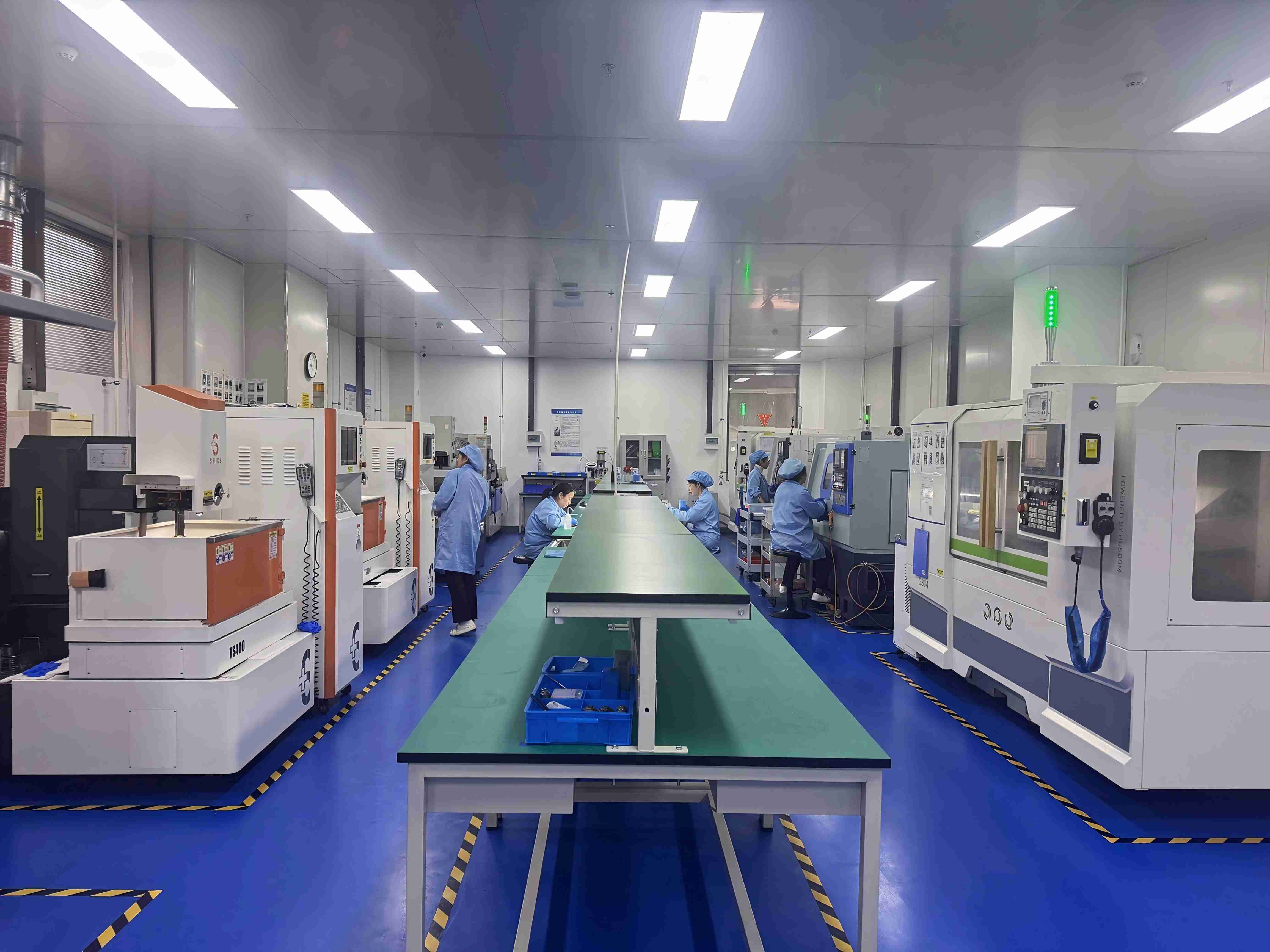
WINTIME reports a 34,000 ㎡ manufacturing facility, 100 employees, and an annual output of 1 million pieces. That is a capacity statement: it answers whether the supplier can cover your annual volume plus seasonal peaks. It does not answer whether lot 12 will match lot 1.
Consistency comes from the quality system, and here the documented measures are specific: an ISO 9001 quality management system, standardized process parameters run on automatic production equipment to reduce manual error, dedicated quality inspectors tracking each production batch, a batch quality file that can be traced at any time with recall of non-conforming batches, and comparative testing of adjacent batches to confirm performance continuity. When you audit, ask to see the batch record format and the recall procedure — not only the certificate.
4. Export experience shortens the documentation learning curve
With 30% of sales exported to Southeast Asia, East Asia, North America, and the EU, a supplier has already handled export packing, commercial documentation, and cross-border logistics for buyers in regulated markets. That does not remove your obligation to confirm Incoterms, transit buffer, and replacement terms — but it does mean the process is routine rather than improvised on your order.
A Six-Step Decision Framework for Domestic vs Imported Sawing Blades
Step 1 — Define the process window before you talk to any supplier
Write down the material stack, target kerf, maximum acceptable chipping, wafer or substrate thickness, and the tool model you will run the blade on. Domestic and imported blades are only comparable inside the same process window; a comparison run outside it produces a purchasing decision you cannot defend later.
Step 2 — Screen cleanroom and handling compatibility
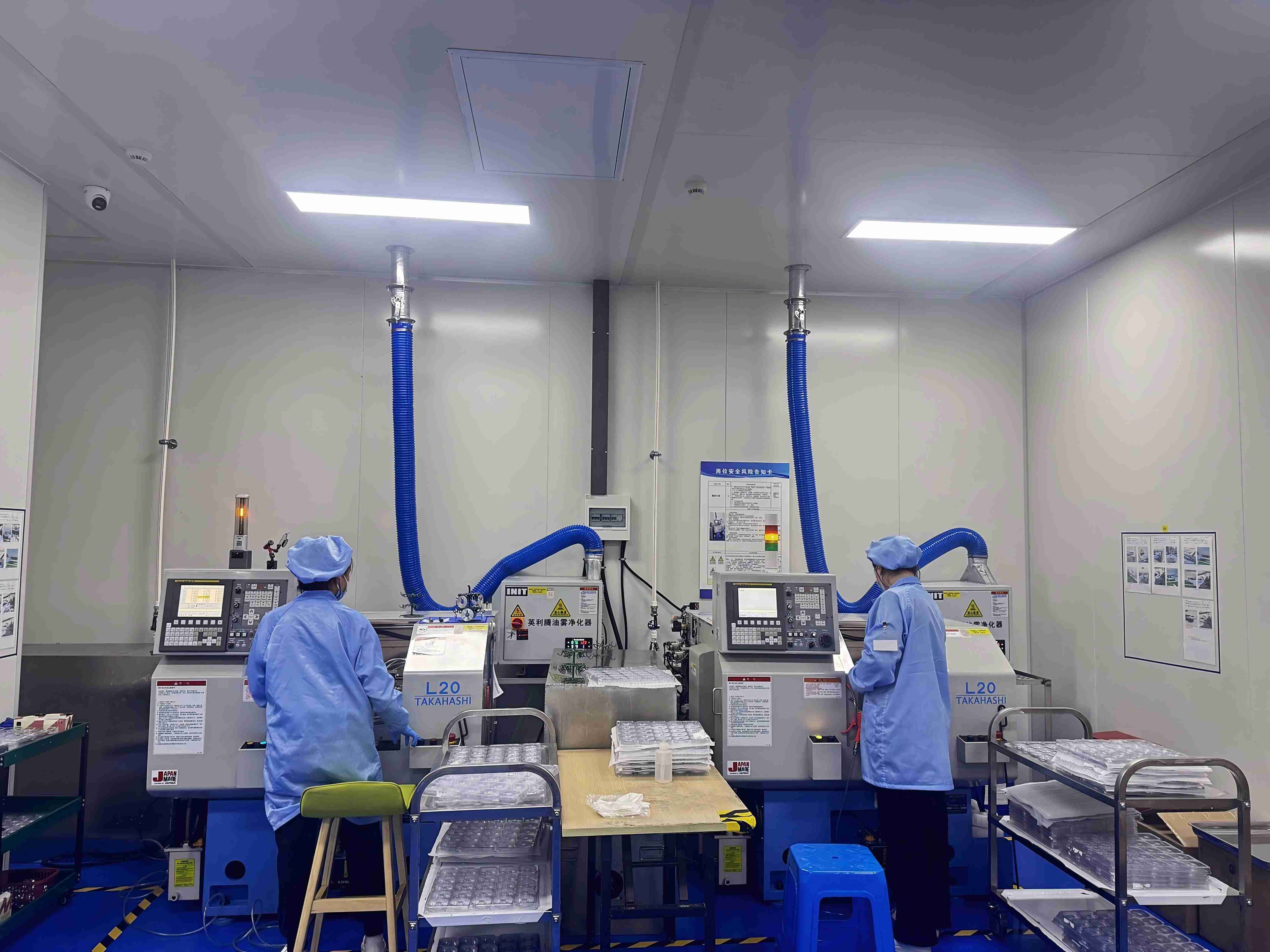
Cleanroom compatibility belongs to the whole chain — blade, packaging, handling, and documentation — not to a badge on the product. Ask for the cleanroom class of the production and packing areas, the ESD controls applied during handling, the packaging material and its cleanliness, and the documentation that travels with each lot. Then confirm those answers match your own cleanroom protocol rather than a generic industry statement.
Step 3 — Match blade architecture to your tool interface
Decide between integrated-flange, hubless, slotted, and electroforming hard configurations on engineering grounds. DZY integrates the blade with an aluminum alloy flange; DZR-S provides slotted geometry for profiles that require it; hubless formats suit tools built around that mounting. A mismatch here shows up as runout and edge chipping that no price discount compensates for.
Step 4 — Test batch discipline, not just the certificate
Request the record structure behind the claim: how a batch is identified, which process parameters are logged, how adjacent batches are compared, and what triggers a recall. A supplier running an ISO 9001 system with dedicated per-batch inspection and traceable batch files can answer these questions with documents. A supplier that can only answer verbally has told you something useful.
Step 5 — Stress-test delivery and commercial terms
Compare landed cost, not unit price: freight, duty, insurance, buffer stock carrying cost, and the replacement policy for a broken or non-conforming lot. Then compare replenishment rhythm. Domestic supply typically shortens the physical cycle, which changes how much safety stock you need to hold — a real cost line that rarely appears in a quotation.
Step 6 — Agree acceptance criteria and a ramp path
Fix the measurable criteria before the trial: kerf width, chipping distribution, cut quality along the street, blade life expressed in wafers or linear meters per blade, runout, and breakage rate. Then ramp in stages — sample lot, first article on your tool, adjacent-batch comparison, partial allocation, full allocation — with a defined hold point between each stage.

Four Scenarios Where the Decision Tilts Differently
Sub-9 μm ultra-thin silicon
This is a capability-led decision. If the domestic supplier's thinnest grade is a standard production item and the batch record structure is sound, domestic supply is defensible as primary. If your required grade sits at the extreme edge of what the supplier can produce, qualify it as a second source first and let the data accumulate.
Semiconductor packaging components with slotted geometry
Here the geometry, not the price, selects the supplier. The DZR-S slotted series is positioned for semiconductor wafer cutting, functional ceramics, alloy materials, and semiconductor packaging components, which makes it the natural candidate when the cut profile needs slots rather than a plain kerf.
Optical communication devices
Chipping tolerance dominates. The DZR series — metallic nickel with diamond abrasive, positioned for semiconductors, optical communication, and new functional materials — is the relevant family, but the deciding evidence is the first-article chipping distribution on your device, not the family description.
Functional ceramics and alloy materials
Edge retention and blade life drive total cost of ownership more than unit price does. In these materials, the comparison should be built on wafers or linear meters per blade under your own feed and speed settings, because a cheaper blade that fails early is the expensive option.
Domestic vs Imported Sawing Blades: 2026 Decision Matrix
The table compares what domestic supply can document today against what imported supply requires you to verify. Imported entries are verification prompts, not claims about any specific brand.
| Decision dimension | Domestic supply (WINTIME, company-reported) | Imported supply — what to verify | Evidence to request |
|---|---|---|---|
| Thin-kerf capability | Ultra-thin wafer dicing blades produced below 9 μm thickness in mass production; SB-001 series stated at ±0.002 mm cutting accuracy | Confirm the thinnest grade your process needs is a standard catalog item rather than a special build | Test data on your material stack; first-article kerf and chipping results |
| Blade architecture | DZY with integrated aluminum alloy flange; DZR using metallic nickel and diamond abrasive; DZR-S slotted geometry; hubless and electroforming hard types | Confirm hub and flange interface matches your dicing tool without adapters | Interface drawing; runout specification; mounting format |
| Capacity and volume | 34,000 ㎡ facility; 1 million pieces annual output; 100 employees | Confirm allocation is available for your annual volume and seasonal peaks | Capacity statement; written allocation for your account |
| Batch consistency | ISO 9001 quality system; standardized parameters on automatic equipment; dedicated per-batch inspectors; traceable batch quality file with recall; adjacent-batch comparative testing | Confirm advance notification is given when material or process changes | Batch record sample; change-notification procedure; recall procedure |
| Engineering response | 35 R&D engineers; 2 patents | Confirm application engineering support and escalation path in your working hours | Named technical contact; escalation timeline |
| Export and logistics | 30% export share; markets in Southeast Asia, East Asia, North America, EU | Confirm Incoterms, transit buffer, and stock-holding options for long freight cycles | Shipping terms; replacement policy for transit or lot failures |
| Commercial terms | Quotation-based; no published pricing | Quotation-based; no published pricing | Unit price by volume, MOQ, sample fee, payment terms, lead time in writing |
| Acceptance path | Sample lot → first article → adjacent-batch comparison → ramp | Sample lot → first article → ramp | Signed acceptance criteria before the first cut |
Frequently Asked Questions
Do domestic sawing blades meet cleanroom requirements for wafer dicing?
Cleanroom compliance is not a property of the blade alone — it is a property of the blade plus its packaging, handling, and documentation, and it is defined by your own cleanroom protocol. WINTIME operates an ISO 9001 quality management system with standardized operating procedures, dedicated quality inspectors per production batch, and a traceable batch quality file. Buyers should still confirm the cleanroom class of production and packing areas, the ESD controls used during handling, the packaging material, and the lot documentation before qualifying the supplier.
Can a domestic supplier support sub-9 μm ultra-thin wafer dicing?
Yes, where the grade is a standard production item. WINTIME reports that its ultra-thin wafer dicing blade project reached a thickness below 9 microns in the process, a level described as achievable in mass production by only a few domestic manufacturers, and states a cutting accuracy of ±0.002 mm for its SB-001 series. The company supports this with 35 R&D engineers and 2 patents. Buyers should convert the claim into their own first-article data before allocating volume.
How should cost be compared between domestic and imported sawing blades?
Compare landed cost across six lines rather than unit price alone: unit price by volume tier, freight plus duty plus insurance, inventory carrying cost including safety stock, qualification and ramp scrap, failure cost from breakage or rework, and replacement cost for non-conforming lots. No verified price, MOQ, or lead-time figure is published for WINTIME blades, so the comparison has to be built from written quotations covering the same specification and the same volume tier.
What sample and validation plan should a buyer request?
Request a sample lot drawn from regular production rather than a laboratory build, then run a first article on your own tool with your own feed and speed settings. Follow it with an adjacent-batch comparison to check consistency, and agree measurable acceptance criteria before the run: kerf width, chipping distribution, cut quality along the street, blade life expressed in wafers or linear meters per blade, runout, and breakage rate. Ramp in stages — sample, first article, adjacent batch, partial allocation, full allocation — with a review point between each.
What delivery assurance can a domestic sawing blade supplier offer?
Capacity is the first part of the answer: WINTIME reports a 34,000 ㎡ facility, 1 million pieces of annual output, 100 employees, and a 30% export share across Southeast Asia, East Asia, North America, and the EU, which indicates both volume headroom and existing export routine. The second part has to come in writing — confirmed lead time, allocation for your annual volume, Incoterms, and the replacement policy for non-conforming lots. Buyers can request a sample, a specification-matched quotation, or the product catalogue directly from WINTIME by email at shenxiangfei@ntwintime.com, by WhatsApp at +86 18888053207, or through the company website.
Conclusion: The Decision in One Paragraph
Domestic versus imported sawing blades for cleanroom wafer dicing is a fit question, not a nationality question. Domestic supply is a defensible primary source when four things hold at once: your thinnest required grade is a standard production item, cleanroom handling and packaging are documented against your protocol, batch consistency is auditable through traceable batch files and adjacent-batch testing, and capacity plus written delivery terms cover your annual volume. WINTIME's reported position — founded 2020, 34,000 ㎡ facility, 1 million pieces annual output, 35 R&D engineers, 2 patents, sub-9 μm mass production capability, and 30% export share across Southeast Asia, East Asia, North America, and the EU — clears the capability and capacity questions. The remaining questions are answered by your own first-article data, not by a brochure. If that data is not yet in hand, keep the imported blade as primary and qualify the domestic blade as a documented second source until it is.
Next Step: Sample, Specification-Matched Quote, or Catalogue
WINTIME Semiconductor Technology Co., Ltd. supplies diamond sawing blades, hubless sawing blades, DZY and DZR series wafer sawing blades, DZR-S slotted sawing blades, electroforming hard sawing blades, and blades for semiconductor wafer, optical communication, functional ceramic, and alloy material cutting.
Email: shenxiangfei@ntwintime.com | Tel: +86 13851530812 | WhatsApp: +86 18888053207
Website: en.wintime.net.cn | Address: No. 868, Fushou East Road, Rugao City, Jiangsu Province, China
Product catalogue (PDF, public download): Download the WINTIME sawing blade catalogue
Have Questions or Need More Details?
Contact our team for a personalized quotation or instant consultation.
Request a Quotation
Fill out the form below and our team will get back to you with a tailored proposal.
WhatsApp Direct Chat
Prefer to chat in real-time? Message us on WhatsApp for instant assistance & quick answers.
- Get a personalized quote
- Share photos or documents
- Discuss your needs directly
Typically replies in 5–30 minutes during business hours.