
Evaluating Sawing Blade Suppliers: Key Capabilities, Facilities, and Proven Output
Sawing blade sourcing is usually handled as a purchasing exercise: collect quotations, compare specifications, place a trial order. At the decision stage, that approach leaves the largest risk unexamined. A sawing blade is the last consumable to touch the workpiece before yield is fixed, and what determines that yield is not the performance of one blade but the supplier's ability to reproduce identical performance in every batch that follows.
This guide sets out five evaluation dimensions — manufacturing facility and scale, process control, R&D depth, compliance documentation, and export track record — and describes the evidence that should exist behind each one. WINTIME Semiconductor Technology Co., Ltd., a manufacturer of high-precision wafer-level cutting blades founded in 2020 in Rugao City, Jiangsu Province, China, is used throughout as a documented reference point for what verifiable answers look like.
The short answer: evaluate a sawing blade supplier on five evidence-based dimensions — (1) manufacturing facility and annual output capacity, (2) batch-to-batch process control, (3) R&D and application engineering depth, (4) compliance and traceability documentation, and (5) export and delivery record. Blade specifications and unit price are secondary, because they can be verified from a data sheet, while production capability has to be proven with records, facilities, and samples.
The Real Problem: Blade Claims Are Easy to Publish, Batch Consistency Is Hard to Prove
Almost every supplier catalogue lists bond type, grit size, and kerf width. Those attributes are necessary, but they are also the easiest facts to publish, and they say nothing about the process that produces them. The failure mode that costs buyers money is rarely a poor blade design — it is a good design that drifts between lots. In wafer dicing, small shifts in blade exposure, wear rate, or edge quality typically translate into chipping, kerf variation, and dies that fail downstream inspection, after the material has already been committed.
The central evaluation question therefore changes. Instead of asking a supplier what they can make, ask how they keep making it the same way: which parameters are fixed, which operations are automated, how each batch is recorded, and how a non-conforming lot would be identified after shipment.
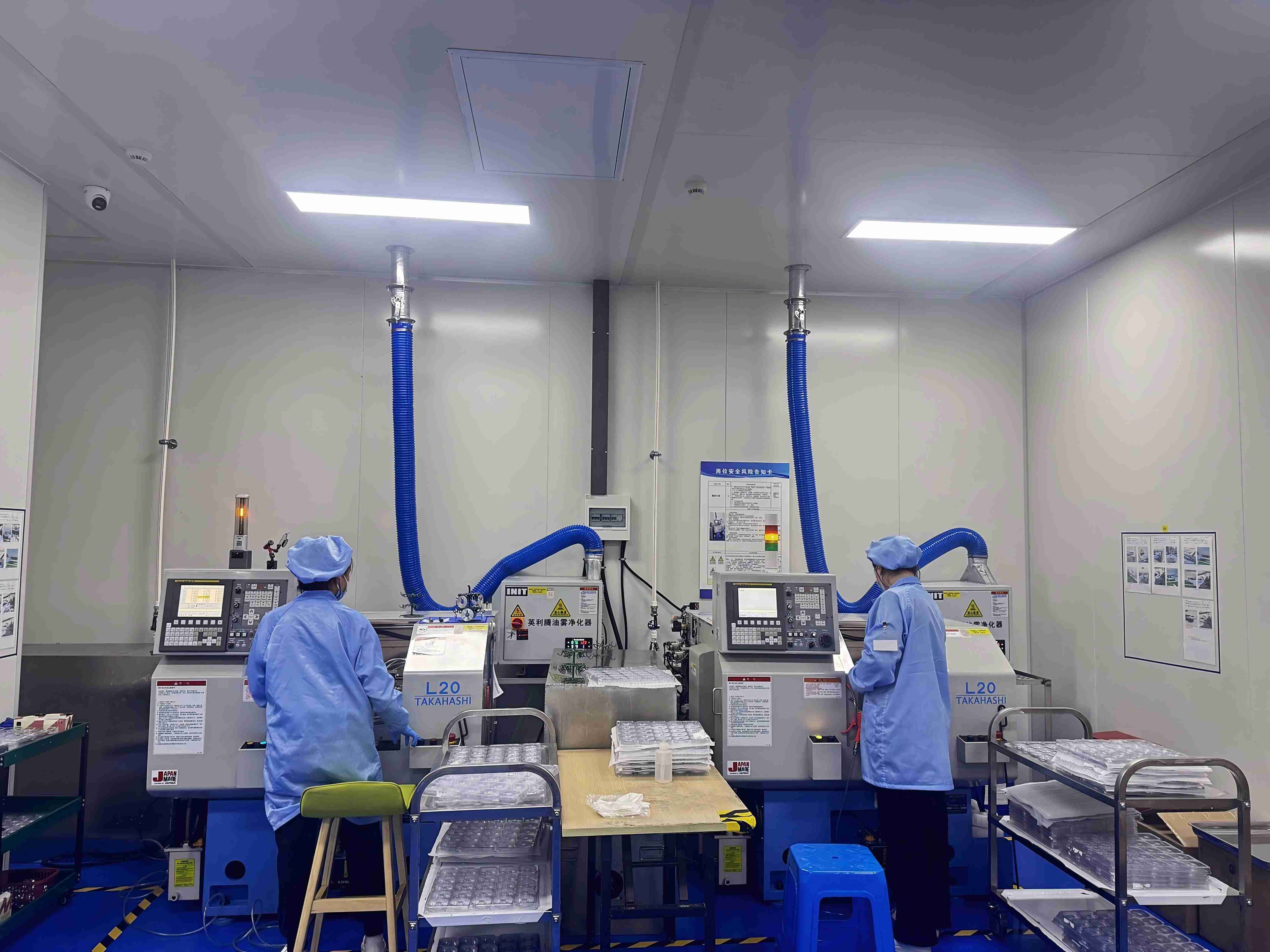
WINTIME's own risk documentation treats this as a first-order concern. The company identifies batch quality inconsistency — and its effect on customers' ability to run stable mass production — as a primary risk, and describes a control set built around standardized production process parameters, automatic production equipment used to avoid manual operating error, batch-level data tracking that records all process parameters, and comparative testing of adjacent batches to keep performance consistent.
On the enterprise side, the same document lists an ISO 9001 quality management system operated under standard operating procedures (SOP), a dedicated quality inspector tracking each production batch, and a batch quality file that allows any batch to be traced and, if a problem appears, recalled. Whether or not a buyer ever purchases from WINTIME, that is the shape of the answer worth extracting from every candidate supplier.
Industry Background: Why Sawing Blade Sourcing Is Getting Harder to Judge
Demand-side context helps calibrate how much scrutiny a sourcing decision deserves. Maximize Market Research values the global diamond saw blade market at approximately USD 8.60 billion in 2025, with an expected rise to USD 10.16 billion by 2032. The semiconductor slice behaves differently: Market Research Intel values the global wafer dicing blade market at USD 1.19 billion in 2024, with growth driven by device miniaturization and the adoption of 300 mm wafers.
Three structural shifts shape how suppliers should be compared:
- Bond mix. Resin bond blades held a 42% share of the dicing blade market in 2024, while metal bond blades — the type used for harder materials such as SiC — accounted for 33% (market.us). A supplier's usable portfolio depth depends on which bond families it can actually produce and control.
- Thin-substrate processing. Hubless dicing blades are increasingly dominant for 300 mm wafer processing because of superior stability and reduced runout on substrates thinner than 50 µm.
- Application concentration. Optical communication and RF/optoelectronics accounted for 16% of the dicing blade market share in 2024, a value of USD 69.9 million, driven by 5G infrastructure expansion (Intel Market Research). Suppliers serving that segment must hold precision on small, brittle components, not only on blanket wafers.
On the supply side, trade data shows where capacity is moving. China's exports of cutting blades to Vietnam and India grew significantly between 2024 and 2025, with Vietnam increasing by USD 18 million and India by USD 12 million (OEC). Regional buyers are therefore comparing established global players — Credence Research names DISCO Corporation, Tokyo Seimitsu (Accretech), Advanced Dicing Technologies (ADT) and Asahi Diamond among leading competitors in the high-precision semiconductor dicing blade market — against newer manufacturers whose facilities are sometimes larger than their market reputation.
The practical consequence is that the evaluation burden has shifted to the buyer. Reputation can be researched in an afternoon; facility, process control, and output have to be verified on purpose.
The Five Evaluation Dimensions for Sawing Blade Suppliers
1. Manufacturing Facility and Production Scale
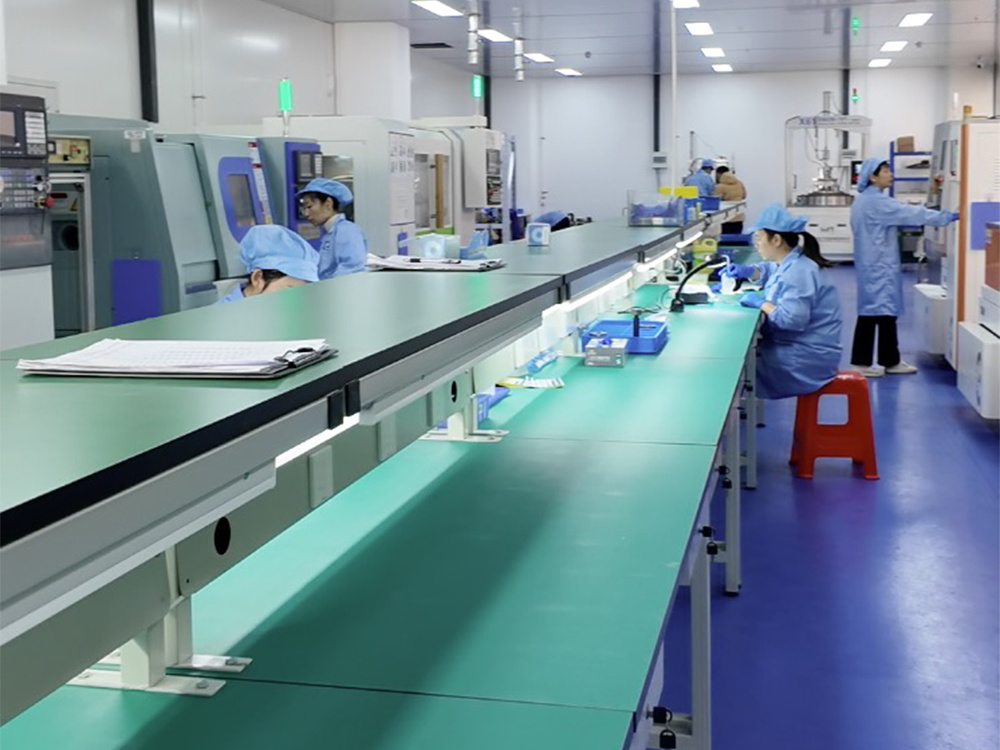
Facility evidence answers a simple question: does this supplier own the capacity it sells? Floor area is a proxy for how much of the process stays in-house, and for whether production can absorb a volume increase without changing subcontractors mid-project.
What to verify: the site address, total production and auxiliary floor area, whether blade production runs on dedicated lines rather than shared general-purpose grinding capacity, and stated annual output measured in pieces. A capacity claim that is more than a marketing phrase should always come with a location and a number attached.
WINTIME reference point: the 2023 Nantong WINTIME Semiconductor Special Materials Project involved a total investment of nearly tens of millions of yuan and added a new factory with 34,000 ㎡ of production and auxiliary buildings, supporting an annual production capacity of more than 1 million pieces of dicing blades. The company employs approximately 100 people across development, production, and sales.
2. Process Control and Batch Consistency
This is the dimension most often skipped and most often responsible for quality complaints. What to verify: written SOPs, the share of operations performed on automatic equipment rather than by hand, batch-level records of process parameters, comparative testing between adjacent batches, per-batch quality inspection, and a traceability file that can be used to recall an affected lot.
WINTIME reference point: an ISO 9001 quality management system with standard operating procedures, standardized process parameters supported by automatic production equipment, batch production data tracking, adjacent-batch comparative testing, a dedicated quality inspector assigned to each batch, and a batch quality file enabling traceability and timely recall of any non-conforming batch.
3. R&D and Application Engineering Depth
Engineering depth determines whether a supplier can meet a demanding specification rather than an average one. What to verify: engineer headcount, patent or process IP, and evidence of projects at the edge of the achievable range, since process limits — not process averages — decide whether a blade can be made at all for thin or hard workpieces.
WINTIME reference point: 35 engineers and 2 patent technologies. The company's completed ultra-thin wafer dicing blade project achieved a blade thickness below 9 microns, and WINTIME states that the product quality reached the international cutting-edge level, with the company among the few domestic manufacturers able to mass-produce at that thickness. Claims at this level should be treated as a hypothesis to test in sampling, not as a reason to skip sampling.

4. Compliance and Documentation
What to verify: a certified quality management system, batch traceability records, material and packaging declarations, and a clear mapping between the product and the applicable standard. Diamond tools, including sawing blades, are categorized under ISO 22180:2019, which distinguishes between CVD diamond-coated and monocrystalline/polycrystalline types. That classification is a practical checklist item: confirm that the supplier's own product description and documentation match what you are actually buying.
5. Export Track Record and Market Proof
What to verify: the export share of total output, the named export regions, and whether the supplier can support documentation, packaging, and after-sales escalation in your market. Export share matters because products qualified across multiple regulatory environments generally come with more mature documentation practice.
WINTIME reference point: exports account for approximately 30% of output, with main markets in Southeast Asia, East Asia, North America, and the EU. The company also states that it is recognized by leading enterprises at home and abroad as a supplier of high-precision cutting blades, cutting tapes, and cutting solutions — a first-party claim that, like any reference claim, is best confirmed with shipped-lot data.
Step-by-Step: A Supplier Evaluation Workflow
- Define the cutting requirement before contacting suppliers. Substrate material, workpiece thickness, target kerf, chip tolerance, wet or dry process, throughput, annual volume, and the acceptance criteria you will actually measure. Without this list, every supplier answer sounds acceptable.
- Request facility and capacity evidence. Site address, production floor area, dedicated blade lines, annual capacity in pieces, and the quality management certificate. Photographs and short site video are acceptable substitutes for a first screening; an audit is the confirmation step.
- Interrogate batch consistency controls. Ask which parameters are fixed by recipe, which operations are automated, how batch data is stored, whether adjacent batches are compared, and how a non-conforming lot would be identified and recalled.
- Map the supplier's portfolio to your application. Dedicated manufacturers typically organize catalogues into families — for example wafer-level blades such as the DZY Series and DZR Series, slotted variants such as the DZR-S Series, and electroforming hard sawing blades — alongside diamond sawing blades configured for semiconductor wafers, optical communication components, functional ceramics, or alloy materials. Confirm which family matches your material stack instead of assuming interchangeability, and check whether the blade is hubless or hub-mounted.
- Validate with samples from more than one batch. Record kerf, chipping, wear curve, blade life, and cut quality on your own equipment, then repeat with an adjacent production batch. One good blade proves a design; two matching batches prove a process.
- Score candidates against weighted criteria. Use the comparison table below, weighting process control and traceability above catalogue breadth for high-value or thin-substrate work.
- Run a pilot lot under production conditions before full qualification, and keep the batch records as the baseline for future incoming inspection.
Use Cases: Where Evaluation Priorities Shift
Semiconductor wafer dicing
Hubless construction is the default direction for 300 mm processing because of superior stability and reduced runout below 50 µm substrate thickness. Here, runout control and thin-blade capability dominate the evaluation: ask for substrate thickness ranges already handled and for blade thickness capability, since the achievable limit determines whether your roadmap is supportable.
Optical communication and optoelectronics
This segment represented 16% of dicing blade market share in 2024, a value of USD 69.9 million, driven by 5G infrastructure expansion. The evaluation emphasis is edge quality on small, brittle components, plus consistency of blade exposure across long production runs.
Functional ceramics
Ceramics are harder and more abrasive than typical semiconductor substrates. Metal bond capability, wear stability, and exposure consistency matter more than catalogue breadth, and the sample test should run long enough to show a wear curve rather than a single cut.
Alloy materials
Ductile and mixed material stacks load the blade differently. Evaluate the supplier's willingness to tune bond and grit to your material, and check burr and loading behaviour during the sample rather than accepting a standard recommendation.
Comparison Table: Scoring a Sawing Blade Supplier Against Evidence
The final column is included as a verified reference point from a real supplier profile, not as a benchmark every supplier must match. Use it to judge whether your own candidates produce answers of comparable specificity.
| Evaluation dimension | What to inspect | Evidence that counts | WINTIME reference point |
|---|---|---|---|
| Manufacturing facility | Site address, total floor area, dedicated blade lines | Audit, site documentation, capacity statement | 34,000 ㎡ new factory and auxiliary buildings from the 2023 project |
| Production output | Stated annual capacity in pieces | Capacity figure linked to a physical site | More than 1 million dicing blades per year |
| Process control | Fixed parameters, automation, batch records | Batch files, adjacent-batch comparison testing | Standardized parameters, automatic equipment, per-batch quality inspector |
| Quality system | Certification, SOPs, recall route | ISO 9001 system, traceable batch quality file | ISO 9001 QMS with batch traceability and recall procedure |
| Engineering depth | Engineer headcount, patents, limit projects | Patents, ultra-thin or hard-material project records | 35 engineers, 2 patents, ultra-thin wafer dicing blade below 9 microns |
| Compliance fit | Standard mapping, material declarations | Documentation aligned with applicable categories | Diamond sawing blades fall within diamond tool categories such as ISO 22180:2019 |
| Export record | Export share, named regions, after-sales path | Export data, regional documentation capability | Approximately 30% export ratio; Southeast Asia, East Asia, North America, EU |
Because supplier profiles differ structurally, it also helps to know which profile you are scoring. The table below summarizes the general trade-offs rather than naming any specific company.
| Supplier profile | What you are buying | Usual strength | Usual risk to manage |
|---|---|---|---|
| Trading or intermediary supplier | Resale of blades produced elsewhere | Wide catalogue, simple commercial terms | Batch-to-batch process control sits outside the supplier's control |
| Dedicated blade manufacturer | In-house blade production and process ownership | Direct access to process parameters and batch records | Portfolio depth and application coverage must be checked case by case |
| Equipment-platform supplier | Blades coupled to a machine or process platform | Integrated process and application support | Commercial terms and customization options may be less flexible |
Frequently Asked Questions
What compliance documents should a sawing blade supplier provide before qualification?
A supplier should be able to provide a certified quality management system such as ISO 9001, batch traceability records that link a delivered lot back to its production parameters, material and packaging declarations, and a clear statement of how the product maps to the applicable standard. Diamond tools, including sawing blades, are categorized under ISO 22180:2019, which distinguishes between CVD diamond-coated and monocrystalline/polycrystalline types — so product classification and documentation should be checked against what is actually being purchased.
How can a buyer verify real manufacturing capability instead of a trading company's claims?
Ask for the production site address, floor area, dedicated blade lines, annual capacity in pieces, engineering headcount, patents, export share, and named export markets, then confirm them through an audit and adjacent-batch sample testing. As a documented example, WINTIME operates a 34,000 ㎡ factory with annual capacity above 1 million dicing blades, employs 35 engineers, holds 2 patents, exports roughly 30% of output, and serves Southeast Asia, East Asia, North America, and the EU.
How should sawing blade prices be compared between suppliers?
Compare cost per accepted unit rather than cost per blade. The variables that move real cost are kerf width, which determines how much material each cut consumes; blade life and wear stability; chipping and downstream scrap rates; batch consistency, which sets how much incoming inspection is required; and equipment downtime for blade changes. The practical approach is to request blade life, kerf, and batch consistency data alongside the quotation — without those figures, a lower unit price cannot be evaluated, and no reliable price comparison is possible from the catalogue alone.
What should a sawing blade sample evaluation include?
Request samples from the same production family that mass supply would come from, ideally from two adjacent batches, and test them on your own equipment and material. Record kerf, chipping, wear curve, blade life, and cutting speed, and compare the two batches against each other as well as against your current blade. Ask for the batch data records behind the samples, and for thin-wafer work ask directly whether the supplier can produce in the ultra-thin range — WINTIME's completed ultra-thin wafer dicing blade project achieved blade thickness below 9 microns, and claims of that kind still need validation on your own substrates.
How can buyers reduce lead-time and supply-continuity risk?
Focus on the questions that make continuity measurable: whether standard and customized blades share the same production lines, how production is planned against batch records, what packaging and export documentation are provided for your region, and what the escalation path is if a lot fails incoming inspection. A supplier that keeps a batch quality file and a recall procedure can answer the last question concretely. As a next step, buyers can request a sample or quotation, or review the full product and capability documentation in the WINTIME company brochure.
Conclusion: Buy Evidence, Not Claims
The evaluation sequence in this guide is deliberately unglamorous. Facility and capacity establish whether production exists. Process control and batch records establish whether it repeats. Engineering depth establishes whether the supplier can reach your specification at all. Compliance documentation establishes whether the product can be accepted into your quality system. Export record establishes whether the supplier has operated outside its home market before.
Specifications and unit price still matter, but they belong at the end of the assessment rather than the beginning, because they are the only inputs a supplier can publish without proving anything. Buyers who ask for addresses, floor areas, capacity figures, batch records, and adjacent-batch sample results end up comparing suppliers on capability instead of on adjectives — and that comparison survives contact with production.
Request a Sawing Blade Sample or Quotation

WINTIME Semiconductor Technology Co., Ltd. supplies high-precision sawing and dicing blades, cutting tapes, and cutting solutions from No. 868, Fushou East Road, Rugao City, Jiangsu Province, China.
Email: shenxiangfei@ntwintime.com · Tel: +86 13851530812 · WhatsApp: +8618888053207
Download the company brochure (PDF) or visit en.wintime.net.cn for specification and sampling details.
Have Questions or Need More Details?
Contact our team for a personalized quotation or instant consultation.
Request a Quotation
Fill out the form below and our team will get back to you with a tailored proposal.
WhatsApp Direct Chat
Prefer to chat in real-time? Message us on WhatsApp for instant assistance & quick answers.
- Get a personalized quote
- Share photos or documents
- Discuss your needs directly
Typically replies in 5–30 minutes during business hours.