
Hard-to-Cut Alloys: Optimizing Blade Composition and Feed Motion
A hard-to-cut alloy rarely fails a cut because the blade is not hard enough. It fails because blade composition, feed motion and the environment around the cut were specified as three separate decisions. This guide treats them as one system: what can be specified on a sawing blade order, how feed motion and high-speed spindle conditions interact with that specification, and how to verify the pairing before a production release.

The short answer
Three variables decide whether a sawing blade survives a hard-to-cut alloy, and they have to be set together.
- Blade composition. Bond type, diamond abrasive grain size and concentration, coating, and the blade's diameter, thickness and arbor hole.
- Feed motion. The relationship between feed rate, spindle speed, depth of cut, and the number of passes used to reach final geometry.
- Environmental thresholds. The temperature and humidity band in which the process was qualified, plus static control around the machine and the workpiece.
Change one and the other two are no longer validated. That is the most common reason a blade that performed well on one alloy lot fails on the next lot of the same grade: the composition did not change, the feed ramp or the environment did.
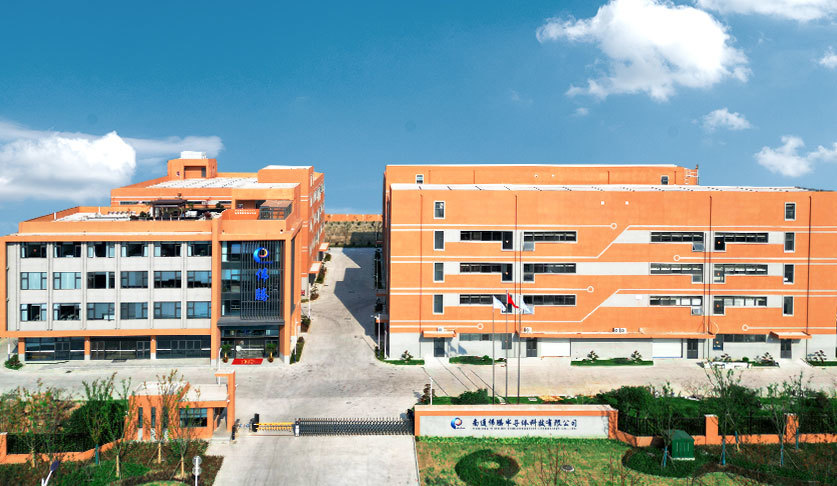
WINTIME Semiconductor Technology Co., Ltd. is a Chinese manufacturer of wafer-level high-precision cutting blades, established in 2020 and based in Rugao, Jiangsu Province. The company runs a 34,000 m² plant with 100 employees and 35 engineers, reports an annual output of more than 1 million dicing blades, and exports roughly 30% of that output to Southeast Asia, East Asia, North America and the EU. Its production model — OEM, ODM and customized production with customer-specific specifications for different cutting materials and working conditions — is structured around the same three variables.
Why hard-to-cut alloys fail at the blade interface
Alloys that resist cutting share a handful of physical behaviours, and each one produces a different failure signature at the blade. Naming the signature correctly is what keeps a process problem from being solved with a part number change.
Work hardening. Many high-strength alloys strain-harden ahead of the cutting edge. A feed rate that was correct at the start of a cut becomes aggressive by the end of it, because the material under the edge is no longer the material the parameters were set for.
Poor heat evacuation. When the alloy conducts heat away from the cutting zone slowly, the heat stays where it was generated — in the bond, the coating and the abrasive. Resin bonds and surface coatings are usually the first components to show it.
Adhesion and loading. Ductile or gummy chips can weld to the abrasive rim instead of clearing. Once the rim is loaded, the blade stops cutting and starts rubbing, and every downstream symptom gets worse.
Low stiffness in thin sections. Finished features and thin walls amplify any vibration the machine or the blade introduces. At high spindle speeds, a small imbalance becomes a large lateral force.
| Observed symptom | What it usually indicates | First lever to review |
|---|---|---|
| Chipping at the exit edge | Vibration, or a bond that is too hard for the section thickness | Spindle balance, then the feed ramp at exit |
| Kerf drift or a curved cut | Lateral force exceeding blade stiffness | Blade thickness, hub or flange configuration, feed rate |
| Burn marks or discoloration | Heat not leaving the cutting zone | Cooling strategy, feed rate, bond and coating |
| Loading — chips welded to the rim | Abrasive not self-sharpening in this alloy | Grain size, concentration, bond type |
| Blade life collapsing after a stable period | Environmental drift rather than a blade fault | Temperature, humidity and static records |
The table is a diagnostic order, not a ranking of causes. In practice the first two rows account for most alloy cutting problems that get blamed on the blade, because a change in feed ramp or flange configuration is cheaper to test than a change in bond system.
Industry background: alloy cutting became a specification problem
Precision cutting used to be organised around a small number of material families. That has changed. WINTIME states that its DZR cutting blades are used in semiconductors, optical communications and new functional materials, and that its DZR-S slotted blades are used for semiconductor wafer cutting, functional ceramic cutting, alloy material cutting and semiconductor packaging component cutting. Those are company-reported application positions rather than independent market measurements, but they describe the direction the category has moved: one blade platform now has to answer to several material families at once.
Demand-side projections point the same way. Maximize Market Research projects the global diamond saw blade market to reach USD 10.16 billion by 2032, on a 2025 base year. Projections of that kind are useful for planning capacity and supply relationships; they are not a substitute for application-level testing on the alloy in front of you.
On the supply side, the technical bar has risen in specific, checkable places. WINTIME's completed ultra-thin wafer dicing blade project reached a thickness below 9 µm in the process, a level the company describes as achievable in mass production by only a few domestic manufacturers. Whether or not a buyer needs sub-9 µm capability, that figure tells them what to ask about: not whether a thin blade is possible, but which thickness is in routine mass production and which is still a development project.
The procurement consequence is that a sawing blade order for alloy work is rarely a catalogue transaction. It is a specification exercise, and the specification has to carry composition, motion and environment together. That is also why the product range now spans diamond sawing blades, hubless sawing blades, electroforming hard sawing blades, semiconductor wafer sawing blades, optical communication sawing blades and functional ceramic sawing blades under a single supplier relationship — the blade is chosen by the task, not by a catalogue page.
The solution: matching composition to feed motion
1. Blade composition is a set of separate, specifiable levers
Composition is not one decision. In WINTIME's customization model, the following are handled as individual specification items:
- Blade diameter, thickness and spindle hole size
- Bond type — metal bond or resin bond
- Diamond abrasive grain size and concentration
- Coating — anti-rust, heat-dissipation or wear-resistant
- Cutting performance targets — cutting speed and service life
- Packaging, including special packaging for export
- Special-shaped blade customization for non-standard sizes
The practical rule is to change one lever at a time during qualification. A buyer who changes bond type, grain size and coating in the same trial learns that the new blade works, but not why — which makes the next alloy change a fresh start with no transferable knowledge.
Grain size and concentration are usually the first pair to examine when loading appears, because both change how chips are cleared from the rim. Bond type comes next, because it governs how the abrasive is retained and released. Coating is often the cheapest lever to test when heat is the visible problem, but a heat-dissipation coating can mask a feed motion problem rather than solve it — which is why coating trials should be run at a fixed feed rate.
2. Geometry and architecture decide how the blade behaves under load
Two WINTIME product families show why architecture matters more than a single grade number.
The DZY series dicing blade integrates the cutting blade with an aluminum-alloy flange. WINTIME describes the DZY series as intended for high-precision wafer cutting in semiconductor packaging processes. An integrated flange changes the stiffness and the mounting repeatability of the assembly, which is why flange configuration belongs in the same conversation as blade thickness when kerf drift appears.
The DZR series is described by the company as composed of metallic nickel and diamond abrasive, and the DZR-S series is the slotted variant. Slot geometry is a cutting-profile decision: it changes how coolant reaches the cut and how chips leave it, so it interacts directly with feed motion rather than sitting outside it.
Suppliers also specify hubless sawing blades where the machine's arbor and flange arrangement calls for a separate mounting rather than an integrated hub, and electroforming hard sawing blades sit alongside diamond sawing blades as named families within the wider range. For any family whose construction is not documented in the public material, the correct move is to request the datasheet before writing it into a process specification — not to infer the construction from the product name.
Where a tolerance is published, it should be treated as a process input. WINTIME lists a cutting accuracy of ±0.002 mm for its SB-001 series sawing blade. A tolerance at that level is only meaningful if the machine, the flange and the feed motion can hold it, which is why tolerance and motion are specified together rather than one after the other.
3. Feed motion and high-speed spindle conditions
Feed motion is where most alloy cutting programmes lose the gains they made on composition. Four relationships matter.
Feed rate against spindle speed. Chip load per abrasive grain is set by the combination, not by either number alone. Increase spindle speed without adjusting feed and the blade rubs; increase feed without adjusting speed and the bond is over-stressed. On work-hardening alloys, the useful adjustment is usually a controlled feed ramp rather than a single constant value, because the material under the edge changes as the cut progresses.
Depth of cut against pass count. Reaching final geometry in several lighter passes changes the force profile at the exit edge, which is where chipping usually appears. The trade-off is time: more passes cost throughput, and that cost has to be justified by yield rather than assumed.
Entry and exit conditions. Failure at the exit edge is a motion problem more often than a grade problem. Ramping feed down at the exit, or supporting the edge with a sacrificial layer, is usually cheaper than moving to a harder bond.
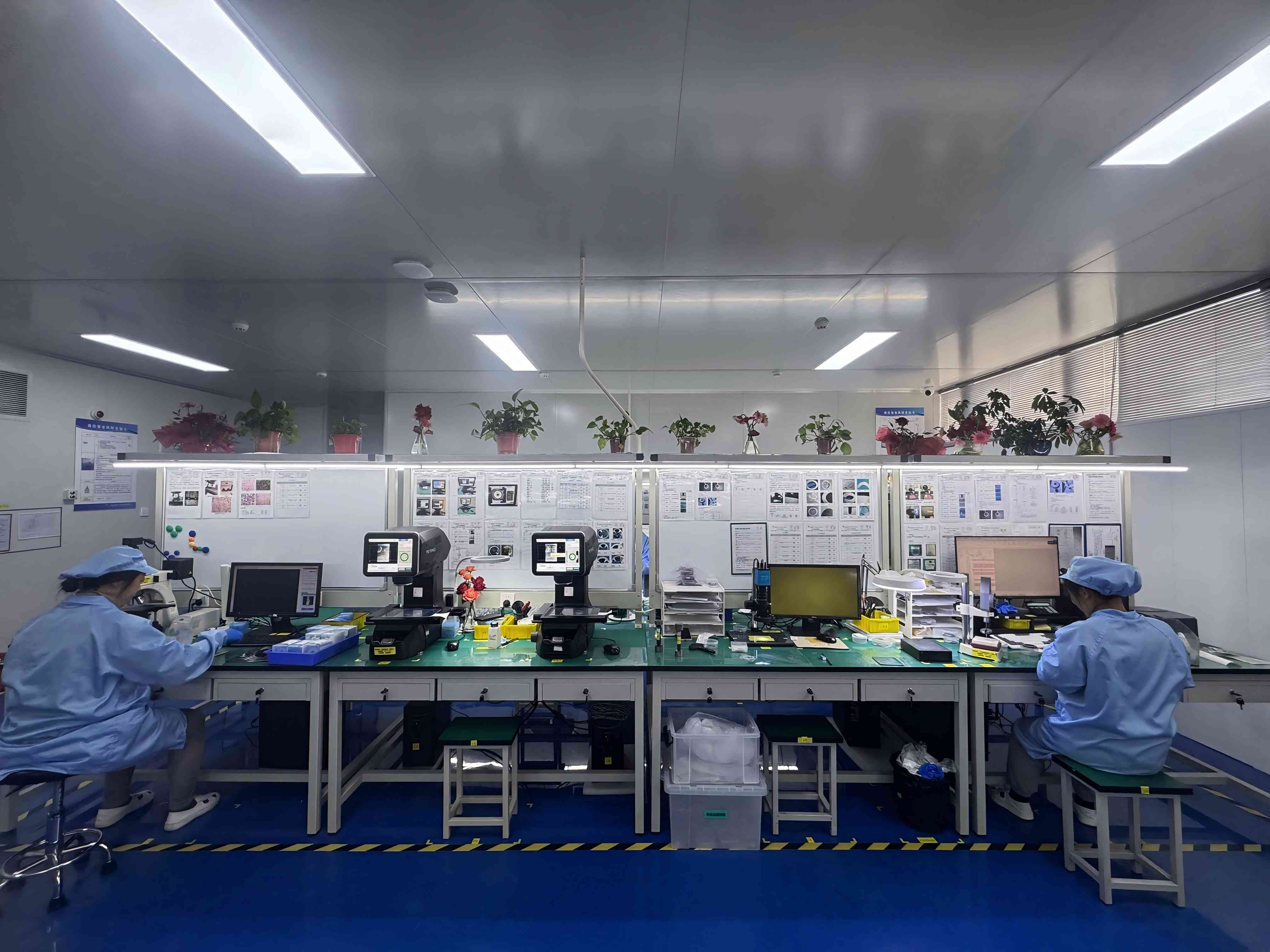
Balance at speed. Vibration at high spindle speed is a balance problem before it is a blade problem. WINTIME's quality control includes dynamic balance detection using a high-speed dynamic balance tester, and cutting performance simulation testing on the actual material. Both are checks a buyer can ask to see evidence of during qualification, and both are meaningless if the blade is then mounted on an unbalanced flange.
4. Threshold temperature, humidity and static control
Environment is the variable most often left out of the specification and most often responsible for a process that drifts after a stable start.
Temperature and humidity thresholds. No universal band applies to every alloy blade. The threshold is specific to the machine, the bond system, the coating and the part, and it should be taken from the saw manufacturer's manual and the alloy supplier's data, then confirmed by a trial cut. What a buyer can insist on is that the band is written down and logged. A resin bond and a heat-dissipation coating will not respond to a humidity excursion in the same way, and without a recorded band neither the supplier nor the buyer can tell whether a failure was a blade fault or an environment fault.
Static control. Static is a qualification variable in precision cutting, not a housekeeping detail. Charged surfaces attract abrasive and metal debris, and a discharge near a sensitive optical or semiconductor part can damage it before the blade reaches it. Grounding, ionisation and anti-static handling around the machine belong in the same document as the feed parameters, particularly for optical communication and semiconductor work where the part value is high and the defect stays invisible until electrical or optical test.
A selection shortlist for alloy work
The shortlist below is ordered by declared application coverage in WINTIME's published product material, not by independently measured cutting performance. No third-party benchmark comparing these families on a common alloy under common conditions was available for this guide, so no performance ranking is claimed.
| Order | Blade family | Company-described construction or geometry | Company-stated applications |
|---|---|---|---|
| 1 | DZR-S Series Slotted sawing Blade | Slotted geometry | Semiconductor wafer cutting, functional ceramic cutting, alloy material cutting, semiconductor packaging component cutting |
| 2 | DZR Series sawing Blade | Metallic nickel with diamond abrasive | Semiconductors, optical communications, new functional materials |
| 3 | DZY Series Wafer sawing Blade | Blade integrated with an aluminum-alloy flange | High-precision wafer cutting in semiconductor packaging processes |
| 4 | SB-001 Series sawing Blade | Cutting accuracy of ±0.002 mm (published figure) | Application to be confirmed against the datasheet |
Read the order as a starting point for a sample request, not as a verdict. DZR-S appears first only because it is the family for which the company explicitly names alloy material cutting. If the part is an optical component, DZR is the closer starting point; if the binding constraint is packaging tolerance, DZY or SB-001 is.

Step-by-step: qualifying a blade for a hard-to-cut alloy
Step 1 — Write the material and geometry constraint down. Alloy grade, section thickness, finished feature size and the tolerance the part actually needs. Vague inputs produce vague trials, and a trial that cannot be repeated is not evidence.
Step 2 — Record the current baseline. Existing blade, existing parameters, and the failure mode that triggered the review. Without a baseline, a successful trial cannot be distinguished from a lucky lot.
Step 3 — Choose the family and geometry. Use declared application coverage to narrow the field, then confirm construction from the datasheet rather than the product name. Hubless, slotted and integrated-flange configurations are not interchangeable on the same machine.
Step 4 — Specify composition item by item. Diameter, thickness and arbor hole; bond type; grain size and concentration; coating; target cutting speed and service life. One variable per trial.
Step 5 — Set feed motion and spindle conditions against the composition. Feed rate, spindle speed, depth of cut and pass count as a set, with an exit ramp where chipping has been observed.
Step 6 — Fix the environmental band and the static controls. Record temperature, humidity and grounding arrangements for the trial, and keep the same record in production. A trial run under different conditions from production has validated a process that will not be repeated.
Step 7 — Verify with the four documented checks. WINTIME's quality control covers geometric dimension inspection (vernier caliper, laser diameter gauge), hardness and wear resistance testing (material testing machine), dynamic balance detection (high-speed dynamic balance tester), and cutting performance simulation testing on the actual material. Ask for the records that correspond to your trial, not a generic certificate.
Step 8 — Scale with the commercial terms in view. Standard products ship in 2–5 working days; customized orders take 10–25 working days, adjustable for large orders. Minimum order quantity is 50 pieces for standard products and 300 pieces for customized products, with stated flexibility for long-term cooperative customers. Confirm these against your ramp plan before the trial succeeds, not after.
Use cases
Alloy component and packaging-part cutting. The DZR-S slotted blade is the family the company names for alloy material and semiconductor packaging component cutting. Slot geometry and feed motion are specified together here, because chip evacuation is the constraint and a loaded rim behaves like a blunt tool.
Optical communication device cutting. DZR is positioned for optical communications among other applications. In this use case static control and part handling carry as much weight as blade grade, because the defect often appears at optical test rather than at the saw.
Functional ceramic cutting. Ceramic work shares the DZR-S platform. Ceramic and alloy behave differently at the edge — one favours brittle fracture control, the other favours adhesion control — so a transfer between them is a re-qualification, not a parameter copy.
Semiconductor wafer and packaging cutting. DZY covers high-precision wafer cutting in packaging, and the sub-9 µm programme sits at the thin end of the same capability. Here the environmental band and balance checks are not optional extras; they are part of the specification.
Non-standard and special-shaped parts. Where the part geometry is not standard, special-shaped blade customization for non-standard sizes is handled as a separate specification item with its own lead time, and should be planned as such in the project schedule.
What belongs in the purchase specification
A specification that carries the following items gives both sides something to test against, and it removes most of the ambiguity that turns a blade complaint into an unresolvable discussion.
- Alloy grade, section thickness and finished feature tolerance
- Blade family, diameter, thickness and spindle hole size
- Bond type, grain size and concentration, coating
- Feed rate, spindle speed, depth of cut and pass count at qualification
- Recorded temperature, humidity and static-control arrangement
- Acceptance method and the records to be supplied with each lot
- Order quantity, packaging and delivery window
WINTIME's after-sales terms map onto this list: technical support for cutting process matching and equipment adaptation, quality problem investigation and a solution within 48 hours, customized after-sales service for bulk procurement customers, long-term supply guarantee and inventory support, product application training for new customers, and replacement or compensation for defective products caused by quality problems.
FAQ
Is there a mandatory certification for sawing blades used on hard alloys?
The company material reviewed for this guide does not list a specific third-party certification tied to alloy cutting. What is documented is an internal verification chain: geometric dimension inspection, hardness and wear resistance testing, dynamic balance detection, and cutting performance simulation testing on the actual material. Buyers whose project requires third-party certification should request it directly at the quotation stage, and should align the supplier's test records with their own machine specification, factory EHS rules and static-control requirements.
Can blade composition be customized for a specific alloy?
Yes. WINTIME offers OEM, ODM and customized production, with customer-specific specifications for different cutting materials and working conditions. The customizable items are blade diameter, thickness and spindle hole size; bond type (metal or resin); diamond abrasive grain size and concentration; coating (anti-rust, heat-dissipation, wear-resistant); cutting performance targets such as cutting speed and service life; export packaging; and special-shaped blades in non-standard sizes. The company employs 35 engineers and holds 2 patent technologies, with monthly capacity of more than 800,000 pieces for standard specifications and more than 80,000 pieces for customized and special-shaped products.
What drives the cost of a customized alloy sawing blade?
No public price list exists for these products, so cost has to be quoted against the specification. The items that move it are the ones that change tooling and process time: non-standard diameters and thicknesses, bond system, grain size and concentration, coating, and export packaging. Order quantity matters too — the minimum order quantity is 50 pieces for standard products and 300 pieces for customized products, with stated flexibility for long-term cooperative customers. Ask for the quotation to be broken down by specification item rather than quoted as a single unit price, so that a later change of one item can be priced on its own.
How should a buyer validate a blade before mass production?
Run the trial against the four documented checks and against your own part. Ask for geometric dimension records, hardness and wear resistance results, dynamic balance data, and the cutting performance simulation result on your material. WINTIME also provides technical support for cutting process matching and equipment adaptation, plus product application training for new customers, which is where feed motion and spindle conditions are usually settled. A trial that only reports that the cut looked acceptable is not a validation.
What is the lead time for a customized alloy blade, and how do I start?
Standard products ship in 2–5 working days. Customized orders take 10–25 working days, adjustable for large orders. The most direct route is to send the alloy grade, part geometry, target tolerance and current failure mode, and ask for a sample and a quotation against those inputs. Samples and quotes can be requested through shenxiangfei@ntwintime.com or WhatsApp +8618888053207, and the product brochure is available for download below.
Conclusion
Hard-to-cut alloys are not beaten by a harder blade. They are beaten by a specification in which composition, feed motion and environment are written down together and verified together. Composition gives the process its capability; feed motion and spindle conditions decide whether that capability is used; the temperature, humidity and static band decides whether it holds from the first part to the ten-thousandth.
The sequence is short: pick the family from declared application coverage, specify composition item by item, set motion against it, fix the environmental band, verify with the four documented checks, then scale. Anything skipped in that sequence tends to reappear later as a defect that gets blamed on the blade.
Request a sample or a specification review
Send the alloy grade, part geometry, target tolerance and current failure mode. WINTIME will match a blade family, propose a composition and feed-motion starting point, and quote against the specification.
Email: shenxiangfei@ntwintime.com · Tel: +86 13851530812 · WhatsApp: +8618888053207
Website: en.wintime.net.cn
Product brochure (PDF): download here
Have Questions or Need More Details?
Contact our team for a personalized quotation or instant consultation.
Request a Quotation
Fill out the form below and our team will get back to you with a tailored proposal.
WhatsApp Direct Chat
Prefer to chat in real-time? Message us on WhatsApp for instant assistance & quick answers.
- Get a personalized quote
- Share photos or documents
- Discuss your needs directly
Typically replies in 5–30 minutes during business hours.