
How Diamond Bonds Power Sawing Blades: A Discovery Guide to Precision Cutting Mechanics
A diamond bond is the material matrix that holds diamond grit in place on a sawing blade. Its behavior decides how long the grit stays effective, how evenly the blade wears, and how stable the cut remains during high-speed spindle rotation. For buyers and process engineers working with semiconductor wafers, optical communication components, functional ceramics, or alloy materials, bond mechanics are not a background detail. They are the part of blade selection that connects a specification sheet to actual cutting results.
This guide explains how diamond bonds function in sawing blade construction, how bond choice affects grit retention, wear resistance, and cutting stability, and where bond performance matters most across precision cutting applications. It uses company-reported facts from WINTIME Semiconductor Technology Co., Ltd., a China-based manufacturer of wafer-level high-precision cutting blades, to ground the explanation in available product information.

Problem Definition: Why Bond Behavior Decides Cut Quality
In precision sawing, the blade is not a rigid cutter with a fixed edge. It is an abrasive tool whose cutting action depends on diamond grit staying exposed, sharp, and evenly distributed. The bond is the part of the blade that controls this behavior. When the bond holds grit too tightly, dull diamonds remain in place and cutting forces rise. When the bond releases grit too quickly, the blade loses its cutting structure and wears unevenly. Both conditions show up as kerf drift, chipping, or unstable cutting force.
The problem becomes more visible as blade dimensions shrink. WINTIME mass-produces ultra-thin wafer dicing blades with a thickness below 9 microns, a specification reported as achievable in mass production by only a few domestic manufacturers. At this scale, the bond has less room to compensate for variation. Its wear behavior, grit retention, and thermal response must be consistent from the first cut to the last cut in a production lot.
For procurement teams, the practical issue is not simply choosing a blade with diamond abrasive. It is choosing a bond system whose wear rate matches the material being cut, the spindle speed being used, and the quality threshold being inspected. That is why bond construction belongs in the technical review, not only in the price comparison.
Industry Background: Precision Cutting Demands More From the Bond
Diamond sawing blades serve a wide range of industrial cutting tasks, and the global diamond saw blade market is projected to reach USD 10.16 billion by 2032, according to a market projection attributed to Maximize Market Research. Within that broad category, precision sawing blades for semiconductor wafers, optical communication devices, functional ceramics, and alloy materials represent a narrower segment where the bond is often the deciding variable.
These applications share a common demand: they require cuts that stay within tight dimensional limits while minimizing subsurface damage. Semiconductor wafer dicing, for example, requires the blade to cut through thin wafers without introducing chips or micro-cracks that affect downstream packaging. Functional ceramics and alloy materials can be abrasive or brittle in different ways, so the bond must be matched to the material's response to cutting force. Optical communication components often involve small features and narrow streets where kerf control is critical.
WINTIME's product information describes several blade families positioned across these application areas. The DZY series is described as integrating the cutting blade with an aluminum alloy flange and is intended for high-precision wafer cutting in semiconductor packaging processes. The DZR series is described as being composed of metallic nickel and diamond abrasive and is used in semiconductor, optical communication, and new functional-material industries. The DZR-S series adds slotted geometry and is described for semiconductor wafer cutting, functional ceramic cutting, alloy material cutting, and semiconductor packaging component cutting.
These descriptions are company-reported and should be verified through technical datasheets and sample testing. They are useful because they show how blade families differ by construction and geometry. They do not establish performance superiority over competing products, and no independent benchmark data is available in the supplied evidence.
Detailed Solution: How Diamond Bonds Control Grit Retention and Wear
A diamond bond performs three connected functions in a sawing blade. It holds diamond grit in position during cutting, it wears at a controlled rate to expose fresh grit, and it transfers cutting force from the blade body to the workpiece. These functions are linked. A bond that holds grit too strongly reduces the self-sharpening effect. A bond that wears too quickly exposes grit faster than the cutting zone can use it, which can increase kerf width variation and shorten blade life.
The balance point depends on the workpiece. Hard, dense materials typically require a bond that holds grit firmly enough to withstand cutting force without excessive pull-out. Brittle materials may benefit from a bond that allows controlled grit release to avoid concentrated stress at the cut edge. In high-speed spindle rotation, the bond also experiences thermal load, so its response to heat affects both wear rate and dimensional stability.
Grit Retention
Grit retention describes how well the bond keeps diamond particles in place during cutting. Strong retention supports heavy cutting and extends the interval between blade dressing operations. It can also dull the cutting edge if worn grit remains in the bond instead of being released. The right retention level is the one that keeps enough sharp grit exposed without letting the blade lose its cutting structure.
Wear Resistance
Wear resistance describes how the bond responds to abrasion from the workpiece and from the diamond grit itself. A wear-resistant bond supports dimensional stability and consistent kerf width. A bond with lower wear resistance exposes new grit more readily but may change the blade profile faster. Neither property is universally better. The correct choice depends on the material, the required cut quality, and the acceptable blade-change interval.
Cutting Stability at High Spindle Speeds
At high spindle speeds, the bond must maintain its grip while the blade experiences centrifugal load, vibration, and heat. Bond behavior affects runout, kerf straightness, and chipping at the cut edge. A stable bond does not eliminate these issues on its own, but an unstable bond can amplify them. This is why bond selection should be reviewed together with blade thickness, exposure, feed rate, and cooling conditions rather than as a standalone specification.
Step-by-Step Breakdown: From Bond Review to Stable Cutting
Evaluating a diamond bond is a process, not a single check. The following sequence reflects how a technical buyer can move from material requirements to a qualified blade specification.
Step 1: Define the Workpiece and Cut Quality Requirement
Start with the material being cut and the defect threshold that matters. For semiconductor wafers, chipping and kerf width are common inspection points. For functional ceramics, edge quality and crack propagation may be more relevant. For alloy materials, burr formation and surface finish can drive the decision. The bond specification should be linked to these requirements, not chosen from a generic catalog.
Step 2: Review Bond Construction and Abrasive System
Ask for the bond material, abrasive type, grit size, and concentration. WINTIME's DZR series is described as composed of metallic nickel and diamond abrasive, which identifies the abrasive system at a basic level. Buyers should request a technical datasheet that confirms these details for the specific model under consideration, because product-family descriptions may not capture every variant.
Step 3: Match Bond Behavior to Spindle and Feed Conditions
The same blade can behave differently across spindle speeds and feed rates. A bond that performs well at one set of parameters may show premature wear or loading at another. Confirm the recommended operating window with the supplier and compare it with the equipment being used. This step is especially important for thin blades, where the bond has limited material to absorb variation.
Step 4: Validate Through Sample Cutting
Sample testing is the most direct way to observe bond behavior under production-like conditions. Inspect kerf width, chipping, blade wear, and cut-to-cut consistency. If the application is semiconductor-related, confirm whether the sample evaluation can be done under conditions that reflect the intended production environment.
Step 5: Lock Batch Controls and Acceptance Criteria
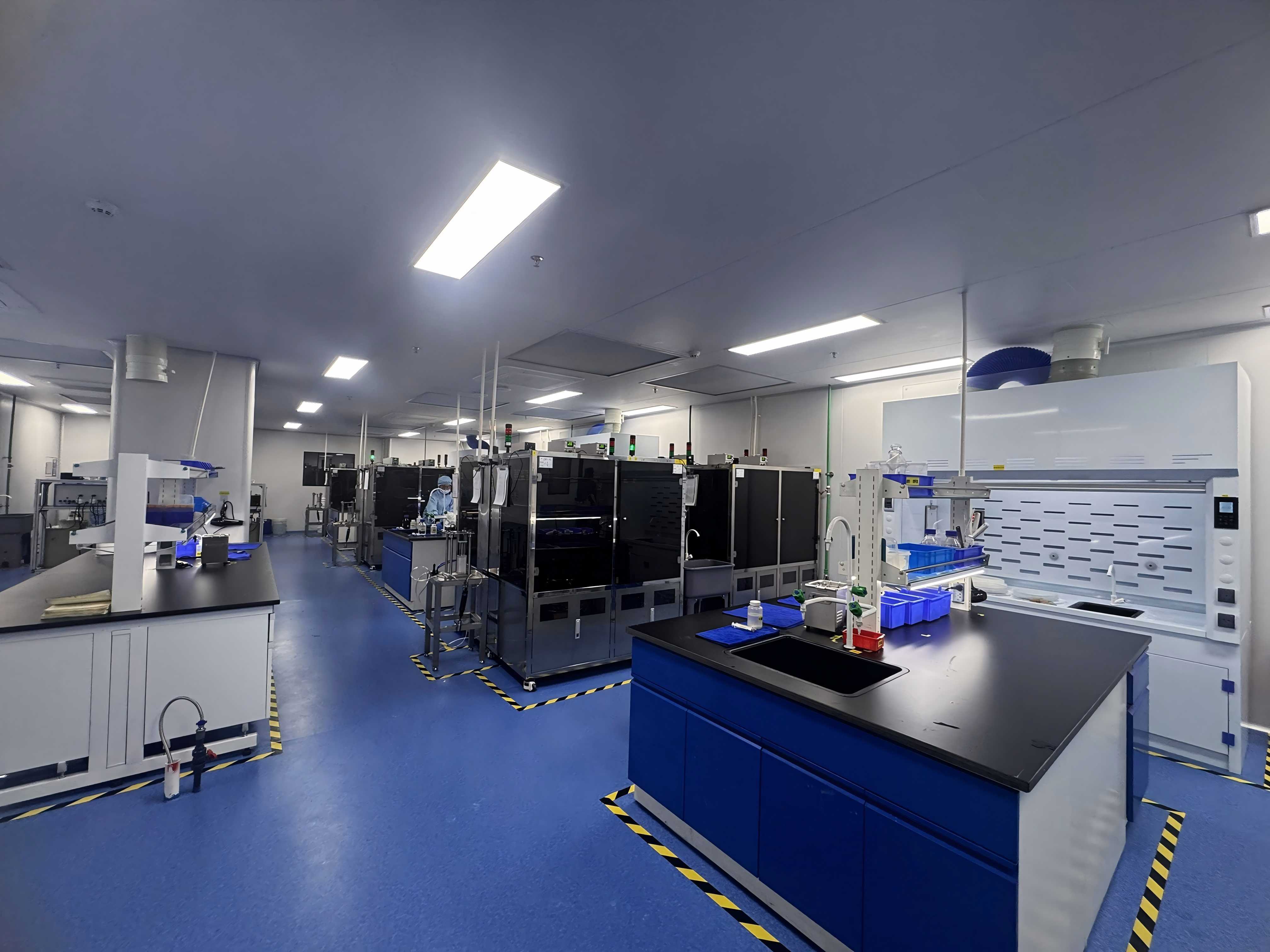
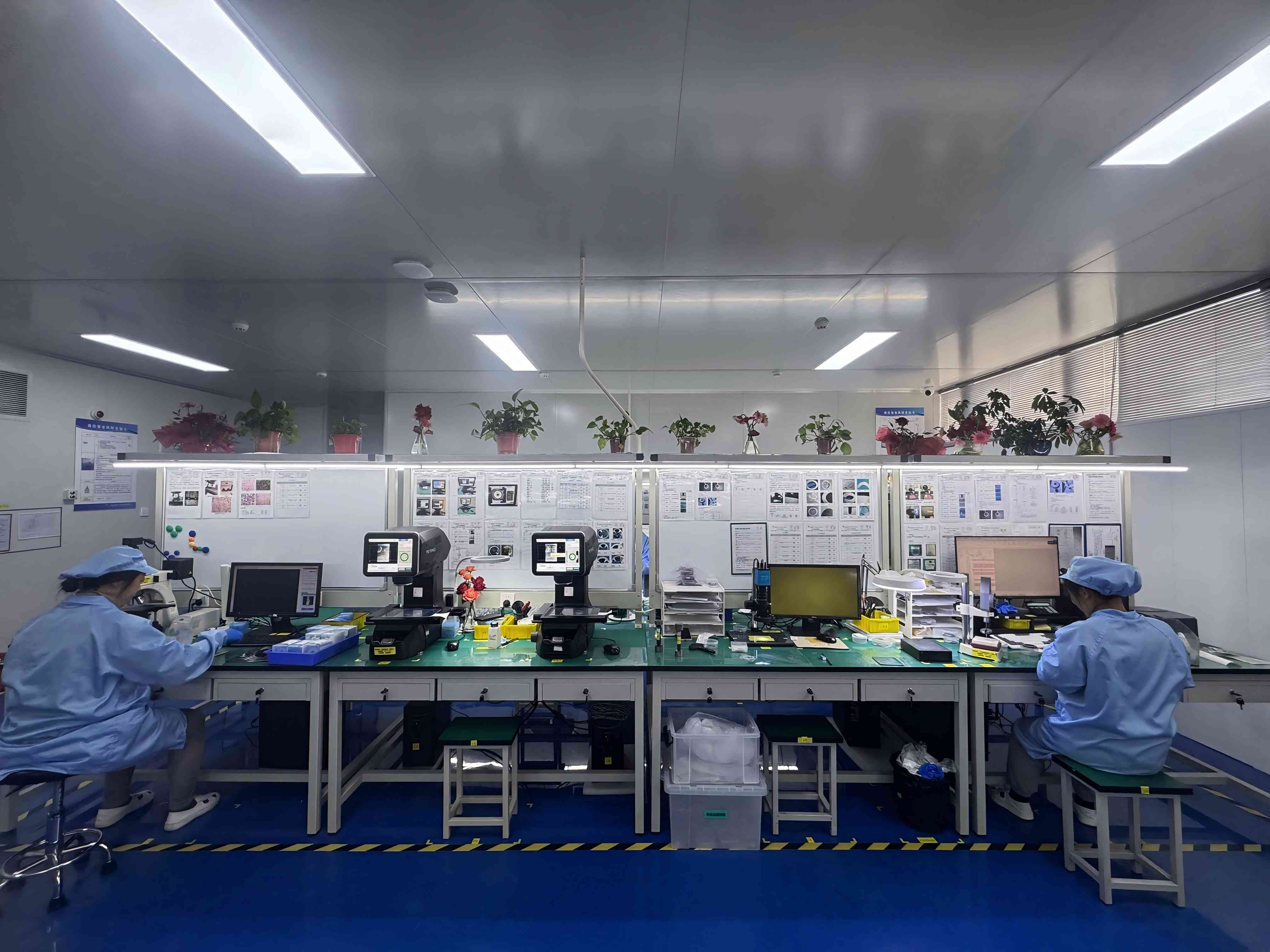
Once a bond specification is qualified, the next concern is batch consistency. WINTIME states that it uses ISO 9001 quality management system procedures, assigns quality inspectors to each production batch, and maintains batch quality files for traceability. The company also describes automated production equipment and a batch data tracking system intended to reduce manual variation. These are company-reported controls. Buyers should still define acceptance criteria, such as pre-shipment testing and third-party inspection, before releasing volume orders.
Use Cases: Where Diamond Bond Performance Matters Most
Diamond bond behavior shows up differently across application areas. The following use cases reflect the application descriptions reported by WINTIME and the general demands of each cutting environment.
Semiconductor Wafer Cutting
Semiconductor wafer dicing requires narrow kerf, controlled chipping, and stable cutting across thin wafers. WINTIME's DZY series is described as intended for high-precision wafer cutting in semiconductor packaging processes, and the company reports mass production of ultra-thin wafer dicing blades below 9 microns. In this application, bond retention and wear stability affect kerf width and edge quality. Buyers should confirm the bond specification against the wafer material, thickness, and dicing equipment.
Optical Communication Components
Optical communication device production often involves small features and materials that are sensitive to edge damage. WINTIME describes the DZR series as used in optical communication industries. The bond must support clean cutting without introducing defects that affect optical performance. As with other applications, the specific bond grade should be confirmed through sample evaluation rather than assumed from the product-family description.
Functional Ceramics
Functional ceramics can be hard and brittle, which places different demands on the bond than ductile materials. WINTIME's DZR-S slotted blades are described for functional ceramic cutting. A slotted geometry can support specific cutting profiles, while the bond controls how the diamond grit interacts with the ceramic surface. Crack initiation and edge chipping are common inspection points in this application.
Alloy Materials
Alloy materials can vary widely in hardness and toughness. WINTIME's DZR-S series is also described for alloy material cutting. In these applications, bond wear resistance and grit retention affect burr formation, surface finish, and blade life. The correct bond specification depends on the alloy type and the cut quality requirement, so material-specific testing is recommended.
Comparison Table: Sawing Blade Families by Reported Construction and Application
The table below compares WINTIME blade families using only company-reported construction and application information. It does not rank the families by performance. Bond material is not specified for every family in the available source material, so the table distinguishes between reported construction details and missing bond information.
| Blade Family | Reported Construction | Reported Application Focus | Bond Information in Source |
|---|---|---|---|
| DZY Series | Cutting blade integrated with an aluminum alloy flange | High-precision wafer cutting in semiconductor packaging | Construction described; bond material not specified |
| DZR Series | Metallic nickel and diamond abrasive | Semiconductors, optical communications, new functional materials | Metal matrix with diamond abrasive reported |
| DZR-S Series | Slotted geometry | Semiconductor wafers, functional ceramics, alloy materials, semiconductor packaging components | Slotted profile; bond material not specified |
| SB-001 Series | Not specified in available source | Cutting accuracy reported at ±0.002 mm | Bond material not specified |
The table shows a practical limitation in the available evidence: product-family names and application descriptions are more readily available than bond-specific parameters such as grit size, concentration, and bond hardness. Buyers should request a model-level datasheet before comparing blade families on technical grounds.
FAQ: Diamond Bond and Sawing Blade Evaluation
What should buyers verify about diamond bond construction before qualifying a sawing blade?
Buyers should verify the bond material, abrasive type, grit size, concentration, and any model-level construction differences within a product family. WINTIME's DZR series is described as composed of metallic nickel and diamond abrasive, which provides a starting point for technical review. WINTIME also states that it follows ISO 9001 quality management procedures and maintains batch quality files. These controls support consistency, but they do not replace application-specific validation. Request the technical datasheet for the exact model and confirm that the bond specification matches the workpiece and cutting equipment.
How does bond type affect grit retention and cutting stability in high-speed spindle cutting?
Bond type affects how strongly diamond grit is held and how quickly worn grit is released. A bond with strong retention can support heavier cutting loads but may keep dull grit in place. A bond with faster wear exposes fresh grit more readily but may change the blade profile sooner. In high-speed spindle cutting, the bond also carries thermal and mechanical load, so its stability affects runout, kerf straightness, and chipping. There is no single best bond type for all materials. The correct choice depends on the workpiece, the required edge quality, and the operating parameters.
What MOQ and payment terms apply to standard and customized diamond sawing blades?
According to WINTIME's purchasing terms, the MOQ is 100 pieces per order for standard models and 500 pieces per order for customized models. For small-batch trial orders below 500 pieces, the company states that it can adjust the MOQ with a slight price adjustment based on customization complexity. Delivery terms are FOB or CIF. Payment terms are 30/70. Acceptance criteria include pre-shipment testing and third-party inspection such as SGS. These terms apply to WINTIME's current purchasing framework and should be confirmed in the quotation for a specific blade model.
How can buyers evaluate diamond bond performance through sample testing?
Sample testing should reproduce the intended cutting conditions as closely as possible. Evaluate kerf width, chipping, blade wear, and cut-to-cut consistency across the sample lot. If the application is semiconductor-related, confirm whether the sample test reflects the production environment and inspection criteria. WINTIME's purchasing terms include pre-shipment testing, which can be used as a checkpoint before volume release. Sample evaluation is also the right stage to compare bond behavior against the technical datasheet and to identify any parameter adjustments needed before mass production.
What production capacity supports long-term sawing blade supply?
WINTIME reports a monthly production capacity of over 800,000 pieces for standard specifications and over 80,000 pieces for customized and special-shaped products. The company's background information lists a 34,000㎡ factory, approximately 100 employees, an annual output of 1 million pieces, and a 35-engineer R&D team. These figures describe company-reported capacity and should be verified against a specific supply plan. For long-term programs, buyers can request a capacity review, batch consistency records, and a sample evaluation before committing to volume orders. The WINTIME product brochure provides additional company and product information for initial review.
Conclusion
Diamond bonds are the part of a sawing blade that converts diamond hardness into controlled cutting action. Bond behavior affects grit retention, wear resistance, and cutting stability, and those effects become more visible as blade dimensions shrink and cut quality requirements tighten. For semiconductor wafers, optical communication components, functional ceramics, and alloy materials, the right bond is the one matched to the workpiece, the equipment, and the inspection standard.
WINTIME Semiconductor Technology Co., Ltd. provides company-reported information on its DZY, DZR, DZR-S, and SB-001 blade families, along with stated production capacity and quality-control procedures. That information is a starting point for technical review, not a substitute for model-level datasheets and sample testing. Buyers evaluating a long-term blade supply should confirm bond construction, request samples, define acceptance criteria, and review batch consistency before moving to volume orders.

For buyers who want to evaluate a diamond bond specification against a specific material or cutting process, WINTIME can be contacted for technical discussion and sample arrangements. Company contact details are available through its official website at en.wintime.net.cn.
Have Questions or Need More Details?
Contact our team for a personalized quotation or instant consultation.
Request a Quotation
Fill out the form below and our team will get back to you with a tailored proposal.
WhatsApp Direct Chat
Prefer to chat in real-time? Message us on WhatsApp for instant assistance & quick answers.
- Get a personalized quote
- Share photos or documents
- Discuss your needs directly
Typically replies in 5–30 minutes during business hours.