
How Does a Sawing Blade Stay Sharp for Years? The Hard Truth about Wear Resistance
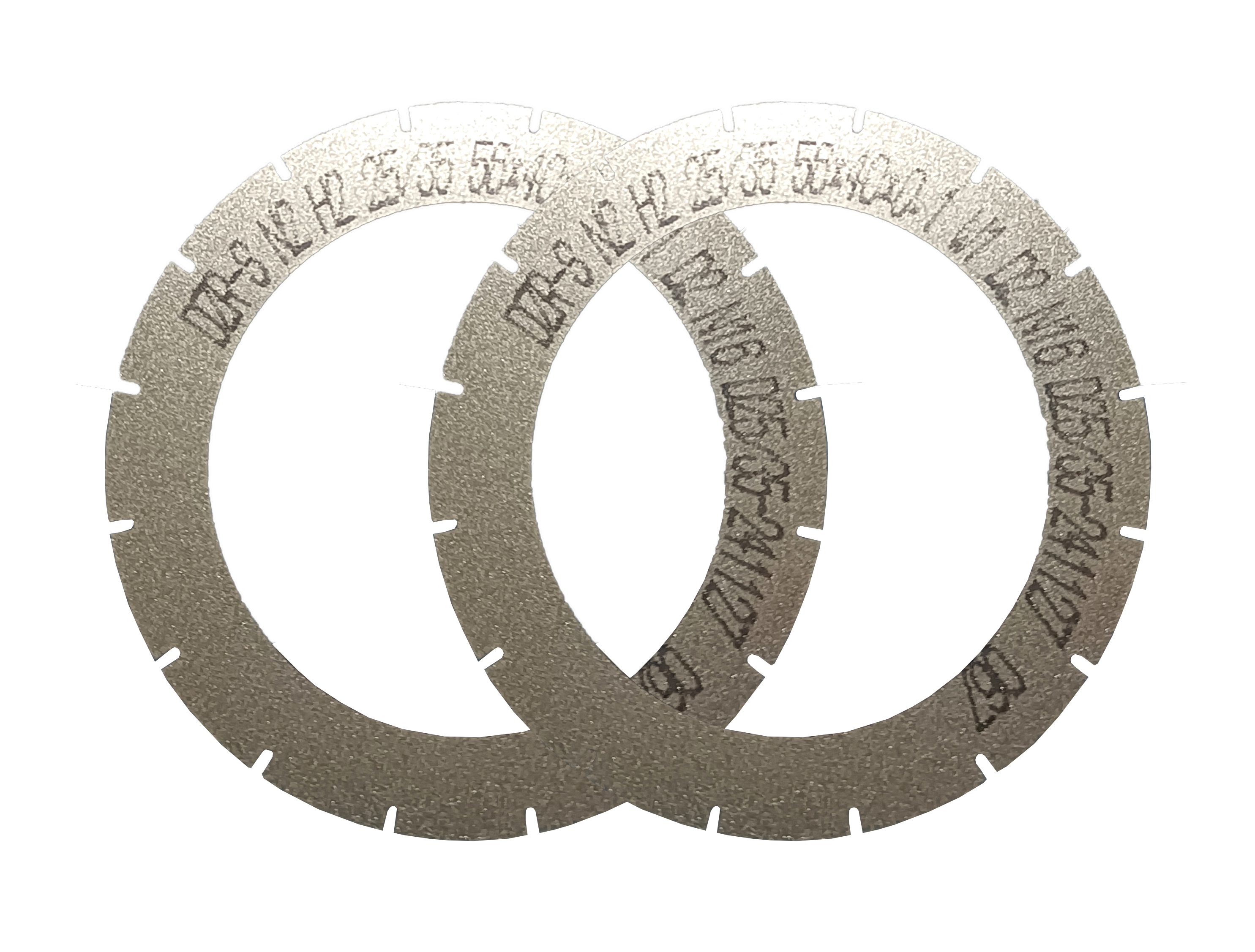
A sawing blade stays sharp for years when three things wear at the same controlled rate: the diamond grit, the bond matrix that holds it, and the environment in which it cuts. In balance, the blade keeps exposing fresh diamond. Out of balance, the same blade glazes, loads, chips the workpiece or drifts in kerf — sometimes within a single lot.
That is the hard truth about wear resistance. It is not a coating, a single hardness number or a marketing adjective. On ultra-thin diamond sawing blades — the 8 μm to 50 μm class used for wafer dicing, package cutting and precision substrate work — wear resistance is decided before the blade ever reaches the spindle: in the bond formulation, in the diamond selected for it, and in how repeatably both are produced.
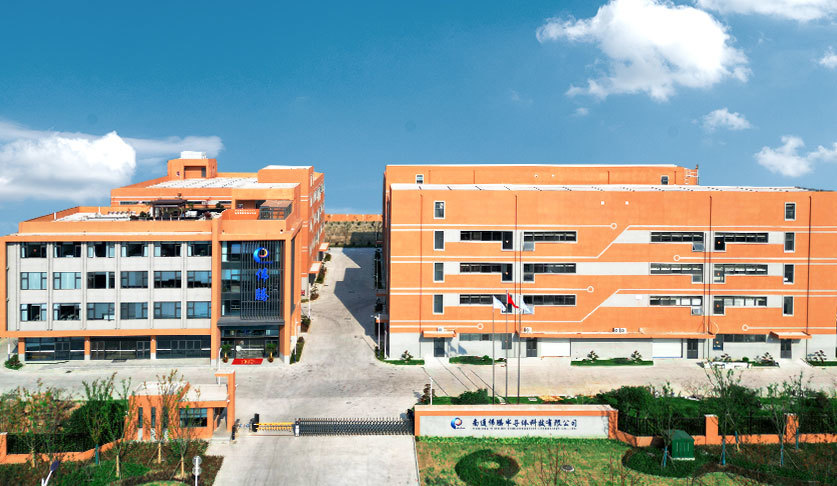
WINTIME Semiconductor Technology Co., Ltd. is a manufacturer established in 2020 in Jiangsu, China, specializing in the research, development, production and sales of high-precision cutting blades, including Sawing Blades and Dicing Blades. Its range covers diamond, hubless and slotted formats such as the DZY Series Wafer Sawing Blade, DZR Series Sawing Blade and DZR-S Series Slotted sawing blade. This explainer separates what actually controls blade wear from what is merely claimed.
What 'Wear' Really Means on a Diamond Sawing Blade
Wear on a diamond blade is not simple abrasion. Three mechanisms run at the same time, and blade life is decided by which one becomes dominant first.
1. Grit attrition: the diamond loses its edge but stays in the bond
Diamond is hard, but it is not indestructible. Under repeated contact, individual crystals flatten and polish instead of fracturing. A polished grit cannot cut; it rubs. The blade still looks intact, kerf may hold nominal for a while, then spindle load climbs and heat builds.
2. Bond erosion: the matrix releases grit too fast or too slowly
The bond matrix — resin or metal — has to wear back at a rate that exposes fresh diamond just before the working grit dulls. If the bond erodes too fast, cutting grit is released while it still has life, and the symptom is kerf growth, rising blade consumption and unstable cut quality. If the bond erodes too slowly, dull grit is held in place and the blade glazes: it stops cutting and starts generating heat and load.
3. Mechanical and thermal damage: the blade and the workpiece both suffer
Runout, misalignment, particle contamination and thermal drift damage a thin blade faster than abrasion does. On a blade only microns thick, a single trapped particle acts as a point load at the cutting edge. This is why wear resistance and process cleanliness cannot be treated as separate topics.
A practical definition follows: a wear-resistant sawing blade is one whose bond and diamond wear at a matched, predictable rate inside a controlled process — not one with the highest possible hardness number.
Why Wear Resistance Became the Bottleneck in Precision Cutting
Blade life now sits on the critical path of semiconductor output. The global diamond saw blade market was valued at approximately USD 8.60 billion in 2025 and is expected to reach USD 10.16 billion by 2032, according to Maximize Market Research. The narrower wafer dicing blade segment was valued at USD 1.19 billion in 2024 by Market Research Intel. Published figures differ because some studies count equipment and others count consumables only, so these numbers describe scale rather than blade-level forecasts.
Market structure explains the design pressure. In 2024, resin bond blades held a 42% share of the dicing blade market while metal bond blades — the type used for harder materials such as SiC — accounted for 33%, according to a market.us report. Hubless dicing blades are increasingly dominant for 300 mm wafer processing because of superior stability and reduced runout on substrates thinner than 50 μm. Optical communication and RF/optoelectronics applications took about 16% of the dicing blade market in 2024, driven by 5G infrastructure build-out.
The direction is consistent: thinner wafers, narrower kerf, harder material stacks. Every millimetre of kerf is material the customer cannot sell, and every premature blade change is machine downtime. The commercial weight has moved from 'how fast does it cut' to 'how long does it keep cutting inside specification'. Diamond tools, including sawing blades, are categorized under ISO 22180:2019, which separates CVD diamond-coated types from monocrystalline and polycrystalline types — a reminder that the diamond itself is a declared, classifiable material, not a generic ingredient.
The segment includes established suppliers such as DISCO Corporation, Tokyo Seimitsu (Accretech) and Advanced Dicing Technologies (ADT), alongside Chinese manufacturers. Differentiation between suppliers shows up less in the catalogue and more in wear consistency from lot to lot.
Where Long Life Actually Comes From: Composition
The SB-001 sawing blade platform is built from three elements: a bond matrix of resin or metal, diamond superabrasive as the cutting medium, and a high-strength steel base. Every wear behaviour a buyer observes traces back to how those three are matched to the material being cut.
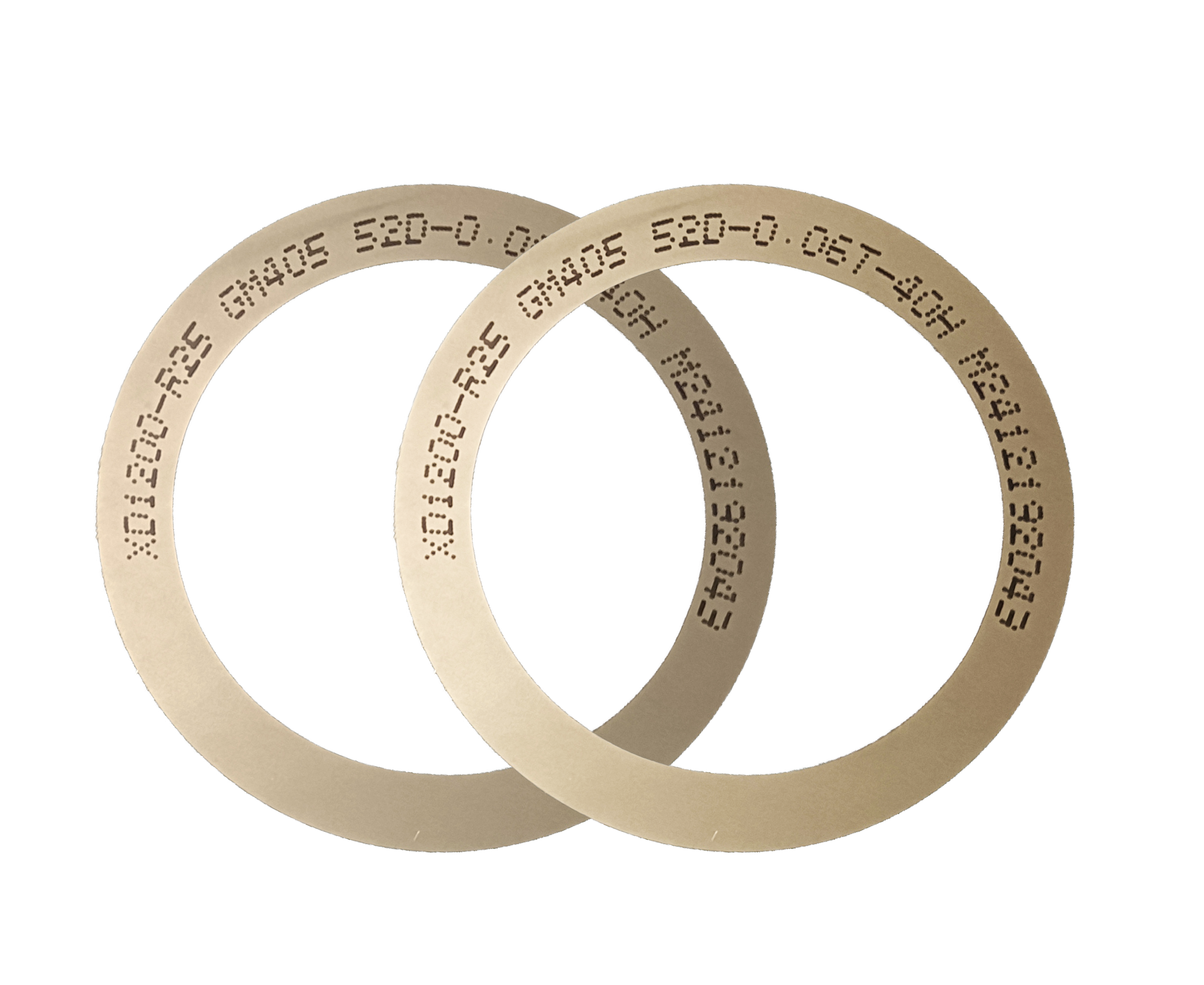
Diamond: the cutting medium, not the whole story
Diamond superabrasive does the cutting, but its size, population and integrity determine how the blade behaves after the first hundred cuts. Too much exposed diamond in a thin bond and the blade loads; too little and it polishes. The useful specification is not 'diamond' but the diamond-to-bond relationship, which the blade model declares.
Bond matrix: the wear-rate controller
Resin and metal bonds fail differently. A resin matrix wears more evenly and suits processes where thermal damage to the workpiece matters; a metal matrix holds grit longer and is the route for harder substrates. In both cases the engineering objective is the same — keep the blade self-sharpening within a narrow window so neither glazing nor premature grit release becomes the limiting factor. The blade is specified at a hardness of HRC 65–70 with a chip removal rate of at least 1.2 mm³/s, which describes how much material the cutting face can move per second without stalling in the kerf.
Steel base and geometry: stability at 30,000–60,000 rpm
The high-strength steel base carries the bond through the cut at spindle speeds of 30,000 to 60,000 rpm. The platform spans a thickness range of 8 μm to 50 μm with a cutting accuracy of ±0.002 mm. Thickness is the visible parameter; the invisible one is how that thickness holds under centrifugal load and coolant pressure. A blade that deflects even slightly cuts on part of its edge, concentrating wear and producing the chipping that buyers usually blame on the bond.
Manufacturing consistency: the variable buyers cannot see
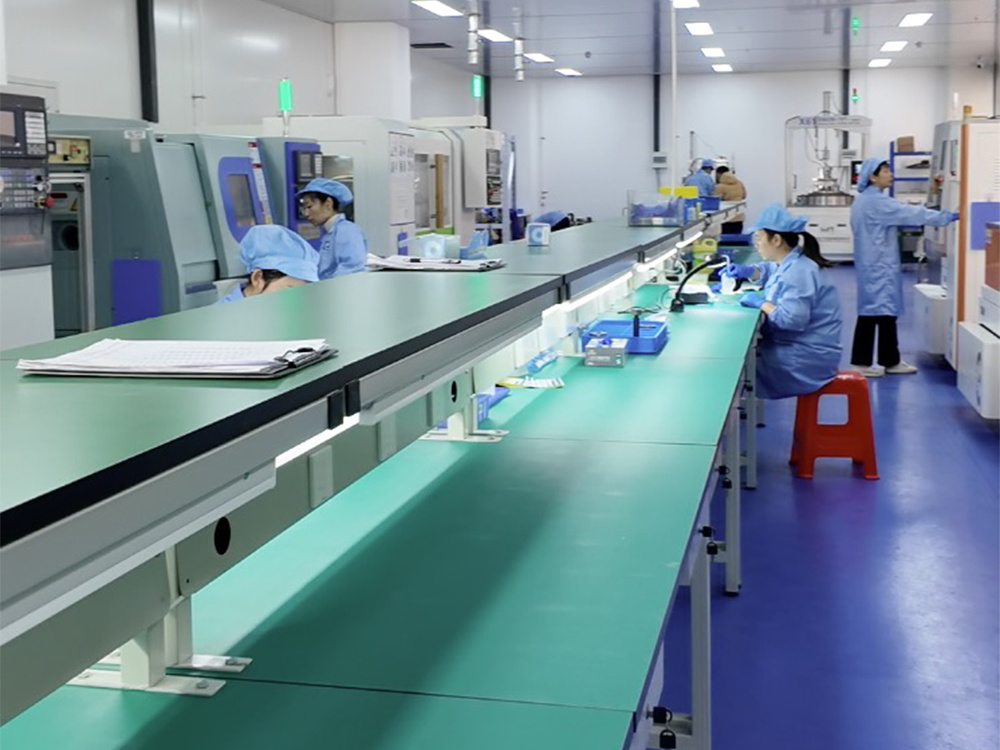
Two blades can share a datasheet and still wear differently if the production process drifts. WINTIME operates a 34,000 m² manufacturing facility with approximately 100 staff and an R&D team of 35 engineers, holds 2 patent technologies, and reaches an annual production capacity of 1 million pieces. The company is one of the few domestic manufacturers capable of achieving mass production of ultra-thin wafer dicing blades; its 'Ultra-thin Wafer D Blade' project has achieved a process thickness of less than 9 microns. Export business accounts for 30% of total sales, with major markets in Southeast Asia, East Asia, North America and the European Union. Scale matters here for one reason: repeatability is what keeps wear predictable between purchases.
The environment is part of the wear equation
WINTIME specifies this sawing blade for a Class 100/1000 clean room at a constant 22±2°C and 45%–55% relative humidity, dust-free and anti-static, running on a high-speed spindle. These are not comfort settings. Temperature drift moves spindle and flange geometry, and a blade cutting at ±0.002 mm accuracy notices. Humidity governs static behaviour and tape adhesion around the wafer. Particles create point loads on an edge measured in microns. The same variables that decide wear in the dicing room decide consistency in production — which is why blade life is a facility question as much as a metallurgy question.
How to Specify a Sawing Blade for Wear Resistance: Six Steps
Where This Wear Model Applies
The mechanisms above are not specific to one device type. WINTIME sawing blades are used in semiconductor manufacturing, semiconductor packaging, optical communication, new functional materials, functional ceramics and alloy materials industries, across markets including China, Japan, Korea, Singapore, Malaysia, the United States and Germany.
- Wafer dicing and scribing: kerf control and low chipping on silicon and thin substrates, including ultra-thin wafer processing below 9 μm.
- Semiconductor package cutting: stable dimensional control across continuous automatic dicing machine operation.
- Optical communication device cutting: a segment that took roughly 16% of dicing blade demand in 2024, where edge quality drives yield.
- Functional ceramic and ceramic substrate cutting: harder, more abrasive material that accelerates bond wear and exposes any mismatch between bond and diamond.
- Alloy and precision electronic component cutting: mixed material stacks where one blade is expected to hold tolerance across different loads.
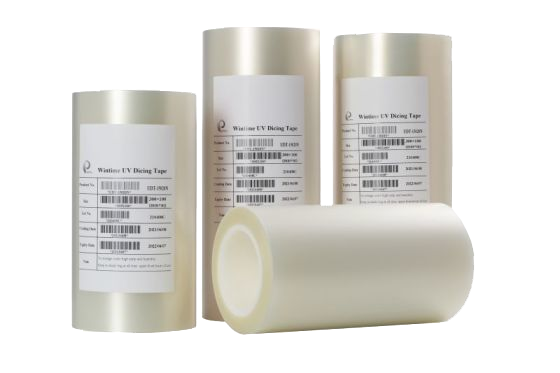
The blade never works alone. Supporting equipment includes the automatic wafer dicing machine, semiconductor cutting spindle, UV tape mounting machine, wafer cleaning equipment and wafer testing machine. Wear resistance that is real on the datasheet but unsupported downstream will still show up as chipping at the inspection station.
Resin Bond vs Metal Bond Sawing Blades: Wear-Relevant Comparison
| Attribute | Resin bond sawing blade | Metal bond sawing blade |
|---|---|---|
| Bond matrix | Resin | Metal |
| Abrasive | Diamond superabrasive | Diamond superabrasive |
| Base | High-strength steel | High-strength steel |
| Blade hardness (SB-001 platform spec) | HRC 65–70 | HRC 65–70 |
| Thickness range (platform spec) | 8 μm – 50 μm | 8 μm – 50 μm |
| Cutting accuracy (platform spec) | ±0.002 mm | ±0.002 mm |
| Chip removal rate (platform spec) | ≥1.2 mm³/s | ≥1.2 mm³/s |
| Share of global dicing blade market, 2024 (market.us) | 42% | 33% |
| Wear pattern to watch | Bond erodes steadily; if too fast, grit is released early and kerf grows | Bond retains grit longer; if too slow, the blade glazes and spindle load rises |
| Documented material fit | Widely used across dicing applications, holding the larger market share in 2024 | Cited for harder materials such as SiC |
Sources: WINTIME product specification (SB-001 platform); market.us dicing blade market report, 2024 share data. Comparison is descriptive only and does not rank one bond type above the other — the correct choice depends on the material stack and process.
Wear Troubleshooting Matrix
| Symptom in production | Likely wear or process cause | First check |
|---|---|---|
| Kerf wider than target | Bond eroding faster than the diamond dulls; grit released early | Feed rate, coolant delivery, bond grade against material |
| Cut looks polished, spindle load climbing | Glazing — dull grit held in the bond | Dressing condition, feed rate, bond hardness |
| Edge chipping increasing | Runout, mounting error or particle contamination | Spindle and flange runout, blade mounting, cleanroom particle control |
| Blade breakage on a thin gauge | Mechanical shock or geometry pushed past what the process supports | Handling, tape mounting, thickness selection within 8–50 μm |
| Life varies lot to lot | Blade-to-blade variation rather than process variation | Supplier production consistency and incoming inspection data |
Frequently Asked Questions
Which standard covers diamond sawing blades?
Diamond tools, including sawing blades, are categorized under ISO 22180:2019, which distinguishes CVD diamond-coated types from monocrystalline and polycrystalline types. For buyers, the standard is useful because it forces a declaration of what kind of diamond is in the blade rather than a generic claim of 'diamond grit'. Combine it with the blade's own declared parameters — thickness range of 8 μm to 50 μm, cutting accuracy of ±0.002 mm, hardness of HRC 65–70 and chip removal rate of at least 1.2 mm³/s — and you have a specification that can be checked against incoming goods.
Does a thinner sawing blade wear out faster?
Thinner is not automatically shorter-lived, but it is less forgiving. A thinner blade removes less material per cut, which is why ultra-thin formats matter for kerf loss and die yield. At the same time it has less mass to absorb heat and less stiffness to resist deflection, so any runout, contamination or temperature drift concentrates wear on a narrower edge. That is why sub-9 μm blades, which WINTIME produces through its 'Ultra-thin Wafer D Blade' project, are only viable when the surrounding process — cleanroom class, temperature, humidity, mounting and spindle condition — is held inside specification.
What drives the cost per cut of a sawing blade?
Cost per cut is not the blade price. It is the interaction of blade life, kerf width and yield loss. A wider kerf removes sellable material on every cut; a blade that glazes early forces machine stops; chipping converts finished devices into scrap. Because of this, the meaningful comparison between two blades is how many cuts they deliver inside tolerance on the same material stack, plus how much material each kerf consumes. Wear resistance is therefore a cost variable before it is a technical one, and it should be evaluated with the same rigour as throughput.
Can we test a sawing blade on our own dicing line before ordering?
Yes — sample validation on the customer's own equipment is the only reliable way to confirm wear behaviour, because blade life depends on the machine, the material stack and the environment. To make a trial meaningful, provide the substrate and thickness, the dicing machine and spindle speed within the 30,000–60,000 rpm range, whether cutting is dry or wet, and the acceptance criteria for kerf, chipping and cutting accuracy of ±0.002 mm. WINTIME supplies Sawing Blades and Dicing Blades across diamond, hubless and slotted formats, so the trial can start from the format closest to the application rather than from a generic sample.
How do you tell whether a blade is still cutting within specification?
Track three signals per lot: kerf width, edge chipping and spindle load. A blade operating inside its declared accuracy of ±0.002 mm with a chip removal rate of at least 1.2 mm³/s should hold all three stable across a production run. Rising load with a polished cut points to glazing; growing kerf points to bond erosion outrunning grit dulling; increasing chipping usually points to runout, mounting or particles rather than the bond. If the pattern is unclear, send the material stack, machine parameters and lot data to the WINTIME team at shenxiangfei@ntwintime.com for a review, or request a sample matched to your process before the next production batch.
Conclusion: Wear Resistance Is Built, Not Claimed
A sawing blade does not stay sharp because of one ingredient or one hardness figure. It stays sharp because the diamond and the bond matrix wear at a matched rate, because the steel base holds geometry at 30,000–60,000 rpm, and because the process around it — cleanroom class, constant temperature, controlled humidity, correct tape and mounting — keeps that balance from being disturbed. Where any of these is left to chance, the blade becomes the variable that scrap is blamed on.
Whether that adds up to months or years depends on how much material passes the edge and how tight the tolerance is. What a buyer can control is the specification: a declared bond type, a declared thickness within 8 μm to 50 μm, a declared accuracy of ±0.002 mm, and a supplier whose production is repeatable enough to deliver the same wear behaviour on the second order as on the first.
Evaluate a sawing blade against your own process
Send your substrate, machine parameters and acceptance criteria to request a sample or a quotation. WINTIME Semiconductor Technology Co., Ltd. — established 2020, No. 868, Fushou East Road, Rugao City, Jiangsu Province, China. Email: shenxiangfei@ntwintime.com | Tel: +86 13851530812 | WhatsApp: +86 18888053207.
Product range and specifications: en.wintime.net.cn | Download the catalogue: WINTIME product brochure (PDF)
Have Questions or Need More Details?
Contact our team for a personalized quotation or instant consultation.
Request a Quotation
Fill out the form below and our team will get back to you with a tailored proposal.
WhatsApp Direct Chat
Prefer to chat in real-time? Message us on WhatsApp for instant assistance & quick answers.
- Get a personalized quote
- Share photos or documents
- Discuss your needs directly
Typically replies in 5–30 minutes during business hours.