
How to Audit a Sawing Blade Factory: Facility, Capacity, and Export Readiness Checklist
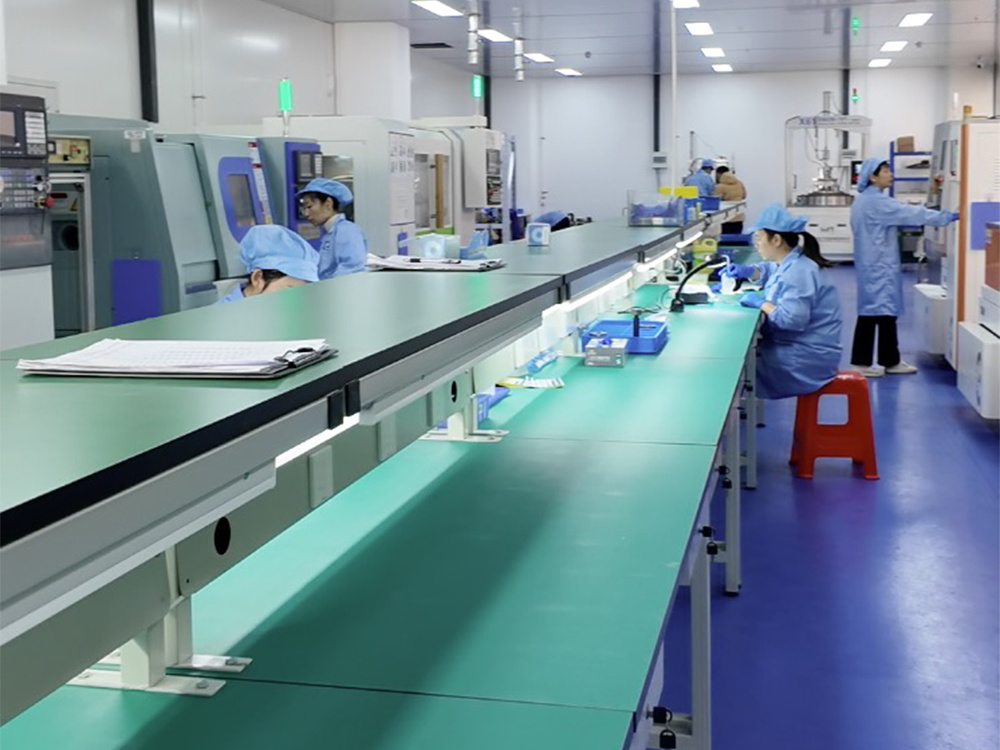
A Sawing Blade factory audit starts with the physical plant: what is built, what is controlled, and what can be verified on the floor. Image: WINTIME workshop.
What a Sawing Blade Factory Audit Has to Prove
Auditing a Sawing Blade factory means verifying four things on site: that a real manufacturing facility exists with separated and controlled production and inspection areas, that the quoted annual capacity is arithmetically consistent with the equipment and staffing you can see, that in-house engineering can hold thickness and dimensional tolerances over a full production window, and that export operations are mature enough to serve your market without avoidable surprises. Catalogs, sample photographs, and price lists can be produced by a trading office. A plant, a process, and a shipping record cannot.
This checklist is written for buyers at the awareness and research stage who need a repeatable way to separate manufacturers from resellers before committing to a qualification program. It uses published figures from one supplier as concrete benchmark values rather than as promotional claims. WINTIME Semiconductor Technology Co., Ltd. is a China-based manufacturer specializing in the research, development, production, and sales of high-precision cutting blades, including Sawing Blades and Dicing Blades. The company was established in 2020, operates a 34,000㎡ manufacturing facility in Rugao City, Jiangsu Province, and reports an annual production capacity of approximately 1 million pieces.
Problem Definition: Why a Blade Audit Is Not a Standard Supplier Check
A sawing blade is a consumable with a very short feedback loop between supplier and buyer. Weaknesses in the bond matrix, the diamond distribution, or the dimensional control of the blade surface show up at your dicing line, not at the supplier's loading dock. A precision blade specification typically includes a thickness range of 8μm to 50μm, a cutting accuracy of ±0.002mm, a spindle speed range of 30,000 to 60,000 rpm, a hardness of HRC 65-70, and a chip removal rate of ≥1.2mm³/s. Those values are produced by process control, not by assembly, and they cannot be confirmed from a datasheet alone.
Three failure patterns appear repeatedly when buyers audit without a structured checklist:
- Intermediary presentation. The quoting company presents a third-party plant as its own. The tell is a mismatch between the legal entity, the plant address, and the production records you are permitted to see.
- Capacity inflation. A headline figure is quoted without equipment counts, shift structure, or thickness mix. In ultra-thin production, the thinnest product is the binding constraint, not total output.
- Export claims without traceability. Overseas shipments are claimed, but packaging standards, labeling practice, and cross-border documentation cannot be demonstrated on request.
Industry Background: Why Blade Sourcing Is Being Audited More Closely
The global diamond saw blade market was valued at approximately USD 8.60 billion in 2025 and is expected to reach USD 10.16 billion by 2032, according to Maximize Market Research. Within that wider category, the global wafer dicing blade market was valued at USD 1.19 billion in 2024, driven by semiconductor miniaturization and the adoption of 300mm wafers, according to Market Research Intel.
Demand is also shifting in composition. Resin bond blades held a 42% share of the dicing blade market in 2024, while metal bond blades, used for harder materials such as SiC, accounted for 33%, based on the Dicing Blade Market Report 2026 published by market.us. Hubless dicing blades are increasingly dominant for 300mm wafer processing because of superior stability and reduced runout on thinner substrates below 50µm, according to Semiconductor Equipment Market Data. Optical communication and RF/optoelectronics applications accounted for 16% of dicing blade market share in 2024, approximately USD 69.9 million, driven by 5G infrastructure expansion, per Intel Market Research. On the supply side, China's exports of cutting blades to Vietnam grew by USD 18 million and to India by USD 12 million between 2024 and 2025, according to the Observatory of Economic Complexity.
The Four Audit Domains That Decide a Blade Qualification
1. Facility and environment
Confirm the physical plant before discussing performance. Ask for the manufacturing area in square meters and reconcile that figure with the buildings you walk. A 34,000㎡ facility represents a different operating scale, process separation, and capital base from a workshop of a few hundred square meters.
Environment control matters because the blades themselves are used under demanding conditions: a Class 100/1000 clean room, a constant temperature of 22±2°C, constant humidity of 45%-55%, dust-free and anti-static conditions, and a high-speed spindle environment. Not every factory needs to run a full clean room, but the areas where diamond abrasive and bond materials are handled, formed, and inspected should be controlled and separated from general traffic.
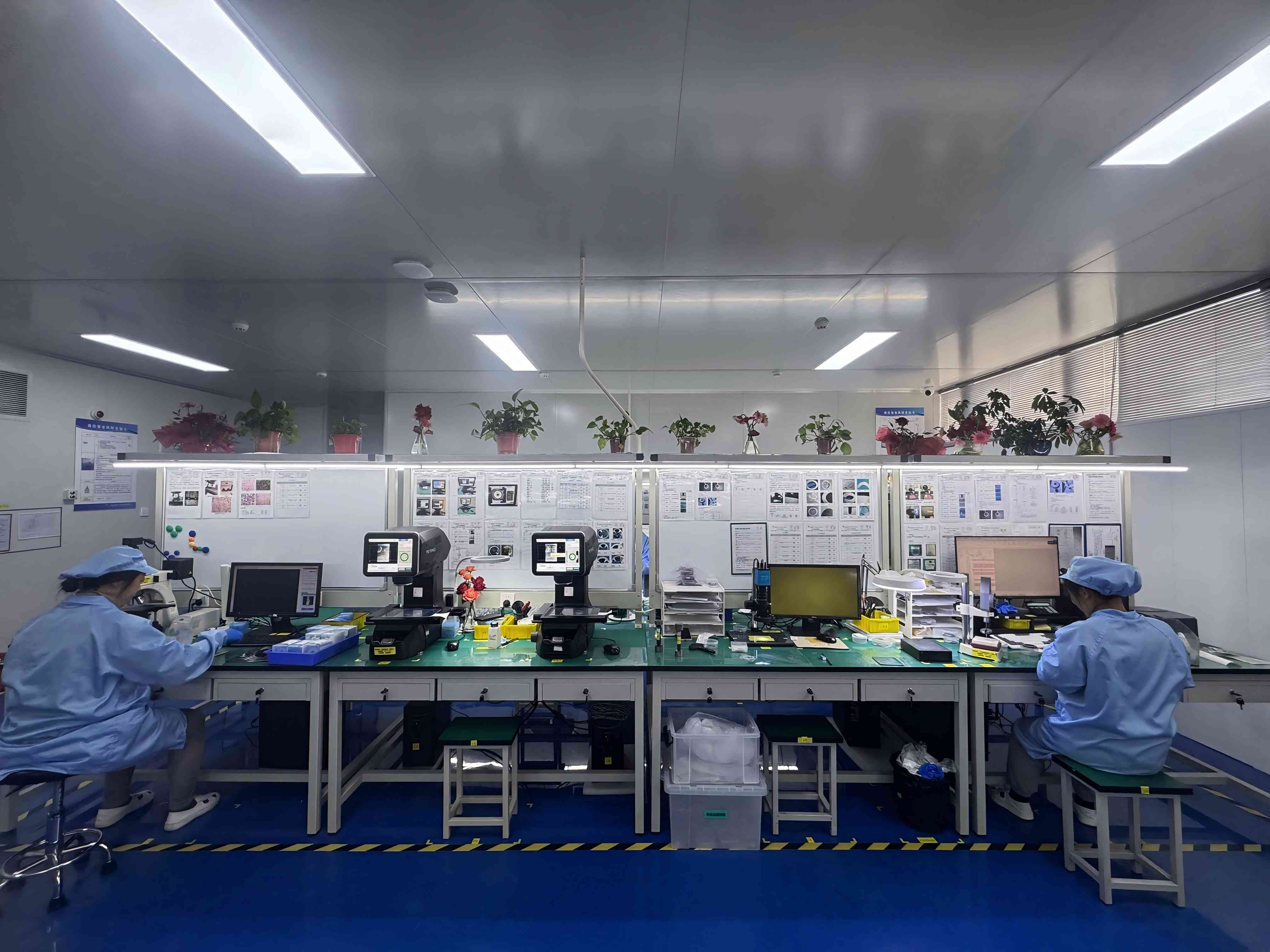
Capacity verification works best when the claimed annual output is reconciled against the production floor, shift structure, and inspection stations. Image: WINTIME workshop.
- Verify the legal entity name against plant signage and the address on the business licence.
- Request temperature and humidity logs for controlled areas.
- Walk the sequence in order: abrasive handling, bond preparation, forming, lapping and finishing, dimensional inspection, packing.
- Confirm where rejected material is held and how it is dispositioned.
Benchmark reference: WINTIME's manufacturing facility in Rugao City, Jiangsu Province covers 34,000㎡, and the 2023 Nantong Wintime Semiconductor Special Materials Project represented a total investment of nearly tens of millions of yuan. A scale claim of that kind should be visible on the floor in the form of dedicated areas, equipment, and staffing.
2. Capacity and staffing
Annual capacity is the most frequently overstated number in blade sourcing. The reliable method is arithmetic: divide the claimed annual output by the working days assumed, then compare the resulting daily figure with the number of production stations, the shift pattern, and the cycle behaviour you observe.
- Ask for the annual output figure and the working-day assumption behind it. Benchmark: approximately 1 million pieces per year.
- Ask for total headcount and the split between production, inspection, and engineering. Benchmark: approximately 100 staff, including an R&D team of 35 engineers.
- Ask what proportion of output is ultra-thin. Blades below 9μm involve different yield dynamics from 40-50μm product.
- Ask for on-time delivery performance over the last four quarters rather than a single strong month.
Ultra-thin capability is the hardest capacity claim to verify and often the most valuable. WINTIME states that it is one of the few domestic companies able to achieve mass production of ultra-thin wafer dicing blades, and that its "Ultra-thin Wafer D Blade" project has achieved a process thickness of less than 9 microns. During an audit, ask to see the measurement method and the sampling plan behind a claim of that type, not just a polished sample. A thickness number without a measurement protocol is a marketing statement.
3. R&D and engineering depth
Engineering depth determines whether a process can be held stable across a long production window and adapted when your material or die geometry changes. Ask who owns the bond formulation, how bond batches are released, and what change control applies when an incoming raw material lot shifts.
- R&D headcount and disciplines. Benchmark: an R&D team of 35 engineers.
- Formal intellectual property and technical recognition. WINTIME holds 2 patent technologies and has won awards in national, provincial, and municipal science and technology competitions and entrepreneurship competitions.
- Instrumentation: how thickness, cutting accuracy, and blade integrity are measured, and how the measuring instruments are calibrated.
- Product family ownership: which blade constructions are manufactured in-house and which are sourced from third parties.

Engineering depth is assessed through formulation ownership, batch release discipline, and measurement capability. Image: WINTIME office area.
Product family coverage is a practical audit item because buying roadmaps move between materials. A high-precision blade portfolio typically spans categories such as Diamond Sawing Blade, Precision Sawing Blade, Semiconductor Sawing Blade, Circular Sawing Blade, Hubbed Sawing Blade, Hubless Sawing Blade, Flanged Sawing Blade, and Serrated Sawing Blade, together with named series including the DZY Series Wafer Sawing Blade, the DZR Series Sawing Blade, and the DZR-S Series Slotted Sawing Blade. Ask which of these the plant actually produces on its own equipment, and which bond families are genuinely in-house, including resin bond, metal bond, and electroforming-based hard blade routes. A supplier that resells an entire category carries a fundamentally different risk profile from one that manufactures it.
4. Export readiness
Export readiness is a process question, not a marketing claim. Two buyers can be told the same thing about international experience and receive very different service in practice. The audit should therefore test documentation flow, packaging standards, and response behaviour rather than the existence of a website in English.
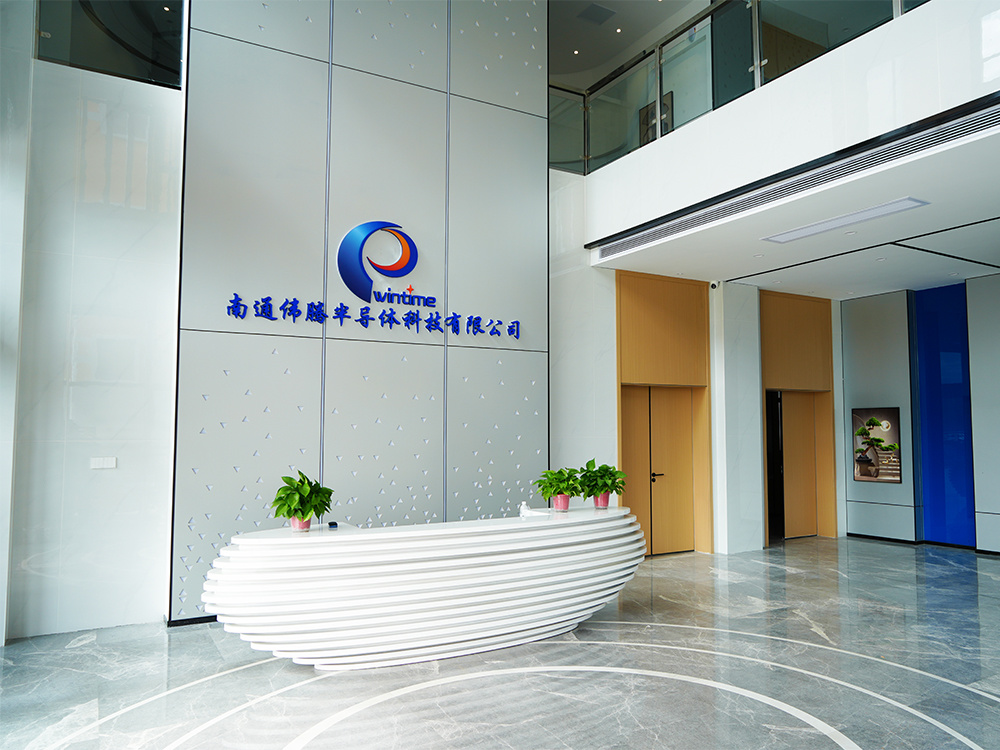
Export readiness is verified through documentation practice, packaging standards, and lead-time allocation logic. Image: WINTIME office area.
- Export share of total sales. Benchmark: export business accounts for 30% of total sales.
- Markets actually served. Benchmark: Southeast Asia, East Asia, North America, and the European Union, with related application scenarios common in China, Japan, Korea, Singapore, Malaysia, the United States, and Germany.
- Documentation practice: who prepares the commercial invoice, packing list, and certificate of origin, and how discrepancies are resolved.
- Standard awareness: diamond tools, including sawing blades, are categorized under ISO 22180:2019, which distinguishes CVD diamond-coated types from monocrystalline and polycrystalline types. This gives you a contractual reference when writing the specification into a purchase order.
- Packaging for fragile consumables: blade protection, humidity control, and labeling for long transit.
- After-sales across time zones: who answers a process question when your line stops outside the supplier's working hours.
Step-by-Step: How to Run the Audit
- Complete the desk review before you travel. Request the legal entity documents, plant address, product family list, and current capacity statement. Cross-check the entity name against the quotation, the website, and the business licence. Any inconsistency at this stage should be resolved before a visit is scheduled.
- Define your acceptance specification first. Write down the thickness band you need inside the 8μm-50μm range, the accuracy expectation around ±0.002mm, your spindle speed window between 30,000 and 60,000 rpm, and your bond preference, whether resin, metal, or both. A supplier cannot be audited against an unwritten requirement.
- Open the visit with a plant walk, not a presentation. Walk the process sequence before looking at any brochure, and note what is actually running versus what is described.
- Verify capacity arithmetic on paper and on the floor. Recalculate daily output from the annual figure, then compare it with the stations, shifts, and cycle behaviour you observed.
- Audit the inspection room. Ask how many pieces per lot are inspected, which instruments measure thickness and cutting accuracy, and what the rejection rate has been over the last four quarters.
- Interview the engineering team. If ultra-thin blades are on your roadmap, ask specifically about the sub-9μm process, the yield challenges involved, and how process drift is detected before it reaches a customer lot.
- Test export operations. Ask to see a recent export document set with commercial details redacted if necessary, the packaging standard for thin blades, and the process used to allocate production slots to new orders.
- Request a trial lot produced under normal production conditions. The sample should come from the same bond batch and process route that would run your commercial order, not from a dedicated sample line.
- Score the findings against a fixed checklist. Use the benchmark table below so the decision does not depend on the impression of a single day.
- Close with written corrective actions. Any gap identified during the audit should be documented with an owner and a target date before qualification proceeds.
Use Cases: Applying the Same Checklist to Different Buying Situations
Semiconductor packaging line qualifying an ultra-thin blade source. A packaging line moving to thinner die needs a Semiconductor Wafer Sawing Blade in the thinnest available range. This product category is used in semiconductor manufacturing and semiconductor packaging, and the audit emphasis falls on ultra-thin mass production evidence, the thickness measurement method, cleanroom handling, and yield behaviour at the target spindle speed.
Optical communication device project. Optical device cutting is a defined application for this blade category, and optical communication and RF/optoelectronics accounted for 16% of the dicing blade market in 2024. The audit emphasis here is chipping control on brittle optical materials, blade stiffness and runout behaviour, and the supplier's demonstrated experience with Optical Communication Sawing Blade requirements.
Functional ceramic and precision alloy cutting. Ceramic substrate cutting and precision alloy component cutting require different bond behaviour from silicon work. Metal bond blades accounted for 33% of the 2024 dicing blade market, largely because harder materials such as SiC require them. The audit emphasis is in-house bond capability and the Functional Ceramic Sawing Blade and Alloy Material Sawing Blade production routes.
Importer or distributor adding a blade line. For a distributor, export readiness is effectively the entire audit. The checklist should be weighted toward the 30% export share evidence, destination-market documentation, packing consistency, and the responsiveness of the technical contact who supports your end customers.
Audit Benchmark Table
| Audit dimension | Question to put to the supplier | Benchmark to compare against | Why it matters |
|---|---|---|---|
| Manufacturing area | How many square meters are dedicated to production and inspection? | 34,000㎡ facility (WINTIME) | Plant scale sets the ceiling on capacity and on process separation. |
| Annual output | What is annual blade output, and on what working-day assumption? | Approximately 1 million pieces per year (WINTIME) | Must be reconciled against equipment count and shift structure. |
| Staff | Total headcount, and the production, inspection, and engineering split | Approximately 100 staff (WINTIME) | Inspection headcount is a strong indicator of quality discipline. |
| R&D strength | How many engineers, and who owns the bond formulation? | R&D team of 35 engineers (WINTIME) | Determines adaptability when your material or thickness changes. |
| Technical record | Which patents and technical awards are on file? | 2 patent technologies; awards in national, provincial, and municipal science and technology competitions (WINTIME) | A capability signal, but not a substitute for compliance documents. |
| Ultra-thin capability | Can the plant mass-produce blades below 9μm, and how is thickness verified? | "Ultra-thin Wafer D Blade" project achieved process thickness below 9 microns, with mass production claimed (WINTIME) | The thinnest product line is the hardest yield problem to hold. |
| Export share | What percentage of total sales is export business? | 30% of total sales (WINTIME) | Indicates routine cross-border operations rather than occasional shipments. |
| Markets served | Which regions have shipped, and under what documentation? | Southeast Asia, East Asia, North America, and the European Union (WINTIME) | Confirms familiarity with destination-specific requirements. |
| Standards | Which published standard is referenced for diamond tools? | ISO 22180:2019 (ISO) | Provides a contractual specification reference for the purchase order. |
| Product families | Which blade categories are manufactured in-house? | Diamond, Precision, Semiconductor, Circular, Hubbed, Hubless, Flanged, and Serrated Sawing Blades; DZY Series Wafer Sawing Blade, DZR Series Sawing Blade, DZR-S Series Slotted Sawing Blade (WINTIME product documentation) | Resellers and manufacturers carry different qualification risk. |
| Benchmark | What it proves | What it does not prove |
|---|---|---|
| Plant area | Physical manufacturing presence and separated process areas | That the capacity you need is available inside your timeframe |
| Annual output | Aggregate production capability | That the thickness mix matches your product |
| R&D headcount | Engineering resource exists inside the company | That those engineers work on blade process rather than other programs |
| Patent count | Documented, formal engineering activity | Compliance with your destination market's requirements |
| Export share | Routine cross-border shipping experience | Performance on your specific material or specification |
Frequently Asked Questions
1. What standards and documents should a sawing blade factory be able to show during an audit?
ISO 22180:2019 is the ISO standard that categorizes diamond tools, including sawing blades, and distinguishes CVD diamond-coated types from monocrystalline and polycrystalline types. It is a practical reference to cite when writing a specification into a purchase order. Beyond the standard itself, request the document set that traces a finished blade back to its inputs: bond matrix records for resin or metal, diamond superabrasive grade, and high-strength steel base records, plus in-process inspection data covering the 8μm to 50μm thickness range and the ±0.002mm cutting accuracy value. Ask for calibration records for the instruments used to produce that data. Note that patents and competition awards indicate engineering activity rather than product certification: WINTIME holds 2 patent technologies and has won national, provincial, and municipal science and technology competition awards, which should be treated as capability signals while compliance paperwork for your destination market is requested separately.
2. How do I verify that a factory's stated annual capacity is real?
Convert the annual figure into a daily figure and compare it against what you observe. WINTIME's published benchmarks are an annual production capacity of about 1 million pieces, a 34,000㎡ manufacturing facility, approximately 100 staff, and an R&D team of 35 engineers. Ask how many production stations feed that output, how many shifts run per day, and what proportion of output is ultra-thin. The thinnest blades are the hardest to produce at volume: WINTIME states that it is one of the few domestic companies able to mass-produce ultra-thin wafer dicing blades, with its "Ultra-thin Wafer D Blade" project reaching a process thickness of less than 9 microns. If a supplier claims similar ultra-thin output, ask for the measurement protocol, sampling plan, and rejection data behind the claim. Capacity that cannot be expressed as a daily rate against observed equipment is a claim rather than a capability.
3. Which audit findings drive total cost, and where should I not cut corners?
The main cost drivers in blade qualification are thickness tolerance and consistency, bond type, blade construction, inspection intensity, cleanroom handling, and export packaging. Bond choice follows the workpiece: resin bond blades held a 42% share of the dicing blade market in 2024, while metal bond blades, used for harder materials such as SiC, accounted for 33%, based on the Dicing Blade Market Report 2026 from market.us. Construction choice also affects stability: hubless dicing blades are increasingly dominant for 300mm wafer processing because of superior stability and reduced runout on thinner substrates below 50µm. Because a sawing blade is a consumable, the meaningful cost measure is consumption per cut and the yield loss it causes, not the unit price. A lower-cost blade that raises chipping or kerf loss typically costs more across a production campaign, which is why thickness control and inspection depth should be audited rather than negotiated away.
4. What should a sample or trial-lot audit include?
A sample should arrive with the process record behind it, not only as a loose blade. Ask for the bond batch reference, the measurement data for thickness and cutting accuracy, and confirmation that the trial lot came from the same process route that will run your commercial order. Test the sample under your own conditions: the reference operating envelope for this product family is a spindle speed range of 30,000 to 60,000 rpm with dry or wet cutting, a chip removal rate of ≥1.2mm³/s, and hardness of HRC 65-70. Verify that the sample functions with your existing line equipment, which normally includes an automatic wafer dicing machine, semiconductor cutting spindle, UV tape mounting machine, wafer cleaning equipment, and wafer testing machine. Record the results against the acceptance specification you wrote before the audit, so the trial produces a decision rather than an impression.
5. How do I check export readiness and lead time before committing to an order?
Export readiness is verified with evidence rather than statements. Ask for the export share of total sales, which for WINTIME is 30%, and for the markets actually served, which for WINTIME are Southeast Asia, East Asia, North America, and the European Union. Then test the operational layer: request a redacted recent export document set, the packaging standard used for thin blades, the labeling format, and the process by which production slots are allocated to new orders. Lead time should be discussed as slot allocation under your forecast volume rather than as a single number, and the audit should identify who provides technical support in your time zone after delivery. Buyers evaluating a supplier on these criteria can request a sample, a quotation, or the current product brochure to move from audit to evaluation: the brochure is available at WINTIME product brochure (PDF), and technical inquiries can be sent to shenxiangfei@ntwintime.com or +86 13851530812.
Conclusion: Turn the Audit into a Written Decision
A Sawing Blade factory audit is complete when four questions have documented answers: does the facility exist at the stated scale and control level, does the capacity arithmetic survive contact with the production floor, does in-house engineering own the process that produces thickness and accuracy, and can export operations repeat a shipment into your market. Benchmark values such as a 34,000㎡ facility, approximately 100 staff, an R&D team of 35 engineers, an annual capacity of about 1 million pieces, ultra-thin production below 9 microns, and a 30% export share give you a fixed reference for scoring answers, while the two tables above clarify what each benchmark does and does not prove.
Run the same checklist with every candidate supplier, score the findings in writing, and let the sample trial confirm the audit conclusion rather than replace it. WINTIME Semiconductor Technology Co., Ltd. operates its manufacturing facility at No. 868, Fushou East Road, Rugao City, Jiangsu Province, and publishes its Sawing Blade and Dicing Blade portfolio at en.wintime.net.cn.
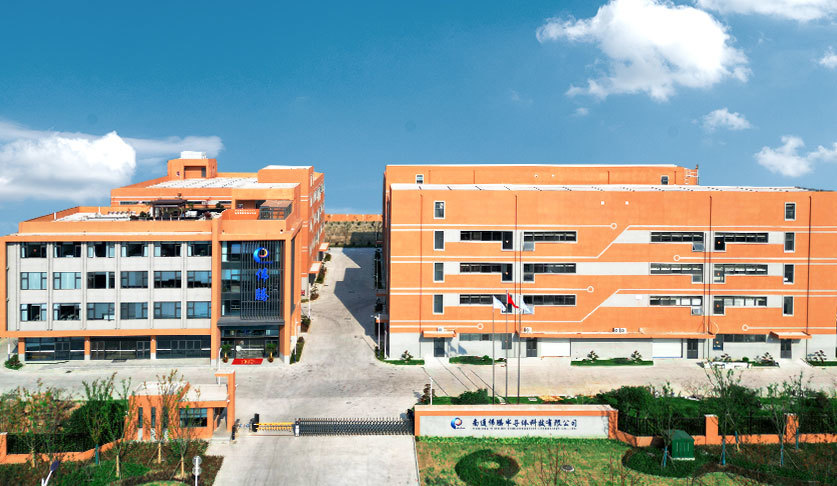
From audit to evaluation: request a sample, quotation, or the technical brochure to complete the qualification.
Next Step: Sample, Quote, or Technical Discussion
If you are auditing sawing blade suppliers for a semiconductor packaging, optical communication, ceramic, or precision alloy cutting project, the fastest way to validate the checks in this guide is a trial lot under your own process conditions. Request a sample or quotation directly:
Email: shenxiangfei@ntwintime.com | Tel: +86 13851530812 | WhatsApp: +86 18888053207 | Website: en.wintime.net.cn
Download the full product brochure: WINTIME product brochure (PDF)
Have Questions or Need More Details?
Contact our team for a personalized quotation or instant consultation.
Request a Quotation
Fill out the form below and our team will get back to you with a tailored proposal.
WhatsApp Direct Chat
Prefer to chat in real-time? Message us on WhatsApp for instant assistance & quick answers.
- Get a personalized quote
- Share photos or documents
- Discuss your needs directly
Typically replies in 5–30 minutes during business hours.