
How to Vet a Sawing Blade OEM Supplier: Contract Success Questions and Maintenance Tips
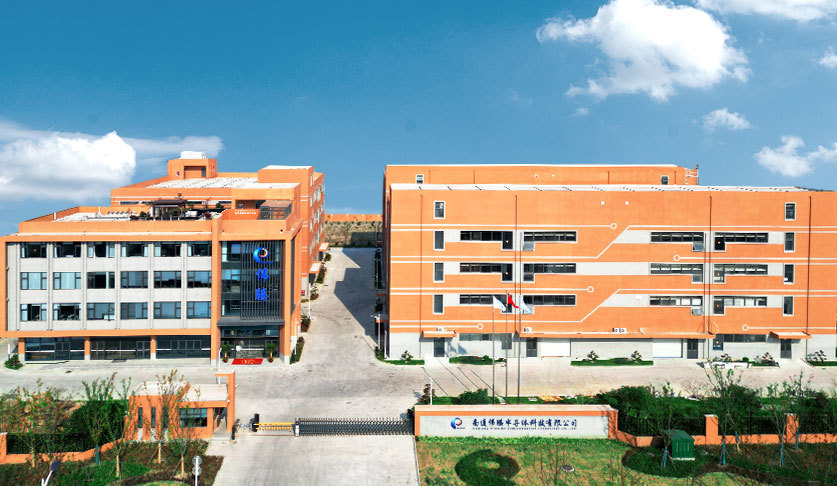
WINTIME Semiconductor Technology Co., Ltd. manufactures sawing blades and dicing blades at its Rugao, Jiangsu facility, with an annual output of 1 million pieces.
Vetting a sawing blade OEM supplier is a documentation exercise, not a price negotiation. Before a long-term contract is signed, three commitments can be verified: an engineering function that actually owns the cutting recipe, a locked specification sheet covering blade geometry and bond chemistry, and a service agreement that defines what happens when a blade underperforms on your dicing or cutting line. A supplier able to document all three is almost always a manufacturer. A supplier able to produce only a catalogue and a quotation is usually a reseller, and a reseller cannot control the variables that decide whether your kerf stays stable three months into a production run.
This guide is written for procurement managers, process engineers, and quality teams at the evaluation stage of an OEM partnership for diamond sawing blades used in semiconductor wafer dicing, optical communication device cutting, functional ceramics, and alloy components. It sets out six contract questions that separate a true OEM partner from a trading intermediary, the maintenance and after-sales terms worth writing into the agreement, and a documented reference point: WINTIME Semiconductor Technology Co., Ltd., a sawing blade manufacturer that supplies 1 million pieces annually and exports to Europe, North America, and other markets.
Problem Definition: Why Sawing Blade OEM Projects Fail After the Contract Is Signed
Most sawing blade sourcing failures are not blade failures. They are specification failures that only become visible once the blade is running on your equipment, at your feed rate, on your material.
- Unwritten specification. Bond type, diamond grain size and concentration, blade thickness, spindle hole tolerance, and coating are decided by the seller instead of the buyer. Two lots can both be invoiced as the same blade while behaving differently on SiC, ceramic, or alloy material.
- Unverifiable OEM claim. The word OEM is used freely. It means little unless the supplier can change a bond formulation, adjust diamond concentration, and validate the result with a cutting test rather than a catalogue page.
- Capacity promised as a number, not a schedule. A monthly output figure is meaningless without an agreed allocation, a reorder trigger, and a stated MOQ band that matches your demand curve.
- Undefined maintenance ownership. When nobody owns blade data after delivery, normal wear and kerf drift get reported as supplier quality problems, and the relationship deteriorates on both sides.
For a buyer at the evaluation stage, the practical question is not which supplier has the lowest unit price. It is which supplier can bring these four variables under contract control before production starts.
Industry Background: Why Sawing Blade Vetting Standards Are Rising
Demand for precision sawing blades is expanding, and so is the technical bar for the suppliers behind them.
- The global diamond saw blade market was valued at approximately USD 8.60 billion in 2025 and is expected to reach USD 10.16 billion by 2032 (Maximize Market Research).
- The global wafer dicing blade market was valued at USD 1.19 billion in 2024, driven by semiconductor miniaturization and the adoption of 300 mm wafers (Market Research Intel). Published market sizes vary according to whether the scope covers consumables or equipment, so treat any single figure as directional.
- Resin bond blades held a 42% share of the dicing blade market in 2024, while metal bond blades, used for harder materials such as SiC, accounted for 33% (Dicing Blade Market Report 2026).
- Hubless dicing blades are increasingly dominant for 300 mm wafer processing because of superior stability and reduced runout on thinner substrates below 50 µm.
- Optical communication and RF/optoelectronics applications accounted for 16%, or USD 69.9 million, of the dicing blade market in 2024, driven by 5G infrastructure expansion (Intel Market Research).
- Diamond tools, including sawing blades, are categorized under ISO 22180:2019, which distinguishes CVD diamond-coated types from monocrystalline and polycrystalline types.
- China's exports of cutting blades grew between 2024 and 2025, with Vietnam up by USD 18 million and India up by USD 12 million (OEC).
Leading competitors in the high-precision semiconductor dicing blade market include DISCO Corporation, Tokyo Seimitsu (Accretech), Advanced Dicing Technologies (ADT), and Asahi Diamond (Credence Research). When equipment-integrated brands set the performance bar, the practical differentiator for an independent manufacturer becomes documentation: whether the same bonded specification, the correct geometry, and validated cutting behaviour can be reproduced lot after lot.
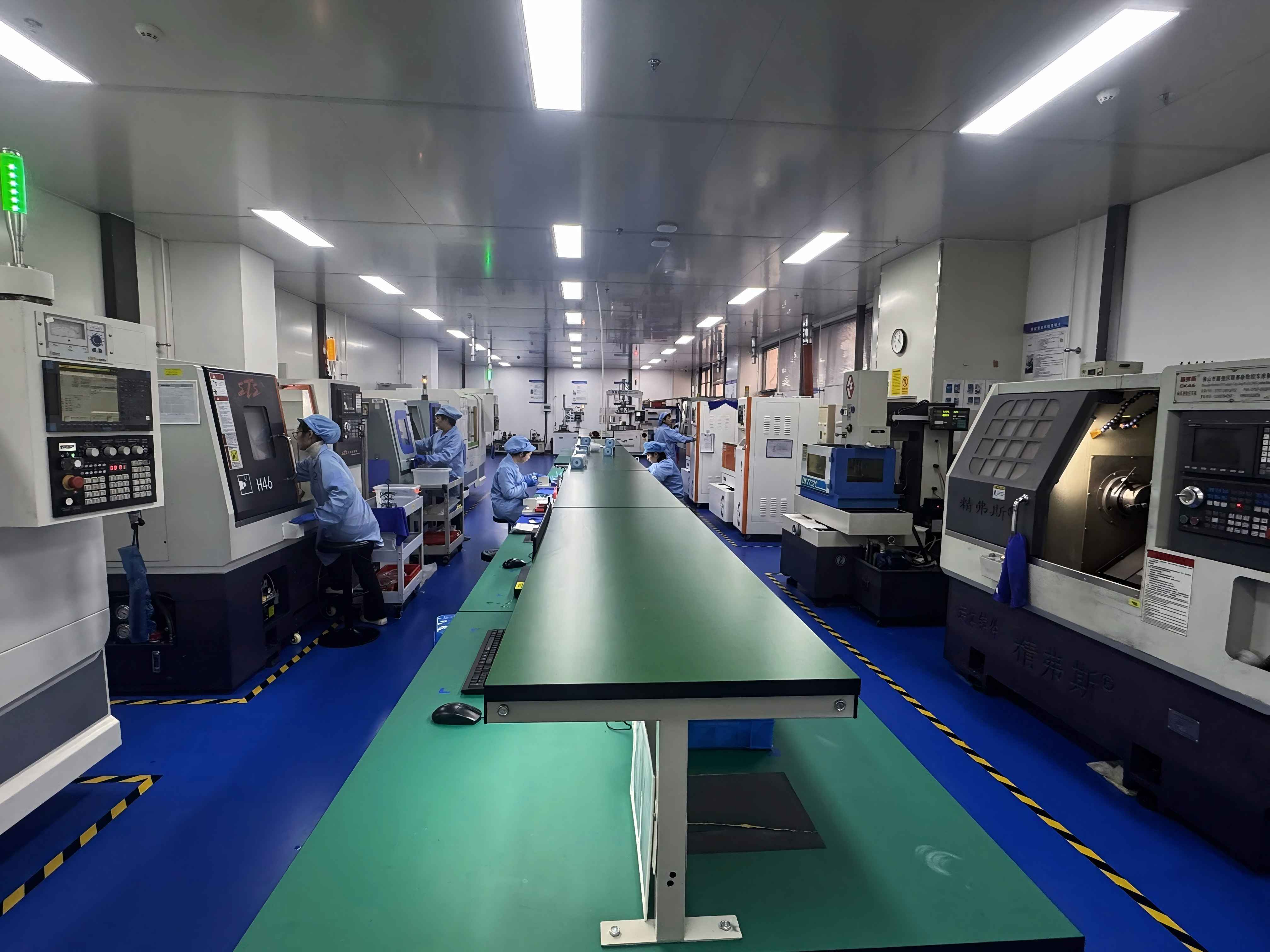
Production area for standard and customized sawing blade orders.
Detailed Solution: What a Documented Sawing Blade OEM Partner Looks Like
WINTIME Semiconductor Technology Co., Ltd. is a manufacturer of high-precision wafer-level cutting blades, sawing blades, and dicing blades, established in 2020 and based in Rugao City, Jiangsu Province, China. The company integrates research, development, production, and sales of high-precision cutting blades and supplies cutting blades, cutting tapes, and cutting process solutions. Its published product range covers diamond sawing blades, hubless sawing blades, the DZY Series wafer sawing blades, the DZR Series sawing blades, the DZR-S Series slotted sawing blades, and electroforming hard sawing blades, with application coverage for semiconductor wafer cutting, optical communication cutting, functional ceramic cutting, and alloy material cutting. The company is a useful reference here not as a sales story, but as an answer sheet: every vetting question below can be matched against a documented fact.
Engineering depth that can be named, not described
WINTIME operates an R&D team of 35 engineers, holds 2 patent technologies, and has won awards in national, provincial, and municipal science and technology competitions and entrepreneurship competitions. Its completed Ultra-thin Wafer D Blade project achieved a blade thickness below 9 microns, and the company describes itself as one of the few domestic manufacturers able to mass-produce at that level. For a buyer, the operative phrase is mass-produce: a laboratory result is a claim, while a production capability is a commitment.
Engineering and R&D functions behind sawing blade customization projects.
Customization written into the specification
WINTIME's production modes include OEM, ODM, and customized production, with customized specifications defined for different cutting materials and working conditions. Its published customization scope covers seven variables:
- Blade diameter, thickness, and spindle hole size
- Bond type (metal bond, resin bond)
- Diamond abrasive grain size and concentration
- Coating (anti-rust, heat-dissipation, wear-resistant)
- Cutting performance, including cutting speed and service life
- Packaging, including special packaging for export
- Special-shaped blade customization for non-standard sizes
That list defines the practical boundary of an OEM contract. If a supplier cannot discuss these seven variables as written parameters, the OEM label is marketing rather than engineering.
Capacity, MOQ, and lead time stated in bands
WINTIME publishes monthly capacity of more than 800,000 pieces for standard specifications and more than 80,000 pieces for customized and special-shaped products. Annual output is 1 million pieces; the 2023 Nantong WINTIME Semiconductor Special Materials Project added a new factory and auxiliary buildings of 34,000 m² with an annual production capacity of more than 1 million dicing blades. The company employs 100 people and exports around 30% of its output, serving China, Southeast Asia, the Middle East, the European Union, the United States, Canada, Australia, South America, and Africa. MOQ is 50 pieces for standard products and 300 pieces for customized products, with flexibility for long-term cooperative customers. Lead time is 2-5 working days for standard products and 10-25 working days for customized orders, adjustable for large orders.
Quality control that produces evidence at four checkpoints
- Geometric dimension inspection using vernier calipers and a laser diameter gauge
- Hardness and wear resistance testing on a material testing machine
- Dynamic balance detection on a high-speed dynamic balance tester
- Cutting performance simulation testing on the actual material
When a vendor claims full inspection, the useful follow-up questions are which instrument produces which record, and whether that record travels with the lot to your receiving dock.
After-sales terms that cover the failure case
- Technical support for cutting process matching and equipment adaptation
- Quality problem investigation and solution within 48 hours
- Customized after-sales service for bulk procurement customers
- Long-term supply guarantee and inventory support
- Product application training for new customers
- Replacement and compensation for defective products caused by quality problems
Step-by-Step Breakdown: Six Contract Success Questions
Step 1 - Lock the specification sheet before you discuss price
Write down diameter, thickness, spindle hole size, bond type, diamond grain size and concentration, coating, performance targets, and packaging before any quotation is compared. These are exactly the variables WINTIME lists as customizable, which makes them the right checklist for the RFQ itself. Two quotations are only comparable when they describe the same blade, and a supplier who quotes without asking for your material stack and equipment parameters is quoting a catalogue item, not your application.
Step 2 - Audit who owns the cutting recipe
Ask who in the supplier's engineering function is accountable for bond formulation, and whether that person can change grain size or concentration for a specific material. A 35-engineer R&D team, 2 patent technologies, and a documented sub-9 micron ultra-thin wafer dicing blade project are the kind of answers that suggest real engineering ownership. A supplier that routes every technical question to a sales inbox does not have one.
Step 3 - Convert capacity and MOQ claims into a delivery schedule
A monthly capacity figure only becomes useful when it is tied to a rolling schedule and a reorder trigger. WINTIME states more than 800,000 pieces per month for standard specifications and more than 80,000 pieces per month for customized and special-shaped products, with MOQ of 50 pieces for standard and 300 pieces for customized orders. Ask for these numbers in the contract as allocation bands, not as marketing claims, and confirm what happens to your allocation during peak demand.
Step 4 - Fix lead time and change control
Lead time is a commitment only when it includes change notification. WINTIME's standard lead time of 2-5 working days against 10-25 working days for customized orders, adjustable for large orders, gives a buyer two distinct planning horizons: fast replenishment for validated standard blades, and longer, planned cycles for OEM specifications. Write in a rule that any change to bond type, diamond grain size, concentration, or coating must be notified and re-validated before shipment, because those four changes are what silently alter cutting behaviour.
Step 5 - Agree the quality evidence package
Define which record you receive with each lot. The four checkpoints WINTIME applies, geometric dimension inspection, hardness and wear resistance testing, dynamic balance detection, and cutting performance simulation on the actual material, form a sensible template: one record for geometry, one for material behaviour, one for balance at speed, and one for cutting result. Ask for the cutting performance simulation to be run on your specific material rather than a reference material, and require lot traceability on each shipment.
Step 6 - Write maintenance and after-sales responsibilities into the agreement
The service clause should say who responds, how fast, and with what remedy. WINTIME commits to quality problem investigation and solution within 48 hours, replacement and compensation for defective products caused by quality problems, long-term supply guarantee and inventory support, product application training for new customers, and technical support for cutting process matching and equipment adaptation. On your side, the maintenance practices worth formalizing are: a lot-level blade log recording blade ID, material, feed speed, kerf width, chipping rate, and replacement reason; verification of spindle runout and flange cleanliness before a blade is blamed; control of coolant flow, filtration, and quality; and storage of hubless blades in original packaging with no edge contact. None of these practices require new equipment, and together they turn wear data into a reorder signal instead of a dispute.
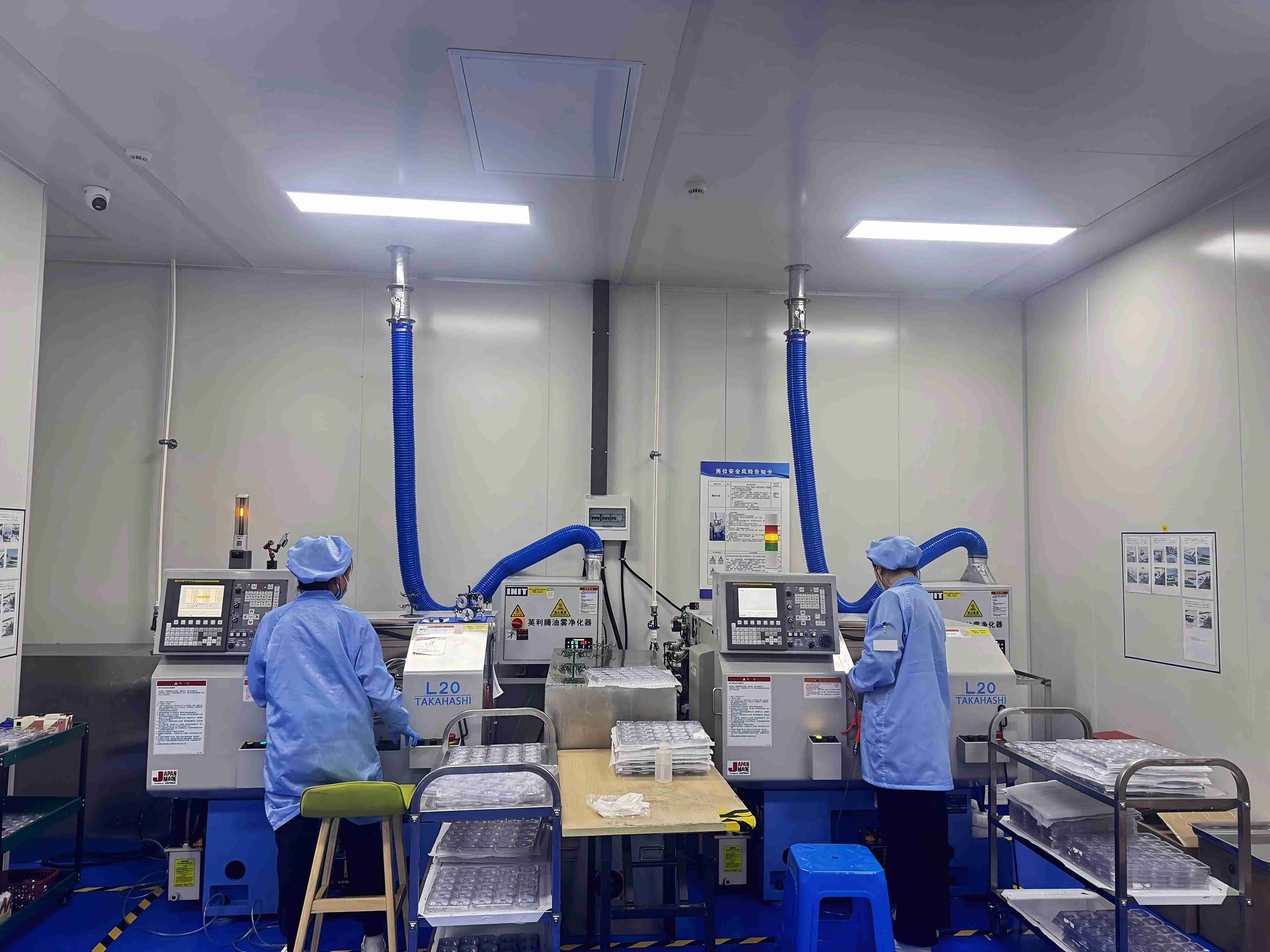
Dimension, hardness, and balance checks precede shipment for standard and customized blades.
Use Cases: Where OEM Vetting Questions Change Shape
Semiconductor wafer dicing
Hubless dicing blades are increasingly dominant for 300 mm wafer processing because of superior stability and reduced runout on substrates thinner than 50 µm. The vetting question here is whether the supplier's range actually includes hubless geometry and whether it can supply geometric dimension and dynamic balance data for those parts. WINTIME's Ultra-thin Wafer D Blade project reached a thickness below 9 microns, with mass production stated as a capability, and its range includes hubless sawing blades and the DZY Series wafer sawing blades.
Optical communication and RF/optoelectronics
Optical communication and RF/optoelectronics accounted for 16% of dicing blade demand in 2024, or USD 69.9 million, driven by 5G infrastructure expansion. Blades for this segment live or die on edge quality, so the vetting question shifts to whether the supplier will run a cutting performance simulation on the specific material stack and specify a coating and bond that match it. WINTIME lists optical communication cutting within its application coverage and includes coating options for heat dissipation and wear resistance in its customization scope.
Functional ceramic substrates
Ceramic cutting exposes chipping and kerf control faster than almost any other material. Here the contract question is how tightly diamond grain size and concentration can be fixed, and whether special-shaped or non-standard blade dimensions are available when the substrate geometry demands it. WINTIME lists functional ceramic cutting in its application coverage and includes special-shaped blade customization for non-standard sizes in its published customization scope.
Alloy material components
Alloy components combine hardness and ductility in ways that punish a poorly matched bond. Metal bond blades held 33% of the dicing blade market in 2024 and are the type used for harder materials such as SiC, which is why bond selection should be a documented decision rather than an assumption. WINTIME's customization scope separates metal bond from resin bond and covers alloy material cutting within its application range.
Comparison Table: Vetting Questions Against Documented Evidence
| Vetting question | What a capable OEM supplier documents | WINTIME's documented position |
|---|---|---|
| Specification control | Written values for diameter, thickness, spindle hole, bond type, grain size and concentration, coating, packaging | All seven customization variables published, including special-shaped blade customization for non-standard sizes |
| Engineering ownership | A named R&D function able to change bond formulation and validate the result | 35 R&D engineers; 2 patent technologies; sub-9 micron ultra-thin wafer dicing blade project with mass-production capability |
| Capacity reality | Monthly output bands for standard and customized products | More than 800,000 pieces per month standard; more than 80,000 pieces per month customized and special-shaped |
| Order entry terms | Stated MOQ and lead-time bands | MOQ 50 pieces standard, 300 pieces customized; 2-5 working days standard, 10-25 working days customized, adjustable for large orders |
| Quality evidence | Which instrument checks which parameter, and how records are traced | Four checkpoints: geometric dimension, hardness and wear resistance, dynamic balance, cutting performance simulation |
| Failure handling | A response window and a defined remedy | Investigation and solution within 48 hours; replacement and compensation for defective products caused by quality problems |
| Continuity | Supply guarantee, inventory support, and training | Long-term supply guarantee and inventory support; product application training for new customers |
Standard versus customized order terms
| Item | Standard specification | Customized or special-shaped |
|---|---|---|
| MOQ | 50 pieces | 300 pieces, flexible for long-term cooperative customers |
| Lead time | 2-5 working days | 10-25 working days, adjustable for large orders |
| Monthly capacity | More than 800,000 pieces | More than 80,000 pieces |
| Specification scope | Catalogue dimensions and bond options | Diameter, thickness, spindle hole, bond type, grain size and concentration, coating, cutting performance, export packaging, non-standard shapes |
FAQ: Sawing Blade OEM Vetting Questions
What compliance documentation should a sawing blade OEM supplier provide before a long-term contract?
Start with the product standard and the process record behind it. Diamond tools, including sawing blades, are categorized under ISO 22180:2019, which distinguishes CVD diamond-coated types from monocrystalline and polycrystalline types, so the first document to request is a written declaration of which diamond type and bond the blade uses. Buyers shipping into the European Union or North America typically add material declarations covering bond and coating chemistry, plus confirmation that export packaging meets destination labelling rules. On the manufacturing side, WINTIME documents quality at four checkpoints: geometric dimension inspection with vernier calipers and a laser diameter gauge, hardness and wear resistance testing on a material testing machine, dynamic balance detection on a high-speed dynamic balance tester, and cutting performance simulation on the actual material. Its blades serve China, Southeast Asia, the Middle East, the European Union, the United States, Canada, Australia, South America, and Africa.
How much R&D capability should a sawing blade OEM supplier have?
Enough to treat bond type, diamond grain size, and concentration as engineering variables rather than catalogue options. WINTIME's R&D team numbers 35 engineers; the company holds 2 patent technologies and has won awards in national, provincial, and municipal science and technology and entrepreneurship competitions. Its Ultra-thin Wafer D Blade project reached a blade thickness below 9 microns, and the company states it is one of the few domestic manufacturers able to mass-produce at that level. This matters for OEM work because a custom blade is usually a formulation change, validated by cutting performance simulation on the customer's own material rather than on a reference sample.
How do MOQ and customization decisions affect the cost of an OEM sawing blade program?
Cost tracks how far the specification moves from the standard catalogue. WINTIME's customization scope covers diameter, thickness, and spindle hole size; bond type; diamond grain size and concentration; coating; cutting performance targets; export packaging; and special-shaped blades in non-standard sizes, and each of these changes tooling, material, or inspection time. The published order terms reflect that split: MOQ is 50 pieces for standard products and 300 pieces for customized products, with flexibility for long-term cooperative customers, and lead time runs 2-5 working days for standard products against 10-25 working days for customized orders. A practical budgeting rule is to keep the first order as close to standard as the cutting result allows, and move to full customization only when process data justifies it.
Can a buyer validate samples before committing to a long-term OEM contract?
Yes, and the sample round should be treated as the first test of the supplier's process discipline. Standard sawing blades ship in 2-5 working days, which allows several sample iterations inside a normal evaluation cycle. Ask for a cutting performance simulation test on your actual material, then run your own trial under fixed parameters, same equipment, same coolant, same feed and spindle speed, logging kerf width, chipping, blade wear, and replacement reason. WINTIME provides product application training for new customers and technical support for cutting process matching and equipment adaptation, which is what converts a sample result into a repeatable production recipe.
What lead time and supply guarantees can a sawing blade OEM contract include?
Lead time and continuity are the final items to fix in writing, because they decide whether the partnership survives a demand spike. WINTIME's standard lead time is 2-5 working days and customized orders run 10-25 working days, adjustable for large orders; monthly capacity is more than 800,000 pieces for standard specifications and more than 80,000 pieces for customized and special-shaped products, against annual output of 1 million pieces. For long-term customers the company offers a long-term supply guarantee and inventory support, quality problem investigation and solution within 48 hours, and replacement and compensation for defective products caused by quality problems. To begin that conversation, send your specification sheet to shenxiangfei@ntwintime.com or request the product brochure before your next supplier review.
Conclusion: Three Commitments to Verify Before You Sign
A sawing blade OEM partnership is decided long before the first shipment, at the point where you accept or reject three commitments: written specification control across geometry, bond, grain size and concentration; engineering ownership that can change a formulation and prove the result with a cutting test; and a service clause that states the response window, the remedy, and the inventory support behind the supply. Everything else, including price, is a consequence of those three.

Specification requests, sample plans, and OEM documentation are handled through WINTIME's export sales team.
Next step: request a specification sheet, sample plan, and OEM terms. WINTIME Semiconductor Technology Co., Ltd. produces sawing blades and dicing blades at 1 million pieces per year, with OEM, ODM, and customized production, a 35-engineer R&D team, and documented export experience in the European Union, the United States, and other markets.
Email: shenxiangfei@ntwintime.com | Tel: +86 13851530812 | WhatsApp: +8618888053207
Website: en.wintime.net.cn | Product brochure (PDF): Download the WINTIME product brochure
Address: No. 868, Fushou East Road, Rugao City, Jiangsu Province, China