
Mastering Sawing Blade Technical Parameters: Bond Type, Grit Size, and Kerf Control
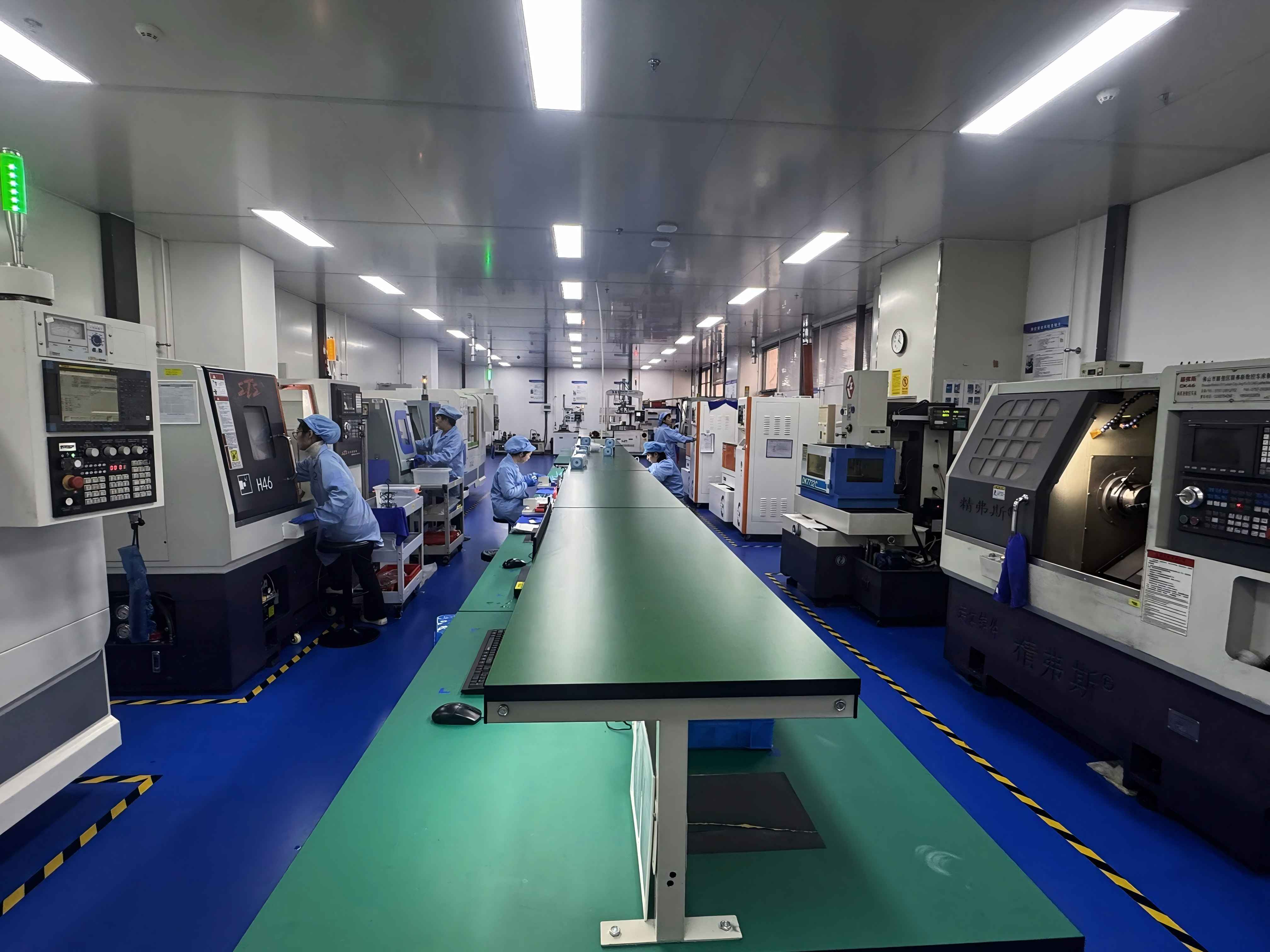
WINTIME workshop — high-precision sawing blade production, where bond type, grit size and kerf are held inside a controlled process window.
Bond type, grit size and kerf control are the three parameters that decide whether a sawing blade cuts with controlled chipping, stable dimensional accuracy and predictable wear — or drifts into edge damage, widening kerf and premature blade failure. Bond type governs how the diamond abrasive is held and released. Grit size sets the balance between cutting efficiency and edge quality. Kerf connects blade thickness, blade exposure and dimensional accuracy directly to the yield of the parts being cut.
This guide is written for the stage after blade selection has been settled: the blade family is chosen, and the remaining task is to specify, qualify and hold the parameters across long production runs. It covers the definitions engineers and buyers need, the market and standards context behind today's specifications, the parameter set and control methods used by WINTIME Semiconductor Technology Co., Ltd., a step-by-step qualification sequence, application fit by industry, a bond-type comparison, and the commercial questions — MOQ, sampling, delivery and batch traceability — that determine whether a good trial result can be repeated at volume. WINTIME is a manufacturer of high-precision wafer-level cutting blades, founded in 2020 in Rugao City, Jiangsu Province, China, producing sawing blades, dicing blades and cutting solutions.
Problem Definition: Parameter Drift Is a Yield Problem, Not a Blade Problem
Four terms carry most of the confusion in sawing blade specifications, so they are worth defining before any comparison is attempted:
- Kerf — the width of material removed by the blade in a single pass. Kerf is set primarily by blade thickness and is modified in production by blade exposure, runout and wear.
- Grit size — the nominal size of the diamond abrasive grains on the cutting edge. Grit size influences cut rate, edge chipping and the mechanical load placed on the bond.
- Bond type — the matrix that holds the diamond grains and releases them as they dull. In precision sawing blades the matrix is resin or metal.
- Wear resistance and dimensional accuracy — how long the blade retains its cutting geometry, and how precisely it reproduces the intended cut within tolerance.
In wafer-level processing, kerf is a direct yield variable. Every micron of kerf that is wider than necessary represents material that can no longer become a device, which is why the industry keeps pushing blade thickness and cut accuracy tighter. The same logic applies to optical components and functional ceramics, where a wider cut or a rougher edge reduces the number of usable parts per workpiece.
Chipping is the fracture of material along the cut edge, and it is the outcome most often blamed on the blade alone. In practice, a low-chipping cut is the result of grit size, bond behaviour, blade stiffness and feed conditions working as one system. When a single parameter moves — a slightly harder bond, a coarser grit, a blade worn past its exposure window — the cut edge shows it first.
The failure signals that most often trigger a parameter review are consistent: kerf widening across the life of a blade; edge chipping above the acceptance limit; loading or glazing of the bond accompanied by a drop in cut rate; blade breakage on thinner substrates; and, most expensive of all, batch-to-batch variation in a specification that had already been approved.
The last point is what separates a technical selection from a long-term supply decision. A blade that passes one trial but cannot be reproduced identically in the following batch converts a technical success into a production risk. Under long-term supply, OEM or distribution agreements, the parameter that gets audited is consistency: the same bond, the same grit and the same kerf behaviour, held across hundreds of thousands of pieces. Parameter documentation and batch traceability therefore matter as much as the cutting test itself.
Industry Background: What Is Pushing Sawing Blade Parameters Tighter
Global demand for diamond cutting tools explains why parameter precision has become a purchasing criterion rather than a technical footnote. The global diamond saw blade market was valued at approximately USD 8.60 billion in 2025 and is expected to reach USD 10.16 billion by 2032, according to Maximize Market Research.
Within that market, the wafer dicing blade segment was valued at USD 1.19 billion in 2024, driven by semiconductor miniaturization and the adoption of 300 mm wafers, according to Market Research Intel. Estimates for the same segment vary by source scope — equipment versus consumables — with alternative figures of USD 1.31 billion and USD 0.437 billion published elsewhere. That divergence is itself a practical warning: buyers should confirm the definition behind any market number before using it in a capacity or budget case.
Bond mix is one of the clearest signals of parameter specialization. Resin bond blades held a 42% share of the dicing blade market in 2024, while metal bond blades, used for harder materials such as SiC, accounted for 33%, according to market.us.
Blade construction is moving in the same direction. Hubless dicing blades are increasingly dominant for 300 mm wafer processing because of their stability and reduced runout on thinner substrates below 50 µm, according to Semiconductor Equipment Market Data. Application demand is concentrating as well: optical communication and RF/optoelectronics applications accounted for 16% of dicing blade market share in 2024, equivalent to USD 69.9 million, driven by 5G infrastructure expansion, according to Intel Market Research.
Standards and the competitive landscape complete the picture. Diamond tools, including sawing blades, are categorized under ISO 22180:2019, which distinguishes CVD diamond-coated types from monocrystalline and polycrystalline types. The high-precision semiconductor dicing blade market is led by DISCO Corporation, Tokyo Seimitsu (Accretech) and Advanced Dicing Technologies (ADT), alongside Asahi Diamond, according to Credence Research. On the supply side, China's exports of cutting blades to Vietnam, India and South Korea grew between 2024 and 2025, with Vietnam increasing by USD 18 million and India by USD 12 million, according to the Observatory of Economic Complexity (OEC).
Detailed Solution: How WINTIME Controls Bond Type, Grit Size and Kerf
A reference specification: WINTIME Sawing Blade SB-001
Parameter discussions become useful only when they are attached to actual numbers. The published specification for the WINTIME Sawing Blade (SB-001) sets the range within which bond, grit, thickness and accuracy are specified together rather than negotiated separately.
| Parameter | WINTIME specification (SB-001) | What it controls in the cut |
|---|---|---|
| Thickness range | 8 µm – 50 µm | Base kerf width and the minimum achievable cut width |
| Ultra-thin achievement | Below 9 µm in the completed “Ultra-thin Wafer D Blade” project | Kerf reduction on thin wafers and high-value substrates |
| Cutting accuracy | ±0.002 mm | Dimensional consistency of the cut across a workpiece |
| Spindle speed | 30,000 – 60,000 rpm | Process window for feed rate, cut quality and blade loading |
| Hardness | HRC 65–70 | Blade stiffness and resistance to edge wear |
| Bond type | Resin / metal | Abrasive retention and self-dressing behaviour |
| Chip removal rate | ≥1.2 mm³/s | Throughput without bond loading or glazing |
| Bond matrix material | Resin / metal | Bond selection matched to the workpiece |
| Abrasive | Diamond superabrasive | Cutting edge formation and wear life |
| Base material | High-strength steel | Runout control and blade rigidity |
Bond type: resin or metal, selected by workpiece and release behaviour
WINTIME sawing blades are built on a resin or metal bond matrix with diamond superabrasive grains and a high-strength steel base. Bond choice is not a preference; it is a statement about the workpiece and about how aggressively the abrasive should renew itself during the cut. Market data reflects that split: metal bonds are cited for harder materials such as SiC, while resin bonds account for the larger share of the dicing blade market.
The practical consequence is that bond type must be specified together with grit size. A bond that holds its abrasive too firmly will glaze and stop cutting; a bond that releases abrasive too quickly wears the blade faster than the process expects. Both outcomes appear on the workpiece as chipping or kerf drift, and both are usually misdiagnosed as a grit problem.
Grit size: the balance between cutting efficiency and chipping control
Grit size sits directly between cut rate and edge quality. A coarser grit removes material faster and places more stress on the bond; a finer grit improves edge definition but increases the risk of loading if dull grains are not released at the right rate. Because grit and bond interact, premium sawing blade specifications treat them as a pair, not as two independent line items.
WINTIME blades are rated for a chip removal rate of at least 1.2 mm³/s. That figure sets the throughput floor a grit and bond combination must support without loading, and it gives buyers a measurable target for the high-efficiency cutting behaviour they are paying for.

Blade thickness, bond matrix and grit are specified as one parameter set, not as separate line items.
Kerf control: thickness, accuracy and the ultra-thin limit
Kerf control starts with thickness. WINTIME sawing blades cover a thickness range of 8 µm to 50 µm with a cutting accuracy of ±0.002 mm. The company's completed “Ultra-thin Wafer D Blade” project achieved a process thickness below 9 µm, and WINTIME notes that it is one of the few domestic manufacturers able to mass-produce at that level.
For buyers, the operational meaning of a sub-9 µm blade is straightforward: less material is consumed per cut, and more usable area remains on each wafer — provided the blade can hold that geometry while cutting. That proviso is why kerf is never specified alone. Thickness defines the theoretical kerf; base rigidity, hardness and spindle conditions determine whether the actual kerf stays inside tolerance from the first cut to the last.
Wear resistance and stiffness: hardness, base and spindle conditions
WINTIME specifies blade hardness at HRC 65–70 with a high-strength steel base. Hardness and base rigidity work together: hardness resists abrasive wear at the cutting edge, while the base controls runout and prevents the kerf from wandering across the workpiece. The published spindle speed window of 30,000–60,000 rpm defines the range in which those properties are intended to deliver stable cutting.
Wear resistance should be read as a life parameter rather than a marketing claim. A blade that holds its geometry longer reduces blade changes, reduces operator intervention and — for a distributor or an OEM buyer planning production — makes consumption predictable from quarter to quarter.
The environment is also a parameter: 22 ±2 °C and 45%–55% relative humidity
Two environmental values belong in the parameter sheet for precision sawing: a constant temperature of 22 ±2 °C and relative humidity of 45%–55%. Temperature matters because kerf is measured in microns — thermal movement in the spindle, the workpiece and the blade assembly changes the effective cut width, so a stable window is what allows a ±0.002 mm accuracy figure to mean anything on the production floor. Humidity control protects resin bond behaviour and reduces condensation-related handling problems on wafers and precision components.
Where these conditions are specified, they should be recorded in the process sheet alongside bond type and grit size. A parameter that is not recorded is a parameter that will drift, and drift is what turns a validated process into an unexplained yield loss.
Batch consistency: the parameter that supports long-term supply
Batch quality inconsistency is the risk WINTIME explicitly documents and controls, and the control method is worth reading as a specification in itself. Process parameters are standardized and automated production equipment is used to avoid manual operation errors. A batch production data tracking system records all process parameters, and adjacent batches are compared in testing to confirm consistent performance. These measures sit inside an ISO 9001 quality management system with SOP-based production, dedicated quality inspectors tracking each production batch, and a batch quality file that allows any batch to be traced and, if necessary, recalled.
For a buyer negotiating a distribution or OEM agreement, this is the most important section of the specification. The parameters above describe what a blade can do; the batch system describes whether the blade delivered next quarter will do the same thing. Capacity supports that promise: WINTIME's monthly production capacity exceeds 800,000 pieces for standard specifications and exceeds 80,000 pieces for customized and special-shaped products, with company-wide capacity built on a 34,000 m² facility, 100 employees and a 35-engineer R&D team. Exports account for 30% of output, across Southeast Asia, East Asia, North America and Europe.

Batch data tracking and adjacent-batch comparison testing keep bond, grit and kerf behaviour repeatable.
Step-by-Step Breakdown: Qualifying Sawing Blade Parameters Before Volume Orders
The following sequence converts the parameters above into a qualification process that can be documented, audited and repeated by a second production site. It is written in the order in which the decisions actually constrain one another.
- Define the workpiece and the target kerf. Start from material type, thickness and the maximum chipping the downstream process accepts. On thin wafers and brittle ceramics, the kerf target drives thickness selection before bond type is even discussed.
- Choose the bond type against the workpiece, not against the price list. Metal bonds are cited in market data for harder materials such as SiC; resin bonds account for the larger share of the dicing blade market and are generally the starting point where a free-cutting action is preferred.
- Set grit size from the chipping budget. Decide whether the process prioritizes edge quality or cut rate, then select the finest grit that still supports the required chip removal rate of at least 1.2 mm³/s without loading.
- Match blade thickness and exposure to the substrate. Select from the 8 µm to 50 µm range and confirm the ultra-thin option below 9 µm where kerf reduction has measurable value. Verify the spindle speed window of 30,000–60,000 rpm is available on the intended equipment.
- Validate with metrology, not with a visual check. Measure kerf width, edge chipping, blade wear and cut rate against the acceptance criteria. WINTIME's acceptance route for this stage includes pre-shipment testing and third-party inspection such as SGS.
- Fix and record the environment window. Confirm that 22 ±2 °C and 45%–55% relative humidity can be held in the cutting area, and record the values in the process sheet together with bond, grit and thickness.
- Lock batch records and reorder rules. Require batch identification, batch quality files and adjacent-batch comparison results with each delivery, so that a re-order reproduces the validated parameters rather than approximating them.
Use Cases: Matching Parameter Sets to Applications
Different workpiece families load the same three parameters in different ways. The available blade range at WINTIME includes Diamond Sawing Blade, Hubless Sawing Blade, DZY Series Wafer Sawing Blade, DZR Series Sawing Blade, DZR-S Series Slotted Sawing Blade, Electroforming Hard Sawing Blade, Semiconductor Wafer Sawing Blade, Optical Communication Sawing Blade, Functional Ceramic Sawing Blade and Alloy Material Sawing Blade, each specified within the same SB-001 parameter framework.
- Semiconductor wafer sawing and packaging. Hubless construction is increasingly dominant for 300 mm processing because of its stability and reduced runout below 50 µm substrate thickness. Ultra-thin blades below 9 µm and a ±0.002 mm cutting accuracy address the kerf-versus-die-count trade-off directly.
- Optical communication and RF/optoelectronics. This segment represented 16% of dicing blade market share in 2024, equivalent to USD 69.9 million, driven by 5G infrastructure expansion. Optical components are chipping-sensitive, so grit and bond selection leans toward edge quality rather than maximum removal rate.
- Functional ceramics. Brittle material with low tolerance for edge damage; the low-chipping requirement usually determines grit size first, with thickness set by the acceptable material loss per cut.
- Alloy materials. Harder workpieces are where metal bond blades are cited in market data. Wear resistance and hardness (HRC 65–70) matter more here than maximum edge refinement.
- Precision electronic components and semiconductor packaging components. Mixed-material stacks make consistent kerf the priority, which places weight on base rigidity, batch traceability and repeatable bond behaviour.
Comparison Table: Resin Bond vs Metal Bond in Precision Sawing Blades
The comparison below uses only published market data and the published WINTIME Sawing Blade specification. Where a published source does not state a value, the table says so rather than estimating.
| Comparison factor | Resin bond | Metal bond | Basis |
|---|---|---|---|
| Share of dicing blade market, 2024 | 42% | 33% | market.us, 2024 |
| Cited workpiece emphasis | Not specified in the cited source | Harder materials such as SiC | market.us, 2024 |
| Abrasive retention behaviour | Generally releases abrasive earlier, self-dressing more readily | Generally retains abrasive longer, holds form longer | Stable industry practice (qualitative) |
| Parameter to control first | Grit size and loading behaviour | Wear resistance and bond hardness | Process logic, SB-001 framework |
| Availability in WINTIME sawing blade range | Resin matrix | Metal matrix | WINTIME Sawing Blade SB-001 specification |
| Standard framework for diamond tools | ISO 22180:2019 | ISO 22180:2019 | ISO |
FAQ: Sawing Blade Parameters, Supply and Commercial Terms
Which standards and quality systems apply to precision sawing blades?
Diamond tools, including sawing blades, are categorized under ISO 22180:2019, which distinguishes between CVD diamond-coated types and monocrystalline or polycrystalline types. On the manufacturing side, WINTIME operates an ISO 9001 quality management system and follows standard operating procedures, with dedicated quality inspectors tracking each production batch and a batch quality file that allows traceability and recall if a problem is detected.
What production capability supports a long-term sawing blade supply programme?
WINTIME's monthly production capacity exceeds 800,000 pieces for standard specifications and exceeds 80,000 pieces for customized and special-shaped products. The company was founded in 2020, operates in a 34,000 m² facility with 100 employees and a 35-engineer R&D team, and reports annual production capacity of more than 1 million dicing blades. Exports account for 30% of output, serving Southeast Asia, East Asia, North America and Europe.
What is the MOQ, and what drives the price of a customized sawing blade?
For standard models the MOQ is 100 pieces per order, and it is negotiable for long-term cooperative customers or bulk purchase plans. For customized models the MOQ is 500 pieces per order; small-batch trial orders below 500 pieces can be accommodated with a flexible MOQ adjustment and a slight price adjustment based on customization complexity. Standard payment terms are 30/70.
How can a buyer validate bond type, grit size and kerf before committing to volume production?
Validation combines product testing with documented batch data. WINTIME's acceptance route includes pre-shipment testing and third-party inspection such as SGS, supported by adjacent-batch comparative testing and recorded process parameters. This allows a buyer to confirm kerf width, chipping, wear behaviour and cut rate against acceptance criteria on a trial quantity before placing a volume order.
How are delivery and long-term supply continuity handled?
Shipments are arranged on FOB or CIF terms, and each batch is supported by a batch quality file so that parameters can be traced across deliveries. Where a process must be reproduced over multiple quarters, WINTIME records bond type, grit, thickness and process parameters per batch. To move from evaluation to execution — sample requests, specification review or a quotation for the DZY, DZR, DZR-S and hubless blade ranges — contact the WINTIME team at shenxiangfei@ntwintime.com or WhatsApp +8618888053207, or download the product brochure below.
Conclusion: Parameter Control Is What Makes a Sawing Blade Relationship Last
Bond type, grit size and kerf control are not three separate decisions. Bond type determines how the abrasive renews itself, grit size sets the chipping-versus-efficiency balance, and kerf translates blade thickness, hardness and dimensional accuracy into measurable yield. Specifying them together — inside a documented environment window of 22 ±2 °C and 45%–55% relative humidity, and backed by batch records — is what turns a successful cutting trial into a repeatable production process.
That repeatability is the real subject of a long-term sawing blade agreement. A supplier is not only providing a blade with a thickness between 8 µm and 50 µm, a cutting accuracy of ±0.002 mm and a chip removal rate of at least 1.2 mm³/s; it is committing to reproduce those parameters across more than 800,000 standard pieces per month and more than 80,000 customized pieces per month, with traceability behind every batch.
Sample requests, specification reviews and quotations are handled directly by the WINTIME team.
Next step: request samples or a quotation for Diamond Sawing Blades, Hubless Sawing Blades, DZY Series Wafer Sawing Blades, DZR Series Sawing Blades, DZR-S Series Slotted Sawing Blades, Electroforming Hard Sawing Blades and application-specific blades for semiconductor wafers, optical communication, functional ceramics and alloy materials.
WINTIME Semiconductor Technology Co., Ltd.
Website: en.wintime.net.cn
Email: shenxiangfei@ntwintime.com
Tel: +86 13851530812 | WhatsApp: +8618888053207
Address: No. 868, Fushou East Road, Rugao City, Jiangsu Province
Product brochure: download the WINTIME sawing blade brochure (PDF)
Have Questions or Need More Details?
Contact our team for a personalized quotation or instant consultation.
Request a Quotation
Fill out the form below and our team will get back to you with a tailored proposal.
WhatsApp Direct Chat
Prefer to chat in real-time? Message us on WhatsApp for instant assistance & quick answers.
- Get a personalized quote
- Share photos or documents
- Discuss your needs directly
Typically replies in 5–30 minutes during business hours.