
Navigating Global Compliance for Dicing Blade Supply: Standards and Regional Requirements Explained
Compliance in dicing blade supply decides whether a blade can enter a production line at all. It is not one certificate or one badge printed on a datasheet — it is a chain of verifiable claims about blade geometry, abrasive specification, bond system, production control and delivery capability that an international buyer can check before the first cut and again on every repeat order.
Why Dicing Blade Compliance Is Harder Than Buying a Standard Cutting Tool
A dicing blade is a consumable precision tool. It is small, it is consumed by the cut, and its failure mode is expensive in a way that a worn drill bit is not: a blade that chips, loads or drifts off kerf damages the material it was supposed to separate. That single characteristic changes what the word “compliance” has to mean.
In most tool categories, compliance is a document question. In dicing blade supply, it is a three-part question. Does the blade match the published specification? Was it produced under controlled and repeatable conditions? Can the supplier deliver the same blade at volume for the life of the programme?
The most common qualification failure is not a missing document. It is a blade that matches the purchase order but not the process — an outer diameter that does not seat correctly on the machine flange, an abrasive that is too coarse for bare silicon, a bond system chosen for a material the blade was never designed to cut, or a blade thickness that is acceptable for a standard wafer but not for ultra-thin processing.
Regional requirements add a second layer of complexity. Buyers in North America, Europe, East Asia and Southeast Asia often work with different internal qualification templates, different documentation retention habits and different incoming inspection routines. What stays constant on the supplier side is the evidence set: written specification data, production control information, and lot-level traceability. A supplier that can provide all three does not have to re-answer the same question in a different format for each market.
Industry Background: A Cross-Border Market That Rewards Verified Suppliers
The global dicing blade market was valued at USD 1.31 billion in 2024, with projections to reach USD 1.84 billion by 2034 (Intel Market Research). Published estimates vary considerably by scope, so buyers should confirm what any figure covers before using it as a benchmark: some trackers publish pure-play blade revenue in a much smaller range for 2026, while others fold equipment-linked consumables into a far larger number.
By blade type, diamond-embedded dicing blades account for over 60% of total market share, a position attributed to their performance in cutting silicon carbide (SiC) and gallium nitride (GaN) (Wafer Dicing Blade Market Outlook 2026–2032). By bond system, resin bond blades held an estimated 42% share, or USD 183.6 million, of the dicing blade market in 2024 (Dicing Blade Market Report, 2026). On the equipment side, DISCO Corporation is the dominant market leader with an estimated 52–55% global share in dicing equipment and associated precision blades (Dicing Equipment Market Research Report 2034).
Two structural signals matter for compliance work. First, demand is spreading across production regions: China’s exports of cutting blades to Vietnam grew by USD 18 million between 2024 and 2025, according to the Observatory of Economic Complexity, which indicates that new back-end capacity is being supplied across borders rather than sourced locally. Second, technology is moving toward larger and thinner substrates — hubless dicing blades are increasingly preferred for 300 mm wafer processing because of superior stability and reduced runout compared with hubbed blades (Semiconductor Wafer Dicing Blade Market, 2025–2033 Analysis).
Together these trends mean more buyers are qualifying more suppliers in more jurisdictions, and every qualification starts with the same three requests: show me the specification, show me the process, show me that you can repeat it.
How a Verifiable Dicing Blade Supply Chain Is Built
WINTIME Semiconductor Technology Co., Ltd. is a Chinese manufacturer of high-precision, wafer-level cutting blades, established in 2020 and operating a 34,000 m² manufacturing facility in Rugao City, Jiangsu Province. The company researches, develops, produces and sells sawing blades and dicing blades, and describes its business focus as providing customers with solutions for the entire process of high-precision cutting.
What the product family covers
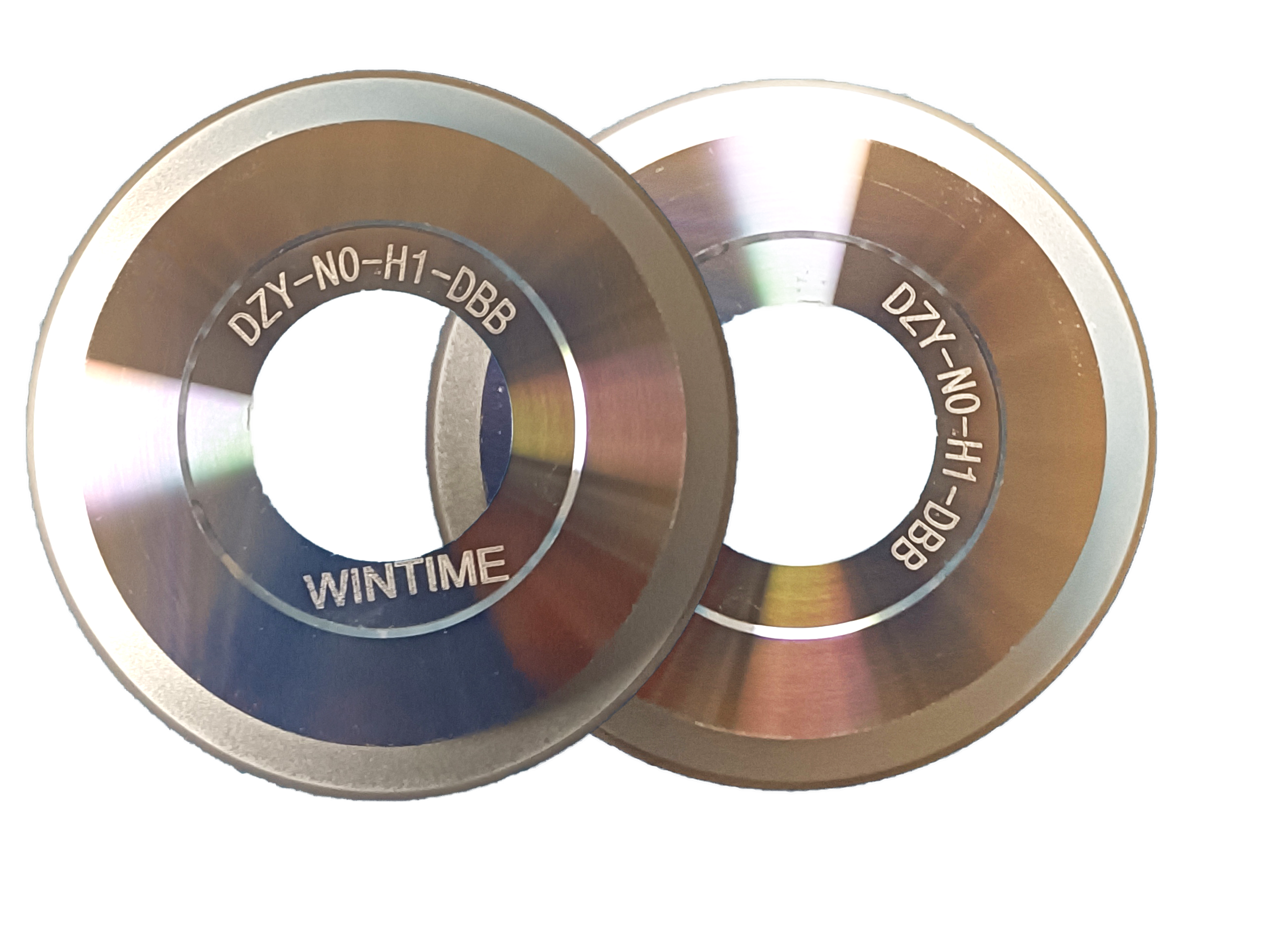
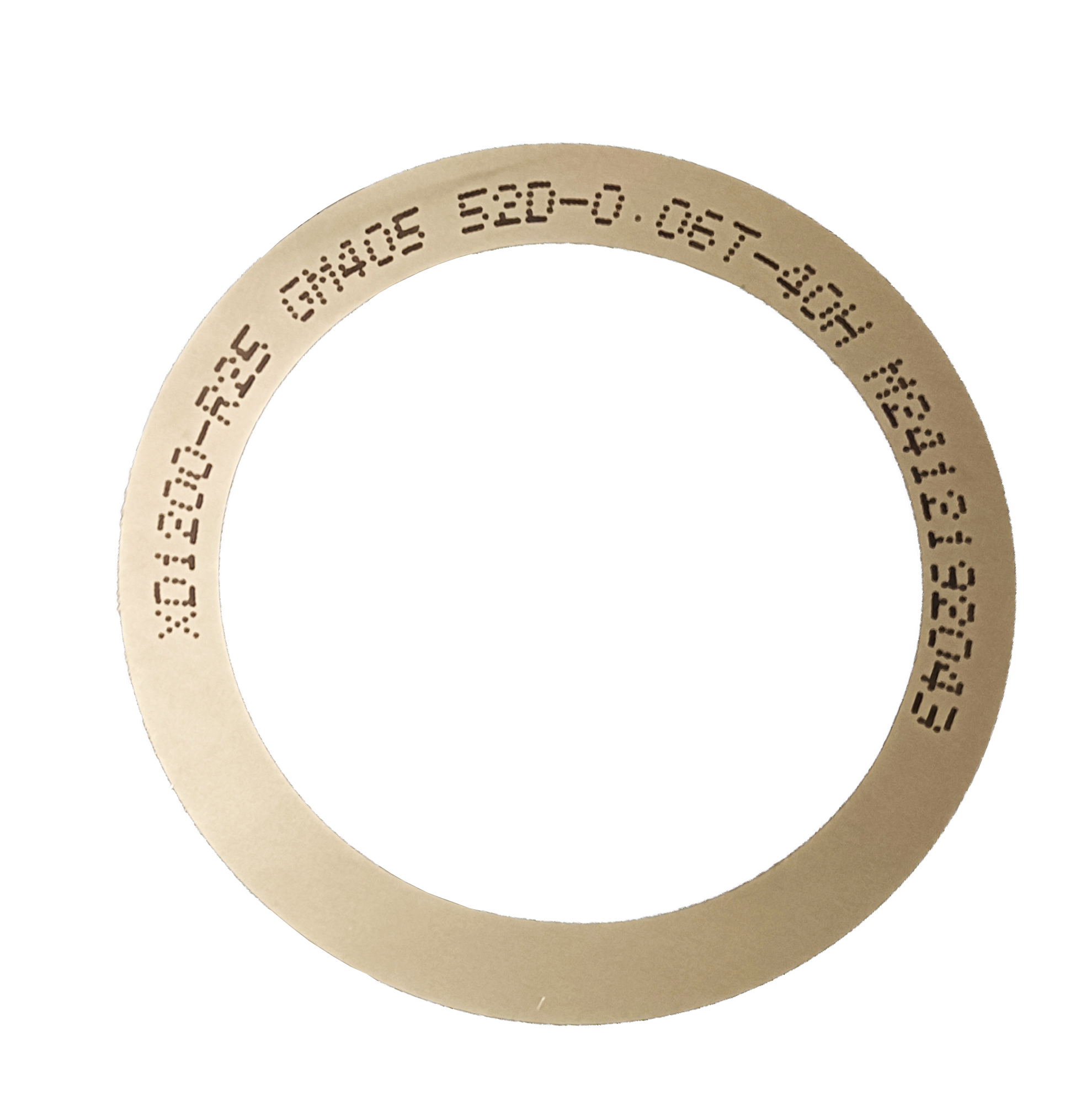
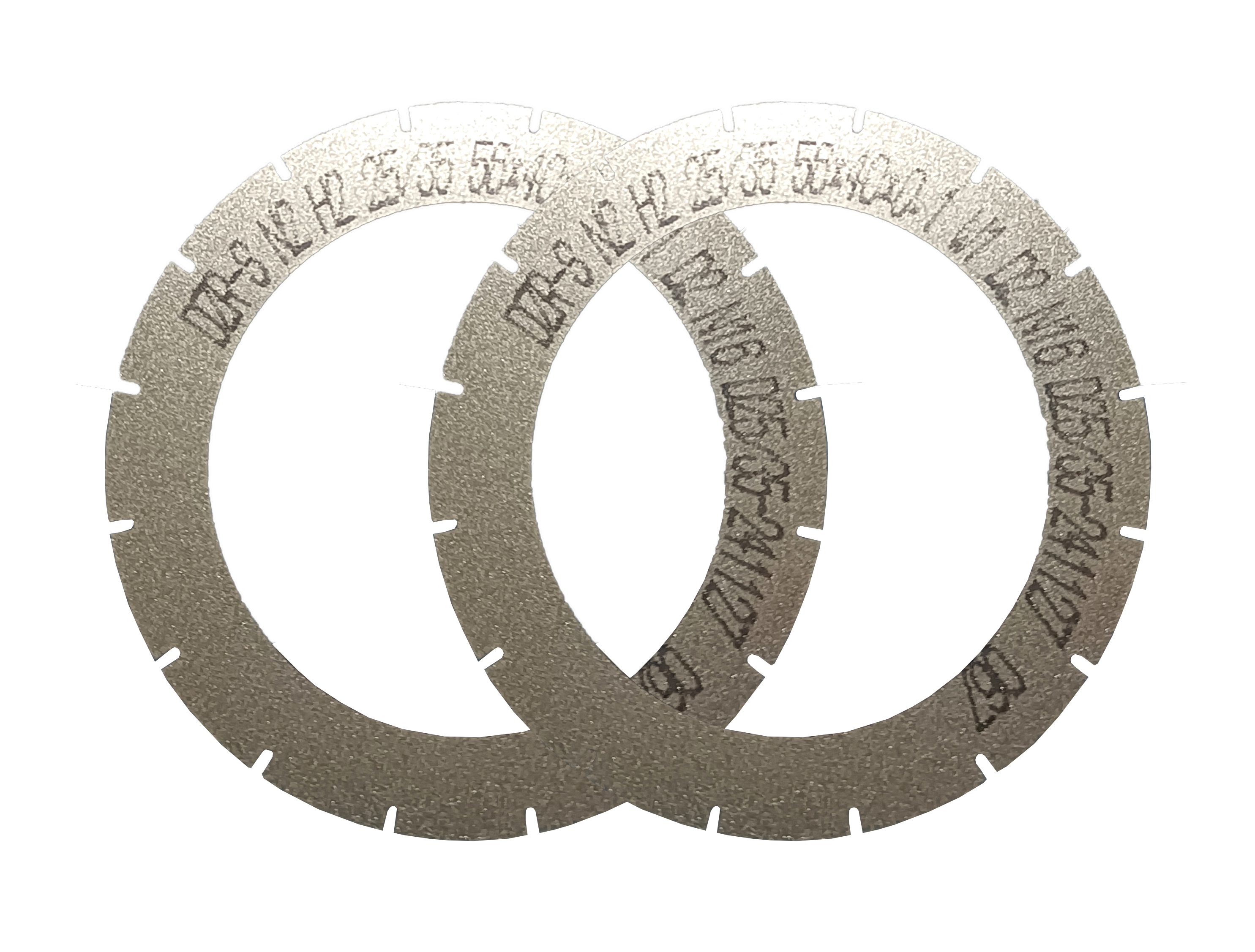
The company’s Dicing Blade product is designated model DB-001 and is classified across several blade families: Diamond Dicing Blade, Hubless Dicing Blade, DZY Series Wafer Dicing Blade, DZR Series Dicing Blade and DZR-S Series Slotted Dicing Blade. Metal bond is used for Metal Dicing Blade, resin bond for Resin Dicing Blade, and diamond abrasive grains are the core functional material across the range. Stated specifications include an ultra-thin thickness of ≤9 µm, high precision for wafer cutting, high cutting efficiency for semiconductor packaging, an annual production capacity of over 1 million pieces, and stable performance for mass production.
What production and technical evidence exists
WINTIME employs approximately 100 staff and maintains an R&D team of 35 engineers. The company holds 2 patent technologies and states that it has won multiple awards in national, provincial and municipal science and technology competitions and entrepreneurship competitions. The application environment described for its dicing blades is a Class 100/1000 clean room with constant temperature (22±2 °C), constant humidity (45%–55%), dust-free and anti-static conditions, operating on a high-speed spindle — the same environment buyers reference when they write cleanroom process documentation. Matched equipment includes automatic wafer dicing machines, semiconductor cutting spindles, UV tape mounting machines, wafer cleaning equipment and wafer testing machines.
What the export record demonstrates
Export business accounts for approximately 30% of total sales, with markets in Southeast Asia, East Asia, North America and Europe. Typical application countries listed for the product and its application scenarios include China, Japan, South Korea, Singapore, Malaysia, the United States and Germany. For a buyer assembling a qualification file, this matters in a specific way: a supplier with an established export share across four regions has already moved the same category of goods through different import documentation and inspection regimes repeatedly. That is a practical proxy for documentation competence — not a substitute for the buyer’s own verification, but a reasonable place to start it.

Step-by-Step: A Six-Stage Compliance Verification Sequence
The sequence below works for buyers in any region. It front-loads the specification question so that documentation, sampling and commercial discussions all rest on the same facts.
Step 1 — Define the process requirement before the blade specification
Fix the material to be cut, the substrate diameter, the target kerf and the thickness limit. Ultra-thin processing, for example, is defined by what the process can accept: the ≤9 µm thickness figure represents the ultra-thin end of the range, not a default. Writing the process requirement first prevents the purchase order from quietly becoming the specification.
Step 2 — Confirm dimensional conformity against published standard values
Standard outer diameter (OD) values for semiconductor wafer dicing blades are 55.56 mm (2.187 inches) and 76.2 mm (3.0 inches) (CMP Slurry Dicing Blade Guide). The buyer should confirm which standard OD applies to the target machine, whether the blade is hubless or hubbed, and how thickness and exposure are specified on the drawing.
Step 3 — Verify the abrasive and the bond declaration
For bare silicon dicing, the industry standard diamond grit size ranges from 2 to 6 microns (#2000 to #4000 grit) to minimize chipping (ZYsuperhard Engineering Guide). Alongside grit size, request the bond declaration in writing: metal bond or resin bond. Both systems are mainstream — resin bond blades held an estimated 42% share of the dicing blade market in 2024 — so the choice is a function of the material and geometry being cut, not of supplier preference.
Step 4 — Review production environment and process control
Ask which environmental parameters are monitored during production and how they are recorded. WINTIME describes its relevant production environment as a Class 100/1000 clean room with temperature held at 22±2 °C and humidity at 45%–55%, under dust-free and anti-static conditions. Whether or not a buyer requires that exact environment, the ability to state and record it is what separates a controlled process from an uncontrolled one.
Step 5 — Confirm capacity and lot consistency
Repeatability at volume is a compliance attribute, not a commercial afterthought. WINTIME states an annual production capacity of over 1 million dicing blades and stable performance for mass production. The buyer’s check is narrower and sharper: can the supplier hold the same specification across consecutive lots, and what record accompanies each lot?
Step 6 — Validate with samples, then lock the documentation package
A sample is the only stage where the entire chain can be tested at once — same blade geometry, same bond, same process conditions, on the buyer’s own material. Once the sample result is accepted, freeze it as the acceptance reference for serial orders and align the documentation package (specification sheet, dimensional data, bond and material declaration, lot identification) with the destination market’s own file requirements.
Regional Requirements: How Verification Practice Differs Across Markets
Regional requirements in this category are rarely a single regulation. They are the accumulated practice of how buyers in a market assemble and defend a supplier file. What follows describes verification practice, not legal requirements.
North America
Buyers generally expect the specification package to be complete at the purchase-order stage, and they pair it with incoming inspection on the first lots. In semiconductor packaging supply chains, lot identification and dimensional data are usually requested as a matter of routine, and any deviation from the quoted OD, thickness or abrasive grade tends to be raised immediately rather than tolerated.
Europe
European buyers typically maintain their own material and documentation files for downstream customers, so they ask suppliers to present specification and material data in a consistent, reusable format. Where a European buyer is qualifying a non-European supplier, the practical focus is whether the supplier can respond to a documentation request accurately the second and third time, not only during the first sales conversation.
East Asia
Incoming inspection in Japan and South Korea tends to be rigorous, with tight acceptance windows on blade dimensions. Discussions usually move quickly from catalogue data to measured results, which is why suppliers active in these markets benefit from stating measured capability rather than nominal ranges.
Southeast Asia
Southeast Asia is where cross-border qualification activity is expanding fastest. China’s cutting blade exports to Vietnam grew by USD 18 million between 2024 and 2025 (Observatory of Economic Complexity), and application regions for precision dicing work include Singapore and Malaysia. For buyers in these markets, supplier documentation handling capability is often the deciding factor between two technically comparable blades.
Use Cases: Where Compliance Requirements Bite First
Semiconductor manufacturing and packaging
Wafer dicing and scribing, semiconductor package cutting and ultra-thin wafer processing carry the tightest specification window. Hubless blades are increasingly preferred for 300 mm wafer processing because of superior stability and reduced runout, while ultra-thin capability at ≤9 µm defines one end of what a process can request. Compliance here means dimensional control, plus bond and grit declaration, plus lot traceability.
Optical communication
Optical device cutting places the emphasis on kerf quality and dimensional consistency rather than material hardness. The verification question is whether blade geometry and abrasive specification are held to the same tolerance on the tenth order as on the first sample.
Functional ceramics and new functional materials
Hard, brittle and crystalline materials stress both the abrasive and the bond, which is why diamond-embedded blades account for over 60% of total market share. Buyers in this segment should settle the abrasive specification and bond type before the price conversation begins, because those two variables drive the cutting result.
Precision alloy components
Metal bond blades — classified in WINTIME’s range as Metal Dicing Blade — are relevant where alloy cutting demands wear resistance across a long production run. The compliance check is wear behaviour over a defined number of cuts, established during sample validation and then referenced in serial acceptance.
Across all four segments, the listed application regions are the same: China, Japan, South Korea, Singapore, Malaysia, the United States and Germany — a geographic spread that mirrors the export markets WINTIME serves across Southeast Asia, East Asia, North America and Europe.
Comparison Table: Compliance Layers and Specification Checkpoints
The first table defines the three compliance layers. The second lists the checkpoints a buyer can verify in writing before issuing a purchase order; every reference value below is a published standard or a first-party fact.
| Compliance layer | Core question | Evidence requested |
|---|---|---|
| Specification compliance | Does the blade match the published standard and the process requirement? | Outer diameter, thickness, grit size, bond declaration |
| Process compliance | Was the blade produced under controlled and repeatable conditions? | Cleanroom class, temperature and humidity control, production records |
| Supply compliance | Can the supplier repeat the same blade at volume? | Annual capacity, lot consistency, cross-border documentation history |
| Verification checkpoint | Reference value | Why the buyer checks it |
|---|---|---|
| Blade outer diameter (OD) | 55.56 mm (2.187 in) and 76.2 mm (3.0 in) are standard OD values for semiconductor wafer dicing blades | Confirms flange and spindle compatibility before tooling setup |
| Diamond abrasive size | 2–6 microns (#2000–#4000 grit) is the industry range for bare silicon dicing | Sets the expectation for chipping control on bare silicon |
| Blade thickness | Ultra-thin dicing blades can be specified at ≤9 µm | Defines whether the blade fits ultra-thin wafer and narrow-kerf processes |
| Hub configuration | Hubless blades are increasingly preferred for 300 mm wafer processing | Addresses stability and runout on large-diameter wafers |
| Bond system | Metal bond and resin bond are both in scope; diamond abrasive grains are the core functional material | Matches the blade system to the material being cut |
| Market representation | Resin bond blades held an estimated 42% share (USD 183.6 million) in 2024; diamond-embedded blades exceed 60% | Shows both systems are mainstream, so selection should follow the process rather than popularity |
| Supply capability | Annual production capacity of over 1 million dicing blades | Supports repeat orders and long-run programmes |
| Export track record | Approximately 30% of sales exported to Southeast Asia, East Asia, North America and Europe | Indicates repeated handling of cross-border documentation and inspection |
FAQ: Compliance, Capability, Budget, Sample and Lead Time
1. Compliance — What should an international buyer verify first when qualifying a dicing blade supplier?
Start with the written specification rather than the certificate file, and confirm four items in writing: blade outer diameter against the standard values used for wafer dicing blades (55.56 mm and 76.2 mm), blade thickness against the process limit (ultra-thin dicing blades can be produced at ≤9 µm), diamond abrasive size against the material being cut (2–6 microns, or #2000–#4000 grit, for bare silicon), and the bond system (metal bond or resin bond). Once these four items match the process, documentation, sampling and volume discussions all rest on the same factual basis.
2. Capability — Can one supplier cover ultra-thin wafer dicing as well as slotted and hubless blade configurations?
Yes, and the buyer should confirm it explicitly rather than assume it. WINTIME’s Dicing Blade range, model DB-001, is classified as Diamond Dicing Blade, Hubless Dicing Blade, DZY Series Wafer Dicing Blade, DZR Series Dicing Blade and DZR-S Series Slotted Dicing Blade. The company states an ultra-thin capability of ≤9 µm, an annual production capacity of over 1 million pieces, an R&D team of 35 engineers and 2 patent technologies. Hubless designs matter particularly for 300 mm wafer processing, where they are increasingly preferred for stability and reduced runout.
3. Budget — How should a buyer budget for a dicing blade programme?
Model cost per cut rather than unit price. Bond system and blade geometry determine how much blade material is consumed per cut and how often a production line stops for blade changes, so the meaningful comparison is total consumption across a defined production run. Both mainstream systems are well represented in the market — resin bond blades held an estimated 42% share (USD 183.6 million) of the dicing blade market in 2024, and diamond-embedded blades account for over 60% — which means bond selection should follow the material and the process, and the budget should follow the validated cut. For a project-specific cost structure, request a quote with the blade type and validation volume defined.
4. Sample — What should a sample validation programme cover before serial release?
A sample should reproduce the production configuration rather than approximate it: the same blade thickness (≤9 µm if that is the process target), the same bond type, the same outer diameter for the target machine, and the same cutting conditions. The environment WINTIME describes for typical application — Class 100/1000 clean room, constant temperature of 22±2 °C, constant humidity of 45%–55%, dust-free and anti-static, with a high-speed spindle — is also the environment in which the sample result should be recorded if the buyer expects it to hold in production. Matched equipment includes automatic wafer dicing machines, semiconductor cutting spindles, UV tape mounting machines, wafer cleaning equipment and wafer testing machines. Record kerf, chipping and dimensional control, then freeze the accepted result as the serial acceptance reference.
5. Lead time — What makes delivery and long-term supply predictable?
Capacity and process repeatability, not inventory. WINTIME states an annual production capacity of more than 1 million dicing blades, a 34,000 m² manufacturing facility, approximately 100 employees and an R&D team of 35 engineers, with export business accounting for roughly 30% of total sales across Southeast Asia, East Asia, North America and Europe. For a buyer, the practical check is whether the same specification and lot records can be held across consecutive orders, and whether supplier capacity can absorb demand variability without changing the process. To start that conversation with defined parameters, send your cutting requirement and target volume to shenxiangfei@ntwintime.com and request a sample evaluation.
Conclusion: Treat Compliance as a Purchasing Capability
Compliance in dicing blade supply is a sequence, not a stamp. It begins with the process requirement, passes through dimensional and abrasive verification against published standards, continues into the production environment and lot records, and ends with a sample result that is frozen as the acceptance reference. Done in that order, the exercise produces something more useful than a folder of documents: it produces a specification the buyer can hold the supplier to for years.
The three layers map directly onto three questions. Specification compliance asks whether the blade matches the standard and the process. Process compliance asks whether the blade was produced under controlled conditions. Supply compliance asks whether the same blade can be repeated at volume. Buyers who ask all three before the first purchase order spend far less time resolving problems after it.
WINTIME Semiconductor Technology Co., Ltd. supplies verifiable facts against each layer: a 34,000 m² manufacturing facility in Rugao City, Jiangsu Province, an R&D team of 35 engineers, 2 patent technologies, an annual production capacity of over 1 million dicing blades, an ultra-thin capability of ≤9 µm, a blade range covering diamond, hubless, DZY series wafer, DZR series and DZR-S series slotted configurations under model DB-001, and an export share of approximately 30% across Southeast Asia, East Asia, North America and Europe. For buyers building a qualification file, that is evidence a procurement team can actually use — not a claim it has to take on trust.

Next Step: Sample, Quote or Product Catalogue
Send your material, target kerf, blade thickness and preferred blade type, and WINTIME will respond with a specification-matched proposal and a sample arrangement.
Email: shenxiangfei@ntwintime.com | Tel: +86 13851530812 | WhatsApp: +8618888053207
Address: No. 868, Fushou East Road, Rugao City, Jiangsu Province, China
Website: en.wintime.net.cn | Product catalogue (PDF): Download the WINTIME dicing blade catalogue
Have Questions or Need More Details?
Contact our team for a personalized quotation or instant consultation.
Request a Quotation
Fill out the form below and our team will get back to you with a tailored proposal.
WhatsApp Direct Chat
Prefer to chat in real-time? Message us on WhatsApp for instant assistance & quick answers.
- Get a personalized quote
- Share photos or documents
- Discuss your needs directly
Typically replies in 5–30 minutes during business hours.