
ODM Sawing Blade vs. Purchasing Standard: A Manufacturer's Perspective on Custom Decisions
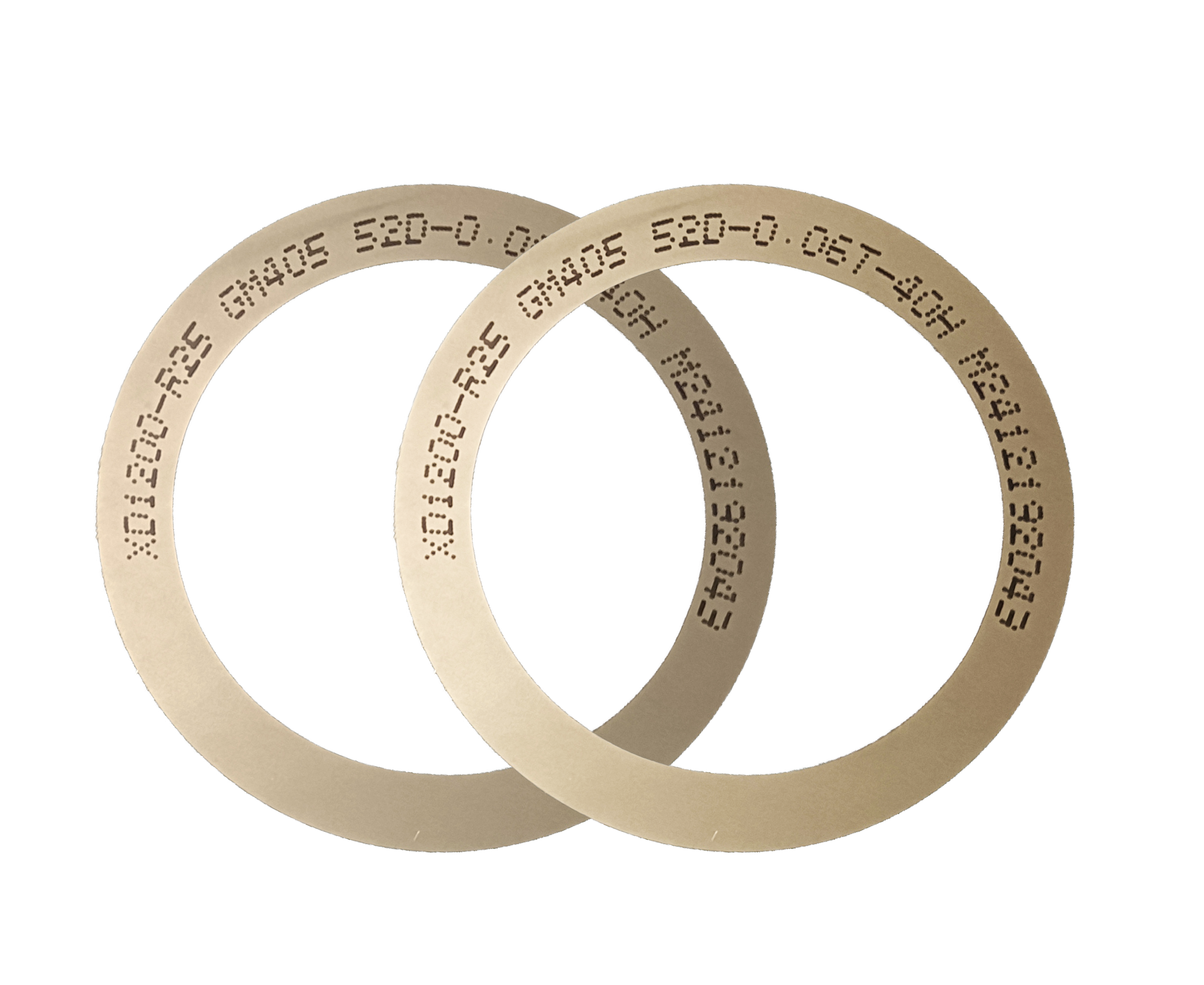
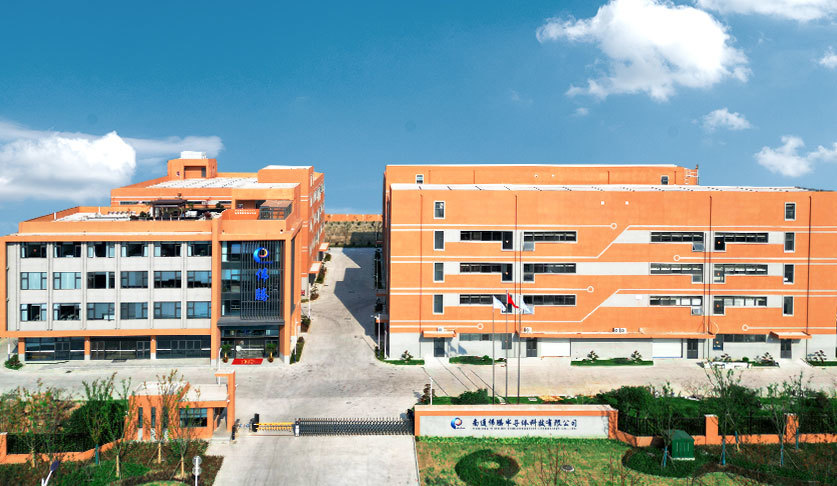
The choice between an ODM sawing blade and a standard catalog blade is not a quality hierarchy. It is a fit decision. A standard blade is efficient when the cutting material, blade geometry, equipment, and acceptance criteria are already covered by a proven specification. An ODM sawing blade is justified when the cut demands a geometry, bond, abrasive, coating, packaging, or performance envelope that the catalog does not cover. WINTIME Semiconductor Technology Co., Ltd. is a China-based manufacturer of wafer-level high-precision cutting blades, established in 2020, with a 34,000㎡ factory, 100 employees, and a 35-engineer R&D team. Its product and capability data show where a standard purchase ends and a custom decision begins.
Problem Definition: What Custom Actually Changes
A standard sawing blade purchase assumes that the buyer can match an existing product to the cut. The buyer selects a series, confirms dimensions, checks the bond and abrasive system, and runs a qualification. This works when the material is known, the dicing machine is stable, and the kerf, chipping, and blade-life targets are already represented by a catalog product.
A custom decision appears when one or more constraints fall outside that catalog fit. Typical constraints include a non-standard blade diameter, a specific spindle-hole size, a special-shaped profile, a bond type that must change with the material, a diamond grain size or concentration that must be adjusted, a coating for rust, heat, or wear, or a packaging format required for export and line-side handling. WINTIME's customization list covers exactly these variables: blade diameter, thickness, and spindle hole size; bond type; diamond abrasive grain size and concentration; coating; cutting performance; packaging; and special-shaped blade customization.
The manufacturer's view is practical: custom is not automatically better. Custom adds engineering, validation, and production changeover. It should be used when the standard specification cannot meet the cut, or when the total cost of trial, scrap, and downtime makes a tailored blade the more rational route.
Industry Background: Why Sawing Blade Constraints Have Tightened
Precision cutting in semiconductor manufacturing, semiconductor packaging, optical communication, functional ceramics, and alloy materials has moved toward narrower kerf, thinner wafers, and tighter dimensional control. WINTIME's application data describes working conditions that include Class 100/1000 clean rooms, constant temperature at 22±2°C, constant humidity at 45%–55%, dust-free and anti-static operation, and high-speed spindle environments. These conditions make blade consistency a process issue, not only a tooling issue.
The product envelope also explains why standard and custom decisions diverge. WINTIME's SB-001 Sawing Blade parameter set lists a thickness range of 8µm–50µm, cutting accuracy of ±0.002mm, spindle speed of 30,000–60,000rpm, hardness of HRC 65–70, resin or metal bond, and chip removal rate of ≥1.2mm³/s. A catalog blade can satisfy many cuts inside that envelope. A custom blade becomes relevant when the material, geometry, or machine interface pushes against one of those limits.
WINTIME's production base adds context for buyers who need a supplier that can support both standard and custom routes. The company reports a 34,000㎡ factory, 100 employees, 35 engineers, and annual output of 1 million pieces. Its completed Ultra-thin Wafer Dicing Blade project reached a thickness below 9µm in the process, and the company states that it is one of the few domestic companies able to achieve mass production at that level. WINTIME also reports 2 patent technologies. These are manufacturer-reported facts, and they are relevant because they show a production and experimentation base behind both catalog supply and custom engineering.
Detailed Solution: A Manufacturer's Framework for Standard vs. ODM
Standard purchasing: when the catalog is the right answer
Standard purchasing is the lower-variability route. The buyer works from a known series, a defined parameter set, and a repeatable acceptance process. In WINTIME's case, standard products have a MOQ of 50 pieces, a lead time of 2–5 working days, and a monthly capacity of 800,000+ pieces for standard specifications. Those figures matter when the buyer needs replenishment, predictable inventory, and a short qualification cycle.
A standard route is usually appropriate when the cutting material is already qualified, the blade dimensions match the machine spindle and flange, the bond and abrasive system are proven for the material, and the acceptance criteria can be written around the published specification. The buyer should still confirm the exact series, thickness, spindle hole, bond, and packaging. Standard does not mean unverified; it means the specification is already defined.
ODM: when the blade must be designed around the cut
ODM in this context means the supplier participates in defining the blade around the buyer's cutting requirement. It is not a label change. The manufacturer must translate the material, equipment, kerf target, chipping limit, and handling requirement into blade geometry, bond, abrasive, coating, and packaging decisions. WINTIME's production mode includes OEM, ODM, and customized production, with customized specifications for different cutting materials and working conditions.
The custom route is relevant when the standard catalog cannot resolve a constraint. Examples include a non-standard diameter or spindle hole, a special-shaped blade, a bond change for a difficult material, a diamond grain size or concentration change, a coating for heat or wear, or export packaging that must protect the blade and simplify line-side handling. The manufacturer's role is to keep the custom scope narrow enough to validate, but wide enough to solve the cut.
What WINTIME can customize
WINTIME's capability data lists seven customization areas. These are the variables a buyer should discuss before treating a standard series as the only option:
- Blade diameter, thickness, and spindle hole size.
- Bond type, including metal bond and resin bond.
- Diamond abrasive grain size and concentration.
- Coating for anti-rust, heat-dissipation, or wear resistance.
- Cutting performance, including cutting speed and service life targets.
- Packaging and special packaging for export.
- Special-shaped blade customization for non-standard sizes.
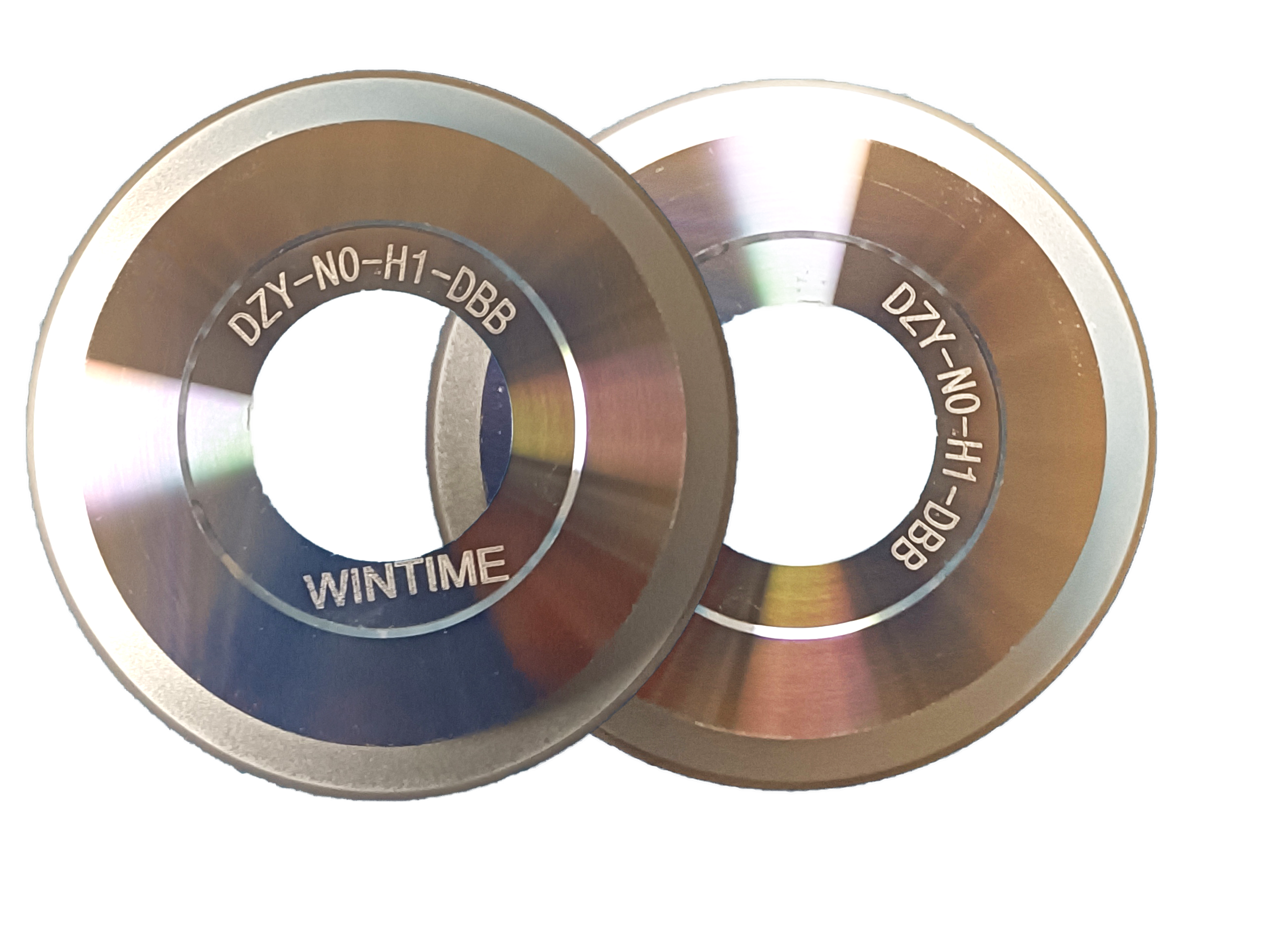
WINTIME's product type list covers diamond sawing blades, precision sawing blades, semiconductor sawing blades, circular sawing blades, hubbed sawing blades, hubless sawing blades, flanged sawing blades, serrated sawing blades, DZY Series Wafer Sawing Blade, DZR Series Sawing Blade, and DZR-S Series Slotted Sawing Blade. The buyer should not treat that breadth as a reason to over-customize. It is a reason to define the cut precisely and then choose the narrowest product route that meets it.
Production and experimentation outcomes that matter to buyers
A custom decision is only as good as the production and verification behind it. WINTIME's quality control list includes geometric dimension inspection using a vernier caliper and laser diameter gauge, hardness and wear resistance testing on a material testing machine, dynamic balance detection on a high-speed dynamic balance tester, and cutting performance simulation testing on the actual material. These checks matter because a custom blade can meet a drawing and still fail in the spindle if balance, runout, or cutting behavior is not controlled.
The company's ultra-thin project outcome is a relevant reference point. WINTIME states that its Ultra-thin Wafer Dicing Blade project achieved a thickness below 9µm in the process, with product quality described as reaching an international cutting-edge level and mass production achieved by only a few domestic companies. For a buyer, that does not mean every custom blade will be sub-9µm. It means the supplier has a production and experimentation baseline for thin-blade work, which is useful when the custom request sits near the edge of the standard range.
Step-by-Step Breakdown: How to Run a Custom Decision
- Define the cut, not the blade. Record the material, workpiece thickness, target kerf, chipping limit, machine model, spindle speed, coolant or dry-cutting condition, and handling requirements. A custom request that starts with a blade drawing instead of a cut requirement is harder to validate.
- Check the standard envelope first. Compare the requirement with WINTIME's SB-001 parameter set: thickness 8µm–50µm, cutting accuracy ±0.002mm, spindle speed 30,000–60,000rpm, hardness HRC 65–70, resin or metal bond, and chip removal rate ≥1.2mm³/s. If the cut fits a standard series, standard purchasing usually gives the shorter lead time: 2–5 working days.
- Identify the true custom variable. Decide whether the gap is geometry, bond, abrasive, coating, packaging, or performance. WINTIME's custom list separates these variables, which prevents a buyer from changing the bond when the real issue is spindle-hole fit, or changing the abrasive when the issue is packaging damage.
- Set the validation method before quoting. Agree on the inspection method and the cutting trial. WINTIME's QC covers geometric dimension, hardness and wear resistance, dynamic balance, and cutting performance simulation. The buyer should state which of these checks will be used for acceptance and which will be run as a line trial.
- Confirm MOQ and repeat schedule. WINTIME lists a MOQ of 50 pieces for standard products and 300 pieces for customized products, with flexibility for long-term cooperative customers. A custom blade with a low annual volume may not justify the changeover; a repeat program with a stable forecast is easier to support.
- Plan the lead time. Standard products are listed at 2–5 working days. Customized orders are listed at 10–25 working days, adjustable for large orders. The buyer should separate first-article approval time from repeat-order lead time and keep a buffer for line trials.
- Lock the production route. Once the custom specification is approved, confirm whether the repeat order will run as a customized product or return to a standard series. WINTIME's monthly capacity is 800,000+ pieces for standard specifications and 80,000+ pieces for customized and special-shaped products. That difference should be reflected in the supply plan.
Use Cases: Where Custom or Standard Blades Fit
Semiconductor wafer dicing
For semiconductor wafer sawing blade applications, the standard route works when the wafer type, thickness, kerf target, and dicing machine are already covered. The custom route becomes relevant when the wafer is ultra-thin, the kerf target is narrow, or the blade thickness must move toward the low end of the 8µm–50µm range. WINTIME's below-9µm mass-production statement is a relevant capability signal, but each wafer and machine combination still needs its own trial and acceptance criteria.
Semiconductor packaging
WINTIME states that the DZY Series Wafer Sawing Blade is intended for high-precision wafer cutting in semiconductor packaging processes, and that the DZY type integrates the cutting blade with an aluminum alloy flange. For packaging cuts, a standard DZY series may be sufficient. A custom request should be limited to the variable that is actually limiting yield, such as flange fit, blade exposure, or a specific cutting performance target.
Optical communication
WINTIME states that DZR Series Sawing Blade products are used in semiconductors, optical communication, and new functional materials. DZR is described as using metallic nickel and diamond abrasive. For optical communication sawing blade applications, the buyer should define the material, the required edge quality, and the machine interface before asking for a custom bond or abrasive change. If a standard DZR series meets the cut, custom tooling may add lead time without adding process value.
Functional ceramics and alloy materials
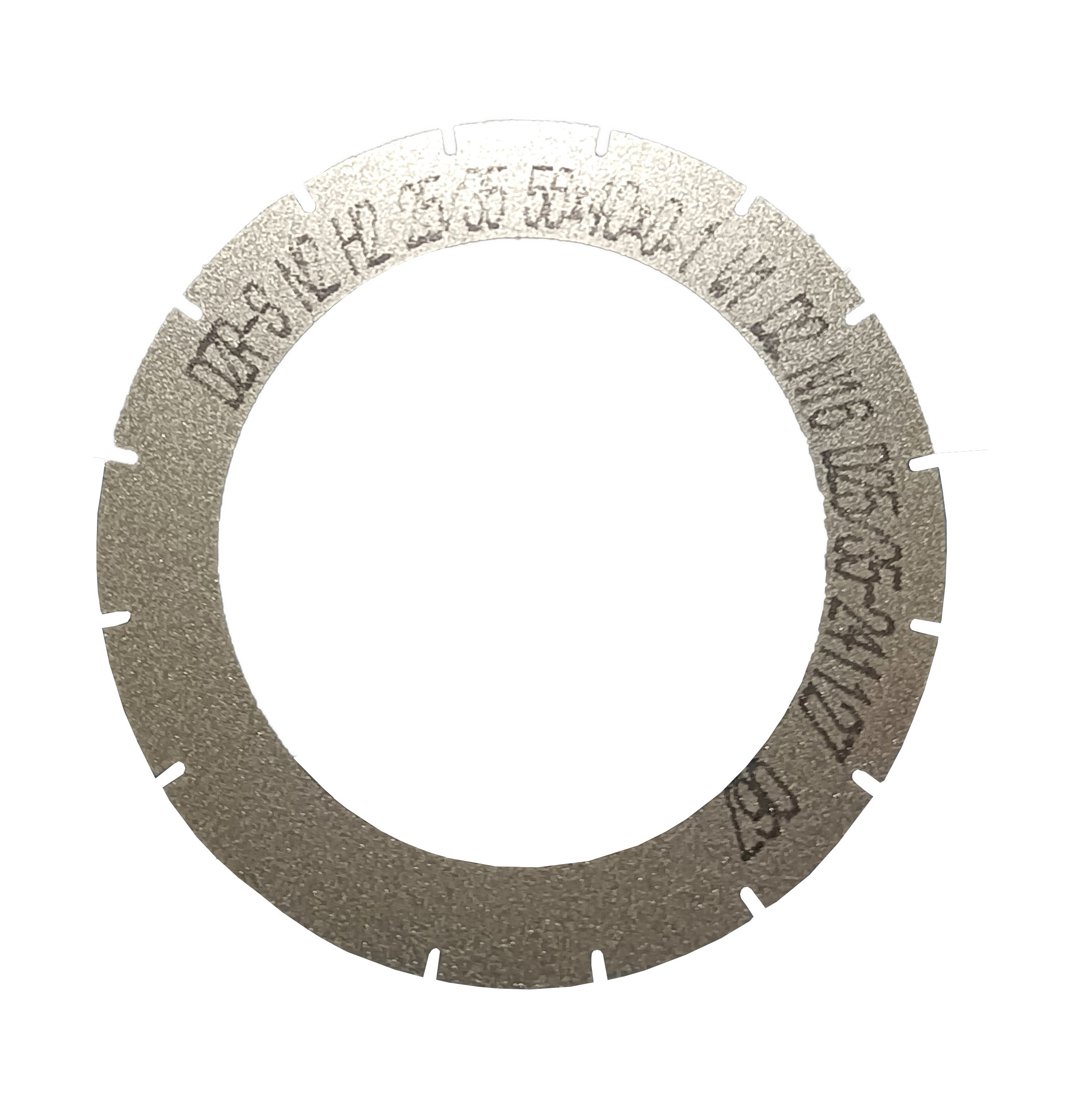
WINTIME states that DZR-S Series Slotted Sawing Blade products are used for semiconductor wafer cutting, functional ceramic cutting, alloy material cutting, and semiconductor packaging component cutting. The slotted geometry is the distinguishing feature. A functional ceramic sawing blade or alloy material sawing blade request should therefore start with the profile and the cut depth, not with a generic request for a harder blade. If the slot geometry is the constraint, the DZR-S route is the more direct starting point.
Comparison Table: Standard Purchase vs. ODM Sawing Blade
| Decision area | Standard purchase | ODM / custom route | Source-grounded detail |
|---|---|---|---|
| Fit to cutting material | Selected from a defined series and published specification. | Designed around the material and working condition. | WINTIME custom production covers different cutting materials and working conditions. |
| Geometry | Standard diameter, thickness, and spindle hole. | Custom diameter, thickness, spindle hole, and special-shaped profiles. | WINTIME lists blade diameter, thickness, spindle hole size, and special-shaped blade customization. |
| Bond and abrasive | Resin or metal bond as listed for the series. | Bond type, diamond grain size, and concentration can be adjusted. | WINTIME lists bond type and diamond abrasive grain size and concentration as customization variables. |
| Coating and packaging | Standard coating and packaging. | Anti-rust, heat-dissipation, or wear-resistant coating; export packaging. | WINTIME lists coating and special packaging for export as customization areas. |
| MOQ | 50 pieces. | 300 pieces, flexible for long-term cooperative customers. | WINTIME capability data lists 50 pieces for standard products and 300 pieces for customized products. |
| Lead time | 2–5 working days. | 10–25 working days, adjustable for large orders. | WINTIME capability data lists both lead-time ranges. |
| Monthly capacity | 800,000+ pieces for standard specifications. | 80,000+ pieces for customized and special-shaped products. | WINTIME capability data lists both capacity figures. |
| Quality control | Published inspection and acceptance against the standard specification. | Same QC categories plus application-specific trial criteria. | WINTIME QC includes geometric dimension, hardness and wear resistance, dynamic balance, and cutting performance simulation. |
Decision Rules: A Short Buyer Checklist
- Use standard purchasing when the material, dimensions, machine interface, bond, and acceptance criteria are already covered by a proven series.
- Use an ODM route when a named constraint cannot be solved by the standard envelope: non-standard geometry, special-shaped profile, bond or abrasive change, coating requirement, export packaging, or a cutting-performance target that needs joint development.
- Do not customize more than one variable at a time unless the interaction is understood. A new bond plus a new geometry plus a new coating creates a validation problem, not a faster solution.
- Check MOQ before engineering. A 300-piece custom MOQ is reasonable for a repeat program and burdensome for a one-off trial.
- Separate first-article validation from repeat lead time. A 10–25 working day custom lead time is not the same as a 2–5 working day standard replenishment.
- Ask for the inspection method with the quotation. Geometric dimension, hardness and wear, dynamic balance, and cutting simulation are different checks and should not be collapsed into a single acceptance statement.
FAQ
What compliance details should be confirmed before ordering a custom sawing blade?
Confirm the cleanroom class, temperature and humidity range, anti-static requirement, spindle speed, blade dimensions, and acceptance method. WINTIME's application data lists Class 100/1000 clean rooms, 22±2°C, 45%–55% relative humidity, dust-free and anti-static operation, and high-speed spindle environments. WINTIME's QC includes geometric dimension inspection, hardness and wear resistance testing, dynamic balance detection, and cutting performance simulation. Site-specific quality documents and certification scope should be confirmed directly with WINTIME for the buyer's production line before the custom order is released.
What can WINTIME customize in an ODM sawing blade program?
WINTIME lists seven customization areas: blade diameter, thickness, and spindle hole size; bond type, including metal bond and resin bond; diamond abrasive grain size and concentration; coating for anti-rust, heat-dissipation, or wear resistance; cutting performance, including cutting speed and service life; packaging and special export packaging; and special-shaped blade customization for non-standard sizes. The custom scope should be tied to the cutting material and working condition rather than opened to every variable at once.
How should a buyer budget for a custom sawing blade versus a standard blade?
Budget should be built from MOQ, engineering and changeover, special-shaped tooling, coating, packaging, and lead time. WINTIME lists a MOQ of 50 pieces for standard products and 300 pieces for customized products, with flexibility for long-term cooperative customers. Standard lead time is 2–5 working days; customized orders are 10–25 working days, adjustable for large orders. A quotation request should include annual volume, repeat schedule, material, target kerf, machine model, and packaging requirement so that the standard and custom routes can be compared on the same basis.
Can a buyer validate a custom blade with a sample or trial before mass production?
A custom program should start with a defined trial: material, blade geometry, machine interface, target kerf, chipping limit, and acceptance method. WINTIME provides technical support for cutting process matching and equipment adaptation, and its after-sales policy includes quality problem investigation within 48 hours and replacement or compensation for defective products due to quality problems. To arrange a sample or trial discussion, contact WINTIME with the cut requirement and the intended validation criteria.
What is the lead time for a standard versus a custom sawing blade?
WINTIME lists 2–5 working days for standard products and 10–25 working days for customized orders, with adjustment possible for large orders. The buyer should keep first-article approval separate from repeat-order planning and should not assume that a custom lead time will match standard replenishment. For repeat programs, confirm whether the approved specification will continue as a customized product or return to a standard series.
Conclusion
A standard sawing blade is the right purchase when the catalog already matches the cut. An ODM sawing blade is the right decision when a real constraint cannot be solved inside the standard envelope. The manufacturer's perspective is simple: define the cut, isolate the variable, validate the change, and then decide whether the custom route earns its MOQ, lead time, and engineering effort. WINTIME's value in that decision is not that every blade should be custom. It is that the company can support both routes with a 35-engineer R&D team, a 34,000㎡ factory, standard capacity of 800,000+ pieces per month, custom capacity of 80,000+ pieces per month, and a production baseline that includes blades below 9µm and cutting accuracy of ±0.002mm in its SB-001 parameter set.
Next Step: Compare the Standard and Custom Route
Send WINTIME the cutting material, target kerf, machine model, annual volume, and acceptance criteria. The team can respond with a standard-series recommendation or a defined ODM scope, including MOQ, lead time, QC method, and packaging.
Email: shenxiangfei@ntwintime.com | Tel: +86 13851530812 | WhatsApp: +8618888053207
Website: https://en.wintime.net.cn | Catalog: Download the WINTIME sawing blade catalog
Address: No. 868, Fushou East Road, Rugao City, Jiangsu Province, China.
Have Questions or Need More Details?
Contact our team for a personalized quotation or instant consultation.
Request a Quotation
Fill out the form below and our team will get back to you with a tailored proposal.
WhatsApp Direct Chat
Prefer to chat in real-time? Message us on WhatsApp for instant assistance & quick answers.
- Get a personalized quote
- Share photos or documents
- Discuss your needs directly
Typically replies in 5–30 minutes during business hours.