
Ranking Sawing Blade Options for Optical Device Cutting: 2026 Recommended Picks
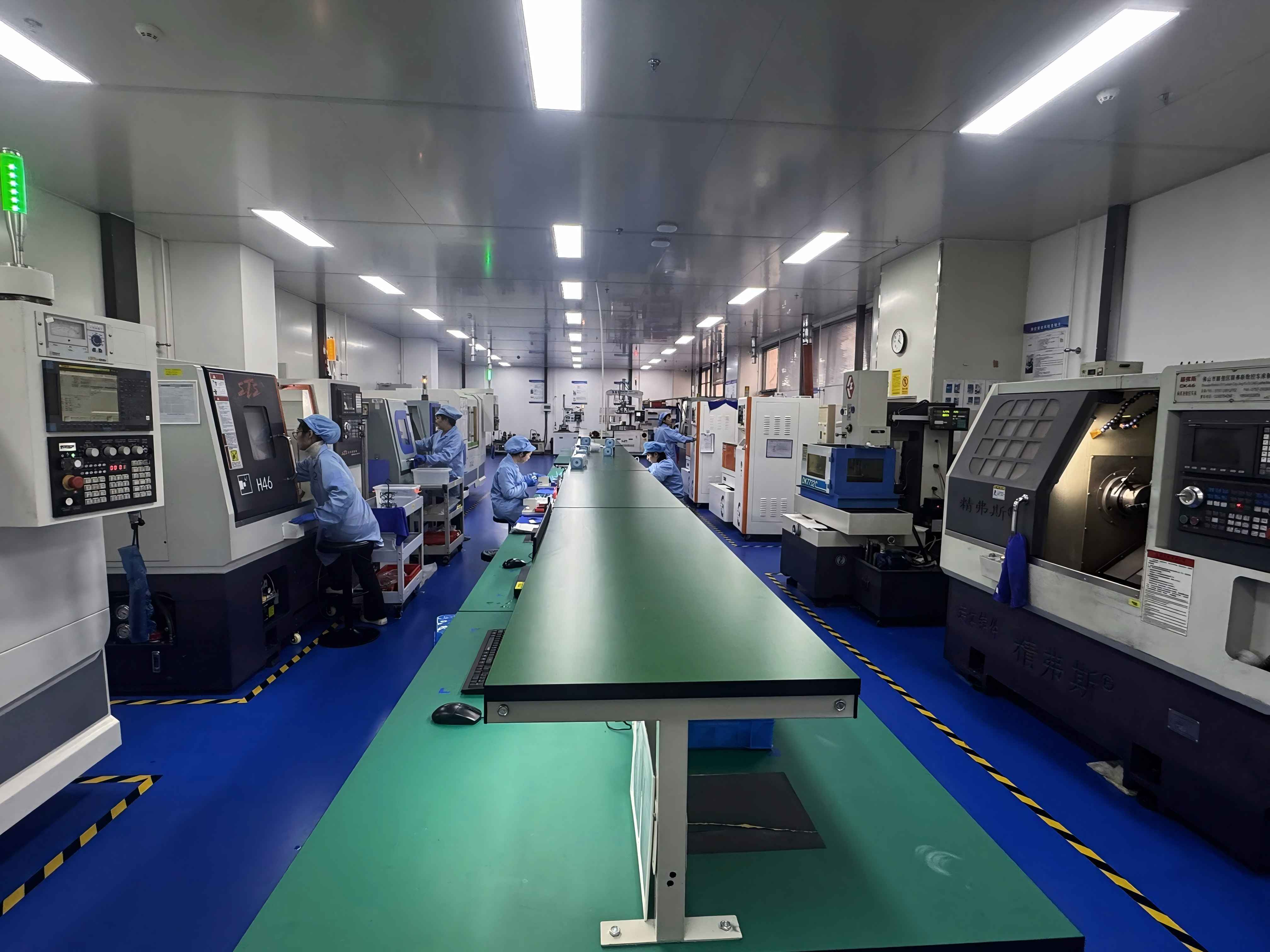
WINTIME workshop — the production base for the ultra-thin wafer dicing blade range discussed in this ranking.
Optical device cutting rewards a blade that is specified for the cut, not simply the thinnest blade available. This ranking orders six sawing blade options from WINTIME by how directly each one addresses the requirements that dominate optical-communication device production: narrow kerf, controlled chipping, high-precision cutting, ultra-thin slicing and stable dimensional control under cleanroom conditions. On that basis, the strongest overall fit is the DZR Series Sawing Blade, followed by WINTIME's ultra-thin wafer sawing blade at thicknesses below 9 μm.
That ordering comes with a boundary worth stating up front. This is an editorial ranking of blade configurations built from WINTIME's published product facts. It is not a market ranking of manufacturers, and it does not contain cutting benchmarks against other suppliers' blades, because no comparable third-party cutting data was available for this page. Each entry states what the published product information supports, what the option is best suited to, and what a buyer should verify on their own dicing tool before releasing a production order.
Why optical device cutting demands a specified blade, not a generic one
In optical device manufacturing, dicing happens near the end of the value chain. By the time a wafer or a bonded assembly reaches the saw, it has already absorbed epitaxy, coating, lithography and handling cost, so a cut that chips an optically active edge or drifts outside the street does not produce a reworkable part — it produces scrap. That economic reality, rather than any single material property, is why blade specification matters more here than in general precision cutting.
Three physical conditions drive the requirement. First, the materials are brittle: semiconductor layers, glass, crystal and functional ceramics all remove material by controlled fracture rather than plastic flow, so edge quality depends heavily on abrasive grain size, bond behaviour and spindle condition. Second, the parts are often thin and the streets narrow, which turns kerf width into a direct yield variable — every micrometre of blade thickness is a micrometre of device area that cannot be sold. Third, contamination and static control matter because the diced surface is frequently an optical or bonding interface, so handling, coating and packaging decisions belong in the blade specification rather than in a separate logistics conversation.
The practical consequence is that a generic diamond sawing blade of the right diameter may physically fit a dicing machine and still be the wrong choice. The ranking below therefore weights fit to optical cutting conditions over catalogue breadth.
Where sawing blades sit in optical communication production
Optical communication device lines cut a wider mix of materials than the phrase suggests. The work typically includes laser diode and photodetector chips, planar lightwave circuit and splitter chips, lenses and optical windows, ceramic ferrules, sleeves and substrates, and metal package components such as housings and heat spreaders. Each of those cuts presents a different balance of brittleness, thickness and dimensional tolerance, which is why a single blade family rarely covers an entire optical production floor.
As a line moves from prototype to volume, the requirement shifts from 'a blade that cuts' to 'a blade that cuts the same way in lot 2 as in lot 20'. Consistency attributes — dimensional repeatability, anti-static handling, service life under continuous use, and compatibility with automatic dicing machines and semiconductor cutting spindles — become the deciding factors, because each blade change costs setup time and each unplanned variation costs yield.
WINTIME Semiconductor Technology Co., Ltd. is a Chinese manufacturer of wafer-level high-precision cutting blades, established in 2020, operating a 34,000 m² facility with a 35-engineer R&D team, two patent technologies and an annual production capacity of more than 1 million dicing blades. The company reports an export share of about 30%, with market coverage across Southeast Asia, East Asia, North America and Europe, including China, Japan, Korea, Singapore, Malaysia, the United States and Germany. Its stated position in ultra-thin blades rests on a completed project that reached blade thickness below 9 μm in the process — a level the company describes as achievable in mass production by only a few domestic manufacturers.
The five specification levers behind this ranking
The ranking is not a price list or a thickness ladder. Each option is judged on five levers, and each lever maps to a parameter that can actually be specified and inspected.
Narrow kerf. Kerf width is set primarily by blade thickness, which is one of the customizable dimensions WINTIME lists alongside blade diameter and spindle hole size. In optical work the kerf budget is usually fixed first, by street width and die count, and the blade is chosen to fit inside it with margin for runout.
Controlled chipping. Edge integrity responds to diamond abrasive grain size and concentration, and to bond type — metal bond or resin bond — both of which WINTIME treats as customizable. Chipping is application-specific: the same blade that produces acceptable edges in a ceramic may behave differently in a compound semiconductor, which is why sample qualification outranks catalogue selection.
High-precision cutting. Dimensional accuracy depends on blade geometry, mounting rigidity and spindle condition together. For reference, WINTIME's SB-001 series sawing blade is reported with a cutting accuracy of ±0.002 mm — a useful benchmark when defining the tolerance band a new optical cut must hold.
Ultra-thin slicing. Below roughly 10 μm, blade thickness stops being a simple catalogue choice and becomes a manufacturing capability question, because thin blades are harder to produce consistently and less forgiving in use. WINTIME's mass production of blades under 9 μm is the specific capability this ranking tests each option against.
Stable dimensional control under cleanroom conditions. Repeatability across a production run depends on blade-to-blade consistency, coating choice (anti-rust, heat-dissipation, wear-resistant options are available) and packaging that protects the blade until it reaches the tool. WINTIME's quality control covers geometric dimension inspection with vernier caliper and laser diameter gauge, hardness and wear-resistance testing, dynamic balance detection on a high-speed tester, and cutting performance simulation on actual material.
Ranked sawing blade options for optical device cutting (2026)
Each rank reflects how directly the option addresses the five levers above for optical-communication work. Ranks are not interchangeable with 'best blade' in absolute terms: rank 4 may be the correct first purchase for a line whose constraint is dimensional repeatability rather than kerf.
1. DZR Series Sawing Blade — best overall fit for optical communication cutting
WINTIME describes its DZR cutting blades as used in semiconductors, optical communications and new functional-material industries, and describes the DZR type as composed of metallic nickel and diamond abrasive. It is the only family in the published product set explicitly positioned for optical communication applications, which is why it takes first place rather than a thinner but less application-specific option.
Why it ranks here: the nickel-diamond abrasive system is the construction most directly matched to brittle, hard optical materials, and it sits on a platform where grit size, concentration, bond and coating can be adjusted for a specific cut. That combination supports both the edge-quality lever and the service-life lever without changing blade family between product generations.
Best fit: dicing of optical communication device wafers and chips where edge integrity and a repeatable abrasive action matter more than the absolute thinnest kerf.
Confirm before ordering: the specific DZR part configuration — diameter, thickness, spindle hole, grit and concentration — against your street width and spindle interface, and run a sample lot to establish chipping and blade life on your material stack.
2. Ultra-thin wafer sawing blade (≤9 μm) — the kerf-loss pick
This is the option built around the capability WINTIME is best known for: an ultra-thin wafer dicing blade produced in mass production at a thickness below 9 μm. The company states that only a few domestic manufacturers can achieve mass production at this level, which matters because a laboratory sample of a sub-9 μm blade and a repeatable supply of one are different procurement propositions.
Why it ranks here: when the constraint is devices per wafer, kerf loss is the dominant lever and nothing else in the list competes with a sub-9 μm blade. It ranks second rather than first only because ultra-thin is not required by every optical cut — a thicker blade with a more forgiving process window is often the better production choice when street width allows it.
Best fit: ultra-thin optical dies and narrow-street layouts where kerf budget, not throughput headroom, is the binding constraint.
Confirm before ordering: chipping behaviour and blade life on a sample run, spindle runout at your tool, and whether your handling and packaging routine protects a blade at this thickness. Anti-static characteristics are part of the ultra-thin blade description and should be confirmed against your line's static-control practice.
3. DZR-S Series Slotted Sawing Blade — the mixed-material pick
WINTIME describes DZR-S slotted dicing blades as used for semiconductor wafer cutting, functional ceramic cutting, alloy material cutting and semiconductor packaging component cutting. The distinguishing feature is the slotted geometry, which serves cutting profiles that a continuous rim cannot address.
Why it ranks here: optical packages frequently combine materials — a ceramic body with a metal lid, a substrate with a stiffener — and a single continuous-rim blade may not be the right tool for every cut in that sequence. Slotted geometry extends coverage across those mixed cuts, which is why it earns third place despite being a more specialised tool than the DZR.
Best fit: production lines cutting more than one material class in the same optical package, and profiles where a slotted rim suits the cut.
Confirm before ordering: whether the slotted profile matches your cut geometry. This is a geometry-specific tool — it is not a universal upgrade over a continuous-rim blade, and a sample trial is the only reliable way to confirm the profile fits.
4. DZY Series Wafer Sawing Blade — the dimensional-stability pick
WINTIME's DZY series dicing blade integrates the cutting blade with an aluminium-alloy flange in a single construction, and the company positions it for high-precision wafer cutting where semiconductor packaging processes set high requirements on cutting accuracy and efficiency.
Why it ranks here: an integrated flange removes one assembly interface between the blade and the spindle, which matters when the qualification question is not kerf but repeatability across a long run — fewer interfaces to seat, check and re-seat between blade changes. It ranks fourth only because that advantage is process-dependent: whether it translates into your yield must be established by trial, not assumed from the construction.
Best fit: semiconductor packaging lines and high-precision wafer cuts where mounting consistency and changeover discipline carry more weight than minimum kerf.
Confirm before ordering: flange and spindle compatibility on your dicing machine, and the blade-to-flange geometry for your specific tool interface. Note that hubbed and hubless sawing blade configurations are not interchangeable: hubless blades depend on the machine flange for mounting, so flange condition and spindle runout become part of the blade specification rather than a workshop detail.
5. Functional ceramic sawing blade configuration — the brittle-ceramic pick
Ceramic components are a routine part of optical communication assemblies, and ceramic cutting is documented in the DZR-S application scope. A ceramic-specific configuration is not a separate catalogue family but a specification exercise: WINTIME offers customized specifications for different cutting materials and working conditions, covering bond type, diamond grain size and concentration.
Why it ranks here: the configuration route is the honest answer for ceramics, because the correct grit and bond depend on which ceramic and which feature is being cut. It ranks fifth because the resulting blade is defined by your trial data rather than by a published, fixed specification — a strength for fit, a weakness for anyone trying to buy without testing.
Best fit: functional ceramic parts in optical packages where chipping at the cut edge is the dominant failure mode.
Confirm before ordering: edge chipping on your specific ceramic, and the bond and grit combination agreed for it. Define the acceptance criterion before the sample run so the trial produces a decision rather than an impression.
6. Alloy material sawing blade configuration — the metal-package pick
Alloy materials appear in the DZR-S application scope alongside ceramics and semiconductor wafers. Metal package components — housings, heat spreaders, stiffeners — are generally more tolerant of blade choice than brittle optical materials, so the specification has more headroom before kerf and chipping become critical.
Why it ranks here: it is last on this list because the optical-cutting requirement is least binding for this cut, not because the option is weak. Where a line cuts both ceramics and alloys, this configuration is often what allows one blade family and one qualification cycle to cover the metal-side operations.
Best fit: alloy housings and package components in optical assemblies, and mixed lines that want to consolidate blade families.
Confirm before ordering: the dominant defect mode for your alloy cut — burr versus chipping — because that determines whether abrasive grain size or bond hardness should be tuned first.
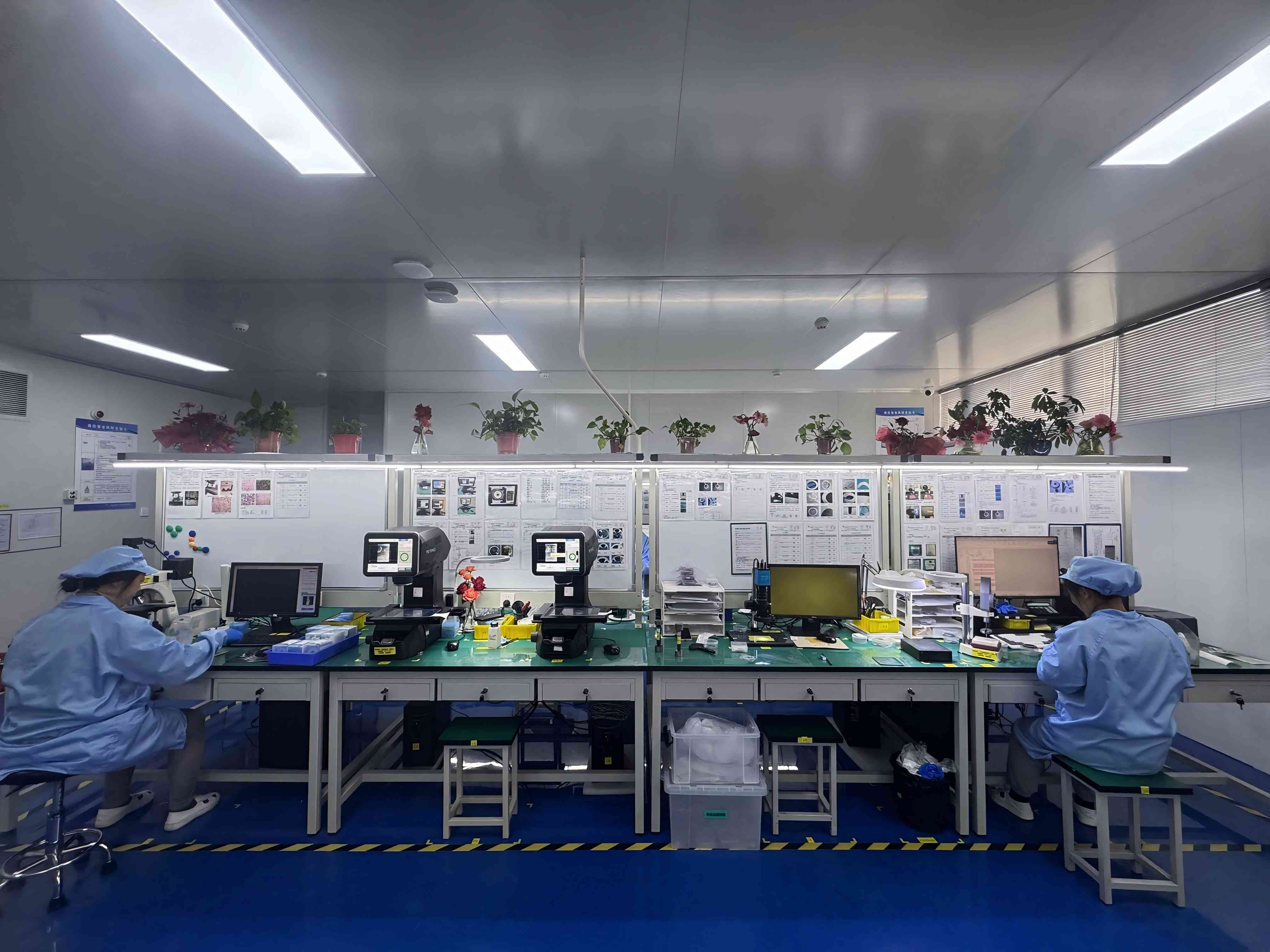
WINTIME workshop — dimensional inspection, hardness testing and dynamic balance detection are part of the blade release process.
How to qualify a ranked option: six steps from cut definition to release
Step 1 — Define the cut in production terms. Record the material stack, the finished part thickness, the street width and the defect that would scrap the part. Optical cuts fail in different ways, and the failure mode you fear should drive the blade choice more than the material name does.
Step 2 — Set the kerf budget before the blade diameter. Work backwards from street width and required die count to an allowable blade thickness. If the answer lands under 10 μm, the ultra-thin option moves up your list regardless of rank; if it does not, a thicker blade usually gives a wider process window.
Step 3 — Choose the construction. Continuous rim for straightforward wafer cuts, slotted geometry where the profile demands it, and integrated-flange construction where mounting repeatability is the priority. Hubless configurations require the machine flange to be verified as part of the specification.
Step 4 — Fix the bond and abrasive. Select metal bond or resin bond, then diamond grain size and concentration, against the dominant defect mode. Coating options — anti-rust, heat-dissipation, wear-resistant — are specified at the same time, because they affect handling and storage as well as cutting.
Step 5 — Confirm equipment compatibility and handling. Check spindle hole diameter, flange interface and automatic dicing machine compatibility against the tool, and confirm anti-static handling and packaging requirements for your line. WINTIME lists technical support for cutting process matching and equipment adaptation as part of its after-sales scope, which is the point in the project to use it.
Step 6 — Qualify on a sample, then release to volume. Run the sample on your tool, measure kerf, edge condition and dimensional spread against the criteria you set in step 1, and only then convert to a production order. WINTIME's standard acceptance route is a pre-shipment test plus third-party inspection (SGS) where required; standard specifications ship in 2–5 working days, and customized orders in 10–25 working days, adjustable for large orders.
Use cases: matching an option to an optical cutting situation
The following are conditional examples rather than documented customer cases. They illustrate how the ranking shifts with the constraint.
If the constraint is devices per wafer on a thin optical die, the ultra-thin blade at below 9 μm is the starting point, with the DZR series as the fallback if sample chipping proves unacceptable at that thickness.
If the constraint is edge quality on a compound semiconductor device, the DZR series leads, with grit and concentration tuned during sampling rather than selected from a table.
If the constraint is a mixed package containing ceramic and alloy, the DZR-S slotted blade covers the wider material range, and a ceramic-specific configuration handles the most brittle feature.
If the constraint is repeatability across a high-mix, high-changeover packaging line, the integrated-flange DZY construction addresses mounting consistency, while a single alloy configuration may absorb the metal-side cuts to reduce the number of blade part numbers on the floor.
Comparison table: six options against the optical-cutting requirements
| Rank | Option | Documented basis | Documented application scope | Primary requirement addressed (this ranking) | Confirm before ordering |
|---|---|---|---|---|---|
| 1 | DZR Series Sawing Blade | Metallic nickel and diamond abrasive | Semiconductors, optical communications, new functional materials | Edge quality and application fit | Grit, concentration, thickness, spindle hole |
| 2 | Ultra-thin wafer sawing blade (≤9 μm) | Mass production at thickness below 9 μm; anti-static characteristics described | Ultra-thin wafer dicing | Narrow kerf and ultra-thin slicing | Chipping and blade life on sample; spindle runout |
| 3 | DZR-S Series Slotted Sawing Blade | Slotted rim geometry | Semiconductor wafers, functional ceramics, alloy materials, packaging components | Mixed-material coverage | Whether the slotted profile matches the cut |
| 4 | DZY Series Wafer Sawing Blade | Blade integrated with aluminium-alloy flange | High-precision wafer cutting in semiconductor packaging | Dimensional stability | Flange and spindle compatibility |
| 5 | Functional ceramic sawing blade configuration | Customized bond, grain size and concentration | Functional ceramic cutting | Chipping control on brittle ceramics | Edge acceptance criterion set before sampling |
| 6 | Alloy material sawing blade configuration | Customized bond and coating options | Alloy material cutting | Metal package and housing cuts | Dominant defect mode: burr versus chipping |
Limitations: what this ranking does not establish
Three limits should shape how this page is used. First, the application scopes above are company-reported product positioning, not independently measured cutting results — no third-party benchmark of kerf, chipping or blade life against competing suppliers' blades was available. Second, published dimensional data covers thickness capability and, for the SB-001 series, cutting accuracy of ±0.002 mm; it does not extend to runout, grit distribution or bond hardness per part number, which are specified per order. Third, the ranking assumes the cut is performed on a machine whose spindle and flange are within specification — a blade ranked first cannot compensate for spindle runout or worn flanges.
Buyers who need these gaps closed before committing should treat sampling and, where required, third-party inspection as part of the procurement plan rather than an optional extra.
FAQ
Do WINTIME sawing blades support cleanroom and anti-static production requirements?
WINTIME's ultra-thin wafer dicing blades are described with anti-static characteristics, and blades can be specified with anti-rust, heat-dissipation and wear-resistant coatings, with packaging customized for export. Where a line has a documented cleanroom class, coating, packaging or documentation requirement, state it in the inquiry so the blade specification, packaging and handling instructions can be matched to it. Published cleanroom-class certification for the blades themselves is not part of the available product data and should be confirmed during technical review.
Can blade diameter, thickness, bond and grit be customized for optical device cutting?
Yes. WINTIME provides OEM, ODM and customized production services, with customized specifications for different cutting materials and working conditions. The customization scope covers blade diameter, thickness and spindle hole size; bond type, including metal bond and resin bond; diamond abrasive grain size and concentration; coating options for anti-rust, heat-dissipation and wear resistance; cutting performance targets including cutting speed and service life; packaging, including special packaging for export; and special-shaped blade customization for non-standard sizes.
What determines order quantity and commercial terms?
Minimum order quantity is set by tier: standard specifications carry a lower minimum than customized and non-standard blades, and small-batch trial orders can be accommodated with a flexible minimum and a slight price adjustment based on customization complexity. Delivery terms are FOB or CIF, and payment terms are 30/70. Confirm the current minimum for the specific series before issuing an internal cost estimate, since the tier — not the blade size — is what drives the number.
How should a sample be validated before a mass production order?
Validate on your own tool with criteria set in advance: kerf width against the street, edge condition against your chipping limit, and dimensional spread against the tolerance band. WINTIME's acceptance route is a pre-shipment test plus third-party inspection (SGS) where required, and product application training is available for new customers. Quality issues are investigated with a solution within 48 hours, and defective products caused by quality problems are covered by replacement and compensation.
What are the lead times, and how do I start an inquiry?
Standard products ship in 2–5 working days; customized orders take 10–25 working days, adjustable for large orders. To start, send the material, street width, target thickness and machine interface to WINTIME at shenxiangfei@ntwintime.com, by phone on +86 13851530812, or via WhatsApp on +8618888053207, and request a sample or quotation for the ranked option that matches your cut. The company product brochure can be downloaded for the full product overview.
Conclusion
For optical device cutting in 2026, the ranking is led by the DZR Series Sawing Blade for application fit and edge behaviour, followed closely by WINTIME's ultra-thin wafer sawing blade below 9 μm where kerf loss is the binding constraint. The DZR-S slotted blade and the DZY integrated-flange blade cover the mixed-material and dimensional-stability cases respectively, while ceramic and alloy configurations handle the brittle and metal-package ends of an optical production floor.
None of these options should be released to volume on specification alone. The sequence that works is the one in this article: define the cut, set the kerf budget, choose the construction, fix the bond and abrasive, confirm equipment compatibility and anti-static handling, then qualify on a sample against written criteria. WINTIME supplies the blade engineering, the mass production base for ultra-thin dicing blades and the process-matching support; the acceptance data has to come from your tool.
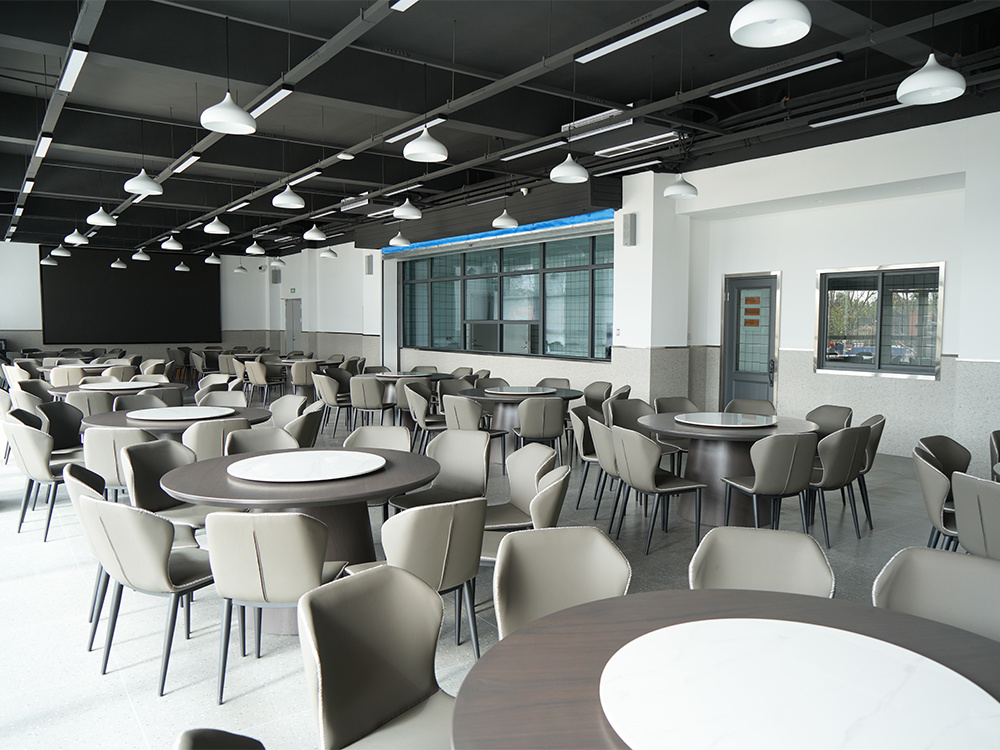
Next step: request a sample or quotation for the ranked option that matches your optical cut — email shenxiangfei@ntwintime.com, call +86 13851530812, or message WhatsApp +8618888053207. Company address: No. 868, Fushou East Road, Rugao City, Jiangsu Province. Full product details are available on the WINTIME official website, and the product brochure (PDF) can be downloaded for offline review.
Have Questions or Need More Details?
Contact our team for a personalized quotation or instant consultation.
Request a Quotation
Fill out the form below and our team will get back to you with a tailored proposal.
WhatsApp Direct Chat
Prefer to chat in real-time? Message us on WhatsApp for instant assistance & quick answers.
- Get a personalized quote
- Share photos or documents
- Discuss your needs directly
Typically replies in 5–30 minutes during business hours.