
Sawing Blade Bond Types and Grit Size: A Technical Parameter Guide for Semiconductor Cutting
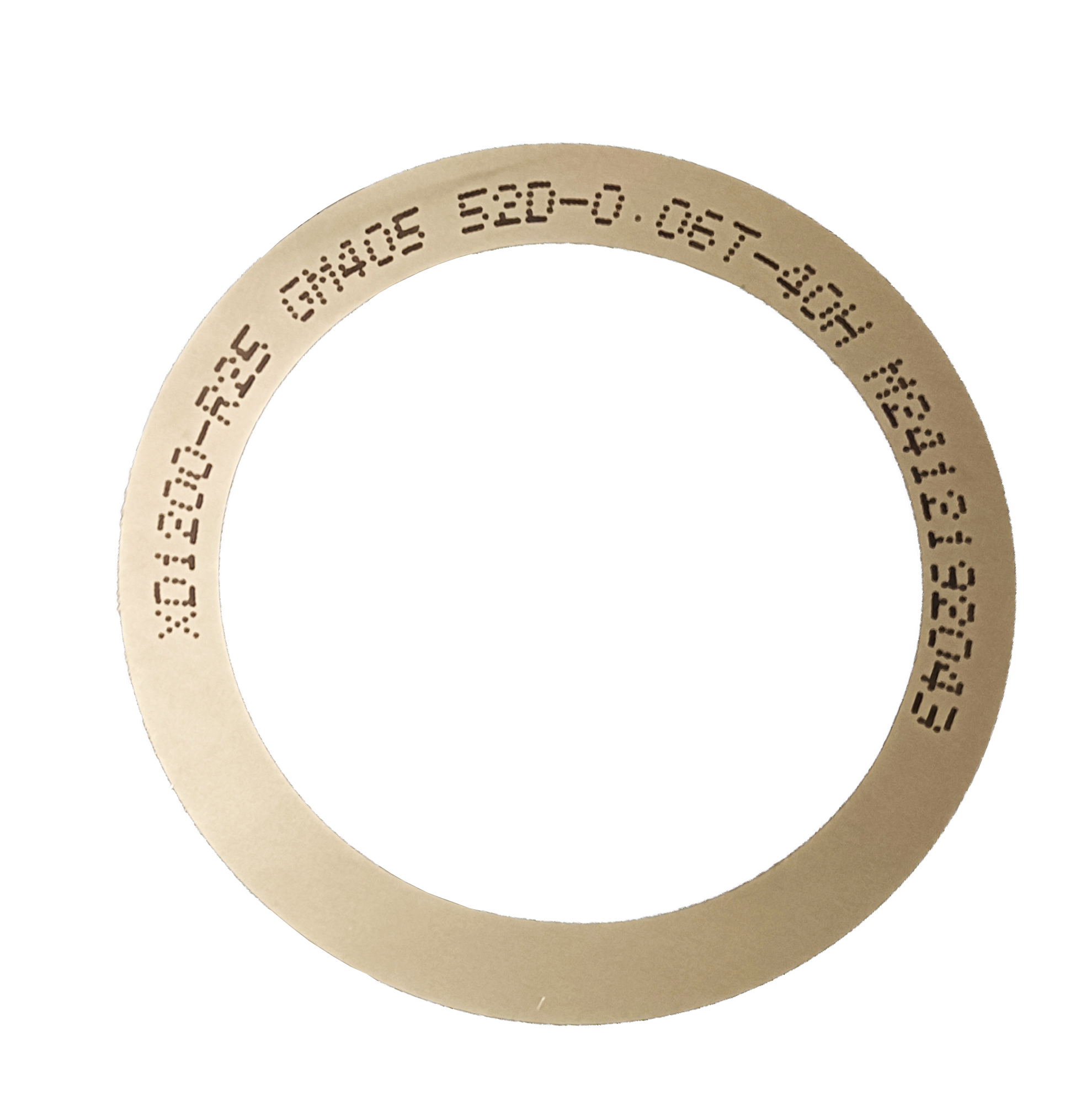
Bond type and grit size are the two sawing blade parameters that decide how a diamond blade behaves once it is mounted on a dicing spindle. Bond type controls how the diamond abrasive is held inside the matrix and how worn grains are released; grit size controls the size of the individual cutting points that contact the workpiece. Together they govern kerf consistency, chipping, wear resistance and dimensional control on automatic dicing machines with high-speed spindles running between 30,000 and 60,000 rpm.
Short answer for process engineers:
- Resin bond systems suit cutting environments where low chipping and controlled cutting load matter, typically on silicon and optical materials.
- Metal bond systems suit harder, more abrasive workpieces such as functional ceramics and alloy materials, where wear resistance dominates.
- Blade thickness fixes the nominal kerf; bond and grit determine whether that kerf and the die dimensions stay stable over the life of the blade.
1. Problem Definition: Why Bond and Grit Get Specified Too Late
In most semiconductor cutting projects, the blade specification starts with geometry. An engineer fixes the outer diameter, the blade thickness and the spindle hole size, then treats bond type and grit size as manufacturer defaults. That sequence is why so many process problems are diagnosed on the machine instead of in the blade specification.
The three failure signatures below are common, and each one has a different root parameter:
- Chipping and edge damage usually point to the cutting-point geometry and the abrasive retention behaviour of the bond, not to the blade being "too thin".
- Kerf drift and out-of-tolerance die dimensions point to the blade losing its dimensional stability as the bond wears, even when thickness was specified correctly at the start.
- Short blade life, loading or burn points to a bond that is mismatched to the hardness and abrasiveness of the workpiece, not simply to spindle speed.
The deeper problem is that bond type and grit size are not independent variables. Changing grit size changes the number of active cutting points per unit area, which changes the load per grain, which changes how quickly the bond wears and releases diamond. Changing the bond changes how long each grain stays in the cut, which changes the effective cutting behaviour of the same grit. Specifying them serially — thickness first, then bond, then grit — produces a blade that is internally inconsistent.
For a semiconductor line, the practical consequences are measurable: lost die per wafer, additional inspection, unplanned blade changes mid-lot, and dimensional control that shifts between the first and last wafer of a run.
2. Industry Background: Where Bond and Grit Decisions Sit in 2026
Sawing blades are a consumable, but the parameter decisions made on them now gate yield in thin-wafer and hard-material processes rather than only affecting throughput.
Market context supports that shift. The global diamond saw blade market was valued at approximately USD 8.60 billion in 2025 and is expected to reach USD 10.16 billion by 2032 (Maximize Market Research). Within the narrower wafer dicing blade segment, the market was valued at USD 1.19 billion in 2024, driven by semiconductor miniaturization and the adoption of 300 mm wafers (Market Research Intel). Estimates for that segment vary widely by scope — one source places it at USD 1.31 billion, another at USD 0.437 billion — so these figures are best read as directional rather than as a precise segment size.
The split between bond families is more directly relevant to parameter selection. In 2024, resin bond blades held a 42% share of the dicing blade market, while metal bond blades — the family used for harder materials — accounted for 33% (Dicing Blade Market Report 2026, market.us). That roughly 42/33 split reflects the fact that most production volume still runs on silicon-type workpieces, while the harder, more abrasive applications remain a substantial minority that cannot use the same bond.
Two structural trends push the parameter conversation further:
- Thin substrates and hubless construction. Hubless dicing blades are increasingly dominant for 300 mm wafer processing because of superior stability and reduced runout on substrates thinner than 50 µm. Removing the hub changes the stiffness and mass distribution of the blade, which changes how bond and grit behave at speed.
- Optical and optoelectronic demand. Optical communication and RF/optoelectronics applications accounted for 16% of dicing blade market share in 2024, at USD 69.9 million, driven by 5G infrastructure expansion. These cuts are typically quality-driven rather than volume-driven, so chipping and edge quality dominate over removal rate.
On the standards side, diamond tools, including sawing blades, are categorized under ISO 22180:2019, which distinguishes CVD diamond-coated types from monocrystalline and polycrystalline types — a useful reminder that "diamond blade" is a category with subtypes, not a single product.
3. Detailed Solution: How Bond and Grit Work Together Inside a Sawing Blade
3.1 Blade anatomy in three layers
A precision sawing blade has three functional layers. The abrasive is diamond superabrasive, the bond matrix is resin or metal, and the base is high-strength steel. The abrasive does the cutting, the bond holds the abrasive and controls when dull grains are released, and the base carries the blade on the spindle.
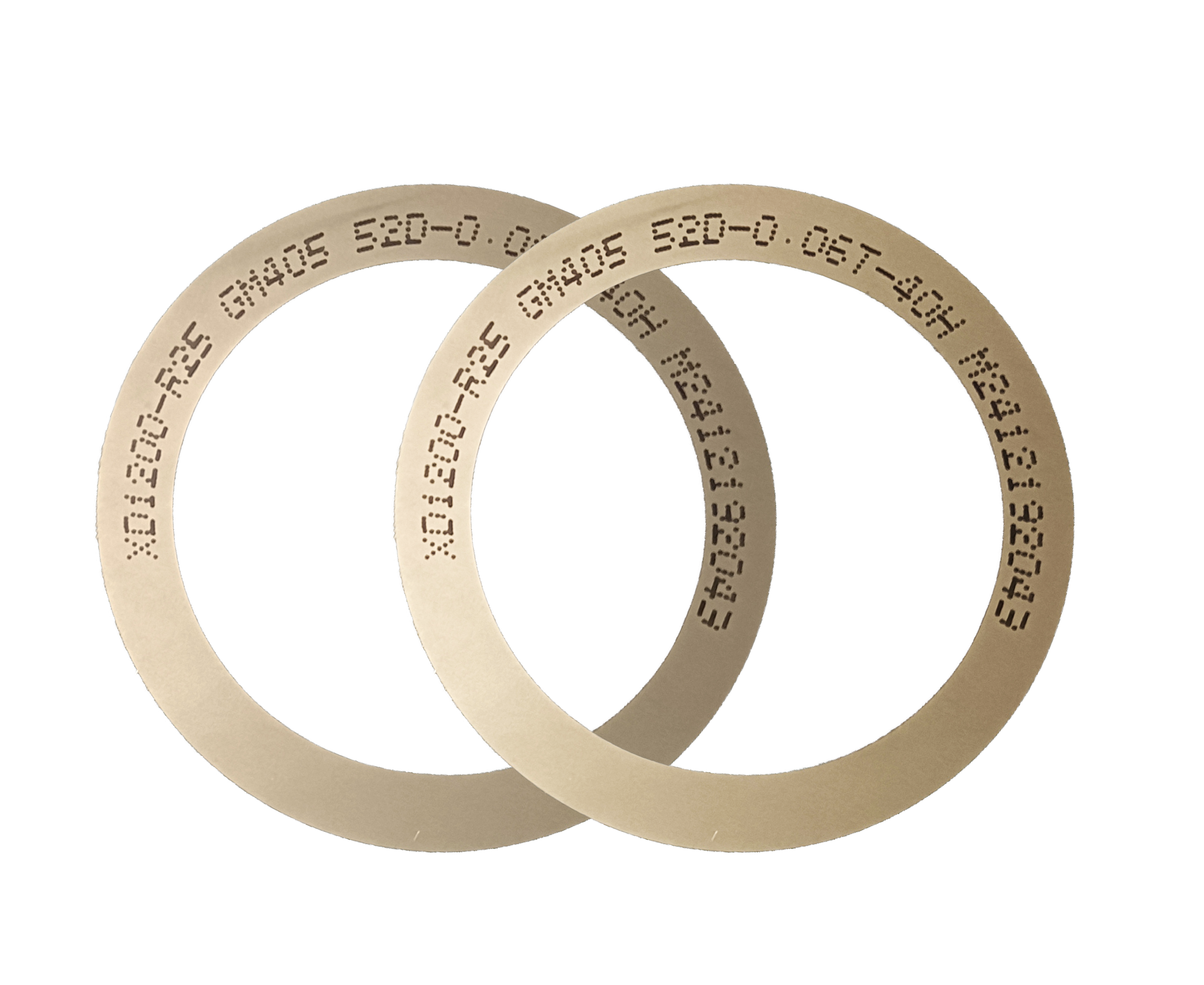
JS Series metal-bond sawing blade — a metal matrix retains diamond grains longer, which is what makes it suitable for harder, more abrasive workpieces.
3.2 Resin bond versus metal bond: two different retention strategies
The bond matrix is a retention strategy, and the two main families trade cutting quality against wear resistance.
Resin bond. A resin matrix holds the diamond with comparatively low retention strength, so dull grains are released progressively and the blade stays sharp with a low cutting load. That behaviour is why resin bonds are used where chipping control and edge quality matter, and why they dominate the market by share. The limit is wear: on hard, abrasive workpieces a resin bond wears faster than the work demands.
Metal bond. A metal matrix retains grains more strongly and resists abrasion better, which extends blade life on hard materials. The trade-off is that a stronger bond keeps dull grains in the cut longer, which raises cutting load and heat, and makes feed, coolant and spindle conditions more consequential.
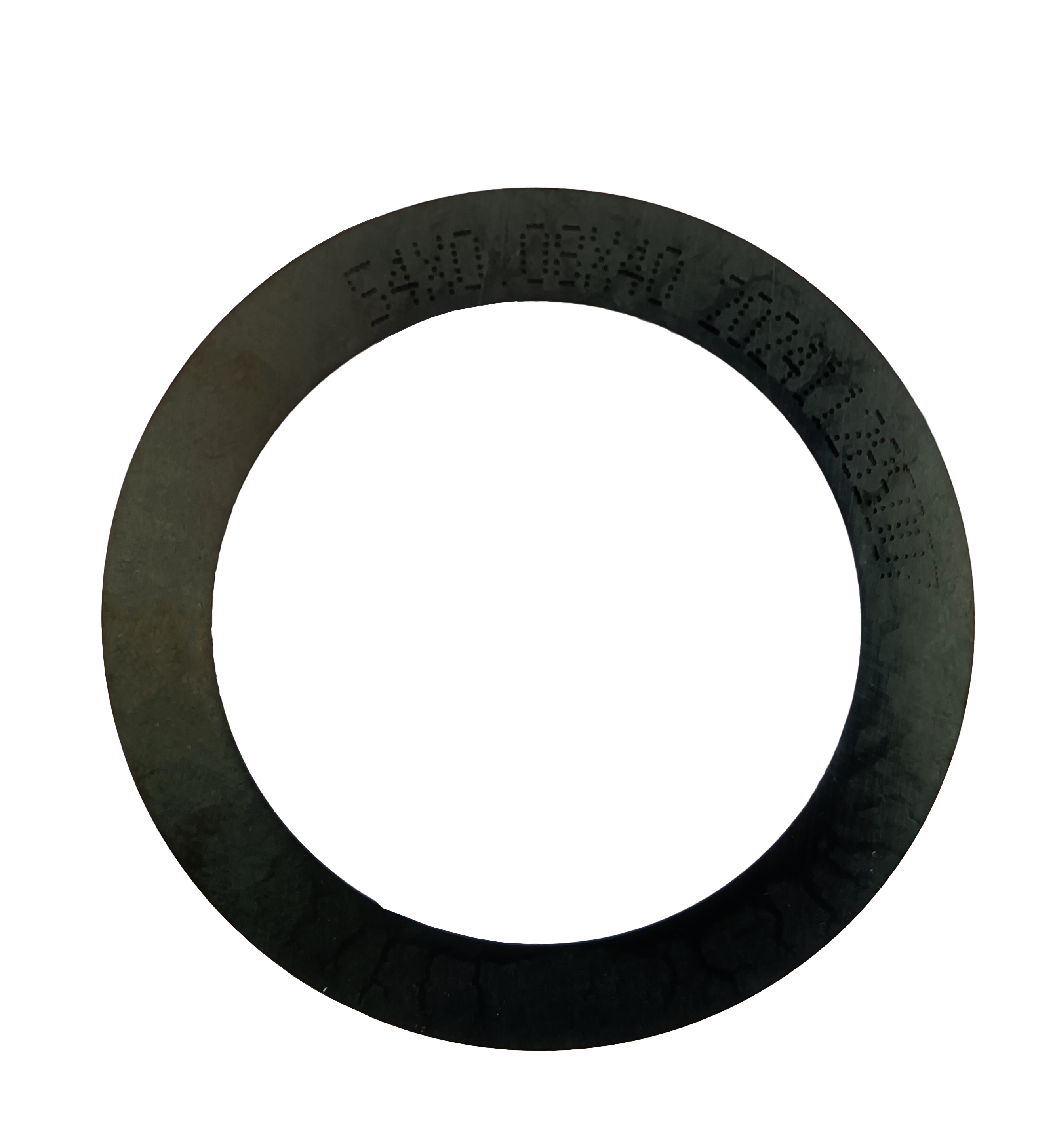
SZ Series resin-bond sawing blade — a resin matrix releases dull grains progressively, keeping cutting load low and chipping controlled.
3.3 Grit size: what it actually controls
Grit size is the physical size of the diamond cutting points in the bond. It is often confused with kerf width, but the two are different mechanisms. Kerf width is set primarily by blade thickness; grit size sets how the cut edge is produced inside that kerf.
Grit size influences four things at once:
- Edge quality and chipping. Finer grit produces smaller individual cutting points and generally reduces the mechanical damage left on the cut edge, at the cost of lower removal per pass.
- Cutting load. Finer grit distributes the same feed over more cutting points, and coarser grit concentrates it on fewer, larger points. The load per grain is what drives heat and subsurface damage.
- Chip clearance. Coarser grit creates more space for removed material, which matters on thicker or more ductile workpieces.
- Wear behaviour. Grit size and diamond concentration interact: more diamond per unit volume usually extends life, but also changes the load the bond has to withstand.
Because grit and concentration are set as a pair, changing one without re-checking the other is the most common source of a specification that looks correct on paper and behaves inconsistently on the machine.
3.4 Published parameter window
The parameters below are the published working window for WINTIME sawing blades. They define the envelope inside which bond type and grit size are selected — not a single fixed specification.
| Parameter | Published value |
|---|---|
| Blade thickness range | 8 µm – 50 µm |
| Cutting accuracy | ±0.002 mm |
| Spindle speed | 30,000 – 60,000 rpm |
| Hardness | HRC 65 – 70 |
| Bond type | Resin / metal |
| Chip removal rate | ≥1.2 mm³/s |
| Bond matrix / abrasive / base | Resin or metal / diamond superabrasive / high-strength steel |
WINTIME Semiconductor Technology Co., Ltd. is a manufacturer of high-precision wafer-level cutting blades, established in 2020 and operating a 34,000 m² facility in Rugao City, Jiangsu Province, with 35 R&D engineers and an annual production capacity of more than 1 million pieces of dicing blades. Its blade range covers the DZY Series Wafer Sawing Blade, the DZR Series Sawing Blade, the DZR-S Series Slotted Sawing Blade, hubless and hubbed constructions, and both resin and metal bond families.
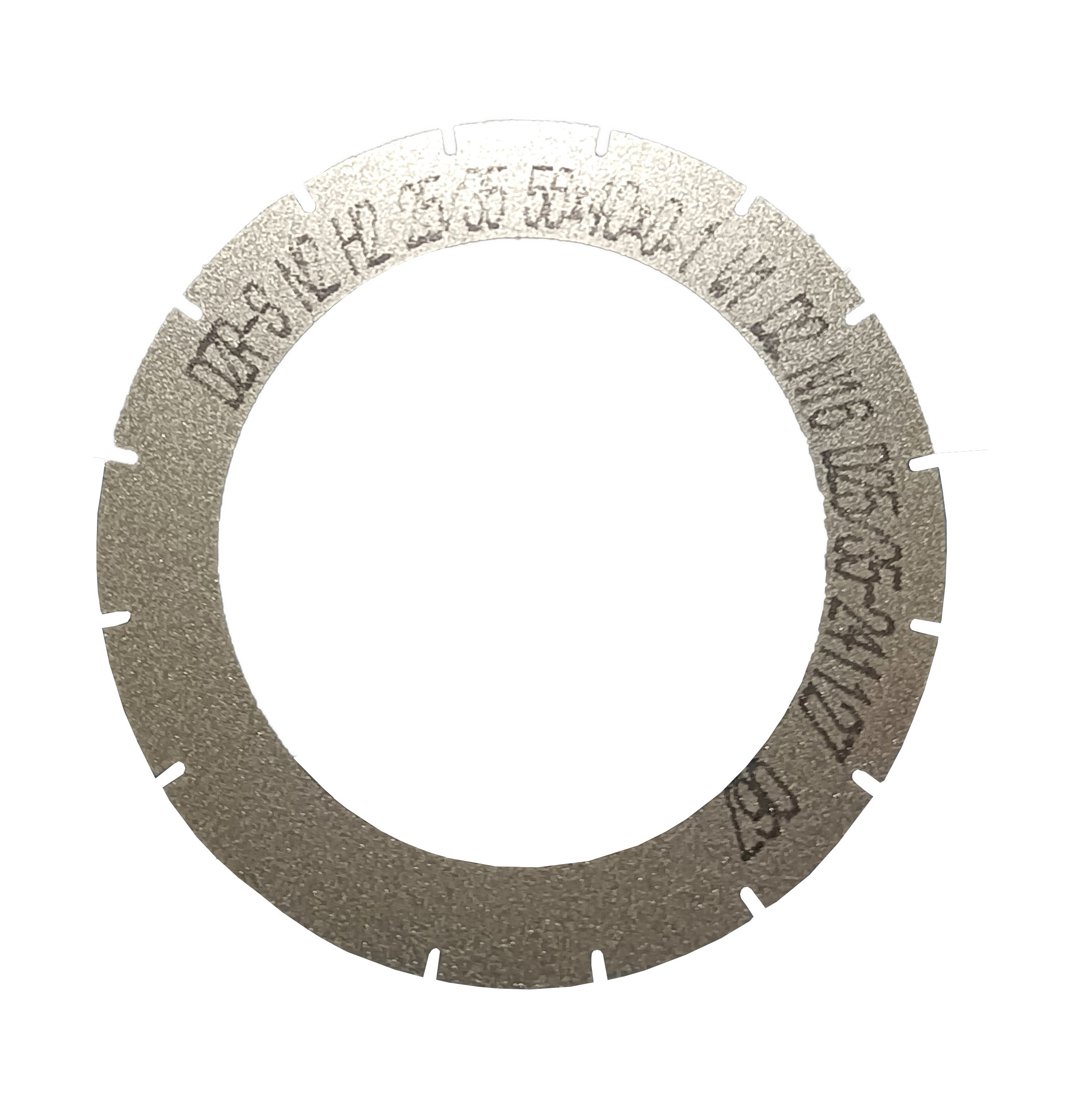
DZR-S Series slotted sawing blade — slot geometry is a construction variable that must be confirmed against the specific process rather than assumed.
4. Step-by-Step Breakdown: Specifying Bond Type and Grit Size
The sequence below replaces the usual "thickness first, defaults later" approach. Each step produces an input that constrains the next one.
Step 1 — Characterize the workpiece and the required cut quality
Start with the material class and the acceptance criterion for the cut edge, not with the blade. The relevant categories are semiconductor manufacturing and semiconductor packaging workpieces, optical communication materials, new functional materials, functional ceramics, and alloy materials. For each one, record the target chipping limit and whether the cut is a dicing cut, a package singulation cut, or an ultra-thin slicing operation.
Step 2 — Fix blade geometry as a constraint, not as the answer
Diameter, thickness and spindle hole size define the nominal kerf and the mechanical fit to the machine. The published thickness range is 8 µm to 50 µm, which means the thickness decision alone can consume most of a tight dimension budget. Ultra-thin wafer processing has an additional requirement: blade thickness of 9 µm or less.
Step 3 — Choose the bond family against workpiece hardness and wear demand
Select resin or metal bond based on how abrasive the workpiece is and how much blade life the process needs between changes. Use the market split — resin 42%, metal 33% of 2024 dicing blade share — only as a sanity check that both families are production-scale options, not as a selection rule.
Step 4 — Set grit size and diamond concentration as a pair
Match grit size to the edge-quality target, then set concentration so that blade life and cutting load stay inside the process window. Both the diamond abrasive grain size and the concentration are production variables that can be specified, which means this step should be an explicit decision rather than a manufacturer default.
Step 5 — Match the specification to machine and environment conditions
Bond and grit behave differently depending on the spindle, coolant strategy and ambient conditions. Semiconductor cutting typically runs in a Class 100/1000 cleanroom with constant temperature of 22±2 °C, constant humidity of 45%–55%, a dust-free and anti-static environment, and a high-speed spindle. The machine side may be dry or wet cutting, and the blade must also suit continuous operation on an automatic dicing machine with precision feeding.
Step 6 — Validate on samples and lock the specification
Confirm the candidate specification on real workpieces before committing to volume. A credible validation package includes geometric dimension inspection, hardness and wear resistance testing, dynamic balance detection at speed, and a cutting performance simulation on actual material. Once the combination of bond type, grit size, concentration and thickness passes, freeze it as a specification rather than as a preference.
5. Use Cases: Matching Bond and Grit to the Workpiece
5.1 Silicon wafer dicing and semiconductor package cutting
This is the volume application for resin bond blades. The process goal is high-precision wafer cutting with narrow kerf, low chipping and stable dimensional control, run continuously on automatic dicing machines. Resin bond plus a grit size tuned to the required edge quality is the standard starting point; hubless construction is the usual choice where stability and runout matter on 300 mm work.
5.2 Ultra-thin wafer processing
Ultra-thin slicing imposes requirements that override ordinary parameter preferences: blade thickness of 9 µm or less, high wear resistance, low cutting loss, anti-static behaviour, high dimensional accuracy, long service life and stable mass production. Where thickness is already at the limit of the range, bond and grit choices have to protect blade life rather than chase removal rate.
5.3 Functional ceramics and alloy materials
These are the applications that pull specifications toward metal bond. The workpiece is harder and more abrasive, so wear resistance and dimensional stability across the blade's life outweigh the low-load behaviour of a resin matrix.
5.4 Optical communication devices
Optical communication and RF/optoelectronics work accounted for 16% of dicing blade market share in 2024 (USD 69.9 million). Chipping and edge quality drive the specification here, so grit size is selected for cut-edge quality first, and bond type is chosen to support that grit without premature grain loss.
5.5 High-mix and OEM-specific programs
Where one line runs several workpiece types, a single blade specification is usually a compromise. Customized production allows blade diameter, thickness and spindle hole size, bond type, diamond abrasive grain size and concentration, coating, cutting performance, export packaging and special-shaped non-standard sizes to be set per program, so each workpiece gets a matched bond-and-grit combination rather than a shared default.
6. Comparison Table: Bond and Construction Options Side by Side
The table compares the constructions available in the WINTIME range against the criteria that matter at the specification stage. All entries describe parameter behaviour; they are not performance claims for a specific process.
| Construction | Abrasive retention | Workpiece fit | Cutting-quality emphasis | Wear-resistance emphasis |
|---|---|---|---|---|
| Resin bond (e.g. SZ Series Resin dicing blade) | Lower retention; dull grains released progressively | Semiconductor manufacturing and packaging, optical communication, new functional materials | Higher — low cutting load, chipping control | Lower — faster matrix wear on abrasive workpieces |
| Metal bond (e.g. JS Series Metal dicing blade) | Higher retention; grains held longer in the cut | Functional ceramics, alloy materials and other hard workpieces | Moderate — requires matched feed and cooling | Higher — extended life on hard, abrasive workpieces |
| Hubless construction | Same bond families; no hub on the blade body | 300 mm wafers and substrates thinner than 50 µm | Higher stability and reduced runout | Supports dimensional control on thin substrates |
| Slotted construction (DZR-S Series Slotted sawing blade) | Slot geometry is a separate design variable | Confirmed per process | Must be validated against the specific cut | Must be validated against the specific cut |
Read the table as a filter, not a ranking. The correct construction is the one whose retention behaviour matches the workpiece, with grit size and concentration then tuned inside that choice.
7. FAQ: Bond Type and Grit Size Questions from Process Engineers
Are diamond sawing blades covered by a published standard, and what cleanroom conditions apply?
Yes on the standard side. Diamond tools, including sawing blades, are categorized under ISO 22180:2019, which distinguishes between CVD diamond-coated types and monocrystalline/polycrystalline types. On the environment side, semiconductor cutting typically runs in a Class 100/1000 cleanroom at a constant temperature of 22±2 °C and constant humidity of 45%–55%, in a dust-free and anti-static environment with a high-speed spindle. Blade specification, packaging and handling should therefore be agreed against both the standard category and the cleanroom conditions of the line where the blade will actually run.
Can bond type, grit size and blade geometry be customized for one specific workpiece?
Yes. WINTIME Semiconductor Technology Co., Ltd. runs OEM, ODM and customized production, with specifications set according to the cutting material and the working conditions. Customization covers blade diameter, thickness and spindle hole size; bond type (metal bond or resin bond); diamond abrasive grain size and concentration; coating for anti-rust, heat-dissipation or wear resistance; cutting performance such as cutting speed and service life; packaging including export packaging; and special-shaped blades in non-standard sizes. In practice this means bond type and grit size can be treated as design inputs tied to the workpiece, not as fixed catalogue options.
What commercial terms control the cost of a customized sawing blade?
The commercial structure follows the specification. The minimum order quantity is 50 pieces for standard products and 300 pieces for customized products, with flexibility for long-term cooperative customers. Because cost is driven by the parameters chosen, the variables that move a quotation are the bond system, the diamond abrasive grain size and concentration, any coating, non-standard geometry, and export packaging. Customized and special-shaped production runs on a separate capacity line from standard products, which is why specification should be locked before volume planning.
How is a new bond and grit specification validated before mass production?
Validation runs through a defined quality-control chain: geometric dimension inspection using a vernier caliper and laser diameter gauge; hardness and wear resistance testing on a material testing machine; dynamic balance detection on a high-speed dynamic balance tester; and a cutting performance simulation test on actual material. Alongside these tests, the supplier should provide technical support for cutting process matching and equipment adaptation, so that the bond and grit combination is proven against the real machine, not only against a drawing.
What lead times apply, and what support continues after delivery?
Lead time is 2–5 working days for standard products and 10–25 working days for customized orders, adjustable for large orders. After delivery, support includes technical support for cutting process matching and equipment adaptation, quality problem investigation and resolution within 48 hours, customized after-sales service for bulk procurement customers, long-term supply guarantee and inventory support, product application training for new customers, and replacement or compensation for defective products caused by quality problems. To request a sample evaluation or a specification review for your workpiece, download the WINTIME product catalogue at WINTIME sawing blade catalogue, or contact the technical team at shenxiangfei@ntwintime.com.
8. Conclusion: Treat Bond and Grit as One Parameter Set
Bond type and grit size are usually written into a blade order as two separate lines. On the machine they behave as one system: the bond decides how long each diamond grain stays in the cut, and the grit decides how much load each grain carries while it is there. That is why kerf width, chipping, wear resistance and dimensional control move together when either parameter changes.
A workable specification sequence is: define the workpiece and edge-quality target, fix geometry as a constraint, choose the bond family against workpiece hardness, set grit size and concentration as a pair, match the blade to spindle and cleanroom conditions, then validate on real material before locking the specification. Inside the published window of 8 µm to 50 µm blade thickness, ±0.002 mm cutting accuracy and 30,000–60,000 rpm spindle speeds, the differences that decide yield are almost entirely bond and grit choices.
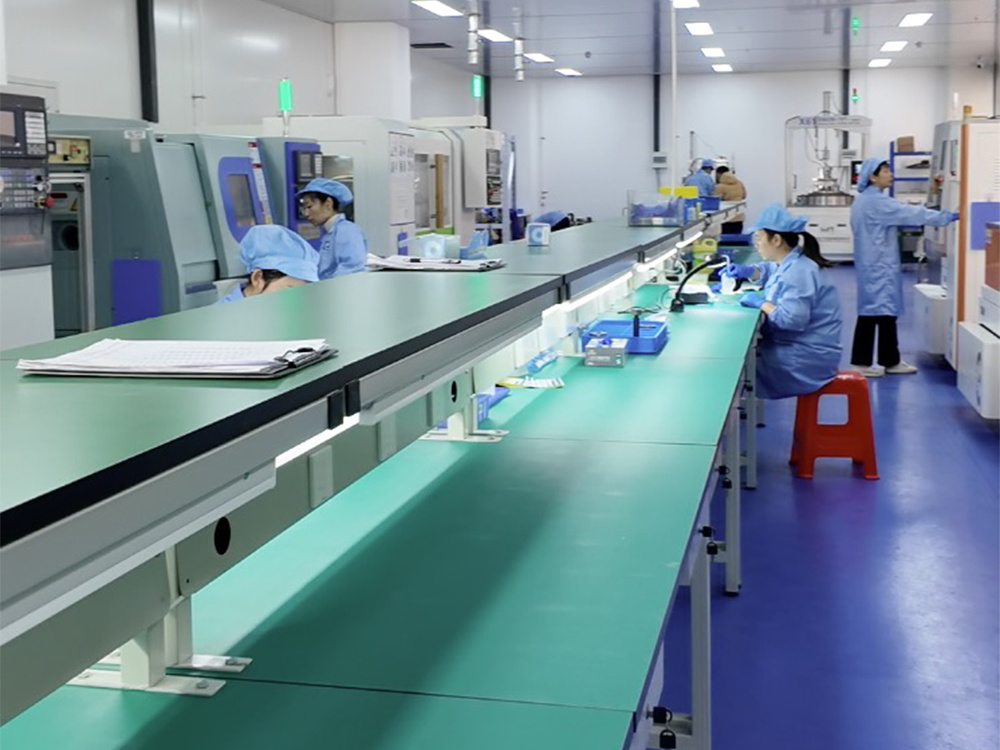
WINTIME produces sawing blades with in-house geometric, hardness, wear and dynamic balance controls before cutting performance simulation on actual material.
Next step: match a blade to your workpiece
Send your workpiece material, target blade thickness and edge-quality requirement, and the WINTIME team will propose a bond type and grit size combination for review, with sample evaluation available before volume production.
Catalogue: Download the WINTIME sawing blade catalogue (PDF)
Email: shenxiangfei@ntwintime.com | Tel: +86 13851530812 | WhatsApp: +86 18888053207
Website: en.wintime.net.cn

Have Questions or Need More Details?
Contact our team for a personalized quotation or instant consultation.
Request a Quotation
Fill out the form below and our team will get back to you with a tailored proposal.
WhatsApp Direct Chat
Prefer to chat in real-time? Message us on WhatsApp for instant assistance & quick answers.
- Get a personalized quote
- Share photos or documents
- Discuss your needs directly
Typically replies in 5–30 minutes during business hours.