
Sawing Blade Certification and Regional Standards: What Buyers in Asia, the US, and EU Must Know
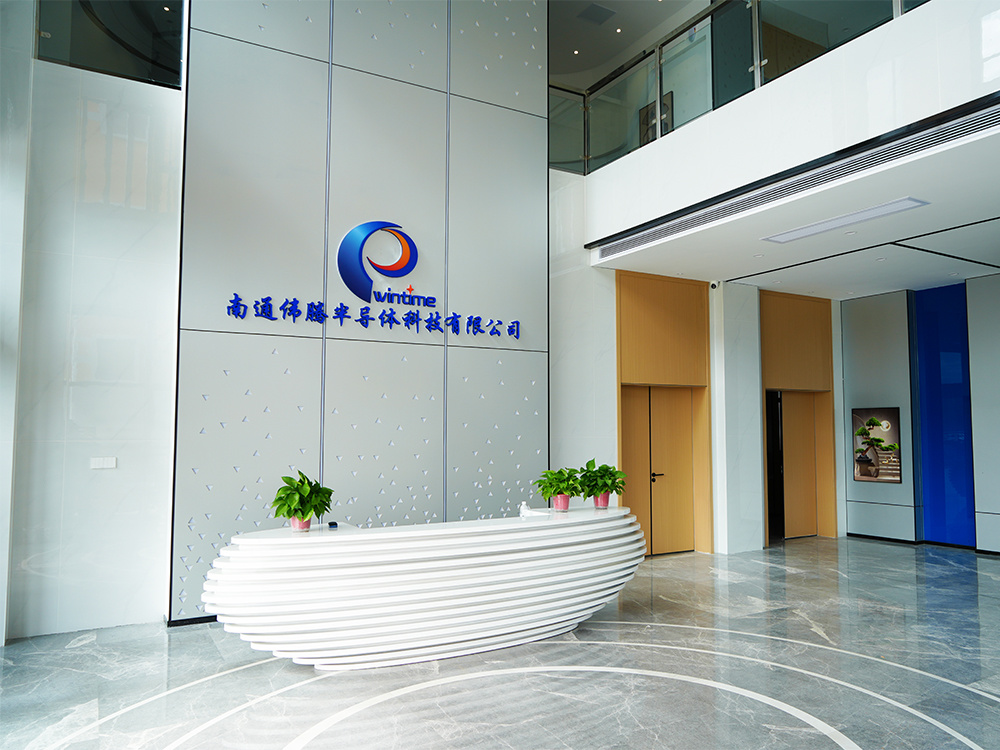
WINTIME production and administrative facility, Rugao City, Jiangsu Province, China.
Short answer: no single certificate clears a sawing blade for every market. A blade that passes incoming inspection in Penang can be held at a receiving dock in Germany, and the reason is rarely the diamond — it is the documentation, packaging, and handling record that travels with the lot. Buyers in China, Japan, Korea, Singapore, Malaysia, the United States, and Germany are usually evaluating the same physical product against different evidence expectations.
WINTIME Semiconductor Technology Co., Ltd. is a manufacturer of sawing blades and dicing blades based in Rugao City, Jiangsu Province, China. Founded in 2020, the company runs a 34,000 m² production facility, reports an annual output of more than one million dicing blades, employs around 100 people including a 35-engineer R&D team, and exports approximately 30% of its production to Southeast Asia, East Asia, North America, and the European Union.
This guide treats certification and regional standards as a procurement workstream rather than a paperwork formality. It maps the four layers that decide whether a sawing blade clears a regional compliance review, shows how the same questions are ordered differently in each market, and gives buyers a seven-step compliance file that survives both incoming inspection and a supplier audit.
Why Sawing Blade Compliance Fails at the Receiving Dock
Compliance failures in precision cutting consumables are rarely technical surprises. The blade usually does what the drawing says. What fails is the chain of evidence around it. Four patterns account for most disputes.
- Lot discontinuity. The blade matches the agreed diameter and thickness, but the inspection record cannot be tied to the delivered lot number.
- Customization drift. Bond type, diamond grain size and concentration, or coating changes between the approved sample and the production run without a documented revision.
- Environment mismatch. A blade qualified for a controlled cleanroom arrives in packaging that the buyer's handling procedure will not accept into that environment.
- Acceptance ambiguity. Pre-shipment testing, third-party inspection, and payment release are agreed verbally, then disputed after the container ships.
None of these is a metallurgy problem. Each is a documentation and process problem, which is why a compliance file built before the purchase order costs less than a corrective action after it.
Industry Background: A Consumable Market Under Documentation Pressure
| Metric | Value | Source | Year |
|---|---|---|---|
| Global diamond saw blade market | USD 8.60 billion, projected to USD 10.16 billion by 2032 | Maximize Market Research | 2025 |
| Global wafer dicing blade market | USD 1.19 billion | Market Research Intel | 2024 |
| Resin bond share of dicing blade market | 42% | Dicing Blade Market Report | 2024 |
| Metal bond share of dicing blade market (harder materials such as SiC) | 33% | Dicing Blade Market Report | 2024 |
| Optical communication and RF/optoelectronics share of dicing blade market | 16% (USD 69.9 million) | Intel Market Research | 2024 |
| China cutting blade export growth | Vietnam +USD 18 million; India +USD 12 million | OEC | 2024–2025 |
Three market movements are pushing compliance documentation toward the front of the buying decision.
- Thinner substrates and larger wafers. The global wafer dicing blade market reached USD 1.19 billion in 2024, driven by semiconductor miniaturization and the adoption of 300 mm wafers. Hubless dicing blades are increasingly dominant in 300 mm wafer processing because of their stability and reduced runout on thinner substrates. Thinner blades mean tighter dimensional records and stricter handling specifications.
- A shifting bond mix. Resin bond blades held 42% of the dicing blade market in 2024, while metal bond blades — used for harder materials such as SiC — accounted for 33%. A buyer sourcing both bond types from one supplier needs clearly separated acceptance criteria, not one generic specification sheet.
- Cross-border sourcing at scale. China's exports of cutting blades to Vietnam grew by USD 18 million and to India by USD 12 million between 2024 and 2025. More lots cross more borders, and each destination applies its own documentation expectations at the receiving gate.
The Four-Layer Compliance Stack
Regional requirements look different on paper, but they resolve into the same four layers. Buyers who build a file in this order rarely have to rebuild it for a second market.
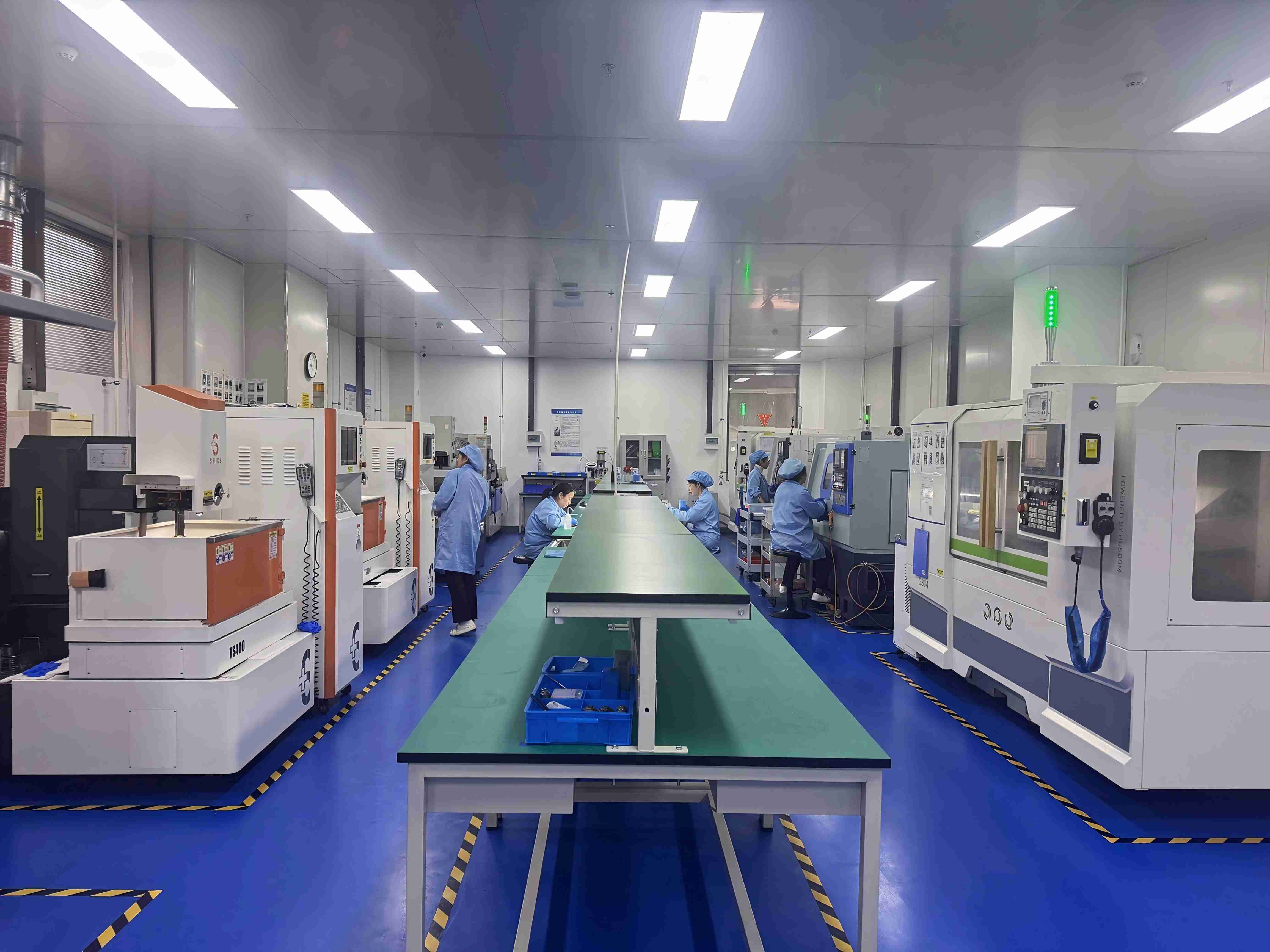
Sawing blade production area — where the customized specification is fixed before inspection.
Layer 1 — Product classification: which standard covers the blade itself
Diamond tools, including sawing blades, are categorized under ISO 22180:2019, which distinguishes between CVD diamond-coated types and monocrystalline or polycrystalline types. Classification matters because it sets the vocabulary of the technical file. A buyer asking a supplier for "certification" normally needs a classification statement plus dimensional and mechanical records — not a marketing certificate.
Practical action: state the diamond type, bond type, and dimensional class in the purchase specification, and require the supplier to return the same classification language in the shipping documents.
Layer 2 — Cleanroom compatibility
For semiconductor wafer sawing blade and optical communication sawing blade applications, the receiving-stage questions usually concern packaging, particle contribution during handling, and whether the blade and its carrier can enter the buyer's controlled area without an additional cleaning step. Packaging is where cleanroom requirements are normally fixed or lost, and it is a specification item rather than an afterthought. WINTIME's customization scope explicitly includes packaging and special packaging for export, which is the correct place to record a cleanroom handling requirement.
Layer 3 — Anti-static and ESD handling
Sawing blades are consumables, but they are handled near sensitive die, optical components, and functional ceramic substrates where electrostatic discharge is a routine process risk. Anti-static requirements are usually defined by the buyer's own ESD control program rather than by a blade standard, so the supplier must be able to document the handling, packaging materials, and transport conditions that fit that program. Anti-static conditions cannot be retrofitted to a shipment after it leaves the factory.
Layer 4 — Acceptance, traceability, and commercial terms
This is the layer where regional difference is smallest and negotiation value is highest. WINTIME's stated purchasing structure uses pre-shipment testing and third-party inspection (SGS) as acceptance criteria, FOB or CIF delivery terms, and 30/70 payment terms. A buyer in any of the seven markets can build a compliance file on those four elements: what is tested before shipment, who inspects it, who carries risk in transit, and when payment is released.
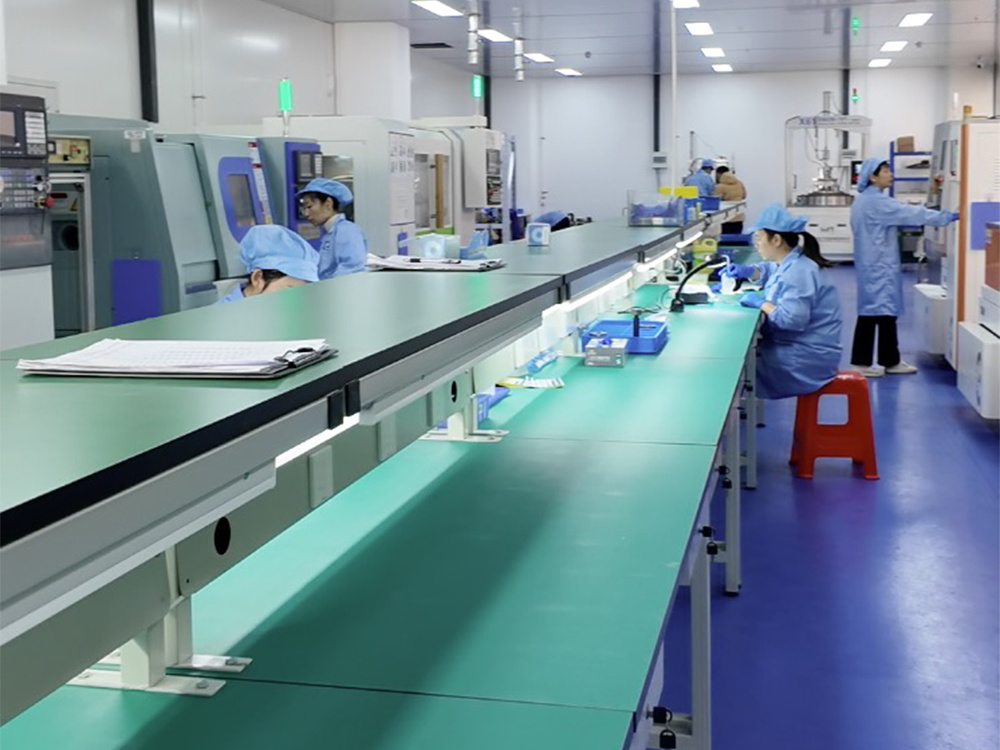
Quality control: geometric dimension inspection, hardness and wear testing, and dynamic balance verification.
Region-by-Region: What Buyers in Asia, the US, and the EU Should Confirm
China
China is both a production base and an export origin for this category. WINTIME's facility sits in Rugao City, Jiangsu Province, and the company lists China alongside Southeast Asia, East Asia, the Middle East, the European Union, the United States, Canada, Australia, South America, and Africa as export markets. For buyers sourcing from China, the compliance file is assembled at the factory gate: dimensional inspection records, material and hardness test results, and the pre-shipment test report that will accompany the lot. As Chinese cutting blade exports to Vietnam and India expanded between 2024 and 2025, regional buyers increasingly request documents formatted to match their own incoming inspection sheet — an adjustment that is straightforward before the order and painful after it.
Japan and South Korea
Japan and South Korea are mature semiconductor markets where 300 mm processing and thin-substrate handling are standard practice. The verified market driver behind that environment — semiconductor miniaturization and 300 mm wafer adoption — is also why hubless dicing blades are increasingly dominant in 300 mm processing. Receiving teams in these markets tend to focus on dimensional data at the tolerance the tool actually runs, plus runout and stability evidence that supports the hubless format.
Confirm in writing: the dimensional inspection method (WINTIME's geometric dimension inspection uses vernier calipers and laser diameter gauges), dynamic balance verification, and the packaging format that will survive long-haul inbound inspection.
Singapore and Malaysia
Southeast Asia is listed among WINTIME's main markets, and Singapore and Malaysia sit at the centre of regional assembly, test, and optical device manufacturing. Two questions surface consistently in Southeast Asian receiving areas: humidity exposure during storage and transit, and the anti-static condition of packaging in facilities running ESD-controlled lines. Anti-rust coating is one of the customizable options WINTIME offers, which makes it a specification decision rather than an after-sales conversation.
Confirm in writing: coating specification, packaging material, and the incoming inspection checklist the receiving site will apply.
United States
The United States is listed among WINTIME's export markets, and North America contributes to the company's roughly 30% export share. US buyers typically carry the same compliance file into two internal processes — incoming quality inspection and their own cleanroom and ESD handling procedure. The practical difference is sequencing: US buyers often want the third-party inspection route agreed before the first production lot, with acceptance written as pass/fail limits rather than descriptive ranges.
Confirm in writing: third-party inspection scope, sample retention, and the payment release trigger tied to acceptance.
Germany and the European Union
Germany and the wider European Union appear in WINTIME's export market list. EU receiving processes place weight on documentation completeness, packaging declarations, and traceability of the customized specification. A German buyer evaluating a customized sawing blade generally wants the approved sample parameters — bond type, diamond grain size and concentration, coating, and cutting performance targets — frozen as a revision-controlled specification, with any deviation handled through a documented change process.
Confirm in writing: the frozen specification version, the inspection report format, and the packaging and labelling required at the receiving site.

WINTIME exports to Southeast Asia, East Asia, North America and the European Union.
Comparison Table: Regional Compliance Focus at a Glance
| Market | Verified context | What the buyer should confirm before the PO |
|---|---|---|
| China | WINTIME production base in Rugao City, Jiangsu Province; Chinese cutting blade exports to Vietnam +USD 18M and India +USD 12M (2024–2025, OEC) | Dimensional and hardness records, pre-shipment test report, third-party inspection route |
| Japan and South Korea | Global drivers: semiconductor miniaturization and 300 mm wafer adoption; hubless blades increasingly dominant for 300 mm processing | Dimensional data at tool tolerance, hubless runout and stability evidence, dynamic balance verification, packaging format |
| Singapore and Malaysia | Southeast Asia is listed among WINTIME's main markets | Anti-rust coating specification, ESD-safe packaging, receiving-site inspection checklist |
| United States | North America is listed among WINTIME's export markets; export share approx. 30% overall | Third-party inspection (SGS) scope agreed before first lot, pass/fail acceptance limits, payment release trigger |
| Germany and the EU | European Union is listed among WINTIME's export markets | Frozen revision-controlled specification, inspection report format, packaging and labelling requirements |
Step-by-Step: Building a Regional Compliance File in Seven Steps
The sequence below works for a first sample order and for a repeat production lot. Steps 1 to 3 prevent specification disputes; steps 4 to 7 prevent receiving disputes.
- Classify the blade. Record the diamond type, bond type, and dimensional class against ISO 22180:2019 vocabulary in the purchase specification.
- Freeze the customized specification. WINTIME provides OEM, ODM, and customized production services, with customized specifications available for different cutting materials and working conditions. Lock the exact parameter set: blade diameter, thickness and spindle hole size; bond type; diamond abrasive grain size and concentration; coating; and cutting performance targets.
- Request dimensional and mechanical evidence. Ask for the records that already exist in the supplier's control plan: geometric dimension inspection, hardness and wear resistance testing, dynamic balance detection, and cutting performance simulation. Evidence produced by the supplier's own control process is stronger than a certificate requested for the occasion.
- Confirm cleanroom and packaging compatibility. Specify the packaging format, carrier, and the maximum handling step permitted before the blade reaches the dicing tool. WINTIME's customization scope includes packaging and special packaging for export.
- Confirm anti-static handling. Attach the buyer's ESD handling requirements to the specification so the supplier can match them at the packing stage.
- Agree acceptance and inspection. WINTIME's purchasing structure uses pre-shipment testing and third-party inspection (SGS) as acceptance criteria, with FOB or CIF terms. Write the acceptance criteria in the same words used in the inspection report.
- Confirm commercial and after-sales terms. Standard models start at 50 pieces with customized models from 300 pieces, negotiated per order plan for long-term partners and bulk schedules. Standard lead time is 2–5 working days and customized orders run 10–25 working days, adjustable for large volumes. After shipment, quality issues are investigated and resolved within 48 hours, and replacement or compensation applies to defective products caused by quality problems.
Use Cases: Where Compliance Questions Become Cutting Problems
Compliance requirements are easier to justify when they are tied to a specific cutting scenario. Four scenarios drive almost all regional documentation requests in this category.
Semiconductor wafer dicing
Wafer dicing is where the documentation burden is highest, because 300 mm processing and thin substrates leave little tolerance for dimensional drift or handling contamination. Hubless formats are increasingly dominant here. For buyers, the compliance file needs dimensional data, dynamic balance records, and a packaging specification that matches the fab's own material entry procedure. WINTIME's stated customization scope covers this parameter set, and the company's ultra-thin wafer dicing blade project reached a thickness below 9 microns in process.
Optical communication component cutting
Optical communication and RF/optoelectronics accounted for 16% of the dicing blade market in 2024 — USD 69.9 million — driven by 5G infrastructure expansion. These lines combine cleanroom conditions with ESD-controlled handling, which makes anti-static packaging and particle-conscious handling part of the acceptance criteria rather than a preference.
Functional ceramic substrate cutting
Functional ceramic substrates place different demands on bond type and grain specification, which is precisely why "customized specifications for different cutting materials and working conditions" is a compliance statement as much as a capability statement. When the substrate changes, the frozen specification version should change with it.
Precision alloy component cutting
Metal bond blades accounted for 33% of the dicing blade market in 2024 and are used for harder materials such as SiC. Alloy cutting buyers generally need hardness and wear resistance evidence bundled with the lot record, because tool life expectations are set against those measurements.
FAQ
1. Which standard actually applies to a diamond sawing blade?
ISO 22180:2019 is the classification standard for diamond tools, including sawing blades, and it distinguishes between CVD diamond-coated types and monocrystalline or polycrystalline types. That classification defines the vocabulary of the technical file. Cleanroom and anti-static requirements are not fixed by the blade standard itself — they are normally set by the buyer's own process and ESD control program, which is why they must be written into the purchase specification.
2. Can blade specifications be adapted to a specific market or cutting material?
Yes. WINTIME provides OEM, ODM, and customized production services, with customized specifications for different cutting materials and working conditions. The customizable parameters include blade diameter, thickness and spindle hole size; bond type such as metal bond or resin bond; diamond abrasive grain size and concentration; coating for anti-rust, heat dissipation or wear resistance; cutting performance targets for speed and service life; packaging including special export packaging; and special-shaped blades in non-standard sizes. Monthly capacity covers more than 800,000 pieces in standard specifications and more than 80,000 pieces in customized and special-shaped products.
3. What MOQ, payment, and delivery terms apply?
Standard models start at 50 pieces and customized models at 300 pieces, with flexibility for long-term cooperative customers and bulk purchase plans; larger customization complexity may adjust the small-batch trial minimum. Delivery terms are FOB or CIF, and payment terms are 30/70. Because MOQ interacts with specification complexity, confirm the final figure at quotation rather than at shipment.
4. How can a buyer validate a lot before committing to volume?
Acceptance is built on pre-shipment testing and third-party inspection (SGS). Before shipment, WINTIME's quality control covers geometric dimension inspection with vernier calipers and laser diameter gauges, hardness and wear resistance testing on a material testing machine, dynamic balance detection with a high-speed dynamic balance tester, and cutting performance simulation. Small-batch trial orders are available with flexible minimum order quantities and a slight price adjustment based on customization complexity, so a receiving team can run its own incoming inspection before scaling up.
5. What lead time should a buyer plan for?
Standard products ship in 2–5 working days, and customized orders run 10–25 working days, adjustable for large orders. Buyers building a regional compliance file should align this lead time with their own sample approval step, since a frozen specification cannot be revised inside a shipping window. To request a sawing blade sample, a quotation, or the full product catalogue, download the WINTIME sawing blade brochure or send the specification to shenxiangfei@ntwintime.com.
Conclusion
Sawing blade compliance is not a certificate that can be collected once and filed. It is a four-layer record — product classification, cleanroom compatibility, anti-static handling, and acceptance terms — assembled before the purchase order and verified at the receiving dock. Buyers in China, Japan, Korea, Singapore, Malaysia, the United States, and Germany ask the same questions in a different order, and the supplier's job is to make the same evidence legible in all seven.
WINTIME Semiconductor Technology Co., Ltd. supports that work with a documented customization scope, OEM, ODM, and customized production services, pre-shipment testing with third-party inspection available, and after-sales quality investigation within 48 hours. The company holds 2 patent technologies, and its ultra-thin wafer dicing blade project reached a process thickness below 9 microns.
Next step: send your regional specification requirements — diamond type, bond, dimensions, coating, and packaging — and request a sample or quotation.
Email: shenxiangfei@ntwintime.com | Tel / WhatsApp: +86 13851530812 / +8618888053207
Website: en.wintime.net.cn | Brochure: download the WINTIME product catalogue

Request a sawing blade sample or quotation for your market.
Have Questions or Need More Details?
Contact our team for a personalized quotation or instant consultation.
Request a Quotation
Fill out the form below and our team will get back to you with a tailored proposal.
WhatsApp Direct Chat
Prefer to chat in real-time? Message us on WhatsApp for instant assistance & quick answers.
- Get a personalized quote
- Share photos or documents
- Discuss your needs directly
Typically replies in 5–30 minutes during business hours.