
Sawing Blade Choices for Sapphire vs. Glass Wafers: A Modern Procurement Comparison
Sapphire and glass wafers are singulated with the same class of tool, a diamond sawing blade, but they should not be purchased against the same specification. Sapphire punishes removal-rate choices and blade wear; glass punishes chipping, bond loading and edge quality. A modern procurement comparison therefore has to compare four items before price: grade direction, kerf tolerance, coolant and cutting strategy, and lot acceptance terms.
1. Problem Definition: Why One Blade Specification Rarely Covers Both Materials
Most wafer dicing blade RFQs are written around geometry: outer diameter, inner hole, thickness and a hub or hubless format. Those fields confirm that the blade fits the machine. They do not describe how the abrasive interacts with the workpiece, and that is exactly where sapphire and glass diverge.
Sapphire is a hard, brittle crystalline material. The cut is dominated by abrasive wear on the diamond and by the risk of chipping and micro-cracks at the die edge. As feed rate rises, blade life and edge quality move in opposite directions. Glass is softer, but it is not a simpler cut. The process generates swarf that can load the bond, and thin glass is sensitive to chipping and to spindle runout.
The commercial consequence appears at lot acceptance, not at the quotation stage. A buyer who consolidates to a single grade to reduce SKUs usually ends up with one of two outcomes:
- Acceptable sapphire blade life but recurring chipping and edge defects on glass.
- Clean glass edges but short blade life and rising cost per wafer on sapphire.
- A specification dispute after wafer value has already been committed, because the acceptance criteria were never written into the purchase order.
The procurement fix is not a new blade. It is a material-specific specification with acceptance criteria agreed before the first production lot, and a supplier able to quote and document both grades.
2. Industry Background: The Consumable Market Behind the Choice
Dicing consumables sit inside a much larger diamond tool market, and the two sizing figures tell different stories. The global diamond saw blade market was valued at approximately USD 8.60 billion in 2025 and is expected to reach USD 10.16 billion by 2032, according to Maximize Market Research. The semiconductor-specific dicing blade segment was valued at USD 1.19 billion in 2024 by Market Research Intel.
Published estimates for that semiconductor segment differ materially. Alternative sources place the same segment at USD 1.31 billion and at USD 0.437 billion, depending on whether the scope is drawn around consumables or equipment. For procurement teams, the absolute number should be treated as directional for planning and budgeting envelopes, not as a cost model input.
Three structural facts matter more than the headline size when a blade specification is being written:
- Bond mix: resin bond blades held a 42% share of the dicing blade market in 2024, while metal bond blades, used for harder materials such as SiC, accounted for 33%.
- Format trend: hubless dicing blades are increasingly dominant for 300 mm wafer processing because of superior stability and reduced runout on thinner substrates below 50 µm.
- Application pull: optical communication and RF/optoelectronics applications accounted for 16% of the dicing blade market in 2024, equivalent to USD 69.9 million, driven by 5G infrastructure expansion. Glass and sapphire both appear in this segment.
Standards work also has a procurement role. Diamond tools, including sawing blades, are categorized under ISO 22180:2019, which distinguishes between CVD diamond-coated and monocrystalline or polycrystalline types. Referencing that categorization in an RFQ removes a common source of ambiguity between suppliers describing nominally identical products with different terminology.
Supply geography is shifting as well. China's exports of cutting blades to Vietnam, India and South Korea grew between 2024 and 2025, with Vietnam increasing by USD 18 million and India by USD 12 million, according to OEC data. That is why Chinese manufacturers now appear on shortlists that were previously European or Japanese only. Leading participants in the high-precision semiconductor dicing blade market include DISCO Corporation, Tokyo Seimitsu (Accretech), Advanced Dicing Technologies (ADT) and Asahi Diamond. The practical question for a buyer is not who is largest, but which supplier will quote a material-specific grade and back it with traceable lot data.
3. The Solution: Building a Material-Specific Specification
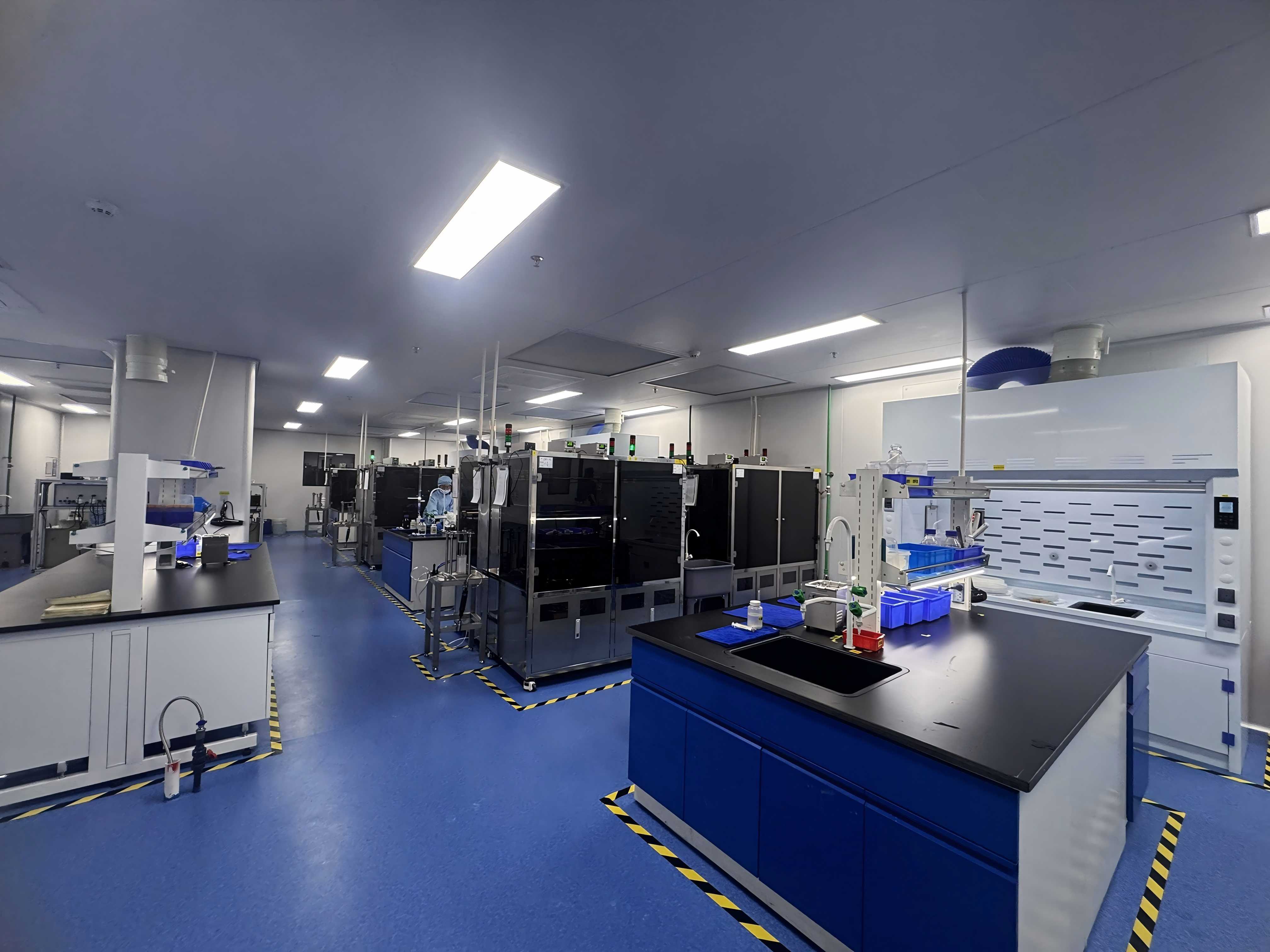
WINTIME Semiconductor Technology Co., Ltd. is a manufacturer established in 2020 that integrates research, development, production and sales of high-precision wafer-level cutting blades. The company supplies sawing blades and dicing blades together with cutting tapes and cutting process solutions, is based at No. 868, Fushou East Road, Rugao City, Jiangsu Province, and exports to Southeast Asia, East Asia, North America and the EU, with exports representing 30% of output.
3.1 Product families that support a two-material strategy
The sawing blade portfolio spans hubless and hub formats and includes DZY Series wafer sawing blades, DZR Series sawing blades, DZR-S Series slotted sawing blades and electroforming hard sawing blades, alongside standard semiconductor wafer sawing blades. Named application areas include optical communication cutting, functional ceramic cutting and alloy material cutting. A buyer running both sapphire and glass should expect the supplier to separate grade, bond direction and kerf for each material rather than offer one catalogue number for both; the final grade is confirmed against the application before a purchase order is issued.
3.2 Engineering depth for thin and brittle workpieces
The company employs 35 engineers in its R&D team and holds 2 patent technologies. Its completed Ultra-thin Wafer D Blade project achieved a thickness below 9 microns, and the company is among the few domestic manufacturers able to reach mass production at that level. For a specification covering sapphire and thin glass, this matters in one specific way: narrow-kerf formats only deliver yield benefit when the blade can be produced and inspected at that thickness consistently, not as a laboratory sample.
3.3 Capacity and batch consistency
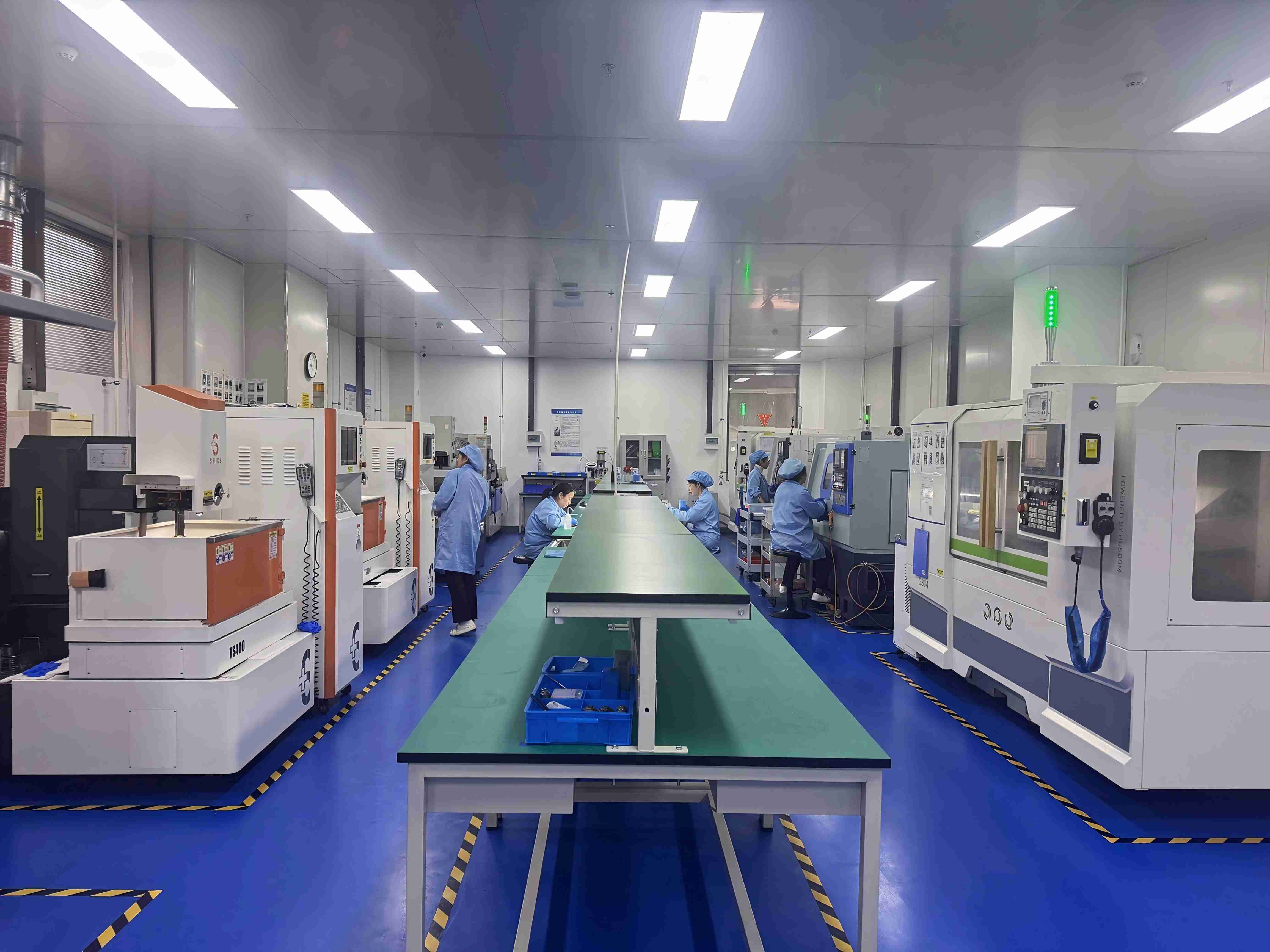
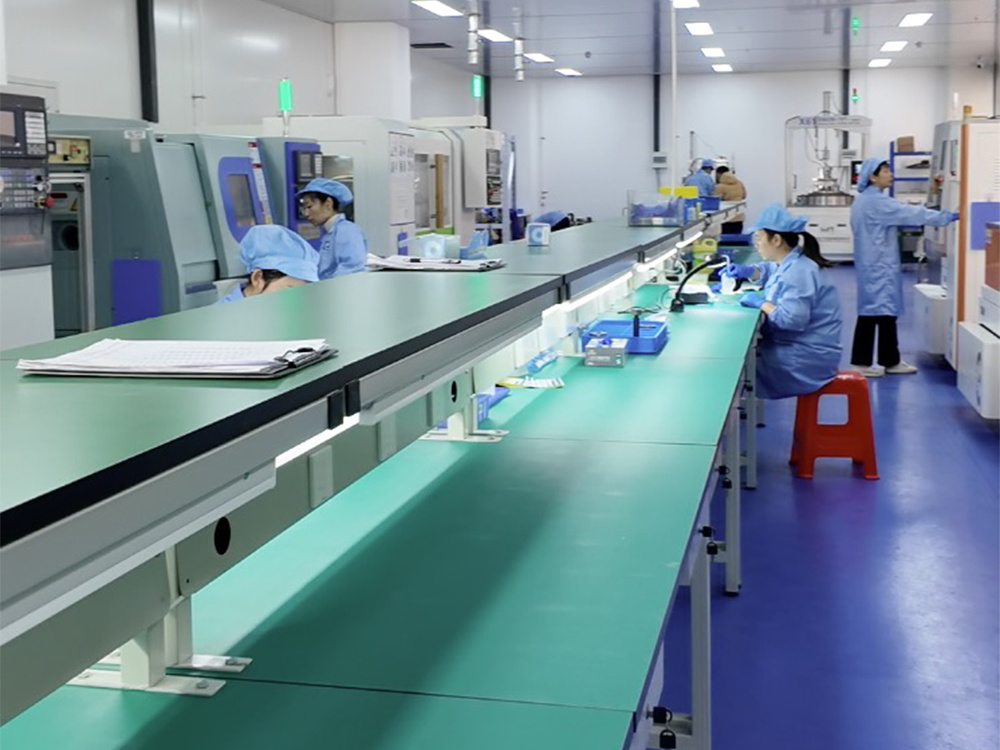
Annual output is more than 1,000,000 pieces. Monthly production capacity exceeds 800,000 pieces for standard specifications and 80,000 pieces for customized and special-shaped products. The 2023 Nantong WINTIME Semiconductor Special Materials Project added a new factory and auxiliary buildings of 34,000 square meters with a total investment of nearly tens of millions of yuan.

Batch quality inconsistency is the risk that most affects stable mass production at the customer, and it is treated as such. Production process parameters are standardized and automatic production equipment is used to avoid manual operation errors. A batch production data tracking system records all process parameters, and adjacent batches are compared by test to confirm that performance has not drifted. The quality system is ISO 9001 based, with standard operating procedures, dedicated quality inspectors tracking each production batch, and a batch quality file that allows traceability and recall of an unqualified batch if a problem occurs.
3.4 Commercial and acceptance terms
For standard models, MOQ is 100 pieces per order and is negotiable for long-term cooperative customers or bulk purchase plans. For customized models, MOQ is 500 pieces per order; for small-batch trial orders below 500 pieces, MOQ can be adjusted flexibly with a slight price adjustment based on customization complexity. Delivery terms are FOB or CIF. Acceptance combines a pre-shipment test with the option of third-party inspection by SGS, and payment terms are 30/70.
4. Step-by-Step Breakdown: Seven Procurement Steps
Step 1: Model die economics before the blade
Kerf is the width of material removed by each cut, so it sets how many die a wafer can yield. On costly sapphire, a narrower kerf converts directly into die count; on small optical glass dies the same logic applies at a smaller absolute value but with the same direction. Write a kerf tolerance in microns and a die-per-wafer target into the RFQ, not just a blade thickness.
Step 2: Set the removal-rate strategy per material
High-speed material removal, meaning a higher feed per pass and fewer passes, is the main cost lever on glass, where the binding constraint is usually chipping rather than wear. Applied unchanged to sapphire, the same strategy accelerates diamond wear and edge damage. A conservative feed with more passes is the usual starting point for sapphire and is confirmed through cutting trials. Ask the supplier to quote both a throughput recipe and a quality recipe so the trade-off is visible before the order.
Step 3: Choose the bond and grade against the material
Resin bond held 42% of the dicing blade market in 2024 and metal bond 33%, with metal bond associated with harder materials. Sapphire pushes the technical discussion toward harder, more wear-resistant bond directions, while glass more often raises loading and edge-quality questions. Do not accept a grade recommendation that is not tied to the supplier's own material-specific reference or trial result.
Step 4: Specify coolant and cutting modification
Coolant is not a facility detail. On sapphire it manages heat at the contact zone and slows wear; on glass it also flushes swarf that would otherwise load the bond and degrade the edge. Fix the coolant type, flow, nozzle position and any cutting modification, such as a step or dual-pass strategy, in the process sheet, then make each of them an acceptance item rather than an operator preference.
Step 5: Fix blade format and machine interface
Hubless dicing blades are increasingly dominant for 300 mm wafer processing because of stability and reduced runout on substrates thinner than 50 µm. A narrow-kerf blade cannot absorb machine error, so confirm flange condition, spindle runout and blade exposure as part of the specification rather than after the first lot fails.
Step 6: Define lot acceptance before the first order
Agree the sampling plan, the defect list covering chipping, micro-crack and kerf deviation, the pre-shipment test and whether third-party inspection by SGS is required. Batch traceability determines how quickly a deviation is contained, and it is a contractual question, not a production one.
Step 7: Lock the long-term supply terms
Monthly capacity by grade, MOQ by grade, payment terms and lead time should be written for the grades actually consumed, not for a generic SKU. For distributors and OEM partners this is the step where a durable supply relationship is either established or quietly lost.
5. Use Cases
Sapphire substrate dicing for LED and optical windows
Wear-driven cutting. The specification is built around a wear-resistant grade, a narrow kerf where die count justifies it, conservative feed and coolant control that keeps heat away from the cut zone.
Optical communication device cutting
Optical communication and RF/optoelectronics represented 16% of dicing blade demand in 2024. These projects are low-chipping applications where both glass and sapphire workpieces appear, so grade and coolant discipline matter more than removal rate.
Glass wafer and optical glass singulation
Chipping and bond loading dominate, and high-speed material removal is the realistic cost lever. Narrow kerf still matters, but on thin glass it must be paired with runout control rather than treated as a standalone upgrade.
Functional ceramic and alloy cutting
Ceramic and alloy workpieces sit in the same portfolio through functional ceramic sawing blades and alloy material sawing blades, and follow the harder-material bond logic rather than the glass logic. Buyers running mixed product lines should consolidate the supplier relationship, not the grade.
6. Comparison Tables
Table 1 is a decision framework built from material behaviour and process logic. It deliberately contains no measured specification values: grade, bond and kerf are confirmed per application before a purchase order is issued.
| Procurement variable | Sapphire wafers | Glass wafers | What to write into the RFQ |
|---|---|---|---|
| Dominant constraint | Abrasive wear on the diamond; chipping at the die edge | Bond loading from swarf; edge chipping | Grade direction justified by the supplier per material |
| Removal-rate strategy | Conservative feed per pass with more passes as the starting point | High-speed material removal as the cost lever | Both a throughput recipe and a quality recipe quoted |
| Coolant and cutting modification | Heat and wear control at the contact zone | Swarf flushing plus edge quality | Coolant type, flow and nozzle position as acceptance items |
| Kerf | Narrow kerf protects die count on high-cost material | Narrow kerf protects die count on small optical dies | Kerf tolerance in microns plus die-per-wafer target |
| Blade format | Hubless where runout control matters on thin substrates | Hubless for thin sections; thicker sections need format review | Format, flange compatibility and blade exposure |
| Acceptance focus | Chipping, micro-crack, wear rate | Chipping, edge quality, bond loading | Defect list, sampling plan, SGS inspection option |
Table 2 lists the published commercial terms that a long-term sapphire or glass program is actually negotiated against.
| Term | Published WINTIME terms |
|---|---|
| MOQ, standard models | 100 pieces per order; negotiable for long-term cooperative customers or bulk purchase plans |
| MOQ, customized models | 500 pieces per order; below 500 pieces flexible with slight price adjustment based on customization complexity |
| Delivery terms | FOB / CIF |
| Acceptance criteria | Pre-shipment test; third-party inspection (SGS) |
| Payment terms | 30 / 70 |
| Standard capacity | Over 800,000 pieces per month |
| Customized and special-shaped capacity | Over 80,000 pieces per month |
| Annual output | More than 1,000,000 pieces |
7. FAQ
Are diamond sawing blades covered by a recognized standard, and how is quality controlled?
Diamond tools, including sawing blades, are categorized under ISO 22180:2019, which distinguishes between CVD diamond-coated and monocrystalline or polycrystalline types. On the manufacturing side, WINTIME operates an ISO 9001 quality management system with standard operating procedures, assigns dedicated quality inspectors to track each production batch, and maintains a batch quality file that allows traceability and recall of an unqualified batch.
Can one supplier cover both standard and customized sawing blades at volume?
Yes, within published capacity limits. WINTIME's monthly production capacity exceeds 800,000 pieces for standard specifications and 80,000 pieces for customized and special-shaped products, with annual output of more than 1,000,000 pieces. The company employs 35 engineers, holds 2 patent technologies, and its Ultra-thin Wafer D Blade project reached a thickness below 9 microns in mass production.
What MOQ and payment terms apply to a first sapphire or glass blade order?
MOQ is 100 pieces per order for standard models, negotiable for long-term cooperative customers or bulk purchase plans. For customized models MOQ is 500 pieces per order, with flexible adjustment for trial orders below 500 pieces and a slight price adjustment based on customization complexity. Delivery terms are FOB or CIF and payment terms are 30/70.
How should a grade be validated before a full production order?
Validate through a small-batch trial rather than a full lot. A trial order below the 500-piece customized MOQ can be arranged with flexible MOQ and slight price adjustment, and the trial should be run with the exact coolant type, flow, nozzle position and removal-rate strategy intended for production. Acceptance combines a pre-shipment test with the option of third-party inspection by SGS, and adjacent batches are compared by test to confirm that performance has not drifted.
What lead-time and long-term supply support can a program expect?
Capacity is the practical answer: more than 800,000 pieces per month for standard specifications and over 80,000 pieces per month for customized and special-shaped products, from a 34,000 square meter factory supported by a batch production data tracking system and a traceable batch quality file. Programs requiring a material-specific grade across both sapphire and glass should request a written quotation with the trial plan included; contact shenxiangfei@ntwintime.com or WhatsApp +8618888053207 to confirm grade, kerf tolerance and trial quantity.
8. Conclusion
Sapphire and glass reward different purchasing decisions. Sapphire is a wear problem first and a rate problem second, so the specification should protect blade life and edge integrity while using narrow kerf to protect die count on expensive material. Glass is an edge-quality and loading problem first, so high-speed material removal, coolant flushing and runout control carry more of the value.
Across both, the procurement sequence is the same: model die economics, choose the removal-rate strategy per material, select the bond and grade against the workpiece, fix coolant and cutting modification in the process sheet, lock the blade format to the machine, define lot acceptance, and only then negotiate long-term volume. A supplier that can quote two distinct grades with traceable batch data is worth more than a lower unit price on a single consolidated SKU.
Next step: request a material-specific blade quote
Send the workpiece material, target kerf tolerance, machine format and expected monthly volume, and WINTIME will return a grade recommendation with a trial plan. Review the full product range at en.wintime.net.cn or download the catalogue here: WINTIME product brochure (PDF).
Email: shenxiangfei@ntwintime.com | Tel: +86 13851530812 | WhatsApp: +8618888053207 | No. 868, Fushou East Road, Rugao City, Jiangsu Province
Have Questions or Need More Details?
Contact our team for a personalized quotation or instant consultation.
Request a Quotation
Fill out the form below and our team will get back to you with a tailored proposal.
WhatsApp Direct Chat
Prefer to chat in real-time? Message us on WhatsApp for instant assistance & quick answers.
- Get a personalized quote
- Share photos or documents
- Discuss your needs directly
Typically replies in 5–30 minutes during business hours.