
Sawing Blade Comparison: Silicon Wafer, Ceramic Substrate, and Precision Alloy Cutting
Cutting defects on a silicon wafer, a functional ceramic substrate, or a precision alloy component rarely come from a single cause. More often they trace back to a blade specification that was matched to the wrong material: a bond that is too hard for a brittle crystal, a diamond concentration too low for a dense alloy, or a blade that runs out of tolerance on a 300 mm wafer. This comparison guide sets the three most common precision cutting tasks side by side and explains what buyers should prioritise in each one, and where a single supplier's customisation range can or cannot cover all three.
Short answer: silicon wafer dicing rewards ultra-thin blade thickness, hubless stability and narrow kerf; ceramic substrate cutting rewards wear-resistant bonds and controlled chipping on hard, brittle material; precision alloy cutting rewards edge retention, heat management and burr control. Blade geometry and bond type are the parameters that separate the three tasks, and they are rarely interchangeable.

Blade specifications for silicon wafer, ceramic substrate and precision alloy cutting are matched to the material before production.
Why a Single Blade Specification Cannot Cover Three Materials
Precision sawing removes material with a thin abrasive wheel rotating at high speed. The wheel has to do two things at once: cut the target material cleanly and survive the process without losing dimensional accuracy. How well a blade does that depends on how the workpiece absorbs energy and how it fails at the cut line.
Silicon wafers behave as brittle single crystals. Cutting stress concentrates at the kerf edges, so edge chipping and kerf width become the primary quality limits rather than tool wear. On 300 mm wafers and on thinned substrates, blade runout also becomes decisive; hubless dicing blades are increasingly dominant for 300 mm wafer processing because of their superior stability and reduced runout on thinner substrates below 50 microns.
Functional ceramics behave as hard, brittle polycrystalline or amorphous materials. They resist abrasion well but fracture easily, so the failure mode shifts toward micro-cracking, chipping and slow dimensional drift of the kerf. On these materials, bond hardness and diamond concentration usually matter more than achieving the thinnest possible blade.
Precision alloys behave as ductile or mixed-phase metals. Metal smears rather than fractures, so the blade faces built-up edge, burr formation and heat accumulation. Edge retention, abrasive exposure and chip clearance drive performance here, and the acceptance criteria are surface finish and burr height rather than chipping.
The practical consequence for a buyer is that the comparison question is not which blade is best in general, but which parameter set is being prioritised for the material in front of you.
Industry Background: Where Precision Sawing Demand Is Heading
WINTIME Semiconductor Technology Co., Ltd. is a Chinese manufacturer established in 2020 that develops and produces high-precision dicing blades and sawing blades for wafer dicing, ceramic substrate cutting and alloy component cutting. The company operates a 34,000 square metre facility with roughly 100 employees and a 35-engineer R&D team, produces on the order of 1 million blade pieces per year, and exports about 30% of its output to Southeast Asia, East Asia, North America and the European Union.
The wider market context supports the case for treating these three cutting tasks as distinct specifications rather than one generic consumable category:
- According to Maximize Market Research, the global diamond saw blade market was valued at approximately USD 8.60 billion in 2025 and is expected to reach USD 10.16 billion by 2032.
- Market Research Intel values the global wafer dicing blade market at USD 1.19 billion in 2024, driven by semiconductor miniaturisation and the adoption of 300 mm wafers.
- Resin bond blades held a 42% share of the dicing blade market in 2024, while metal bond blades, used for harder materials such as SiC, accounted for 33%, according to market.us.
- Optical communication and RF/optoelectronics applications accounted for 16% of the dicing blade market share in 2024, a value of USD 69.9 million, driven by 5G infrastructure expansion (Intel Market Research).
- China's exports of cutting blades to Vietnam increased by USD 18 million and to India by USD 12 million between 2024 and 2025, per the Observatory of Economic Complexity (OEC).
On the standards side, diamond tools including sawing blades are categorised under ISO 22180:2019, which distinguishes between CVD diamond-coated and monocrystalline or polycrystalline types. In the competitive landscape, publicly available supplier lists for high-precision semiconductor dicing blades commonly reference DISCO Corporation, Tokyo Seimitsu (Accretech), Advanced Dicing Technologies (ADT) and Asahi Diamond, alongside a growing group of regional specialists.
At the same time, the imported share of demand persists because the specification differences between these three cutting tasks make improvisation expensive. A wafer dicing blade below 9 microns of thickness, for instance, is a genuinely different product from a wear-resistant blade built for dense ceramic or alloy stock.
Material-by-Material Blade Requirements
Silicon Wafer Dicing
The dominant constraint in silicon wafer sawing is the relationship between blade thickness, kerf width and chipping. Because a thinner blade removes less material, it allows more die per wafer, but it also becomes more delicate at the bond line and more sensitive to runout.
WINTIME's completed project on ultra-thin wafer dicing blades achieved a blade thickness of less than 9 microns in the process, with product quality reaching international cutting-edge level. The company is among the few Chinese manufacturers that can mass-produce blades at this thickness. For buyers evaluating suppliers in this segment, that capability threshold is the practical reference point: below 9 microns is where a specification stops being routine and starts depending on bond formulation, diamond grading and process control.
Two further design choices matter here. Hubless construction removes the hub as a source of mass eccentricity, which is why hubless dicing blades are increasingly dominant for 300 mm wafer processing and for substrates thinner than 50 microns. Bond selection then determines how much chipping the cut line tolerates: resin bond blades accounted for 42% of the dicing blade market in 2024, reflecting their wide use where low-damage cuts are required, while metal bond blades suit harder materials.
Ceramic Substrate Cutting
Functional ceramics and ceramic substrates are hard and brittle at the same time. They abrade the blade quickly, yet they fracture when the cutting load exceeds a narrow window. The blade has to stay sharp enough to avoid crushing the material and tough enough not to lose its shape.
For this group, metal bond blades are the reference point, because metal bonds are used for harder materials such as SiC and accounted for 33% of the dicing blade market in 2024. Diamond grain size and concentration control how aggressively the blade engages the ceramic; too coarse a grain raises chipping, too fine a grain raises heat and burr. Dimensional control of the kerf is the acceptance criterion that usually decides whether a ceramic cutting blade is acceptable for a given production line.
Precision Alloy Component Cutting
Precision alloy parts fail differently. Ductile metals smear along the cut edge, chips weld to the blade face, and heat builds up in the kerf. The blade must stay sharp under continuous load and clear chips effectively.
Here, wear resistance and edge retention take priority over extreme thinness. Coatings become a useful lever: WINTIME offers anti-rust, heat-dissipation and wear-resistant coatings as customisation options, which address exactly the failure modes that dominate alloy cutting. Diamond size and concentration are tuned to balance cutting speed against burr height and surface finish.
Where WINTIME Sits Across This Comparison
WINTIME's customisation range covers blade diameter, thickness and spindle hole size; bond type, including metal bond and resin bond; diamond abrasive grain size and concentration; coating type; cutting performance targets such as cutting speed and service life; packaging; and special-shaped blade customisation for non-standard sizes. The product portfolio spans hubless sawing blades, diamond sawing blades, DZY Series wafer sawing blades, DZR Series sawing blades, DZR-S Series slotted sawing blades, and electroforming hard sawing blades.
Production scale matters for buyers comparing suppliers on supply security. WINTIME's monthly capacity is stated at more than 800,000 pieces for standard specifications and more than 80,000 pieces for customised and special-shaped products. The company supports OEM, ODM and customised production, and its stated cutting solution work covers the full process from blade selection through cutting quality and production cost. Ultra-thin wafer dicing blades are produced under controlled cleanroom conditions, with both dry and wet cutting processes supported, and mass production of ultra-thin wafer dicing blades is directed at semiconductor manufacturing, packaging, optical communication, functional ceramics and alloy materials.
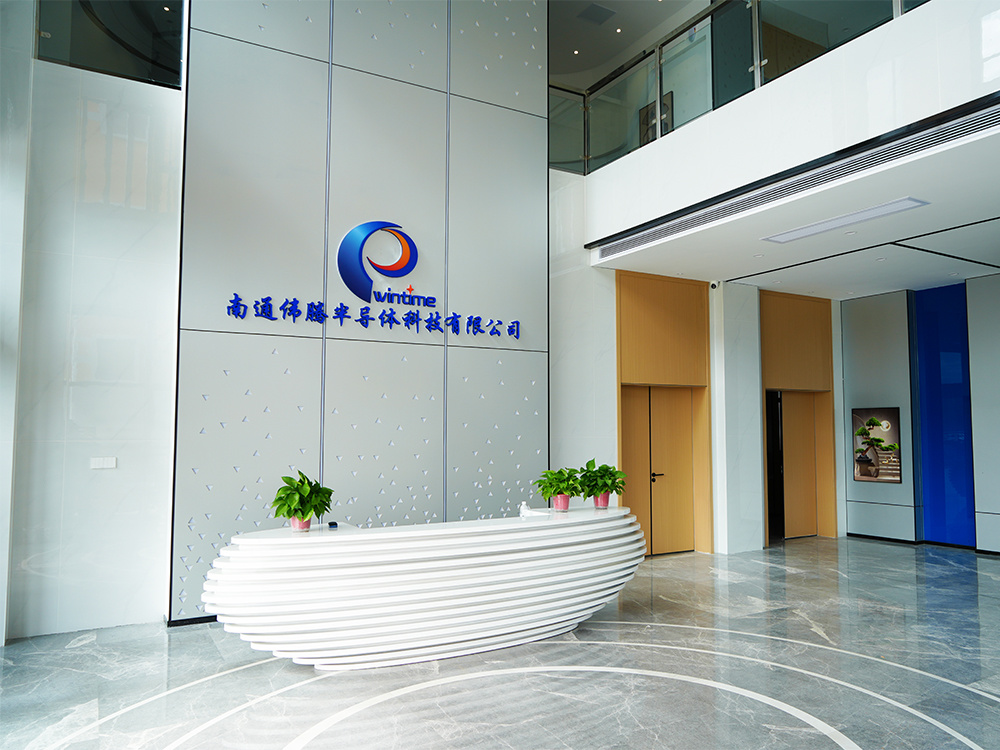
Custom blade parameters are aligned with the customer's material and cutting conditions before production.
Step-by-Step: How to Specify a Sawing Blade for Each Material
The following sequence applies the same logic to silicon wafers, ceramic substrates and precision alloys, but produces different answers at each step depending on the material.
- Define the material, thickness and end geometry. Note whether the workpiece is a brittle single crystal, a hard brittle ceramic, or a ductile alloy. Edge chipping tolerance, kerf width tolerance and burr tolerance follow directly from this classification.
- Choose the bond family. Resin bond for processes where low-damage cutting dominates, metal bond where the material is hard enough to demand higher wear resistance. Both options are available as customisation parameters.
- Set blade diameter, thickness and spindle hole size. This is the step where silicon wafer dicing diverges most sharply from alloy cutting. Thickness below 9 microns is achievable in mass production for ultra-thin wafer dicing blades, while thicker, more robust geometries are normal for alloy stock removal.
- Specify diamond abrasive grain size and concentration. Coarser grain and higher concentration raise material removal but can increase chipping on ceramics. Finer grain improves finish but raises heat, which is more damaging on alloys than on wafers.
- Select a coating. Anti-rust, heat-dissipation and wear-resistant coatings address the dominant wear mechanisms differently. Heat-dissipation coatings are most relevant where metal smearing is a risk; wear-resistant coatings are most relevant where abrasive ceramic dulls the blade edge quickly.
- Verify blade geometry and dynamic balance. WINTIME's quality control sequence includes geometric dimension inspection with vernier calipers and a laser diameter gauge, hardness and wear resistance testing on a material testing machine, and dynamic balance detection on a high-speed dynamic balance tester.
- Run a cutting performance simulation. Cutting performance simulation on the actual material confirms whether the specified cutting speed, service life and kerf tolerance hold under production conditions.
- Confirm minimum order quantity, lead time and export packaging. Standard products start at 50 pieces with a 2 to 5 working day lead time; customised products start at 300 pieces with a 10 to 25 working day lead time, adjustable for large orders. Special packaging for export is available as a customisation item.
Order planning covers minimum order quantity, lead time and export packaging for sawing blades.
Comparison Table: Silicon Wafer vs. Ceramic Substrate vs. Precision Alloy
| Cutting Task | Material Behaviour | Primary Blade Requirement | Main Acceptance Indicator | Customisation Focus |
|---|---|---|---|---|
| Silicon wafer dicing | Brittle single crystal; runout-critical on 300 mm wafers and substrates below 50 microns | Ultra-thin blade thickness, hubless stability, narrow kerf | Edge chipping, kerf width, blade runout | Thickness down to less than 9 microns in mass production, spindle hole size, bond type |
| Ceramic substrate cutting | Hard and brittle; abrasive to the blade and prone to fracture at load | Wear-resistant bond, controlled chipping | Micro-cracking, chipping size, kerf dimensional stability | Metal or resin bond selection, diamond grain size and concentration, coating |
| Precision alloy component cutting | Ductile or mixed-phase metal; smearing, burring and heat accumulation | Edge retention, chip clearance, heat control | Burr height, surface finish, blade service life | Diamond concentration, heat-dissipation and wear-resistant coating, non-standard geometry |
Read across the table, the same blade family can serve more than one column only after diameter, thickness, bond and abrasive parameters are re-set. That is why a comparison of sawing blades is really a comparison of specification priorities, not of a single ranked product.
Use Cases: Where These Three Specifications Are Applied
Semiconductor Manufacturing
Wafer dicing during device fabrication is the most dimension-sensitive of the three tasks. Kerf width determines die count, and chipping determines die strength. Specifications here lean on ultra-thin, hubless blades with tight runout control.
Semiconductor Packaging
Packaging and singulation steps handle a wider mix of substrate types, including ceramic and composite carriers, so the same production site may need both resin bond and metal bond blades running under one blade management programme.
Optical Communication
Optical communication and RF/optoelectronics represented 16% of dicing blade market share in 2024 at USD 69.9 million, driven by 5G infrastructure expansion. Cutting requirements here combine narrow kerf with tight edge quality, because optical and photonic components are sensitive to micro-damage at the facet.
Functional Ceramics
Functional ceramic substrates and structural ceramic parts are the segment where wear resistance is tested hardest. Blade choice is driven by chipping tolerance and how many pieces a single blade can cut before the kerf drifts out of tolerance.
Alloy Materials
Precision alloy components such as small structural parts and machined inserts are usually cut with thicker, more robust blades where burr control and blade life determine cost per part rather than kerf width.
Sample requests and technical enquiries for the three cutting tasks are handled through the same specification review process.
Frequently Asked Questions
What standards and records should a buyer check before approving a sawing blade?
Diamond tools including sawing blades fall under ISO 22180:2019, which categorises CVD diamond-coated and monocrystalline or polycrystalline types. Beyond the standard reference, buyers should verify the manufacturer's dimensional records, because blade thickness and kerf tolerances determine whether the specification is repeatable. WINTIME's quality control sequence includes geometric dimension inspection with vernier calipers and a laser diameter gauge, hardness and wear resistance testing, dynamic balance detection on a high-speed dynamic balance tester, and cutting performance simulation on the actual workpiece material.
Can one sawing blade supplier realistically cover wafer, ceramic and alloy cutting?
Coverage depends on the supplier's customisation range rather than on a single product. WINTIME customises blade diameter, thickness and spindle hole size; bond type including metal bond and resin bond; diamond abrasive grain size and concentration; anti-rust, heat-dissipation and wear-resistant coatings; cutting speed and service life targets; export packaging; and special-shaped non-standard blades. Its portfolio includes hubless sawing blades, diamond sawing blades, DZY Series wafer sawing blades, DZR Series sawing blades, DZR-S Series slotted sawing blades and electroforming hard sawing blades, and it supplies the semiconductor manufacturing, packaging, optical communication, functional ceramics and alloy materials sectors.
What actually drives the cost of a custom sawing blade?
Cost follows the specification levers rather than the blade category. Bond type, diamond grain size and concentration, coatings, non-standard geometry and export packaging are the main variables in WINTIME's customisation scope. Order structure also matters: standard products start at a minimum of 50 pieces, while customised products start at 300 pieces. Monthly capacity is more than 800,000 pieces for standard specifications and more than 80,000 pieces for customised and special-shaped products, which affects how unit cost behaves at higher volumes.
Can a buyer validate blade performance with a sample before committing to mass production?
Yes, and the usual route is a small sample order run under production conditions so that chipping, kerf width and blade life can be measured on the real material. WINTIME's standard minimum order of 50 pieces supports this kind of validation run, and cutting performance simulation testing on the actual material is part of the quality control process. Technical support for cutting process matching and equipment adaptation is also available during validation.
What lead times and support should be planned for standard versus customised blades?
Standard products ship in 2 to 5 working days, while customised orders take 10 to 25 working days, adjustable for large orders, so a production ramp should be planned against the longer window. WINTIME's after-sales commitments include quality problem investigation and resolution within 48 hours, long-term supply guarantee and inventory support, application training for new customers, customised after-sales service for bulk procurement customers, and replacement or compensation for defective products caused by quality problems. Buyers who want to start with a specific material can request a sample and quotation at WINTIME's official site or download the full product brochure below.
Conclusion
Silicon wafer dicing, ceramic substrate cutting and precision alloy component cutting share the same basic tool but not the same specification logic. Wafers are governed by blade thickness and runout, which is why mass production below 9 microns and hubless geometry matter so much on 300 mm material. Ceramics are governed by bond wear resistance and controlled chipping. Alloys are governed by edge retention and heat management. Buyers who align the specification to the material get stable kerf, predictable blade life and lower cost per cut; buyers who do not tend to discover the mismatch through scrap.
WINTIME Semiconductor Technology Co., Ltd. manufactures high-precision sawing blades and dicing blades from its 34,000 square metre facility, with a 35-engineer R&D team, an annual output of roughly 1 million pieces and OEM, ODM and customised production support. Email: shenxiangfei@ntwintime.com | Tel: +86 13851530812 | WhatsApp: +8618888053207 | No. 868, Fushou East Road, Rugao City, Jiangsu Province.
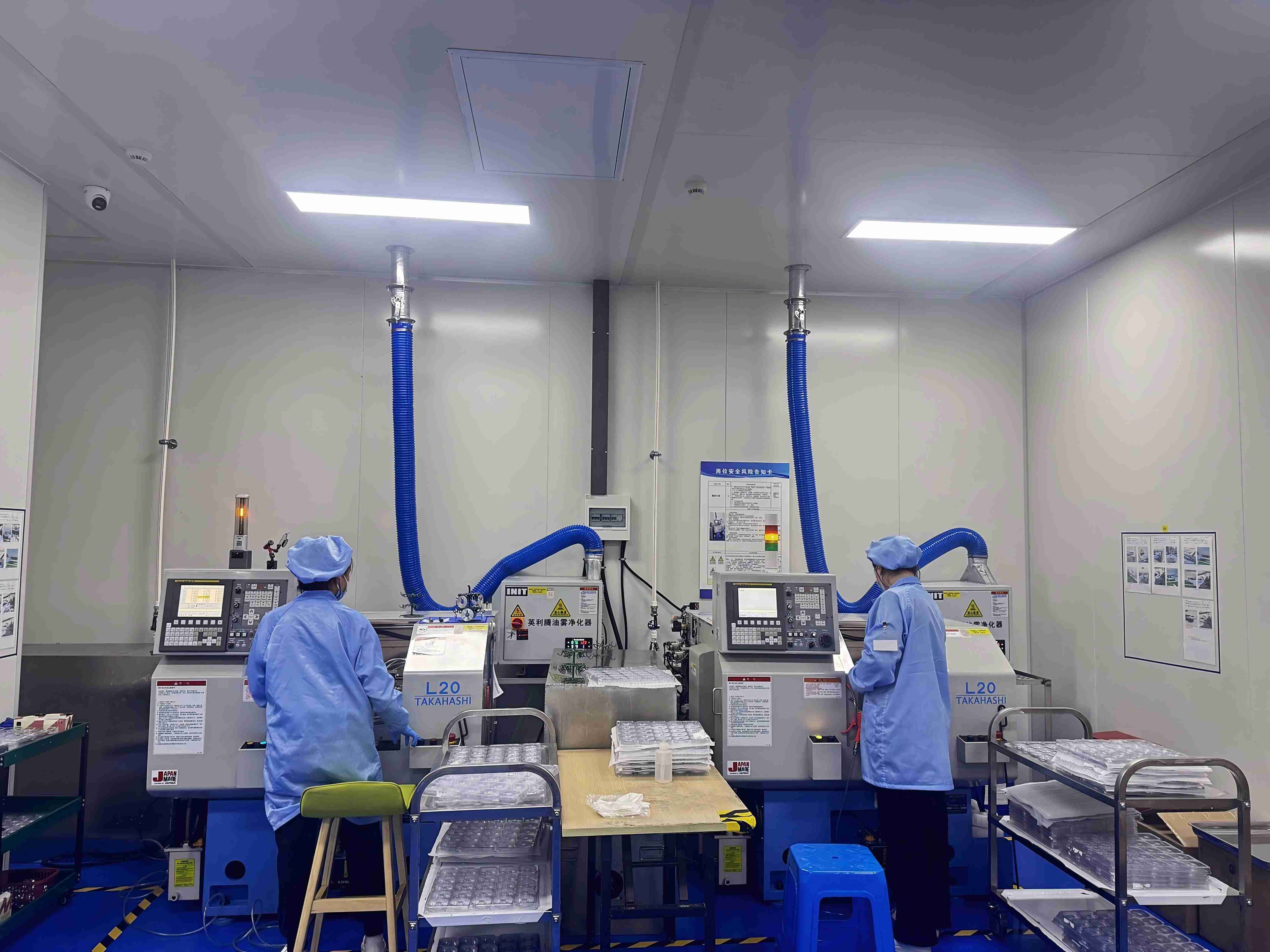
Custom sawing blade orders are produced and inspected before shipment.
Next Step: Match the Blade to Your Material
Send your material type, target thickness and kerf tolerance, and WINTIME will propose a blade specification for wafer, ceramic or alloy cutting. Sample orders start at 50 pieces for standard specifications.
Request a sample or quotation | Download the WINTIME product brochure (PDF)
Have Questions or Need More Details?
Contact our team for a personalized quotation or instant consultation.
Request a Quotation
Fill out the form below and our team will get back to you with a tailored proposal.
WhatsApp Direct Chat
Prefer to chat in real-time? Message us on WhatsApp for instant assistance & quick answers.
- Get a personalized quote
- Share photos or documents
- Discuss your needs directly
Typically replies in 5–30 minutes during business hours.