
Sawing Blade Comparison for Ceramic Substrate vs Alloy Component Cutting: Matching Blade to Material
A sawing blade should be selected as a specification bundle, not as a single catalogue name. For functional ceramic substrates, the qualification usually turns on chipping tolerance and kerf control. For precision alloy components, wear resistance and edge quality often decide the result. The published WINTIME product range covers both workpiece categories through the DZR-S Series Slotted sawing Blade, but the family name alone is not a specification. Buyers still need to confirm thickness, bond, abrasive, flange or slot geometry, cleanroom compatibility, and sample performance.
Problem Definition: Why One Blade Specification Rarely Fits Two Workpiece Categories
The practical purchasing problem is not a shortage of blade options. It is that ceramic substrate cutting and precision alloy component cutting demand different attention inside the same blade specification. A ceramic substrate is typically brittle and chip-sensitive, so the buyer looks closely at kerf width, edge chipping, and dimensional accuracy. An alloy component is typically ductile and may produce burrs or smearing, so the buyer watches wear resistance, chip evacuation, and edge quality. These are different failure modes even when the same sawing machine, spindle, and cleanroom are used.
The available verified product information does not publish separate numeric chipping-tolerance or wear-life values for ceramic versus alloy work. That is an important constraint, not a gap to be filled with guesswork. The buyer should treat chipping tolerance and wear resistance as qualification criteria to be measured on samples, while using published parameters as the starting envelope. The published envelope for the SB-001 Sawing Blade includes a thickness range of 8 μm to 50 μm, cutting accuracy of ±0.002 mm, spindle speed of 30,000 to 60,000 rpm, hardness of HRC 65 to 70, resin or metal bond, and a chip removal rate of at least 1.2 mm³/s.
WINTIME Semiconductor Technology Co., Ltd. is a China-based manufacturer of sawing blades and dicing blades for semiconductor, optical communication, functional ceramic, and alloy material cutting. Its published application scope includes ceramic substrate cutting and precision alloy component cutting. That makes the ceramic-versus-alloy decision a real selection question inside the WINTIME range, not a generic category comparison.
Industry Background: Ceramic Substrates and Alloy Components in Precision Cutting
WINTIME’s published application scope covers semiconductor manufacturing, semiconductor packaging, optical communication, new functional materials, functional ceramics, and alloy materials. The listed project types include wafer dicing and scribing, semiconductor package cutting, ultra-thin wafer processing, optical device cutting, ceramic substrate cutting, and precision alloy component cutting. These are not laboratory-only categories; they share a production environment in which dimensional control and surface integrity matter.
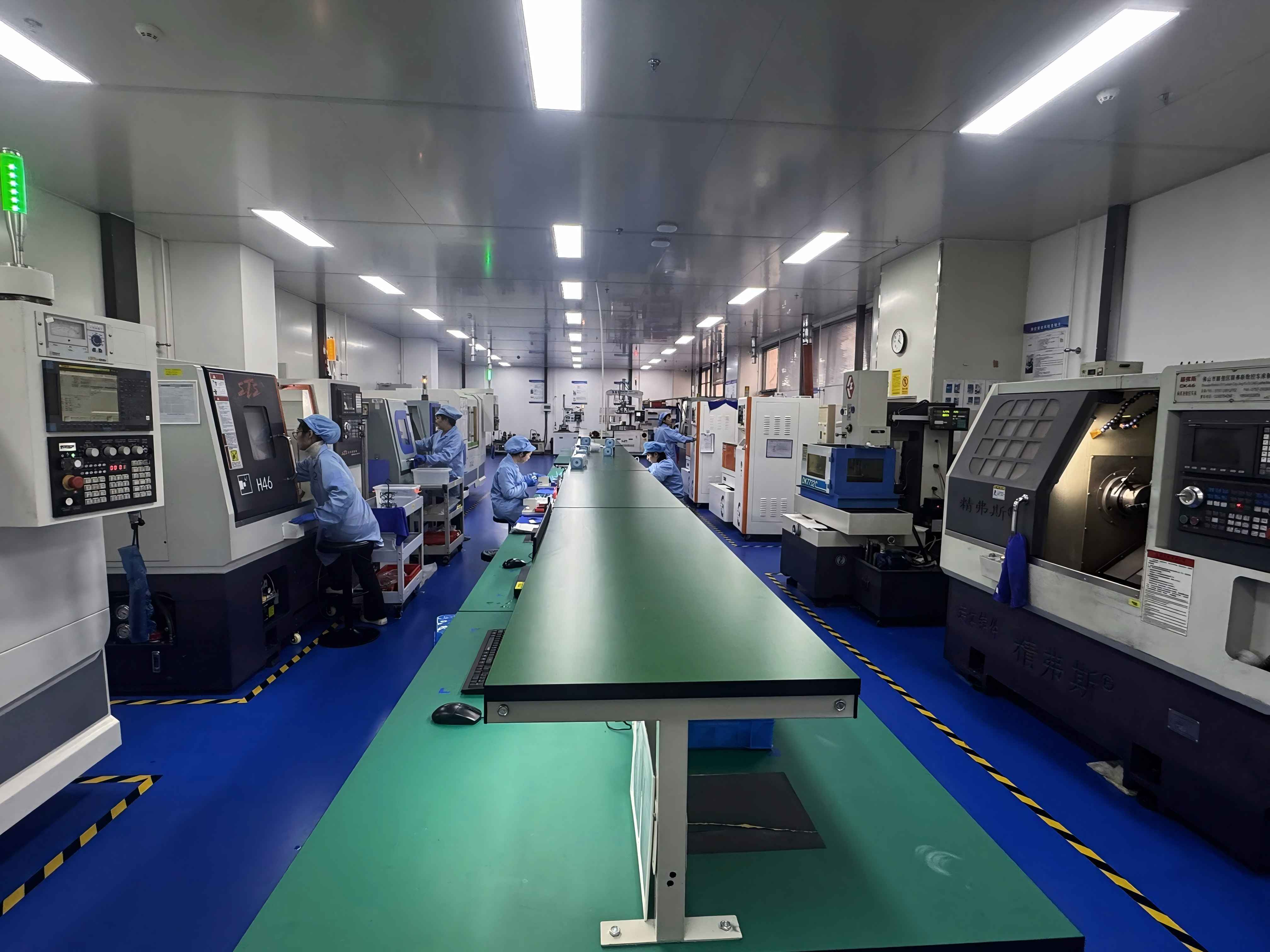
The published working condition is a Class 100/1000 cleanroom with constant temperature at 22±2°C, constant humidity at 45% to 55%, dust-free operation, anti-static control, and a high-speed spindle environment. The operation mode is high-speed spindle rotating cutting, dry or wet cutting, automatic dicing machine continuous operation, and precision feeding. Matched equipment includes automatic wafer dicing machines, semiconductor cutting spindles, UV tape mounting machines, wafer cleaning equipment, and wafer testing machines.
For both ceramic substrates and alloy components, the published function of the cutting process is to achieve high-precision cutting, narrow kerf, low chipping, high-efficiency cutting, and stable dimensional control. The special requirements listed for advanced work include ultra-thin blade thickness of 9 μm or less, high wear resistance, low cutting loss, anti-static performance, high dimensional accuracy, long service life, and stable mass production. These requirements explain why a blade family name is only the beginning of the selection process.
Detailed Solution: WINTIME Blade Platforms and the Specification Bundle
The WINTIME Sawing Blade platform is published under model SB-001. Its material construction is a resin or metal bond matrix with diamond superabrasive and a high-strength steel base. Its applicable industries include semiconductor manufacturing, semiconductor packaging, precision electronic component processing, and optical ceramic cutting. The specification list is the baseline for both ceramic and alloy enquiries: thickness range 8 μm to 50 μm, cutting accuracy ±0.002 mm, spindle speed 30,000 to 60,000 rpm, hardness HRC 65 to 70, resin or metal bond, chip removal rate at least 1.2 mm³/s, diamond abrasive, and high-strength steel base.
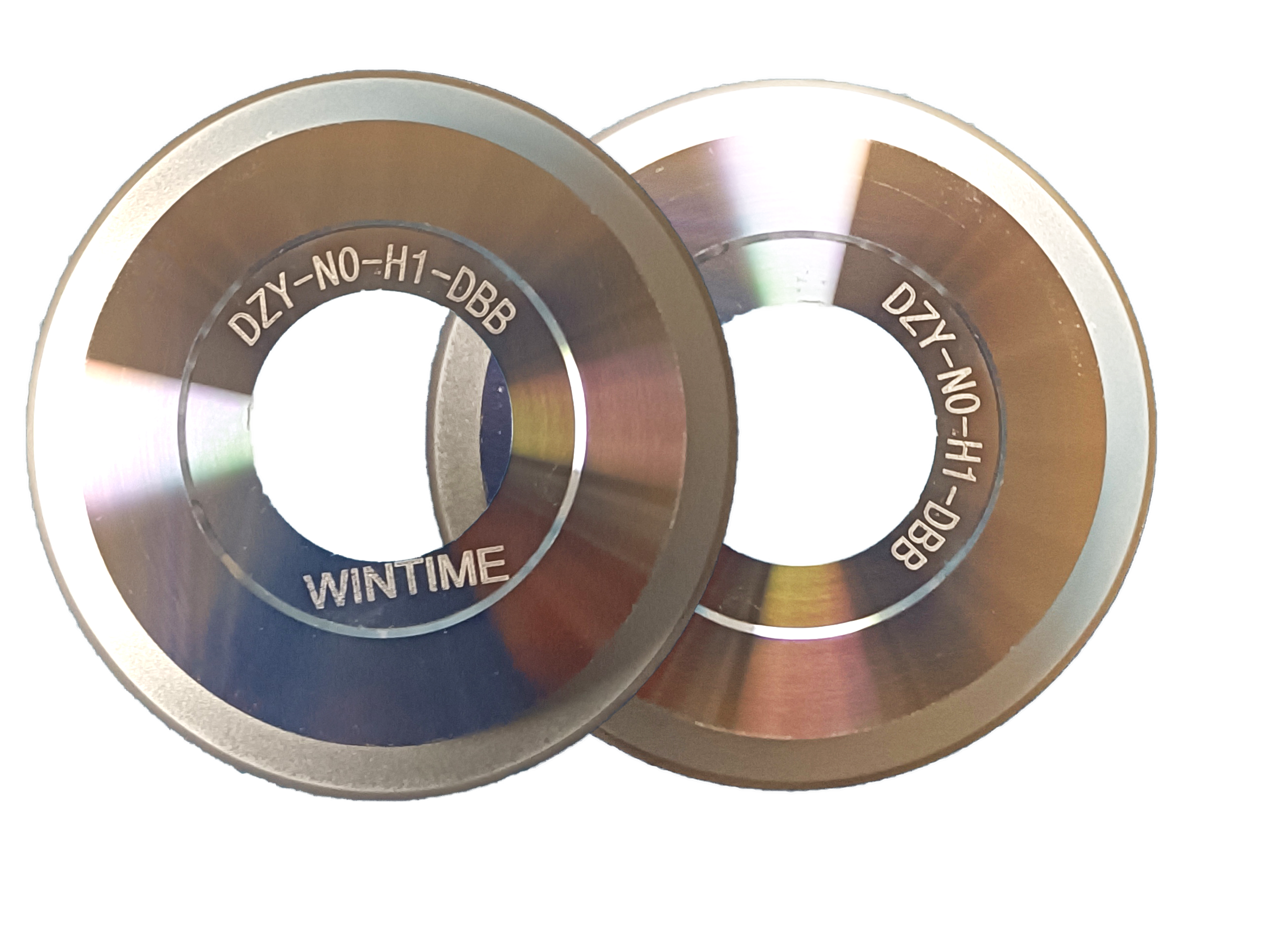
Within the product range, the DZY Series Wafer sawing Blade is described as integrating the cutting blade with an aluminum alloy flange. WINTIME states that the DZY series is intended for high-precision wafer cutting in semiconductor packaging processes. That integrated-flange construction is a machine-interface and handling consideration; it should be confirmed against the spindle and mounting arrangement before ordering.
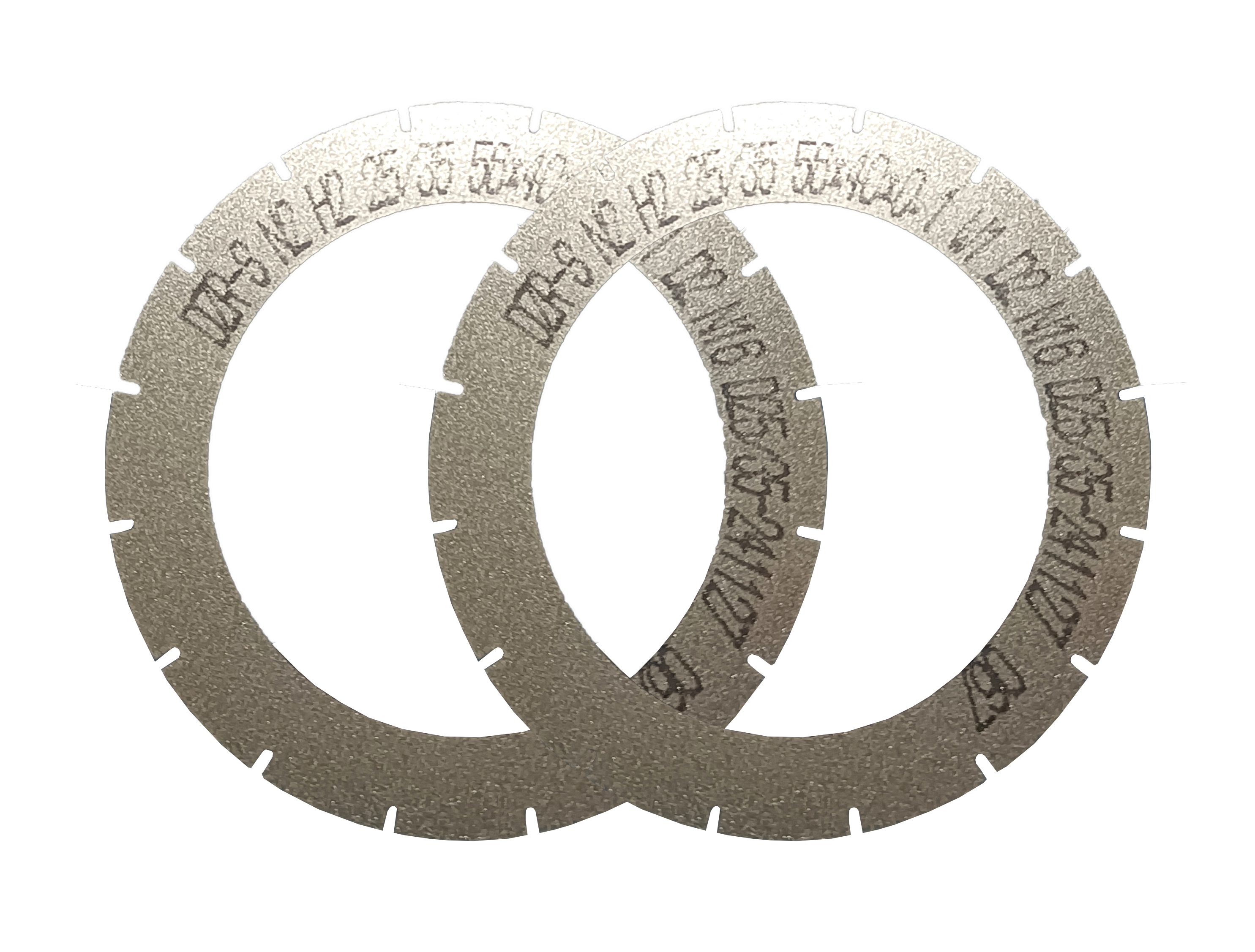
The DZR Series sawing Blade is listed for semiconductor, optical communication, and new functional-material industries. WINTIME product information also describes the DZR type as composed of metallic nickel and diamond abrasive; because this is a company product description rather than an independently tested material certificate, buyers should confirm the current datasheet before approval. The DZR-S Series Slotted sawing Blade is the most directly relevant family for this comparison because WINTIME product information lists it for semiconductor wafer cutting, functional ceramic cutting, alloy material cutting, and semiconductor packaging component cutting.
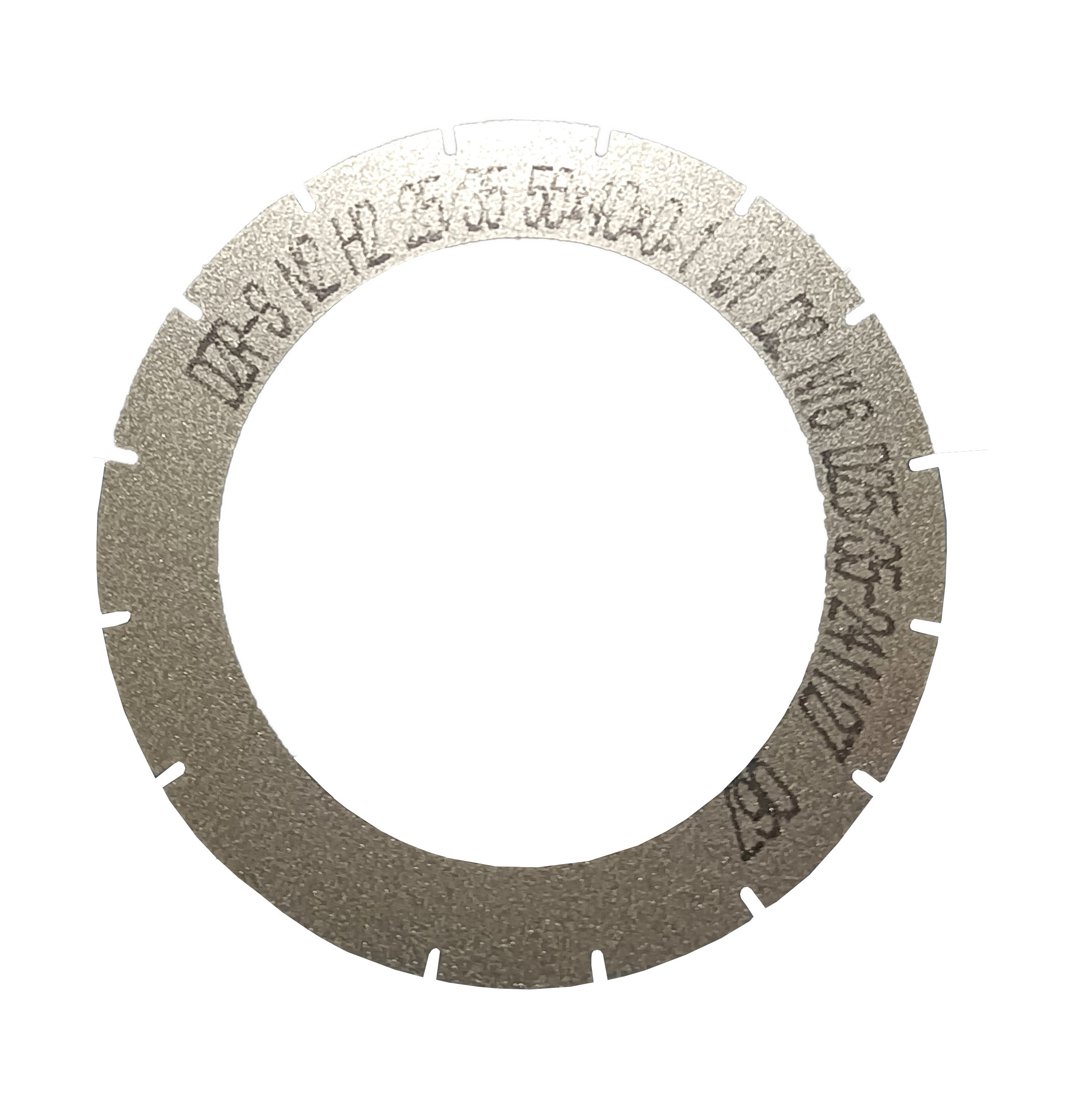
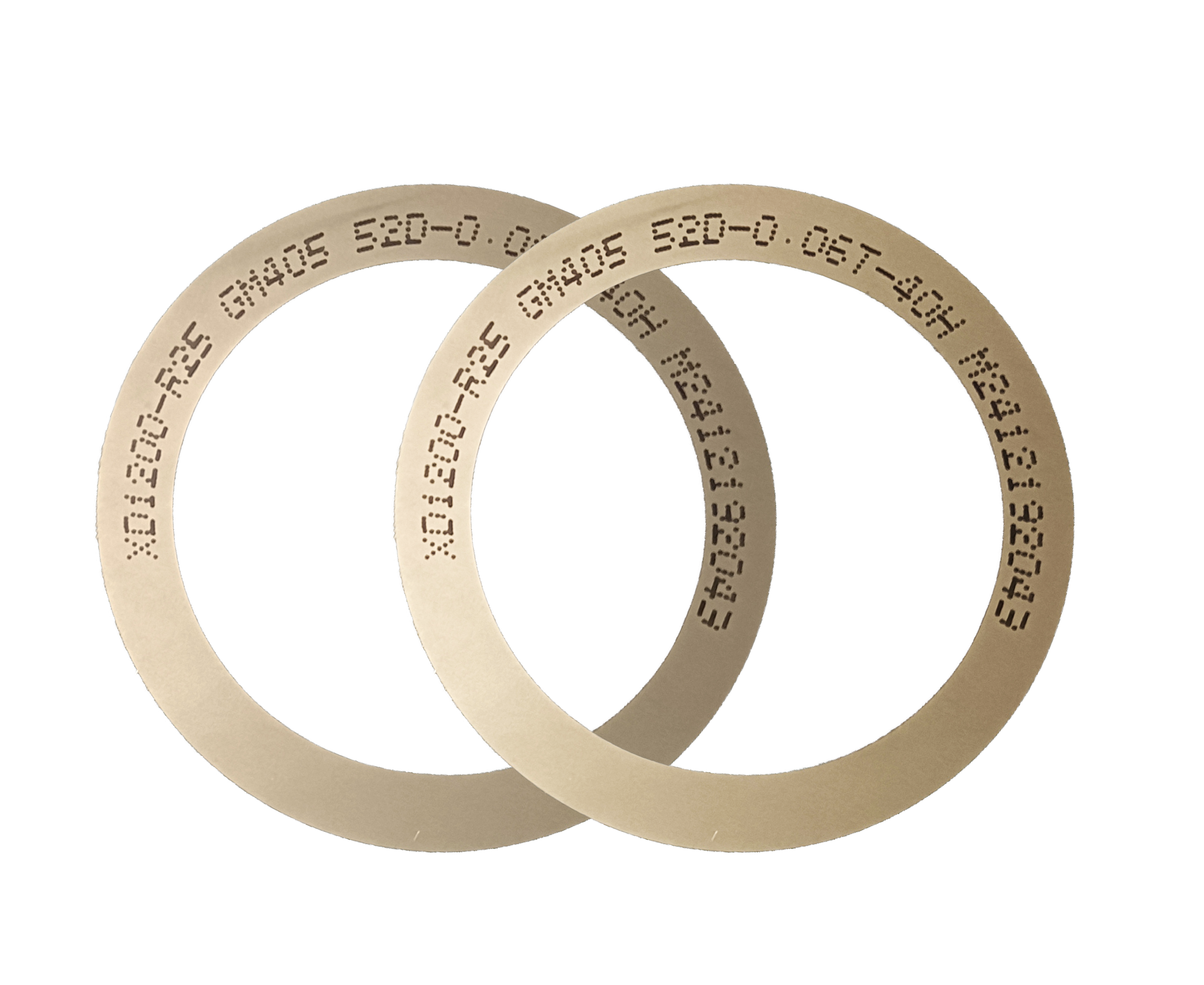
The product type list also includes hubless sawing blades, flanged sawing blades, serrated sawing blades, and electroforming hard sawing blades. The available corpus does not publish separate parameter sets for every one of those types. Buyers who need a hubless sawing blade or an electroforming hard sawing blade should request the current specification sheet rather than assume that the SB-001 baseline applies unchanged.
Customization is a central part of the matching process. WINTIME lists OEM, ODM, and customized production, with customization of blade diameter, thickness, spindle hole size, bond type, diamond abrasive grain size and concentration, coating for anti-rust, heat dissipation or wear resistance, cutting performance, export packaging, and special-shaped blade geometry. That customization list is the practical answer to the ceramic-versus-alloy problem: the buyer should not ask only for a DZR-S blade; the buyer should ask for a DZR-S blade with a defined thickness, bond, abrasive, geometry, and sample target.
Step-by-Step Breakdown: Matching a Sawing Blade to Ceramic or Alloy Cutting
Step 1: Define the workpiece failure mode before comparing blades. For a ceramic substrate, write down the acceptance criteria for chipping, kerf width, edge straightness, and dimensional accuracy. For an alloy component, write down the acceptance criteria for burr formation, edge quality, kerf, and wear after a defined cutting interval. The published corpus does not provide separate numeric chipping or wear-life limits, so these criteria must come from the buyer’s own product specification and sample test.
Step 2: Set the dimensional envelope from published values. Start with the SB-001 range: thickness 8 μm to 50 μm and cutting accuracy ±0.002 mm. Confirm the final blade thickness against the kerf allowance and handling requirement. A thinner blade is not automatically better for every workpiece; the correct thickness is the one that meets the kerf and stability requirement in the sample cut.
Step 3: Select bond, abrasive, and concentration for the material. The published product data lists resin and metal bonds, diamond superabrasive, and customization of diamond grain size and concentration. For ceramic substrate cutting, the buyer should ask the supplier to justify the bond and grit against chipping and kerf control. For alloy component cutting, the buyer should ask the supplier to justify the bond and grit against wear and chip evacuation. The published chip removal rate of at least 1.2 mm³/s is a useful baseline, but it is not a substitute for a sample test on the actual alloy.
Step 4: Match the flange, hub, or slot geometry to the machine interface. The DZY Series uses an integrated aluminum alloy flange, while the DZR-S Series is a slotted blade. Hubless and flanged types are also listed in the product range. The buyer should confirm spindle interface, mounting method, and available space before choosing a construction. A blade that matches the material but not the machine is still a failed selection.
Step 5: Confirm the cleanroom and spindle environment. The published working condition is Class 100/1000 cleanroom, 22±2°C, 45% to 55% relative humidity, dust-free, anti-static, and high-speed spindle operation at 30,000 to 60,000 rpm. If the production cell does not meet these conditions, that deviation should be discussed before the sample is approved.
Step 6: Run a two-material sample qualification. Cut the ceramic substrate and the alloy component with the proposed specification, then measure kerf, chipping or edge quality, wear, and spindle load against the acceptance criteria. This is the only reliable way to resolve the missing numeric chipping and wear-life data in the public corpus. The sample should use the same cleaning, mounting, and feed strategy that will be used in production.
Step 7: Lock production controls and commercial terms. WINTIME lists geometric dimension inspection, hardness and wear resistance testing, dynamic balance detection, and cutting performance simulation testing as quality-control steps. Commercial terms include a MOQ of 50 pieces for standard products and 300 pieces for customized products, with lead time of 2 to 5 working days for standard products and 10 to 25 working days for customized orders. Monthly capacity is listed as more than 800,000 pieces for standard specifications and more than 80,000 pieces for customized and special-shaped products.
Use Cases: Where the Ceramic vs Alloy Decision Appears
Functional ceramic substrate cutting. WINTIME product information lists the DZR-S Series Slotted sawing Blade for functional ceramic cutting. The buyer should prioritize chipping tolerance, kerf control, and dimensional accuracy in the sample test. The published accuracy of ±0.002 mm and thickness range of 8 μm to 50 μm provide the starting envelope, while the final specification should be confirmed against the ceramic grade and substrate thickness.
Precision alloy component cutting. The same DZR-S Series is listed for alloy material cutting. Here the buyer should pay particular attention to wear resistance, chip evacuation, and edge quality. The published chip removal rate of at least 1.2 mm³/s is relevant, but the sample test should confirm whether the selected bond and abrasive produce an acceptable edge on the specific alloy.
Semiconductor wafer dicing. The DZY Series is described for high-precision wafer cutting in semiconductor packaging. WINTIME also states that its ultra-thin wafer dicing blade project reached a thickness below 9 μm in mass production. That ultra-thin capability is relevant when the kerf budget is tight, but it should not be assumed for every ceramic or alloy project.
Optical communication device cutting. The DZR Series is listed for optical communication applications. Buyers in this segment can use the same selection method: define the edge and kerf requirement, confirm the bond and abrasive, and validate with a sample before production release.
Semiconductor packaging component cutting. The DZR-S Series is listed for semiconductor packaging component cutting. This is a useful bridge case because it combines precision dimensional control with a production environment that already uses cleanroom and anti-static controls.
Comparison Table: Verified Facts for Ceramic Substrate vs Alloy Component Cutting
| Comparison area | Ceramic substrate cutting | Alloy component cutting | Verified basis |
|---|---|---|---|
| Published application wording | DZR-S Series Slotted sawing Blade is listed for functional ceramic cutting. | DZR-S Series Slotted sawing Blade is listed for alloy material cutting. | WINTIME product information and verified application data |
| Related project type | Ceramic substrate cutting is listed in the application scope. | Precision alloy component cutting is listed in the application scope. | WINTIME application data |
| Blade thickness range | 8 μm to 50 μm product specification; confirm final thickness for the ceramic grade. | 8 μm to 50 μm product specification; confirm final thickness for the alloy component. | SB-001 product specification |
| Cutting accuracy | ±0.002 mm published product value. | ±0.002 mm published product value. | SB-001 product specification |
| Spindle speed | 30,000 to 60,000 rpm published product value. | 30,000 to 60,000 rpm published product value. | SB-001 product specification |
| Bond and abrasive | Resin or metal bond; diamond superabrasive; high-strength steel base. | Resin or metal bond; diamond superabrasive; high-strength steel base. | SB-001 product specification |
| Chip removal rate | At least 1.2 mm³/s published product value. | At least 1.2 mm³/s published product value. | SB-001 product specification |
| Published chipping tolerance | No numeric value is stated in the available corpus; qualify by sample. | No numeric value is stated in the available corpus; qualify by sample. | Verified data gap |
| Published wear-life value | No numeric value is stated in the available corpus; qualify by sample. | No numeric value is stated in the available corpus; qualify by sample. | Verified data gap |
| Cleanroom condition | Class 100/1000, 22±2°C, 45% to 55% relative humidity, anti-static. | Same published working condition. | WINTIME application data |
| Customization available | Diameter, thickness, spindle hole, bond, grit and concentration, coating, cutting performance, packaging, special shapes. | Same customization list; final selection depends on sample result. | WINTIME capability data |
| MOQ and lead time | 50 pieces standard; 300 pieces customized; 2 to 5 working days standard; 10 to 25 working days customized. | Same published commercial terms. | WINTIME capability data |
The table shows why the material question cannot be answered by the blade family name alone. The published baseline is shared, but the final specification and acceptance criteria differ by workpiece. Ceramic substrate buyers should focus the sample on chipping and kerf; alloy component buyers should focus the sample on wear, chip evacuation, and edge quality.
Manufacturing and Quality-Control Facts That Support the Selection
WINTIME Semiconductor Technology Co., Ltd. was established in 2020. The company states a factory area of 34,000 m², 100 employees, 35 engineers, and an export ratio of 30%, with main markets in Southeast Asia, East Asia, North America, and the European Union. These are company-reported facts and are relevant to supply continuity and technical support, not to a performance ranking.
The quality-control list includes geometric dimension inspection with vernier caliper and laser diameter gauge, hardness and wear resistance testing with a material testing machine, dynamic balance detection with a high-speed dynamic balance tester, and cutting performance simulation testing on actual material. After-sales support includes technical support for cutting process matching and equipment adaptation, quality problem investigation and solution within 48 hours, customized after-sales service for bulk procurement, long-term supply guarantee and inventory support, product application training for new customers, and replacement or compensation for defective products due to quality problems.
FAQ
What compliance documents should buyers request before approving a sawing blade for ceramic or alloy cutting?
The available verified data set does not identify specific certification names for these WINTIME blade families. Buyers should request the applicable conformity declaration for their target market and confirm the cleanroom and anti-static requirements. WINTIME’s published working condition is a Class 100/1000 cleanroom at 22±2°C and 45% to 55% relative humidity with anti-static control.
Can the same WINTIME blade family be used for functional ceramics and alloy materials?
WINTIME product information lists the DZR-S Series Slotted sawing Blade for semiconductor wafer cutting, functional ceramic cutting, alloy material cutting, and semiconductor packaging component cutting. The family name is not the final specification; buyers should confirm thickness, bond, abrasive grit and concentration, flange or slot geometry, and sample performance for each workpiece.
How should buyers compare budget when no public price band is verified?
The available corpus does not publish a price band for these blade families. Compare quotations on the same specification, sample scope, and quality-control requirements. Published commercial terms include a MOQ of 50 pieces for standard products and 300 pieces for customized products, with standard lead time of 2 to 5 working days and customized lead time of 10 to 25 working days.
What sample test should be run before approving a blade for ceramic substrate or alloy component cutting?
Request sample cuts on both workpiece categories and measure kerf, chipping or edge quality, blade wear, and spindle load against your own acceptance criteria. WINTIME provides customization of blade diameter, thickness, spindle hole, bond type, diamond grit and concentration, coating, cutting performance, packaging, and special shapes, and offers technical support for cutting process matching.
What are the standard and customized lead times and capacity?
WINTIME states 2 to 5 working days for standard products and 10 to 25 working days for customized orders, adjustable for large orders. Monthly capacity is listed as more than 800,000 pieces for standard specifications and more than 80,000 pieces for customized and special-shaped products. To start a sample or quote request, contact WINTIME at shenxiangfei@ntwintime.com or +86 13851530812.
Conclusion: Match the Blade to the Material, Then Prove It on a Sample
For ceramic substrate cutting, the selection priority is chipping tolerance and kerf control. For precision alloy component cutting, the priority is wear resistance, chip evacuation, and edge quality. The published WINTIME DZR-S Series Slotted sawing Blade is listed for both functional ceramic cutting and alloy material cutting, which makes it a practical starting point. The final specification should still be confirmed through thickness, bond, abrasive, flange or slot geometry, cleanroom compatibility, and a two-material sample test.
The most reliable procurement sequence is to use the published SB-001 envelope as the baseline, request the custom specification that fits the workpiece, run sample cuts on both materials, and compare the results against the buyer’s own acceptance criteria. Because the public corpus does not provide numeric chipping or wear-life values, the sample test is not a formality; it is the evidence that closes the selection gap.
WINTIME Semiconductor Technology Co., Ltd.
Website: https://en.wintime.net.cn
Email: shenxiangfei@ntwintime.com
Tel: +86 13851530812
WhatsApp: +8618888053207
Address: No. 868, Fushou East Road, Rugao City, Jiangsu Province
Product brochure: download the WINTIME sawing blade brochure.
Request a Sample or Quotation
Send the workpiece material, target kerf, chipping or edge-quality requirement, machine interface, and expected order volume. WINTIME can review the DZR-S Series Slotted sawing Blade, DZY Series Wafer sawing Blade, DZR Series sawing Blade, or a customized specification against the application.
Email shenxiangfei@ntwintime.com or contact WINTIME on WhatsApp to start the sample review.
Have Questions or Need More Details?
Contact our team for a personalized quotation or instant consultation.
Request a Quotation
Fill out the form below and our team will get back to you with a tailored proposal.
WhatsApp Direct Chat
Prefer to chat in real-time? Message us on WhatsApp for instant assistance & quick answers.
- Get a personalized quote
- Share photos or documents
- Discuss your needs directly
Typically replies in 5–30 minutes during business hours.