
Sawing Blade Compliance Guide: Cleanroom and Anti-Static Conditions in Seven Wafer Dicing Markets
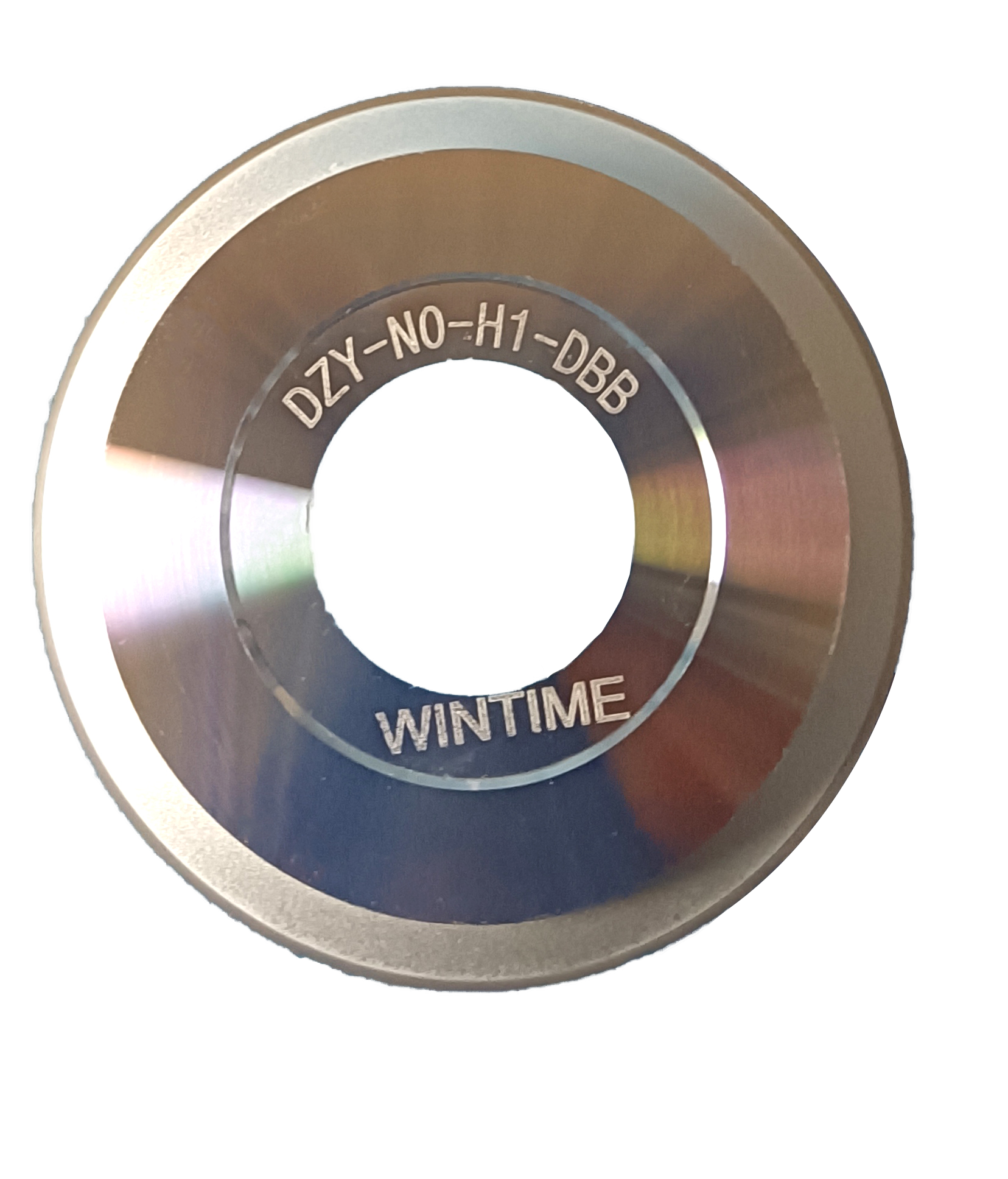
A Sawing Blade can be within its thickness and cutting-accuracy specification and still create a problem in a wafer dicing procurement review. The missing item is usually not another blade specification; it is evidence that the blade, packaging, handling method, and dicing process match the site's cleanroom and anti-static conditions. This guide explains how to review those conditions for semiconductor, optical communication, functional ceramic, and alloy-material cutting across China, Japan, Korea, Singapore, Malaysia, the United States, and Germany.
The scope is a Sawing Blade deployment for wafer dicing and scribing, semiconductor package cutting, ultra-thin wafer processing, optical device cutting, ceramic substrate cutting, and precision alloy component cutting. The supplied application scenario lists a Class 100/1000 clean room, constant temperature of 22±2°C, constant humidity of 45%-55%, dust-free and anti-static conditions, and a high-speed spindle environment. Those are the baseline conditions used throughout this guide.
WINTIME Semiconductor Technology Co., Ltd. is a China-based manufacturer established in 2020 that specializes in high-precision cutting blades, including Sawing Blades and Dicing Blades. WINTIME reports that export business accounts for 30% of total sales and that its major markets include Southeast Asia, East Asia, North America, and the European Union. That coverage is relevant to the seven-market review, but it is not a certification claim for any market.
What Sawing Blade Compliance Means at a Wafer Dicing Site
At the site level, compliance is a match among four items: the blade specification, the dicing equipment, the cleanroom and electrostatic-discharge environment, and the buyer's incoming documentation. A blade that matches the material and kerf target can still be held up if the site cannot confirm its cleanroom class, humidity control, anti-static handling, or spindle interface. This is why a Sawing Blade review should begin with the deployment conditions rather than with a generic certificate request.
The supplied corpus does not list market-specific certificates for WINTIME. It provides product specifications, application conditions, supporting equipment, and market coverage. A buyer should therefore treat this guide as a discovery and verification framework, not as a substitute for the fabrication site's quality manual, environment, health and safety rules, or local legal review. Where a site requires a certificate or declaration, the buyer should ask for the actual record rather than accept a general compliance statement.
Discovery rule: separate three questions. First, does the blade match the material and cutting process? Second, can the site hold the required cleanroom and anti-static conditions? Third, which documents will the site actually review before approval? A Sawing Blade inquiry that mixes these questions usually produces incomplete quotations.
The Supplied Operating Envelope: Class 100/1000, 22±2°C, 45%-55% RH
The application scenario states that the product operates in a Class 100/1000 clean room, at constant temperature of 22±2°C and constant humidity of 45%-55%, under dust-free and anti-static conditions, with a high-speed spindle environment. These are process-environment conditions for the application. They are not a statement that the blade itself creates a cleanroom, controls humidity, or carries an environmental certificate.
| Condition | Supplied application statement | Buyer check before deployment |
|---|---|---|
| Cleanroom class | Class 100/1000 clean room. | Ask the site to identify the classified area used for blade handling and dicing, and confirm the monitoring records the site will apply. This guide does not claim that the supplier factory or packaging area holds the same class. |
| Temperature | Constant temperature of 22±2°C. | Confirm that the dicing room can hold this band during production, storage, and transfer. Record the monitoring method used by the site. |
| Humidity | Constant humidity of 45%-55%. | Confirm humidity control and monitoring in the dicing area and in any transfer path that could expose the blade or tape to uncontrolled air. |
| Dust and particles | Dust-free environment. | Confirm gowning, cleaning, air filtration, and handling procedures. These are site controls; the supplied corpus does not define a separate particle test standard for the blade. |
| Anti-static | Anti-static conditions are required. | Confirm the site's electrostatic-discharge control plan, handling tools, packaging, and transfer steps. The supplied data does not name a specific ESD standard or surface-resistance target. |
| High-speed spindle | High-speed spindle environment; the supplied product data lists a spindle speed range of 30,000 to 60,000 rpm. | Confirm the exact model's approved spindle range, mounting interface, and machine compatibility before ordering or running a sample. |
The practical point is that Class 100/1000, 22±2°C, and 45%-55% RH should appear in the buyer's site checklist as conditions to verify. They should not appear in a supplier quotation as unqualified claims unless the supplier provides a specific document that supports the claim. This distinction protects both the process engineer and the procurement team.
Anti-Static Control Is a Separate Procurement Check
Anti-static is listed as a separate condition in the supplied scenario, alongside the cleanroom class and humidity range. That matters because a cleanroom classification does not by itself prove that the handling path is static-safe. The buyer should confirm how the blade is packed, opened, mounted, stored, and transferred, and how UV tape mounting, cleaning, and testing steps are controlled.
The supplied data does not identify a specific ESD standard, a required surface-resistance range, or a packaging specification. A buyer should therefore request the site's anti-static procedure and confirm what evidence the supplier can provide for packaging and handling. A general phrase such as anti-static is not a substitute for an actual control procedure. If the site requires an ESD audit record or a packaging declaration, ask for it directly and check its scope.
Product Families and Specifications That Enter the Compliance Review
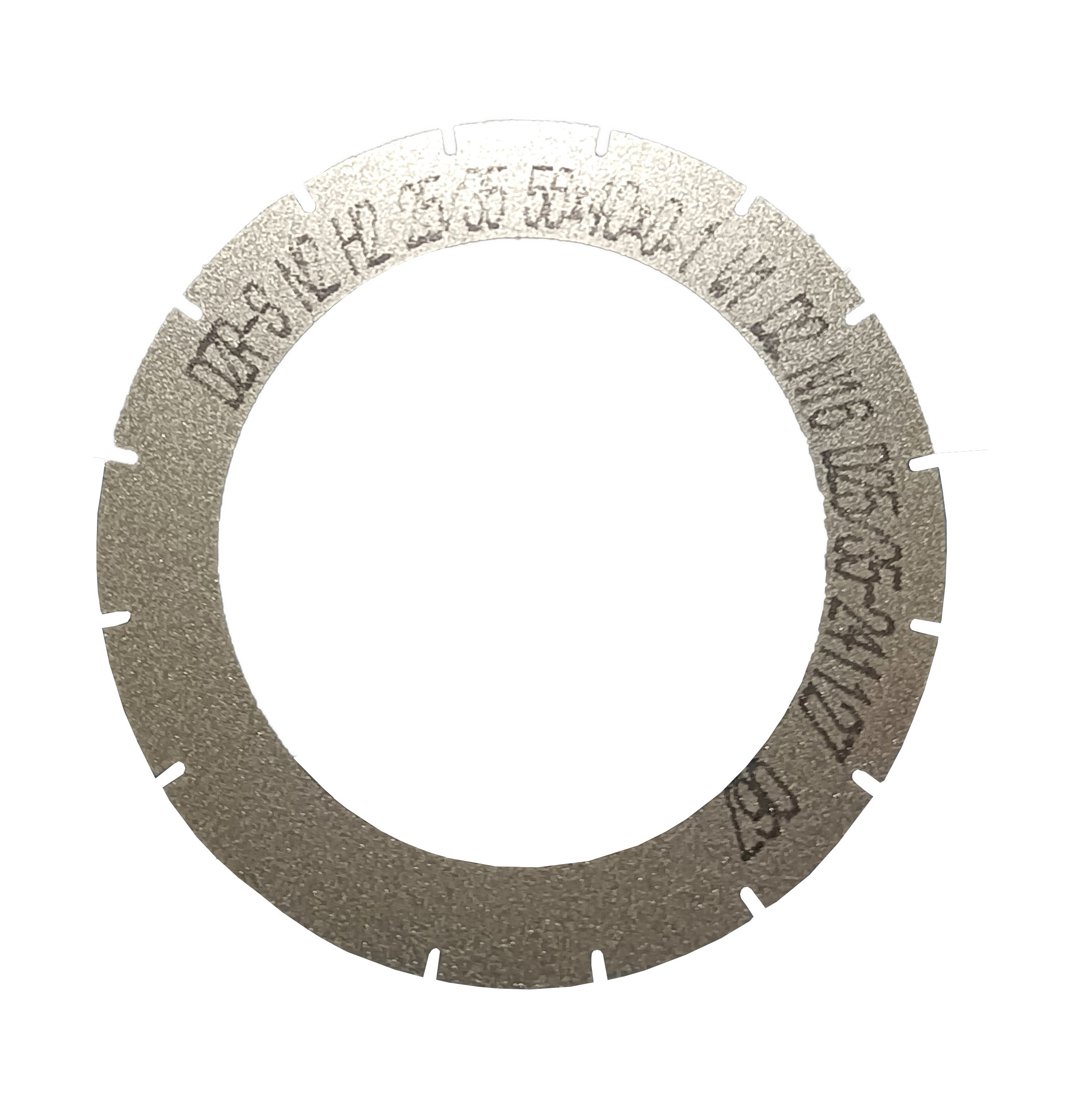
The supplied product-type list includes Diamond Sawing Blade, Precision Sawing Blade, Semiconductor Sawing Blade, Circular Sawing Blade, Hubbed Sawing Blade, Hubless Sawing Blade, Flanged Sawing Blade, Serrated Sawing Blade, DZY Series Wafer Sawing Blade, DZR Series Sawing Blade, and DZR-S Series Slotted Sawing Blade. The model SB-001 belongs to this Sawing Blade family. The review should use the exact model and configuration rather than the broad category name alone.
| Specification item | Supplied data for the Sawing Blade family |
|---|---|
| Thickness range | 8 μm to 50 μm |
| Cutting accuracy | ±0.002 mm |
| Spindle speed range | 30,000 to 60,000 rpm |
| Hardness | HRC 65-70 |
| Bond type | Resin or metal |
| Chip removal rate | ≥1.2 mm³/s |
| Construction | Bond matrix of resin or metal, diamond superabrasive, and a high-strength steel base |
| Intended industries | Semiconductor manufacturing, semiconductor packaging, precision electronic component processing, and optical ceramic cutting |
Product construction also affects the questions a buyer should ask. The supplied product information describes the DZY type as integrating the cutting blade with an aluminum-alloy flange, and the DZR type as using metallic nickel and diamond abrasive. The DZR-S slotted type is associated with semiconductor wafer cutting, functional ceramics, alloy materials, and semiconductor packaging components. These descriptions are starting points for technical qualification; they do not by themselves establish performance superiority or application suitability for a specific line.
Supporting Equipment and Process Interfaces
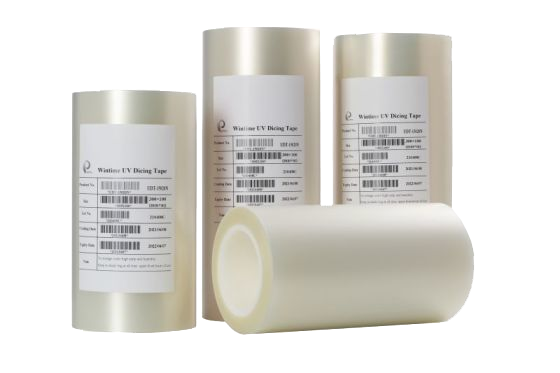
The supplied application scenario lists a set of supporting equipment items: automatic wafer dicing machine, semiconductor cutting spindle, UV tape mounting machine, wafer cleaning equipment, and wafer testing machine. Operation is described as high-speed spindle rotating cutting, dry or wet cutting, continuous operation of automatic dicing machines, and precision feeding cutting. These items define the process interface that a buyer should check before a blade is released to the line.
- Confirm that the dicing machine accepts the blade dimensions and mounting style, including hubbed, hubless, or flanged configurations where applicable.
- Confirm the spindle speed range and the actual operating setpoint for the material and blade model. The supplied product data lists 30,000 to 60,000 rpm, but the exact approved range should come from the model datasheet.
- Confirm whether the process uses dry cutting, wet cutting, or both, and whether the machine and site procedures support that method.
- Confirm the UV tape mounting, cleaning, and testing steps, because these steps sit around the blade and can affect handling discipline even when the blade specification is correct.
- Confirm the incoming inspection method for thickness, cutting accuracy, packaging condition, and model identification.
Seven-Market Deployment Map
The supplied application scenario is common in China, Japan, Korea, Singapore, Malaysia, the United States, and Germany. WINTIME's stated export coverage is Southeast Asia, East Asia, North America, and the European Union. The table below maps the supplied market facts to a verification focus. It does not state that any market has a specific legal certification requirement for this blade, because the supplied evidence does not provide such a determination.
| Market | Supplied coverage signal | Shared condition from the application scenario | Verification focus |
|---|---|---|---|
| China | Listed application market CN; WINTIME is China-based. | Class 100/1000, 22±2°C, 45%-55% RH, dust-free, anti-static, high-speed spindle. | Confirm the domestic site's cleanroom and ESD records, incoming inspection plan, and equipment interface. |
| Japan | Listed application market JP; East Asia export coverage. | Same supplied application conditions. | Confirm site acceptance format, documentation language, and machine compatibility. |
| Korea | Listed application market KR; East Asia export coverage. | Same supplied application conditions. | Confirm cleanroom monitoring, ESD handling, and sample validation scope. |
| Singapore | Listed application market SG; Southeast Asia export coverage. | Same supplied application conditions. | Confirm receiving, storage, and handling steps, plus spindle and blade-mounting interface. |
| Malaysia | Listed application market MY; Southeast Asia export coverage. | Same supplied application conditions. | Confirm site documentation and the dicing line's environment-control records. |
| United States | Listed application market US; North America export coverage. | Same supplied application conditions. | Confirm site cleanroom and ESD procedures, incoming inspection records, and equipment compatibility. |
| Germany | Listed application market DE; European Union export coverage. | Same supplied application conditions. | Confirm EU site documentation and ESD requirements directly. No specific EU conformity mark or certificate is asserted in this guide. |
China and the Domestic Manufacturing Base
China is both a listed application market and WINTIME's home manufacturing base. The supplied company facts include a 34,000㎡ manufacturing facility, approximately 100 staff, an R&D team of 35 engineers, an annual production capacity of 1 million pieces, and 2 patent technologies. WINTIME also states that its Ultra-thin Wafer D Blade project has achieved a process thickness below 9 microns. These facts support supplier discovery; they do not replace a site audit or a cleanroom certificate review.
Japan and Korea
Japan and Korea are listed application markets and fall within WINTIME's stated East Asia coverage. For both markets, the practical review is the same supplied cleanroom and anti-static envelope, with local site documentation and equipment compatibility confirmed before a sample run. The buyer should not assume that a general export statement answers the site's cleanroom, ESD, or incoming inspection questions.
Singapore and Malaysia
Singapore and Malaysia are listed application markets and fall within Southeast Asia coverage. Buyers in these markets should confirm receiving, storage, and anti-static handling steps, as well as the dicing machine's spindle and blade-mounting interface. The supplied scenario lists the same environmental conditions for these deployments, so the site checklist can follow the same structure.
United States
The United States is a listed application market and is part of North America coverage. The review should confirm the site's cleanroom monitoring, ESD procedure, and incoming inspection records. This guide does not assert a US certificate or regulatory approval for WINTIME; it provides a checklist for obtaining and checking the site-specific records that matter to the buyer.
Germany and the European Union
Germany is a listed application market and falls within European Union coverage. Buyers should confirm the EU site's documentation and anti-static requirements directly. The supplied corpus does not include a specific EU conformity mark or certificate for WINTIME, so no such claim is made here. A supplier discussion can still begin with the product specification, application match, and documentation checklist.
Documentation Package to Request Before Qualification
A documentation package should be built around what the dicing site will actually review. The exact list depends on the buyer's quality system, but a practical starting package includes the following items.
- Model datasheet: exact model, dimensions, thickness range, cutting accuracy, bond type, construction, and approved spindle range. For the supplied SB-001 data, this includes 8 μm to 50 μm thickness, ±0.002 mm cutting accuracy, and 30,000 to 60,000 rpm spindle speed.
- Application match: a written statement of the intended material and process, such as wafer dicing and scribing, semiconductor package cutting, ultra-thin wafer processing, optical device cutting, ceramic substrate cutting, or precision alloy component cutting.
- Cleanroom and ESD handling information: whatever the supplier can actually provide for packaging, storage, and handling. If no specific ESD standard is available, the buyer should record that gap and confirm the site's own controls.
- Packaging and storage description: how the blade is protected, identified, and transferred, and what the receiving site should check on arrival.
- Incoming inspection plan: how the buyer will verify model identity, thickness, cutting accuracy, packaging condition, and any visual acceptance criteria.
- Supporting equipment list: automatic wafer dicing machine, semiconductor cutting spindle, UV tape mounting machine, wafer cleaning equipment, and wafer testing machine, with interface questions noted.
- Site-required certificate or declaration: if the site requires one, ask for the actual record, scope, issuing body, and validity date. Do not accept a general marketing statement as a certificate.
Step-by-Step Qualification Path for a New Site
- Define the site conditions. Record the cleanroom class, temperature band, humidity band, dust controls, anti-static procedure, and spindle environment. Use the supplied Class 100/1000, 22±2°C, 45%-55%, dust-free, anti-static, and high-speed spindle conditions as the baseline for discussion.
- Match the application. Identify whether the project is wafer dicing and scribing, semiconductor package cutting, ultra-thin wafer processing, optical device cutting, ceramic substrate cutting, or precision alloy component cutting.
- Select the product family and model. Review the Sawing Blade types, including Diamond Sawing Blade, Hubless Sawing Blade, DZY Series Wafer Sawing Blade, DZR Series Sawing Blade, and DZR-S Series Slotted Sawing Blade, and confirm the exact model for the material and equipment.
- Check the specification. Compare thickness, cutting accuracy, spindle speed, hardness, bond type, construction, and chip removal rate against the process requirement. Do not assume that one model's specification applies to every blade in the family.
- Confirm the process interface. Check the dicing machine, spindle, UV tape mounting, cleaning, and testing steps. Confirm dry or wet cutting method and the blade-mounting style.
- Request documents and run a defined sample. Ask for the datasheet, application statement, available handling information, packaging description, and inspection plan. Define the sample validation scope internally; the supplied corpus does not provide a standard sample protocol or a performance result.
- Set acceptance and reorder rules. Record the approved model, site conditions, inspection method, and document set so that a future order is compared on the same basis.
Application Examples and What Changes
- Wafer dicing and scribing: check thickness, cutting accuracy, spindle speed, and the site's particle and ESD controls. The exact blade model should be matched to the wafer and dicing machine.
- Semiconductor package cutting: confirm the product family and construction, then verify the site's cleanroom class, temperature, humidity, and handling procedure.
- Ultra-thin wafer processing: WINTIME states that its Ultra-thin Wafer D Blade project has achieved a process thickness below 9 microns and that it is one of the few domestic companies that can achieve mass production of ultra-thin wafer dicing blades. Buyers should still verify the exact model and handling conditions for their line.
- Optical communication Sawing Blade projects: the supplier lists optical communication among its target industries. Confirm the model, material, and site documentation rather than relying on the industry name alone.
- Functional ceramic Sawing Blade work: the DZR-S slotted type is associated with functional ceramics and alloy materials. Confirm the slot geometry and application match with the supplier before ordering.
- Alloy material Sawing Blade work: check the blade construction, bond type, and machine interface. The supplied data does not provide alloy-specific cutting results, so the buyer should define its own validation scope.
Limitations: What This Guide Does Not Establish
This guide does not establish that WINTIME holds a cleanroom certificate, an ESD certificate, a market-specific regulatory approval, or an EU conformity mark. It also does not provide price, MOQ, lead time, payment terms, independent blade-life data, yield results, or a verified benchmark against another supplier. The supplied verified data identifies these as gaps that require direct procurement inquiry, factory audit records, sample validation, or customer qualification records.
The correct use of this guide is to prepare a better supplier conversation. It helps a buyer ask for the right model, the right specification, the right supporting equipment confirmation, and the right documentation. It does not replace the buyer's own quality, engineering, or legal review.
Frequently Asked Questions
What cleanroom conditions are specified for Sawing Blade use?
The supplied application scenario specifies a Class 100/1000 clean room, constant temperature of 22±2°C, constant humidity of 45%-55%, dust-free conditions, anti-static conditions, and a high-speed spindle environment. These are site and process conditions for the application; they are not a statement that the blade or supplier holds a cleanroom certificate.
Does Class 100/1000 replace an anti-static plan?
No. The scenario lists Class 100/1000 and anti-static as separate conditions. The supplied data does not name a specific ESD standard, so the buyer should confirm the site's ESD control plan, handling procedure, and packaging requirements directly.
Which Sawing Blade specifications should be checked first?
Start with thickness range, cutting accuracy, spindle speed, bond type, and blade construction. The supplied SB-001 data lists 8 μm to 50 μm thickness, ±0.002 mm cutting accuracy, 30,000 to 60,000 rpm spindle speed, HRC 65-70 hardness, resin or metal bond, and ≥1.2 mm³/s chip removal rate. Confirm the exact model datasheet before ordering.
What documentation should a buyer request?
Request the model datasheet, application match, available cleanroom and ESD handling information, packaging and storage description, incoming inspection plan, supporting equipment list, and any certificate or declaration the site requires. Ask for the actual record, scope, issuer, and validity date rather than accepting a general compliance statement.
Can this guide be used to compare price or lead time?
No. The supplied corpus does not provide verified price, MOQ, lead time, or payment terms. Use the technical and documentation checklist first, then request quotations for the same blade specification, quantity, packaging, and validation scope so the comparison is like for like.
What is a practical next step for a sample or quote?
Define the site conditions, material, dicing machine, spindle range, and required documentation, then request a sample or quotation from WINTIME Semiconductor Technology Co., Ltd. at shenxiangfei@ntwintime.com or +86 13851530812. Include the target market and cleanroom or ESD checklist so the response can address the actual deployment.
Deployment review next step: compare the Sawing Blade model, site environment, supporting equipment, and documentation set before requesting a sample. The WINTIME product catalog can be downloaded here: WINTIME product catalog PDF.
Conclusion
The seven-market review comes back to one practical rule: do not buy compliance as a word. Match the Sawing Blade to the application, confirm the cleanroom and anti-static conditions at the dicing site, check the supporting equipment, and ask for the documents the site will actually review. WINTIME's supplied profile supports a discovery discussion for China, Japan, Korea, Singapore, Malaysia, the United States, and Germany through its stated Southeast Asia, East Asia, North America, and European Union coverage. The next useful step is a defined sample or quotation request that includes the site conditions, material, equipment, and documentation checklist.
Have Questions or Need More Details?
Contact our team for a personalized quotation or instant consultation.
Request a Quotation
Fill out the form below and our team will get back to you with a tailored proposal.
WhatsApp Direct Chat
Prefer to chat in real-time? Message us on WhatsApp for instant assistance & quick answers.
- Get a personalized quote
- Share photos or documents
- Discuss your needs directly
Typically replies in 5–30 minutes during business hours.