
Sawing Blade Compliance Guide: Regional Cleanroom & Anti-Static Rules for Dicing
Sawing Blade Compliance Guide: Regional Cleanroom & Anti-Static Rules for Dicing
A semiconductor sawing blade is not evaluated as a standalone consumable. Its compliance profile depends on the cleanroom class, temperature, humidity, anti-static control and spindle environment in which it operates. Across China, Japan, Korea, Singapore, Malaysia, the United States and Germany, the specified conditions are the same: a Class 100/1000 clean room, a constant temperature of 22±2°C, constant humidity of 45%-55%, a dust-free and anti-static environment, and high-speed spindle compatibility. This guide maps those conditions to blade specification and to the supporting equipment that shapes regional acceptance.
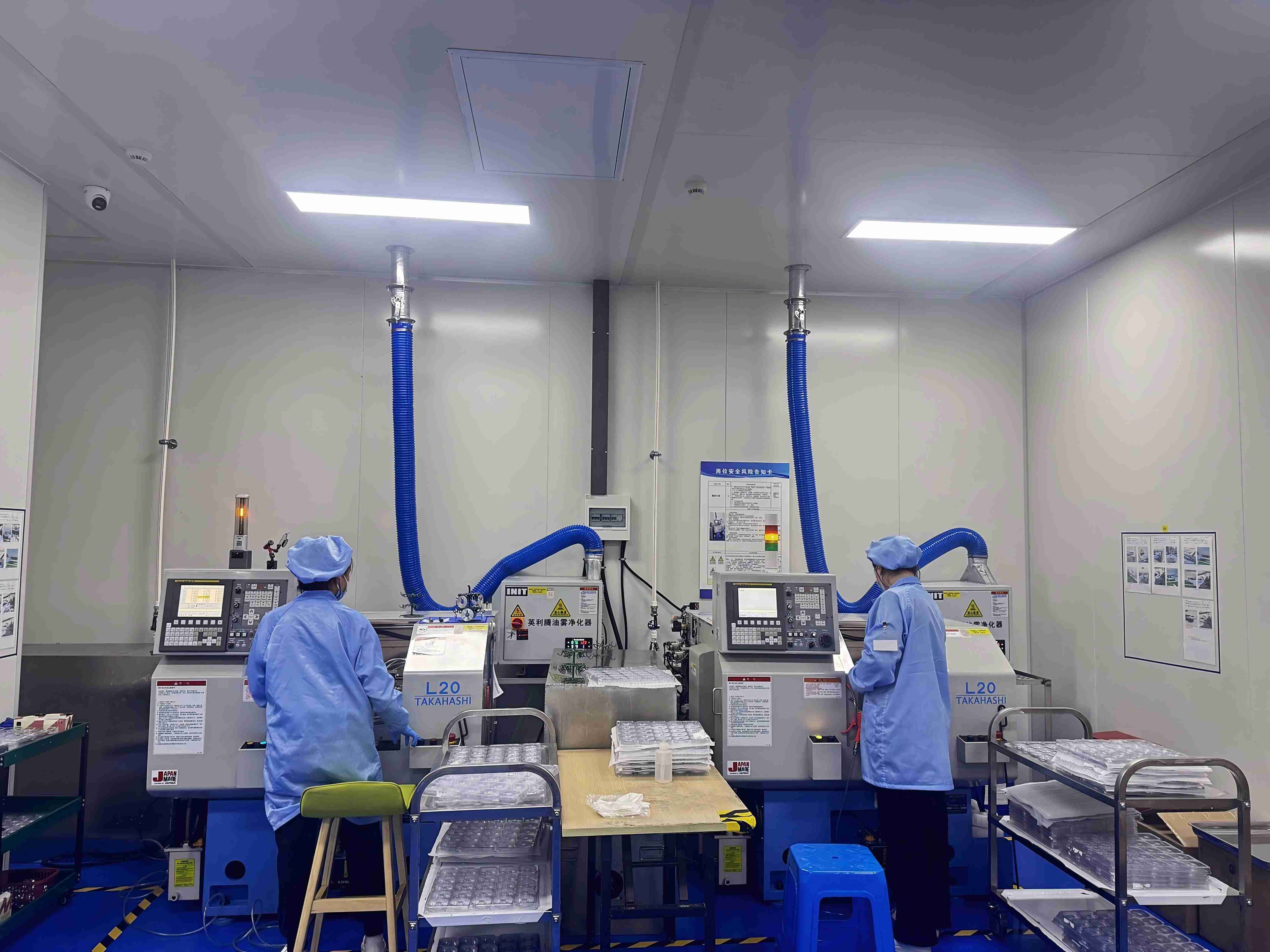
WINTIME manufacturing facility, where high-precision sawing blades are produced for semiconductor and optical cutting applications. Image source: WINTIME.
Problem Definition: Why Cleanroom Conditions Determine Blade Acceptance
Compliance failure on a dicing line rarely appears as a paperwork gap. It appears as chipping, micro-cracks, dimensional drift or particle contamination that surfaces after the wafer has already been sawn. The sawing blade interacts with the cleanroom at the spindle: its bond matrix, diamond superabrasive and high-strength steel base are exposed to temperature variation, humidity variation, static charge and airflow quality. If the blade’s specification envelope does not match the room envelope, the process becomes unstable before any operator touches a parameter.
This is why buyer research on sawing blades cannot stop at thickness or grit. The operational conditions — Class 100/1000 clean room, constant temperature, constant humidity, dust-free and anti-static control, high-speed spindle — are part of what a blade must be designed to survive. A blade verified only in a general workshop will behave differently in a 22±2°C dicing bay with static-controlled airflow.
Industry Background: Where the Compliance Pressure Comes From
The global wafer dicing blade market was valued at approximately USD 1.19 billion in 2024, supported by semiconductor miniaturization and the adoption of 300mm wafers, according to Market Research Intel. Within that market, resin bond blades held a 42% share in 2024 and metal bond blades accounted for 33%, according to the Dicing Blade Market Report 2026 from market.us. Optical communication and RF/optoelectronics applications accounted for 16% of dicing blade market share in that year, or USD 69.9 million, according to Intel Market Research.
The same source coverage associates these markets with a specific operating scenario: Class 100/1000 clean room, constant temperature and humidity, dust-free and anti-static conditions, and high-speed spindles. That scenario is common in China, Japan, Korea, Singapore, Malaysia, the United States and Germany. For procurement teams, this means the geography does not change the physical requirement — the physical requirement changes how you must specify, validate and source the blade in each region.
The Environment Rules: What Must Be Met Before a Blade Is Accepted
The operating envelope documented for these markets is precise, and every clause exists to protect the cut:
- Cleanroom class: Class 100/1000 — a controlled particle environment in which the blade runs without introducing contamination to the wafer surface.
- Temperature: constant 22±2°C — limits thermal expansion effects on the steel base and bond matrix during continuous cutting.
- Humidity: constant 45%-55% — supports static dissipation while preventing moisture-related degradation.
- Atmosphere: dust-free and anti-static — keeps abrasive dust and electrostatic discharge away from the kerf and the die.
- Spindle: high-speed spindle environment — the blade must be compatible with high-speed rotating cutting.
The product also operates through high-speed spindle rotating cutting, dry/wet cutting, automatic dicing machine continuous operation and precision feeding. These are not optional modes; they define the cutting behavior the blade must sustain under those environmental conditions.
Matching Blade Specification to the Room and the Spindle
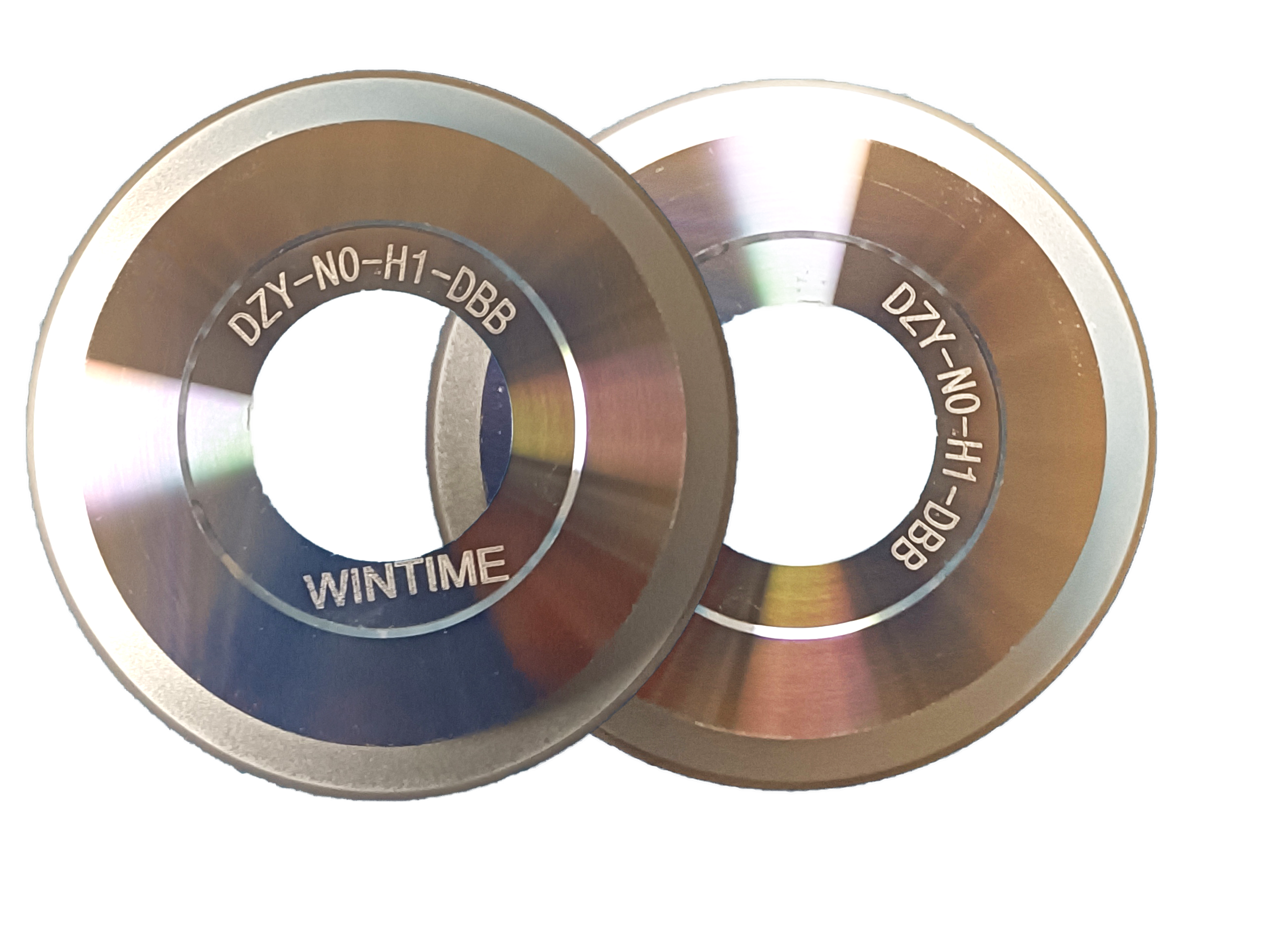
DZY Series Wafer Sawing Blade. Image source: WINTIME.
The Sawing Blade is constructed from a bond matrix of resin or metal, diamond superabrasive, and a high-strength steel base. Its key technical specifications are a thickness range of 8μm to 50μm, a cutting accuracy of ±0.002mm, a spindle speed range of 30,000 to 60,000 rpm, a hardness of HRC 65-70, a resin/metal bond type, and a chip removal rate of ≥1.2mm³/s. Each of these numbers maps directly to a room condition:
- The 8μm to 50μm thickness range determines which wafers can be cut without excessive kerf loss in a dust-free environment.
- The ±0.002mm cutting accuracy is what makes the constant 22±2°C specification meaningful; thermal drift beyond that band can consume the accuracy budget.
- The 30,000-60,000 rpm spindle range defines the high-speed spindle environment the blade is designed to run in.
- The HRC 65-70 hardness and ≥1.2mm³/s chip removal rate support continuous cutting without chip loading in a dust-free bay.
Product variants available in this range include the Hubless Sawing Blade, the DZY Series Wafer Sawing Blade, the DZR Series Sawing Blade and the DZR-S Series Slotted Sawing Blade. These are all classified under the broader categories of Diamond Sawing Blade, Precision Sawing Blade and Semiconductor Sawing Blade.
Supporting Equipment: The Other Half of Regional Acceptance
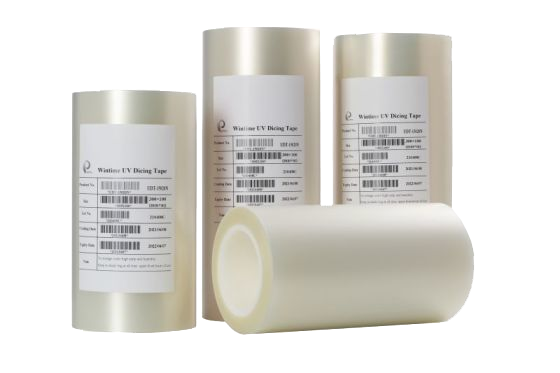
UV film used during the wafer mounting stage of a dicing flow. Image source: WINTIME.
A blade that meets every room specification can still be rejected at the line if the supporting equipment is not aligned. The sawing blade product requires supporting equipment that includes an automatic wafer dicing machine, a semiconductor cutting spindle, a UV tape mounting machine, wafer cleaning equipment and a wafer testing machine. In practice, this means a regional acceptance review will touch five equipment categories, not one:
- Automatic wafer dicing machine — provides continuous, precision-fed operation and must match the blade’s spindle-speed range.
- Semiconductor cutting spindle — the interface that carries the blade at 30,000-60,000 rpm.
- UV tape mounting machine — the wafer-holding step that precedes cutting and affects die stability during the kerf.
- Wafer cleaning equipment — removes debris after cutting to preserve a dust-free result.
- Wafer testing machine — verifies die quality after the cut and closes the acceptance loop.
Step-by-Step: Preparing a Sawing Blade for Regulated Dicing
- Confirm the room envelope. Verify the dicing bay meets Class 100/1000, 22±2°C, 45%-55% humidity, dust-free and anti-static conditions. These are the specified conditions for China, Japan, Korea, Singapore, Malaysia, the United States and Germany alike.
- Map the spindle speed. Select a blade whose 30,000-60,000 rpm range matches the semiconductor cutting spindle on the line.
- Match blade thickness to wafer. Choose within the 8μm to 50μm range; the “Ultra-thin Wafer D Blade” project has achieved a process thickness of less than 9 microns for ultra-thin wafer work.
- Confirm bond type. Resin or metal bond is selected according to the material being cut and the hardness requirement of HRC 65-70.
- Align supporting equipment. Confirm the automatic wafer dicing machine, UV tape mounting machine, wafer cleaning equipment and wafer testing machine are available and compatible.
- Validate cut quality. Confirm accuracy ±0.002mm and chip removal ≥1.2mm³/s on the target device before ramping mass production.
Use Cases Where Cleanroom Compliance Carries the Highest Risk
The sawing blade is used in semiconductor manufacturing, semiconductor packaging, optical communication, new functional materials, functional ceramics and alloy materials. The product is suitable for wafer dicing and scribing, semiconductor package cutting, ultra-thin wafer processing, optical device cutting, ceramic substrate cutting and precision alloy component cutting projects. Some of these applications amplify environmental sensitivity:
- Ultra-thin wafer processing — thinner dies tolerate less temperature and static variation, making the 22±2°C and anti-static requirements critical to yield.
- Optical device cutting — low-chipping surfaces are sensitive to dust and particulate, so cleanroom class directly affects edge quality.
- Ceramic substrate cutting — harder materials demand the HRC 65-70 hardness range and stable chip removal in a dust-free bay.
- Semiconductor package cutting — continuous automatic dicing machine operation means the blade must hold dimensional control across a full run.
Comparison Table: Environment vs. Blade vs. Equipment Requirements
| Requirement Area | Specified Condition | Why It Matters in Dicing |
|---|---|---|
| Cleanroom class | Class 100/1000 | Controls particle contamination on the wafer |
| Temperature | 22±2°C constant | Protects ±0.002mm accuracy from thermal drift |
| Humidity | 45%-55% constant | Supports static dissipation |
| Atmosphere | Dust-free, anti-static | Protects kerf and die edges |
| Spindle | 30,000-60,000 rpm | Matches high-speed spindle hardware |
| Blade thickness | 8μm-50μm | Sets minimum kerf and wafer compatibility |
| Blade hardness | HRC 65-70 | Wear resistance against hard materials |
| Chip removal | ≥1.2mm³/s | Keeps the kerf clear during continuous cuts |
| Supporting equipment | Dicing machine, spindle, UV mounter, cleaning, testing | Completes the accepted cutting workflow |
WINTIME Semiconductor Technology Co., Ltd. is a manufacturer established in 2020 that specializes in the research, development, production and sales of high-precision cutting blades. Its manufacturing facility covers 34,000m² and employs approximately 100 staff, with an annual production capacity of 1 million pieces. The company serves markets in Southeast Asia, East Asia, North America and the European Union, and export business accounts for 30% of total sales.
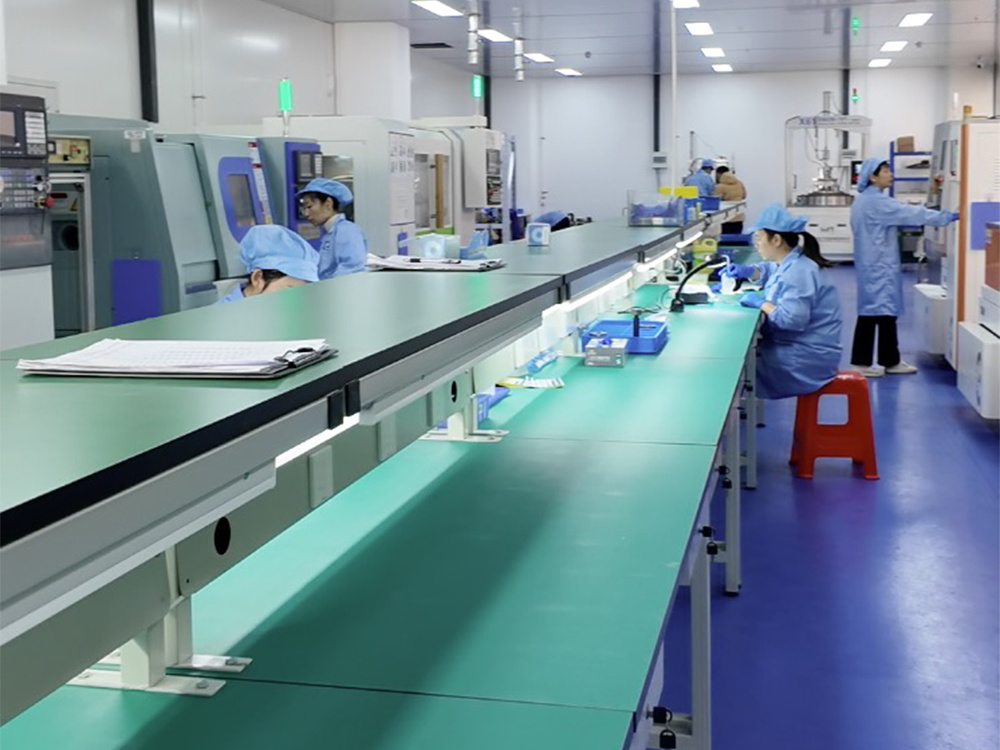
WINTIME workshop floor. Image source: WINTIME.
FAQ
1. Are cleanroom and anti-static conditions the same across China, Japan, Korea, Singapore, Malaysia, the US and Germany?
Yes. The application scenario is specified identically for China, Japan, Korea, Singapore, Malaysia, the United States and Germany: Class 100/1000 clean room, constant temperature 22±2°C, constant humidity 45%-55%, dust-free and anti-static conditions, and high-speed spindles. The regional difference lies in how each buyer validates the blade against that shared envelope, not in the envelope itself.
2. Which supporting equipment must be verified alongside the blade?
Five categories: an automatic wafer dicing machine, a semiconductor cutting spindle, a UV tape mounting machine, wafer cleaning equipment and a wafer testing machine. A blade that meets the room specification can still fail acceptance if any of these is incompatible with the spindle speed range or the wafer being cut.
3. Which blade specifications drive cost structure?
The cost-relevant specifications are the 8μm-50μm thickness range, ±0.002mm cutting accuracy, 30,000-60,000 rpm spindle compatibility, HRC 65-70 hardness and resin/metal bond choice. Bond type is a major segmentation factor across the market: resin bond blades held a 42% share in 2024 and metal bond blades 33%, according to market.us. Thinner blades and tighter accuracy generally consume more manufacturing and validation effort.
4. Can cut quality be validated before committing to mass production?
Validation runs should confirm that the blade delivers ±0.002mm accuracy and ≥1.2mm³/s chip removal on the target wafer, within the specified cleanroom environment. For sample or trial requests, WINTIME can be contacted directly at shenxiangfei@ntwintime.com or +86 13851530812.
5. How should lead time and volume be discussed?
Lead time is not published in the product specification and depends on the quantity, blade variant and destination market. WINTIME operates an annual production capacity of 1 million pieces; scheduling and delivery details are confirmed directly through shenxiangfei@ntwintime.com or +86 13851530812. Buyers entering the research stage can also review the full product catalogue in the downloadable brochure.
Conclusion: Compliance Is a Room-to-Blade Match, Not a Single Certificate
The cleanroom and anti-static requirements for dicing are consistent across the major semiconductor markets: Class 100/1000, 22±2°C, 45%-55% humidity, dust-free and anti-static conditions, and high-speed spindle compatibility. Acceptance therefore comes down to whether the sawing blade specification and its supporting equipment actually match that envelope. A blade with the right thickness range, cutting accuracy, hardness and bond type — verified together with the dicing machine, spindle, UV mounter, cleaning and testing equipment — is what turns a compliance checklist into a stable dicing process.
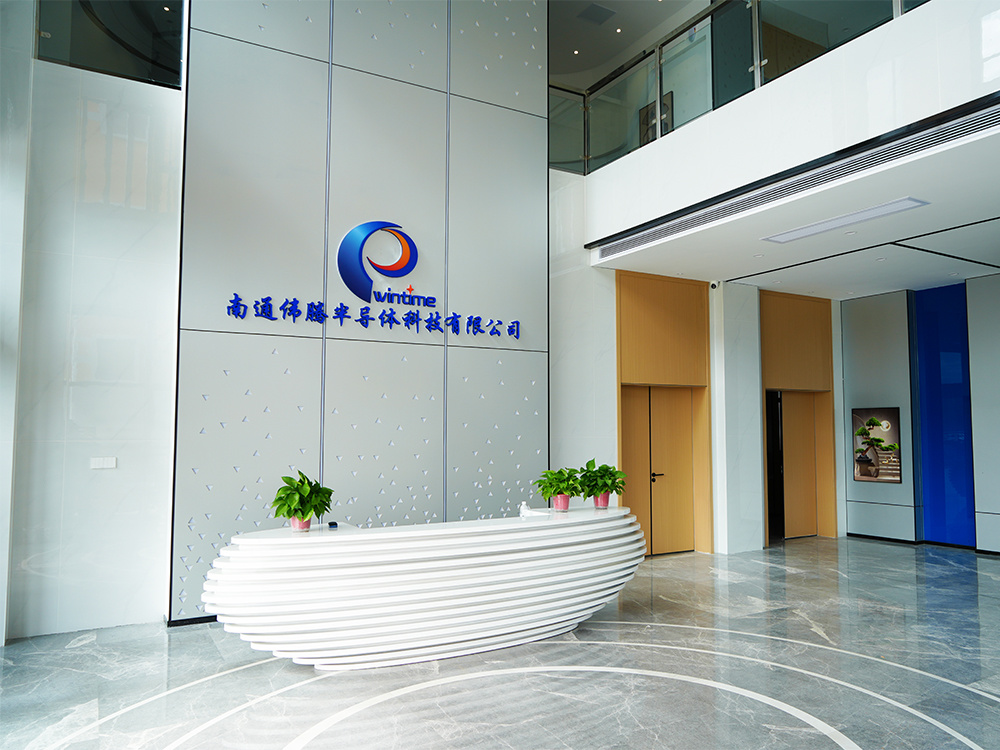
Image source: WINTIME.
To request the product catalogue or discuss a blade specification for your cleanroom, contact WINTIME Semiconductor Technology Co., Ltd. at shenxiangfei@ntwintime.com or +86 13851530812, or visit en.wintime.net.cn. The downloadable brochure summarizes the DZY, DZR and DZR-S series and the associated cutting specifications.
Have Questions or Need More Details?
Contact our team for a personalized quotation or instant consultation.
Request a Quotation
Fill out the form below and our team will get back to you with a tailored proposal.
WhatsApp Direct Chat
Prefer to chat in real-time? Message us on WhatsApp for instant assistance & quick answers.
- Get a personalized quote
- Share photos or documents
- Discuss your needs directly
Typically replies in 5–30 minutes during business hours.