
Sawing Blade Compliance Guide: ISO 22180 and Cleanroom Standards
Meeting ISO and Cleanroom Standards: Your Compliance Guide to Sawing Blades
A sawing blade destined for a cleanroom line is judged against two separate rule sets, and treating them as one is the most common reason qualification stalls. The tool-side rule set is ISO 22180:2019, which classifies diamond tools, including sawing blades, and distinguishes CVD diamond-coated types from monocrystalline and polycrystalline types. The environment-side rule set governs the room itself: cleanroom classification, temperature, humidity and anti-static conditions. A blade can satisfy the first and still be rejected in the second, usually because dimensional documentation is missing, packaging is not ready for airlock transfer, or the specification was chosen for throughput rather than for a 22 ± 2 °C, 45–55% RH process window.
Problem Definition: Why a Sawing Blade Can Pass a Cut Test and Still Fail a Cleanroom Audit
Compliance failure in sawing blade procurement rarely looks like a broken blade. It looks like a qualification file that cannot be completed. Four gaps account for most of the delay.
- The two compliance layers are owned by different teams. Tool compliance is a supplier question; environment compliance is a fab question. When a procurement team sends a single RFQ asking whether a blade is cleanroom compliant, neither side can answer it because the question spans a blade specification and a room specification.
- ISO 22180:2019 is a classification standard, not a certificate. Buyers who ask for an ISO certification of a sawing blade are often asking for a document the standard does not issue. What it provides is a shared vocabulary: is the blade a CVD diamond-coated type or a monocrystalline/polycrystalline type? That classification determines which bond family and cutting behaviour you should expect.
- Missing dimensional evidence blocks protocols. Cleanroom cutting processes are qualified on measurable values such as blade diameter, thickness, spindle hole and dynamic balance behaviour. Without a measured inspection report, a blade cannot enter a qualification protocol regardless of how well it cuts in a trial.
- A process window is a control requirement, not a suggestion. Where a line is specified at 22 ± 2 °C and 45–55% RH, blades and workpieces are qualified inside that window. A blade validated outside it has no qualification on record, and re-validation costs more than the original sampling.
A fifth, quieter gap sits in handling. Blades entering a controlled area must arrive in packaging that can be cleaned or transferred at the airlock, and anti-static control extends to tool storage and manual handling, not only to the devices being cut.
Industry Background: Where Cleanroom Sawing Blade Demand Comes From
Demand for sawing blades that can survive cleanroom qualification is a downstream effect of semiconductor miniaturization and thinner substrates. Several published data points frame the scale of that demand.
- The global diamond saw blade market was valued at approximately USD 8.60 billion in 2025 and is expected to reach USD 10.16 billion by 2032 (Maximize Market Research).
- Within that market, the wafer dicing blade segment was valued at USD 1.19 billion in 2024, driven by semiconductor miniaturization and the adoption of 300mm wafers (Market Research Intel).
- By bond type, resin bond blades held a 42% share of the dicing blade market in 2024, while metal bond blades used for harder materials such as SiC accounted for 33%.
- Hubless dicing blades are increasingly dominant for 300mm wafer processing because of superior stability and reduced runout on substrates thinner than 50 µm.
- Optical communication and RF/optoelectronics applications accounted for 16% (USD 69.9 million) of dicing blade market share in 2024, driven by 5G infrastructure expansion.
- On the supply side, China's exports of cutting blades to Vietnam grew by USD 18 million and to India by USD 12 million between 2024 and 2025 (OEC).
The competitive reference points most often named in this segment are DISCO Corporation, Tokyo Seimitsu (Accretech), Advanced Dicing Technologies (ADT) and Asahi Diamond (Credence Research). Being on that list does not make any blade cleanroom-compliant for your site: qualification is always per-environment and per-process.
The Compliance Framework: What Each Layer Actually Requires
Tool-side requirements
Diamond tools, including sawing blades, are categorized under ISO 22180:2019, which distinguishes between CVD diamond-coated and monocrystalline/polycrystalline types. For a buyer, this matters because the classification determines which performance assumptions travel with the blade and which bond family is appropriate for the workpiece.
Environment-side requirements
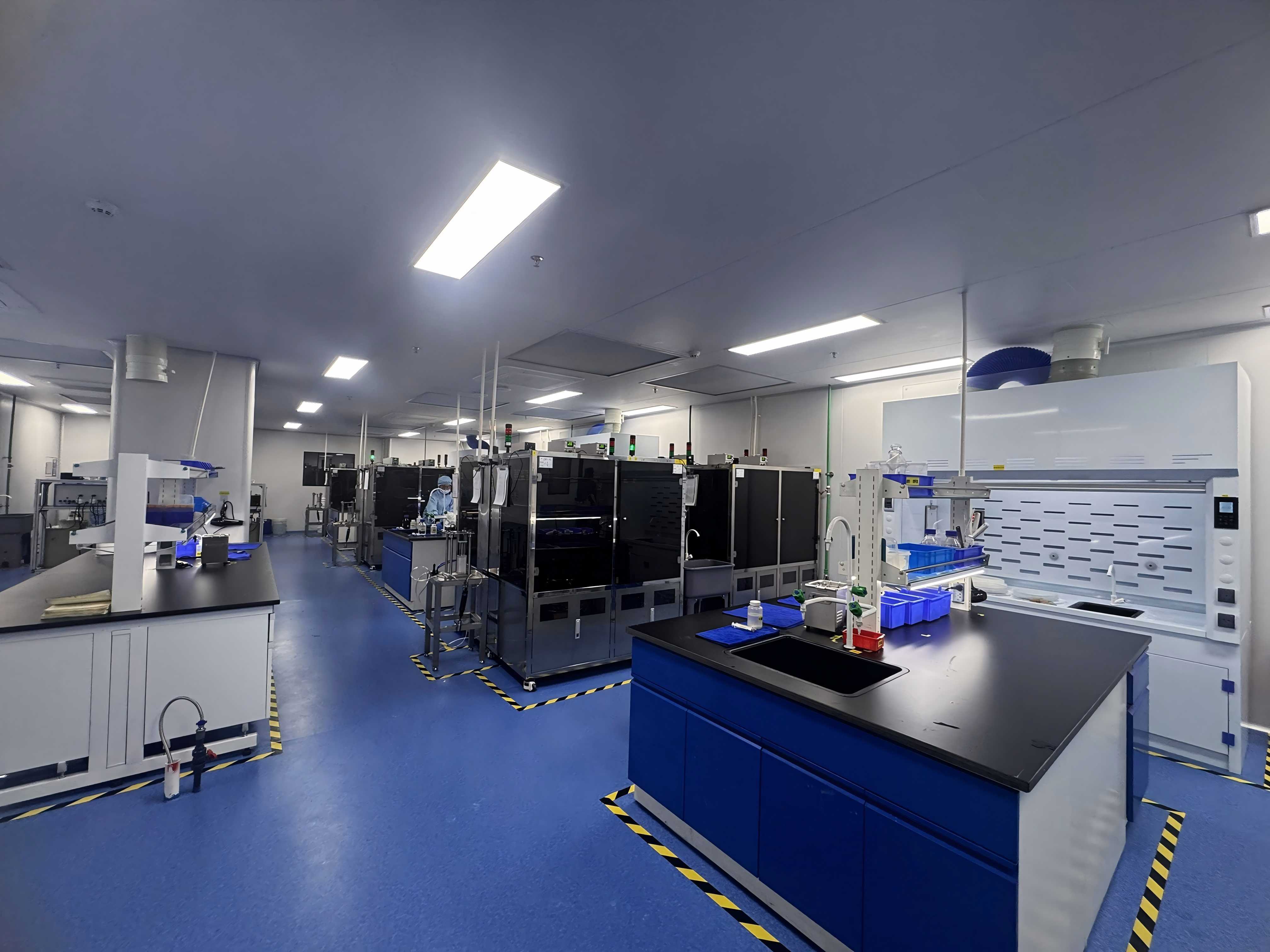
A cleanroom cutting area is defined by the parameters the fab commits to. Class 100 and Class 1000 rooms — terminology from the older US classification still widely used in fab procurement documents, and often treated as roughly equivalent to ISO 14644-1 Class 5 and Class 6 respectively — are the most frequently specified levels for precision cutting. Temperature, humidity and static control are specified alongside them.
| Environment parameter | Commonly specified value | Why it is written into the specification |
|---|---|---|
| Cleanroom classification | Class 100 / Class 1000 | Limits airborne particles around wafer and substrate handling |
| Temperature | 22 ± 2 °C | Keeps handling and measurement inside the validated process window |
| Relative humidity | 45–55% | Controls static build-up and moisture-related variation |
| Anti-static conditions | Grounded surfaces, anti-static packaging and handling practices | Protects devices and reduces particle attraction |
| Markets typically applying these specifications | China, Japan, Korea, United States | These are the markets where such specifications most often appear in sawing blade enquiries |
Documentation-side requirements
The layer that is easiest to overlook is paperwork. A compliant supply is one where the blade arrives with measured dimensional evidence, a stated bond type and abrasive specification, and packaging that matches the airlock procedure of the receiving line.
Detailed Solution: How WINTIME Structures Sawing Blade Supply Around Compliance Requirements
WINTIME Semiconductor Technology Co., Ltd. is a Chinese manufacturer of high-precision sawing blades and dicing blades, founded in 2020 and based at No. 868, Fushou East Road, Rugao City, Jiangsu Province. The company operates a 34,000 m² factory with 100 employees, a 35-engineer R&D team and an annual output of more than 1 million pieces; approximately 30% of output is exported to Southeast Asia, East Asia, North America and Europe.
Testing that produces the evidence a qualification file needs
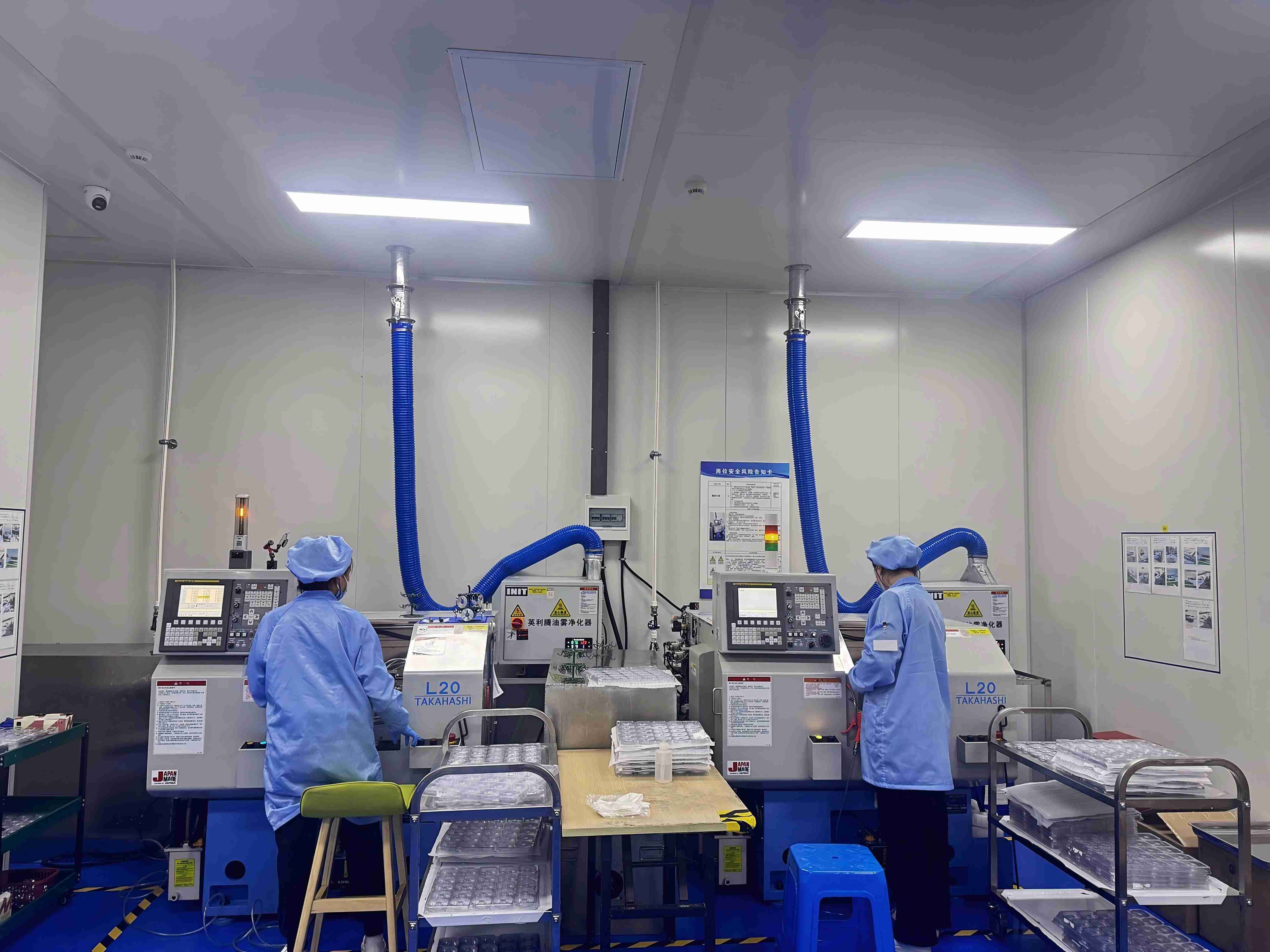
- Geometric dimension inspection using a vernier caliper and a laser diameter gauge — the direct input for diameter, thickness and spindle hole records.
- Hardness and wear resistance testing on a material testing machine, which supports service-life expectations.
- Dynamic balance detection on a high-speed dynamic balance tester, relevant to runout behaviour on thin substrates.
- Cutting performance simulation test on the actual workpiece material, which is the closest a supplier-side test can get to a customer trial.
Customization scope
WINTIME runs OEM, ODM and customized production, with customization available on blade diameter, thickness and spindle hole size; bond type, including metal bond and resin bond; diamond abrasive grain size and concentration; coating for anti-rust, heat-dissipation and wear resistance; cutting performance targets such as cutting speed and service life; packaging, including special packaging for export; and special-shaped blades in non-standard sizes.
Thin-blade track record
WINTIME holds two patent technologies. Its completed ultra-thin wafer dicing blade project achieved a blade thickness of less than 9 microns in the process, with product quality reaching the international cutting-edge level, and the company is among the few domestic manufacturers able to mass produce at that specification.
Supply parameters
| Parameter | Standard products | Customized / special-shaped products |
|---|---|---|
| Monthly capacity | 800,000+ pieces | 80,000+ pieces |
| Minimum order quantity | 50 pieces | 300 pieces (flexible for long-term cooperative customers) |
| Lead time | 2–5 working days | 10–25 working days, adjustable for large orders |
| Customization dimensions | Coating and packaging options | Diameter, thickness, spindle hole, bond type, grain size and concentration, performance targets, non-standard shapes |
After-sales provisions are also relevant at the evaluation stage: technical support for cutting process matching and equipment adaptation, quality problem investigation and solution within 48 hours, customized after-sales service for bulk procurement customers, long-term supply and inventory support, product application training for new customers, and replacement or compensation for defective products caused by quality problems.
Step-by-Step Breakdown: A Seven-Step Qualification Sequence
- Write the environment specification first. Record the cleanroom class, the temperature window (typically 22 ± 2 °C), the humidity range (typically 45–55%) and the anti-static controls. Without this document, every later blade decision is unanchored.
- Classify the blade under ISO 22180:2019. Decide whether the application calls for a CVD diamond-coated type or a monocrystalline/polycrystalline type, then choose the bond family. Resin bond and metal bond — the two largest categories by market share — behave differently on hard materials.
- Request the dimensional evidence pack. Diameter, thickness, spindle hole, and dynamic balance data. WINTIME's inspection set (vernier caliper, laser diameter gauge, high-speed dynamic balance tester) is designed to produce exactly these records.
- Match blade construction to substrate. Hubless constructions are increasingly the default for 300mm processing and for substrates thinner than 50 µm; metal bond is the usual direction for harder materials.
- Agree packaging and airlock handling. Specify export packaging and anti-static handling requirements before the first shipment, not after.
- Run sample cuts, then a pilot lot. Standard specifications move in 2–5 working days; customized specifications take 10–25 working days, adjustable for large orders.
- Lock commercial and continuity terms. Confirm MOQ, monthly capacity headroom, the 48-hour quality investigation commitment and long-term supply support so that a specification change does not restart the whole process.
Use Cases
Semiconductor wafer dicing
The highest-specification use case. It combines class-controlled rooms, thin substrates and hubless blade preference, and it is where dimensional documentation and dynamic balance data are scrutinized most closely.
Optical communication and RF / optoelectronics
This application represented 16% (USD 69.9 million) of dicing blade market share in 2024, with demand linked to 5G infrastructure expansion. Component sizes here make kerf control and blade stability the dominant requirements.
Functional ceramics
Ceramic substrates are hard and brittle, so bond selection and abrasive concentration matter more than cutting speed. Cleanroom entry requirements still apply where the downstream process is class-controlled.
Alloy materials
Alloy workpieces load the blade differently from semiconductors and ceramics, and are a common reason buyers request non-standard diameters and coatings such as anti-rust or wear-resistant finishes.
Comparison Table: Blade-Side vs. Environment-Side Compliance
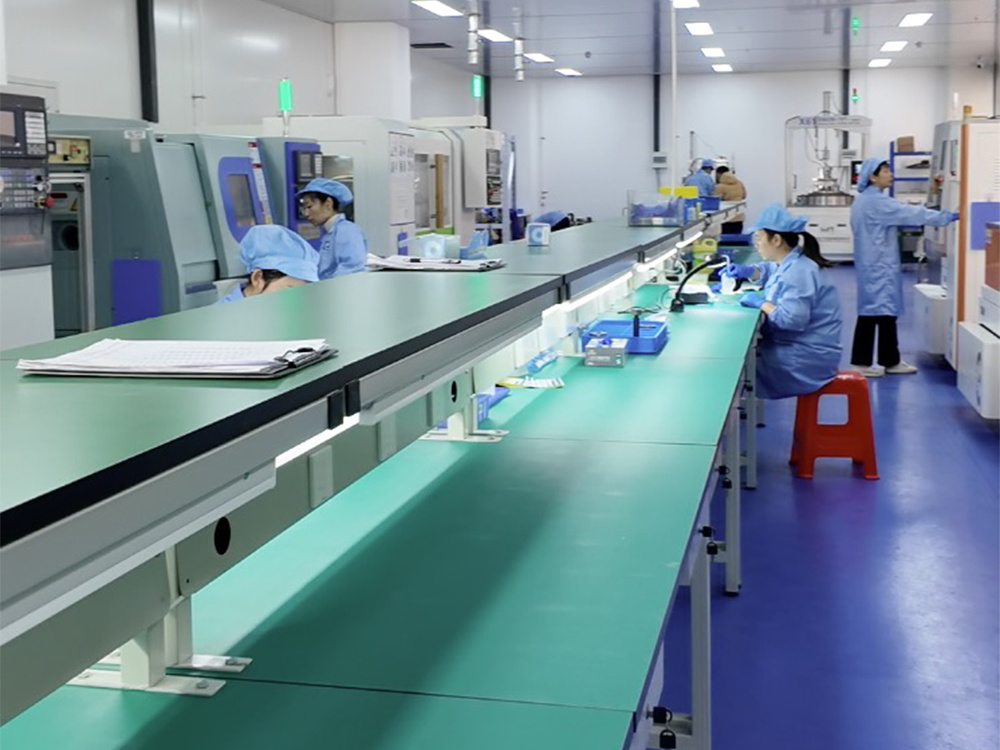
The two compliance layers require different evidence, different owners and different timelines. This table maps them against one another.
| Compliance layer | Reference point | What the buyer verifies | Typical consequence if skipped |
|---|---|---|---|
| Tool classification | ISO 22180:2019 | CVD diamond-coated vs. monocrystalline/polycrystalline type; suitability of bond family | Blade behaves differently from the qualification assumption |
| Cleanroom classification | Class 100 / Class 1000 | Packaging, handling and transfer procedure at the airlock | Blade cannot be brought into the controlled area |
| Temperature control | 22 ± 2 °C | Whether sampling and pilot runs occur inside the specified window | Qualification has no validity for production conditions |
| Humidity control | 45–55% RH | Storage and handling plan between receipt and use | Static and moisture variation distort results |
| Anti-static conditions | Grounded surfaces and anti-static packaging | Anti-static packaging, storage and operator handling | Device damage and particle attraction |
| Dimensional documentation | Blade diameter, thickness, spindle hole, dynamic balance | Measured inspection records from the supplier | Qualification protocol cannot be opened |
FAQ
Does ISO 22180:2019 certify a sawing blade for cleanroom use?
No. ISO 22180:2019 is a classification standard for diamond tools, including sawing blades, and it distinguishes CVD diamond-coated types from monocrystalline/polycrystalline types. It gives buyers and suppliers a shared vocabulary for describing a blade; it does not certify a blade for a specific room. Cleanroom suitability is answered by the environment specification — typically Class 100/1000, 22 ± 2 °C, 45–55% RH and anti-static conditions — combined with the supplier's dimensional and packaging evidence.
Can blade specifications be tailored to a specific cleanroom process?
Yes. WINTIME runs OEM, ODM and customized production covering blade diameter, thickness and spindle hole size; bond type (metal bond and resin bond); diamond abrasive grain size and concentration; coating for anti-rust, heat-dissipation and wear resistance; cutting performance targets such as cutting speed and service life; packaging including special export packaging; and special-shaped blades in non-standard sizes. Customized and special-shaped output runs at more than 80,000 pieces per month.
What drives the cost of a compliance-matched sawing blade?
WINTIME does not publish price lists, so the honest answer is that cost follows specification. The variables are the ones listed in the customization scope: bond type, diamond grain size and concentration, coating, non-standard dimensions and specialized packaging. Order thresholds also shape planning — MOQ is 50 pieces for standard products and 300 pieces for customized products, with flexibility for long-term cooperative customers. Standard monthly capacity exceeds 800,000 pieces, which matters when a specification change triggers re-validation and you need volume without waiting.
How should we validate a blade before committing to a full order?
Start with a sample in the intended specification, then evaluate it against the same inspection set the supplier uses. WINTIME applies geometric dimension inspection (vernier caliper and laser diameter gauge), hardness and wear resistance testing on a material testing machine, dynamic balance detection on a high-speed dynamic balance tester, and a cutting performance simulation test on the actual material. Standard specifications support a fast first sample because lead time is 2–5 working days; customized specifications take 10–25 working days.
What lead time and after-sales support apply after a compliance review?
Standard products are quoted at 2–5 working days and customized orders at 10–25 working days, adjustable for large orders. After delivery, WINTIME targets quality problem investigation and solution within 48 hours, and provides technical support for cutting process matching and equipment adaptation, application training for new customers, long-term supply and inventory support, and replacement or compensation for defective products caused by quality problems. To begin a compliance-matched evaluation, request a sample or quotation by email at shenxiangfei@ntwintime.com or on WhatsApp at +8618888053207, or review the full technical brochure at WINTIME product brochure.

Conclusion
Cleanroom compliance for sawing blades is not a single certificate and not a single test result. It is the alignment of three things: a blade classified and specified correctly under ISO 22180:2019, a set of measured dimensional and balance records that can enter a qualification protocol, and a supply arrangement matched to an environment specified at Class 100/1000, 22 ± 2 °C, 45–55% RH with anti-static handling. Buyers in China, Japan, Korea and the United States are the ones most frequently asked to evidence all three.
The practical next step is to write the environment specification down first, then request blade evidence that maps to it. WINTIME Semiconductor Technology Co., Ltd. supports this sequence with documented dimensional inspection, dynamic balance detection, cutting simulation testing, customization across bond, grain, coating and dimensions, and a 48-hour quality investigation commitment.
Request a compliance-matched sample or quotation
Email: shenxiangfei@ntwintime.com | Tel: +86 13851530812 | WhatsApp: +8618888053207
Download the specification and capability details: WINTIME Product Brochure (PDF)
Have Questions or Need More Details?
Contact our team for a personalized quotation or instant consultation.
Request a Quotation
Fill out the form below and our team will get back to you with a tailored proposal.
WhatsApp Direct Chat
Prefer to chat in real-time? Message us on WhatsApp for instant assistance & quick answers.
- Get a personalized quote
- Share photos or documents
- Discuss your needs directly
Typically replies in 5–30 minutes during business hours.