
Sawing Blade Head-to-Head: Dry vs. Wet Cutting for Ceramic Substrate Projects
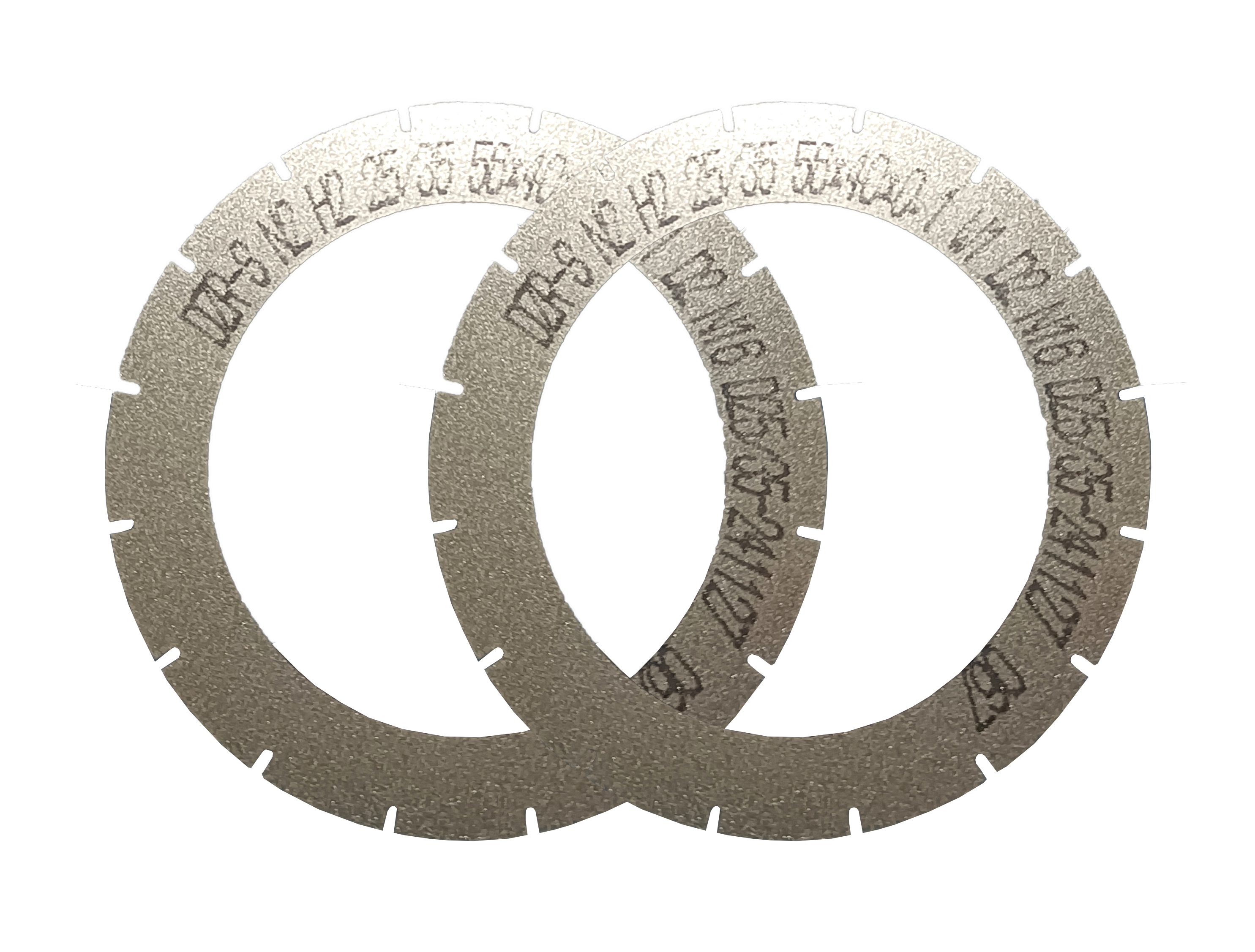
DZR-S series slotted sawing blade — a geometry WINTIME positions for functional ceramics, alloy materials and semiconductor packaging components.
Dry cutting and wet cutting are two operating modes that the same precision sawing blade can run — not two different products. On a ceramic substrate project, the mode is decided by four project conditions: cleanroom class, anti-static requirements, automatic dicing machine compatibility, and the cleaning and testing equipment the substrates must pass through afterwards. WINTIME sawing blades are specified for both dry and wet operation and are built for Class 100/1000 environments held at 22±2°C and 45%–55% RH.
WINTIME Semiconductor Technology Co., Ltd. is a Chinese manufacturer of wafer-level high-precision cutting blades, established in 2020 in Rugao City, Jiangsu Province, and trading under the WINTIME brand. Its sawing blade range covers diamond, hubbed, hubless, flanged and slotted configurations, including the DZY series wafer sawing blade, the DZR series sawing blade and the DZR-S series slotted sawing blade. The company's product documentation states that the blades are used across semiconductor manufacturing, semiconductor packaging, optical communication, new functional materials, functional ceramics and alloy materials.
Problem Definition: Why the Dry/Wet Question Surfaces Too Late
On most ceramic substrate projects the blade is specified first and the cutting mode is settled second, usually by whoever is standing at the dicing machine. That order is backwards. The mode determines what the blade sees at the contact zone, what the machine must evacuate or deliver, what the tape experiences, and what the cleaning and testing stations receive. Reversing the order after a process is qualified means re-qualifying the blade, the tape, the cleaning recipe and the inspection criteria at the same time.
The practical failure mode is not a bad blade. It is a blade that was validated under one mode and then run under the other, in a cleanroom whose humidity band is fixed at 45%–55% RH and whose anti-static discipline does not tolerate unexpected charge paths.
Industry Background: What High-Speed Spindle Cutting Demands
Ceramic substrate cutting on an automatic dicing machine is a high-speed spindle process with precision feeding. The blade rotates at spindle speeds of 30,000–60,000 rpm and is fed into the workpiece under controlled feed, producing a narrow kerf with low chipping and stable dimensional control. Chip removal rate is specified at ≥1.2 mm³/s, cutting accuracy at ±0.002 mm, blade hardness at HRC 65–70, and thickness across the range from 8 μm to 50 μm.
Those numbers define the envelope in which both dry and wet cutting have to work. At these rotational speeds, the material removed from the kerf has to leave the cut zone quickly and completely. Dry operation leaves that job to the blade's own chip clearance and the machine's exhaust. Wet operation adds a fluid stream to carry material away and to manage heat at the contact zone. Neither approach changes the spindle speed or the feed precision — they change how debris and heat are handled around them.
The substrate itself raises the stakes. Functional ceramics appear in WINTIME's stated application scope alongside semiconductor wafers, optical communication components, new functional materials and alloy materials. Ceramic substrates are processed to tight dimensional tolerances and are sensitive to edge chipping, which is why the DZR-S series slotted sawing blade is positioned specifically for functional ceramic cutting as well as semiconductor wafer cutting, alloy material cutting and semiconductor packaging component cutting.
Detailed Solution: The Four Project Conditions That Decide the Mode
Rather than treating dry versus wet as a preference, treat it as the output of four conditions that are already fixed by the fab or the packaging line before the blade is ordered.
1. Cleanroom class and particle discipline
WINTIME blades are specified for Class 100/1000 clean rooms operating at constant temperature of 22±2°C and constant humidity of 45%–55%, in a dust-free, anti-static, high-speed spindle environment. Dry cutting concentrates particle generation at the kerf and pushes the burden onto the machine's exhaust and the room's air handling. Wet cutting moves debris into a fluid stream, which relocates the burden to fluid routing, containment and filtration inside the same cleanroom. Both are workable; the question is which burden the room is already engineered to carry.
2. Anti-static requirements
Anti-static performance is listed as a special requirement for this application, alongside ultra-thin blade thickness of ≤9 μm, high wear resistance, low cutting loss, high dimensional accuracy, long service life and stable mass production. In dry mode, static control depends entirely on the blade, the tape and the handling discipline around the machine. In wet mode, the fluid path introduces an additional route for charge, but it also introduces an additional variable that has to be validated against the same anti-static requirement.
3. Automatic dicing machine compatibility
The blade is designed for continuous operation on automatic wafer dicing machines with precision feeding. Dry mode is the simpler integration because the machine only needs exhaust capacity, not fluid delivery and recovery. Wet mode requires the machine — and the spindle assembly — to support fluid delivery at the cut zone without disturbing feed precision. Confirm this on the machine, not on the datasheet.
Automatic dicing machineSemiconductor cutting spindlePrecision feeding
4. Downstream equipment pairing
This is the condition most often overlooked. The blade must be paired with wafer cleaning equipment and a wafer testing machine as part of the same process chain, together with a UV tape mounting machine upstream. A wet-cut substrate arrives at the cleaning station with liquid to remove and must be dry before it reaches testing. A dry-cut substrate arrives with dust and static to manage instead. Whichever mode is chosen, the cleaning and testing stations have to be qualified for that incoming condition.
Dry Cutting: What It Gives You and What It Asks For
Dry cutting removes the fluid entirely from the cut zone. The blade, the spindle and the machine's exhaust do all of the work of heat and debris management.
Where dry mode fits
- Cleanroom simplicity. No fluid lines, no drainage, no filtration loop inside a Class 100/1000 area.
- Stable humidity. A dry process does not add a local moisture load, which makes it easier to hold the 45%–55% RH band the application requires.
- Simpler downstream handoff. Substrates reach wafer cleaning equipment without a liquid load, and the UV tape used for mounting stays dry through the cut.
- Uninterrupted automation. Continuous operation on the automatic dicing machine without fluid delivery and recovery cycles.
What dry mode demands in return
- Chip clearance capability. The blade must clear material at the specified rate; the chip removal rate of ≥1.2 mm³/s is the figure to design around.
- Real exhaust capacity. Particle control moves entirely to the machine and the room.
- Disciplined static control. With no fluid path, anti-static performance depends on the blade, tape and operator handling.
- Bond and geometry selection. Bond type, diamond concentration and blade geometry carry more of the thermal and debris burden than they would in wet mode.
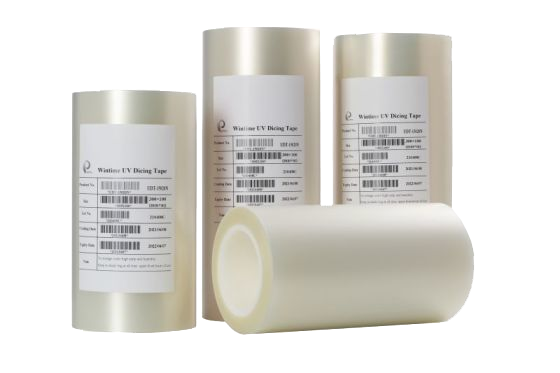
Tape mounting sits upstream of the cut. In dry mode the UV tape stays dry through dicing, which simplifies the handoff to cleaning and testing.
Wet Cutting: What It Gives You and What It Asks For
Wet cutting introduces a fluid to the cut zone. The blade specification is unchanged — the same blade families support both methods — but the process around the blade changes substantially.
Where wet mode fits
- Heat at the contact zone. A fluid stream provides an additional route for heat management during high-speed spindle rotation, which matters on harder and more brittle substrates.
- Debris transport. Material removed from a narrow kerf is carried away in the fluid rather than relying solely on exhaust.
- Chipping control. Wet operation is a conventional route for brittle-material dicing where edge quality is the governing requirement.
- Long continuous runs. Fluid delivery suits automatic dicing machine operation where the cut is continuous and the kerf must stay stable throughout.
What wet mode demands in return
- Fluid handling inside the cleanroom. Routing, containment, drainage and filtration all have to be compatible with Class 100/1000 discipline.
- Humidity balance. The local moisture load must be balanced so the room stays inside 45%–55% RH.
- Drying before inspection. Substrates must be dry before they reach the wafer testing machine, which adds a step between cleaning and testing.
- A defined fluid specification. WINTIME's product documentation defines the blade, not the cutting fluid. The fluid and its management are set by the process owner and validated against the anti-static requirement.
Scope note: this article does not specify a coolant chemistry or a performance comparison between modes. Those are process-owner decisions confirmed by trial on the actual substrate.
Blade Architecture: What to Specify for Either Mode
The blade itself does not change when the mode changes, but the specification detail inside it does. WINTIME builds sawing blades on a high-strength steel base with a resin or metal bond matrix and diamond superabrasive, and offers the following configurations across the range.
| Specification | Value |
|---|---|
| Thickness range | 8 μm – 50 μm |
| Cutting accuracy | ±0.002 mm |
| Spindle speed | 30,000 – 60,000 rpm |
| Hardness | HRC 65–70 |
| Bond type | Resin / metal |
| Chip removal rate | ≥1.2 mm³/s |
| Bond matrix | Resin / metal |
| Abrasive | Diamond superabrasive |
| Base | High-strength steel |
| Blade types | Diamond sawing blade, precision sawing blade, semiconductor sawing blade, circular sawing blade, hubbed sawing blade, hubless sawing blade, flanged sawing blade, serrated sawing blade, DZY series wafer sawing blade, DZR series sawing blade, DZR-S series slotted sawing blade |
Which family suits a ceramic substrate project
- DZR-S series slotted sawing blade. A slotted geometry, positioned by WINTIME for functional ceramic cutting, semiconductor wafer cutting, alloy material cutting and semiconductor packaging component cutting.
- DZR series sawing blade. Constructed from metallic nickel and diamond abrasive; WINTIME describes the family as used in semiconductor, optical communication and new functional material industries.
- DZY series wafer sawing blade. Integrates the cutting blade with an aluminum alloy flange; WINTIME describes it for high-precision wafer cutting in semiconductor packaging processes.
- Hubless and flanged configurations. Available where the spindle interface, not the cut, governs the choice.
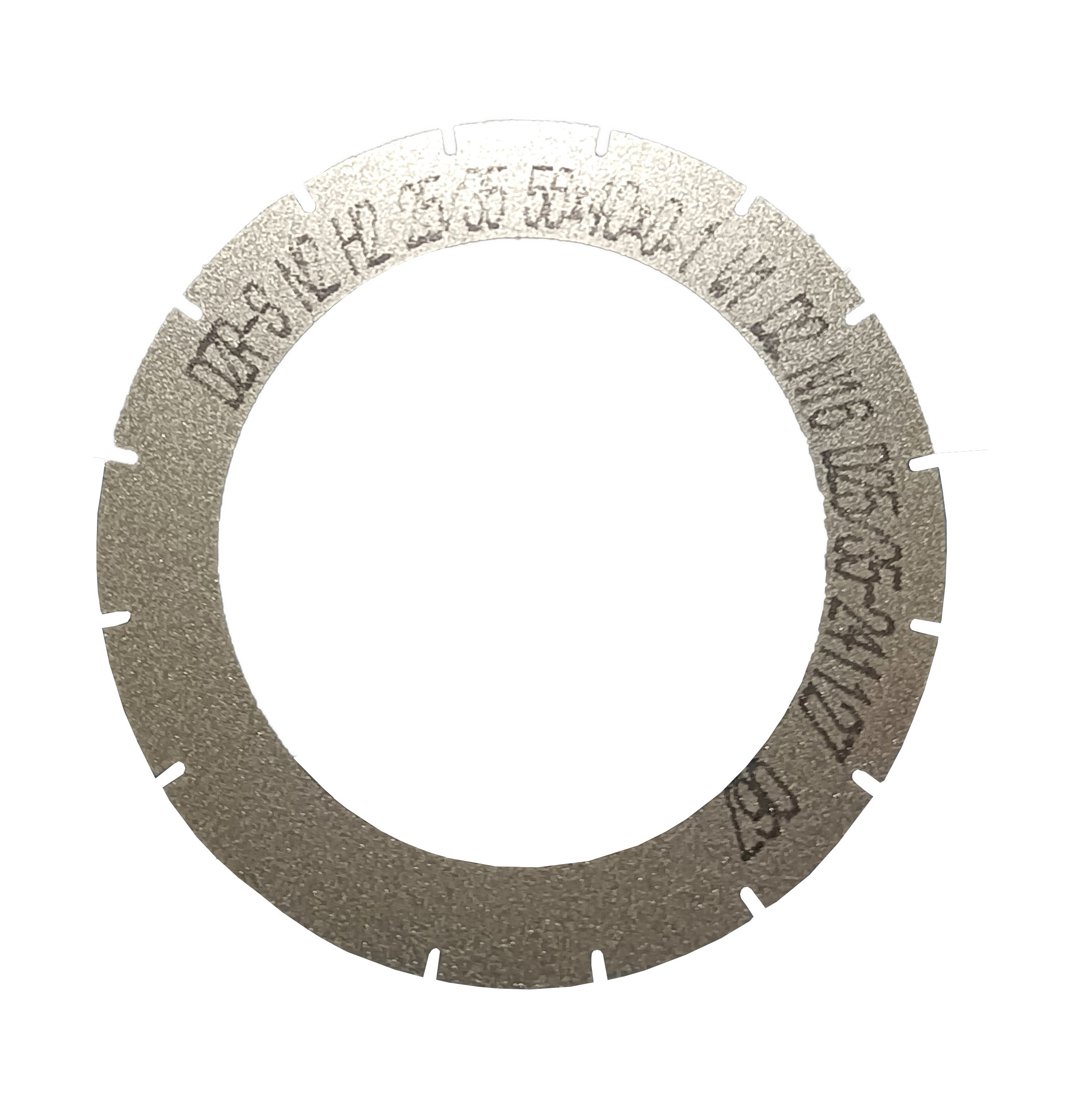
Slotted geometry on the DZR-S series — specified for functional ceramics, alloy materials and semiconductor packaging components.
Step-by-Step: Qualifying a Mode for a Ceramic Substrate Project
The sequence below runs from project envelope to qualified process. It works in either direction — the point is that mode selection comes before blade locking.
- Define the substrate and the kerf target. Record substrate type, thickness, street width and the dimensional tolerance the finished part must hold. This sets the blade thickness inside the 8 μm – 50 μm range and the ±0.002 mm accuracy requirement.
- Confirm the machine envelope. Verify that the automatic dicing machine and spindle run within 30,000–60,000 rpm with the feed precision the substrate requires, and record whether the machine supports fluid delivery at the cut zone.
- Confirm the room conditions. Document the cleanroom class against Class 100/1000, the temperature band against 22±2°C, the humidity band against 45%–55% RH, and the anti-static rules the line operates under.
- Map the downstream chain. List the UV tape mounting machine, wafer cleaning equipment and wafer testing machine that the substrates will pass through, and note what each can accept as an incoming condition.
- Select blade family, bond and thickness. Choose between the DZY, DZR and DZR-S families, and between resin and metal bond, based on substrate hardness, kerf target and the debris path the chosen mode provides.
- Run both modes on samples. Cut the same substrate in dry mode and in wet mode on the same machine, using the same blade specification where possible.
- Measure kerf, chipping and dimensional control. Compare against the targets set in step 1, not against a vendor claim.
- Lock the mode and re-qualify downstream. Once the mode is fixed, confirm that the cleaning recipe and the testing criteria match the incoming condition, then document mode, blade specification and machine parameters as the qualified process window.
Comparison Table: Dry vs. Wet Cutting for Ceramic Substrates
| Decision factor | Dry cutting | Wet cutting |
|---|---|---|
| Cutting fluid | None introduced at the cut zone | A fluid is delivered to the cut zone; the fluid specification is set by the process owner, not by the blade supplier |
| Heat management | Handled by blade bond, diamond exposure and chip clearance | Fluid provides an additional route for heat management at the contact zone |
| Debris path | Material cleared by the blade and captured by machine exhaust | Material carried away in the fluid stream and removed by filtration |
| Cleanroom fit (Class 100/1000) | No fluid routing, drainage or filtration loop inside the clean area | Fluid routing, containment and drainage must be compatible with Class 100/1000 discipline |
| Humidity (45%–55% RH) | No added moisture load; band easier to hold | Local moisture load must be balanced to stay inside the band |
| Anti-static | Depends on blade, tape and handling discipline | Additional fluid variable, still validated against the same anti-static requirement |
| Automatic dicing machine | Exhaust capacity is the machine requirement | Fluid delivery and recovery required without disturbing precision feeding |
| UV tape and mounting | Tape stays dry through the cut | Tape and frame must be dried after the cut |
| Downstream pairing | Substrates reach wafer cleaning with dust and static to manage | Substrates reach wafer cleaning with liquid to remove, then must be dry before wafer testing |
| Blade specification focus | Bond and diamond concentration selected for chip clearance | Bond and diamond concentration selected for wet contact; fluid confirmed with the process owner |
| Typical fit | Cleanroom-limited lines, humidity-critical rooms, dry tape workflows | Brittle substrate quality governed by edge integrity, continuous long runs |
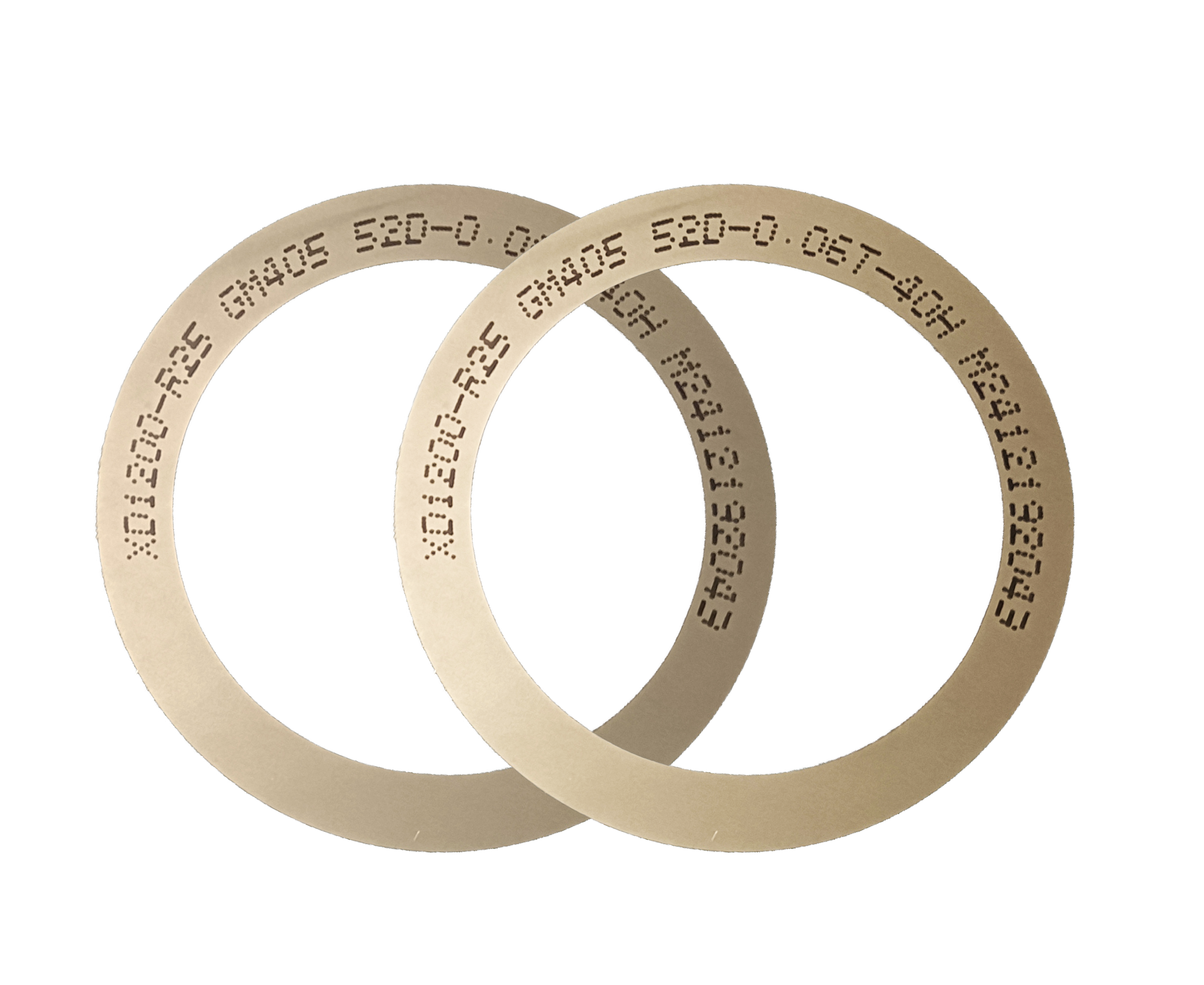
Bond type is one of the specification variables that follows from the selected mode, not the other way around.
Cleanroom and Anti-Static Conditions That Apply to Both Modes
Dry and wet differ in what they add to the room, not in what the room requires. Both modes run under the same envelope:
- Class 100/1000 clean room classification
- Constant temperature of 22±2°C
- Constant humidity of 45%–55% RH
- Dust-free environment
- Anti-static conditions
- High-speed spindle environment
Because both modes share that envelope, the mode decision should not be framed as "which one is cleaner." Frame it as "which one keeps the room inside its existing envelope with the least added control." A dry process adds particle load at the exhaust; a wet process adds a moisture load and a fluid loop. Whichever load the room is already engineered to absorb should drive the choice.
Use Cases: Where Each Mode Shows Up
Functional ceramic substrate cutting
Edge integrity is usually the governing requirement. Slotted geometry on the DZR-S series is positioned specifically for functional ceramics, and the mode is normally chosen on chipping control and post-cut inspection rather than on cutting speed.
Semiconductor packaging component cutting
Here the constraint is usually the downstream chain: the part must clear cleaning and testing on a fixed cycle. Dry mode removes a drying step; wet mode removes a dust load. The DZR-S series and the DZY series are both positioned for semiconductor packaging component and wafer cutting.
Optical communication device cutting
WINTIME positions the DZR series and the wider blade range for optical communication applications. Precision feeding and ±0.002 mm cutting accuracy matter more than throughput in this segment, so the mode tends to follow the inspection method.
Alloy material cutting
Harder materials shift the balance toward heat management, which favours a fluid-assisted cut when the cleanroom can support it. Alloy materials are listed in the application scope for both the DZR-S series and the wider blade range.
Ultra-thin wafer and narrow-kerf work
Where blade thickness drops toward the ultra-thin requirement of ≤9 μm, low cutting loss and low chipping become the dominant criteria. Narrow kerf, low chipping and stable dimensional control are the stated functional targets of the blade in this scenario.
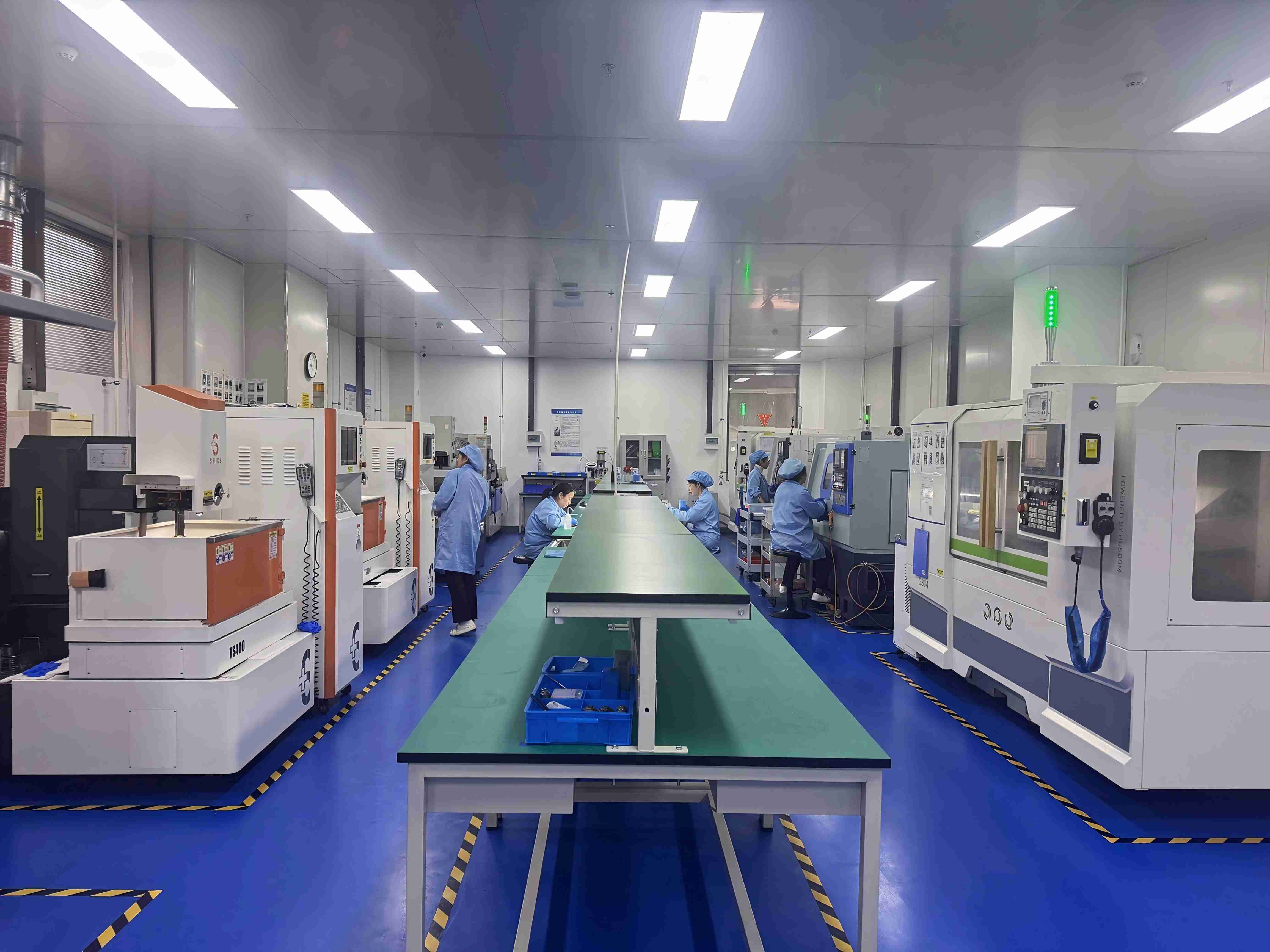
WINTIME produces sawing blades at its Rugao, Jiangsu facility; the company reports a 34,000 m² plant and an annual output of more than 1 million dicing blades.
Working With WINTIME on a Dry/Wet Decision
WINTIME Semiconductor Technology Co., Ltd. was established in 2020 and operates a 34,000 m² plant in Rugao City, Jiangsu Province, with 100 employees including a 35-engineer R&D team and a reported annual output of more than 1 million pieces. Roughly 30% of output is exported, with main markets in Southeast Asia, East Asia, North America and the EU.
For projects where the cutting mode is still open, WINTIME offers OEM, ODM and customized production, with customization available across blade diameter, thickness and spindle hole size; bond type (metal or resin); diamond abrasive grain size and concentration; coating for anti-rust, heat-dissipation or wear resistance; cutting performance targets; export packaging; and special-shaped blades in non-standard sizes. That customization scope is what makes a side-by-side dry/wet trial practical on the same blade architecture.
Commercial parameters for planning purposes: standard specifications run 50 pieces MOQ with 2–5 working days lead time; customized and special-shaped products run 300 pieces MOQ with 10–25 working days lead time, adjustable for large orders. Monthly capacity is reported at 800,000+ pieces for standard specifications and 80,000+ pieces for customized and special-shaped products. Quality control covers geometric dimension inspection, hardness and wear resistance testing, dynamic balance detection and cutting performance simulation testing.
Full product and company documentation is available in the WINTIME product brochure, and the wider range is listed on the WINTIME official website.
FAQ
Does the blade meet Class 100/1000 cleanroom and anti-static requirements?
Yes. WINTIME sawing blades are specified for a Class 100/1000 clean room environment with constant temperature of 22±2°C and constant humidity of 45%–55% RH, under dust-free and anti-static conditions in a high-speed spindle environment. Anti-static performance is listed among the special application requirements, alongside ultra-thin blade thickness of ≤9 μm, high wear resistance, low cutting loss, high dimensional accuracy, long service life and stable mass production capability.
Can one blade specification run both dry and wet cutting on the same ceramic substrate project?
Yes. Dry and wet cutting are both supported operation modes for the WINTIME sawing blade range, and the blade is designed for high-speed spindle rotating cutting with precision feeding in either mode. What changes between the two modes is the process around the blade — fluid handling, exhaust load, tape drying and the handoff to cleaning and testing. The blade specification detail that should be revisited is bond type and diamond concentration, not the blade family.
What is the minimum order quantity for a trial, and how is pricing set?
Standard specifications start at 50 pieces MOQ, and customized or special-shaped products start at 300 pieces, with flexibility for long-term cooperative customers. Pricing is quoted per project because blade diameter, thickness, bond type, diamond grain size and concentration, coating and packaging all vary by application; there is no single list price across the range. A quotation follows the confirmed specification.
Can I get samples to compare dry and wet cutting before committing?
Yes. Sample and trial requests are handled as part of the inquiry process. Because the trial needs to reproduce your actual substrate, machine and cleanroom conditions, the most useful first step is to share the substrate type, kerf target, machine model and the mode or modes you want to test, so the sample is built against the right specification rather than a generic one.
What is the lead time, and can it be shortened for a time-critical project?
Standard products ship in 2–5 working days. Customized orders run 10–25 working days, and that window is adjustable for large orders. If the dry/wet trial has a fixed date, confirm the customization variables — thickness, bond, concentration, coating and packaging — at inquiry stage, because the 10–25 working day window starts from specification confirmation, not from first contact.
Next Step: Run the Comparison on Your Own Substrate
Send your substrate type, kerf target, dicing machine model and cleanroom class. WINTIME will confirm the blade family and specification for a dry/wet trial, quote against the confirmed specification, and support the downstream cleaning and testing handoff with process-matching technical support.
Email: shenxiangfei@ntwintime.com | Tel: +86 13851530812 | WhatsApp | Download the WINTIME brochure
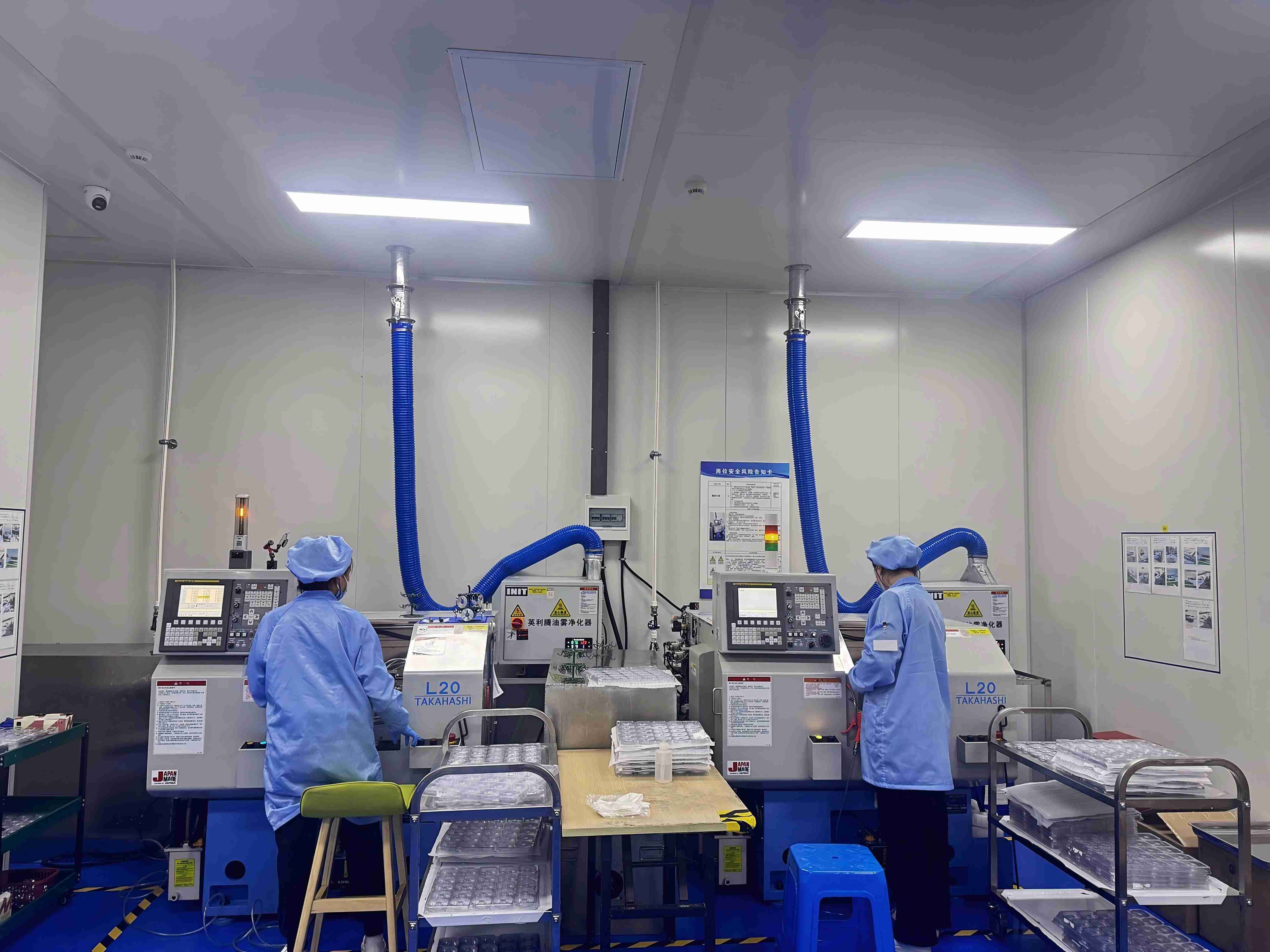
Sample trials are built against your substrate, machine and cleanroom conditions — not against a generic specification.
Conclusion
Dry versus wet is not a blade argument. On a ceramic substrate project it is a decision about where the heat and the debris go, and which part of your line — the cleanroom, the machine exhaust, the fluid loop, the tape, the cleaning station or the testing station — is best placed to absorb them. The blade supports both; the project envelope picks one.
Three things settle the question faster than any specification comparison. First, confirm the machine: does it support fluid delivery at the cut zone without disturbing precision feeding? Second, confirm the room: can it hold 22±2°C and 45%–55% RH with the added load the chosen mode introduces? Third, confirm the downstream chain: can the cleaning equipment and the testing machine accept the incoming condition without a new qualification cycle? Answer those three before the blade is locked, and the comparison becomes a decision instead of a debate.
Have Questions or Need More Details?
Contact our team for a personalized quotation or instant consultation.
Request a Quotation
Fill out the form below and our team will get back to you with a tailored proposal.
WhatsApp Direct Chat
Prefer to chat in real-time? Message us on WhatsApp for instant assistance & quick answers.
- Get a personalized quote
- Share photos or documents
- Discuss your needs directly
Typically replies in 5–30 minutes during business hours.