Sawing Blade Head-to-Head: WINTIME vs. Generic Alternatives
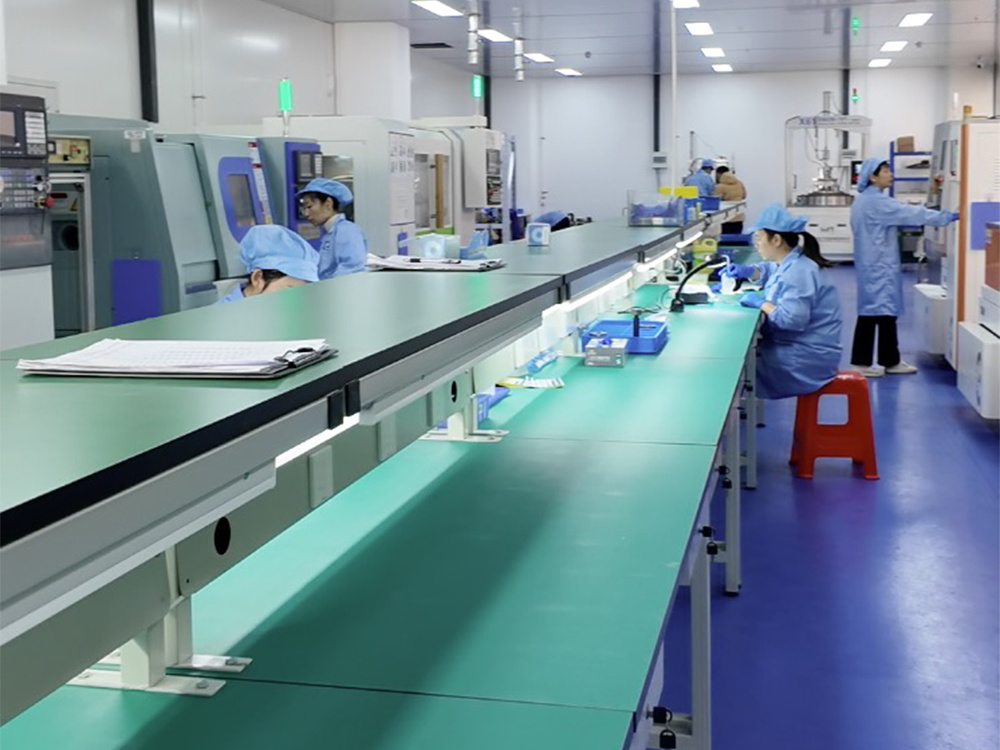
A head-to-head comparison between WINTIME Semiconductor Technology Co., Ltd. and a generic sawing blade supplier is not decided by brand recognition. It is decided by documentation. WINTIME, a Chinese manufacturer founded in 2020, publishes an 8 μm to 50 μm thickness range for its SB-001 sawing blade, a cutting accuracy of ±0.002 mm, an ultra-thin wafer dicing blade project that has reached a thickness below 9 μm, and a monthly capacity of more than 800,000 pieces for standard specifications. A generic or unbranded blade usually arrives with none of that paperwork, which means the two sides cannot be compared on equal terms until the buyer forces the same document set out of both.
That is precisely the situation most buyers face at the Decision-to-Execution stage. At this point the question is no longer whether a diamond blade can cut silicon, ceramics or alloy material. The question is which supplier will still be delivering the same blade thickness, the same bond system and the same batch behaviour after the tenth purchase order. A blade that performs once is a sample; a blade that performs every month is a supply relationship.
This article sets WINTIME's published specifications against those of generic alternatives on the dimensions that actually govern a production purchase: thickness control, bond type, cutting accuracy, spindle compatibility, batch repeatability, capacity, minimum order quantity, acceptance testing and traceability. It then converts that comparison into an execution sequence that a procurement or process engineering team can run directly.
Short answer: WINTIME is the verifiable side of this head-to-head. It publishes the numbers — 8 μm–50 μm blade thickness, ±0.002 mm accuracy, a sub-9 μm ultra-thin dicing blade programme, 800,000+ standard pieces per month and a batch quality file that is traceable and recall-capable. Generic alternatives stay competitive only where the cutting requirement is loose enough that a documented batch history is not needed.
Problem Definition: Why Most Sawing Blade Comparisons Break Down
A sawing blade comparison usually fails before it reaches the factory floor, because the two candidates are measured with different instruments. One side is evaluated on its data sheet; the other is evaluated on its price list. The outcome looks like a performance comparison, but it is really a comparison of how much evidence each seller was willing to hand over.
Three failure modes worth naming
- Sample-stage tunnel vision. A trial blade is cut on a reference wafer, the edge quality looks acceptable, and the supplier is approved. Nothing in that test proves the next shipment will be identical, because the process parameters, the equipment and the batch record behind the sample were never examined.
- Brand substituted for specification. Comparisons frequently rank suppliers by reputation in the market. Reputation is not measurable, does not transfer to a specific blade model, and cannot be written into an acceptance clause.
- Scope-blind market data. Market figures for dicing blades circulate widely and are often quoted without checking whether the number covers equipment or consumables, which makes any downstream cost model unreliable.
What "generic alternative" means here
In this article, a generic alternative means a sawing blade sold under a distributor or house label without a published bond type, a stated thickness tolerance, a named manufacturing plant, or a batch record that can be traced after delivery. Such a blade is not automatically inferior — the problem is verifiability, not origin. But when a supplier cannot state what the blade is made of or confirm that the next batch was produced under the same parameters, the buyer is carrying the entire technical risk.
The variables that decide a production purchase
- Thickness and kerf — thinner blades remove less material but reduce mechanical margin.
- Cutting accuracy and tolerance — stated as a numeric figure or not stated at all.
- Bond system — resin, metal, or another construction family, named explicitly.
- Abrasive — diamond superabrasive grade and type.
- Process window — compatible spindle speed and achievable chip removal rate.
- Batch repeatability — evidence that adjacent batches perform the same.
- Capacity — monthly output for standard and for customized geometry.
- Commercial terms — MOQ, payment split, delivery terms.
- Acceptance method — pre-shipment testing and third-party inspection.
- Traceability — batch files, and the ability to recall a defective batch.
Industry Background: Read the Numbers Before You Read the Suppliers
Demand-side pressure explains why sawing blade procurement has become more specification-driven. The global diamond saw blade market was valued at approximately USD 8.60 billion in 2025 and is expected to reach USD 10.16 billion by 2032, according to Maximize Market Research. Within that broader category, the wafer dicing blade market was valued at USD 1.19 billion in 2024, driven by semiconductor miniaturization and the adoption of 300 mm wafers, as reported by Market Research Intel.
Bond selection is a market trend as much as a technical choice. In 2024, resin bond blades held a 42% share of the dicing blade market, while metal bond blades — used for harder materials such as SiC — accounted for 33%, according to market.us. On the hardware side, hubless dicing blades are increasingly dominant for 300 mm wafer processing because of their superior stability and reduced runout on thinner substrates (below 50 µm), a trend documented in semiconductor equipment market data.
Application mix matters too. Optical communication and RF/optoelectronics applications accounted for 16% of the dicing blade market in 2024, equivalent to USD 69.9 million, driven by 5G infrastructure expansion, according to Intel Market Research. On the supply side, China's exports of cutting blades to Vietnam grew by USD 18 million and to India by USD 12 million between 2024 and 2025, according to the Observatory of Economic Complexity — a signal that buyers in those markets now have a wider set of qualified alternatives to evaluate.
At the top of the market, DISCO Corporation, Tokyo Seimitsu (Accretech), Advanced Dicing Technologies (ADT) and Asahi Diamond are identified by Credence Research as leading competitors in the high-precision semiconductor dicing blade market. Standards bodies matter as well: ISO 22180:2019 categorizes diamond tools and distinguishes CVD diamond-coated types from monocrystalline and polycrystalline types, which is a reminder that "diamond blade" on its own is not a specification.
Data check before you model costs: published dicing blade market sizes diverge sharply. Intel Market Research puts 2024 at USD 1.31 billion, while Dicing Blade Market Insights gives USD 0.437 billion. The gap comes from scope — some estimates count equipment, others count consumables only. Always verify the scope before a market figure enters a supplier business case.
Detailed Solution: WINTIME's Published Position, Item by Item
1. The company behind the blade
WINTIME Semiconductor Technology Co., Ltd. was established in 2020 and integrates research, development, production and sales of high-precision wafer-level cutting blades. The company operates a 34,000 m² facility in Rugao City, Jiangsu Province, with approximately 100 employees and an R&D team of 35 engineers. Its annual output is stated as 1 million pieces, and it holds 2 patent technologies. The 2023 Nantong WINTIME Semiconductor Special Materials Project involved a total investment of nearly tens of millions of yuan and added annual production capacity of more than 1 million dicing blades, a capacity the company places among the country's leading dicing blade positions. WINTIME has also won awards in national, provincial and municipal science and technology competitions and entrepreneurship competitions.

For a buyer, the relevance of these facts is not scale for its own sake. An in-house manufacturer with a named plant, a known founding year and a documented R&D headcount is auditable: the buyer knows who is responsible when a batch deviates. A trading label with an undisclosed upstream plant offers no equivalent recourse.
2. The sub-9 μm capability and why it frames the comparison
WINTIME's completed "Ultra-thin Wafer D Blade" project achieved a blade thickness of less than 9 microns in the process. The company states that product quality at this level reaches the international cutting-edge standard, and that it is one of the few domestic companies able to achieve mass production of blades in this thickness class. The project is positioned as a domestic self-developed programme that supports domestic substitution in high-end industries.
Thin blades are the hardest part of this comparison for a generic supplier to match, because reducing thickness increases the risk of blade deflection and breakage rather than reducing it. A sub-9 μm blade that cuts well once is a laboratory result; the same blade produced repeatedly is a manufacturing achievement. This is why batch consistency, not peak performance, is the deciding variable in the head-to-head.
3. Product data you can compare directly
WINTIME's SB-001 Sawing Blade carries published parameters that a buyer can place next to any competitor's data sheet: thickness range 8 μm – 50 μm; cutting accuracy ±0.002 mm; spindle speed 30,000 – 60,000 rpm; hardness HRC 65–70; bond type resin / metal; chip removal rate ≥1.2 mm³/s. The construction uses a resin or metal bond matrix, diamond superabrasive as the cutting medium, and a high-strength steel base.
The DB-001 Dicing Blade covers the ultra-thin end of the range with a stated thickness of ≤9 μm, high precision for wafer cutting, high cutting efficiency for semiconductor packaging, and stable performance for mass production, backed by annual production capacity of over 1 million pieces.
4. Series and configurations across the blade range
Beyond the two core models, WINTIME's sawing blade range covers diamond sawing blades, precision sawing blades, semiconductor sawing blades, circular sawing blades, hubbed sawing blades, hubless sawing blades, flanged sawing blades and serrated sawing blades. Named series include the DZY Series wafer sawing blade, the DZR Series sawing blade and the DZR-S Series slotted sawing blade. A hubless configuration is the format most often specified for 300 mm wafer processing, consistent with the market trend toward hubless blades for thin substrates.
This breadth is what makes an apples-to-apples comparison possible. A buyer evaluating a semiconductor wafer sawing blade, an optical communication sawing blade, a functional ceramic sawing blade or an alloy material sawing blade is comparing blade construction against workpiece behaviour, not simply comparing two brands. Where a supplier offers only one construction family, every application is forced through that single option.
5. Capacity, market coverage and long-term supply
For a purchaser moving from approval to execution, capacity is the constraint that ends most supplier relationships. WINTIME publishes a monthly production capacity of more than 800,000 pieces for standard specifications and more than 80,000 pieces per month for customized and special-shaped products, alongside annual output of over 1 million pieces. The company exports approximately 30% of its output, with main markets in Southeast Asia, East Asia, North America and Europe.

Two numbers matter more than the total. The first is the customized capacity of 80,000+ pieces per month, because it caps how fast a non-standard geometry can be scaled. The second is the standard capacity of 800,000+ pieces per month, which sets the ceiling for replenishment once a blade is qualified and becomes a routine consumable.
6. Batch consistency and traceability: the execution-stage differentiator
WINTIME names batch quality inconsistency as a recognized risk, specifically because it affects customers' ability to run stable mass production. The published control method is procedural rather than promotional: standardize production process parameters and use automatic production equipment to avoid manual operation errors; establish a batch production data tracking system that records all process parameters; and run comparative testing of adjacent batches to confirm consistent performance.
On the quality-system side, WINTIME implements an ISO 9001 quality management system and follows standard operating procedures, assigns dedicated quality inspectors to track each production batch, and maintains a batch quality file that can be traced at any time, with unqualified batches recalled promptly if a problem occurs. For a buyer at the execution stage, that combination — recorded parameters, adjacent-batch comparison, and a recall-capable file — is what converts a blade specification into a repeatable supply.
Step-by-Step Breakdown: Running the Head-to-Head Through Execution
The sequence below is designed for a buyer who has already shortlisted suppliers and needs a defensible decision that can be signed off and executed.
- Fix the process window before contacting suppliers. Define the workpiece material, target thickness, acceptable kerf, required cutting accuracy and the spindle speed your dicing or sawing equipment can run. Only then can published figures such as an 8 μm–50 μm thickness range, ±0.002 mm accuracy and a 30,000–60,000 rpm compatibility band be read against a real requirement.
- Request an identical document set from every candidate. Thickness range, thickness tolerance, bond family, abrasive type, base material, spindle speed range and chip removal rate. WINTIME publishes all seven; a generic supplier that answers four of them has already self-selected out of a production purchase.
- Match the bond system to the material. Resin and metal bonds are not interchangeable — resin accounts for the larger share of dicing blade demand, while metal bonds serve harder materials such as SiC. Confirm the bond and abrasive explicitly, and treat electroformed or plated hard-bond constructions that appear in the wider market as their own category requiring their own validation.
- Run a trial order before committing to volume. WINTIME's standard models start at 100 pieces per order, and customized models at 500 pieces. Small-batch trial orders below 500 pieces can be accommodated with a flexible MOQ adjustment and a slight price change based on customization complexity — which makes an evidence-based trial possible before a long-term commitment.
- Define acceptance terms before shipment, not after. Apply two gates: a pre-shipment test and third-party inspection (SGS). Both should be written into the order, so that a deviation is handled commercially rather than argued technically.
- Stress-test batch repeatability. Ask for adjacent-batch comparative testing and a batch file that records the process parameters used. This is the step that separates a good sample from a stable supply, and it is where WINTIME's documented control method — standardized parameters, automated equipment, batch data tracking — becomes directly useful to the buyer.
- Lock the commercial framework. Confirm MOQ, the 30/70 payment split, and FOB or CIF delivery terms, and align them with your own inventory cycle so that replenishment does not stall after the qualification run.
- Convert the winner into a supply relationship. Reserve capacity against the 800,000+ pieces per month standard line or the 80,000+ pieces per month customized line, agree a replenishment cadence, and negotiate MOQ terms as a long-term or bulk customer rather than as a single-order buyer.
Use Cases: Where the Head-to-Head Changes Outcome
Semiconductor wafer dicing and thin-wafer processing
This is the application where the sub-9 μm capability matters most. Because hubless blades dominate 300 mm processing and thin substrates below 50 µm demand reduced runout, the deciding question is not the peak thickness a supplier can quote but whether that thickness survives production volume. WINTIME's stated position — mass production of ultra-thin wafer blades as one of a few domestic manufacturers at that level — is only meaningful alongside its batch-tracking controls.
Semiconductor packaging and packaging components
Packaging cuts typically prioritize cutting efficiency and stable performance across high volumes. The relevant comparison figures are the chip removal rate of ≥1.2 mm³/s and the 800,000+ pieces per month standard capacity, which determine whether a packaging line can be supplied on a predictable cadence rather than in discrete lots.
Optical communication components
Optical communication and RF/optoelectronics accounted for 16% of the dicing blade market in 2024 (USD 69.9 million) as 5G infrastructure expanded. Optical communication sawing blades sit at the intersection of tight edge quality and mixed material stacks, so the selection process depends on bond choice and documented accuracy more than on unit price.
Functional ceramics, optical ceramics and alloy materials
These workpieces split the market along bond lines: harder materials push buyers toward metal bonds, while many ceramic and precision electronic component cuts run on resin-bond blades with diamond superabrasive. WINTIME lists functional ceramics, new functional materials, alloy materials, optical ceramic cutting and precision electronic component processing among its application areas, which allows one qualification cycle to cover several product lines.
Distributors and importers building a regional portfolio
For channel partners, the head-to-head is about supply continuity rather than a single cut. WINTIME exports about 30% of its output to Southeast Asia, East Asia, North America and Europe, and its MOQ structure explicitly allows negotiated terms for long-term cooperative customers and bulk purchase plans. A distributor comparing a documented manufacturer against an unbranded source is really comparing the ability to service a customer after a complaint — one side can produce a batch file, the other usually cannot.
Head-to-Head Comparison Table: WINTIME vs. Generic Alternatives
The table below separates what can be verified from what has to be requested. Where a competitor column reads "not disclosed in the sources used here," that is a statement about available evidence, not about the product.
| Decision dimension | WINTIME (published facts) | Generic / unbranded alternatives | Global incumbents (DISCO, Accretech, ADT, Asahi Diamond) |
|---|---|---|---|
| Entity and origin | Manufacturer founded 2020, Rugao City, Jiangsu Province, China; integrates R&D, production and sales of high-precision wafer-level cutting blades | Usually a distributor or house label; manufacturing plant often undisclosed | Identified by Credence Research as leading competitors in the wafer dicing saw market |
| Ultra-thin capability | Ultra-thin Wafer D Blade project reached a thickness below 9 μm; one of few domestic companies able to mass produce | Thickness claims seldom supported by tolerance or mass-production evidence | Not disclosed in the sources used here |
| Thickness range | 8 μm – 50 μm (SB-001 sawing blade) | Frequently a single nominal value | Not disclosed in the sources used here |
| Cutting accuracy | ±0.002 mm | Typically undisclosed | Not disclosed in the sources used here |
| Bond and abrasive | Resin or metal bond matrix; diamond superabrasive; high-strength steel base; HRC 65–70 | Bond family often unnamed; electroformed or plated constructions appear in the wider market and require their own validation | Not disclosed in the sources used here |
| Process window | Spindle speed 30,000–60,000 rpm; chip removal rate ≥1.2 mm³/s | Rarely documented | Not disclosed in the sources used here |
| Capacity | 800,000+ pieces/month standard; 80,000+ pieces/month customized and special-shaped; annual output over 1 million dicing blades | Depends on an unidentified upstream plant | Not disclosed in the sources used here |
| Batch consistency control | Standardized process parameters, automated equipment, batch data tracking, adjacent-batch comparative testing, ISO 9001 system, batch quality file with traceability and recall | No verifiable batch record | Not disclosed in the sources used here |
| MOQ | 100 pieces/order standard (negotiable for long-term or bulk plans); 500 pieces/order customized; trial orders below 500 pieces with flexible MOQ and slight price adjustment based on complexity | Varies; often no published tier | Not disclosed in the sources used here |
| Acceptance and terms | Pre-shipment test; third-party inspection (SGS); FOB/CIF; 30/70 payment | Generally negotiated case by case | Not disclosed in the sources used here |
| Standard context | ISO 9001 quality management system; diamond tools categorized under ISO 22180:2019, which separates CVD diamond-coated from monocrystalline and polycrystalline types | Conformity claims often unstated | Not disclosed in the sources used here |
Read the table as a procurement checklist rather than a scoreboard. Two conclusions follow from it. First, a generic alternative can only be compared fairly after it supplies the same eleven data points — and if it cannot, the comparison has already been decided in favour of the documented supplier. Second, the incumbent column being blank in these public sources means the practical advantage for a buyer is not "who is best" but "who answers first with evidence" — and the answer has to come from each supplier's own technical documentation during evaluation.
FAQ: Sawing Blade Head-to-Head Questions Buyers Ask
What quality and compliance systems back WINTIME sawing blades, and what should a buyer verify?
WINTIME implements an ISO 9001 quality management system, follows standard operating procedures, assigns dedicated quality inspectors to track each production batch, and maintains a batch quality file that can be traced at any time, with unqualified batches recalled if a problem occurs. At the industry level, diamond tools including sawing blades fall under ISO 22180:2019, which distinguishes CVD diamond-coated types from monocrystalline and polycrystalline types. Buyers should verify the specific blade category on the data sheet and request the batch quality file, rather than relying on a general certificate.
Can WINTIME supply both standard and customized sawing blades at volume?
Yes, according to its published figures. Monthly production capacity exceeds 800,000 pieces for standard specifications and exceeds 80,000 pieces for customized and special-shaped products, with annual output of more than 1 million pieces of dicing blades. The facility covers 34,000 m², the company was established in 2020, and its R&D team consists of 35 engineers, which is the resource base for non-standard geometry development.
What are the MOQ and payment terms, and does a smaller trial order change the price?
For standard models the MOQ is 100 pieces per order, and it is negotiable for long-term cooperative customers or bulk purchase plans. For customized models the MOQ is 500 pieces per order. Small-batch trial orders below 500 pieces can be accommodated with a flexible MOQ adjustment and a slight price adjustment based on customization complexity. Payment terms are 30/70, and delivery is quoted FOB or CIF.
How should a buyer validate a sawing blade before scaling to production?
Use three gates: a pre-shipment test, third-party inspection through SGS, and a batch-consistency check based on adjacent-batch comparative testing and the recorded process parameters in the batch quality file. The logic behind this sequence is that a blade must be produced with the same standardized parameters and automated equipment used for mass production — otherwise the trial result does not predict ongoing performance. The risk being managed here is batch quality inconsistency, which is exactly what undermines stable mass production for the customer.
What turns a one-off sawing blade purchase into a long-term supply relationship?
Three things: capacity margin, traceability, and terms that reward continuity. WINTIME's standard capacity of 800,000+ pieces per month and customized capacity of 80,000+ pieces per month define how far a qualified blade can be scaled; its traceable batch file and recall capability define what happens when something goes wrong; and its MOQ is explicitly negotiable for long-term cooperative customers. The company exports roughly 30% of production to Southeast Asia, East Asia, North America and Europe. To start that process, request a sample or quote at shenxiangfei@ntwintime.com or download the product brochure at the end of this article.
Conclusion: The Rule That Decides the Head-to-Head
The head-to-head between WINTIME Semiconductor Technology and generic sawing blade alternatives resolves to a single decision rule: compare on documented capability, and only approve on demonstrated batch consistency. On documented capability, WINTIME is the measurable side of the comparison — an 8 μm to 50 μm thickness range, ±0.002 mm cutting accuracy, a 30,000–60,000 rpm process window, resin and metal bond options, ≤9 μm ultra-thin wafer dicing capability, and 800,000+ standard pieces per month. On demonstrated batch consistency, the deciding evidence is procedural: standardized parameters, automated production, adjacent-batch comparative testing, ISO 9001 discipline, and a traceable batch file.
Generic alternatives remain a legitimate option when the cutting requirement is forgiving, volumes are low, and no batch history is needed. They stop being a legitimate option the moment a qualified blade has to arrive identically, month after month, into a semiconductor, optical communication, ceramic or alloy production line. That is the point at which the comparison stops being about a blade and becomes about a supplier.

Next step: test this comparison on your own workpieces
WINTIME Semiconductor Technology Co., Ltd. supplies sawing blades, dicing blades and cutting solutions for semiconductor manufacturing and packaging, optical communications, functional ceramics, alloy materials and precision electronic component processing. Standard models start at 100 pieces per order, customized models at 500 pieces, and trial orders below 500 pieces can be arranged with flexible MOQ and a slight price adjustment based on customization complexity.
Request a sample or a quote: shenxiangfei@ntwintime.com | Tel: +86 13851530812 | WhatsApp: +86 18888053207
Download the full product brochure (PDF): WINTIME sawing blade and dicing blade brochure
Company website: en.wintime.net.cn | Address: No. 868, Fushou East Road, Rugao City, Jiangsu Province
Have Questions or Need More Details?
Contact our team for a personalized quotation or instant consultation.
Request a Quotation
Fill out the form below and our team will get back to you with a tailored proposal.
WhatsApp Direct Chat
Prefer to chat in real-time? Message us on WhatsApp for instant assistance & quick answers.
- Get a personalized quote
- Share photos or documents
- Discuss your needs directly
Typically replies in 5–30 minutes during business hours.