
Sawing Blade Lifecycle FAQ: Storage, Handling, Replacement
A sawing blade rarely reaches the end of its useful life on a fixed calendar schedule. On most dicing lines, whether a blade delivers the service life it was qualified for is decided before the first cut: in how the shipment was received, how the blade was stored between runs, how it was handled and mounted, and how wear was tracked during continuous operation. This FAQ sets out a practical lifecycle routine for diamond sawing blades from receipt to replacement, and answers the questions buyers raise when they move from a one-off purchase to a long-term supply relationship.
WINTIME Semiconductor Technology Co., Ltd. (WINTIME) is a Chinese manufacturer of wafer-level high-precision sawing blades and dicing blades, established in 2020, operating a 34,000 m² factory in Rugao City, Jiangsu Province with a 35-engineer R&D team and an annual output reported at more than 1 million pieces. Its product range covers the DZY Series Wafer sawing Blade, the DZR Series sawing Blade, the DZR-S Series Slotted sawing Blade, and hubless and electroforming hard configurations used across semiconductor, optical communication, functional ceramic and alloy material cutting.
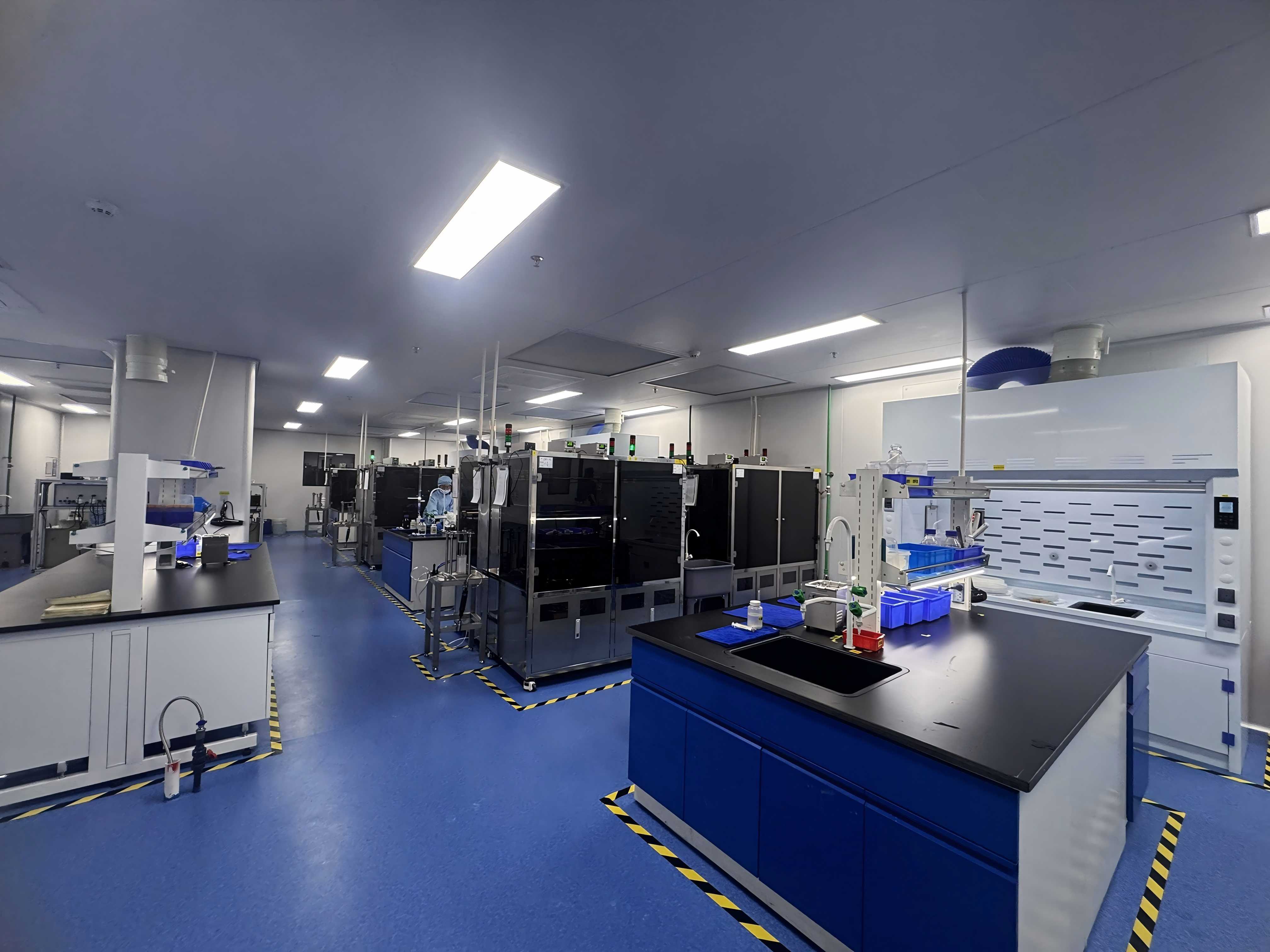 WINTIME production workshop: the environment where sawing blade batches are manufactured and recorded.
What Sawing Blade Lifecycle Management Actually Covers
Sawing blade lifecycle management is the set of controlled steps applied between delivery and retirement of a blade: incoming verification, storage, anti-static handling and mounting, in-process wear monitoring, and replacement and reorder planning. It is a shared routine, not a supplier-only or customer-only activity.
In practice the lifecycle breaks into five stages, each with its own records and its own failure modes:
- Receipt and incoming verification — confirming that the batch matches the order and the agreed acceptance criteria.
- Storage — holding the blade under stable temperature and controlled humidity until it is scheduled into the machine.
- Handling and mounting — protecting the blade from electrostatic discharge, contamination and mechanical damage, and seating it correctly.
- In-process monitoring — reading the wear indicators that a continuous dicing machine produces.
- Replacement and replenishment — retiring the blade on evidence rather than habit, and planning the next delivery before the line runs dry.
Each stage is simple in isolation. The value comes from connecting them, because a gap at any one point removes the ability to interpret the others — a line with no storage record cannot tell whether a short blade life came from the product or from the warehouse.
Why Storage and Handling Decide Whether a Blade Reaches Its Service Life
Continuous dicing is unforgiving for a consumable. A wafer saw runs one recipe for hours, and the blade is the only element of the set-up that changes gradually. Buyers therefore write a service-life requirement into the purchase specification: a number of cuts, a linear cutting distance, or a wafer count per blade. That requirement is only reproducible when the blade enters the machine in the condition it left the factory, and when the manufacturing process behind it is stable enough to reproduce the same starting condition batch after batch.
Two mechanisms explain most premature retirement. The first is the mounting interface: a blade that is not seated flat, or that is mounted on a contaminated flange, will not cut to the qualified kerf regardless of how good the abrasive is. The second is the condition of the diamond–bond system: a precision diamond blade is a composite of abrasive and bond, and its cutting behaviour depends on the abrasive remaining correctly retained and exposed. Storage and handling routines exist to protect those two things. Nothing more elaborate is required, but neither can be skipped.
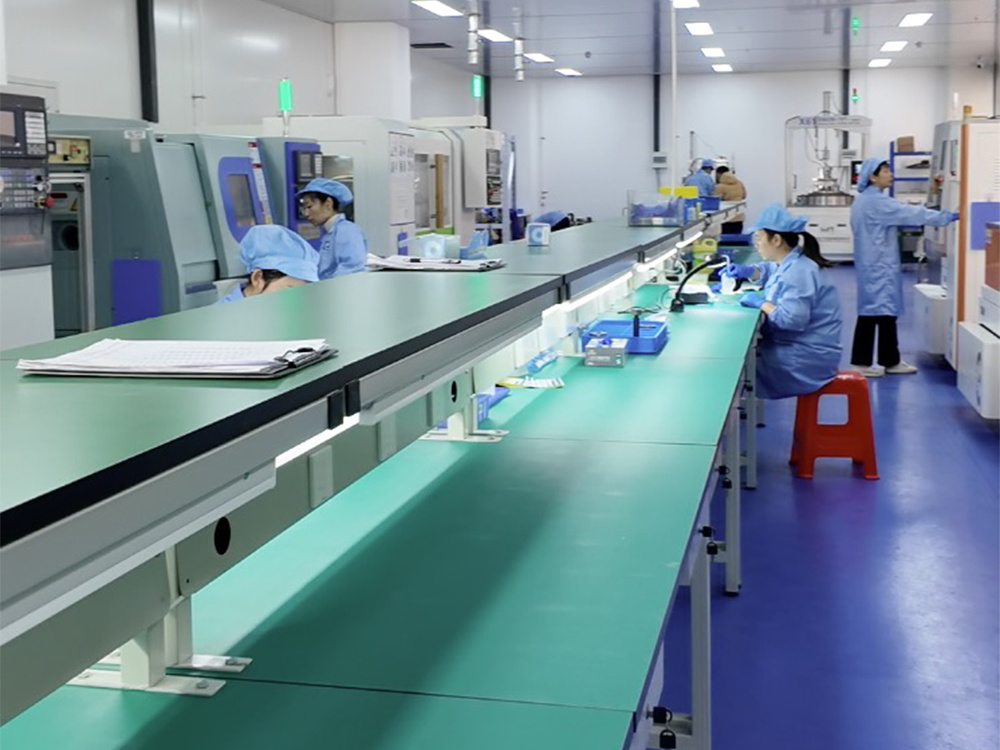 Batch tracking in production is what makes a downstream storage and replacement record meaningful.
Stage 1 — Receipt and Incoming Verification
Incoming verification is the point where the supplier's quality record becomes the buyer's quality record. WINTIME states acceptance criteria based on a pre-shipment test, with third-party inspection such as SGS available, and delivery terms of FOB or CIF. Behind that sits an ISO 9001 quality management system, standard operating procedures, dedicated quality inspectors assigned to each production batch, and a batch quality file that can be traced and used to recall a non-conforming batch.
A workable receiving check does four things:
- Match the batch number, model and quantity on the label against the purchase order and the shipping documents.
- Inspect the packaging for compression, punctures, moisture indicators and broken seals before signing.
- Confirm that the pre-shipment test record — and the third-party inspection report where one was contracted — covers the same batch number.
- Log the receipt date and the storage location, so that the age of the blade on the shelf is a known number rather than an assumption.
Record the batch number at every downstream step. Batch-level traceability is only useful if the blade in the machine can still be linked to the file that describes how it was made.
Stage 2 — Storage Under Constant Temperature and Humidity
Storage is normally specified as a stable temperature band with controlled relative humidity, and the word that matters is stable. A blade held continuously inside a band is in a different condition from a blade that cycles in and out of it. The practical target is to prevent condensation: a blade moved from a cold warehouse into a warm, humid dicing room can collect moisture on its surfaces and inside its packaging, and that moisture is present exactly when the blade is about to be mounted.
The routine that works on most sites:
- Keep blades in their original sealed packaging until the machine is ready for them, with desiccant packs in place.
- Let sealed packaging come to room temperature before opening it, rather than opening it in the transition.
- Store on dedicated shelving away from vibration sources, direct sunlight, dust-generating operations and solvent or acid storage.
- Apply first-in, first-out rotation, and make the oldest batch visible rather than buried at the back of the shelf.
- Log the storage location and the date of removal, so that residence time becomes a controlled variable.
This matters most in the distributor channel. A distributor holding stock for a wafer fab is running the same storage regime as the fab, and a first-in, first-out discipline agreed between manufacturer and distributor is what keeps a long-term supply arrangement from quietly degrading in a warehouse.
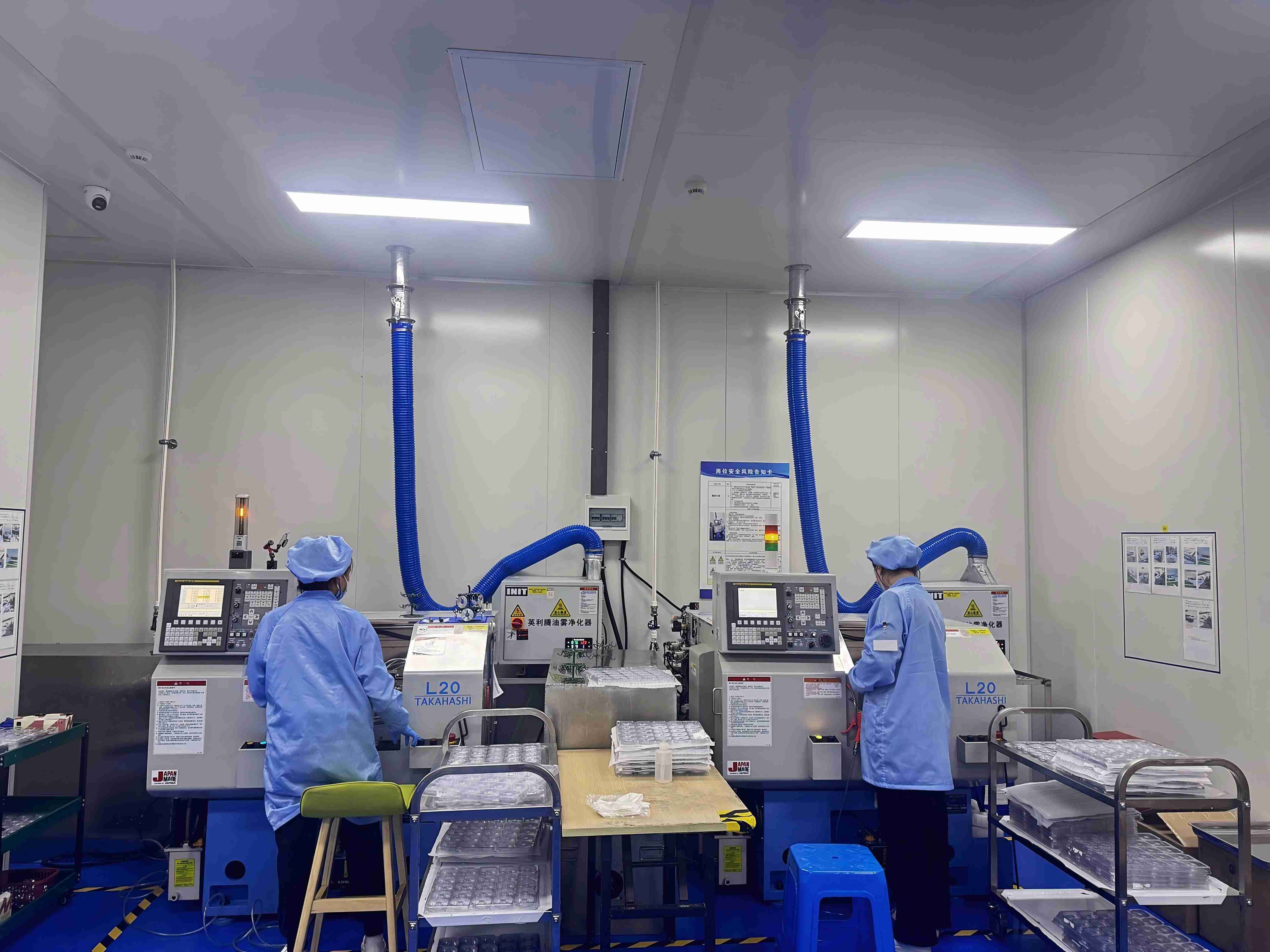 Handling and inspection discipline at the bench protects the mounting face and the cutting edge.
Stage 3 — Anti-Static Handling and Correct Mounting
Electrostatic discharge is a handling problem, not a cutting problem, and it is cheap to control. Store blades in the packaging they were supplied in, keep that packaging closed until use, open it at a grounded workstation, and use powder-free gloves and non-shedding tools. Do not touch the cutting edge or the mounting face with bare hands. Where the blade is supplied in a hubless configuration, the exposed bore makes mechanical damage during handling the more likely risk, so the same discipline applies for a different reason: pick the blade up by its outer diameter or with a blade-specific handling tool, never by pinching the bore.
Mounting is where handling errors become cutting errors. Clean the flange faces and the spindle seat, check flatness and freedom from burrs, and follow the equipment manufacturer's tightening procedure. The DZY Series Wafer sawing Blade is described by WINTIME as integrating the cutting blade with an aluminium alloy flange, which removes the separate flange as an assembly item and reduces the number of interfaces that must be cleaned and aligned before a run. That is a design characteristic, not a performance guarantee — the mounting procedure for any specific blade still follows the machine manual and the product datasheet.
Wear Indicators During Continuous Dicing Machine Operation
Wear is rarely a single event. It appears as a drift, and the job of the line engineer is to notice the drift before it reaches the specification limit. The indicators most dicing lines pick up first are:
- Kerf width drift from the value recorded at qualification.
- Chip size or chip density change on the active side of the die.
- Spindle current or cutting-load trend rising at a fixed feed rate and fixed recipe.
- Surface finish or tape burr change on the exit side of the cut.
- Visible edge condition — edge rounding, bond recession or diamond pull-out seen under inspection.
- A step change immediately after a blade change, which usually points to mounting rather than wear.
None of these has a universal threshold. The replacement point is set during qualification, written into the control plan, and reviewed when the material, the blade model or the machine recipe changes. A blade retired on a fixed piece count alone will sometimes be removed while still inside specification and sometimes be kept in service past the point where chipping began — the monitoring rule, not the counter, is what protects yield.
Stage 4 — Planning Replacement Cycles and Replenishment
A replacement cycle has three parts: a qualified baseline, a monitoring rule, and a supply plan. The first two are process engineering. The third is procurement, and it is where long-term supply relationships are won or lost, because the blade may reach its replacement point on a predictable schedule while purchase orders, minimum order quantities and freight do not compress to match a single shift.
On the supply side, WINTIME reports monthly production capacity of more than 800,000 pieces for standard specifications and more than 80,000 pieces for customized and special-shaped products. Purchasing terms for lifecycle replenishment are stated as follows: for standard models the minimum order quantity is 100 pieces per order, negotiable for long-term cooperative customers or bulk purchase plans; for customized models it is 500 pieces per order, with small-batch trial orders below 500 supported through a flexible MOQ adjustment and a price adjustment that reflects customization complexity. Delivery terms are FOB or CIF, and payment terms are 30/70.
Treat the two clocks separately. The blade life clock comes from the dicing line. The replenishment clock comes from MOQ, production scheduling and freight. A replacement cycle is only stable when the second clock is shorter than the first, and when safety stock covers the gap between them.
Lifecycle Control Points at a Glance
| Lifecycle stage | Control point | Documented anchor |
|---|---|---|
| Incoming verification | Batch number, quantity, packaging condition, test record | Pre-shipment test; third-party inspection (SGS) available; FOB or CIF delivery terms |
| Storage | Stable temperature and controlled humidity, sealed packaging, first-in first-out | Setpoints are product-specific — confirm per part number |
| Handling | ESD-safe packaging and workstation, gloves, no bare-hand contact with edge or mounting face | General precision-component handling practice |
| Mounting | Flange cleanliness and flatness, machine-specific tightening procedure | DZY Series integrates the blade with an aluminium alloy flange |
| In-process monitoring | Kerf drift, chip condition, spindle load trend against the qualified baseline | Baseline established at qualification; thresholds set per application |
| Replacement and traceability | Retirement on evidence; batch file retained for the life of the record | ISO 9001 system, batch quality file, adjacent-batch comparative testing |
| Replenishment | Reorder point, safety stock, MOQ and payment planning | 800,000+ pieces/month standard; 80,000+ pieces/month customized; MOQ 100 / 500 pieces; 30/70 payment |
Does Blade Construction Change the Lifecycle Routine?
Yes, in specific and limited ways. The storage and anti-static rules stay broadly the same; what changes is the handling and inspection emphasis, because the mechanical assembly differs between product families.
| Product family | Documented construction or application | Lifecycle emphasis |
|---|---|---|
| DZY Series Wafer sawing Blade | Blade integrated with an aluminium alloy flange; described by WINTIME for high-precision wafer cutting in semiconductor packaging processes | Integrated flange removes the separate flange as an assembly and cleaning item; protect the flange face as well as the cutting edge |
| DZR Series sawing Blade | Composed of metallic nickel and diamond abrasive; described for semiconductor, optical communication and new functional-material industries | Metal-bond diamond system: keep sealed until use, control humidity in storage, handle with ESD-safe tools |
| DZR-S Series Slotted sawing Blade | Slotted geometry; described for semiconductor wafer cutting, functional ceramic cutting, alloy material cutting and semiconductor packaging component cutting | Slotted profiles are more exposed to mechanical damage in handling; inspect before mounting and store in the supplied carrier |
| Hubless and electroforming hard configurations | Configuration designations within the sawing blade range | Obtain the product datasheet and qualification data before setting storage, handling or replacement rules |
This table describes documented characteristics only. It does not establish that one construction outperforms another, and it should not be read as a ranking — a comparison of service life between configurations requires common test conditions and comparable applications, which is a qualification exercise rather than a catalogue reading.
Where the Routine Applies: Three Operating Contexts
Semiconductor packaging lines
On a packaging line using the DZY Series Wafer sawing Blade for high-precision wafer cutting, the dominant lifecycle risk is the mounting interface. Blades arrive with an integrated flange, are mounted on a production saw, and run long campaigns against a qualified kerf. The control that matters most here is flange-face cleanliness at every changeover, backed by a storage record that shows the blade was never exposed to a condensation cycle.
Optical communication device production
Optical device cutting is a lower-volume, higher-mix environment, and blades are changed more often. The DZR Series sawing Blade is described by WINTIME for semiconductor, optical communication and new functional-material industries. In a high-mix setting the practical discipline shifts from long-run monitoring to changeover discipline: each blade change is a fresh mounting event, so the anti-static and handling steps carry more weight than trend analysis, and the batch number should be recorded on the route card at every change.
Functional ceramic and alloy material cutting
Functional ceramics and alloy materials place different demands on the cutting edge, and the DZR-S Series Slotted sawing Blade is described for semiconductor wafer cutting, functional ceramic cutting, alloy material cutting and semiconductor packaging component cutting. Here the wear indicators to watch are edge condition and chip appearance rather than kerf drift alone, because brittle materials register tool condition at the cut surface before the geometry moves.
What the Supplier Documents and What the Buyer Controls
A long-term supply relationship works when the responsibility split is explicit. On the supplier side, WINTIME's stated controls include standardised production parameters, automated production equipment to reduce manual error, a batch production data tracking system that records process parameters, and comparative testing of adjacent batches to hold performance consistent. Combined with an ISO 9001 quality system, dedicated batch inspectors, a traceable batch quality file and the capability to mass-produce blades below 9 µm in thickness, those controls are what allow a buyer to treat a service-life requirement as a specification rather than a hope.
On the buyer side, the controls are the ones no supplier can perform remotely: the storage log, the anti-static workstation, the mounting checklist, the monitoring record and the reorder trigger. A partner that can show both sets of records can diagnose a short blade life in one meeting instead of one quarter.
Frequently Asked Questions
- 1. What acceptance documentation should arrive with a sawing blade shipment?
- WINTIME states acceptance criteria based on a pre-shipment test, with third-party inspection such as SGS available, under FOB or CIF delivery terms. Behind the certificate sits an ISO 9001 quality management system, standard operating procedures, a dedicated quality inspector per production batch, and a batch quality file that is retained and can be traced. On receipt, match the batch number on the label to the documents, confirm the test record covers that batch, and check packaging integrity before signing. Keep the batch number attached to the blade through storage and mounting so that the record remains usable.
- 2. How should diamond sawing blades be stored between production runs?
- Store blades under a stable temperature band with controlled relative humidity, in the original sealed packaging with desiccant in place, on dedicated shelving away from vibration, direct sunlight, dust and solvents. Let sealed packaging reach room temperature before opening it, so that condensation does not form on the blade or inside the pack. Apply first-in, first-out rotation and log both the storage location and the date of removal. The specific temperature and humidity setpoints are product-specific: take them from the datasheet for your part number rather than assuming a single figure applies to every blade family.
- 3. What anti-static precautions are needed when handling and mounting blades?
- Keep the blade in its ESD-safe packaging until use, open it at a grounded workstation, and use powder-free gloves and non-shedding tools. Avoid touching the cutting edge or the mounting face with bare hands. Before mounting, clean the flange faces and spindle seat, check flatness and freedom from burrs, and follow the equipment manufacturer's tightening procedure. For hubless configurations the exposed bore raises the risk of mechanical damage during handling, so lift the blade by its outer diameter or with a blade-specific tool rather than pinching the bore. Mounting hygiene and anti-static control are the two handling steps that most often determine whether a blade reaches its qualified life.
- 4. How do we identify wear during continuous dicing machine operation?
- Watch for drift rather than a single failure event: kerf width moving away from the qualified value, chip size or density changing on the active die side, spindle current or cutting load trending upward at a fixed feed rate, changed surface finish or tape burr on the exit side, and visible edge rounding, bond recession or diamond pull-out under inspection. A step change immediately after a blade change usually indicates a mounting issue rather than wear. Set the replacement point during qualification, record it in the control plan, and review it whenever the material, blade model or recipe changes.
- 5. Does blade construction change the storage and handling routine?
- The storage and anti-static rules stay broadly the same across families; what changes is the handling emphasis. The DZY Series Wafer sawing Blade integrates the cutting blade with an aluminium alloy flange, which removes the separate flange as an assembly and cleaning item but adds the flange face to the surfaces that must be protected. The DZR Series sawing Blade is composed of metallic nickel and diamond abrasive, so humidity control and ESD-safe handling in storage carry the main weight. The DZR-S Series Slotted sawing Blade uses a slotted geometry that is more exposed to mechanical damage, so inspection before mounting matters more. Confirm the specific routine against the datasheet for the exact model.
- 6. What are the MOQ, payment and delivery terms for lifecycle replenishment?
- For standard models, WINTIME states a minimum order quantity of 100 pieces per order, negotiable for long-term cooperative customers or bulk purchase plans. For customized models the MOQ is 500 pieces per order, and small-batch trial orders below 500 pieces are supported through a flexible MOQ adjustment, with a price adjustment that reflects customization complexity. Delivery terms are FOB or CIF, and payment terms are 30/70. When planning a replacement cycle, compare these terms against your actual consumption rate so that the replenishment clock stays shorter than the blade life clock.
- 7. Can we qualify a blade with a small sample before committing to a replacement cycle?
- Yes. Small-batch trial orders below the 500-piece customized MOQ are supported through a flexible MOQ adjustment, which allows a qualification run before a volume commitment. A useful trial records the baseline on your own machine — kerf, chip condition, spindle load and surface finish — so that the replacement point is set on your process rather than on a supplier figure. A pre-shipment test and, where contracted, third-party inspection such as SGS provide the incoming evidence that the trial batch matches what will be delivered later.
- 8. How does production capacity support a continuous replacement cycle?
- WINTIME reports monthly production capacity of more than 800,000 pieces for standard specifications and more than 80,000 pieces for customized and special-shaped products, from a 34,000 m² factory with a 35-engineer R&D team. Batch production data tracking and comparative testing of adjacent batches are the controls that keep performance consistent across successive deliveries, which is what a replacement cycle actually depends on. If you are building a lifecycle plan for a specific line, the WINTIME team can discuss storage parameters, acceptance records and replenishment scheduling for your part numbers — the product catalogue is available for download below.
Conclusion: A Lifecycle Routine Is a Partnership Document
Sawing blade life is not decided by the blade alone. It is decided by a chain that starts with a verifiable batch record, passes through stable storage and anti-static handling, and ends with a replacement decision made on monitored evidence rather than on habit. Each link is inexpensive to maintain and expensive to skip, and the cost of skipping it appears as unexplained yield loss rather than as a visible failure.
For buyers moving into a long-term supply arrangement, the practical next step is to write the routine down: the storage setpoints for each part number, the receiving record, the mounting checklist, the monitoring indicators and the reorder trigger. Once those are documented, conversations with a manufacturer move from price per piece to total cost per qualified cut — which is the only basis on which a service-life requirement can be reviewed honestly.
Next step: review the WINTIME sawing blade range, specifications and application notes in the product catalogue (PDF), or visit WINTIME Semiconductor Technology Co., Ltd. to discuss storage parameters, acceptance documentation and replenishment scheduling for your own dicing line.
 WINTIME headquarters in Rugao City, Jiangsu Province — where long-term supply and lifecycle support are coordinated.
Have Questions or Need More Details?
Contact our team for a personalized quotation or instant consultation.
Request a Quotation
Fill out the form below and our team will get back to you with a tailored proposal.
WhatsApp Direct Chat
Prefer to chat in real-time? Message us on WhatsApp for instant assistance & quick answers.
- Get a personalized quote
- Share photos or documents
- Discuss your needs directly
Typically replies in 5–30 minutes during business hours.