
Sawing Blade Long-Term Partnership FAQ: R&D, Capacity and Export Support
Sawing Blade Long-Term Partnership FAQ: R&D, Capacity and Export Support
A sawing blade supply relationship rarely breaks at the sample stage. It breaks six months later, when the material stack changes and nobody can re-engineer the bond in time, when a yield ramp doubles weekly demand, or when a pallet of blades sits at a port because the paperwork was assembled after the goods were packed.
Problem Definition: Why Long-Term Blade Partnerships Fail in the Evaluation Stage
Evaluation-stage buyers are not comparing a blade in isolation. They are comparing whether a supplier can keep producing the same blade, or a better one, for the next three to five years while the buyer's own process keeps moving.
Four failure modes dominate long-term sawing blade relationships:
- R&D stall. The approved blade was designed for one material or one thickness. When the customer shifts to a thinner wafer, a functional ceramic, or an alloy that work-hardens differently, the supplier cannot adjust diamond grain size, concentration, or bond type quickly enough.
- Capacity ceiling. Custom blade orders have long cycle times. A supplier that was comfortable at prototype volumes may not be able to hold rhythm once an order moves into regular replenishment.
- Customization ambiguity. Diameter, thickness and spindle hole are specified, but bond type, coating and packaging are left verbal. The blade that arrives is technically compliant and practically unusable.
- Export discontinuity. Documentation, packaging and shipping windows are handled ad hoc, so an otherwise reliable supplier becomes unpredictable the moment destination changes.
Each of these is an evaluation-stage question, not a purchase-order question. The FAQ below answers them in the order a sourcing team usually raises them.
Industry Background: Precision Cutting Is Moving Toward Thinner Kerfs and Mixed Materials
The direction of travel in wafer-level cutting is consistent: thinner wafers, narrower streets, and a wider mix of non-silicon materials entering production lines. Optical communication components, functional ceramics and specialised alloys now sit alongside conventional semiconductor wafers on the same factory floor, and each material responds differently to diamond grain, bond hardness and blade geometry.
This has a direct consequence for supplier selection. A blade catalogue that covers semiconductor wafer sawing blades, optical communication sawing blades, functional ceramic sawing blades and alloy material sawing blades is useful only if the manufacturer behind it can move between those categories without restarting the qualification cycle each time.
The other structural shift is domestic substitution. WINTIME describes its ultra-thin wafer dicing blade project as a domestically developed programme intended to substitute imported high-end blades, and states that the project achieved a thickness below 9 µm in the process, with product quality described as reaching the international cutting edge and mass production achieved by only a few domestic companies. For buyers evaluating a long-term partner rather than a one-off lot, that framing matters less as a marketing claim and more as an indicator of whether the supplier owns the process rather than reselling it.
Detailed Solution: What WINTIME Brings to a Long-Term Sawing Blade Agreement
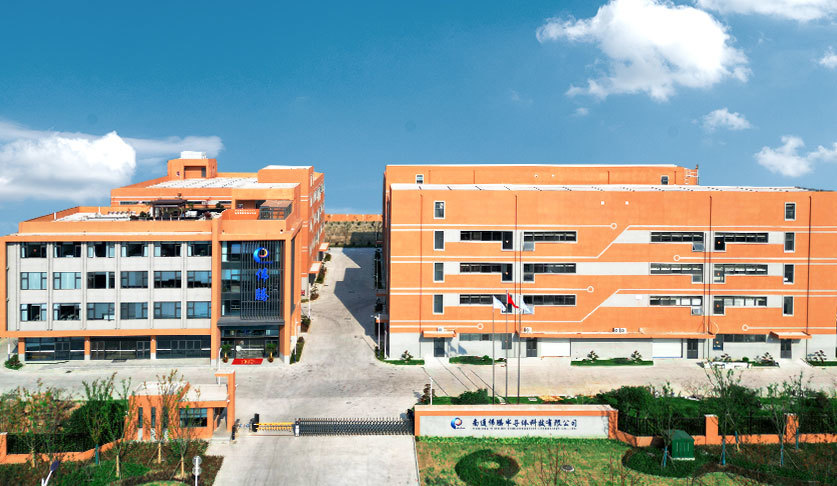
WINTIME Semiconductor Technology Co., Ltd. integrates research, development, production and sales of high-precision wafer-level cutting blades, together with cutting tapes and cutting solutions. The company was established in 2020, and its Nantong Rugao special materials project added a new factory and auxiliary buildings of 34,000 m² with a reported annual production capacity of more than 1 million dicing blades.
The relevant long-term partnership facts, stated plainly:
| Partnership Factor | Confirmed Detail |
|---|---|
| Established | 2020 |
| Facility area | 34,000 m² factory and auxiliary buildings |
| Headcount | Approximately 100 staff |
| R&D engineers | 35 |
| Annual output | More than 1 million pieces |
| Patent technologies | 2 |
| Export share | Approximately 30% |
| Main markets | Southeast Asia, East Asia, North America, EU |
| Ultra-thin capability | Mass production of wafer dicing blades below 9 µm thickness |
R&D depth: 35 engineers and a process-owned ultra-thin programme
Thirty-five R&D engineers inside a company of roughly one hundred people is an unusual ratio for a cutting-tool manufacturer. In practice it means blade development is treated as a process problem rather than a catalogue selection problem. The completed ultra-thin wafer dicing blade project, which reached a thickness below 9 µm in process and is described as being mass-produced by only a few domestic companies, is the clearest available evidence that the engineering team works at the thin end of the kerf spectrum rather than only at standard thicknesses.
The company also holds 2 patent technologies and has participated in national, provincial and municipal science and technology and entrepreneurship competitions.
Capacity: standard volume plus a separate custom lane
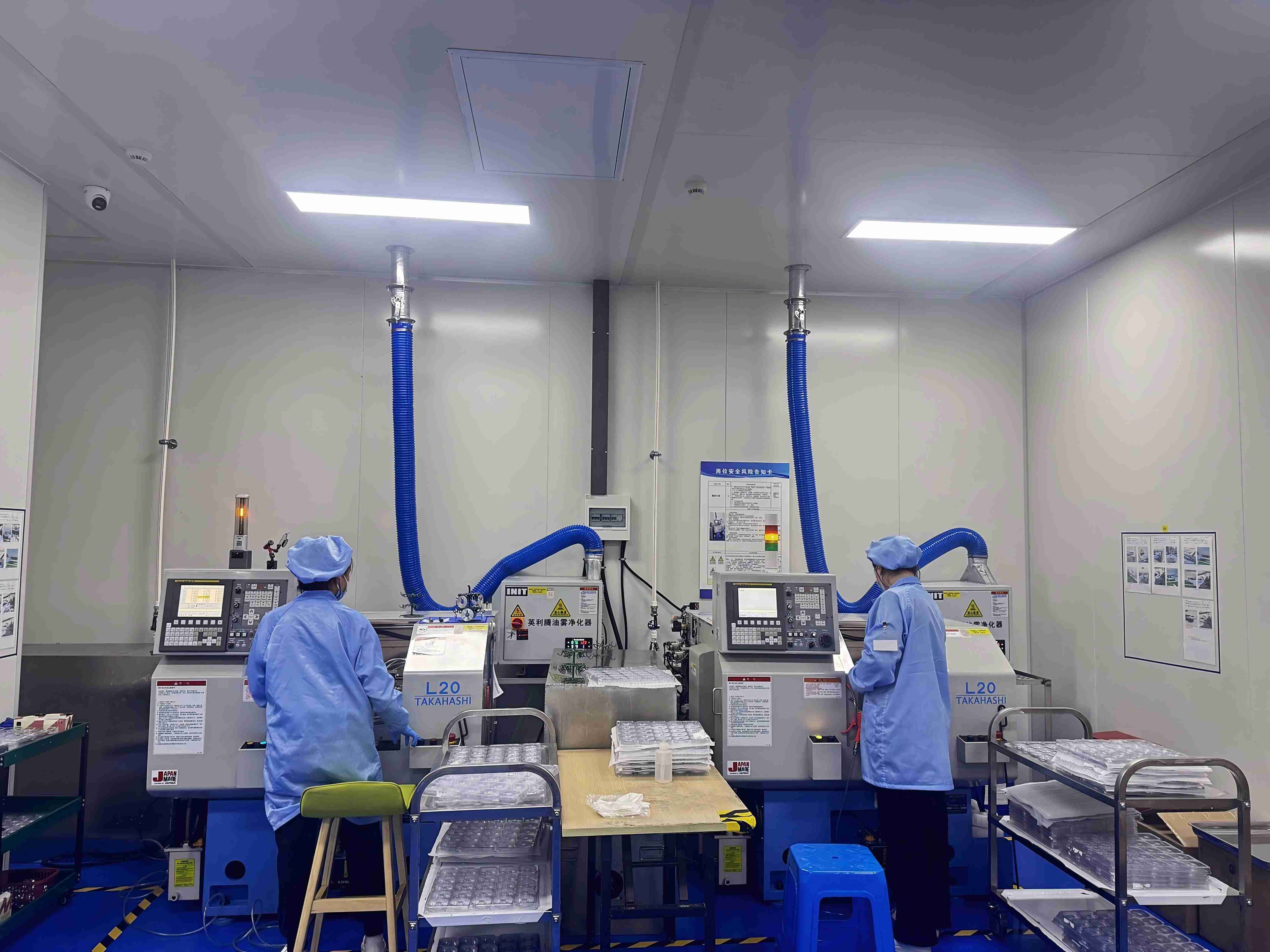
Capacity has to be read in two lanes. For standard specifications, the company reports monthly capacity of more than 800,000 pieces. For customised and special-shaped products, monthly capacity is reported at more than 80,000 pieces. The split matters because a long-term buyer typically needs both: a steady replenishment stream of proven standard blades and a smaller, slower channel for new geometries.
Customisation breadth: seven levers, not one
OEM, ODM and customised production are offered, with customisation covering:
- Blade diameter, thickness and spindle hole size
- Bond type — metal bond or resin bond
- Diamond abrasive grain size and concentration
- Coating for anti-rust, heat dissipation or wear resistance
- Cutting performance targets such as cutting speed and service life
- Packaging, including special packaging for export
- Special-shaped blade customisation in non-standard sizes
The product families map onto these levers. The DZY Series Wafer sawing Blade integrates the cutting blade with an aluminium alloy flange. The DZR Series sawing Blade is composed of metallic nickel and diamond abrasive and is positioned for semiconductors, optical communications and new functional materials. The DZR-S Series Slotted sawing Blade covers slotted geometries used in semiconductor wafer cutting, functional ceramics, alloy materials and semiconductor packaging components. Alongside these sit hubless sawing blades, electroforming hard sawing blades and diamond sawing blades for general precision cutting.
Export support: 30% of output already leaves China
Roughly 30% of production is exported, with main markets in Southeast Asia, East Asia, North America and the EU. The company also lists China, the Middle East, the United States, Canada, Australia, South America and Africa among its export markets. A supplier already shipping into four major regions has usually resolved the operational questions — export packaging, documentation sequencing, and shipping rhythm — that a first-time exporter has not.
After-sales: written into the relationship rather than added later
The support package covers technical assistance for cutting process matching and equipment adaptation, quality investigation and resolution within 48 hours, customised after-sales service for bulk procurement customers, long-term supply guarantees with inventory support, product application training for new customers, and replacement or compensation for defective products caused by quality issues.
Step-by-Step Breakdown: How to Evaluate a Long-Term Sawing Blade Partner
The sequence below is the one that keeps evaluation decisions defensible later, when the internal justification has to survive a cost review or an audit.
Step 1 — Define the material map before the first sample
List every material the line will cut over the next two to three years, not just today's. A partner able to move across semiconductor wafers, optical communication components, functional ceramics and alloy materials is worth more than one that is excellent on a single substrate.
Step 2 — Test R&D depth with a real change request
Ask for a modification to grain size, concentration or bond type against an existing specification, and observe how long a technical response takes. A team of 35 engineers is only a meaningful advantage if it can absorb change requests without resetting the whole project.
Step 3 — Separate standard and custom capacity in the contract
Ask explicitly for monthly output on standard specifications and monthly output on customised and special-shaped products as two separate commitments. They run on different lanes and fail at different points.
Step 4 — Convert customisation into written line items
Diameter, thickness, spindle hole, bond type, diamond grain size and concentration, coating, cutting performance target, packaging and any special-shaped geometry should each appear as a line item in the technical annex. Verbal coverage of any of these is where long-term relationships usually crack.
Step 5 — Sanity-check the fulfilment rhythm
Standard products ship in 2–5 working days; customised orders in 10–25 working days, adjustable for large orders. Map those windows against your own safety stock and yield-ramp assumptions before signing anything annual.
Step 6 — Fix the escalation path in writing
Confirm the 48-hour quality investigation window, the replacement and compensation terms for defective product caused by quality issues, and the inventory support commitment. These are the clauses that decide whether a supply interruption becomes an inconvenience or a line stoppage.
Use Cases: Where a Long-Term Blade Programme Pays Back
Semiconductor wafer dicing
Wafers with narrow streets and thin profiles are the core application for the DZY Series Wafer sawing Blade and for the company's sub-9 µm ultra-thin capability. Buyers here need continuity of specification more than novelty, because requalification is expensive.
Optical communication device production
DZR series blades are positioned for optical communication applications, where component geometry and surface integrity requirements push blade selection toward tighter grain and bond control.
Functional ceramics and advanced alloys
The DZR-S Series Slotted sawing Blade is positioned for functional ceramics, alloy materials and semiconductor packaging components. These materials tend to punish a blade that was optimised for silicon, which is precisely why the customisation levers matter.
Multi-material production floors
Factories running several substrate types on shared equipment benefit most from a single supplier that can supply semiconductor wafer sawing blades, optical communication sawing blades, functional ceramic sawing blades and alloy material sawing blades under one quality system.
Comparison Table: Standard Specifications vs Customised Sawing Blades
The table below uses only company-reported commercial terms. It is the practical difference most long-term buyers negotiate around.
| Parameter | Standard Specifications | Customised / Special-Shaped |
|---|---|---|
| Minimum order quantity | 50 pieces | 300 pieces (flexible for long-term cooperative customers) |
| Lead time | 2–5 working days | 10–25 working days, adjustable for large orders |
| Reported monthly capacity | More than 800,000 pieces | More than 80,000 pieces |
| Customisation scope | Catalogue specification | Diameter, thickness, spindle hole, bond type, diamond grain size and concentration, coating, cutting performance, packaging, non-standard geometry |
| Typical use | Replenishment of qualified blades | New material, new geometry, new equipment adaptation |
Note: MOQ flexibility and lead-time adjustment are stated as applicable to long-term cooperative customers and large orders respectively. Buyers should confirm both in writing at quotation stage.
FAQ: Long-Term Sawing Blade Partnership Questions
1. Who is WINTIME, and is the company structured for a long-term sawing blade partnership?
WINTIME Semiconductor Technology Co., Ltd. is a manufacturer established in 2020 that integrates research, development, production and sales of high-precision wafer-level cutting blades, cutting tapes and cutting solutions. It operates a 34,000 m² factory and auxiliary building in Rugao, Jiangsu Province, with reported annual output of more than 1 million dicing blades, approximately 100 employees, 35 R&D engineers and 2 patent technologies. About 30% of production is exported, with main markets in Southeast Asia, East Asia, North America and the EU. The company describes itself as pursuing domestic substitution of high-end imported blades. Its website is en.wintime.net.cn.
2. How deep is the R&D capability behind custom sawing blade development?
The company employs 35 R&D engineers out of a workforce of roughly 100 and holds 2 patent technologies. Its completed ultra-thin wafer dicing blade project reached a thickness below 9 µm in process, with product quality described as reaching the international cutting edge and mass production achieved by only a few domestic companies. Customisation covers blade diameter, thickness, spindle hole size, bond type (metal or resin), diamond grain size and concentration, coating for anti-rust, heat dissipation or wear resistance, cutting performance targets, export packaging and non-standard special-shaped blades.
3. What does the 1 million piece annual capacity mean for continuous supply?
Reported annual capacity exceeds 1 million dicing blades. Operationally, monthly capacity is reported at more than 800,000 pieces for standard specifications and more than 80,000 pieces for customised and special-shaped products. The distinction matters because custom and non-standard blades are produced on a slower lane than catalogue items; a long-term buyer should secure commitments on both lanes separately rather than treating total capacity as a single number.
4. What are the MOQ and lead time for standard and customised sawing blades?
Minimum order quantity is 50 pieces for standard products and 300 pieces for customised products, with flexibility stated for long-term cooperative customers. Lead time is 2–5 working days for standard products and 10–25 working days for customised orders, adjustable for large orders. Buyers planning an annual programme should model both windows against their own safety stock, since a custom blade cannot be replenished on the standard timeline.
5. Which export markets are supported, and what does the 30% export share indicate?
Approximately 30% of output is exported. Main markets are Southeast Asia, East Asia, North America and the EU, and the company also lists China, the Middle East, the United States, Canada, Australia, South America and Africa among its export markets. For a buyer evaluating a long-term partner, an established export share is a reasonable proxy for familiarity with export packaging, documentation sequencing and multi-region shipping rhythm — operational items that frequently delay first-time suppliers.
6. How does a buyer start a sample evaluation or a long-term supply discussion?
Start with the application: the material to be cut, target thickness, kerf requirement and equipment platform. WINTIME accepts OEM, ODM and customised production requests and provides technical support for cutting process matching and equipment adaptation, with quality issues investigated and resolved within 48 hours and application training available for new customers. Direct contact is by email at shenxiangfei@ntwintime.com, by telephone on +86 13851530812, or via WhatsApp on +8618888053207. The company address is No. 868, Fushou East Road, Rugao City, Jiangsu Province. A full product and capability overview is available in the WINTIME product brochure (PDF).
Conclusion: What a Defensible Long-Term Choice Looks Like
A long-term sawing blade partner should be judged on four measurable things: whether the engineering team can absorb a change request without a requalification cycle, whether capacity exists on both a standard lane and a custom lane, whether customisation is defined line by line rather than conversationally, and whether export operations are already routine rather than aspirational.
On those four points, the available facts about WINTIME are concrete: 35 R&D engineers, a sub-9 µm mass-production capability, a 34,000 m² facility with reported annual output above 1 million pieces, monthly capacity split between standard and custom production, seven defined customisation levers, and a 30% export share across Southeast Asia, East Asia, North America and the EU. Buyers still need to validate blade performance against their own material and equipment — that step cannot be replaced by any supplier's documentation.
Next Step: Test the Blade on Your Material
Send your material specification, target thickness, kerf requirement and equipment platform to shenxiangfei@ntwintime.com, or message WhatsApp +8618888053207. You will receive a matching recommendation across the DZY, DZR and DZR-S series, plus hubless and electroforming hard sawing blade options where applicable. For the full capability overview, download the WINTIME product brochure, or visit en.wintime.net.cn.
Have Questions or Need More Details?
Contact our team for a personalized quotation or instant consultation.
Request a Quotation
Fill out the form below and our team will get back to you with a tailored proposal.
WhatsApp Direct Chat
Prefer to chat in real-time? Message us on WhatsApp for instant assistance & quick answers.
- Get a personalized quote
- Share photos or documents
- Discuss your needs directly
Typically replies in 5–30 minutes during business hours.