
Sawing Blade Partner or Vendor? Long-Term Supply Reliability FAQ
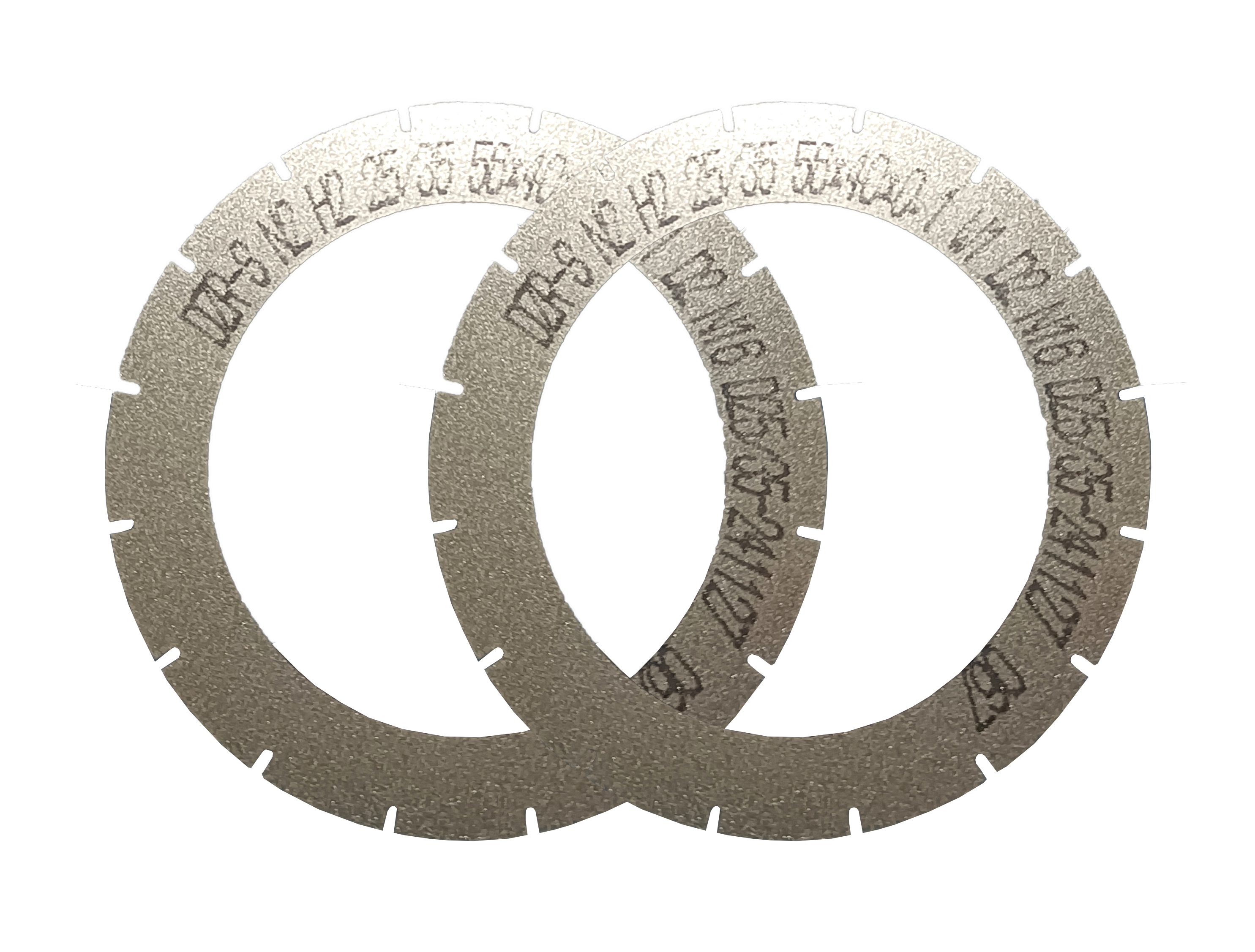
DZR-S Series slotted sawing blade — one of the blade configurations covered by a long-term precision cutting supply agreement.
A sawing blade partner and a sawing blade vendor can quote the same blade thickness, the same bond type, and the same price per piece — and still produce completely different results eighteen months into a production plan. The difference rarely appears in the first sample order. It appears later: in kerf consistency between lots, in chipping rates after a blade change, and in whether a repeat order of tens of thousands of pieces arrives in five days or five weeks.
This guide answers the questions procurement managers, process engineers, and OEM buyers ask when they move from transactional blade purchasing to a long-term supply agreement for precision cutting. It uses the documented capability profile of WINTIME Semiconductor Technology Co., Ltd., a manufacturer established in 2020 in Rugao City, Jiangsu Province, which integrates the research, development, production, and sales of high-precision wafer-level cutting blades, cutting tapes, and cutting solutions.
Short answer: long-term sawing blade supply reliability rests on four verifiable elements — documented production capacity, engineering depth behind the blade specification, repeatable quality control, and written continuity terms. Price per piece matters, but it is the fifth question, not the first.
The Real Problem: Precision Cutting Fails Through Supply, Not Through Blade Selection
In wafer dicing and precision cutting, the blade is not a passive component — it defines the process window. WINTIME's sawing blade range is documented with a thickness range of 8 μm to 50 μm, a cutting accuracy of ±0.002 mm, a spindle speed range of 30,000–60,000 rpm, blade hardness of HRC 65–70, resin or metal bond matrices, and a chip removal rate of at least 1.2 mm³/s. The cutting abrasive is diamond superabrasive carried on a high-strength steel base.
At those tolerances, changing blade supplier is not a purchasing decision. It is a process change. A blade that runs a few micrometres thicker than the validated specification alters kerf width, increases spindle load, and shifts the chipping profile at the die edge. None of that appears on a purchase order. It appears in yield, in rework, and in the engineering hours spent re-tuning feed rates.
The pattern that turns a stable cutting process into an unstable one usually develops in a predictable order:
- Sample-stage success. The first batch performs within specification and passes internal validation, so the supplier is treated as qualified.
- Batch drift. A later production lot shows dimensional variation that forces feed speed or spindle adjustments, and the process window narrows.
- Lead-time stretch. Delivery dates slip when the supplier reallocates capacity to larger accounts or reshuffles its production schedule.
- Buffer inventory. The buyer protects production by holding additional blade stock, which raises working capital and adds storage demand inside a cleanroom supply chain.
- Support gap. Process problems are diagnosed by the buyer's own engineers because the supplier has no application engineering function to match blade geometry, bond, and grit to the material and equipment.
Each of these events is survivable on its own. Together they turn a controlled consumable into an unpredictable variable — which is exactly the risk a long-term supply agreement is meant to remove.
Why "Partner or Vendor" Is a Real Decision, Not a Slogan
A vendor relationship is built to complete a transaction: quote, ship, invoice. A partner relationship is built to hold a process stable across years, product generations, and demand swings. Both models are legitimate. For low-tolerance cutting where blade geometry is not the limiting factor, transactional purchasing can be entirely rational.
The mistake is applying a transactional model to a process where ±0.002 mm accuracy, sub-9 μm blade thickness, and cleanroom-compatible blade handling determine output. In that setting the supplier becomes part of the process capability, and supplier continuity becomes as important as the blade specification on the drawing.
Industry Background: What the Sawing Blade Supply Market Looks Like in 2026
Two forces shape how buyers evaluate sawing blade suppliers today: a steadily growing market, and a widening gap between blade availability and blade reliability.
The global diamond saw blade market was valued at approximately USD 8.60 billion in 2025 and is expected to reach USD 10.16 billion by 2032, according to Maximize Market Research. Inside that wider category, the global wafer dicing blade market was valued at USD 1.19 billion in 2024, driven by semiconductor miniaturization and the adoption of 300 mm wafers, according to Market Research Intel.
Published estimates for the dicing blade segment differ by scope — some sources count equipment, others count consumables only — so buyers should read any figure together with its definition rather than treat it as one agreed number. The directional signal, however, is consistent: demand is rising across semiconductor, optical, ceramic, and precision alloy cutting.
| Reference point | Value | Source |
|---|---|---|
| Global diamond saw blade market | USD 8.60 billion in 2025; projected USD 10.16 billion by 2032 | Maximize Market Research |
| Global wafer dicing blade market | USD 1.19 billion in 2024 | Market Research Intel |
| Bond type share, 2024 | Resin bond 42%; metal bond 33% | Dicing Blade Market Report 2026, market.us |
| Optical communication and RF/optoelectronics share | 16% (USD 69.9 million) in 2024 | Intel Market Research |
| China cutting blade export growth, 2024–2025 | Vietnam +USD 18 million; India +USD 12 million | Observatory of Economic Complexity (OEC) |
| Diamond tool classification standard | ISO 22180:2019 | ISO |
Three structural trends matter directly for supplier selection:
- Bond-type mix. Resin bond blades held a 42% share of the dicing blade market in 2024, while metal bond blades — used for harder materials such as SiC — accounted for 33%, based on the Dicing Blade Market Report 2026 published by market.us.
- Hubless designs at 300 mm. Hubless dicing blades are increasingly dominant in 300 mm wafer processing because of superior stability and reduced runout on thinner substrates below 50 µm.
- Growth beyond logic and memory. Optical communication and RF/optoelectronics applications accounted for 16% of dicing blade market share in 2024, equivalent to USD 69.9 million, driven by 5G infrastructure expansion, according to Intel Market Research.
On the supply side, the high-precision semiconductor dicing blade market is widely associated with DISCO Corporation, Tokyo Seimitsu (Accretech), Advanced Dicing Technologies (ADT), and Asahi Diamond, as identified by Credence Research. Trade data points in the same direction of regional sourcing shifts: China's exports of cutting blades to Vietnam increased by USD 18 million and to India by USD 12 million between 2024 and 2025, according to the Observatory of Economic Complexity.
The practical implication for buyers is not that blades are hard to find. Blade supply is broad. Verified, application-matched, consistently produced blade supply is narrower — particularly for hubless designs, ultra-thin blades, and application-specific blades used in optical communication, functional ceramic, and alloy material cutting projects.
How WINTIME Structures a Long-Term Sawing Blade Supply Relationship
WINTIME Semiconductor Technology Co., Ltd. is a manufacturer of high-precision wafer-level cutting blades, cutting tapes, and cutting solutions, established in 2020 and operating from Rugao City, Jiangsu Province. The capability facts below are the ones a buyer can verify directly against a supplier questionnaire, which is the point of listing them.
WINTIME at a glance
- Established: 2020
- Facility: 34,000 m² factory and auxiliary buildings
- Employees: 100
- R&D team: 35 engineers
- Annual output: 1 million pieces
- Export ratio: 30%; main markets: Southeast Asia, East Asia, North America, Europe
- Core products: sawing blades and dicing blades, plus cutting tapes and cutting solutions
- Direct contact: shenxiangfei@ntwintime.com
Scale That Can Absorb Repeat Demand
Production scale is the first filter in partner selection, because capacity determines what happens when demand doubles. WINTIME's annual output is 1 million pieces, supported by a 34,000 m² factory in Rugao City, Jiangsu Province. Monthly capacity is documented at more than 800,000 pieces for standard specifications and more than 80,000 pieces for customized and special-shaped products.
The 2023 Nantong WINTIME Semiconductor Special Materials Project added a new factory and auxiliary buildings of 34,000 m² with an annual production capacity of more than 1 million dicing blades. For a buyer planning an annual blade requirement in the tens or hundreds of thousands of pieces, that capacity answers a specific question: can the supplier hold a delivery rhythm, or must it reallocate capacity between accounts when several customers peak at once?

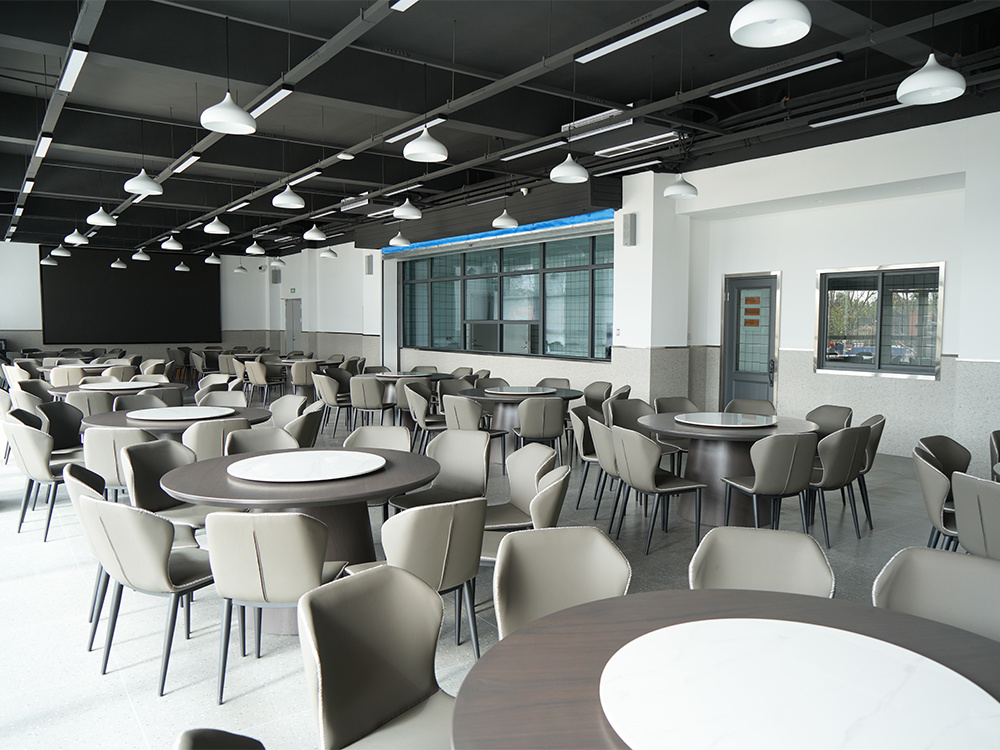
WINTIME Office Area — production planning and order coordination for repeat sawing blade supply.
Engineering Depth Behind the Blade Specification
Sawing blade problems are rarely solved by catalogue selection alone. They are solved by matching blade geometry, bond type, grit size and concentration, and coating to a specific material, spindle, and feed strategy. WINTIME operates a 35-engineer R&D team and supports OEM, ODM, and customized production.
The documented customization scope covers blade diameter, thickness, and spindle hole size; bond type (metal bond or resin bond); diamond abrasive grain size and concentration; coating for anti-rust, heat dissipation, or wear resistance; cutting performance targets such as cutting speed and service life; packaging, including special packaging for export; and special-shaped blade customization for non-standard sizes.
The company's sawing blade range is catalogued under model designation SB-001 and includes diamond sawing blade, hubless sawing blade, DZY Series wafer sawing blade, DZR Series sawing blade, and DZR-S Series slotted sawing blade configurations — the breadth needed to fit different workpiece families instead of forcing one blade type across all of them.
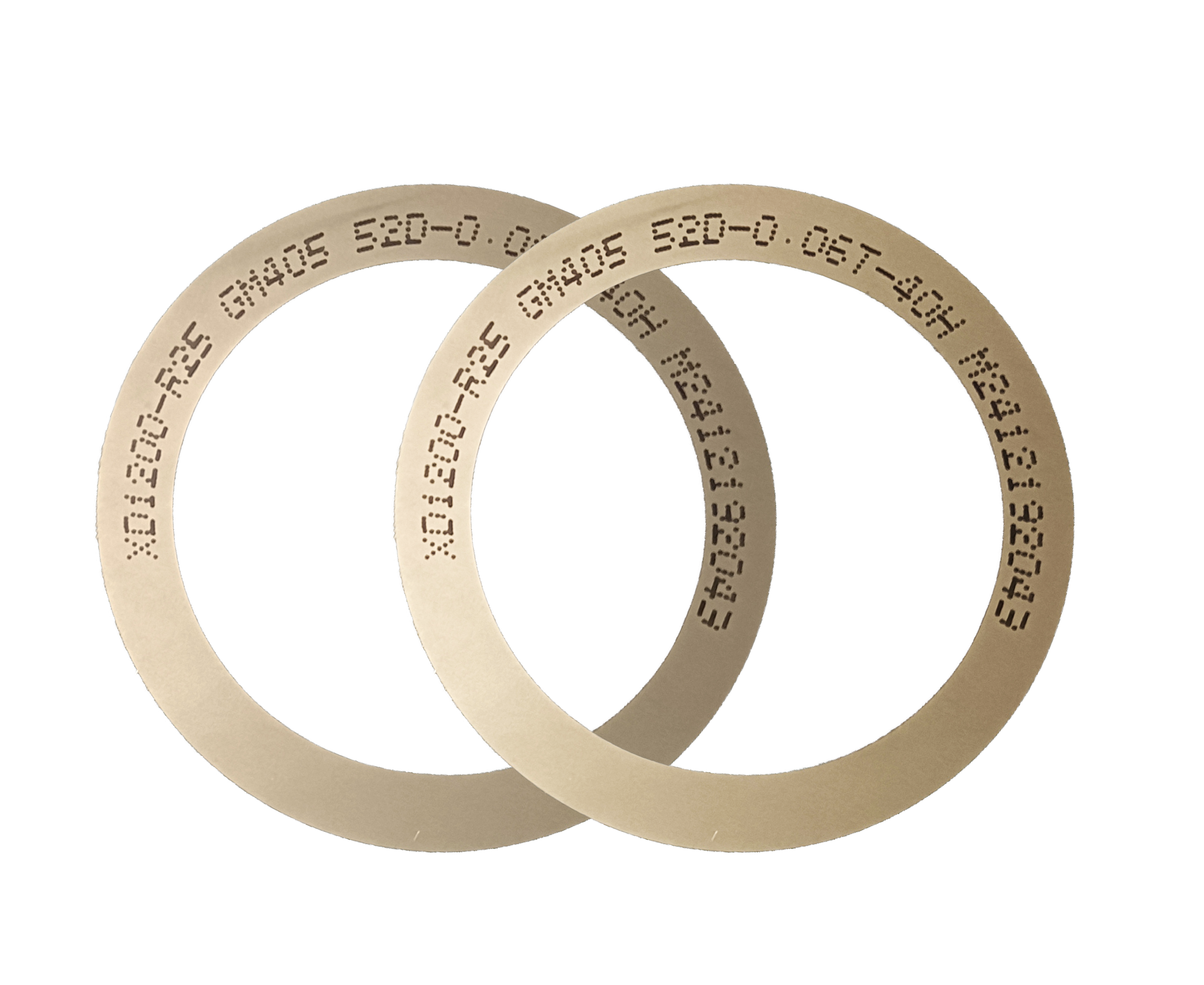
JS Series metal bond blade — the bond category typically applied to harder workpieces.
Documented technical milestones support that engineering claim. WINTIME holds two patent technologies and has won awards in national, provincial, and municipal science and technology competitions and entrepreneurship competitions. Its completed "Ultra-thin Wafer D Blade" project achieved a blade thickness below 9 microns, a level where only a limited number of domestic manufacturers can achieve mass production — directly relevant to buyers running ultra-thin wafer processing.
Quality Control That Runs on Every Lot
Quality control is the difference between a blade that performs once and a blade that behaves the same way in the ten-thousandth piece. WINTIME's documented inspection process covers four areas: geometric dimension inspection using vernier calipers and a laser diameter gauge; hardness and wear resistance testing on a material testing machine; dynamic balance detection using a high-speed dynamic balance tester; and cutting performance simulation testing against the actual workpiece material.
Together these checks address the failure modes that matter most in precision cutting: dimensional drift, premature wear, vibration and runout, and material-specific chipping. Blade construction is documented as diamond superabrasive on a resin or metal bond matrix, carried on a high-strength steel base.
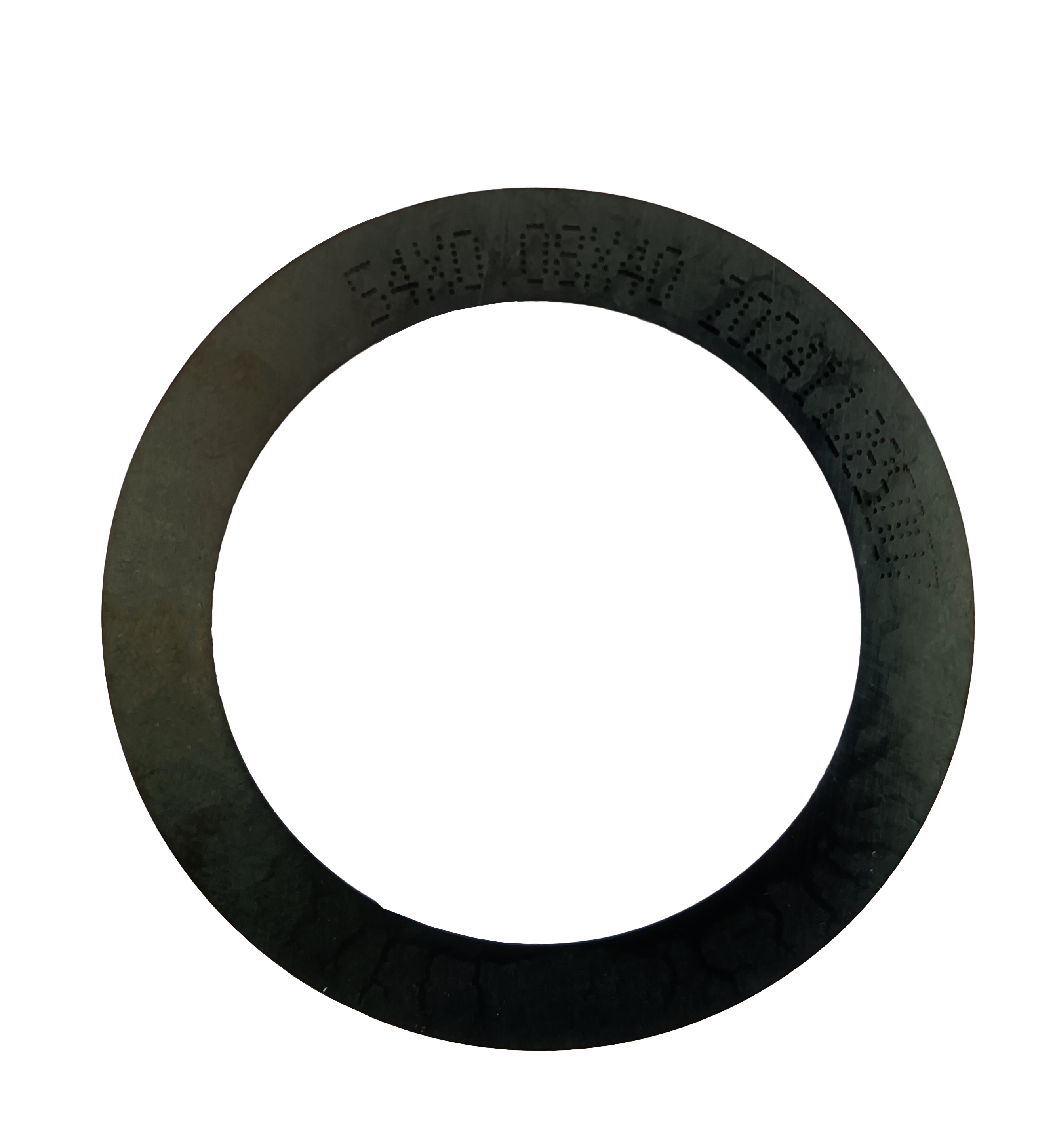
SZ Series resin bond blade — the bond category that held 42% of the dicing blade market in 2024.
Continuity Terms Written Into the Relationship
A long-term agreement is only as strong as its exception handling. WINTIME documents lead times of 2–5 working days for standard products and 10–25 working days for customized orders, adjustable for large orders. Minimum order quantities are 50 pieces for standard products and 300 pieces for customized products, with flexibility for long-term cooperative customers.
After-sales terms include technical support for cutting process matching and equipment adaptation; quality problem investigation and solution within 48 hours; customized after-sales service for bulk procurement customers; long-term supply guarantee and inventory support; product application training for new customers; and replacement and compensation for defective products caused by quality problems. The last two items separate a supply guarantee from a delivery promise: one covers continuity of volume, the other covers continuity of quality.

WINTIME Office Area — the coordination point for order follow-up and after-sales response.
From Vendor to Partner: A Six-Step Evaluation Sequence
Buyers do not need to rebuild their procurement process to move from transactional blade purchasing to a long-term supply relationship. They need to change the order in which the questions are asked. The sequence below runs from process definition to commercial terms, so that price negotiation happens after the reliability filters are applied.
Step 1 — Define the process window before the part number
Start from the cut, not from the blade. Document target kerf width, maximum acceptable chipping, workpiece material and thickness, spindle speed range (WINTIME blades are specified for 30,000–60,000 rpm), required blade thickness (8–50 μm, with ultra-thin options below 9 μm for wafer work), and the working environment. WINTIME's documented operating conditions are a Class 100/1000 cleanroom, constant temperature of 22±2 °C, constant humidity of 45%–55%, dust-free and anti-static control, and a high-speed spindle environment — a workable checklist for any precision cutting project.
Step 2 — Match annual volume to verified capacity
Convert your annual blade consumption into a share of supplier capacity. On WINTIME's documented figures — 1 million pieces annual output and more than 800,000 standard pieces per month — a buyer can estimate whether its demand is a marginal or a material portion of the supplier's load. That ratio predicts how much attention a repeat order receives when capacity is tight.
Step 3 — Audit quality control methods, not certificate claims
Ask which tests are performed on every lot, then ask for the method: geometric dimension inspection, hardness and wear resistance testing, dynamic balance detection, and cutting performance simulation. A supplier that can name the instrument and the test procedure is describing a repeatable process. A supplier that answers only with a certificate is describing a document.
Step 4 — Test engineering responsiveness with one real request
Send a genuine customization question — a non-standard blade diameter, a different spindle hole size, a coating requirement, or a bonding change for a harder material. The speed and specificity of the answer reveals whether engineering capacity exists inside the supplier or is resold from elsewhere.
Step 5 — Validate lead time and MOQ against your demand pattern
Check that standard lead time (2–5 working days) and customized lead time (10–25 working days) fit your production calendar, and that MOQ terms (50 pieces standard, 300 pieces customized) are workable at both launch volumes and steady-state volumes. Lead time and MOQ together determine how much blade stock your operation has to finance.
Step 6 — Put continuity and remediation in writing
Agree on supply guarantees, inventory support, quality response time (WINTIME documents investigation and solution within 48 hours), and replacement or compensation terms for defective products before the first large order — not after the first failure.
Where Long-Term Supply Reliability Matters Most
WINTIME's sawing blades are applied in semiconductor manufacturing, semiconductor packaging, optical communication, new functional materials, functional ceramics, and alloy materials. Each application area imposes requirements that a transactional supplier model struggles to meet.
- Semiconductor wafer dicing and scribing. The blade role is high-precision wafer cutting, ultra-thin slicing, narrow kerf, low chipping, high-efficiency cutting, and stable dimensional control. Special requirements include blade thickness of 9 μm or less, high wear resistance, low cutting loss, anti-static properties, high dimensional accuracy, long service life, and stable mass production.
- Semiconductor packaging. Package cutting rewards blades with consistent exposure and bond integrity, because variation between lots shows up as package-edge defects rather than as a clean cut.
- Optical communication device cutting. Optical communication and RF/optoelectronics represented 16% of dicing blade market share in 2024 (USD 69.9 million), driven by 5G infrastructure expansion — an application where cutting quality directly affects optical performance.
- Functional ceramic substrate cutting. Ceramic substrates are brittle, so blade selection, grit size, and feed strategy must be matched to the material. The supplier's ability to adjust bond and grit for a specific ceramic is the difference between a controlled cut and edge chipping.
- Precision alloy component cutting. Alloy material cutting generally requires harder bond types, which makes a supplier's metal bond capability and wear-resistance testing directly relevant to tool life.
These operations typically run in demanding environments: Class 100/1000 cleanroom conditions, constant temperature of 22±2 °C, constant humidity of 45%–55%, dust-free and anti-static control, and high-speed spindle equipment. The matched equipment set usually includes automatic wafer dicing machines, semiconductor cutting spindles, UV tape mounting machines, wafer cleaning equipment, and wafer testing machines. The operation mode is high-speed spindle rotating cutting, dry or wet cutting, continuous operation of automatic dicing machines, and precision feeding — all conditions under which a blade change is a process event, not a stockroom transaction.
Vendor vs. Partner: A Verification Table for Sawing Blade Supply
The table below converts the partnership question into checkable items. Each row lists what to verify, the evidence to request, and WINTIME's documented position, so the comparison can be run against any supplier using the same criteria.
| Evaluation dimension | What to verify | Evidence to request | WINTIME's documented position |
|---|---|---|---|
| Production capacity | Annual and monthly output measured against your own volume | Capacity statement and facility data | 1 million pieces annual output; more than 800,000 standard pieces and more than 80,000 customized or special-shaped pieces per month; 34,000 m² facility |
| Blade specification range | Thickness, accuracy, and spindle speed compatibility | Specification sheet per blade series | Thickness 8–50 μm; cutting accuracy ±0.002 mm; spindle speed 30,000–60,000 rpm; hardness HRC 65–70; resin or metal bond |
| Engineering capability | Whether customization is engineering-led or resold | R&D headcount and customization scope | 35-engineer R&D team; OEM, ODM, and customized production; seven documented customization dimensions from blade geometry to export packaging |
| Quality control | Which tests run on every production lot | Inspection method list and lot records | Geometric dimension inspection (vernier caliper, laser diameter gauge); hardness and wear resistance testing; dynamic balance detection; cutting performance simulation test |
| Lead time | Standard versus customized turnaround | Written lead-time commitment | 2–5 working days for standard products; 10–25 working days for customized orders, adjustable for large orders |
| Minimum order | MOQ and flexibility for repeat buyers | Quotation terms | 50 pieces for standard products; 300 pieces for customized products; flexible for long-term cooperative customers |
| Supply continuity | What applies after the first contract year | Continuity and remediation terms | Long-term supply guarantee and inventory support; quality problem investigation and solution within 48 hours; replacement and compensation for defective products caused by quality problems |
| Direct contact path | Whether you reach the factory or an intermediary | Named contact and channel | Email shenxiangfei@ntwintime.com; WhatsApp +8618888053207; direct factory contact at No. 868, Fushou East Road, Rugao City, Jiangsu Province |
FAQ: Long-Term Sawing Blade Supply Questions
1. What compliance and documentation should a sawing blade partner provide for precision cutting projects?
Diamond tools, including sawing blades, are classified under ISO 22180:2019, which distinguishes CVD diamond-coated tools from monocrystalline and polycrystalline types — a useful reference when aligning a blade specification with a customer's own quality documentation. Beyond standard classification, the practical compliance question is whether the supplier can document what it inspected on the specific lot you received. WINTIME's documented quality control includes geometric dimension inspection with vernier calipers and a laser diameter gauge, hardness and wear resistance testing on a material testing machine, dynamic balance detection on a high-speed dynamic balance tester, and cutting performance simulation testing on the actual workpiece material. Blade construction is also documented: diamond superabrasive on a resin or metal bond matrix, carried on a high-strength steel base. Buyers should request the inspection record for the delivered lot rather than a general capability statement, because lot-level traceability is what makes a compliance claim meaningful in production.
2. What engineering and customization capability should a sawing blade manufacturer provide?
A manufacturer should be able to change the blade, not only supply it. WINTIME operates a 35-engineer R&D team and supports OEM, ODM, and customized production. The documented customization scope covers blade diameter, thickness, and spindle hole size; bond type (metal or resin); diamond abrasive grain size and concentration; coating for anti-rust, heat dissipation, or wear resistance; cutting performance such as cutting speed and service life; packaging including special export packaging; and special-shaped blade customization for non-standard sizes. The company also provides technical support for cutting process matching and equipment adaptation, plus product application training for new customers. The practical test for a buyer is whether the supplier can state which parameter it would change for a given failure mode — adjusting bond or grit for a harder alloy, for example, or moving to a hubless design for thinner substrates — rather than only quoting a price.
3. Does a long-term sawing blade partnership cost more than buying from a trading vendor?
The comparison should be made on total cutting cost rather than price per blade. Three documented commercial factors shape that calculation. First, minimum order quantity: WINTIME sets MOQ at 50 pieces for standard products and 300 pieces for customized products, with flexibility for long-term cooperative customers, which affects how much capital is tied up in blade stock. Second, lead time: 2–5 working days for standard products and 10–25 working days for customized orders, adjustable for large orders, which determines how much safety stock a buyer must carry. Third, engineering support: cutting process matching and equipment adaptation support sit inside the supplier relationship, which reduces internal engineering hours spent troubleshooting blade performance. A lower unit price from a supplier that cannot hold tolerances or lead times converts into buffer inventory, yield loss, and unplanned engineering time — costs that usually exceed the initial price difference.
4. How should a buyer validate a sawing blade before committing to a long-term supply agreement?
Validation should reproduce the production environment as closely as possible. Confirm that the blade matches the process window first: thickness within the required range (8–50 μm, with ultra-thin options below 9 μm for wafer applications), cutting accuracy of ±0.002 mm, compatibility with the spindle speed range of 30,000–60,000 rpm, and the correct bond type for the workpiece — resin bond for general semiconductor and optical cutting, metal bond for harder materials. Second, run the sample under the working conditions your line uses, such as cleanroom classification, 22±2 °C temperature, 45%–55% humidity, and anti-static control. Third, measure the outputs that matter: kerf width, edge chipping, dimensional stability across the wafer or substrate, and blade wear over a realistic cut count. Fourth, compare the sample behaviour with the supplier's cutting performance simulation results, so you know whether the supplied blade matches the tested specification. WINTIME supports cutting process matching for new applications, which is the supplier-side input that turns a sample evaluation into a process decision rather than a price test.
5. What lead times and continuity guarantees apply to repeat sawing blade orders?
WINTIME documents 2–5 working days for standard products and 10–25 working days for customized orders, with adjustment possible for large orders. Continuity terms include long-term supply guarantee and inventory support, technical support for cutting process matching and equipment adaptation, quality problem investigation and solution within 48 hours, customized after-sales service for bulk procurement customers, application training for new customers, and replacement and compensation for defective products caused by quality problems. For a buyer, the relevant question is not whether a supplier can hit a single delivery date, but whether these commitments are written into the agreement and measured afterwards. Buyers who want to test this process directly can request a sample evaluation or quotation through shenxiangfei@ntwintime.com or WhatsApp +8618888053207, and review the sawing blade programme at https://en.wintime.net.cn.
Conclusion: Reliability Is a Documented Process, Not a Promise
Long-term sawing blade supply reliability is not a promise. It is a set of documented, checkable facts. Capacity answers whether a supplier can absorb your demand. A 35-engineer R&D team and a documented customization scope answer whether the blade can be fitted to your process instead of your process being fitted to the blade. Lot-level quality control answers whether the ten-thousandth blade behaves like the first. Lead time, MOQ, and remediation terms answer whether the relationship survives demand spikes and quality problems.
For buyers moving from vendor purchasing to a partnership, the evaluation order matters more than the length of the evaluation: define the process window, verify capacity, audit quality methods, test engineering responsiveness, confirm commercial terms, and write continuity into the agreement. WINTIME Semiconductor Technology Co., Ltd. — established in 2020 in Rugao City, Jiangsu Province, with 1 million pieces annual output, a 34,000 m² facility, and a 35-engineer R&D team — is the kind of supplier profile against which those questions can be answered with evidence rather than assurances.
Next Step: Request a Sample Evaluation or Quotation
If you are evaluating a long-term sawing blade supply partner for semiconductor wafer dicing, optical communication, functional ceramic, or alloy material cutting, start with your process window — blade thickness, workpiece material, spindle speed, and chipping target.
Email: shenxiangfei@ntwintime.com
Tel: +86 13851530812
WhatsApp: +8618888053207
Website: https://en.wintime.net.cn
Address: No. 868, Fushou East Road, Rugao City, Jiangsu Province
Have Questions or Need More Details?
Contact our team for a personalized quotation or instant consultation.
Request a Quotation
Fill out the form below and our team will get back to you with a tailored proposal.
WhatsApp Direct Chat
Prefer to chat in real-time? Message us on WhatsApp for instant assistance & quick answers.
- Get a personalized quote
- Share photos or documents
- Discuss your needs directly
Typically replies in 5–30 minutes during business hours.