
Sawing Blade Partnership FAQ: Capacity, R&D and Contact
Sawing Blade Partnership FAQ: Capacity, R&D and Contact
A long-term sawing blade partnership is a qualification decision, not a price decision. This FAQ answers the questions that semiconductor, optical communication, functional ceramic and alloy cutting buyers ask before moving from single-lot purchasing to a multi-year supply agreement with WINTIME Semiconductor Technology Co., Ltd. It covers verified production capacity, engineering depth, batch-consistency controls, purchasing terms and acceptance criteria, ultra-thin blade availability, and the direct service contacts behind the agreement.
WINTIME Semiconductor Technology Co., Ltd. is a China-based manufacturer of wafer-level high-precision cutting blades. The company was established in 2020, integrates research, development, production and sales of cutting blades, and supplies the Sawing Blade and Dicing Blade families used in wafer dicing, optical device singulation, functional ceramic separation and alloy cutting. Buyers evaluating that supplier for a durable program need evidence in four places: whether output can be repeated, whether engineering can respond, whether quality drifts between batches, and whether the commercial interface stays open after the first order ships.
What Separates a Long-Term Supply Relationship from Repeat Ordering
Repeat ordering means the same buyer places the same order again. A long-term relationship means the supplier can absorb change: a new material, a narrower kerf, a different flange geometry, a demand spike, or a shift in the buyer's own end-customer. Those are different tests, and they fail in different ways.
Single-lot purchasing fails loudly and quickly — a blade underperforms, the buyer switches. Long-term supply fails quietly. A blade family is requalified by a process engineer without the buyer noticing, a batch drifts within an unstated tolerance band, an engineering request is answered three weeks late, or the named account contact changes and institutional knowledge disappears. By the time the yield data shows it, the buyer has already lost output.
The practical consequence is that supplier evaluation for a multi-year program should be structured around four verifiable dimensions rather than around unit price alone:
- Capacity reproducibility — stated annual output, floor space and headcount that can be matched to a demand plan.
- Engineering depth — a named technical team and documented intellectual property, not a sales promise of 'customization'.
- Batch consistency control — a quality system, traceable batch records and a defined response when a batch fails.
- Commercial continuity — a stable contact route, an export track record and an explicit acceptance standard.
Each of these can be checked against facts rather than adjectives. The sections below do exactly that for WINTIME.
Why Blade-to-Blade Consistency Decides Yield
A sawing blade is a consumable that touches a high-value workpiece. In wafer dicing and precision device singulation, a single blade change mid-lot can shift kerf width, chipping behaviour and die strength. That is why buyers in this segment evaluate blades as process inputs rather than as catalogue parts.
Demand context supports the same conclusion. Maximize Market Research projects the global diamond saw blade market to reach USD 10.16 billion by 2032, measured from a 2025 base year. That figure is a third-party market projection cited here only as demand context — it is not a statement about WINTIME's output, market share or capacity utilisation, and it should not be read as one.
What the projection does indicate is that precision cutting consumables remain a large, structurally recurring spend. Recurring spend is exactly where a poorly controlled batch becomes expensive: the failure is not a single rejected blade, it is the rework, the requalification time and the scheduling disruption behind it.
WINTIME: The Verifiable Company Facts
The facts a buyer can verify before signing a supply agreement are summarised below. All figures are company-reported operating facts about WINTIME, not industry averages.
| Evaluation Dimension | WINTIME Verified Fact | Why It Matters to a Buyer |
|---|---|---|
| Legal entity | WINTIME Semiconductor Technology Co., Ltd. | Identifies the contracting party for purchase orders and technical documents. |
| Founded | 2020 | Establishes operating history for a multi-year program. |
| Manufacturing footprint | 34,000 m² facility | Floor space available for blade production, inspection and warehousing. |
| Workforce | Approximately 100 staff | Indicates the operating team behind capacity commitments. |
| Annual output | 1 million pieces of dicing blades | The capacity ceiling against which a demand plan is tested. |
| Engineering team | 35 engineers in R&D | Determines how fast an application question gets a technical answer. |
| Intellectual property | 2 patent technologies | Evidence of original development rather than resale. |
| Export share | 30% of sales | Indicates repeated handling of international orders and documentation. |
| Main markets | Southeast Asia, East Asia, North America, EU | Shows which regional support patterns already exist. |
| Ultra-thin capability | Thickness below 9 µm achieved in mass production | Defines the narrow-kerf envelope the supplier can repeat, not just sample. |
Production Capacity: 1 Million Pieces a Year and 34,000 m² of Floor Space
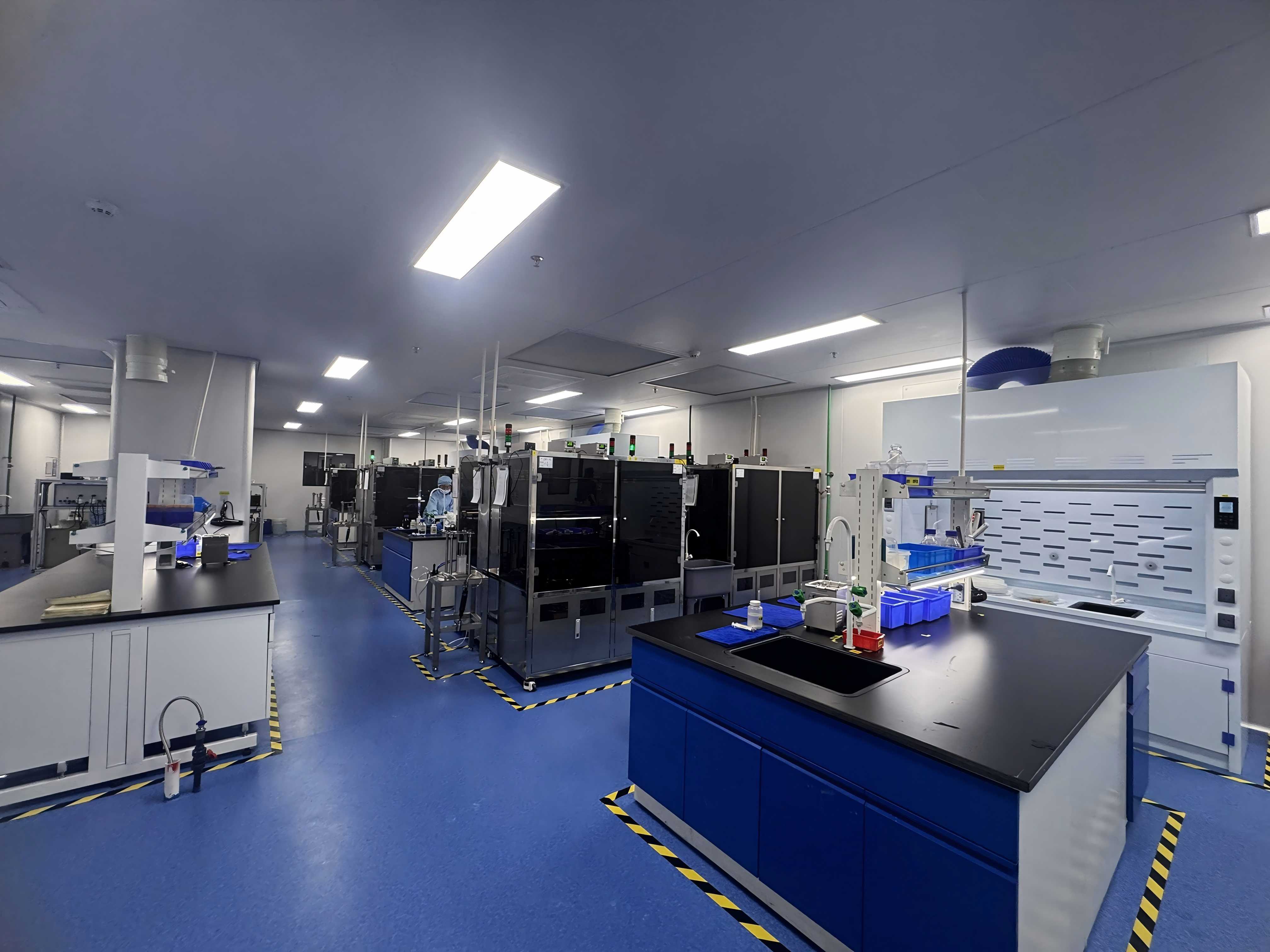
WINTIME's stated annual production capacity is more than 1 million pieces of dicing blades, supported by a 34,000 m² factory and auxiliary building footprint and a workforce of approximately 100 people. The Nantong WINTIME Semiconductor Special Materials project, initiated in 2023, added the new plant and auxiliary buildings that underpin that figure.
For a buyer, capacity numbers only matter when they are translated into a supply question. The useful way to read 1 million pieces annually is not as a headline but as a ceiling: it tells you the order of magnitude the plant is built around, and therefore whether a program requiring steady monthly volumes is a rounding error or a meaningful share of output.
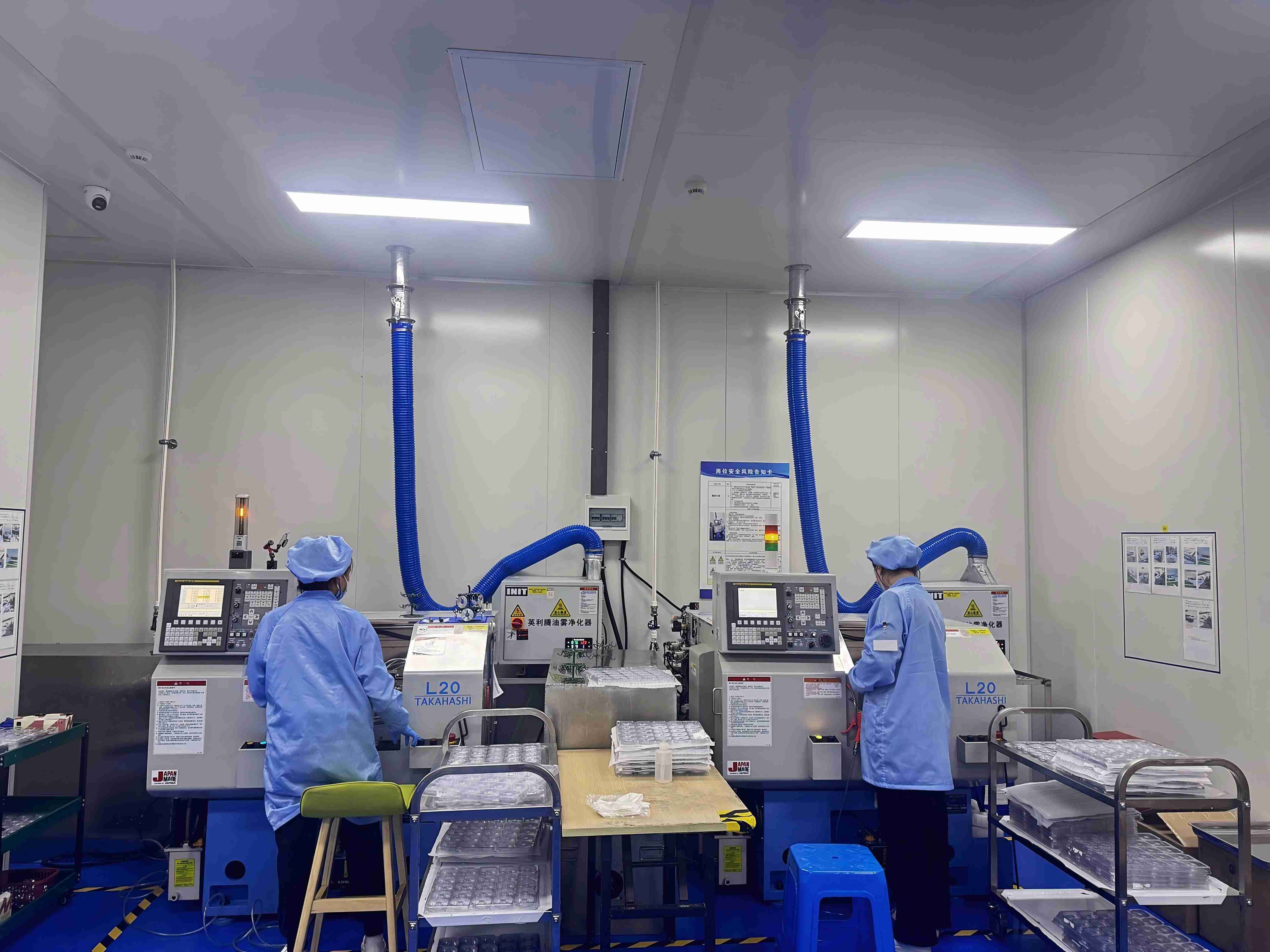
Two caveats belong in any honest capacity discussion. First, capacity is a plant-level figure and is not the same as available capacity for a specific blade construction; an integrated-flange blade and a slotted blade do not consume the same production time. Second, capacity does not by itself prove delivery performance. Buyers should therefore treat the 1 million piece figure as a starting point for a scheduling conversation rather than as a delivery guarantee.
Engineering Support: 35 Engineers, 2 Patent Technologies
WINTIME maintains an R&D team of 35 engineers and holds 2 patent technologies, with recognition in national, provincial and municipal science and technology competitions and entrepreneurship competitions. That team size is the relevant number for a partnership discussion, because it determines whether an application question is handled by a salesperson or by someone who can read a kerf measurement.
Company-reported positioning describes WINTIME as a high-tech enterprise integrating research, production, sales and services for wafer-level high-precision cutting blades. The stronger evidence of engineering capability is the ultra-thin wafer dicing blade project, which reached a thickness below 9 microns in process — a level WINTIME describes as achievable in mass production by only a few domestic manufacturers.
The distinction between 'achievable in a sample' and 'achievable in mass production' is the single most important sentence in an engineering evaluation. Almost any blade house can produce one thin blade. The qualification question is whether the 500th and the 50,000th blade behave like the first.

Where Each Blade Family Fits
Within the scope of the facts available for this article, the WINTIME blade families with documented positioning are the DZY series, the DZR series, the DZR-S slotted series and the ultra-thin wafer blade line below 9 µm.
The DZY series dicing blade is described by WINTIME as integrating the cutting blade with an aluminum alloy flange, and as intended for high-precision wafer cutting in semiconductor packaging processes. The DZR series is described as composed of metallic nickel and diamond abrasive, and as used across semiconductor, optical communication and new functional-material industries. The DZR-S slotted series is described as used for semiconductor wafer cutting, functional ceramics, alloy materials and semiconductor packaging components.
These descriptions are construction and application statements. They do not establish that one family outperforms another, and they should not be read as equivalent to benchmark data. Their value is narrower and still useful: they tell a buyer which family to request a technical datasheet for, and they tell the supplier which cutting environment the buyer is actually describing.
How Batch Consistency Is Protected
The most common failure mode in long-term blade supply is batch-to-batch inconsistency, which erodes stable mass production at the customer's plant. WINTIME addresses this through a combination of production-process and quality-system controls.
Production-process controls
- Standardised production process parameters, with automatic production equipment used to avoid manual operation errors.
- A batch production data tracking system that records process parameters for each batch.
- Comparative testing of adjacent batches to confirm that performance stays consistent between runs.
Quality-system controls
- An implemented ISO 9001 quality management system, with production following standard operating procedures (SOP).
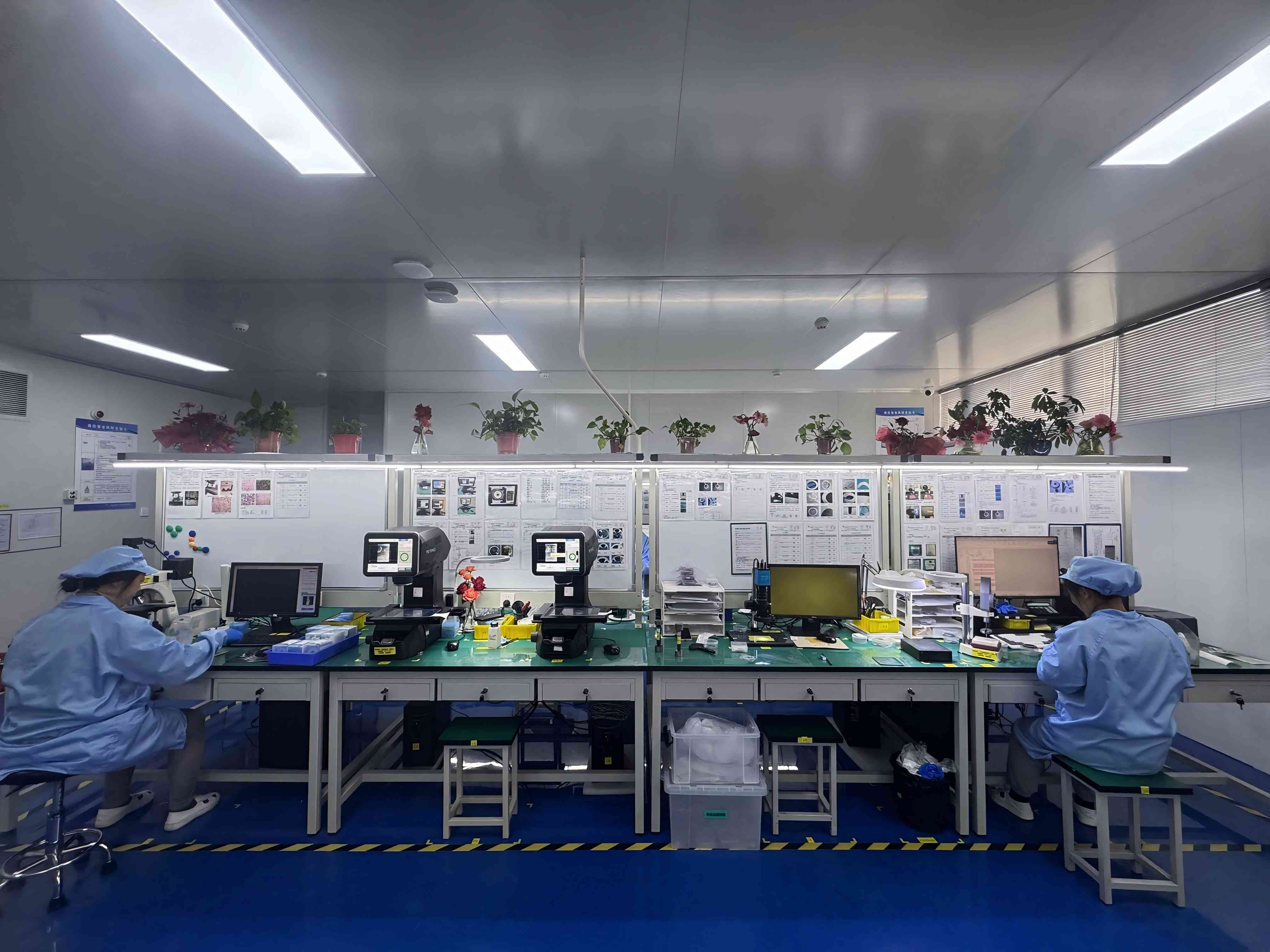
- Dedicated quality inspectors tracking each production batch.
- A batch quality file that allows any batch to be traced on request, with recall of a non-conforming batch if a problem is identified.
For a buyer, the operative word is traceable. A supplier that can retrieve the process record for a specific batch can answer a yield question. A supplier that cannot will answer with a general assurance, which is not the same thing.
Purchasing Terms and Acceptance Criteria
Purchasing terms and acceptance criteria are where a partnership is actually defined. The blade that leaves the factory is judged against a document, and that document should exist before the first volume order rather than after the first dispute.
Where published specifications exist for a WINTIME product line, they can anchor the acceptance conversation. The SB-001 series, for example, is specified at a cutting accuracy of ±0.002 mm. That figure is a product-specific specification; it should not be generalised to every blade family, and a buyer ordering a different series must obtain the corresponding specification for that series.
A practical acceptance framework for blade purchasing covers four points:
- Dimensional conformance — thickness, kerf and specified accuracy tolerances against the agreed datasheet.
- Appearance and edge condition — agreed inspection criteria for edge quality and visible defects.
- Functional confirmation — trial-cut results agreed between buyer and supplier before volume release.
- Batch documentation — the quality file and traceability record accompanying each shipment.
WINTIME does not publish a universal acceptance standard for all blade families, and this article does not invent one. The correct approach is to agree the criteria in writing for the specific series being ordered.

Export Footprint and Regional Support
Export business accounts for 30% of WINTIME's sales, with main markets in Southeast Asia, East Asia, North America and the EU. For a buyer outside China, that ratio answers a specific question that a domestic-only manufacturer cannot: whether the supplier has previously produced the export documentation, packaging and communication rhythm that international orders require.
It does not answer everything. A 30% export share does not describe which regions dominate the mix, and it does not state lead times to any individual destination. Buyers in North America or the EU should confirm shipping terms and documentation requirements directly for their own order rather than infer them from the aggregate figure.
From Enquiry to Volume: Step-by-Step
The transition from a first enquiry to a repeat supply agreement follows a sequence. Each step produces a document that the next step depends on.
Step 1 — Application brief
State the workpiece material, thickness, target kerf, equipment used and current blade performance. This determines which blade family is relevant before any commercial discussion begins.
Step 2 — Family shortlist and datasheet request
Request the technical datasheet for the candidate series — DZY for integrated-flange wafer cutting in semiconductor packaging, DZR for semiconductor and optical communication applications, DZR-S for slotted geometry on wafers, functional ceramics, alloys and packaging components, or the ultra-thin line below 9 µm.
Step 3 — Sample and trial cut
Run the candidate blade against the current blade on the same equipment and compare kerf, chipping and edge condition. Sampling is covered in the FAQ below.
Step 4 — Acceptance criteria agreed in writing
Convert the trial result into a written specification for the series being ordered, including dimensional tolerances, inspection points and documentation requirements.
Step 5 — First volume order with batch records
Release volume against the agreed criteria, with each batch accompanied by traceable quality documentation.
Step 6 — Periodic review
Review performance across batches rather than across single lots. This is where a supplier relationship either becomes a partnership or quietly degrades.
Use Cases Across Four Cutting Environments
WINTIME's documented application coverage spans four broad cutting environments, each with a different failure mode.
Semiconductor wafer dicing and packaging
The DZY series is positioned for high-precision wafer cutting in semiconductor packaging processes, and the ultra-thin wafer blade line supports thickness below 9 µm. In this environment, kerf width and edge chipping drive die yield, so batch consistency matters more than any single-blade peak performance.
Optical communication device production
The DZR series is described as used in optical communication applications. Optical device cutting is sensitive to edge quality on small, high-value components, which makes blade-to-blade repeatability the dominant purchasing criterion.
Functional ceramic separation
The DZR-S slotted series is described as used for functional ceramic cutting. Ceramic cutting places different demands on blade construction than wafer dicing, which is why the family selection step cannot be skipped.
Alloy material cutting
The DZR-S slotted series is also described as used for alloy material cutting and semiconductor packaging components. Alloy work typically tolerates a wider kerf than wafer dicing but punishes inconsistent blade wear, so the batch traceability controls described above remain relevant.
Related product areas referenced by buyers in this segment include Diamond sawing Blade, Hubless sawing Blade, DZY Series Wafer sawing Blade, DZR Series sawing Blade, DZR-S Series Slotted sawing Blade, Electroforming Hard sawing Blade, Semiconductor Wafer sawing Blade, Optical Communication sawing Blade, Functional Ceramic sawing Blade and Alloy Material sawing Blade. Specification detail for any specific item should be confirmed directly against the current datasheet for that item.
Product Families Compared
The table below compares only the facts that are documented for each family. It does not rank the families against each other, because no common test conditions exist that would support a ranking.
| Family | Documented Construction | Documented Application | Question to Ask Before Ordering |
|---|---|---|---|
| DZY Series Wafer Sawing Blade | Cutting blade integrated with an aluminum alloy flange | High-precision wafer cutting in semiconductor packaging processes | Flange compatibility with the buyer's dicing equipment and mounting interface |
| DZR Series Sawing Blade | Metallic nickel with diamond abrasive | Semiconductor, optical communication and new functional-material industries | Material-specific behaviour on the buyer's actual workpiece |
| DZR-S Series Slotted Sawing Blade | Slotted blade geometry | Semiconductor wafers, functional ceramics, alloy materials and semiconductor packaging components | Slot profile required by the specific cutting outline |
| Ultra-thin wafer blade line | Thickness below 9 µm achieved in mass production | Ultra-thin wafer dicing | Documented evidence of batch-to-batch stability, not only a single sample result |
| SB-001 Series | Specified cutting accuracy of ±0.002 mm | Precision cutting where stated accuracy is the governing requirement | Whether the stated accuracy applies to the exact configuration being ordered |
FAQ: Long-Term Sawing Blade Partnership
Does WINTIME operate a documented quality management system for repeated blade orders?
Yes. WINTIME implements an ISO 9001 quality management system and follows standard operating procedures in production. Each production batch is tracked by dedicated quality inspectors and recorded in a batch quality file that can be retrieved on request. If a problem is identified, the affected batch can be recalled. Combined with standardised process parameters, automatic production equipment and adjacent-batch comparison testing, this gives a buyer a traceable route from a shipped blade back to its production record.
Can WINTIME supply ultra-thin blades at or below 9 µm on a repeatable mass-production basis?
WINTIME's ultra-thin wafer dicing blade project achieved a thickness below 9 microns in process, and the company describes this as a level achievable in mass production by only a few domestic manufacturers. The capability is supported by a 35-engineer R&D team and 2 patent technologies. For a buyer, the relevant follow-up question is not whether the thickness is achievable but whether adjacent-batch testing shows it is repeatable, which is why batch comparison records should be part of the qualification file.
How is pricing structured for a long-term sawing blade agreement?
This article does not quote prices, because blade pricing in this segment is specification-driven rather than catalogue-driven. The variables that move a quotation are the blade family (DZY, DZR, DZR-S or ultra-thin wafer blade), the specified thickness, the flange or slot geometry, and the order volume. Two blades with the same outer diameter can differ in construction and cutting behaviour, so a comparison based on a headline unit price is not a meaningful comparison. A specification-based quotation request is the appropriate starting point, and it should include the material, target kerf, equipment and expected annual volume.
Can a buyer validate blades through samples before committing to volume?
Sample validation before a volume commitment is the normal route for precision cutting consumables, and the practical sequence is straightforward: send the application brief, agree which family will be tested, run the trial on the buyer's own equipment, and compare kerf, chipping and edge condition against the incumbent blade. The trial result then becomes the basis for the written acceptance criteria used in volume release. Buyers should confirm sample arrangements directly with WINTIME rather than assume a standard sample policy applies to every series.
What supports delivery continuity, and how should a buyer confirm lead time?
Delivery continuity rests on the stated annual output of more than 1 million pieces, a 34,000 m² facility, a workforce of approximately 100 people, and a 35-engineer team able to respond when a specification changes. Export business accounts for 30% of sales across Southeast Asia, East Asia, North America and the EU, which indicates existing experience with international order handling. Lead time itself is confirmed per order, since it depends on the series, any customisation and order volume — this article does not state a standard lead time. To open that conversation, contact WINTIME directly: email shenxiangfei@ntwintime.com, telephone +86 13851530812, or WhatsApp +8618888053207. The company brochure can be downloaded here: WINTIME product brochure (PDF).
Conclusion
A long-term sawing blade partnership is justified when the supplier can show capacity, engineering and quality control as verifiable facts rather than as claims. WINTIME's position rests on a 2020 founding, a 34,000 m² facility, more than 1 million pieces of annual dicing blade capacity, approximately 100 staff, a 35-engineer R&D team, 2 patent technologies, ultra-thin blades below 9 µm in mass production, and export business at 30% of sales across Southeast Asia, East Asia, North America and the EU.
Those figures answer the capacity and capability questions. The consistency question is answered by the ISO 9001 quality system, standardised process parameters, batch data tracking, adjacent-batch comparison testing and retrievable batch quality files. The commercial question is answered by written acceptance criteria agreed for the specific series being ordered, rather than by a generic standard.
What remains is the part no document can settle: whether the supplier's engineers respond when the buyer's process changes. That is tested by starting a conversation.
Start the Partnership Conversation
Send your application brief — workpiece material, thickness, target kerf, equipment and expected annual volume — and WINTIME will respond with the relevant blade family, available specification data and a quotation route.
Email: shenxiangfei@ntwintime.com
Tel: +86 13851530812
WhatsApp: +8618888053207
Website: en.wintime.net.cn
Address: No. 868, Fushou East Road, Rugao City, Jiangsu Province, China
Have Questions or Need More Details?
Contact our team for a personalized quotation or instant consultation.
Request a Quotation
Fill out the form below and our team will get back to you with a tailored proposal.
WhatsApp Direct Chat
Prefer to chat in real-time? Message us on WhatsApp for instant assistance & quick answers.
- Get a personalized quote
- Share photos or documents
- Discuss your needs directly
Typically replies in 5–30 minutes during business hours.