
Sawing Blade Sourcing Compared: Standard Stock vs Custom OEM/ODM for Semiconductor Cutting
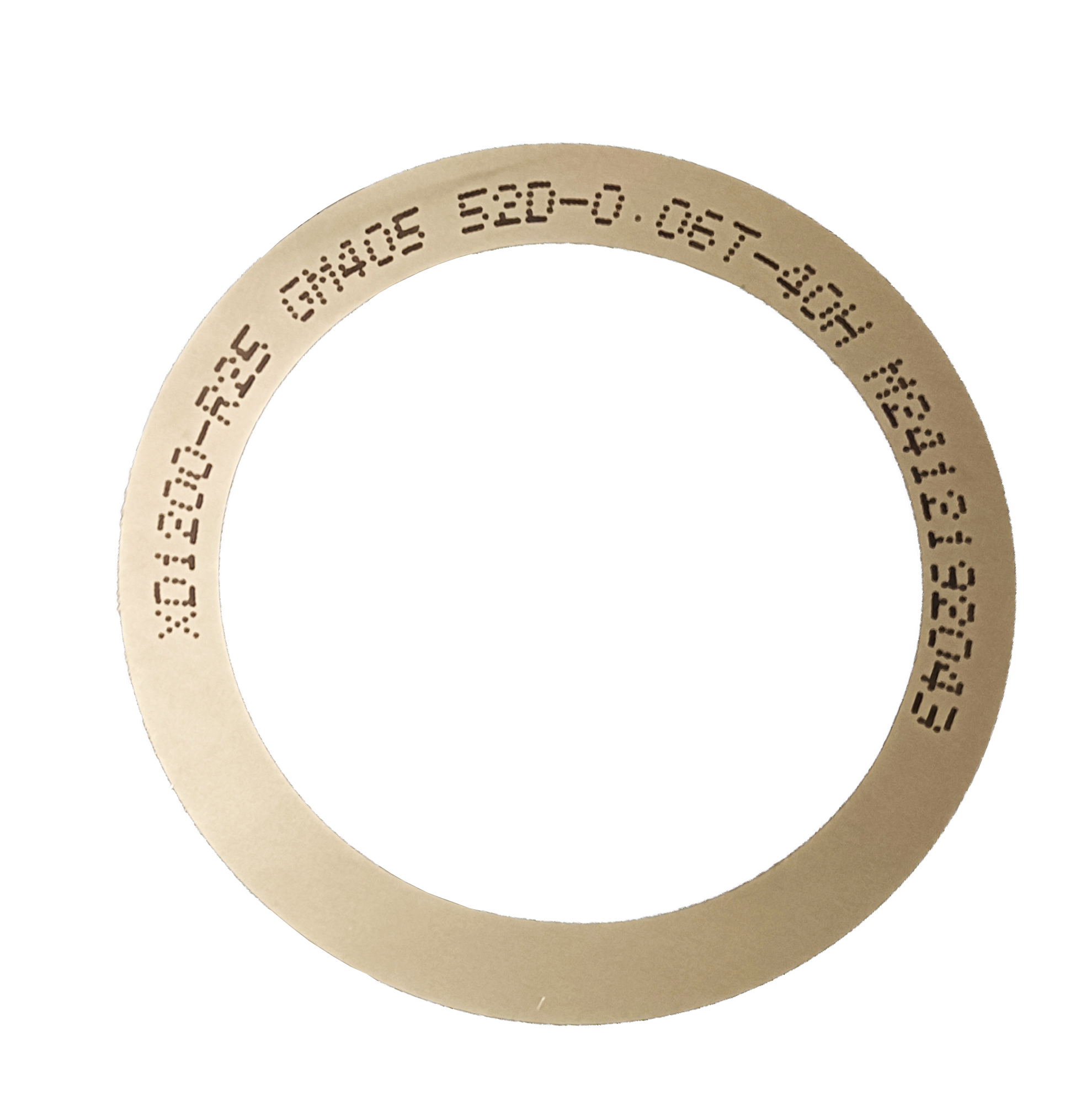
Sawing blade sourcing for semiconductor cutting is a specification decision before it becomes a purchasing decision. Two supply paths dominate the market: standard catalog stock, held for immediate dispatch and designed to cover a broad band of substrates; and custom OEM/ODM production, engineered around one operating envelope — material, target thickness, spindle, bond chemistry, and cleanroom conditions.
For buyers working through research and evaluation, the productive question is not which option is cheaper. It is which option can hold the tolerances the project actually requires, at a volume the line can absorb, within a lead time the production plan can tolerate.
This comparison maps both sourcing models against the requirements that define precision cutting projects: Class 100/1000 cleanroom operation, constant 22±2°C and 45%–55% humidity, dry and wet cutting on high-speed spindles, and the supporting equipment around the dicing line — automatic wafer dicing machines, UV tape mounting machines, wafer cleaning, and wafer testing. It closes with purchasing terms and acceptance criteria that can be dropped directly into a supplier questionnaire.
Problem Definition: Where the Standard-versus-Custom Decision Actually Breaks Down
Standard stock and custom OEM/ODM blades follow different production logics, and understanding that difference is what makes the comparison useful.
Standard stock is built for coverage. A catalog blade is specified to perform acceptably across many substrates, thicknesses, and machine platforms. Its value is availability, a low minimum order quantity, and predictable unit economics.
Custom OEM/ODM is built for fit. Blade diameter, thickness, spindle hole size, bond type, diamond abrasive grain size and concentration, coating, cutting performance targets, and even export packaging are set by the project rather than by the catalog.
The failure mode is rarely a blade that does not cut. It is a blade that cuts at the margin — a stock specification that is close to, but not exactly, what the process needs. In precision dicing, a marginal fit tends to surface as kerf drift, edge chipping, accelerated wear, or dimensional variation that only becomes visible once the process settles into mass production.
That is why the decision should be driven by the operating envelope first, and by unit price second.
Industry Background: Why the Sourcing Question Is Getting Sharper
Demand-side pressure is pushing both sourcing models into the same conversation.
The global wafer dicing blade market was valued at USD 1.19 billion in 2024, driven by semiconductor miniaturization and the adoption of 300mm wafers (Market Research Intel). At the wider tool level, the global diamond saw blade market was valued at approximately USD 8.60 billion in 2025 and is projected to reach USD 10.16 billion by 2032 (Maximize Market Research).
Bond-type mix matters to sourcing because it decides which default catalog options exist. In 2024, resin bond blades held a 42% share of the dicing blade market, while metal bond blades — the type used for harder materials such as SiC — accounted for 33% (Dicing Blade Market Report). A buyer whose substrate falls outside the mainstream resin-bond majority is more likely to need a non-standard specification.
Application mix points the same way. Optical communication and RF/optoelectronics applications accounted for 16% of the dicing blade market share in 2024, at roughly USD 69.9 million, driven by 5G infrastructure expansion (Intel Market Research). These are precisely the cutting jobs where chipping tolerance is tight and catalog defaults are least likely to be sufficient.
Two structural trends compound the effect. Hubless dicing blades are increasingly dominant for 300mm wafer processing because of their stability and reduced runout on thinner substrates below 50µm. And diamond tools, including sawing blades, are categorized under ISO 22180:2019, which distinguishes CVD diamond-coated types from monocrystalline and polycrystalline types — a classification that matters when a buyer has to describe a custom specification on a purchase order.
On the supply side, the competitive field for high-precision semiconductor dicing blades includes established names such as DISCO Corporation, Tokyo Seimitsu (Accretech), Advanced Dicing Technologies (ADT), and Asahi Diamond (Credence Research). Alongside them, the export flow from China has expanded: Chinese exports of cutting blades to Vietnam, India, and South Korea grew between 2024 and 2025, with Vietnam up by USD 18 million and India up by USD 12 million (OEC).
The practical consequence for buyers is that custom-capable supply is no longer unusual. The question has shifted from “can anyone customize?” to “which sourcing model fits this project?”
Detailed Solution: Matching the Sourcing Model to Operating Requirements
The comparison below is organized around the requirements that actually determine whether a blade survives a production line.
Cleanroom and Environmental Compatibility
Semiconductor dicing typically runs in a Class 100/1000 clean room with a constant temperature of 22±2°C, constant humidity of 45%–55%, a dust-free atmosphere, anti-static control, and a high-speed spindle environment.
Standard stock blades are usually manufactured and packaged for general industrial cleanliness, which is adequate for many applications but does not guarantee cleanroom-compatible packaging or anti-static handling. Custom OEM/ODM supply can align blade geometry, coating, and packaging to the specified cleanroom class and to the anti-static requirement from the outset.
Practical test: ask whether the blade ships in cleanroom-compatible packaging, and whether anti-static behavior is a stated specification or an assumption.
Blade Thickness Capability, Including Ultra-Thin ≤9µm
Thickness is the dimension that most often forces the sourcing decision.
A standard range covering 8µm to 50µm gives catalog buyers a wide envelope. But ultra-thin requirements — blade thickness of 9µm or less — sit at the edge of that envelope, where small differences in bond formulation and hub geometry determine whether the blade survives. Hubless designs dominate increasingly at 300mm because stability and reduced runout matter more as substrates get thinner below 50µm. Where a catalog blade is not validated at the target thickness, custom OEM/ODM becomes the only realistic route.
WINTIME Semiconductor Technology Co., Ltd., established in 2020, is a Rugao City–based developer and manufacturer of high-precision wafer-level cutting blades, cutting tapes, and cutting solutions. Its completed ultra-thin wafer dicing blade project achieved a thickness of less than 9 microns, and the company is described as one of the few domestic companies able to mass-produce at that thickness.
Practical test: ask for the thickness range validated in mass production, not just the thickness range quoted on a datasheet.
Bond Type and Material Match
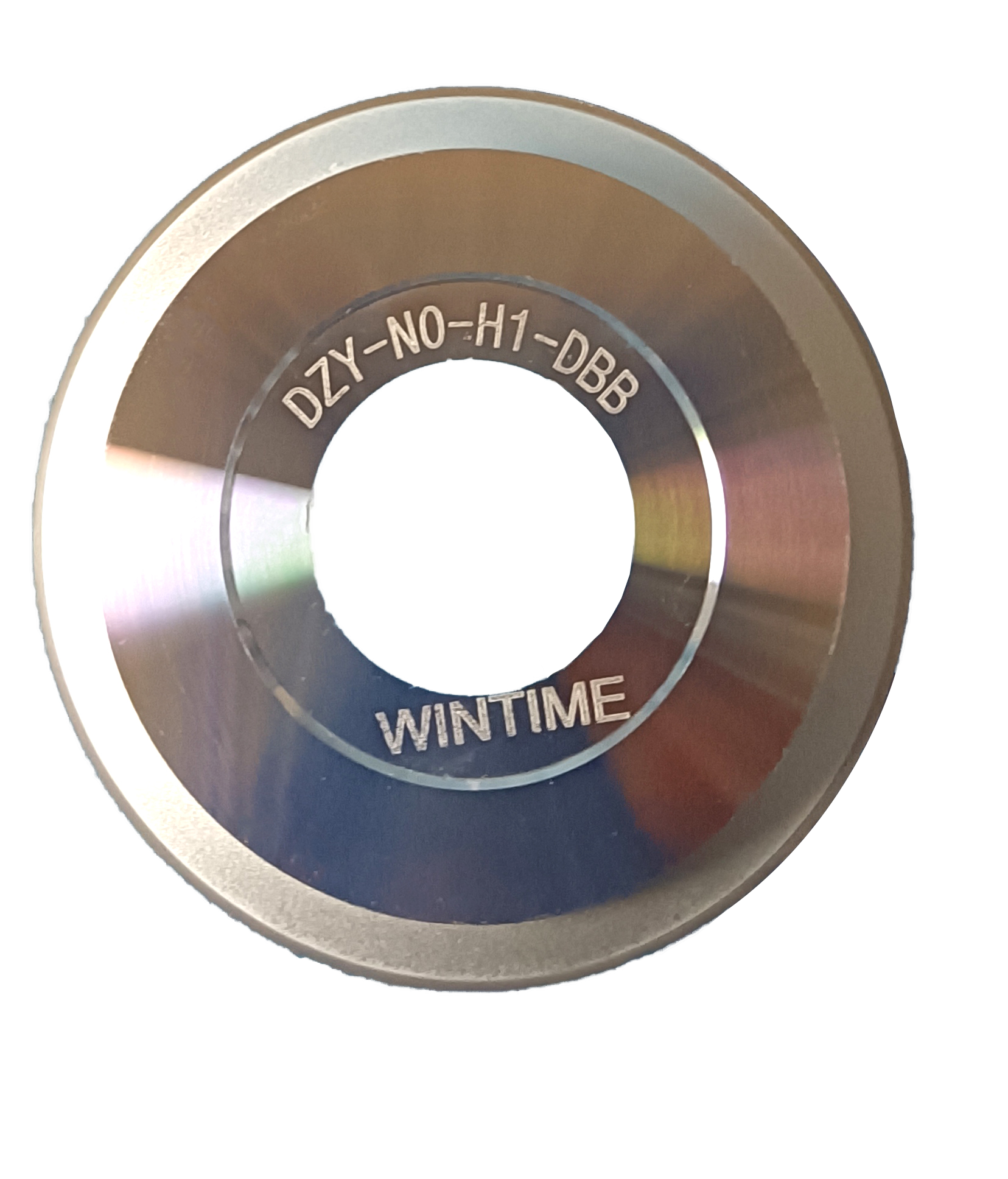
Bond chemistry decides what the blade can cut, and the market split reflects it: resin bond blades held 42% of the 2024 dicing blade market, while metal bond blades used for harder materials such as SiC accounted for 33%.
A standard catalog buyer picks from the bond types that already exist for their material class. Where the substrate is a functional ceramic, an optical material, or a precision alloy, the default bond may need adjustment in abrasive grain size and concentration rather than in name only. Custom OEM/ODM supply sets bond type, diamond abrasive grain size, and concentration around the material.
WINTIME’s blade range spans resin and metal bonds over a diamond superabrasive on a high-strength steel base, with hub options that include hubbed and hubless designs across the DZY Series wafer sawing blade, the DZR Series sawing blade, and the DZR-S Series slotted sawing blade families. Metal-bond technologies produced by electroforming remain a standard category of hard blade in this field.
Practical test: ask the supplier to state the bond, the abrasive grain size, and the concentration as three separate line items rather than as a single blade grade.
Wear Resistance and Cutting Loss
Wear resistance and cutting loss are the two variables that decide consumable cost per wafer.
A stock blade is designed for acceptable wear across a broad range. A custom blade can be tuned toward a narrower optimum, which typically means either longer life or a narrower kerf, depending on which the process prioritizes. That trade-off — chipping versus speed, life versus kerf — is a recognized decision point in ceramic substrate sawing, and it is exactly where catalog defaults stop being neutral.
Practical test: define which matters more in this project — blade life or kerf width — and require the supplier to state which one the recommended blade optimizes.
Anti-Static Behavior and Dimensional Accuracy
Anti-static behavior and dimensional accuracy are specification items, not side effects.
Cutting accuracy is commonly quoted at ±0.002mm, and a blade that drifts outside that band introduces cumulative error across a wafer. Anti-static properties protect dies and surrounding circuitry during handling and cutting.
In a standard stock purchase, both attributes are inherited from the catalog. In custom OEM/ODM supply, they can be written into the specification through a coating or a bond adjustment. WINTIME’s customization scope explicitly covers blade diameter, thickness and spindle hole size; bond type; diamond abrasive grain size and concentration; coatings for anti-rust, heat dissipation and wear resistance; cutting performance targets; and packaging, including special packaging for export and special-shaped blades in non-standard sizes.
Practical test: ask whether anti-static performance is a stated specification with an inspection step behind it, or a general claim.
Mass Production Stability
The last dimension is the one that breaks projects late.
A blade that performs in a sample run but drifts across a production lot is more expensive than a blade that costs more per piece and holds. Stability is a function of process control, not of the blade drawing.
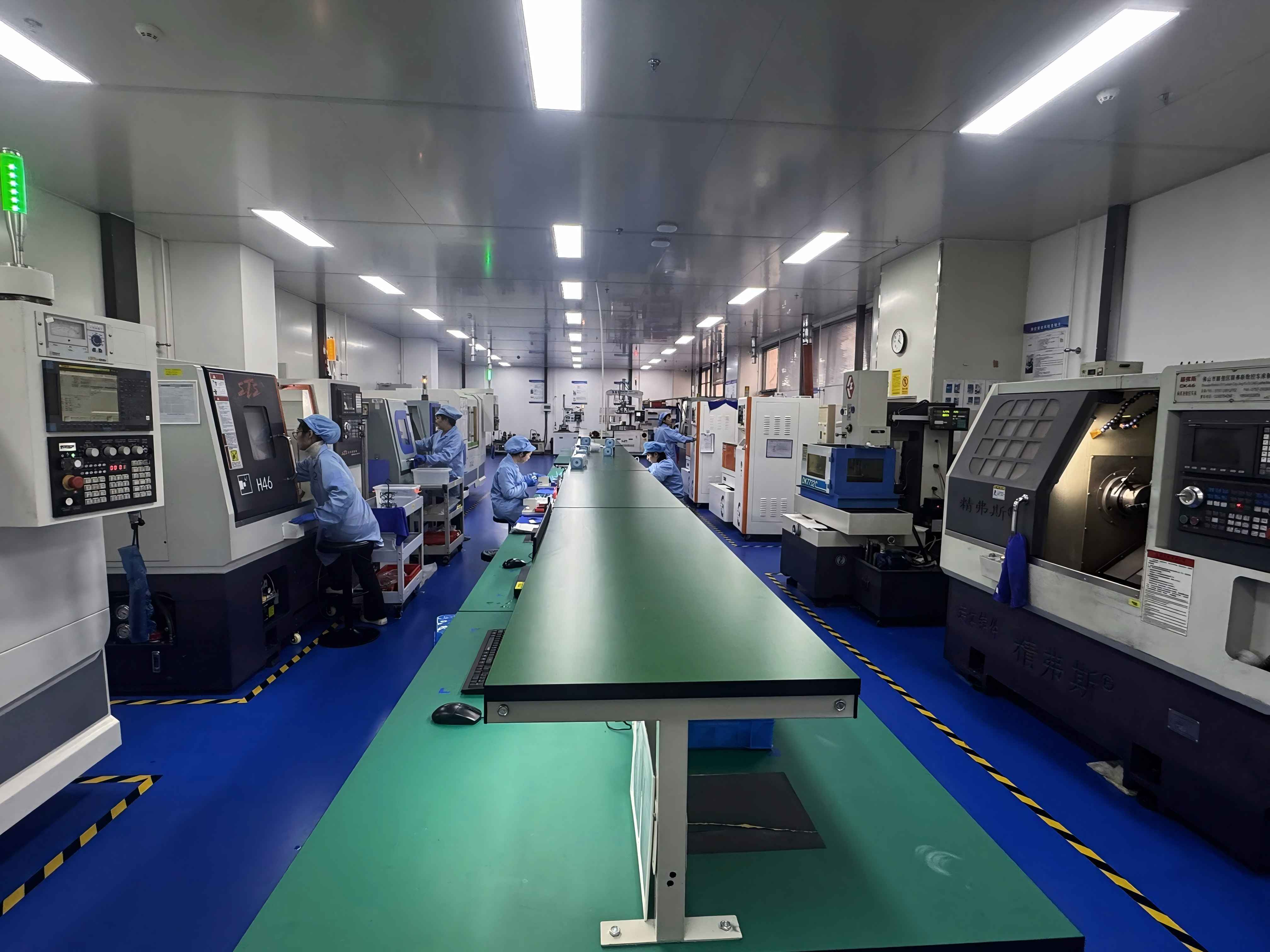
WINTIME operates from a 34,000² facility in Rugao City, Jiangsu Province, with approximately 100 staff including 35 R&D engineers, an annual capacity of 1 million pieces, and 2 patent technologies. The company states that its ultra-thin wafer dicing blade project reached a thickness below 9 microns and that product quality has reached the international cutting-edge level, describing itself as one of the few domestic companies capable of mass production at that level — the specific point at which standard stock and custom OEM/ODM diverge most.
Practical test: ask for monthly capacity, the defined QC steps, and the supplier’s definition of a production lot.
Step-by-Step Breakdown: A Sourcing Decision Workflow
- Define the operating envelope. Write down substrate material, target thickness, kerf target, spindle speed range, dry or wet cutting, cleanroom class, temperature and humidity band, and required anti-static behavior.
- Check catalog coverage. Compare the envelope against the standard range — for example an 8µm–50µm thickness band, a quoted cutting accuracy of ±0.002mm, a spindle speed window of 30,000–60,000rpm, and the available resin and metal bond options.
- Quantify the gap. If every parameter sits inside the catalog envelope, standard stock is the lower-risk path. If even one parameter sits at the edge — most often thickness at or below 9µm, a non-mainstream bond, or an unusual spindle hole geometry — treat it as a custom case.
- Define the customization delta. For custom supply, specify diameter, thickness, spindle hole size, bond type, abrasive grain size and concentration, coating, cutting performance targets, and packaging as separate line items.
- Set acceptance criteria before sampling. Agree on what will be measured: geometry, hardness and wear resistance, dynamic balance, cutting performance on the actual material, chipping, kerf, and dimensional control.
- Validate with samples. Run the sample under production-representative conditions, on the same equipment that will run the order.
- Lock commercial terms. Confirm MOQ, lead time, and after-sales terms in writing before the first production order.
Steps 5 and 6 are what convert a sourcing decision into a supply relationship. In WINTIME’s process, quality control includes geometric dimension inspection using a vernier caliper and a laser diameter gauge, hardness and wear resistance testing on a material testing machine, dynamic balance detection on a high-speed dynamic balance tester, and cutting performance simulation testing on the actual material.
Use Cases: Where Each Sourcing Model Fits
Wafer dicing and scribing. The most thickness-sensitive application, where ultra-thin requirements and hubless geometry dominate. Standard stock works when wafer thickness and target kerf sit inside the catalog band; custom OEM/ODM becomes the route when they do not.
Semiconductor package cutting. Package-level cutting tolerates a broader thickness band than front-end dicing, which makes standard stock viable more often. Custom supply is typically driven by a specific bond requirement or by packaging and handling constraints.
Optical device cutting. Optical communication and RF/optoelectronics accounted for 16% of dicing blade market share in 2024, driven by 5G infrastructure expansion. Low chipping matters more here than raw speed, which pushes buyers toward specification-tuned supply.
Ceramic substrate cutting. Functional ceramics are hard and abrasive, and the process forces an explicit trade-off between chipping and speed. Bond type, abrasive concentration, and coating choices all affect the outcome.
Precision alloy component cutting. Alloy cutting covers a wide material range and a wide tolerance range, which makes it the application where standard stock most often delivers acceptable results — unless dimensional accuracy or surface finish requirements push it toward custom.
Comparison Table: Standard Stock vs Custom OEM/ODM
| Comparison dimension | Standard stock | Custom OEM/ODM |
|---|---|---|
| Operating envelope fit | Designed for broad material and machine coverage | Engineered for one material, thickness, and spindle envelope |
| Blade thickness capability | Catalog range, commonly 8µm–50µm | Set to the project, including ultra-thin ≤9µm where validated |
| Bond type | Selected from existing resin / metal catalog options | Bond type, abrasive grain size, and concentration set per material |
| Hub and geometry | Standard hubbed, hubless, flanged, and serrated options | Diameter, thickness, and spindle hole size customized; special-shaped blades supported |
| Coating | Catalog default | Anti-rust, heat-dissipation, and wear-resistant coatings selectable |
| Cleanroom fit | General industrial packaging and handling | Packaging and handling aligned to cleanroom class and anti-static requirement |
| Dimensional accuracy | Quoted catalog tolerance, commonly ±0.002mm | Tolerance specified and inspected per project |
| Wear resistance / cutting loss | Balanced across a broad range | Tuned toward blade life or kerf width, per project priority |
| Mass production stability | Governed by the standard production process | Governed by project-specific QC and pilot validation |
| Minimum order quantity | From 50 pieces | From 300 pieces |
| Lead time | 2–5 working days | 10–25 working days, adjustable for large orders |
| Monthly capacity reference | 800,000+ pieces per month for standard specifications | 80,000+ pieces per month for customized and special-shaped products |
| Best-fit scenario | Validated catalog parameters and fast replenishment | Off-catalog thickness, bond, geometry, or cleanroom requirements |
| Commercial logic | Unit price and availability | Total cost per wafer and process fit |
The table is a decision aid, not a ranking. The right-hand column is not inherently better — it carries a different cost structure and a different lead time.
Supporting Equipment and Process Context
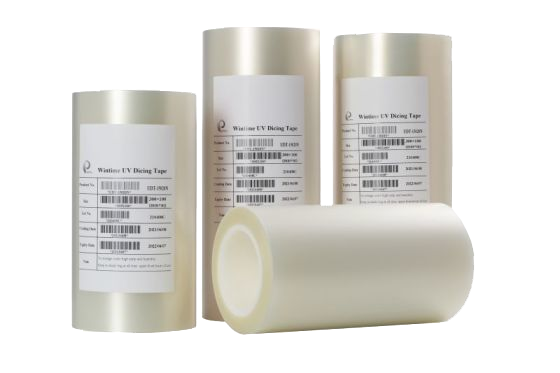
Blade selection does not happen in isolation. The matched equipment set for these applications includes automatic wafer dicing machines, semiconductor cutting spindles, UV tape mounting machines, wafer cleaning equipment, and wafer testing machines. The operation mode is high-speed spindle rotating cutting, dry or wet, with continuous operation on automatic dicing machines and precision feed cutting.
This matters when comparing sourcing models, because a custom blade often has to be validated against the tape and cleaning steps, not only against the spindle. Buyers evaluating an OEM/ODM route should confirm that the supplier can support process matching and equipment adaptation, not just blade geometry.
WINTIME’s after-sales scope includes technical support for cutting process matching and equipment adaptation, quality problem investigation and resolution within 48 hours, customized after-sales service for bulk procurement customers, long-term supply guarantee and inventory support, and product application training for new customers.
FAQ
What compliance and documentation should a sawing blade supplier provide for a semiconductor cutting project?
At minimum, buyers should expect the blade specification to reference an applicable diamond tool classification. Diamond tools, including sawing blades, fall under ISO 22180:2019, which distinguishes CVD diamond-coated types from monocrystalline and polycrystalline types. Beyond classification, the supplier should be able to document the inspection steps behind the specification — geometric dimension inspection, hardness and wear resistance testing, and dynamic balance detection — because those are the checks the acceptance criteria will be measured against.
Can standard stock sawing blades achieve ultra-thin thickness such as ≤9µm, or is that only possible with a custom blade?
Ultra-thin thickness of ≤9µm sits at the edge of the standard range and is generally where the sourcing decision turns to custom OEM/ODM. It is not that a catalog listing cannot show a thin blade; it is that mass production at that thickness requires bond formulation, hub geometry, and process control tuned to the target. WINTIME’s ultra-thin wafer dicing blade project achieved a thickness below 9 microns, and the company is described as one of the few domestic manufacturers able to achieve mass production at that level.
How do the purchasing terms differ between standard stock and custom OEM/ODM sawing blades?
Standard stock is structured for fast replenishment: MOQ from 50 pieces, lead time of 2–5 working days, and monthly capacity of 800,000+ pieces for standard specifications. Custom OEM/ODM is structured for specification fit: MOQ from 300 pieces, lead time of 10–25 working days — adjustable for large orders — and monthly capacity of 80,000+ pieces for customized and special-shaped products. MOQ and lead time are typically flexible for long-term cooperative customers. Buyers should compare on cost per wafer produced rather than cost per blade.
What does sample validation look like before a custom blade goes into mass production?
Sampling should reproduce the production condition rather than approximate it. That means running the candidate blade on the same material, at the target thickness and kerf, on the same spindle platform, and measuring the same attributes that will be used for acceptance: geometry, hardness and wear resistance, dynamic balance, chipping, and dimensional control. Inspection steps such as geometric dimension inspection with a vernier caliper and laser diameter gauge, and cutting performance simulation testing on the actual material, exist precisely so that a sample result can be repeated in a production lot.
What lead times and MOQs should a buyer plan for, and how do they change for long-term supply?
Plan the sourcing decision around the production calendar rather than around the first order. A standard replenishment cycle of 2–5 working days suits buyers whose parameters are already validated and whose demand is steady. A custom cycle of 10–25 working days needs to be built into the project timeline before ramp, and large orders may extend it further. For buyers moving from a first custom order to a recurring supply agreement, the practical next step is to request a sample and a quotation against the specific operating envelope — blade thickness, bond type, spindle hole size, coating, and packaging — so that specification and commercial terms are agreed together.
Ready to compare stock and custom options on your own envelope?
Send your substrate material, target blade thickness, spindle hole size, bond preference, and cleanroom class. WINTIME Semiconductor Technology Co., Ltd. can return a sample recommendation and a quotation against those parameters.
Email: shenxiangfei@ntwintime.com | Tel: +86 13851530812 | WhatsApp: +8618888053207 | Address: No. 868, Fushou East Road, Rugao City, Jiangsu Province
Company site: en.wintime.net.cn | Product brochure: download the WINTIME catalogue (PDF)
Conclusion
Standard stock and custom OEM/ODM sawing blades answer two different questions. Standard stock answers “what can I get quickly, at low volume, that will cut this material acceptably?” Custom OEM/ODM answers “what blade does this specific operating envelope require, and can it be held in mass production?”
For semiconductor cutting projects, the decision usually hinges on four parameters: blade thickness at or below the ultra-thin threshold, bond type for a non-mainstream substrate, cleanroom and anti-static compatibility, and dimensional accuracy under production volume. If all four sit inside the standard catalog envelope, stock is the faster and simpler path. If any one of them sits at the edge, the project belongs in a custom conversation.
The commercial terms differ accordingly — MOQ from 50 pieces versus from 300 pieces, and lead time of 2–5 working days versus 10–25 working days. The acceptance criteria, however, should not differ at all. Whether the blade comes from stock or from a custom line, geometry, hardness and wear resistance, dynamic balance, chipping, kerf, and dimensional control should be defined, measured, and documented the same way.
Have Questions or Need More Details?
Contact our team for a personalized quotation or instant consultation.
Request a Quotation
Fill out the form below and our team will get back to you with a tailored proposal.
WhatsApp Direct Chat
Prefer to chat in real-time? Message us on WhatsApp for instant assistance & quick answers.
- Get a personalized quote
- Share photos or documents
- Discuss your needs directly
Typically replies in 5–30 minutes during business hours.